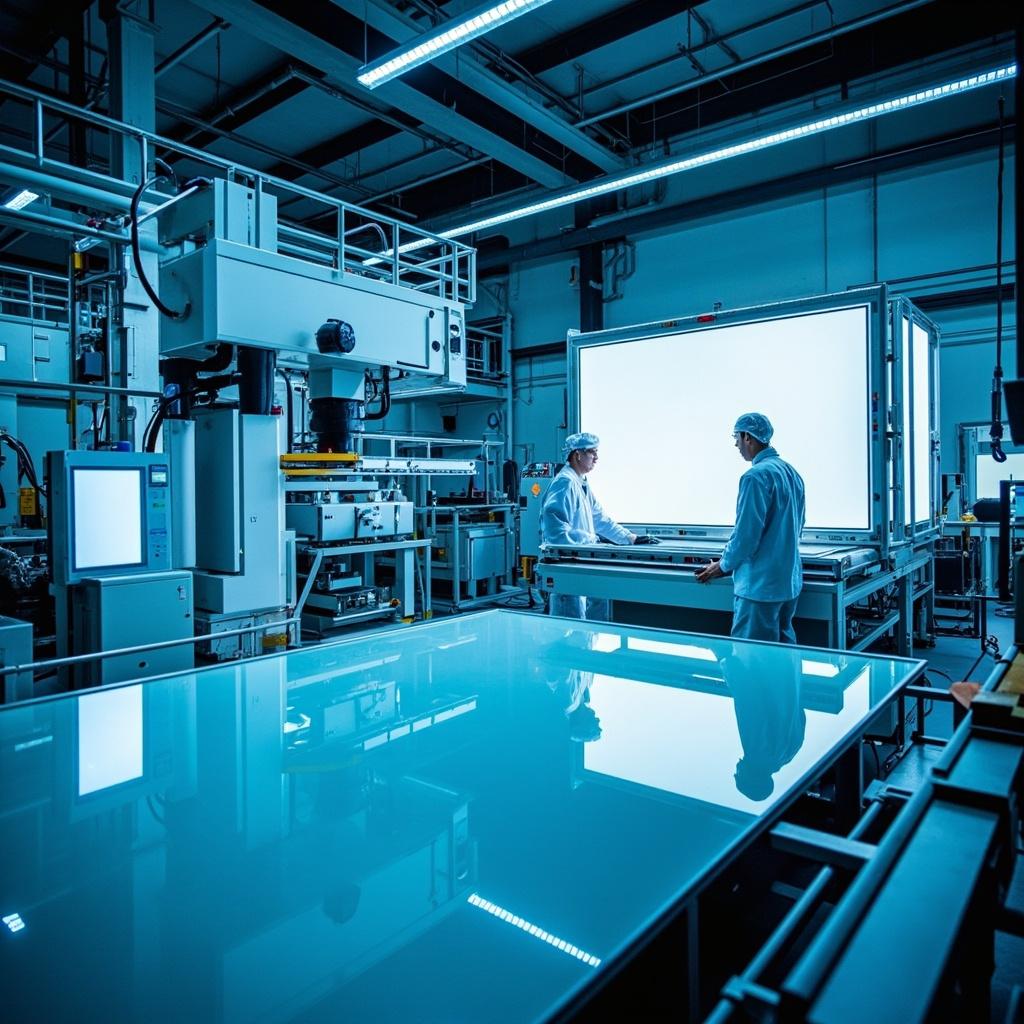
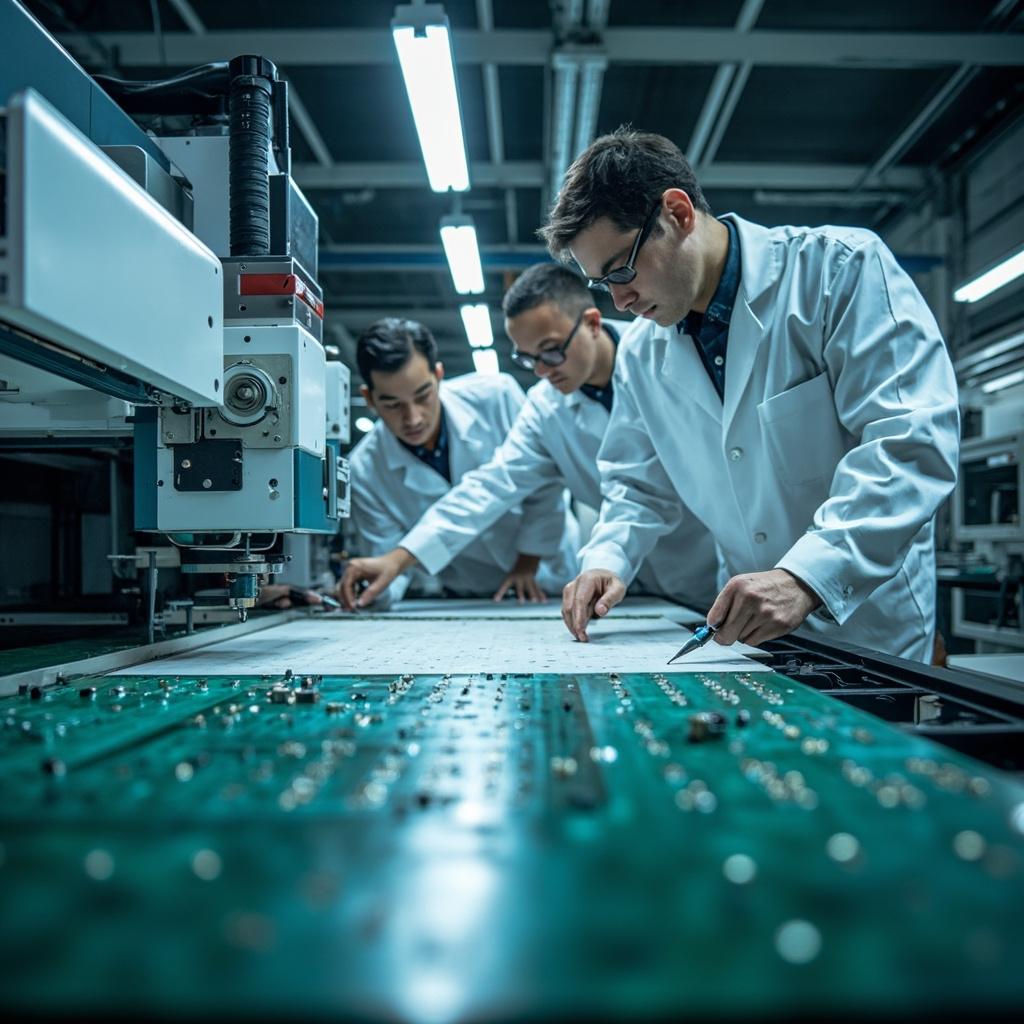
A top equipment maker is defined less by brand recognition and more by process depth, placement precision, and the software ecosystem wrapped around its machines.
In surface-mount assembly, the decisive metric is placement accuracy: leading machines place thousands of components per hour down to sub-100 micron accuracy, and companies such as FUJI and Yamaha hold long-standing dominance on smartphone and wearable assembly lines. In advanced packaging, ASMPT has become the benchmark for thermo-compression bonding (TCB), the process used to stack high-bandwidth memory (HBM) for AI accelerators, with 2025 TCB sales growing more than 140% year-on-year.
Beyond raw hardware, customer lock-in increasingly comes from software. Panasonic Connect couples its placement lines with Blue Yonder supply-chain software, while Yamaha promotes its YSUP control platform. These platforms turn a one-time machine sale into an ongoing data relationship, which is why the most valuable equipment companies increasingly resemble software companies.
Finally, scale and after-sales coverage matter. A maker that can deploy and maintain lines across dozens of countries, as ASMPT, Nordson, and Mycronic do, commands stronger unit economics and stickier relationships than a regional specialist. VerityRank weights these technology, scale, ecosystem, and financial dimensions to separate leaders from the rest.
VerityRank scores the top smart-device manufacturing equipment companies on a 0-100 scale across four weighted dimensions tailored to precision equipment.
Technology and process depth (30%) weighs placement accuracy and advanced-packaging capability, advanced-packaging capability such as TCB and hybrid bonding, and proprietary know-how in dispensing, inspection, and laser processing. Production scale and global reach (25%) considers the breadth of manufacturing bases, cumulative installed base, and after-sales coverage across markets.
Customer lock-in and ecosystem (25%) captures how deeply a vendor is embedded in leading EMS and OEM lines, plus the stickiness of its software and control platforms. Financial resilience and R&D intensity (20%) assesses revenue growth, profitability, and sustained engineering investment.
Data is drawn from audited results, investor presentations, and third-party industry research cited throughout this report. ASMPT earns top marks for TCB leadership and HBM order momentum, Nordson for precision dispensing margins with a 32% adjusted EBITDA margin, and Mycronic for display-mask and high-mix AOI excellence. The composite score is reported on each company profile.
Advanced packaging — especially thermo-compression bonding and hybrid bonding — is growing far faster than conventional surface-mount placement because AI chips require it.
Generative-AI accelerators and high-bandwidth memory (HBM) stack multiple dies vertically, connected by extremely fine-pitch bonds that standard placement machines cannot produce. This has turned equipment vendors at the packaging frontier into high-growth businesses: ASMPT's TCB revenue jumped more than 140% in 2025 and its net profit soared 163.6%, while it won major share of HBM4 12-high orders.
By contrast, mainstream SMT placement is a mature but steady market, growing with global smartphone, PC, and wearables volumes. The distinction matters for buyers: a line manager sourcing packaging tools faces sub-micron process challenges, whereas an SMT buyer optimizes for speed, accuracy, and total cost of ownership across proven placement platforms.
This split also explains regional dynamics. Advanced packaging is concentrated in Asia — Japan, Singapore, South Korea, and China — while the SMT base is diversifying as EMS capacity shifts toward Vietnam, India, and Mexico. Equipment leaders are investing in both fronts to capture the AI windfall and the reshoring wave at the same time.
The shift to smart factories is being led by equipment makers that pair hardware with software and data platforms rather than selling standalone machines.
Panasonic Connect is among the most aggressive, integrating generative-AI capabilities and Blue Yonder supply-chain software to connect placement, inspection, and final assembly into one data loop; company research projects GenAI could drive up to 38% sales growth in 2025. Yamaha pushes its YSUP ecosystem for one-stop smart solutions and opened a dedicated SMT and robotics support center in India in 2026.
Mycronic exemplifies the software-leveraged model, with EBIT margins near 24% supported by strong AOI inspection software and flexible high-mix placement. Nordson leverages its NBS Next framework to optimize precision dispensing and surface treatment, while Chinese integrators such as Lead Intelligent and Bozhon supply whole flexible final-assembly lines managing thousands of processes from machinery to vision inspection.
For factory owners, line-level software interoperability, remote monitoring, and predictive maintenance are becoming differentiators as important as placement-head mechanics. Companies that convert process knowledge into data platforms retain customers through every capacity-upgrade cycle.
Chinese smart-device equipment makers are closing the gap quickly, particularly in whole-line automation and new-energy equipment, while still trailing in the most advanced packaging processes.
Lead Intelligent has become the world's largest supplier of whole-turnkey battery line equipment and a major builder of customized 3C assembly systems, generating about CNY 14.4 billion in 2025 revenue with profit up more than 446%, and completed an A+H dual listing in early 2026. Han's Laser, Asia's largest industrial laser maker, grew its PCB equipment business more than 72% in 2025 on AI-server demand, and Bozhon lifted revenue 32.5% by pairing consumer-line automation with a surging new-energy backlog.
These players compete fiercely on price, customization, and delivery speed for flexible assembly lines. However, in the most demanding niches — sub-micron packaging, high-end laser sources, and display-mask generation — Japanese and European leaders such as ASMPT, FUJI, Nordson, and Mycronic still hold meaningful technology and margin advantages.
The competitive frontier is shifting as AI and reshoring reshape the industry. Chinese makers are winning share in new-energy and high-mix assembly, and their global after-sales networks are expanding, narrowing a gap that was wide only a few years ago. The next phase will test whether they can move up-market into the most precision-critical processes.