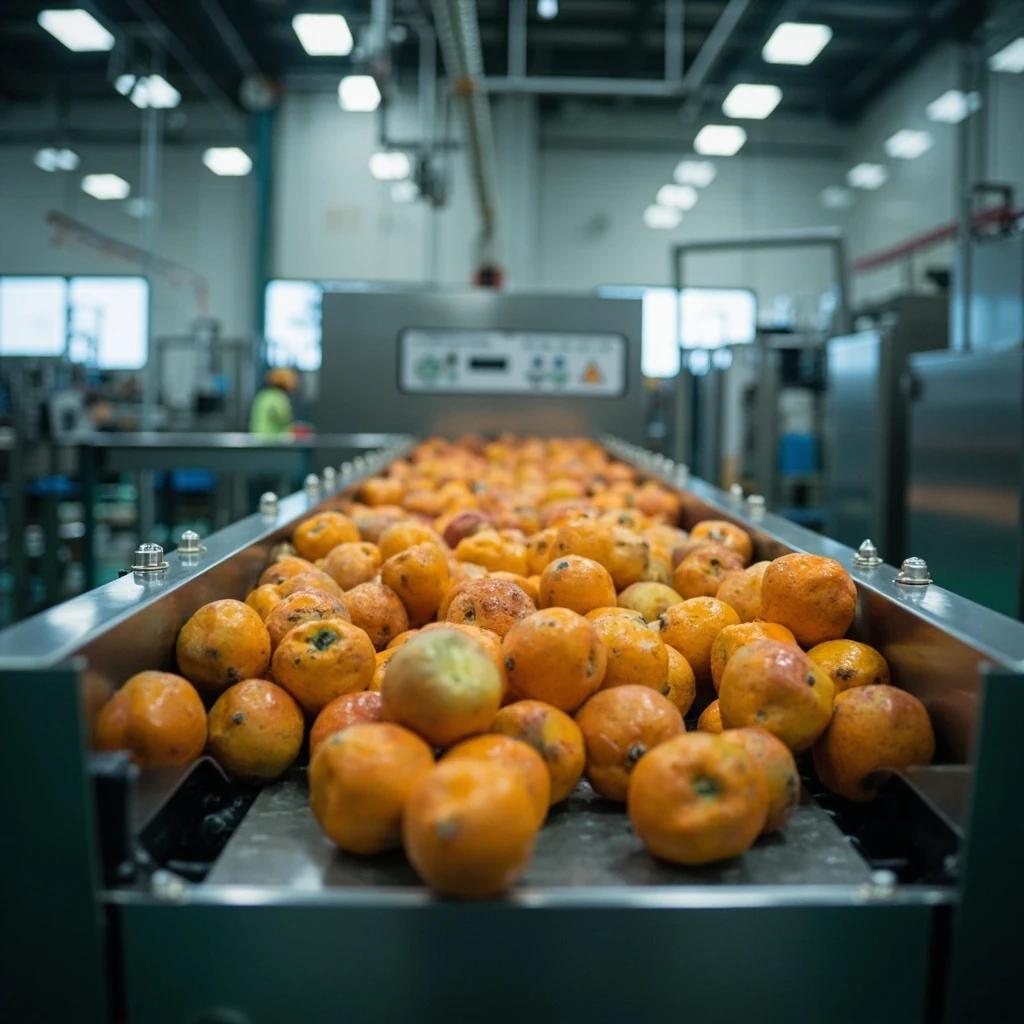
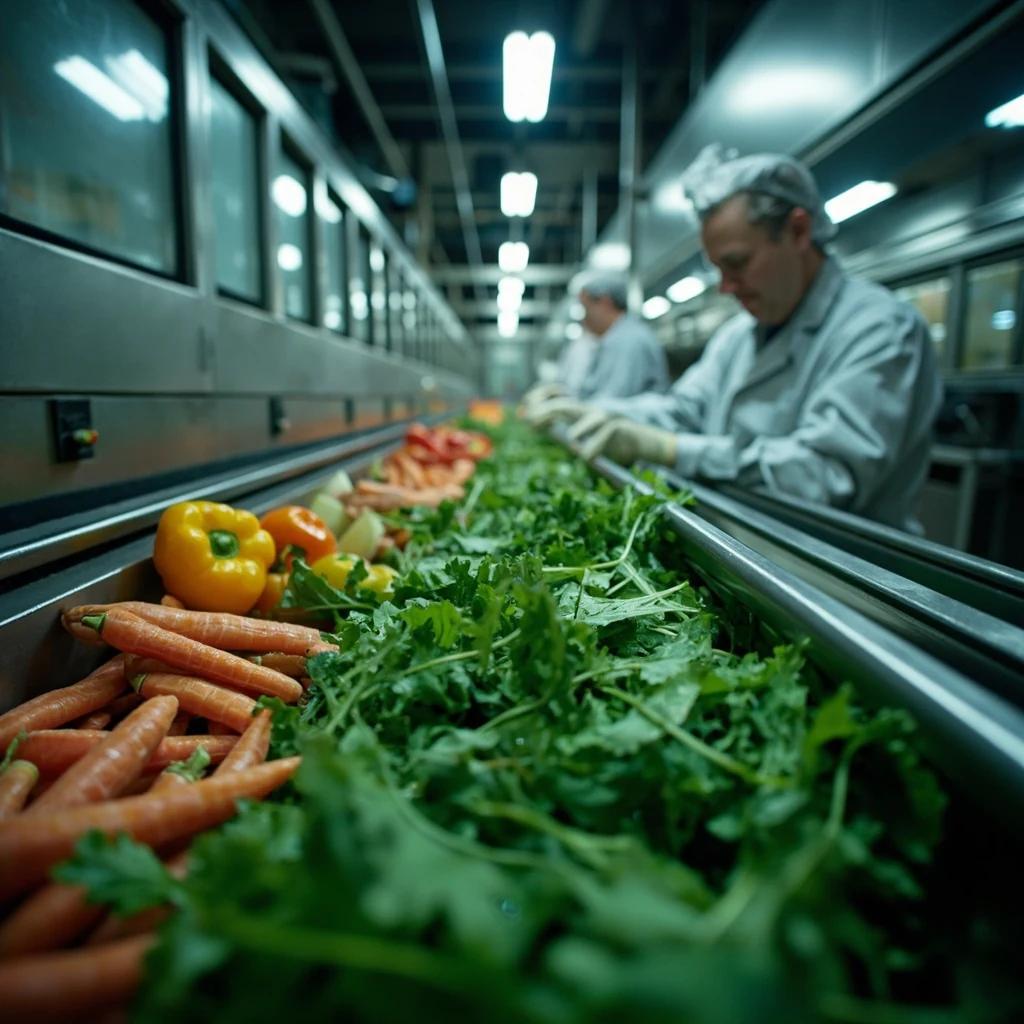
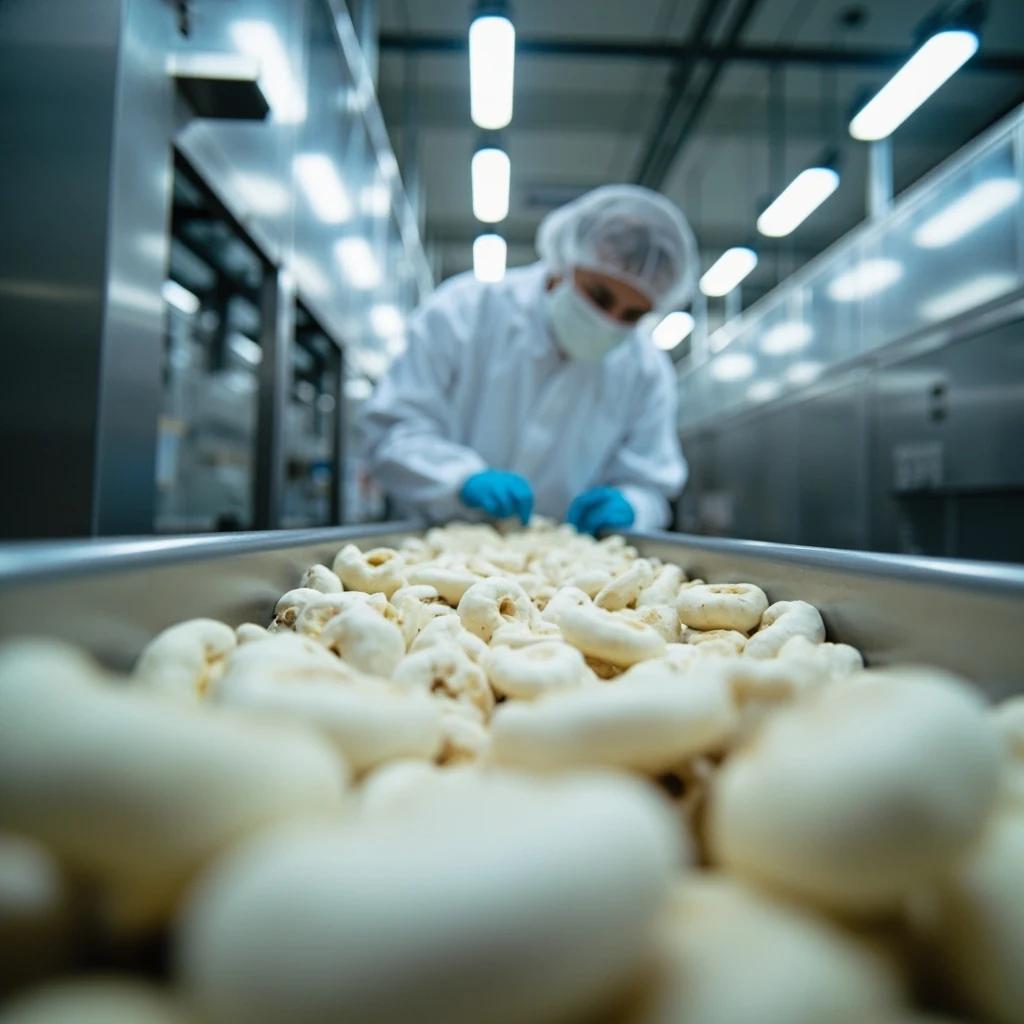
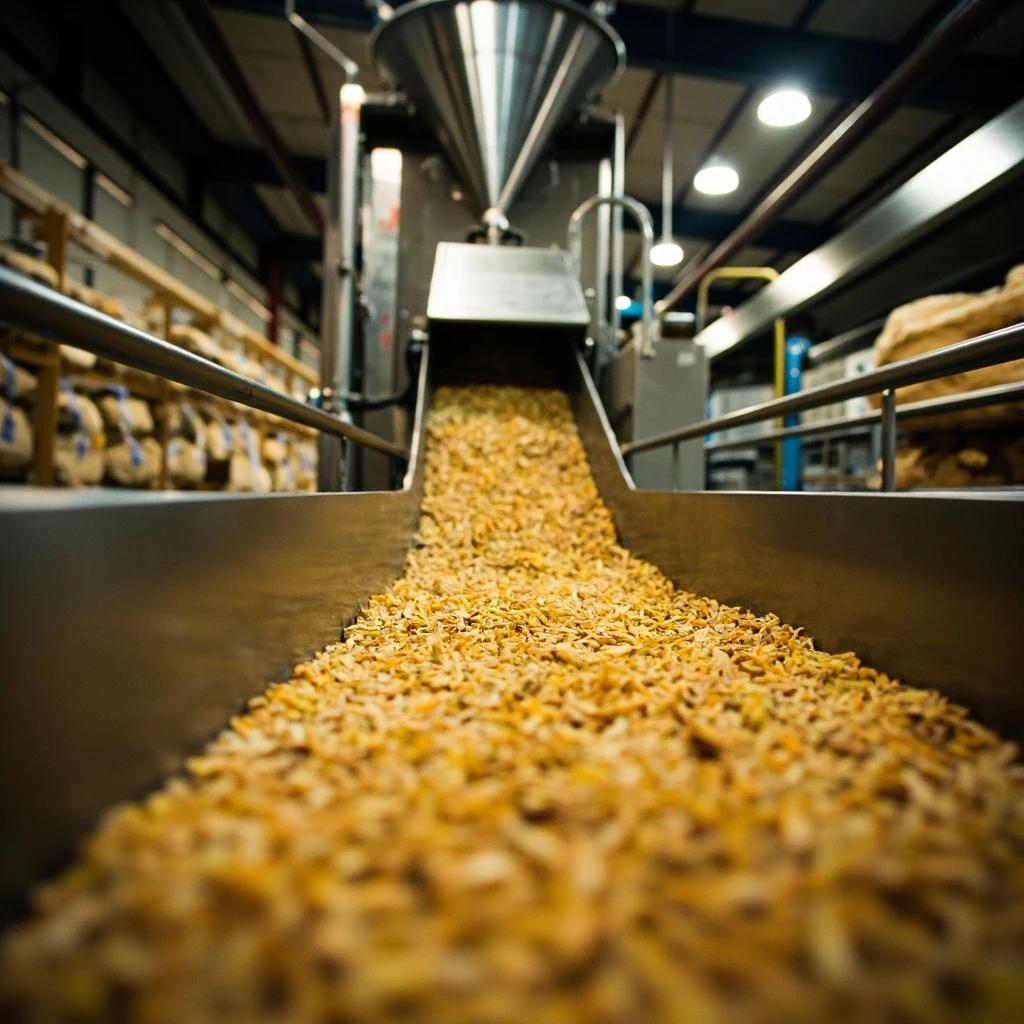
Owned capacity in this industry is a balance-sheet question before it is a marketing one: it means crushing lines, sugar mills, palm oil mills, biorefinery parks, port terminals and tank farms held outright, plus the hectares of plantation or contracted crop base that keep those assets fed. A 40 percent weight on that list decides most of this ranking before financial performance is read at all. The research behind the page states the qualification rule plainly: a company must have processing plants, deep-processing biorefinery parks and supply-chain infrastructure of its own or under its control, and those assets have to be the kind that can be pointed at, counted and named. Scale in the trading book does not substitute for them, which is why the four letters that appear in every commodity brokerage list do not all appear here.
Where The Asset Line Runs. The ten entries in this ranking can be read as a single inventory. Bunge works from more than 500 processing facilities and port terminals; ADM from 270 deep-processing plants plus more than 800 procurement and logistics points; Wilmar from more than 500 manufacturing plants; Louis Dreyfus from more than 100 large industrial plants; Raízen from 35 bioenergy parks; COFCO Sugar from more than 20 sugar refineries and beet plants beside more than 10 tomato processing plants; Südzucker from roughly 30 European beet factories, three starch plants and the CropEnergies biorefineries; Golden Agri-Resources from 46 palm oil mills and eight refineries or oleochemical parks; Tereos from 43 large industrial plants; and Cargill from more than 1,000 production sites, terminals and processing plants. Placed side by side, the ranking stops looking like a revenue table and starts looking like a fixed-asset register.
What The Line Costs To Build. Every name on that list is attached to a capital number. Bunge's soybean and softseed crush runs above 80 million tonnes a year, a throughput that reaches 120 million tonnes once Viterra's network is counted, and each plant inside it is a multi-hundred-million-dollar commitment. Louis Dreyfus put a 6,000-tonne-a-day soybean crush into the Fulin food industrial park at Nansha as part of a RMB 7.0 billion joint investment. Wilmar's palm refining capacity exceeds 25 million tonnes a year and its soybean crush exceeds 30 million tonnes. Cargill's newest single asset is a one-million-tonne canola plant at Regina. These are not facilities a merchant rents when a spread opens; they are facilities a company owns when the spread closes.
The Three Models The Weight Removes. A 40 percent facility weight screens as hard as it scores, and three business models leave the ranking at the qualification stage. The first is the pure merchandiser, which moves crops through silos and crushing lines it does not own and carries freight and price risk instead of plant risk. The second is the brand licensor, which puts its name on a product that leaves somebody else's factory and owns the trademark rather than the mill. The third is the toll or OEM contractor, whose processing is credited to whoever owns the equipment even when the contractor operates it. Contract farming survives the screen only where the company controls the base rather than merely buying from it, which is why Südzucker's 305,800 contracted beet hectares, COFCO Sugar's 1.5 million mu of crop base and Tereos's 11,000 grower-owners count as capacity while a spot purchase agreement does not.
Both pages carry the same sentence, five of the ten are Fortune Global 500 members, and the five are not the same companies, because the two rankings score different legal entities: the brands page reads COFCO Group while the manufacturers page reads COFCO Sugar, and only one of those two files the consolidated accounts that put a company on the list. Membership follows the reporting entity rather than the group chart. COFCO Group ranked 133rd on the 2025 list on revenue of US$88,260.0 million, and the Shanghai-listed subsidiary that actually runs the refineries, the beet and cane bases and the tomato plants inherits none of that standing. The place that keeps the manufacturers page at five is Raízen, at No. 333 on US$45,473.9 million.
Why COFCO Drops Out And Raízen Comes In. The swap is not a scoring judgement; it follows the entity being scored. COFCO Sugar books about RMB 32.5 billion of revenue, roughly US$4.6 billion, of which more than 85 percent is earned inside China, so even setting the parent aside it sits far below the US$32.2 billion entry line set for the 2025 list. Raízen, by contrast, is itself the filer: the Brazilian company listed on B3 as RAIZ4 reports about US$42.0 billion of group revenue including fuel distribution, and it enters the 2025 list in its own name rather than through Shell or Cosan, each of which holds roughly 44 percent of it.
Why The Other Four Members Match. ADM and Bunge appear on both pages because the same legal entity is scored on both: ADM at No. 143 on US$85,530.0 million, Bunge at No. 279 on US$53,108.0 million, Wilmar International at No. 200 on US$67,379.1 million, and Louis Dreyfus Company at No. 299 on US$50,589.0 million. Each of the four publishes audited accounts filed with a securities regulator or an exchange, which is the test the list applies. Where a company is unlisted and files nothing of that kind, the register goes quiet: Cargill is the country's largest privately held company and appears nowhere among the 500.
What The Rule Protects Against. The inheritance trap matters because it is easy to read a subsidiary's capacity off its parent's balance sheet, and every figure on this page is meant to be read at the level of the entity that owns the plant. COFCO Sugar's position rests on more than 20 refineries and beet plants, more than 10 tomato processing plants, more than five million tonnes of sugar traded a year and a 1.5 million mu crop base, not on the 150-plus plants and 140-plus countries of the group above it. The same discipline applies to the other non-members here: Südzucker, Golden Agri-Resources and Tereos are judged on revenue between roughly US$5 billion and US$11 billion, below the threshold, and on the assets they hold in their own names. Membership is not transferred by ownership either: a parent, a shareholder or a joint-venture partner cannot lend its place to a company that files its own accounts, so a subsidiary is read on the plants and the revenue line it reports for itself, which is the only basis on which two pages listing different companies can be reconciled.
Raízen is the only company on this page whose headline revenue and whose crop-processing revenue describe two different businesses, and the gap is not a presentation choice: about US$42.0 billion of group revenue includes the fuel distribution network, while the sugar and biofuel feedstock division that owns and runs the 35 bioenergy parks earns roughly US$9.5 billion. Read the second number beside the cane, and read the first beside the Fortune Global 500, where Raízen took 333rd place in 2025 on US$45,473.9 million. Only one of the two figures measures industrial crop feedstock capacity, and only one of them belongs in a comparison with Bunge's crush tonnage or with Südzucker's beet campaign.
What The 35 Parks Put Through. The physical base is unusually concentrated for a company of this size: 35 large bioenergy parks in Brazil, 100 million tonnes of cane crushed a year, more than six million tonnes of raw sugar, 3 billion litres of ethanol capacity and roughly 45,000 employees. Exports reach more than 40 countries, with more than 1.2 million tonnes a year going to China and about US$1.4 billion of that trade in raw sugar and industrial ethanol feedstock. Production sits almost entirely in Brazil, so the entire asset base answers to one climate and one currency.
Where The Second Generation Changes The Asset. First-generation ethanol ferments cane juice and molasses; the second generation Raízen has commercialised takes the bagasse and other residue left after crushing and converts the cellulose in it into additional fuel, which is why the company now qualifies as a feedstock source for the aviation fuels industry. The economics differ in kind from a bag of raw sugar: the residue has no competing food use, the carbon accounting is favourable, and the offtake is a fuel contract rather than a commodity sale. Südzucker's CropEnergies refineries, which turn beet into more than a million cubic metres of ethanol a year, and Tereos's industrial alcohol and bioethanol lines are the European version of the same move.
Why The Two Figures Should Not Be Merged. The group total is a distribution business bolted onto a processing business. Fuel distribution moves refined product through service stations, airports and wholesale contracts, and it earns a logistics and retail margin on volume the company does not grow; the sugar and biofuel feedstock division is the part that owns the cane, the mills and the fermentation capacity. Nothing in the distribution line adds crushing capacity, so when this page weighs facility scale against the 40 percent dimension, the US$9.5 billion is the figure to hold beside the 100 million tonnes of cane, and the US$42.0 billion is the figure that qualified the company for the Fortune list. The same discipline applies elsewhere on the page: Bunge's US$102.3 billion of 2025 revenue is earned through crushing, refining and trading that pass through its own facilities and terminals, while Raízen's headline includes a network that crushes nothing at all.
What The Bet Owes To Weather And Policy. A cane platform is a wager on rainfall as much as on technology, and the 2025 drought in centre-south Brazil cut the sugar content of the crop and raised the cost of every tonne crushed; the 2025 Fortune entry for Raízen also records a US$758.3 million loss for that year. Second-generation capacity is capital-heavy, so its return depends on aviation fuel mandates and on the premium for low-carbon feedstock holding through the next investment cycle, while the sugar and ethanol that pay today's bills still sell into prices set by the world market.
Wilmar and Golden Agri-Resources both earn their living from the oil palm, and their margins come from opposite ends of the chain: Wilmar takes the crop and refines it into a global network of products, while Golden Agri-Resources grows it and is paid for the yield of a hectare before anything is refined. The two models produce different revenue lines, different risk exposures and different answers to the 30 percent category-production weight, even though both are ranked here on the same crop.
The Refiner's End. Wilmar works from more than 500 manufacturing plants, refines more than 25 million tonnes of palm oil a year and crushes more than 30 million tonnes of soybeans, holds tens of thousands of hectares of concession plantations in Indonesia and Malaysia with a dedicated liquid barge fleet, and reaches Chinese buyers through more than 70 production bases and more than 100 deep-processing plants run by Yihai Kerry. It reported US$70.42 billion of revenue with net profit up 20.6 percent at US$1.411 billion, and it earns from the spread between crude palm oil and the refined, fractionated and oleochemical products it sells, a spread that widens when Indonesia pushes more of the crop into biodiesel.
The Planter's End. Golden Agri-Resources holds more than 500,000 hectares of plantations, runs more than 2.6 million tonnes of palm product through 46 palm oil mills and eight refineries or oleochemical parks, and manages more than 100,000 employees across a trade network reaching more than 70 countries. Its answer to a land-constrained business is agronomy: the EKA 1 and EKA 2 seeds it bred itself lift output to 10.8 to 13 tonnes per hectare, well above the industry norm, and the downstream is being monetised separately, with its 56.27 percent subsidiary Gemini Edibles refiling for an Indian listing in August 2026. Annualised revenue is about US$10.8 billion, with US$167.2 million of net profit in the first half of 2026.
Why Policy Sets The Price For Both. Neither model controls the demand signal. Indonesia's B35 and B50 blending mandates pull refined product into fuel and lift the value of every tonne of crude palm oil, which reaches the integrated refiner first and the planter second. The EU Deforestation Regulation imposes documentation and traceability costs on export volumes whichever end of the chain earns the margin, and the two companies carry that cost at different points: one across a 70-country trade network and a Chinese refining base at Ningbo and Taicang with more than a million tonnes of annual capacity, the other across a plantation estate that has to be mapped lot by lot.
Where The Two Models Converge. Both need the same physical spine: mills close to the fruit, refineries close to a port, and a downstream that turns a commodity oil into a specification product. Wilmar built that spine outward from trading and refining, while Golden Agri-Resources is building it downward from the estate, which is why the second of them is the more exposed to a biological clock. Old palms yield less, and the first half of 2026 brought a fresh fruit bunch decline of about three percent as replanting caught up with the estate, a cost a refiner with no plantation never pays.
The 2025 European beet harvest was heavy enough to break the sugar price, and two of the processors on this page closed their financial year in loss without stopping a single mill: Südzucker reported a net loss of EUR 362 million, with the sugar segment alone EUR 177 million negative, and Tereos lost EUR 590 million and was cut to B+ by S&P. The question a reader should ask is not why they lost money but why the plants kept running when the price fell below the cost of production, and the answer sits in the physical nature of the asset rather than in the accounts.
Why The Slicing Clock Does Not Stop. Beet is a perishable input rather than a stock: it has to be sliced within days of lifting, which ties every factory to a catchment radius it cannot widen and turns the plant into an asset whose value depends on the crop arriving. A mill that stops for a season loses the growers who planted for it, and those contracts are the raw material supply. Südzucker controls 305,800 hectares of contracted beet area and processes it through roughly 30 European factories; Tereos is owned by about 11,000 French beet growers and runs 43 plants across 15 producing countries. In both cases closing capacity is a decision about a grower relationship rather than a quarterly cost line.
What The Co-Products Carry. A beet factory does not sell sugar alone. The same beet yields molasses, pulp and residual streams that go into industrial alcohol, bioethanol, modified starch, animal feed and low-carbon fuel. Südzucker routes beet into the CropEnergies refineries that stand beside its food sugar lines and sold its Richelieu Foods sauces and dressings division to Winland Foods to concentrate on those streams and on starch and bioethanol; Tereos earns more than 85 percent of revenue from feedstock processing and biorefining, with industrial alcohol and starch and sweeteners alongside sugar. When the sugar price falls, the co-product lines are what keeps the gate open and the campaign funded.
What China Adds From The Same Crop. COFCO Sugar illustrates the other half of the squeeze. It trades more than five million tonnes of sugar a year, close to a third of the Chinese market, from more than 20 refineries and beet and cane plants, and about 90 percent of its revenue comes from industrial crop feedstock processing. Its margin is not set by the European beet crop but by the gap between international raw sugar prices and the domestic refining price, which import duties and quota policy move independently of the harvest. When the world price falls, imported raw sugar gets cheaper and the refiner's spread narrows, so the same commodity cycle presses on the downstream rather than on the field.
What A Loss Year Does Not Tell You. A single negative year understates the asset position at both European companies. Tereos cut net debt by 11 percent in the same period in which it lost EUR 590 million, which means the plants were still generating cash while the income statement went negative, and the downgrade to B+ prices leverage rather than capacity. Südzucker's sugar segment loss came with operating EBITDA above EUR 150 million in the first quarter of 2026/27. Manufacturers in this category are read on the durability of the fixed asset through the cycle, and one year of negative earnings is the price of staying in the campaign.