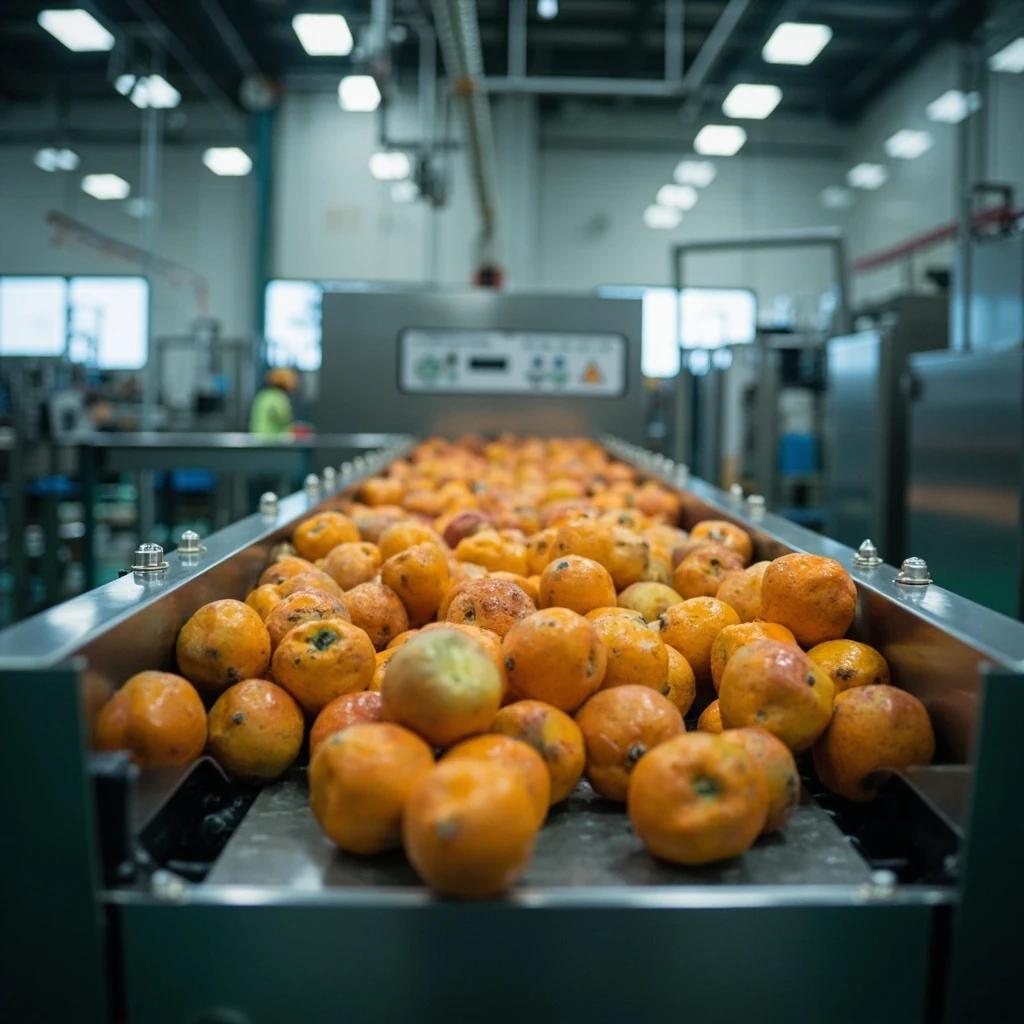
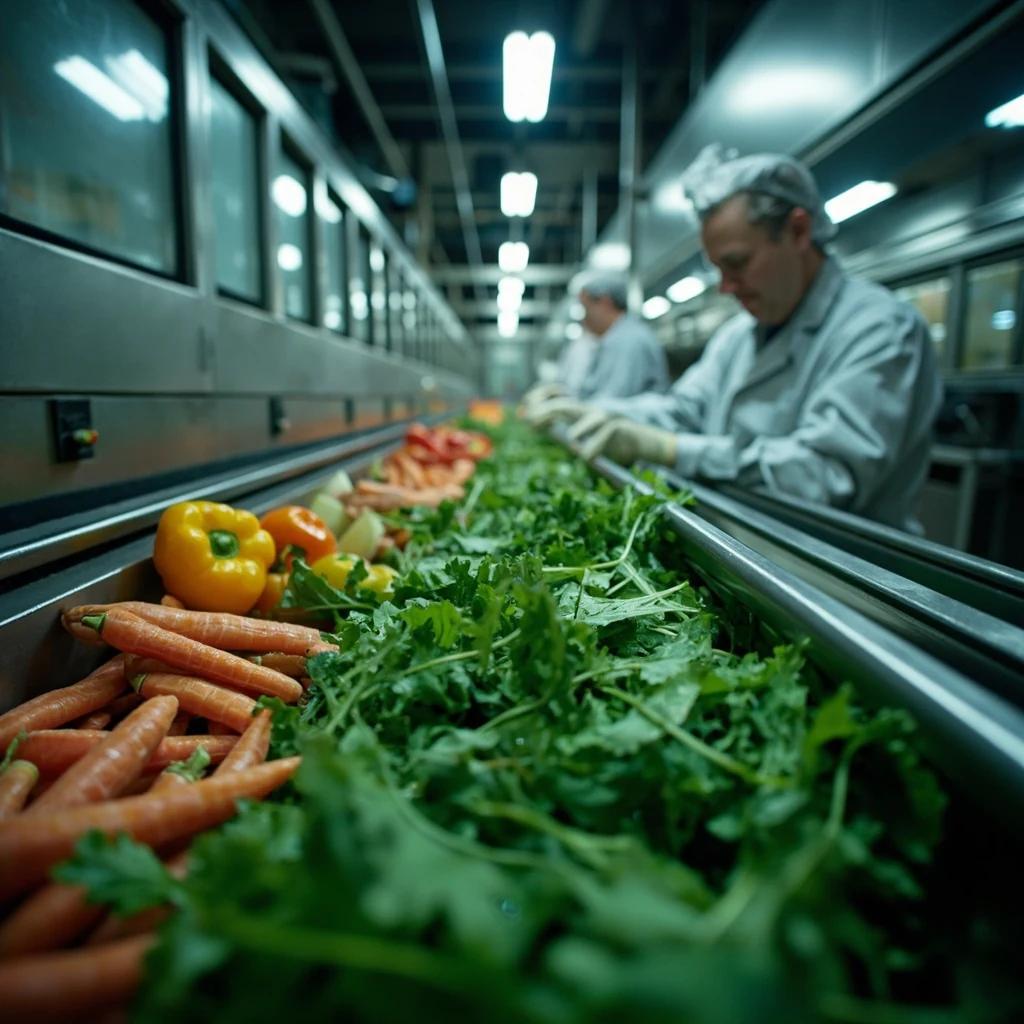
A place on this list depends on assets the company operates itself — growing land, protected structures and the cutting, canning or freezing plants behind the pack — so a business that licenses a vegetable brand and buys finished product from someone else cannot qualify, however well known its name.
The condition is easy to state and demanding to satisfy. Taylor Fresh Foods operates 22 large automated fresh-cut and cold-chain plants together with more than 100,000 acres of managed and owned farmland. Bonduelle SCA runs 54 vegetable processing plants fed by 128,000 hectares of owned and contracted growing land. Dole plc reports more than 250 refrigerated warehouses, ripening centres and packing facilities and farms 110,000 acres. Del Monte Corporation holds 40-plus fresh-cut and distribution centres along with a refrigerated shipping fleet of its own. Mastronardi Produce Ltd., trading as SUNSET, works more than 5,000 acres of high-tech greenhouse and brought a 168-acre year-round greenhouse into production in California in 2026. Each of those is an asset a buyer can visit, count or insure, and none of them can be conjured by a contract.
What the filter excludes is a business model rather than a list of companies. A brand owner who writes a specification and contracts production keeps the label and the marketing margin while carrying none of the risk that belongs to a field or a factory. It does not choose the harvest date, it cannot say how long the crop sat between cutting and chilling, and when a retail customer asks where a bag of salad came from it can only forward the question to its supplier. Contract packing of that kind is why the research behind this page sets the ownership requirement in the first place, and it is also why some familiar vegetable names are missing from the ten. The practical test is simple: ask for a site rather than a supplier list, and treat a company that can name its plants and hectares as a manufacturer and one that can name only its brands as a marketer.
The rule has a price, and it appears in the restructuring record. Owning plants is a fixed cost that must be paid in a weak year as well as a strong one. Dole agreed to dispose of its fresh-cut salad operation, the Fresh Vegetables Division, during 2025-2026 and sold Ecuadorian port assets for US$95 million in July 2026. Bonduelle completed the sale of its loss-making bagged salad retail operations in France and Germany in July 2025 under its Transformation to Win programme and turned back toward canned and frozen vegetables. Greenyard was taken private in September 2025, which ended its exchange reporting and its Brussels quotation under the ticker GREEN. Ownership therefore decides who qualifies for this page and also shapes what happens inside those companies, which is why the ranking reads the disposal record as closely as it reads the asset list.
Protected cultivation and open-field growing buy different things: a greenhouse buys output per square metre and pays for it in construction and energy, while an open field buys tonnes per dollar of capital and pays for it in exposure to weather, water and a short working season.
Protected cultivation is a capital decision before it is an agronomic one. Mastronardi Produce Ltd. holds more than 5,000 acres of high-tech greenhouse across Canada, the United States and Mexico and commissioned a 168-acre year-round greenhouse in California in 2026. Shouguang Vegetable Industry Group holds more than 600,000 mu of owned and directly controlled bases in Shandong, most of it solar greenhouse built to produce tomatoes, cucumbers and coloured peppers through a winter when northern fields yield almost nothing, and it brought a 500 mu smart glass greenhouse base into production in 2025-2026. The payback is measured in output and water, because protected vegetables can yield eight to twelve times what an open field produces on the same land and use more than 80% less water. The cost is front-loaded: glass, climate control and the energy to run them are paid before the first harvest, and the structure keeps producing only while that bill is met.
Open-field growing converts land, machinery and labour into volume. Grimmway Enterprises farms more than 50,000 acres of certified organic land across four US states and processes through seven plants. Beidahuang Group works more than 1.5 million mu of self-operated potato and vegetable land in Heilongjiang, where driverless equipment covers more than 80% of field operations in the vegetable zones and more than 20 plants carry potatoes into frozen, deep-processed and fresh-cut formats. Capital per acre is far lower and can be spread across crops and seasons, but the field answers to the calendar rather than to a thermostat, and the cold-region growing season in the far north-east of China is short enough that machinery and scale are the only ways to compress it.
Risk does not vanish under a roof, it changes address. A greenhouse trades weather risk for energy and disease-management risk and concentrates a great deal of capital on a single site, so a power price spike, an outage or a humidity failure is felt immediately. An open field keeps its capital mobile but accepts frost, heat and drought as normal operating conditions, which is why Anecoop's members, farming more than 50,000 hectares around the Mediterranean, added a photovoltaic hydroponic demonstration farm in Valencia alongside their fields. China's two entries on this page run both models inside one market, and comparing them is more useful than ranking the systems: the question for a buyer is whether the structure matches the crop, the calendar the retailer needs and the price that crop can carry.
Two of the ten are not shareholder-owned companies, and the difference shows up twice: in how much capital they can retain, and in how much of their business an outsider can verify.
A cooperative is a marketing and packing organisation owned by its suppliers. Anecoop S. Coop. is owned by more than 23,000 growers whose land extends over more than 50,000 hectares, and it owns almost no growing ground itself beyond five trial farms. What it holds are the 15 or more regional packing and processing centres standing between those fields and northern European retail, together with the export cold chain that carries the crop to 85 countries and regions. Revenue of EUR 1.00 billion to EUR 1.05 billion, about US$1.10 billion, is returned largely to members rather than retained, so the cooperative funds its facilities from growers rather than from a share price and cannot bank surplus for a large acquisition in a weak year. Vegetables are about half its business, because citrus and fruit are the other half, and more than 95% of the volume it handles comes from Mediterranean growing regions, which concentrates its exposure to Iberian drought.
A state farm group owns land on a scale no private grower matches, but the equity sits somewhere else. Beidahuang Group, founded in 1947, manages 43 million mu of arable land in Heilongjiang, of which more than 1.5 million mu is self-operated land for fresh potatoes, carrots, garlic and greenhouse vegetables, worked by more than 30,000 staff with driverless machinery covering over 80% of field operations in the vegetable zones. Group revenue passed RMB 170 billion in 2025, yet the fresh vegetable, potato and fresh-produce block measured on this page came to roughly US$1.25 billion, about RMB 8.2 billion of it earned domestically. The group parent is not listed at all: a crop subsidiary trades in Shanghai under code 600598, so an investor cannot buy the landholding directly, and the vegetable business is one segment inside a much larger farming operation.
Verification is the practical consequence for anyone reading the numbers. Three of the ten still trade on a public market, Dole and Del Monte in New York and Bonduelle in Paris, while the rest are private, family, cooperative or state owned, and Greenyard's September 2025 take-private removed it from that group. Figures for a cooperative come from cooperative publications and figures for a state group come from group statements, which are not the same document as an audited annual report. None of that makes the numbers wrong, but it changes what they can support: a disclosed figure can carry a comparison of asset scale, and only an audited statement can carry a claim about profit. The two forms also answer to different owners, so neither is likely to chase a listed peer's margin target at the expense of its growers or its land.
China's two entries are not variations on one model: Shouguang grows vegetables under cover on hundreds of thousands of mu of solar greenhouse, while Beidahuang grows them in the open on state farm land and mechanises the field instead of the climate.
Shouguang answers a climate problem with structures. The group holds more than 600,000 mu of owned and directly controlled bases in Shandong, most of it under solar greenhouse, and uses that base to supply tomatoes, cucumbers and coloured peppers through a winter when northern open fields produce little. Seed and seedlings are part of the same answer: capacity above 200 million vegetable plants a year, breeding programmes for its own varieties, and localisation of high-resistance pepper and cherry tomato lines past 70%, supported by a 500 mu smart glass greenhouse base commissioned in 2025-2026, which the group describes as the largest single installation of its kind in Asia. Its workforce of about 4,500 people excludes the cooperative farmers who work land the group controls but does not employ, so headcount on its own understates the size of the operation by a wide margin.
Beidahuang answers the same problem with scale and machinery. The group manages 43 million mu of arable land on the black-soil plains of Heilongjiang and devotes more than 1.5 million mu of it to self-operated fresh potatoes, carrots, garlic and greenhouse vegetables. Driverless equipment covers more than 80% of field operations in the cold-region vegetable zones, and more than 20 plants turn that crop into frozen, deep-processed and fresh-cut products, including a 200,000 tonne a year fresh potato and prepared vegetable line added in 2025-2026. Where Shouguang builds a roof to extend the season, Beidahuang compresses a short northern season with machines applied over very large fields, and the two therefore compete for different buyers most of the year.
The two routes have different weak points, and a buyer should price them separately. Shouguang's exposure is concentration rather than capability: RMB 10.8 billion of RMB 11.5 billion of 2025 revenue was earned inside China, the group holds no consumer brand of its own outside the country, and about 30% of its seed sources are still imported, so its input layer remains partly external even as domestic breeding improves. Beidahuang's exposure is that vegetables are a minority of what it does, roughly 20% of group revenue, and that its vegetable volume depends on a short northern season and on potato and root-crop prices that move with industrial demand as much as with retail demand. The useful comparison is not which model is better but which asset is scarce: in Shandong it is the greenhouse and the seed, and in Heilongjiang it is land, time and machinery.
Fresh vegetable share carries (30%) of the score, which is enough to reorder a list built on revenue, and it is the clearest reason the group with the largest turnover on this page ranks last of the ten.
Pure vegetable businesses sit at the top of the share column. Bonduelle SCA is 100% vegetables, running 54 processing plants and drawing on 128,000 hectares of owned and contracted land, with FY2025-2026 sales expected at EUR 2.186 billion, about US$2.40 billion. Mastronardi Produce Ltd., trading as SUNSET, is also 100% vegetables, with more than 5,000 acres of high-tech greenhouse and revenue of about US$1.80 billion. Taylor Fresh Foods follows at roughly 95%, with about US$7.0 billion of revenue and 22 automated fresh-cut plants. A company whose whole book is vegetables collects the full weight of this dimension, which is why two specialists in the group sit above larger and more diversified businesses.
Mixed companies pay a penalty for every crop that is not a vegetable. Greenyard is about 60% vegetables on revenue of EUR 5.4 billion and more than 35 processing plants. Anecoop is about 50%, because citrus and fruit make up the other half of what its 23,000 growers sell. Del Monte Corporation is about 40% vegetables against FY2025 net sales of US$4.322 billion, and Dole plc is about 35% against FY2025 revenue of US$9.17 billion. None of those businesses is worse for holding fruit, and in some seasons fruit carries the group, but on this page revenue arriving from bananas, pineapples or citrus is credited in the sales dimension rather than the vegetable dimension, so the dilution is real and it is deliberate. Greenyard shows how the two dimensions interact: at about 60% vegetables it still ranks second overall, because production strength and scale are weighted more heavily than share and its platforms handle more than 3 million tonnes of fresh and long-life produce a year.
The most dramatic case of that dilution is Beidahuang. Group revenue passed RMB 170 billion in 2025 across soybeans, grains, edible oils and food processing, while the fresh vegetables, potatoes and fresh produce this page measures came to roughly US$1.25 billion, about a fifth of the total, with domestic vegetable and fresh-produce revenue near RMB 8.2 billion. That is also why this page states its scope in the methodology rather than in a footnote: the entity measured is the vegetable business, and where a group reports a segment, the segment is what appears. The group nevertheless works more than 1.5 million mu of self-operated vegetable and potato land with more than 20 processing plants, a production base larger than most of the companies ranked above it. It finishes tenth with 81 points because the ranking measures the vegetable business rather than the landowner, and a page that substituted group turnover for segment turnover would be describing a different company altogether.