At VerityRank, our ranking methodology is built on data, not opinions. We aggregate and cross-validate information from multiple authoritative third-party sources to produce the most objective industry ranking possible. For the industrial paper converting sector, our analysis draws from SEC filings, annual reports, stock exchange disclosures, industry association databases, and global trade intelligence platforms.
1. Data Sources — Multi-Source Cross-Verification
Our primary data comes from four pillars:
• National Statistical Agencies: We incorporate official trade and production statistics from agencies including the U.S. Bureau of Economic Analysis, Eurostat, Japan's Ministry of Economy, Trade and Industry (METI), and China's National Bureau of Statistics, providing macroeconomic context for paper and packaging industry trends.
• University-Affiliated Research Institutions: We reference market studies from organizations such as Smithers (Functional & Barrier Coatings for Paper & Board to 2030), RISI/Fastmarkets (global pulp and paper indices), and the Technical Association of the Pulp and Paper Industry (TAPPI), which provide independent technical analysis of production capacity, technology trends, and material science innovations.
• AI-Driven Global Consumer Sentiment Analysis: Our proprietary natural language processing engine continuously monitors trade publications (Pulp & Paper International, Packaging Gateway, Paper360°), financial media (Bloomberg, Reuters, Financial Times), B2B procurement platforms, and social media to gauge real-time brand perception, customer satisfaction signals, and emerging reputational risks.
• Publicly Listed Company Financial Reports: We directly analyze 10-K annual reports, 20-F filings for foreign issuers, quarterly earnings releases, investor presentations, and sustainability/ESG reports from NYSE, LSE, HKEX, TYO, Nasdaq Helsinki, and SZSE-listed companies to extract verified revenue data, employee counts, production capacity figures, and capital expenditure plans.
2. The Four-Dimensional Scoring Model
Each company receives a composite score (0-100) based on four equally weighted pillars:
• Market Influence (25%): Evaluates global market share, total annual revenue (in USD equivalent), geographic distribution across countries served, annual production capacity (million tonnes), and upstream supply chain control through pulp mill ownership and recovered fiber procurement networks. For example, Smurfit Westrock's presence across 40 countries and International Paper's 62,602-employee workforce are key data points in this dimension.
• Brand Reputation (25%): Measures industry awards and certifications (FSC Chain of Custody, PEFC, ISO 14001, ISO 9001), B2B customer ratings on procurement platforms, media sentiment scores from trade and financial press, and perceived reliability among Fortune 500 packaging buyers. Companies like Stora Enso receive premium ESG valuation recognition in capital markets, which is factored into this score.
• Innovation & R&D (25%): Assesses patent portfolio breadth in functional coating technology (9.1), barrier material science (9.2), and bio-based material development (9.6); R&D spending as percentage of revenue; strategic technology partnerships with chemical companies; and successful commercialization of plastic-free packaging solutions such as Amcor's AmFiber platform and UPM's biochemical refinery at Leuna.
• Sustainability & Ethics (25%): Scores environmental commitments including Science Based Targets initiative (SBTi) alignment, carbon neutrality roadmaps, recycled fiber utilization rates, circular economy certifications, labor practices transparency, and progress toward fossil-fuel-free manufacturing through biomass energy adoption and biochemical material development.
3. Our Commitment to Independence
VerityRank operates with complete editorial independence. We do not accept payment, sponsorship, or preferential treatment from any company in exchange for ranking placement, score adjustment, or favorable editorial coverage. Our research team follows a strict conflict-of-interest policy, and all data sources are publicly verifiable. Companies cannot pay to be included in or excluded from our rankings. The industrial paper converting sector assessment reflects only the objective output of our multi-dimensional scoring model applied consistently across all evaluated entities. Any company wishing to verify or update their profile data may contact our research team with supporting documentation, but such updates are subject to independent validation before incorporation.
Disclaimer: The information presented in this ranking is compiled from publicly available data sources believed to be reliable at the time of publication. VerityRank makes no representations or warranties, express or implied, regarding the accuracy, completeness, or suitability of this information for any particular purpose. Rankings and scores are based on quantitative models and do not constitute investment advice, trading recommendations, or endorsements of any company's products, services, or securities. Users should conduct their own due diligence before making business or investment decisions.
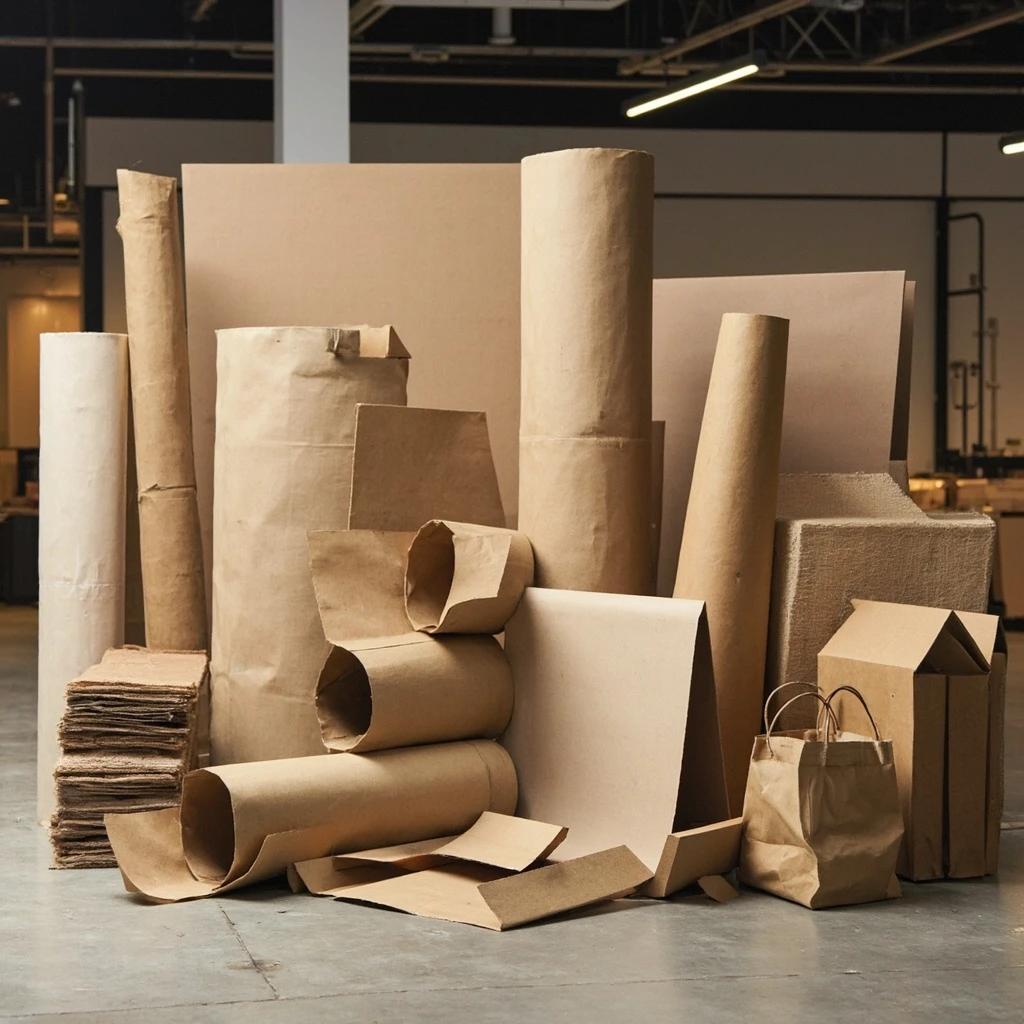
Industrial paper converting is the manufacturing process that transforms base paper, paperboard, and fiber-based substrates into value-added finished products through coating, laminating, forming, treating, and finishing operations. Unlike basic papermaking — which produces raw rolls and sheets of paper — paper converting adds functional properties, structural integrity, and application-specific performance characteristics that make paper suitable for packaging, industrial, medical, and consumer applications.
The industry encompasses several major product categories as defined by the VerityRank classification system:
• Functional Coating Materials (Category 9.1): This includes water-based barrier coatings, PHA (polyhydroxyalkanoate) biopolymer dispersions, silicone release coatings for labels, and heat-seal coatings that replace traditional PE (polyethylene) extrusion lamination. Leading manufacturers like Amcor and Mondi have invested billions in developing coating technologies that achieve water vapor transmission rates (WVTR) and oxygen barrier properties comparable to multi-layer plastic films while maintaining repulpability and compostability. The global functional barrier coatings market is projected to grow at approximately 4% CAGR through 2030 according to Smithers.
• Composite Lamination Substrates (Category 9.2): Multi-layer structures combining paper with aluminum foil, metallized films, or bio-based barrier layers for high-performance packaging applications including aseptic cartons, retort pouches, and pharmaceutical blister packs. These products require precise adhesive lamination, extrusion coating, or solvent-free lamination technologies. Companies like Smurfit Westrock and Oji Holdings operate dedicated composite lamination lines serving the liquid packaging and medical device sectors.
• Specialty Impregnated Papers (Category 9.3): Papers saturated with resins, latex, or functional chemicals for applications including decorative laminates (furniture surfaces), abrasive backings, filter media, gasket materials, and electrical insulation papers. Oji Holdings maintains a particularly strong position in this segment with 20 overseas facilities dedicated to functional materials.
• Industrial Formed Packaging Products (Category 9.4): Molded fiber packaging (egg cartons, electronic device cushioning, food service containers), corrugated containers (single-wall, double-wall, triple-wall), folding cartons, rigid setup boxes, and paper-based dunnage systems. Nine Dragons Paper produces over 25.2 million tonnes annually of containerboard that is converted into corrugated packaging, making it the world's largest producer in this segment.
• Bio-Based Derived Materials (Category 9.6): The industry's most advanced frontier — converting wood biomass and cellulose into biochemicals (bio-based ethylene glycol, lignin-based phenols), nanocellulose composites, and biodegradable polymer alternatives that can replace fossil-fuel-derived materials in textiles, automotive components, and construction chemicals. UPM's €1.275 billion Leuna biorefinery represents the most significant commercial-scale investment in this category.
The industry's supply chain is fundamentally integrated upstream: most leading converters also operate significant pulp and paper manufacturing operations, creating a "forest-to-finished-product" value chain. This vertical integration — exemplified by International Paper's 54 billion dollar capital investment program (2021-2025) and Nine Dragons Paper's self-sufficiency in pulp production — provides critical cost advantages and supply security in an industry characterized by volatile raw material markets. The boundary between "papermaking" and "converting" continues to blur as companies integrate downstream to capture higher margins from value-added finishing operations.
The industrial paper converting sector serves end markets that collectively represent over $350 billion in annual demand, spanning e-commerce packaging (Amazon, Alibaba), fast-moving consumer goods (Unilever, P&G, Nestlé), food and beverage (Coca-Cola, Danone, Kraft Heinz), pharmaceutical and medical devices, electronics, automotive, and construction materials. The accelerating shift from plastic to paper-based packaging across all these sectors — driven by consumer preferences, regulatory mandates, and brand sustainability commitments — positions industrial paper converting as one of the most structurally advantaged manufacturing sectors for the decade ahead.
The competitive differentiation among industrial paper converters is increasingly defined by mastery of advanced material science technologies rather than simple production scale. As the industry transitions from commodity paperboard manufacturing to high-performance functional materials, several key technology domains separate market leaders from followers. Understanding these factors is essential for procurement professionals, investors, and industry participants evaluating converter capabilities.
1. Barrier Coating Technology — The Plastic Replacement Frontier
The single most critical technology battleground in 2025 is functional barrier coating development. Traditional paper packaging requires polyethylene (PE) or aluminum foil lamination to achieve the moisture, oxygen, and grease resistance demanded by food, beverage, and pharmaceutical applications. The industry's holy grail is achieving equivalent barrier performance using renewable, repulpable, and compostable coating formulations. Leading approaches include:
• Water-based dispersion coatings: Amcor's AmFiber platform and Mondi's functional barrier papers use aqueous dispersions of specialty polymers (acrylics, PVdC alternatives, bio-based latexes) applied via rod, blade, or curtain coating to achieve WVTR below 10 g/m²/day.
• PHA biopolymer coatings: Polyhydroxyalkanoate dispersions derived from bacterial fermentation offer marine-biodegradable barrier properties. Stora Enso and UPM are actively developing PHA-coated paperboard for food service applications.
• Nanocellulose barrier films: Cellulose nanofibrils (CNF) and microfibrillated cellulose (MFC) form dense, transparent films with excellent oxygen barrier properties (below 1 cc/m²/day at 50% RH). Oji Holdings' CNF research program is among the most advanced globally, targeting electronics packaging and pharmaceutical blister applications.
2. Precision Lamination and Multi-Layer Structuring
Composite lamination technology determines a converter's ability to serve high-value markets such as aseptic liquid packaging, retortable pouches, and pharmaceutical cold-form blisters. Key capabilities include:
• Solvent-free lamination: Eliminating volatile organic compounds (VOCs) while maintaining bond strengths exceeding 2.5 N/15mm, critical for food safety compliance under EU Framework Regulation (EC) No 1935/2004.
• Extrusion coating and coextrusion: Applying molten polymer layers (LDPE, PP, bio-PE) at line speeds exceeding 400 m/min with gauge variation below ±3%, essential for high-speed form-fill-seal packaging lines.
• Metallization and transparent barrier deposition: Vacuum-deposited aluminum or silicon oxide (SiOx) layers achieving optical density above 2.5 for light-sensitive products while maintaining microwave compatibility.
3. Digital Printing and Smart Packaging Integration
The convergence of converting with digital technologies creates new value propositions:
• In-line digital inkjet printing: Enabling mass customization, variable data printing (QR codes, serialization), and just-in-time production without plate-making costs. Smurfit Westrock's digital corrugated printing capabilities serve e-commerce brands requiring personalized unboxing experiences.
• RFID and NFC tag embedding: Integrating wireless communication chips into paper substrates during the converting process for supply chain tracking, anti-counterfeiting, and consumer engagement applications.
• Thermochromic and photochromic indicators: Smart packaging features that change color to indicate temperature abuse, freshness status, or authenticity verification.
4. Quality Certifications and Regulatory Compliance
Leading converters maintain rigorous certification portfolios that serve as market entry barriers:
• Food contact material compliance: FDA 21 CFR 176.170/180 (US), EU No 1935/2004 and No 10/2011, China GB 9685, and Japan's MHLW Ordinance No. 370, verified through independent laboratory migration testing.
• Sustainability certifications: FSC (Forest Stewardship Council) Chain of Custody, PEFC (Programme for the Endorsement of Forest Certification), and compostability certifications (EN 13432, ASTM D6400) for biodegradable packaging products.
• Quality management systems: ISO 9001:2015, ISO 14001:2015 (environmental), ISO 45001:2018 (occupational health and safety), and BRCGS Packaging Materials certification for food-grade manufacturing facilities.
5. Raw Material Security and Pulp Integration
The ability to control fiber quality and cost through upstream integration is a decisive competitive advantage:
• Virgin fiber self-sufficiency: Companies owning or controlling timberlands and pulp mills (International Paper, Stora Enso, UPM) can specify fiber characteristics — fiber length, coarseness, brightness — for specific converting applications.
• Recovered fiber networks: Nine Dragons Paper's extensive recovered paper collection infrastructure across China and Southeast Asia provides cost-competitive feedstock for containerboard converting operations.
• Alternative fiber development: Research into agricultural residues (wheat straw, bagasse, bamboo) as alternatives to wood fiber for regions with limited forest resources, a particular focus for Sun Paper and Lee & Man Paper in their Southeast Asian expansion strategies.
Sourcing industrial paper converting products requires a systematic evaluation framework that balances technical performance specifications, total cost of ownership, supply chain resilience, and sustainability compliance. Whether you are a packaging procurement manager at a Fortune 500 consumer goods company, a supply chain director at an e-commerce platform, or an industrial buyer sourcing protective packaging, the following evaluation criteria will help you identify the right converter partners and negotiate optimal supply agreements.
1. Technical Specification Alignment — Performance First
Begin with rigorous technical qualification against your application requirements:
• Physical performance parameters: For corrugated packaging, verify Edge Crush Test (ECT) ratings (typically 23-71 lb/in for single-wall), Bursting Strength (Mullen) values (125-350 psi), and Box Compression Test (BCT) results appropriate to your stacking and transportation conditions. For flexible packaging, confirm Oxygen Transmission Rate (OTR, target below 1 cc/m²/day for sensitive products), Water Vapor Transmission Rate (WVTR, target below 5 g/m²/day), and seal strength (above 2.5 N/15mm).
• Print quality and brand consistency: Evaluate color accuracy (Delta E below 2.0 for brand colors), registration tolerance (±0.5mm), and surface smoothness (Bekk or Parker Print Surf method) to ensure your brand graphics meet consumer shelf-appeal standards.
• Converting compatibility: Verify that the supplied materials run efficiently on your filling, sealing, and labeling equipment at target line speeds. Request trial rolls and conduct machine trials before committing to volume contracts.
2. Total Cost of Ownership Analysis — Beyond Unit Price
The lowest unit price rarely delivers the lowest total system cost:
• Material yield and waste rates: Calculate actual usable square meters per tonne, factoring in converter trim waste, roll changeovers, and start-up losses. A 2% yield improvement can offset a 5% unit price premium.
• Freight and logistics optimization: Evaluate cube utilization (pallet load factors), just-in-time delivery capabilities, and geographic proximity of converting facilities to your filling locations. Mondi's "local-for-local" strategy of 100 facilities across 30 countries demonstrates the cost advantage of regional manufacturing proximity.
• Inventory carrying costs: Assess minimum order quantities (MOQs), lead times, and the converter's willingness to hold safety stock or operate vendor-managed inventory (VMI) programs that reduce your working capital requirements.
• Line efficiency impact: Documented machine downtime attributable to material defects, splice breaks, or dimensional variation. Premium materials that run at 98%+ efficiency may justify higher prices over materials causing even 1-2% additional downtime.
3. Supply Chain Resilience — Beyond Single-Source Dependency
The 2020-2025 period demonstrated the catastrophic cost of supply chain fragility:
• Multi-plant redundancy: Verify that your converter operates multiple qualified production lines across geographically diverse locations. A converter with redundant capacity across different regions (like Smurfit Westrock's network across 40 countries) provides natural business continuity protection.
• Raw material backward integration: Converters with captive pulp production (Nine Dragons Paper, International Paper) offer superior supply security compared to those dependent on merchant pulp markets, which experienced price swings exceeding 30% year-over-year in recent cycles.
• Qualification lead time understanding: For regulated applications (food contact, pharmaceutical, medical device), the 6-18 month qualification timeline for alternative suppliers means you must maintain active relationships with at least two qualified converters and conduct periodic re-qualification trials.
4. Sustainability Compliance — The New Market Access Requirement
Environmental credentials are no longer optional — they are prerequisites for market access:
• Chain of Custody certification: Require FSC or PEFC chain of custody certification with documented mass balance or physical segregation traceability. Verify certification validity through public databases (FSC Certificate Database, PEFC Certificate Search).
• Recycled content verification: For brands with post-consumer recycled (PCR) content commitments, require third-party verified recycled content percentages and understand the measurement methodology (mass balance vs. physical segregation).
• Carbon footprint transparency: Request ISO 14067-compliant product carbon footprint data covering cradle-to-gate (raw material extraction through converter manufacturing). Stora Enso and UPM provide detailed product-level environmental product declarations (EPDs) that enable Scope 3 emissions accounting.
• Plastic replacement verification: If your organization has plastic reduction targets, verify that claimed "plastic-free" or "plastic-replacement" materials are certified by recognized bodies (such as TÜV Austria's OK Compost or Biodegradable Products Institute certification) and comply with upcoming EU PPWR requirements for recyclable packaging.
5. Strategic Partnership Evaluation — Looking Beyond Transactional Relationships
The most successful sourcing relationships evolve into innovation partnerships:
• Co-development capability: Assess the converter's willingness and capability to collaborate on custom material development, joint patent filings, and exclusivity arrangements for proprietary packaging solutions.
• Innovation pipeline access: Leading converters (Amcor, UPM, Mondi) maintain active innovation pipelines. Evaluate whether your organization receives early access to new material developments, trial quantities, and technical support before commercial launch.
• Regulatory support: For food and pharmaceutical applications, assess the converter's in-house regulatory affairs expertise and ability to support your FDA, EU, or CFDA submission processes with migration testing data and compliance documentation.
• Commercial flexibility: Evaluate the converter's willingness to offer index-based pricing (linked to published pulp, energy, or resin indices), multi-year volume commitments with price escalation caps, and gain-sharing mechanisms for cost reduction initiatives.
The global industrial paper converting industry exhibits a distinct regional competitive structure, with different companies dominating specific geographic markets while competing globally for multinational customer accounts. Understanding regional dynamics is essential for buyers evaluating supply chain diversification strategies and for investors assessing company exposure to growth markets versus mature, slow-growth regions.
North America: The Consolidation Epicenter
North America represents the most concentrated industrial paper converting market globally, dominated by three integrated giants:
• Smurfit Westrock (HQ: Dublin, Ireland / Major US Operations): Following the landmark Smurfit Kappa-WestRock merger in 2024, the combined entity controls an estimated 20-25% of North American containerboard converting capacity. With pro-forma revenues approaching $31 billion and operations in 40 countries, it is the undisputed global leader in sustainable paper-based packaging. The company's 2025 restructuring — closing 600,000 tonnes of high-cost capacity while simultaneously achieving $400 million in merger synergies — exemplifies the "fewer, larger, more efficient" strategy reshaping North American supply.
• International Paper (HQ: Memphis, Tennessee): The 127-year-old giant completed its transformative acquisition of DS Smith in 2025, significantly expanding its European footprint while maintaining dominance in North American containerboard. With $23.63 billion in 2025 revenue, $1.7 billion in operating cash flow, and a planned corporate split into separate North American and EMEA entities by 2027, International Paper is actively reshaping its portfolio to maximize regional focus.
Europe: The Sustainability Innovation Laboratory
European paper converters lead the world in sustainable material science, driven by the EU's aggressive regulatory framework:
• Stora Enso (HQ: Helsinki, Finland): With €9.33 billion in 2025 revenue and 19,000 employees, Stora Enso has executed the industry's most dramatic pivot from traditional paper to renewable packaging materials. Packaging now represents over 55% of revenue, supported by massive investments including the Oulu consumer board machine conversion. The company is systematically divesting non-core timber and building solutions operations to become Europe's largest pure-play renewable materials company.
• UPM-Kymmene (HQ: Helsinki, Finland): UPM's €9.66 billion revenue masks its true strategic significance — the company has invested €1.275 billion in the Leuna biochemical refinery, positioning itself at the frontier of bio-based material science. The 2025 operational launch of Leuna, producing bio-monoethylene glycol and lignin-based products, represents the industry's most ambitious diversification beyond traditional paper and packaging.
• Mondi Group (HQ: Vienna, Austria): Mondi's €7.66 billion revenue and 100 manufacturing facilities across 30 countries position it as Europe's most geographically diversified converter. The 2025 acquisition of Schumacher Packaging's Western European corrugated operations and the opening of an advanced industrial bag facility in Pittsburgh, USA, demonstrate Mondi's balanced approach to both European consolidation and selective North American expansion.
Asia-Pacific: The Scale and Growth Engine
Asia-Pacific represents both the largest production region and the fastest-growing demand market for industrial paper converting:
• Nine Dragons Paper (HQ: Dongguan, China): As the world's largest containerboard producer by capacity (25.2 million tonnes annually), Nine Dragons exemplifies the Chinese model of massive scale, vertical integration, and aggressive capacity expansion. With RMB 63.24 billion in FY2025 revenue and 177.3% net profit growth year-over-year, the company has successfully executed its "forest-pulp-paper integration" strategy to achieve raw material self-sufficiency. Its 12 production bases spanning China, Vietnam, Malaysia, and the United States provide both scale economies and geographic diversification.
• Sun Paper (HQ: Jining, Shandong, China): With RMB 39.19 billion revenue and 18,196 employees, Sun Paper demonstrates that quality execution can deliver profit growth even in challenging market conditions — net profit grew 4.82% despite a slight revenue decline. The company's 14 million tonne annual pulp and paper capacity, supported by major production bases in Shandong, Guangxi, Hubei, and Laos, reflects the strategic logic of China's "dual circulation" economic model applied to industrial paper converting.
• Lee & Man Paper (HQ: Hong Kong / Dongguan, China): Lee & Man's HK$26.64 billion revenue and 43% net profit surge in 2025 validate its pioneering "Southeast Asia Shift" strategy. By establishing integrated pulp-and-paper hubs in Vietnam and Malaysia — circumventing China's waste paper import ban while accessing lower labor and energy costs — Lee & Man has created a replicable blueprint for Chinese manufacturers navigating trade barriers and domestic overcapacity.
• Oji Holdings (HQ: Tokyo, Japan): As Asia's most technologically sophisticated paper converter, Oji Holdings deploys 43 domestic and 65 overseas industrial materials facilities alongside 29 functional materials sites. The company's strategic pivot — articulated in its 2027 Medium-Term Management Plan — from cultural paper to sustainable packaging and forest biomass represents Japan's answer to the structural decline of graphic paper demand. Oji's CNF (cellulose nanofiber) research positions it at the frontier of bio-based advanced materials.
Global Market Dynamics and Outlook
Several macro trends are reshaping the competitive landscape across all regions:
• Regulatory divergence creating regional moats: The EU's PPWR, China's plastic restriction policies, and varying US state-level extended producer responsibility (EPR) laws are creating region-specific packaging specifications that favor locally-embedded converters over pure exporters. This "regulatory fragmentation" benefits companies with multi-regional manufacturing footprints.
• E-commerce structural demand growth: Global e-commerce packaging demand continues to grow at 8-10% annually, driven by emerging market adoption and the shift toward sustainable corrugated solutions replacing plastic mailers. This trend disproportionately benefits large-scale containerboard converters with integrated e-commerce packaging design capabilities.
• The plastic-to-paper substitution megatrend: Industry analysts estimate that 8-12% of plastic packaging volume is technically substitutable with paper-based alternatives at current technology levels — representing a $60-90 billion addressable market opportunity. The pace of substitution will be determined by functional barrier coating cost-performance curves, which are improving rapidly as production scales.
• Raw material cost volatility as a competitive filter: 2025 demonstrated that companies with captive fiber supply (International Paper, Nine Dragons, Stora Enso) maintained margin stability while merchant-pulp-dependent converters experienced significant earnings pressure. This dynamic is accelerating vertical integration and driving consolidation among mid-tier converters lacking upstream assets.