VerityRank

Brand Rankings in the Paper & Printing Industry

HomePaper & PrintingBrand Rankings in the Paper & Printing Industry

The global paper & printing market, valued at approximately $84.6 billion in 2025 with a projected CAGR of 4.6% toward $115.8 billion by 2032, is navigating a paradox: traditional print media continues its secular decline, yet packaging, labeling, and specialty printing applications are experiencing a structural boom. The e-commerce explosion—generating over 160 billion parcels annually—has made corrugated packaging and shipping labels one of the most reliable growth vectors in the entire materials sector. Simultaneously, sustainability-driven plastic substitution is accelerating demand for fiber-based packaging: the EU's Packaging and Packaging Waste Regulation, mandating 65% recycling rates by 2025, is pushing brands toward renewable and recyclable paper solutions. Digital printing technology, led by HP Indigo and Fujifilm, has transformed economics by enabling profitable print runs as small as a single unit, opening the door to mass customization in packaging, direct mail, and even book publishing. The paper industry's carbon footprint remains a focal point, with the sector consuming approximately 4% of global energy, but advances in biomass co-generation and closed-loop water systems in Nordic mills demonstrate that a net-zero pulp and paper industry is technically achievable by 2050.

The competitive structure of paper and printing spans integrated forestry-to-paper giants, specialized packaging converters, and digital printing technology leaders. International Paper, with 2024 revenues exceeding $18 billion and a 19-million-ton annual containerboard capacity, exemplifies the scale advantage that defines the corrugated packaging segment. WestRock and Smurfit Kappa, with their merger creating a $20+ billion entity, signal that consolidation is the industry's dominant strategic logic—driven by the pursuit of procurement leverage, mill optimization, and geographic coverage. In Asia, Nine Dragons Paper, founded by Zhang Yin from scrap paper trading, has built a recycling-to-packaging empire that mirrors China's manufacturing dominance, while Asia Pulp & Paper's integrated operations stretch from Sumatran plantations to global brand customers. The intellectual core of the industry, however, increasingly lies in specialty coatings and barrier technologies: companies like Stora Enso and UPM-Kymmene are developing lignin-based adhesives and microfibrillated cellulose that could replace petroleum-derived plastics in food packaging. The future belongs not to the biggest papermaker, but to the company that can engineer the most functional, sustainable, and economically compelling fiber-based material.

Our Ranking Methodology

VerityRank evaluates paper & printing brands across four equally weighted dimensions:

Market Influence (25%): Global revenue and production capacity, market share in key segments (packaging, graphic paper, specialty papers), distribution network coverage, and customer concentration metrics.

Brand Reputation (25%): Customer satisfaction and contract renewal rates, brand preference among packaging buyers and printers, industry awards (PPI, TAPPI), and sustainability ratings from CDP and EcoVadis.

Innovation & R&D (25%): Patent portfolio in fiber science, barrier coatings, and digital print technologies, R&D investment intensity, new product commercialization rate, and adoption of AI in quality control and process optimization.

Sustainability & Ethics (25%): Forest certification coverage (FSC/PEFC), renewable energy share in mill operations, water stewardship and effluent treatment standards, and circularity metrics (recycled fiber content, recovery rates).

Data Sources & References

FAO — Global Forest Products Statistics

Fastmarkets RISI — Pulp & Paper Industry Intelligence

Statista — Paper Industry Overview

CEPI — European Paper Industry Statistics

Smurfit Westrock — Industry Benchmark Data

Disclaimer: The data in this ranking is compiled from third-party authoritative sources, including FAO forestry statistics, industry intelligence from Fastmarkets RISI, publicly listed company financial reports, and independent sustainability rating agencies. The ranking results are derived from a multi-dimensional algorithmic model and are intended for reference and market decision support only. They do not constitute direct investment advice or an absolute brand endorsement.

Top 10 Rankings

2026.05 Edition
1
International Paper

International Paper Company

International Paper is one of the world's foremost fiber-based packaging and industrial paper converting manufacturers, founded in 1898 in Memphis, Tennessee, USA. With annual revenue of $23.6 billion (2025), the company operates 200+ mills and converting facilities globally, employing 39,000 people. Listed on NYSE: IP, International Paper commands unparalleled control over global fluff pulp markets with 2.3 million tons of annual capacity across 8 pulp mills, making it the backbone of the industrial fiber supply chain.

Strengths: Dominant market position in fluff pulp and virgin fiber with 2.3M tons annual capacity; successful acquisition of DS Smith expanding EMEA converting footprint; announced strategic split into North America and EMEA independent public companies unlocking shareholder value; 80/20 performance system optimizing customer delivery and supply chain efficiency; 125+ years of operational heritage creating deep institutional knowledge; strong cash flow generation supporting consistent dividend payments.

Weaknesses: Faced hostile takeover attempt from Brazil's Suzano causing market volatility and strategic distraction; DS Smith acquisition accounting triggered $19M in Q1 2026 special charges; mill closures and capacity optimization leading to accelerated depreciation costs; exposure to cyclical containerboard and pulp pricing impacting revenue predictability; complex corporate restructuring into two companies creating near-term operational uncertainty.

Brand

International Paper

Founded

1898

Workforce

39,000

Presence

North America, EMEA, Latin America

Facilities

200+ mills and converting facilities

Headquarters

United States

Market

NYSE: IP
Key Product Categories
Paper & Printing BrandsPaper Raw Materials & Substrates IndustryVirgin Wood Pulp IndustryPulp Sheets & Fluff Pulp IndustryPackaging Materials & Solutions IndustryPaper Substrates: Rolls/Sheets IndustryPaper & Printing FactoryPaper Raw Materials & Substrates IndustryVirgin Wood Pulp IndustryPulp Sheets & Fluff Pulp IndustryPaper & Printing BrandsPaper Raw Materials & Substrates IndustryVirgin Wood Pulp IndustryPulp Sheets & Fluff Pulp IndustryPackaging Materials & Solutions IndustryPaper Substrates: Rolls/Sheets IndustryPaper & Printing FactoryPaper Raw Materials & Substrates IndustryVirgin Wood Pulp IndustryPulp Sheets & Fluff Pulp Industry
2
Smurfit Westrock plc

Smurfit Westrock plc

Smurfit Westrock plc is the world's largest paper-based packaging company, formed through the landmark 2024 merger of Smurfit Kappa and WestRock. Headquartered in Dublin, Ireland, and dual-listed on the NYSE (SW) and LSE (SWR), the group operates across 40 countries with approximately 100,000 employees. In its first full fiscal year 2025, Smurfit Westrock posted record net sales of $31.18 billion with adjusted EBITDA of $4.94 billion, driven by its dominant position in corrugated packaging, containerboard, and recycled fiber substrates.

Strengths: Unmatched global scale as the world's #1 paper packaging company with $31.18B revenue and 100K employees across 40 countries. Synergistic integration delivering $400M+ in merger cost synergies ahead of schedule. Dual capital market access via NYSE and LSE providing deep liquidity. End-to-end vertical control from recycled fiber collection to finished corrugated packaging.

Weaknesses: Integration pain from ongoing plant closures and 3,000+ layoffs triggering union protests. North American concentration with 58.5% of revenue from a single region. Debt leverage risk from merger financing requiring aggressive deleveraging.

Brand

Smurfit WestRock

Founded

2024

Workforce

100,000+

Presence

36+ Countries

Facilities

150+ Paper Mill

Headquarters

Ireland

Market

NYSE: SW
Key Product Categories
Paper & Printing BrandsPaper Raw Materials & Substrates IndustryVirgin Wood Pulp IndustryPulp Sheets & Fluff Pulp IndustryPackaging Materials & Solutions IndustryPaper Substrates: Rolls/Sheets IndustryPaper & Printing FactoryPaper Raw Materials & Substrates IndustryVirgin Wood Pulp IndustryPulp Sheets & Fluff Pulp IndustryPaper & Printing BrandsPaper Raw Materials & Substrates IndustryVirgin Wood Pulp IndustryPulp Sheets & Fluff Pulp IndustryPackaging Materials & Solutions IndustryPaper Substrates: Rolls/Sheets IndustryPaper & Printing FactoryPaper Raw Materials & Substrates IndustryVirgin Wood Pulp IndustryPulp Sheets & Fluff Pulp Industry
3
UPM-Kymmene Oyj

UPM-Kymmene Oyj

UPM-Kymmene Oyj is a globally leading bio-based materials company headquartered in Helsinki, Finland, and listed on Nasdaq Helsinki (UPM). The group operates 48 production plants across 42 countries with 15,100 employees and 5 world-class pulp mills with 5.8 million tonnes annual commodity pulp capacity. In 2025, UPM achieved €9.66 billion in sales with €1.41 billion in operating cash flow. UPM leads the industry's transition from fossil-based to renewable materials through its Leuna biochemicals refinery in Germany — the world's first industrial-scale wood-based biochemicals facility.

Strengths: Pioneering bio-refining with the Leuna biochemicals plant achieving first commercial deliveries of 100% wood-based biochemicals. Uruguay mega-mill with 2.1M tonnes single-site capacity providing unmatched cost advantages. EcoVadis Platinum rating placing UPM in the global top 1% for sustainability. Strong cash generation with €1.41B operating cash flow demonstrating operational excellence.

Weaknesses: Traditional paper decline forcing mill closures in Germany and Finland. Capital-intensive biomass transition with long payback periods for biofuel projects. European energy cost exposure affecting manufacturing competitiveness.

Brand

UPM

Founded

1996

Workforce

15,890

Presence

46+ Countries

Facilities

11+ Paper Mill

Headquarters

Finland

Key Product Categories
Paper & Printing BrandsPaper Raw Materials & Substrates IndustryVirgin Wood Pulp IndustryPulp Sheets & Fluff Pulp IndustryCultural & Office Paper IndustryPrinting & Copy Paper IndustryPaper & Printing FactoryPaper Raw Materials & Substrates IndustryVirgin Wood Pulp IndustryPulp Sheets & Fluff Pulp IndustryPaper & Printing BrandsPaper Raw Materials & Substrates IndustryVirgin Wood Pulp IndustryPulp Sheets & Fluff Pulp IndustryCultural & Office Paper IndustryPrinting & Copy Paper IndustryPaper & Printing FactoryPaper Raw Materials & Substrates IndustryVirgin Wood Pulp IndustryPulp Sheets & Fluff Pulp Industry
4
Stora Enso Oyj

Stora Enso Oyj

Stora Enso Oyj is a globally leading renewable materials company headquartered in Helsinki, Finland, with roots tracing to the world's oldest limited company (1288). Dual-listed on Nasdaq Helsinki (STERV) and Nasdaq Stockholm (STE A), Stora Enso employs 19,000 people globally and generated €9.33 billion in sales in 2025. The company has fully exited the declining graphic paper market, converting its Oulu mill into a modern containerboard facility, and is strategically pivoting toward high-value renewable packaging substrates and engineered wood products.

Strengths: Complete portfolio transformation from legacy graphic paper to high-value packaging substrates. Oulu mill conversion marking a landmark shift to containerboard production. Balance sheet optimization with €900M from Swedish forestland divestiture improving leverage to 2.8x. Nordic forest resources providing sustainable, traceable raw material supply.

Weaknesses: Biomaterials margin pressure from global pulp price weakness. Oulu ramp-up costs dragging Q4 earnings. Limited emerging market presence compared to Asian competitors.

Brand

Stora Enso

Founded

1998

Workforce

19,000

Presence

30+ Countries

Facilities

35+ Production Base

Headquarters

Finland

Key Product Categories
Paper & Printing BrandsPaper Raw Materials & Substrates IndustryVirgin Wood Pulp IndustrySpecialty Pulp Substrates IndustryCultural & Office Paper IndustryPrinting & Copy Paper IndustryPaper & Printing FactoryPaper Raw Materials & Substrates IndustryVirgin Wood Pulp IndustrySpecialty Pulp Substrates IndustryPaper & Printing BrandsPaper Raw Materials & Substrates IndustryVirgin Wood Pulp IndustrySpecialty Pulp Substrates IndustryCultural & Office Paper IndustryPrinting & Copy Paper IndustryPaper & Printing FactoryPaper Raw Materials & Substrates IndustryVirgin Wood Pulp IndustrySpecialty Pulp Substrates Industry
5
Oji Holdings Corporation

Oji Holdings Corporation

Oji Holdings Corporation is Japan's largest and most historically significant integrated paper manufacturing group, founded in 1873 and headquartered in Tokyo. Listed on the Tokyo Stock Exchange (TYO: 3861), Oji operates a globally diversified forestry and manufacturing network spanning Japan, Southeast Asia, Oceania, and South America with approximately 12 million tonnes of annual pulp capacity. The group is accelerating its transformation under the 2027 Medium-Term Management Plan, prioritizing ROE over pure revenue growth with a ¥120B share buyback program, while pivoting toward high-value specialty pulp substrates, bioethanol, and wood-derived biochemicals.

Strengths: 150-year industrial heritage with unmatched technical expertise in specialty pulp substrates. Global pulp capacity of ~12M tonnes annually ranking among the world's top 5. Bio-chemical diversification into dissolving pulp, wood-derived sugars, and bioethanol representing future growth engines. Shareholder-friendly capital policy with ¥120B buyback and 8% ROE target.

Weaknesses: Structural domestic demand decline from Japan's aging population and digitalization. Margin pressure from narrowing raw material-fuel price spreads. Geographic concentration with heavy reliance on the Japanese domestic market.

Brand

Oji

Founded

1873

Workforce

39,136

Presence

26+ Countries

Facilities

80+ Paper Mill

Headquarters

Japan

Market

TYO: 3861
Key Product Categories
Paper & Printing BrandsPaper Raw Materials & Substrates IndustryVirgin Wood Pulp IndustryPulp Sheets & Fluff Pulp IndustryCultural & Office Paper IndustryPrinting & Copy Paper IndustryPaper & Printing FactoryPaper Raw Materials & Substrates IndustryVirgin Wood Pulp IndustryPulp Sheets & Fluff Pulp IndustryPaper & Printing BrandsPaper Raw Materials & Substrates IndustryVirgin Wood Pulp IndustryPulp Sheets & Fluff Pulp IndustryCultural & Office Paper IndustryPrinting & Copy Paper IndustryPaper & Printing FactoryPaper Raw Materials & Substrates IndustryVirgin Wood Pulp IndustryPulp Sheets & Fluff Pulp Industry
6
Suzano S.A.

Suzano S.A.

Suzano S.A. is the world's largest eucalyptus pulp producer and a global leader in renewable bio-based materials, headquartered in Salvador, Bahia, Brazil, and dual-listed on B3 (SUZB3) and NYSE (SUZ). In 2025, Suzano achieved record pulp sales of 12.7 million tonnes (up 15% YoY) with total volume of 14.2 million tonnes. The company generated R$123 billion in net revenue with R$13.4 billion in net profit, supported by its unmatched low-cost production model based on 1.3 million hectares of sustainably managed eucalyptus plantations.

Strengths: Unbeatable cost position from tropical eucalyptus plantations yielding the lowest pulp production costs globally. Record operational execution delivering 12.7M tonnes of pulp sales. R$21.7B EBITDA with best-in-class 52.3% gross margins. Dual-listed liquidity on B3 and NYSE providing broad investor access.

Weaknesses: Land rights controversies including MST occupations and Quilombola community protests over pesticide spraying. Commodity pulp price exposure with limited downstream diversification into higher-value products.

Brand

Suzano

Founded

1924

Workforce

35,000+

Presence

100+ Countries

Facilities

11+ Pulp Mill

Headquarters

Brazil

Key Product Categories
Paper & Printing BrandsPaper Raw Materials & Substrates IndustryVirgin Wood Pulp IndustryPulp Sheets & Fluff Pulp IndustryCultural & Office Paper IndustryPrinting & Copy Paper IndustryPaper & Printing FactoryPaper Raw Materials & Substrates IndustryVirgin Wood Pulp IndustryPulp Sheets & Fluff Pulp IndustryPaper & Printing BrandsPaper Raw Materials & Substrates IndustryVirgin Wood Pulp IndustryPulp Sheets & Fluff Pulp IndustryCultural & Office Paper IndustryPrinting & Copy Paper IndustryPaper & Printing FactoryPaper Raw Materials & Substrates IndustryVirgin Wood Pulp IndustryPulp Sheets & Fluff Pulp Industry
7
Asia Pulp & Paper Group

Asia Pulp & Paper Group

Asia Pulp & Paper Group / APP is Asia's largest and one of the world's foremost integrated pulp-and-paper manufacturers, founded in 1972 and headquartered in Jakarta, Indonesia. With estimated annual revenue of ~$20 billion (2025), APP operates 100+ pulp mills, paper mills, and industrial converting facilities globally, employing over 100,000 people. The company manages millions of hectares of plantation forests, achieving complete vertical integration from tree nursery to finished functional coated materials, with total design capacity exceeding 25 million tons per year.

Strengths: Unrivaled vertical integration from self-owned plantation forests to finished industrial paper products ensuring raw material security; 25M+ tons annual capacity across 100+ facilities providing unmatched economies of scale; complete acquisition and integration of Vinda International expanding downstream converting capabilities; 150+ country global sales network spanning six continents; RGE Group parent backing providing access to substantial capital for expansion; dominant market position across China and Southeast Asia with deep manufacturing bases in Ningbo, Hainan, and Guangxi.

Weaknesses: Sustained pressure from international environmental organizations regarding forest management practices and 12 million tons CO2-equivalent Scope 1+2 emissions; heavy reliance on tropical plantation forestry creating biodiversity and land-use controversy risks; opaque financial reporting as a privately held group limiting investor confidence; exposure to pulp price volatility despite vertical integration advantages; significant capital expenditure requirements for net-zero 2050 commitments straining near-term profitability.

Brand

APP

Founded

1972

Workforce

100,000+

Presence

150+ countries

Facilities

100+ mills and converting facilities

Headquarters

Indonesia

Market

Private

Key Product Categories
Paper & Printing BrandsPaper Raw Materials & Substrates IndustryVirgin Wood Pulp IndustryPulp Sheets & Fluff Pulp IndustryCultural & Office Paper IndustryPrinting & Copy Paper IndustryPaper & Printing FactoryPaper Raw Materials & Substrates IndustryVirgin Wood Pulp IndustryPulp Sheets & Fluff Pulp IndustryPaper & Printing BrandsPaper Raw Materials & Substrates IndustryVirgin Wood Pulp IndustryPulp Sheets & Fluff Pulp IndustryCultural & Office Paper IndustryPrinting & Copy Paper IndustryPaper & Printing FactoryPaper Raw Materials & Substrates IndustryVirgin Wood Pulp IndustryPulp Sheets & Fluff Pulp Industry
8
Nine Dragons Paper (Holdings) Limited

Nine Dragons Paper (Holdings) Limited

Nine Dragons Paper (Holdings) Limited is Asia's largest containerboard producer and one of the world's top pulp and paper manufacturers, headquartered in Dongguan, Guangdong, China, and listed on the Hong Kong Stock Exchange (HKEX: 2689). In FY2024/25, Nine Dragons posted record total revenue of RMB 63.24 billion (up 6.3% YoY) with product sales volume hitting an all-time high of 21.5 million tonnes. The group's global paper design capacity exceeds 25 million tonnes, with fiber raw material capacity at 10.2 million tonnes including 7.4 million tonnes of virgin wood pulp capacity.

Strengths: Unmatched Asian scale with 25M+ tonnes paper capacity, the world's largest containerboard production base. Perfect raw material hedge achieving complete self-sufficiency in virgin wood pulp (7.4M tonnes). Explosive profit growth with net profit surging 135.4% as raw material costs collapsed. Strategic geographic positioning with operations in China, Malaysia, Vietnam, and the USA.

Weaknesses: High leverage with gearing ratio at 66.0% from aggressive capacity expansion. Trade war exposure with significant US recycled fiber dependencies vulnerable to tariff disruptions. Domestic China concentration exposing the company to consumption downgrades and real estate sector weakness.

Brand

Nine Dragons Paper

Founded

1995

Workforce

18,000+

Presence

50+ Countries

Facilities

10+ Paper Mill

Headquarters

China

Key Product Categories
Paper & Printing BrandsPaper Raw Materials & Substrates IndustryRecycled Fiber Pulp IndustryWaste Paper Recycling IndustryPackaging Materials & Solutions IndustryPaper Substrates: Rolls/Sheets IndustryPaper & Printing FactoryPaper Raw Materials & Substrates IndustryRecycled Fiber Pulp IndustryWaste Paper Recycling IndustryPaper & Printing BrandsPaper Raw Materials & Substrates IndustryRecycled Fiber Pulp IndustryWaste Paper Recycling IndustryPackaging Materials & Solutions IndustryPaper Substrates: Rolls/Sheets IndustryPaper & Printing FactoryPaper Raw Materials & Substrates IndustryRecycled Fiber Pulp IndustryWaste Paper Recycling Industry
9
Graphic Packaging International

Graphic Packaging International

Graphic Packaging International, LLC is a globally leading paper-based packaging solutions provider headquartered in Atlanta, Georgia, USA, and listed on the NYSE (GPK). The company operates a fully integrated manufacturing network converting paperboard into folding cartons, cups, foodservice packaging, and multipack solutions. With approximately 25,000 employees and 2025 revenue of $9.5 billion, Graphic Packaging is a leader in coated recycled board and coated unbleached kraft markets, serving the world's largest food and beverage brands with sustainable fiber-based packaging alternatives to plastic.

Brand

Graphic Packaging

Founded

1978

Workforce

25K+

Presence

10+ Countries

Facilities

60+ Production Base

Headquarters

United States

Market

NYSE:GPK

Key Product Categories
Paper & Printing BrandsPackaging Materials & Solutions IndustryPaper Substrates: Rolls/Sheets IndustryCustom Packaging Containers IndustryFood-Grade Solutions IndustryPrinting & Finishing Services IndustryPaper Raw Materials & Substrates IndustryPackaging Materials & Solutions BrandsPaper & Printing BrandsPackaging Materials & Solutions IndustryPaper Substrates: Rolls/Sheets IndustryCustom Packaging Containers IndustryFood-Grade Solutions IndustryPrinting & Finishing Services IndustryPaper Raw Materials & Substrates IndustryPackaging Materials & Solutions Brands
10
Lee & Man Paper Manufacturing Limited

Lee & Man Paper Manufacturing Limited

Lee & Man Paper Manufacturing Limited is a leading packaging paper manufacturer in China, headquartered in Hong Kong and founded in 1994.

Strengths: Vertically integrated operations from waste paper recycling to finished paperboard production across 5 manufacturing bases. Strong cost efficiency through self-owned power generation and port logistics. Extensive distribution network serving 30+ countries across Asia, Middle East, and Africa.

Weaknesses: Heavy concentration in the China market exposes the company to domestic economic cycles and environmental regulation risks. Limited product diversification beyond containerboard and packaging paper grades.

Brand

Lee & Man Paper

Founded

1994

Workforce

15,000+

Presence

30+ Countries

Facilities

7+ Mills in China + Vietnam + Malaysia, 9.76M tonne total capacity

Headquarters

China

Market

SEHK : 2314

Key Product Categories
Paper & Printing BrandsPaper Raw Materials & Substrates IndustryRecycled Fiber Pulp IndustryWaste Paper Recycling IndustryPackaging Materials & Solutions IndustryPaper Substrates: Rolls/Sheets IndustryPaper & Printing FactoryPaper Raw Materials & Substrates IndustryRecycled Fiber Pulp IndustryWaste Paper Recycling IndustryPaper & Printing BrandsPaper Raw Materials & Substrates IndustryRecycled Fiber Pulp IndustryWaste Paper Recycling IndustryPackaging Materials & Solutions IndustryPaper Substrates: Rolls/Sheets IndustryPaper & Printing FactoryPaper Raw Materials & Substrates IndustryRecycled Fiber Pulp IndustryWaste Paper Recycling Industry

Frequently Asked Questions

How Do We Generate Our Rankings?
At Verity Rank, our ranking methodology is built on data, not opinions. We aggregate and cross-validate information from multiple authoritative third-party sources to produce the most objective industry ranking possible.

1. Data Sources — Multi-Source Cross-Verification
Our primary data comes from four pillars:
National Statistical Agencies: We collect macro-level industry data from government statistical bureaus across major economies, including the U.S. Bureau of Economic Analysis, Eurostat, China''s National Bureau of Statistics, and Japan''s Ministry of Economy, Trade and Industry. These provide verified data on production volumes, trade flows, and industry revenues.
University-Affiliated Research Institutions: We incorporate peer-reviewed studies and industry reports from leading academic institutions such as MIT''s Supply Chain Management Program, ETH Zurich, Tsinghua University''s School of Economics and Management, and the London School of Economics. These give us deep insights into technology trends, material innovations, and market dynamics.
AI-Driven Global Consumer Sentiment Analysis: We deploy natural language processing algorithms to analyze millions of consumer reviews, social media posts, forum discussions, and professional buyer feedback across platforms in over 40 languages. This captures real-time market perception that traditional surveys miss.
Publicly Listed Company Financial Reports: For publicly traded companies, we analyze SEC filings, annual reports, earnings call transcripts, and ESG disclosures. This gives us verified revenue data, R&D spending, profit margins, and sustainability commitments.

2. The Four-Dimensional Scoring Model
Each company is evaluated across four equally weighted dimensions:
Market Influence (25%): Global market share, revenue scale, distribution network breadth, number of countries served, and year-over-year growth rate.
Brand Reputation (25%): Consumer satisfaction scores, professional buyer ratings, industry awards and certifications, media sentiment analysis, and brand recognition surveys.
Innovation & R&D (25%): Number of active patents, R&D investment as percentage of revenue, new product launch frequency, technology partnerships, and contributions to industry standards.
Sustainability & Ethics (25%): Environmental certifications (ISO 14001, LEED, etc.), carbon footprint reduction targets, labor practices and fair trade compliance, supply chain transparency, and corporate social responsibility initiatives.

3. Our Commitment to Independence
We do not accept payment for rankings. No company can pay to improve its position or to be included in our rankings. Our research team operates independently from our commercial operations. Rankings are updated quarterly to reflect the latest available data.

Disclaimer: The data in this ranking is compiled from third-party authoritative sources, including national statistical agencies, university-affiliated research institutions, AI-driven global consumer sentiment analysis, and publicly listed company financial reports. The ranking results are based on a multi-dimensional algorithm model and are intended for reference and market decision support only. They do not constitute direct investment advice or brand endorsement.
What is the Paper & Printing Industry and What Are Its Main Product Categories?
The paper and printing industry encompasses the production of paper, paperboard, and converted paper products, along with commercial and packaging printing services. Despite digital disruption in some segments, the global paper and pulp market remains valued at over $350 billion, with packaging emerging as a powerful growth driver.

Major Segments
Pulp Production: The foundation of the industry — mechanical pulp (groundwood, TMP — thermomechanical pulp), chemical pulp (kraft process — dominant, accounting for ~80% of global pulp; sulfite process — smaller share for specialty papers), and recycled pulp (de-inked and reprocessed from recovered paper). Dissolving pulp is a specialty category used to produce viscose, lyocell, and other textile fibers.
Graphic Papers: Newsprint, printing and writing papers (uncoated and coated), and specialty graphic papers. This segment has declined structurally in developed markets due to digital substitution but retains strong demand in emerging markets and for premium applications (art papers, luxury packaging papers).
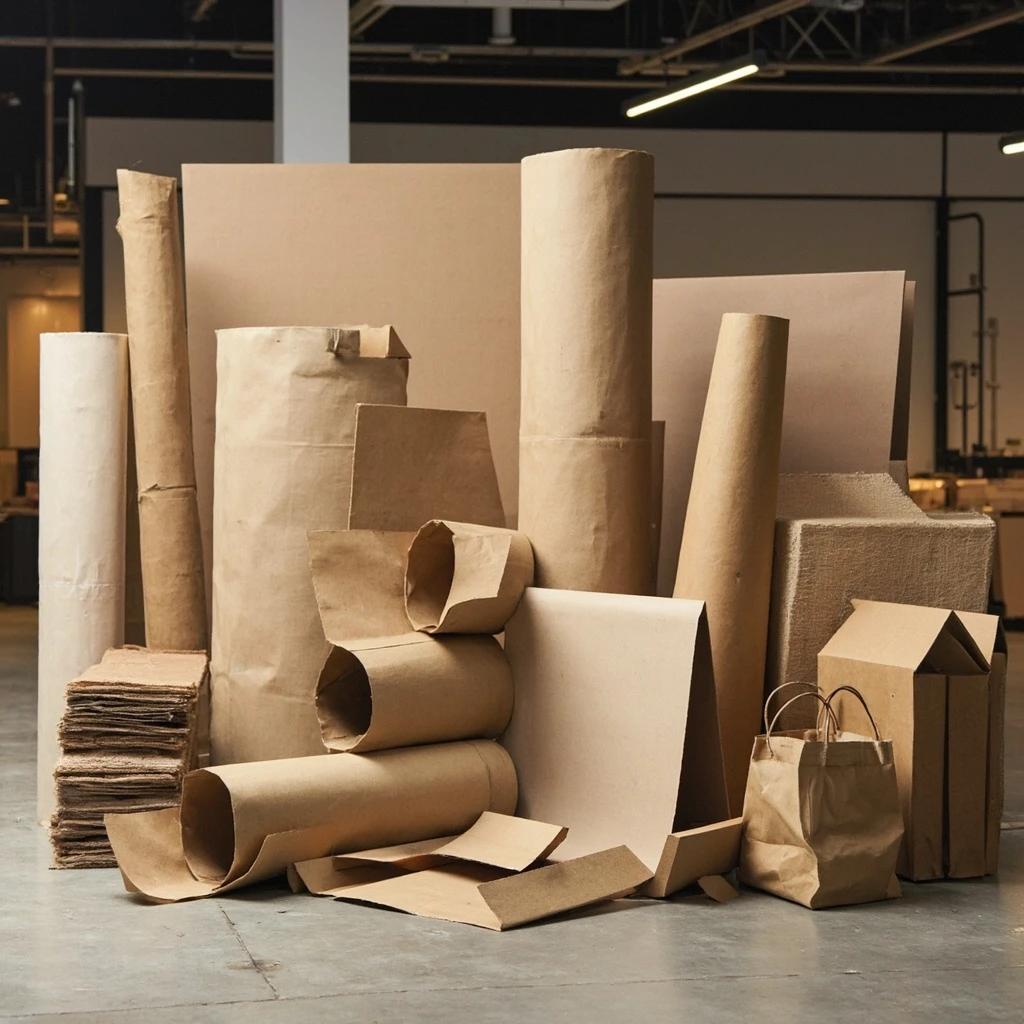
Packaging Paper & Board: The industry''s growth engine — containerboard (linerboard and corrugating medium for corrugated boxes — driven by e-commerce), cartonboard/folding boxboard (for consumer goods packaging — cereal boxes, pharmaceutical cartons, cosmetics), liquid packaging board (milk and juice cartons — requires aseptic properties), and kraft paper (industrial sacks, wrapping, envelopes).
Tissue & Hygiene: Toilet paper, facial tissue, paper towels, napkins, and hygiene products (diapers, feminine care, adult incontinence — though these increasingly incorporate non-woven and superabsorbent materials). Tissue is the most recession-resistant paper grade — demand is driven by population and hygiene standards rather than economic cycles.
Specialty Papers: Thermal paper (receipts, labels), release liners (for stickers and tapes), abrasive backings, filter papers, security papers (banknotes, passports), decorative laminates, and electrical insulation papers.
Printing Services: Commercial printing (brochures, catalogs, direct mail), packaging printing (flexography, gravure, offset lithography, digital — for folding cartons, labels, flexible packaging), publication printing (books, magazines), and wide-format/signage printing.

Industry Dynamics
The industry is undergoing a fundamental transformation. Graphic paper decline is offset by packaging growth (driven by e-commerce, plastic-to-paper substitution, and demand for sustainable packaging). Digital printing (inkjet, electrophotography) is capturing share from traditional analog processes (offset, flexo, gravure) due to advantages in short runs, personalization, and speed-to-market. Sustainability is the defining theme — the industry''s raw material is renewable (wood fiber from managed forests), paper products are highly recyclable (68% recovery rate in the US, over 80% in Europe), and the sector is investing heavily in carbon reduction, water stewardship, and circular economy infrastructure.
What Are the Key Technologies, Quality Standards, and Sustainability Factors in the Paper & Printing Industry?
The paper and printing industry combines centuries-old craftsmanship with cutting-edge process engineering, digital technology, and an increasingly urgent sustainability imperative.

1. Pulping & Papermaking Technologies
Kraft pulping: The dominant chemical pulping process, producing the strongest fibers. Modern kraft mills achieve 98%+ chemical recovery rates (through recovery boilers and recausticizing), generating much of their own energy from black liquor combustion. Extended delignification and oxygen delignification reduce bleaching chemical demand and effluent loading.
Elemental Chlorine-Free (ECF) and Totally Chlorine-Free (TCF) bleaching: ECF uses chlorine dioxide (no elemental chlorine) and is the global standard. TCF uses oxygen, ozone, and peroxide — primarily for markets demanding absolute chlorine-free certification.
Paper machine technology: Modern paper machines can be over 200 meters long, running at speeds exceeding 2,000 meters per minute, producing paper webs up to 11 meters wide. Key sections: forming (where fiber slurry is deposited on a moving wire mesh), pressing (mechanical water removal), drying (steam-heated cylinders), and calendering (smoothing and glossing).
Recycling technology: Modern de-inking systems use flotation, washing, and enzymatic treatments to remove inks, adhesives, and contaminants from recovered paper. The average fiber can be recycled 5-7 times before becoming too short for papermaking.

2. Printing Technologies
Offset lithography: Still the dominant commercial printing process for high-volume, high-quality work. Uses printing plates and the principle that oil and water don''t mix.
Flexography: Dominant for packaging — uses flexible photopolymer plates and fast-drying inks. Ideal for corrugated, flexible packaging, and labels.
Gravure: Highest-quality process for long runs — engraved cylinders transfer ink directly. Used for magazines, catalogs, and high-end packaging.
Digital printing: Inkjet and electrophotography (laser) — no plates required, enabling variable data printing, personalization, and economic short runs. HP Indigo (liquid electrophotography) bridges the quality gap with offset.
Hybrid printing: Combining digital and analog processes — e.g., flexo for base colors + digital for variable data.

3. Quality & Performance Standards
Basis weight (grammage): Mass per unit area in g/m² — the fundamental paper specification.
Brightness and whiteness: ISO brightness (diffuse blue reflectance) and CIE whiteness — critical for printing papers.
Strength properties: Tensile, tear, burst, and ring crush (for containerboard) — measured under TAPPI, ISO, and SCAN standards.
Printability: Surface smoothness, porosity, ink absorption, and surface strength (picking resistance).
Optical properties: Opacity (show-through resistance), gloss, and color consistency (measured as Delta E).
Sustainability certifications: FSC (Forest Stewardship Council), PEFC (Programme for the Endorsement of Forest Certification), and SFI (Sustainable Forestry Initiative) for virgin fiber sourcing. EU Ecolabel, Nordic Swan, Blue Angel for overall environmental performance.

4. Sustainability & Circular Economy
The paper industry has one of the highest recycling rates of any material — over 70% globally for paper and board. The industry is investing in carbon-neutral pulp mills, biorefinery concepts (extracting high-value biochemicals from wood alongside pulp), water stewardship (many mills now return water to rivers cleaner than when withdrawn), and plastic replacement (barrier-coated papers and molded fiber packaging replacing single-use plastics). The European paper industry has committed to climate neutrality by 2050 under the Cepi 2050 Roadmap.
What Should Buyers Consider When Sourcing Paper and Printing Products?
Sourcing paper and printing products — whether you''re a publisher, a packaging buyer, a corporate procurement manager, or a print broker — involves evaluating technical specifications, supply chain reliability, sustainability credentials, and total cost in a rapidly evolving industry landscape.

1. Technical Specifications & Quality Requirements
Define the end-use requirements clearly: A premium art book requires different paper properties (smoothness, opacity, brightness, bulk, archival quality) than a corrugated shipping box (burst strength, edge crush test, moisture resistance).
Specify paper properties: Basis weight (g/m² or lb), caliper (thickness), brightness (ISO %), opacity, smoothness (Bekk or Sheffield), moisture content, and grain direction. For packaging, specify burst strength (Mullen), edge crush test (ECT), ring crush, and Cobb (water absorption).
Print quality requirements: Resolution (DPI), color accuracy (Delta E tolerance), registration tolerance, ink adhesion, rub resistance, and lightfastness.
Request printed samples or press proofs before full production runs. For color-critical work, establish contract proofs that define the standard both parties agree to meet.

2. Supplier Evaluation & Supply Chain
Mill integration: Integrated pulp and paper mills typically offer better cost stability and supply security than non-integrated converters who must purchase paper in the open market.
Production capacity & lead times: Paper is a continuous-process industry — machine downtime for grade changes or maintenance can create supply gaps. Understand your supplier''s machine schedule and maintenance calendar.
Geographic sourcing strategy: Paper is heavy relative to its value, making transportation a significant cost factor. Regional sourcing (within a continent) is typically most economical for commodity grades. Specialty papers may justify intercontinental shipping.
Inventory & consignment programs: Many large paper buyers negotiate vendor-managed inventory (VMI) or consignment stock arrangements where the supplier maintains buffer inventory at the buyer''s location.

3. Sustainability & Certification Requirements
Fiber sourcing: Require FSC or PEFC chain-of-custody certification for virgin fiber. Specify minimum recycled content percentages if applicable. Verify that fiber does not come from illegal logging, high conservation value forests, or areas with land-use conflicts.
Carbon footprint: Request product carbon footprint data. Some suppliers now provide carbon-neutral paper options through verified carbon offsets or insetting projects.
Chemical compliance: Ensure compliance with relevant regulations for food contact (FDA, EU Framework Regulation 1935/2004, BfR recommendations), toy safety (EN 71-3 for heavy metals), and restricted substances (REACH, Proposition 65).
End-of-life recyclability: Verify that the paper/print combination is recyclable in standard recovered paper streams. Certain coatings, adhesives, and inks can contaminate recycling batches.

4. Total Cost & Commercial Terms
Paper is a commodity market: Prices for pulp, containerboard, and graphic papers can swing 20-40% within a cycle. Understand the market direction when negotiating contract terms.
Index-linked pricing: Many long-term supply agreements use published index prices (RISI/Fastmarkets, FOEX) plus or minus a negotiated discount/premium.
Volume commitments and take-or-pay clauses: Paper machines run most efficiently at steady rates. Suppliers may offer better pricing in exchange for minimum volume commitments.
Total cost includes: Paper + printing/converting + freight + warehousing + waste/overs allowance (typically 5-10% for printing) + obsolescence risk (for customized or dated materials).
Which Regions and Countries Lead in Global Paper Production and Printing?
The global paper and printing industry has a distinct geographic footprint, with production concentrated in regions that combine fiber resources, energy availability, capital investment, and proximity to end-use markets.

1. China — The World''s Largest Producer and Consumer
China is the world''s largest paper and paperboard producer, accounting for approximately 28% of global production (over 120 million tons annually). The industry has undergone massive modernization — thousands of small, polluting mills have been closed, replaced by world-scale facilities with advanced technology. Key manufacturing clusters include Guangdong (packaging paperboard — driven by the Pearl River Delta manufacturing economy), Shandong (the traditional papermaking heartland — home to Chenming Paper, Sun Paper, Huatai Paper), Zhejiang and Jiangsu (tissue, specialty papers, and printing), and Fujian (tissue and packaging). China''s packaging paper demand is driven by e-commerce (over 100 billion parcels annually) and manufacturing exports. However, the country''s ban on imported recovered paper (National Sword 2018, tightened 2021) has fundamentally reshaped global recovered paper flows and forced Chinese mills to invest in overseas virgin pulp capacity.

2. North America — Efficiency and Fiber Advantage
The United States is the world''s second-largest paper producer, with unique structural advantages: abundant and sustainably managed forest resources (the US South — the "wood basket" — provides low-cost fiber from fast-growing loblolly and slash pine plantations), low energy costs (natural gas from shale), and highly efficient, capital-intensive mills. Key producers include International Paper, WestRock, Packaging Corporation of America, Georgia-Pacific, and Kimberly-Clark. The US is strong in containerboard, tissue, and market pulp. Canada is a major producer of market pulp (NBSK — Northern Bleached Softwood Kraft), newsprint, and specialty papers, leveraging vast boreal forest resources and hydropower.

3. Europe — Sustainability Leadership and Premium Markets
Europe accounts for approximately 22% of global paper production, with strengths in high-quality graphic papers, tissue, specialty papers, and sustainable packaging. Leading producing countries: Germany (Europe''s largest — graphic papers, packaging, tissue), Sweden and Finland (world leaders in market pulp, kraftliner, and high-quality graphic papers — Stora Enso, UPM, SCA, Metsä Group), and Italy (tissue, specialty papers, luxury packaging). The Nordic countries combine vast sustainably managed forests with abundant renewable energy (hydropower and biomass). European producers lead globally in circular economy practices, carbon disclosure, and product environmental transparency.

4. Asia-Pacific — Growth Markets
Beyond China: Japan is the world''s third-largest paper producer, with strengths in high-quality graphic papers, specialty papers, and advanced papermaking technology (Oji Holdings, Nippon Paper). India is a rapidly growing market — paper production expanding at 6-7% annually, driven by education, packaging, and hygiene demand, though raw material constraints (fiber, water) are significant challenges. Indonesia (APP/Asia Pulp & Paper — one of the world''s largest pulp and paper companies) and Thailand are major producers in Southeast Asia, benefiting from tropical hardwood plantations with rapid growth cycles (5-7 years versus 20-40 years for temperate species).

5. Latin America — The Fiber Powerhouse
Brazil is the world''s largest producer of market hardwood pulp (BEK — Bleached Eucalyptus Kraft), led by Suzano, Klabin, and CMPC. Eucalyptus plantations in Brazil achieve the world''s fastest growth rates (6-7 year rotation) and highest yields (40-50 m³/ha/year), giving Brazilian producers the lowest cash cost pulp in the world. Chile is also a major market pulp producer (CMPC, Arauco), with strengths in both hardwood (eucalyptus) and softwood (radiata pine) pulp.

Strategic Implications
The global paper industry is characterized by regional markets for commodity products (containerboard, tissue — high transportation costs relative to value favor regional production) and global markets for market pulp and specialty papers (where quality, fiber properties, and cost advantages justify intercontinental trade). Sustainability is reshaping trade flows — regulations like EUDR (EU Deforestation Regulation) are increasing the premium on certified, traceable fiber sources, creating competitive advantages for producers with robust chain-of-custody systems.