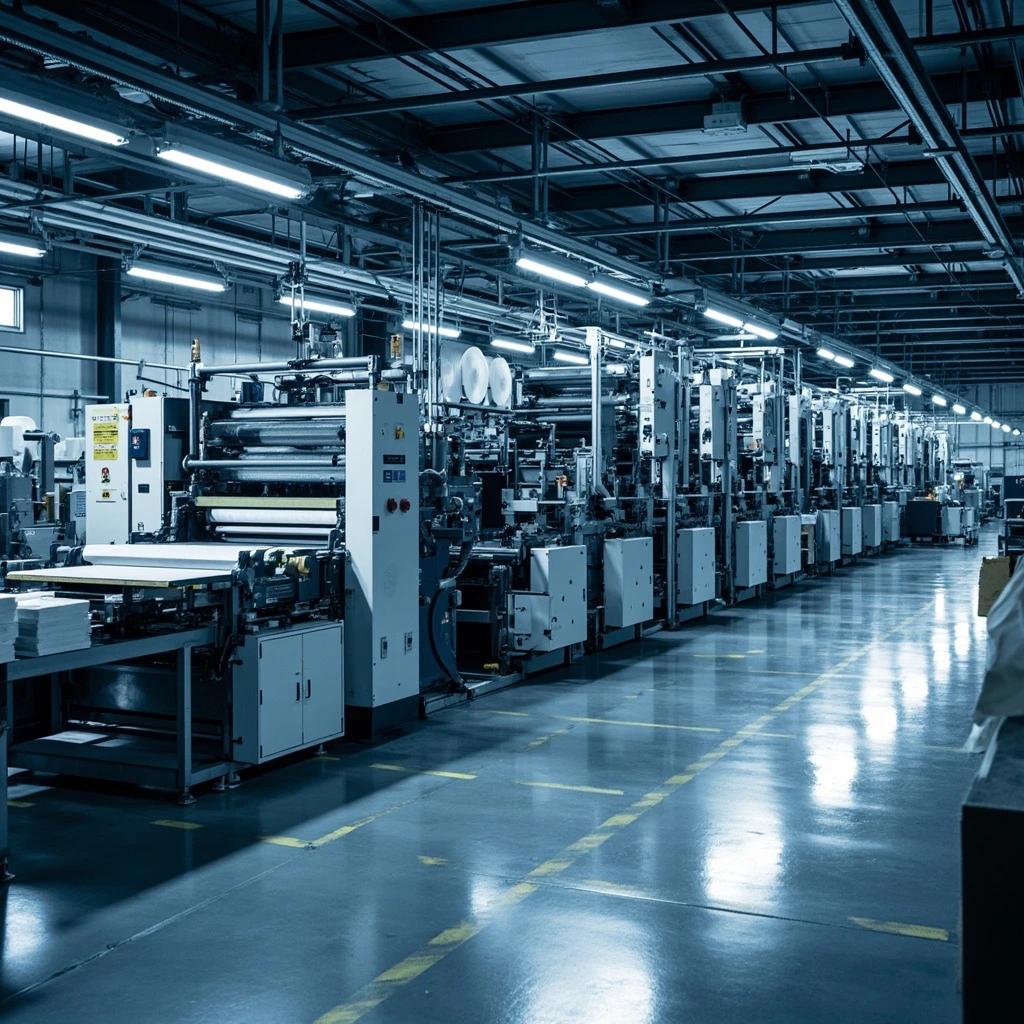
At VerityRank, our ranking methodology is built on data, not opinions. We are committed to delivering authentic, transparent, and verifiable industry insights for the global manufacturing sector. This ranking is not based on subjective opinions or paid placements, but on a rigorous multi-dimensional evaluation model that systematically collects, cross-verifies, and quantitatively analyzes public data and authoritative information from global sources.
1. Data Sources — Four Pillars of Evidence
Our evaluation framework rests on four independent, verifiable data pillars, ensuring no single source can bias the results:
• National Statistical Agencies and Government Databases: We incorporate official trade statistics, industrial production indices, and manufacturing output data from agencies such as the U.S. Bureau of Labor Statistics, Eurostat, Japan's Ministry of Economy, Trade and Industry (METI), and China's National Bureau of Statistics. These provide the macroeconomic context for evaluating manufacturing scale.
• University-Affiliated Research Institutions and Industry Consortia: We integrate peer-reviewed research, technology readiness assessments, and industry whitepapers from institutions including MIT Industrial Performance Center, Fraunhofer Institute for Manufacturing Engineering, and the World Economic Forum's Advanced Manufacturing initiative. These inform our evaluation of technological sophistication and innovation capacity.
• AI-Driven Global Supply Chain and Sentiment Analysis: Our proprietary AI models continuously monitor global trade flows, shipping manifests, supplier diversity databases, and procurement platform data to assess real-world supply chain reach and reliability. We also analyze buyer reviews, industry forum discussions, and professional network sentiment to gauge market reputation.
• Publicly Listed Company Financial Reports and Regulatory Filings: We systematically analyze audited annual reports (10-K, 20-F), quarterly earnings calls, sustainability reports (GRI, SASB, TCFD), and stock exchange filings from the SEC, Tokyo Stock Exchange, London Stock Exchange, and other major exchanges. Revenue, CapEx, R&D spending, and workforce data are cross-referenced with independent financial databases including Bloomberg and S&P Capital IQ.
2. The Four-Dimensional Scoring Model for Manufacturers
For manufacturer rankings, we evaluate companies across four equally weighted dimensions, each scored on a 0-100 scale and aggregated into a composite VerityRank Score:
• Production Scale (25%): Annual manufacturing output (tonnage or units), total revenue attributable to manufacturing operations, number and geographic distribution of production facilities, total manufacturing floor space, and year-over-year capacity expansion. This dimension measures sheer production muscle and the ability to serve large-scale global demand.
• Technological Integration (25%): Level of automation (Industry 4.0, IoT-enabled production lines), adoption of digital printing technologies (inkjet, electrophotography, hybrid), use of AI/ML in quality control and predictive maintenance, number of active patents in manufacturing processes, and R&D expenditure as a percentage of revenue. Manufacturers with smart factories and data-driven production systems score higher.
• Supply Chain Reach (25%): Number of countries with active manufacturing or distribution operations, proximity to key raw material sources, logistics infrastructure (owned fleet, warehousing network, port access), supplier diversity and redundancy, and demonstrated supply chain resilience during disruptions. This dimension captures a manufacturer's ability to reliably deliver products anywhere in the world.
• Sustainability and Compliance (25%): Certifications held (ISO 14001, ISO 50001, FSC Chain-of-Custody, PEFC), carbon footprint and emissions reduction targets (SBTi-validated), percentage of renewable energy in manufacturing, waste diversion and circular economy initiatives, compliance with EU CSRD and PPWR regulations, and transparency in ESG reporting. As regulatory requirements intensify, sustainability performance increasingly determines market access.
3. Our Commitment to Independence
VerityRank operates with complete editorial independence. We do not accept payments for inclusion in our rankings, nor do we allow manufacturers to influence their position through sponsorship or advertising. Our revenue model is based on providing data-as-a-service subscriptions and custom industry reports to enterprise clients, completely separate from our public ranking operations. Every ranking is subject to quarterly review, with methodology refinements documented in our publicly available methodology whitepaper.
Disclaimer: The data in this ranking is compiled from publicly available third-party sources and is intended for informational and reference purposes only. While we employ multi-source cross-validation, VerityRank makes no representations or warranties regarding the completeness or accuracy of the information. Financial data may reflect different fiscal year reporting periods. Users should conduct independent due diligence before making procurement or investment decisions. Manufacturers are encouraged to submit updated corporate information through our verification portal for consideration in future ranking updates.
Top-tier printing services and solutions manufacturers distinguish themselves through five interconnected manufacturing capabilities that create formidable competitive moats. These capabilities separate global leaders from regional players and increasingly determine which manufacturers secure long-term contracts with Fortune 500 brand owners.
1. Massive Press Fleet Scale and Technological Diversity
Elite manufacturers maintain enormous multi-technology press fleets spanning sheet-fed offset, web offset, flexographic, rotogravure, and high-speed digital inkjet systems. Smurfit Westrock operates over 500 converting facilities globally, while International Paper runs more than 200 manufacturing sites across North America, Europe, and emerging markets. This technological diversity enables them to match the optimal printing process to each job — offset for high-volume consistent quality, digital for variable-data and short-run work, and flexo/gravure for packaging applications. The capital expenditure required to build and maintain such a fleet creates a natural barrier to entry that protects incumbent positions.
2. Vertical Integration from Substrate to Finished Print
Leading manufacturers own upstream paper, board, and substrate production capabilities, giving them cost advantages of 10-15% over non-integrated competitors. International Paper's 33 million metric tons of annual containerboard capacity feeds directly into its downstream converting operations, insulating margins from commodity price volatility. Similarly, Amcor's proprietary film extrusion and lamination technologies provide differentiated substrate performance that competitors cannot easily replicate. This vertical control extends to ink formulation, coating chemistry, and adhesive development in the most advanced manufacturers.
3. Global Manufacturing Footprint with Regional Service Centers
Top manufacturers maintain production facilities in 20-40+ countries, positioned to serve multinational brand owners who demand consistent quality and delivery across all regions. Amcor operates in 43 countries with over 200 plants, while Mondi maintains strategic production clusters in Central and Eastern Europe that combine cost competitiveness with proximity to Western European markets. YUTO has built 40+ production bases across 10 countries, enabling same-week delivery to major consumer electronics brands' assembly hubs. This geographic diversification also provides natural hedging against regional demand fluctuations, currency movements, and trade disruptions.
4. Digital-to-Physical Integration and Smart Factory Capabilities
The convergence of digital front-ends with physical production is reshaping manufacturing competitiveness. TOPPAN and DNP have invested hundreds of millions of dollars in IoT-enabled production lines that connect customer e-procurement systems directly to press scheduling, enabling automated order-to-cash cycles. RR Donnelley's variable-data printing platforms process over 10 million unique SKUs annually, each with individualized content, barcodes, and version-specific graphics. Smart factories with real-time production monitoring, AI-driven quality inspection, and predictive maintenance algorithms achieve 15-20% higher overall equipment effectiveness (OEE) than conventional plants.
5. Sustainability Infrastructure and Circular Economy Manufacturing
With the EU Packaging and Packaging Waste Regulation (PPWR) and Corporate Sustainability Reporting Directive (CSRD) now in force, sustainability capabilities have shifted from marketing advantage to regulatory requirement. Smurfit Westrock and Mondi lead in 100% recyclable and repulpable packaging, with both companies holding comprehensive FSC and PEFC chain-of-custody certifications across their entire supply chains. Leading manufacturers now track Scope 1, 2, and 3 emissions, with multiple firms committed to net-zero targets by 2040-2050 validated by the Science Based Targets initiative (SBTi). Manufacturers lacking documented sustainability credentials face increasing exclusion from European and North American brand owner RFPs.
Vertical integration — strategic ownership of multiple value chain stages from raw materials through manufacturing to distribution — has evolved from competitive advantage to survival imperative for printing manufacturers in the 2025-2026 landscape. In an era of persistent supply chain fragility, tightening environmental regulations, and margin compression from brand owner consolidation, vertical integration provides the structural foundation for sustainable profitability.
1. Raw Material Cost Insulation and Supply Security
Printing substrates — paper, board, films, and specialty materials — typically represent 40-60% of total cost of goods sold in printing operations. Vertically integrated manufacturers absorb substrate costs at internal transfer prices rather than market rates, providing a structural margin advantage of 8-12 percentage points during commodity upcycles. International Paper, with its 33 million metric tons of annual containerboard capacity, demonstrated this advantage during the 2021-2023 global pulp price surge, maintaining EBITDA margins 6-9 points above non-integrated competitors. Beyond cost, vertical integration guarantees supply continuity — a critical advantage when ocean freight disruptions or regional shortages threaten just-in-time delivery commitments to major brand owners.
2. Quality Control Across the Full Value Chain
When a manufacturer controls substrate production, ink formulation, printing, converting, and finishing under one roof, quality accountability is total rather than fragmented across multiple suppliers. Amcor's integrated film extrusion-to-printed-packaging operations enable it to guarantee seal integrity, barrier performance, and print registration with single-source traceability — a requirement increasingly demanded by pharmaceutical and food safety regulations. TOPPAN's integration extends from specialty substrate R&D through semiconductor packaging substrates, creating quality control loops that are impossible to replicate in multi-vendor supply chains. This comprehensive quality ownership reduces defect rates by 60-80% compared to multi-supplier workflows and dramatically shortens root-cause analysis cycles when issues do arise.
3. Speed-to-Market and Responsiveness
Vertically integrated manufacturers compress lead times by eliminating handoffs between independent suppliers. YUTO's end-to-end integration — from paperboard sourcing through design, printing, die-cutting, and assembly — enables it to deliver fully finished consumer electronics packaging in 7-10 days from design approval, compared to 3-4 weeks for multi-vendor workflows. Smurfit Westrock's integrated mills-to-box-plants network positions corrugated converting facilities within 150 miles of major customer distribution centers, enabling 24-48 hour replenishment cycles that pure-play converters cannot match without owning upstream board supply.
4. Sustainability Compliance and Traceability
As the EU CSRD and PPWR regulations mandate full supply chain transparency, vertically integrated manufacturers hold a decisive advantage. They can provide auditable chain-of-custody documentation from certified forest to finished package without relying on third-party supplier attestations. Mondi's integrated forestry-to-paper-to-packaging operations give it complete visibility into the carbon footprint and recycled content of every product, while Smurfit Westrock's closed-loop recycling systems capture post-consumer fiber and feed it directly back into mill production. This level of traceability is becoming a prerequisite for brand owners facing their own Scope 3 emissions reporting obligations.
5. The Risks: Capital Intensity and Cyclical Exposure
Vertical integration is not without its trade-offs. The capital expenditure required to maintain upstream mill assets typically runs $200-500 million annually for large integrated players, creating high fixed-cost bases that amplify earnings volatility during demand downturns. Quad/Graphics' experience with aggressive acquisition-driven integration in 2010-2018 demonstrated how over-leveraged vertical strategies can backfire when market conditions shift, ultimately leading to Chapter 11 restructuring in 2024. Successful vertical integrators maintain disciplined balance sheets, target capacity utilization above 85%, and continuously optimize their asset portfolios through strategic divestitures of underperforming facilities.
Digital printing technologies are fundamentally restructuring the operational economics, competitive dynamics, and growth trajectory of the global printing manufacturing industry. The shift from analog to digital represents far more than a technology upgrade — it is reshaping factory floor configurations, workforce skill requirements, capital allocation strategies, and the very definition of what constitutes a competitive manufacturing operation in the 2025-2030 era.
1. From Scale Economics to Flexibility Economics
Traditional offset and gravure printing derive their economic advantage from amortizing high fixed setup costs (plates, makeready, waste) over long production runs. Digital printing — including production inkjet, electrophotography, and hybrid offset-digital systems — eliminates these setup costs entirely, making single-copy production economically viable. RR Donnelley's digital platform now handles over 10 million unique SKUs annually with average run lengths falling below 500 units, a threshold that would be unprofitable on conventional equipment. This flexibility economics shift enables manufacturers to serve the long tail of customized, versioned, and personalized print demand that was previously inaccessible, expanding the total addressable market while reducing inventory waste and obsolescence by 30-40%.
2. Variable Data Printing and Personalization at Scale
Digital printing's defining capability — every impression can be different — has unlocked entirely new product categories. Transcontinental and Taylor Corporation have built substantial direct marketing businesses where each mail piece carries recipient-specific offers, imagery, and QR codes generated from customer data platforms in real time. Cimpress's Mass Customization Platform (MCP) integrates generative AI design tools with digital print production to deliver personalized apparel, signage, and promotional products at unit quantities of one. In packaging, digital enables serialized QR codes, regionalized labeling, and limited-edition brand campaigns that drive consumer engagement — capabilities that are increasingly demanded by CPG brands seeking to connect packaging to digital marketing ecosystems.
3. AI-Driven Quality Control and Predictive Maintenance
Leading manufacturers are embedding AI/ML systems throughout digital production workflows. TOPPAN and DNP have deployed computer vision inspection systems operating at production speeds exceeding 300 meters per minute, detecting print defects at the micron level and automatically adjusting ink density, registration, and color calibration in real time. These systems reduce make-ready waste by 40-60% and maintain color consistency within Delta E < 1.5 across entire production runs. Predictive maintenance algorithms analyzing vibration spectra, thermal signatures, and component wear patterns reduce unplanned downtime by 35-50%, directly improving OEE and reducing maintenance costs by $2-5 million annually for large-scale operations.
4. Workforce Transformation and the Skills Gap
The transition to digital manufacturing is reshaping workforce requirements. Traditional press operator roles — valued for craft expertise in ink-water balance, plate mounting, and mechanical troubleshooting — are being supplemented and in some cases replaced by digital workflow managers, data analysts, and automation engineers. Quad/Graphics has invested over $50 million in workforce retraining programs, transitioning hundreds of conventional press operators into digital production roles. Industry surveys indicate that 60-70% of printing manufacturers identify workforce skills gaps as the primary barrier to digital transformation, exceeding even capital constraints. Manufacturers that invest proactively in talent development gain 12-18 month lead time advantages over competitors who delay workforce transformation.
5. Investment Timing and the Risk of Inaction
The printing industry is approaching a technological inflection point where digital becomes cost-competitive with offset for an expanding range of run lengths — estimated at 50-70% of all commercial print jobs by 2028 according to Smithers. Manufacturers that initiated digital transformation in 2020-2023 have already captured significant market share in the growing short-run and personalized segments, while late adopters risk being confined to declining long-run commodity print markets. The strategic calculus is clear: every year of delay in digital investment compounds the competitive disadvantage, as early movers build irreplaceable customer relationships, data assets, and operational expertise that become increasingly difficult for followers to replicate.
The European Union's Corporate Sustainability Reporting Directive (CSRD) and Packaging and Packaging Waste Regulation (PPWR), enacted in 2025, represent the most transformative regulatory shock to the global printing and packaging manufacturing industry in decades. These regulations mandate comprehensive carbon accounting, recycled content minimums, design-for-recycling standards, and restrictions on per- and polyfluoroalkyl substances (PFAS) in food-contact packaging—directly reshaping manufacturing processes, capital allocation, and competitive dynamics across the entire sector.
Water-based and plant-based ink transitions represent the industry's most urgent reformulation challenge. Traditional solvent-based printing inks contain volatile organic compounds (VOCs) that contribute to ground-level ozone formation and pose occupational health hazards. Leading manufacturers have invested heavily in transitioning to water-based flexographic inks, UV-curable inks with bio-based monomers, and plant-derived pigments. Smurfit Westrock has committed to full water-based ink adoption across its corrugated packaging operations by 2028. Amcor, serving pharmaceutical and food clients with the most stringent safety requirements, has pioneered plant-based ink formulations that meet both FDA and EU food-contact compliance standards while maintaining the high-speed printing performance required for its 400+ production facilities.
Plastic-free lamination and mono-material design constitute the second critical compliance frontier. The PPWR mandates that all packaging be recyclable by 2030 and contain minimum recycled content by 2035, effectively banning traditional multi-material laminates (e.g., paper-plastic-aluminum composites) that cannot be separated in recycling streams. Mondi Group's Ad/Vantage series of water-based coatings replaces polyethylene lamination on corrugated packaging, while TOPPAN Holdings' mono-material high-barrier films eliminate the need for multi-layer structures in food packaging. These innovations require complete re-tooling of lamination lines and coating application systems—investments running into hundreds of millions of euros per manufacturer—but create first-mover advantages as brand owners rush to secure compliant packaging suppliers ahead of enforcement deadlines.
Recycled fiber integration and closed-loop manufacturing are reshaping upstream supply chains. The CSRD requires manufacturers to disclose and progressively increase the percentage of post-consumer recycled (PCR) content across their product portfolios. International Paper recycles approximately 6 million tons of fiber annually. Smurfit Westrock operates over 100 fiber recovery facilities, with recycled fiber constituting more than 70% of total fiber inputs. Oji Holdings has pioneered advanced de-inking and contaminant removal technologies at its Japanese mills that enable high-quality recycled fiber integration into food-grade packaging—traditionally a domain reserved exclusively for virgin fiber.
The compliance cost asymmetry is accelerating industry consolidation. The capital investment required to meet PPWR recyclability mandates and CSRD reporting obligations—estimated at €50-150 million per mid-tier manufacturer for equipment upgrades, certification, monitoring systems, and reporting infrastructure—is prohibitive for small and medium-sized enterprises operating on thin margins. This regulatory-driven cost burden explains the acceleration of mega-mergers witnessed in 2025-2026: Amcor's acquisition of Berry Global, TOPPAN's acquisition of Sonoco TFP, and Smurfit Westrock's post-merger synergy realization all explicitly cited regulatory compliance scale economies as strategic rationales. The net effect is a rapidly consolidating industry where the top 10 manufacturers are capturing an increasing share of global printing and packaging volumes, while undercapitalized competitors face existential compliance gaps.