Our manufacturing rankings are based on independently verified data from public financial disclosures, sustainability reports, patent databases, and industry association benchmarks.
Each manufacturer receives a Composite Manufacturing Score (0-100) calculated across four equally weighted dimensions:
Production Scale (25%): We evaluate annual specialty paper production capacity, number of dedicated manufacturing facilities globally, revenue from specialty-grade products, and geographic diversification of operations. For example, International Paper operates 28+ manufacturing facilities worldwide with 3.63B revenue, while Ahlstrom runs 38 plants across 17 countries specializing exclusively in fiber-based specialty materials.
R&D and Technological Integration (25%): This dimension assesses patent portfolio strength (e.g., Stora Enso holds over 4,000 active patents), R&D expenditure as percentage of revenue, and recent product innovation launches. Ahlstrom invests approximately 3.2% of revenue in R&D focused on filtration media, medical substrates, and sustainable barrier coatings. Pixelle Specialty Solutions operates dedicated innovation centers for release liners, thermal papers, and flexible packaging substrates.
Supply Chain Reach (25%): We measure the manufacturer's ability to serve global customers through distribution networks, raw material integration (including captive pulp supply), and logistics infrastructure. Mondi's integrated supply chain spans 100+ countries with in-house forestry operations ensuring fiber traceability. Fedrigoni Group's acquisition of Arconvert expanded its self-adhesive materials distribution across 132 countries.
Sustainability and Compliance (25%): Assessment includes FSC/PEFC chain-of-custody certification coverage, carbon reduction targets validated by SBTi, water stewardship performance, circular economy initiatives, and regulatory compliance across FDA, EU MDR, REACH, and ISO 13485 standards. Sappi Limited achieved a 55.5% reduction in specific GHG emissions since 2005 and sources 76% of fiber from certified forests.
Disclaimer: Rankings reflect publicly available data as of 2025-2026. Production capacity estimates are based on disclosed data and third-party industry benchmarks. VerityRank does not endorse any listed manufacturer.
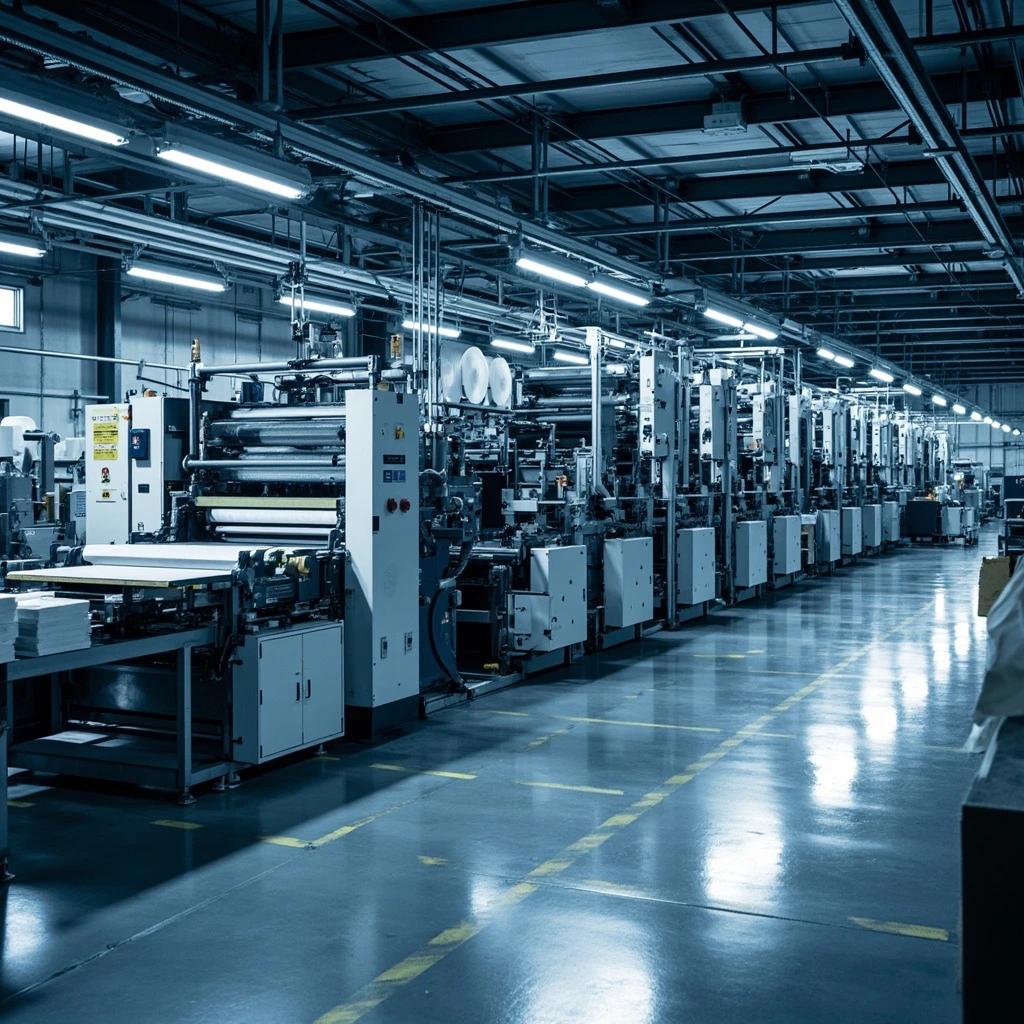
The world's leading specialty paper manufacturers distinguish themselves through five core manufacturing capabilities that determine product quality, production efficiency, and market competitiveness.
1. Advanced Coating and Surface Treatment Technologies: Top manufacturers deploy multi-layer curtain coating, blade coating, and size-press technologies to apply functional coatings at micron-level precision. Ahlstrom's filtration media division, for instance, operates 12 dedicated coating lines capable of applying nanofiber layers, activated carbon impregnation, and electrostatic charge treatments for high-efficiency air and liquid filtration. Stora Enso's dispersion coating technology produces barrier papers that replace plastic laminates in food packaging, with production capacity exceeding 200,000 tonnes annually across its European mills.
2. Fiber Science and Substrate Engineering: The ability to engineer paper substrates from diverse fiber sources—including softwood kraft, hardwood sulfite, abaca, synthetic fibers, and nonwoven materials—is a key differentiator. Domtar Corporation's Engineered Absorbent Materials division operates dedicated pilot plants for developing cellulose-based superabsorbent cores, while Sappi's Technology Center in the Netherlands specializes in nanocellulose development for high-barrier packaging applications. Pixelle Specialty Solutions produces over 150 distinct paper grades from its four North American mills, spanning thermal, carbonless, release, and security paper categories.
3. Multi-Site Manufacturing with Grade Flexibility: Global manufacturers maintain geographically distributed production facilities with rapid grade-change capabilities. International Paper operates 274 manufacturing facilities in 19 countries, enabling region-specific product customization while leveraging global procurement. Mondi's network of 100+ production sites includes 14 dedicated specialty paper mills with real-time grade optimization systems that reduce changeover times to under 45 minutes.
4. In-House Raw Material Integration: Vertical integration into pulp production, chemical supply, and even forestry operations provides cost advantages and quality control. Stora Enso owns 1.4 million hectares of forest land in Sweden and Finland, with 100% of its wood traceable to source. Mondi manages 2.54 million hectares of forestry concessions in Russia and South Africa, supplying approximately 60% of its own fiber requirements. This integration ensures consistent fiber quality and insulates against commodity pulp price volatility—a critical advantage in the 0B+ specialty paper market.
5. Quality Management and Certification Infrastructure: The complexity of specialty paper manufacturing—particularly for regulated industries like medical devices, food contact, and aerospace—requires robust quality systems. Magnera Corporation (formed from the Glatfelter-Berry merger) operates ISO 9001, ISO 14001, and ISO 45001 certified facilities across 14 countries, with dedicated cleanroom manufacturing environments for medical-grade nonwovens. Ahlstrom maintains 16 BRC-certified production lines for food-grade release papers and grease-resistant packaging materials, serving brands like Nestlé and PepsiCo.
Maintaining uniform product quality across globally distributed manufacturing facilities is one of the most complex challenges in specialty paper production. Leading manufacturers deploy six interconnected quality assurance systems to achieve this.
1. Global Quality Management Systems (QMS): All top-ranked manufacturers operate enterprise-wide QMS platforms certified to ISO 9001:2015. International Paper's 'Manufacturing Excellence System' standardizes operating procedures across all 274 facilities through a centralized digital platform that tracks over 2,400 quality checkpoints per paper machine per shift. Stora Enso's integrated management system covers quality (ISO 9001), environment (ISO 14001), and occupational health (ISO 45001) with annual third-party surveillance audits at every production site.
2. Statistical Process Control (SPC) and Real-Time Monitoring: Manufacturing lines are equipped with online measurement systems continuously monitoring basis weight (±0.5% tolerance), moisture content (±0.3%), caliper, formation, porosity, and surface properties. Mondi employs over 12,000 real-time sensors across its specialty paper mills, with automated feedback loops adjusting machine parameters within milliseconds. Sappi's Maastricht Mill uses near-infrared (NIR) spectroscopy for inline coating weight measurement with precision down to 0.1 g/m².
3. Laboratory Testing and Material Characterization: Each manufacturing facility maintains ISO/IEC 17025 accredited laboratories performing physical, chemical, and functional testing. Ahlstrom's central R&D laboratory in Pont-Évêque, France, conducts over 50,000 analytical tests annually, including SEM imaging for fiber morphology, GC-MS for volatile compound analysis, and dynamic mechanical analysis for coated paper performance. Every production batch undergoes a minimum of 12 standardized tests before release.
4. Raw Material Qualification and Supplier Auditing: Incoming raw materials—pulp, chemicals, coating pigments, and synthetic fibers—undergo rigorous qualification before production use. Domtar maintains a database of 340+ qualified raw material specifications, with suppliers subject to annual audits covering quality systems, sustainability practices, and business continuity. Pixelle conducts Certificate of Analysis (CoA) verification on 100% of incoming specialty chemicals, with random third-party testing for 15% of shipments.
5. Cross-Facility Calibration and Round-Robin Testing: To ensure measurement consistency, manufacturers conduct quarterly cross-calibration of all online and laboratory instruments across facilities. Fedrigoni Group runs monthly round-robin testing programs where identical samples are tested at all 11 manufacturing sites, with results compared against a central reference laboratory. Any facility showing deviation greater than 2 sigma triggers an immediate corrective action investigation.
6. Regulatory Compliance for Specialized Applications: Manufacturers serving regulated industries maintain facility-specific certifications. Magnera holds FDA 21 CFR Part 820 Quality System Regulation compliance for medical device components, EU MDR 2017/745 certification for in-vitro diagnostic substrates, and BRCGS Packaging Materials certification (Grade AA) for food contact papers. These certifications require annual unannounced audits and full production traceability from fiber source to finished roll—a level of documentation that commodity paper producers rarely achieve.
The specialty paper manufacturing industry is undergoing five transformative trends that are reshaping production technologies, market demand, and competitive dynamics.
1. Plastic-to-Paper Substitution Accelerating: Regulatory pressure—particularly the EU Single-Use Plastics Directive and Extended Producer Responsibility (EPR) schemes—is driving rapid substitution of plastic packaging with fiber-based alternatives. The barrier coating paper segment is growing at 8.2% CAGR, with demand for water-based dispersion coatings, nanocellulose barriers, and metallized papers surging. Stora Enso invested €200 million in converting its Oulu mill to produce renewable packaging boards, targeting annual production of 750,000 tonnes. Mondi's 'FunctionalBarrier Paper' series has replaced over 15,000 tonnes of plastic packaging since 2023, securing contracts with major FMCG brands including Unilever and Mars.
2. Smart and Functionalized Paper Development: The integration of electronics, sensors, and active compounds into paper substrates is creating entirely new product categories. RFID-embedded papers for inventory tracking, time-temperature indicator papers for cold chain logistics, and antimicrobial papers for medical packaging represent high-growth niches. Pixelle Specialty Solutions has commercialized conductive carbon-coated papers for battery electrode separators, while Ahlstrom's GenCollect® blood specimen collection cards have become the global standard for newborn screening programs, processing over 130 million tests annually across 58 countries.
3. Digitalization and Industry 4.0 Integration: Artificial intelligence and machine learning are transforming manufacturing operations. International Paper deployed AI-driven predictive maintenance across its North American mill network, reducing unplanned downtime by 18% and energy consumption by 7% in 2024. Digital twin technology, pioneered by Stora Enso at its Imatra Mills, creates virtual replicas of paper machines for real-time process optimization, improving grade-change efficiency by 23%. Blockchain-based fiber traceability systems are being adopted by Sappi and Mondi to provide end-to-end supply chain transparency for sustainability-conscious customers.
4. Bio-Based and Circular Economy Feedstock Innovation: The shift toward renewable, biodegradable, and recycled fiber sources is accelerating. Magnera Corporation has developed nonwoven substrates using 85% post-consumer recycled polyester fiber for filtration applications, while Domtar's bio-materials division is commercializing lignin-based phenol replacements for paper coatings—reducing fossil carbon content by up to 60%. The industry is targeting 90% paper recycling rates in Europe by 2030, with specialty paper manufacturers investing in advanced de-inking and fiber recovery technologies to process increasingly complex waste streams.
5. Regional Manufacturing Reshoring and Supply Chain Resilience: Post-pandemic supply chain disruptions and geopolitical tensions are driving specialty paper manufacturers to regionalize production. Fedrigoni Group's €150 million investment in a new self-adhesive materials plant in Brazil (2025) serves the growing Latin American market, while Ahlstrom expanded its North American filtration media capacity by 40% through the acquisition of a former competitor's plant in Wisconsin. The trend toward regional manufacturing hubs reduces logistics costs by an estimated 15-25% and improves lead times from 8-12 weeks to 2-4 weeks for regional customers.
VerityRank updates its specialty functional paper manufacturer rankings on a quarterly basis, with comprehensive revisions every 6 to 12 months.
Our standard review cycle evaluates each manufacturer's latest financial disclosures, including quarterly earnings reports, annual 10-K/20-F filings, and sustainability reports. When manufacturers announce significant events—such as capacity expansions, new product launches, facility acquisitions or divestitures, or major sustainability milestones—we may issue interim updates to reflect material changes in their competitive position.
Trigger Events for Mid-Cycle Updates: Mergers and acquisitions are particularly impactful in the specialty paper industry. The 2024 formation of Magnera Corporation through the Glatfelter-Berry Global HHNF merger created a .6B specialty materials giant, prompting an immediate ranking reassessment. Similarly, Fedrigoni Group's acquisitions of Arconvert, Tageos, and Unifol represent over €600 million in strategic expansion since 2023, continuously strengthening its ranking position.
Data Refresh Sources: We monitor SEC EDGAR filings, European Securities and Markets Authority (ESMA) databases, Tokyo Stock Exchange disclosures, and stock exchange announcements from Johannesburg, Helsinki, and Milan. Industry data from Smithers, Fisher International, RISI/Fastmarkets, and the Confederation of European Paper Industries (CEPI) supplement our analysis. Manufacturer-submitted production data and certifications are reviewed and validated before incorporation.
Verification Process: Each update cycle includes direct outreach to listed manufacturers, inviting them to submit updated capacity figures, certification documentation, and sustainability metrics. VerityRank's analyst team cross-references submitted data against public disclosures and third-party benchmarks before adjusting rankings. Manufacturers that do not respond within 60 days are evaluated solely on publicly available information.