VerityRank

Manufacture Rankings in the ​​Sustainable Fashion Industry

HomeTextile & Apparel Industry ManufacturersManufacture Rankings in the ​​Sustainable Fashion Industry

Welcome to Verity Rank’s “Sustainable Fashion Manufacturer Rankings”. Whether sourcing responsible partners or tracing the origins of premium products, this list offers crucial guidance. We evaluate not just scale, but the adoption of innovative technologies (e.g., waterless dyeing, bio-based materials), possession of international eco-certifications, and proven experience supplying leaders like Patagonia and Kering. Rankings synthesize capacity data, patent analysis, and supply chain research from industry alliances and academic institutions. Verity Rank identifies manufacturing excellence that aligns with environmental responsibility, bridging the gap between sustainable vision and scale.

Top 10 Rankings

2026.05 Edition
1
Lenzing AG

Lenzing AG

Lenzing AG (VIE: LNZ) is a global leading producer of specialty cellulose fibers, renowned for its flagship brands TENCEL™ Lyocell and Modal. As a provider of sustainable material solutions at the very upstream of the textile value chain, the company employs a vertically integrated “tree-to-fiber” model to produce biodegradable fibers sourced from certified wood. These fibers serve as core raw materials, supplied to over 1,000 global brands for manufacturing a full spectrum of products from apparel and home textiles to nonwovens. With H1 2025 revenue reaching €1.34 billion and significantly improved profitability, Lenzing has established its leadership in the sustainable fiber sector through its irreplaceable technological edge and deep empowerment of the industry's green transformation. Strengths:Lenzing's core strengths are the exceptionally high technological barriers and near-monopolistic market position it has built in specialty cellulose fibers like Lyocell; concurrently, its vertically integrated model of “sustainably managed wood + closed-loop production process” not only ensures raw material reliability and environmental credentials but also forms powerful capabilities for cost control and quality assurance. Weaknesses:Lenzing's main weaknesses stem from its performance being highly sensitive to global commodity price cycles (e.g., wood, energy) and fluctuations in downstream textile industry demand; simultaneously, as a capital-intensive upstream materials producer, its substantial capital expenditures and capacity expansion plans carry significant operational and market risks.
Brand

Lenzing

Headquarters

Austria

Founded

1938

Workforce

7.9K+

Presence

10+ Countries

Market

WBAG : LNZ

Key Product Categories
Eco-friendly Clothing ManufacturersTextile Fiber Raw Materials IndustryTechnical Fabrics IndustrySustainable Fashion IndustryOrganic Materials IndustryRecycled Fabrics IndustrySustainable Fashion ManufacturersTextile Fiber Raw Materials IndustryTechnical Fabrics IndustrySustainable Fashion IndustryEco-friendly Clothing ManufacturersTextile Fiber Raw Materials IndustryTechnical Fabrics IndustrySustainable Fashion IndustryOrganic Materials IndustryRecycled Fabrics IndustrySustainable Fashion ManufacturersTextile Fiber Raw Materials IndustryTechnical Fabrics IndustrySustainable Fashion Industry
2
Patagonia, Inc.

Patagonia, Inc.

Patagonia, Inc. is a US-origin, globally top-tier outdoor equipment brand and social enterprise fundamentally driven by radical environmental activism. Its core mission is “using business to save our home planet,” culminating in a historic 2022 ownership shift that transferred all equity to an environmental trust and collective, declaring “Earth is now our only shareholder.” Its business centers on high-performance, durable outdoor apparel (notably fleece and functional outerwear) and gear, sold via its own channels and carefully selected retailers, with all profits funding environmental causes. Through its unique model of “top-tier product performance + lifetime repair service + transparent environmental practice,” Patagonia has built unparalleled brand devotion, achieving over $1.5 billion in annual revenue and transforming into a global cultural symbol and ethical benchmark that transcends commerce.

Strengths: Patagonia's core strengths are its unmatched brand moral authority and consumer faith, built upon tangible environmental action and its “Earth as sole shareholder” ownership structure, which translate into exceptional customer loyalty, brand premium, and competitive immunity; concurrently, its deep integration of extreme product durability, lifetime repair services (Worn Wear), and radical environmental commitment creates a business model and value-based moat that competitors cannot replicate.

Weaknesses: Patagonia's central weakness is the fundamental contradiction inherent in its business model: as a company needing profit to fund environmental work, there exists a perpetual philosophical and commercial tension between its “buy less, repair more” anti-overconsumption ethos and the pursuit of sustained business growth; furthermore, its utmost ethical standards mean any minor supply chain or operational flaw can be magnified, posing significant reputational risk, and achieving 100% environmental and equitable goals across its complex global supply chain remains a monumental, ongoing challenge.

Brand

Patagonia

Headquarters

USA

Founded

1973

Workforce

3K+

Presence

35+ Countries

Facilities

100+ Stores

Market

Unlisted ( Private Company )

Key Product Categories
Eco-friendly Clothing BrandsMen's Clothing IndustryMen's Outerwear IndustryMen's Sportswear IndustryWomen's Clothing IndustryWomen's Outerwear IndustryOutdoor Gear CompaniesMen's Clothing IndustryMen's Outerwear IndustryMen's Sportswear IndustryEco-friendly Clothing BrandsMen's Clothing IndustryMen's Outerwear IndustryMen's Sportswear IndustryWomen's Clothing IndustryWomen's Outerwear IndustryOutdoor Gear CompaniesMen's Clothing IndustryMen's Outerwear IndustryMen's Sportswear Industry
3
Kering S.A.

Kering S.A.

Kering S.A. is a global leading luxury group headquartered in Paris, France, and listed on Euronext Paris. Operating as a “house of brands,” Kering's core business is brand portfolio management—it does not manufacture products but strategically acquires, owns, and empowers a collection of premier luxury houses including Gucci, Saint Laurent, Balenciaga, Bottega Veneta, and Boucheron. The group focuses on fashion, leather goods, jewelry, and watches, generating €19.95 billion in revenue in 2024 (down 4% on a comparable basis), solidifying its position as the world's second-largest luxury conglomerate. Its central strategy is to provide centralized operational and financial support while preserving each brand’s creative autonomy, with a growing emphasis on developing its jewelry division as a key future growth pillar and driving sustainability transformation across the group.

Strengths: Kering's core strengths lie in its portfolio of iconic, trend-defining luxury brands with a clear strategic hierarchy, coupled with a proven, exceptional track record in brand revitalization and value creation; furthermore, its sophisticated group platform provides comprehensive strategic empowerment—from retail networks to digital innovation—for its brands, supported by a powerful network of creative talents that continuously drives industry influence.

Weaknesses: Kering's main weaknesses are its excessive dependence on the performance of its flagship brand, Gucci, whose current transformative phase introduces significant earnings volatility and uncertainty for the entire group; simultaneously, the group is highly vulnerable to consumer sentiment shifts in key markets (notably Greater China) and faces intensely fierce direct competition from giants like LVMH across all major product categories.

Brand

Kering

Headquarters

France

Founded

1962

Workforce

47K+

Presence

120+ Countries

Market

Euronext Paris:KER

Key Product Categories
Fashion Accessories ManufacturersMen's Clothing IndustryMen's Tops IndustryMen's Outerwear IndustryMen's Bottoms IndustryMen's Formalwear IndustryLuggage & Accessories WholesalerMen's Clothing IndustryMen's Tops IndustryMen's Outerwear IndustryFashion Accessories ManufacturersMen's Clothing IndustryMen's Tops IndustryMen's Outerwear IndustryMen's Bottoms IndustryMen's Formalwear IndustryLuggage & Accessories WholesalerMen's Clothing IndustryMen's Tops IndustryMen's Outerwear Industry
4
Toray Industries, Inc.

Toray Industries, Inc.

Toray Industries, Inc. (TYO: 3402) is a globally leading integrated materials science group, holding a dominant position particularly in carbon fiber and high-performance fibers. Building upon synthetic fiber technology, the company operates a vertically integrated R&D and production system, covering the entire value chain from basic chemicals and specialty fibers (e.g., nylon, polyester) to advanced carbon fiber composites and engineering plastics. Its products serve as critical raw materials, extensively used in aerospace (e.g., Boeing 787), high-end sports equipment, automotive lightweighting, and functional textiles. With FY2025 sales of ¥2.56 trillion, Toray has established itself as a key materials enabler driving innovation across multiple industries, leveraging its profound technological heritage, near-monopolistic market position, and deep partnerships with top-tier industrial clients worldwide.

Strengths:Toray's core strengths are its near-monopolistic global technological leadership and exceptionally high market entry barriers established in tip materials like carbon fiber; concurrently, its vertically integrated “basic chemicals-to-advanced materials” control over the entire industrial chain ensures superior quality, cost advantages, and supply chain security from R&D to mass production.

Weaknesses:Toray's main weaknesses stem from the dependence of its core businesses (e.g., carbon fiber) on strongly cyclical industries like aerospace and automotive, making its performance vulnerable to macroeconomic fluctuations; simultaneously, as a capital-intensive technology and manufacturing conglomerate, its substantial capital expenditures and capacity expansion plans carry significant investment risks, alongside pressure from emerging market competitors.

Brand

Toray

Headquarters

Japan

Founded

1926

Workforce

48K +

Presence

25+ Countries

Market

TYO : 3402

Key Product Categories
Sustainable Fashion ManufacturersTextile Fiber Raw Materials IndustryTechnical Fabrics IndustrySustainable Fashion IndustryOrganic Materials IndustryRecycled Fabrics IndustrySustainable Fashion ManufacturersTextile Fiber Raw Materials IndustryTechnical Fabrics IndustrySustainable Fashion IndustryOrganic Materials IndustryRecycled Fabrics Industry
5
Shenzhou International Group

Shenzhou International Group

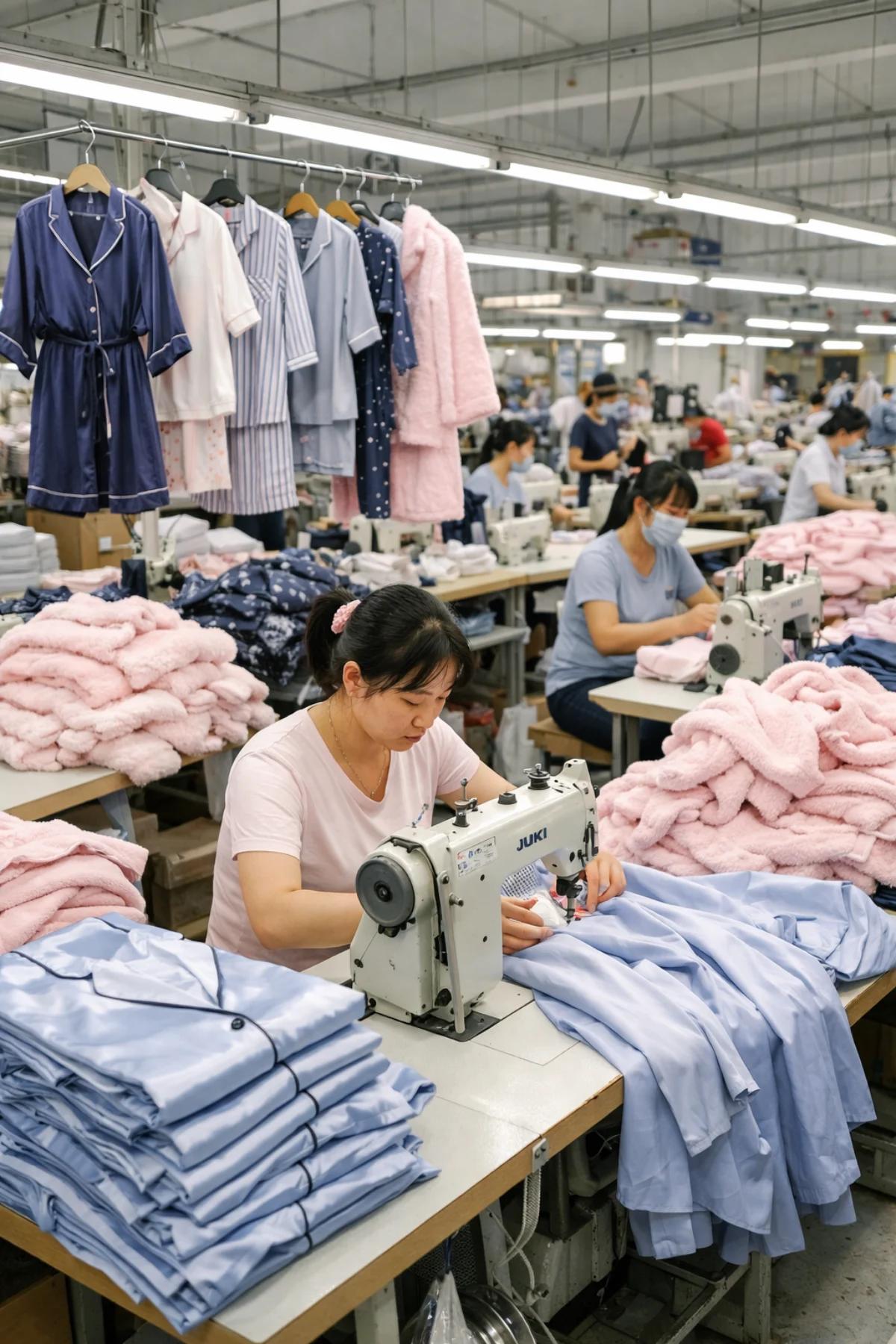
Shenzhou International Group Holdings Limited is the "invisible champion" of global knitwear manufacturing, headquartered in Ningbo, Zhejiang, China. As a Hong Kong Stock Exchange-listed company (SEHK:02313), its core business focuses on Textile & Apparel categories including men's performance T-shirts, women's yoga wear, underwear, and loungewear, providing vertically integrated OEM/ODM services from fabric R&D, dyeing and finishing to garment sewing for global sportswear brands like Nike, Uniqlo, Adidas, and Puma. In 2025, Shenzhou achieved estimated revenue of RMB 32.5-34 billion, employing over 110,000 people across 13 large-scale integrated factories in Ningbo, Anhui, Vietnam, and Cambodia, producing approximately 550 million garments and 250,000 tons of fabric annually. Its top four clients contribute about 82% of revenue. Leveraging ultimate vertical integration efficiency and quick response capabilities, Shenzhou defines the manufacturing benchmark behind global brands.

Strengths: Shenzhou's core strength in Textile & Apparel lies in its extreme vertical integration model, controlling the entire value chain from fabric R&D, dyeing and finishing to garment sewing, building a triple moat of efficiency, quality, and cost in knitwear categories like performance T-shirts and yoga wear. Annual production scale of 550 million garments and 250,000 tons of fabric, combined with overseas capacity in Vietnam and Cambodia, makes it an irreplaceable core supplier for global brands like Nike and Uniqlo, with its share in client supply chains growing through shortened lead times and quick response capabilities.

Weaknesses: Shenzhou's main weaknesses stem from its business model's heavy reliance on its top four clients (Nike, Adidas, Uniqlo, Puma), with customer concentration reaching 82%, making performance highly susceptible to core brand order fluctuations. As a B2B manufacturer lacking end-consumer brand recognition, its gross margin is compressed by rising labor costs and initial depreciation of overseas new factories, slightly declining to 27.1% in H1 2025. It also faces uncertainty risks from cross-border raw material tariffs amid changing global trade environments.

Brand

Shenzhou

Headquarters

China

Founded

2005

Workforce

110K+

Market

SEHK : 2313

Key Product Categories
Baby Clothing (0-24 Months) ManufacturersMen's Clothing IndustryMen's Tops IndustryPolo ShirtMen's Knitted TopMen's Casual WearChildren's Clothing (For Ages 2-12) ManufacturersMen's Clothing IndustryMen's Tops IndustryPolo ShirtBaby Clothing (0-24 Months) ManufacturersMen's Clothing IndustryMen's Tops IndustryPolo ShirtMen's Knitted TopMen's Casual WearChildren's Clothing (For Ages 2-12) ManufacturersMen's Clothing IndustryMen's Tops IndustryPolo Shirt
6
Levi Strauss & Co.

Levi Strauss & Co.

Levi Strauss & Co. (NYSE: LEVI) is the originator and leading brand of the global jeans category, with a heritage spanning over 170 years. Centered around iconic denim products like the 501® jeans, the company covers a full range of casualwear, activewear, and accessories for men and women through its multi-brand portfolio including Levi's, Dockers, and Beyond Yoga. Utilizing a capital-light global outsourcing model with operations in over 100 countries, it has successfully executed a DTC (Direct-to-Consumer) transformation, with DTC revenue reaching 46% in Q3 2025. With net revenues of $1.543 billion in Q3 2025, Levi's maintains its leadership in the global denim and casual apparel market through its profound brand culture, successful omnichannel transformation, and robust global operations.

Strengths:Levi's core strengths are its irreplaceable brand cultural heritage and global consumer mindshare as the category definer for jeans, which create an exceptionally high competitive barrier; concurrently, its successfully implemented DTC-first strategy has significantly enhanced profitability, customer insight, and omnichannel control.

Weaknesses:Levi's main weaknesses are its historical revenue reliance on the core denim category, presenting an ongoing challenge in diversifying into other high-growth product segments; simultaneously, while flexible, its global outsourced supply chain remains vulnerable to external shocks from geopolitics, tariffs, and cost fluctuations.

Brand

Levi's

Headquarters

USA

Founded

1853

Workforce

18K+

Presence

100+ Countries

Key Product Categories
Eco-friendly Clothing BrandsMen's Clothing IndustryMen's Tops IndustryMen's Outerwear IndustryMen's Bottoms IndustryWomen's Clothing IndustrySustainable Fashion BrandsMen's Clothing IndustryMen's Tops IndustryMen's Outerwear IndustryEco-friendly Clothing BrandsMen's Clothing IndustryMen's Tops IndustryMen's Outerwear IndustryMen's Bottoms IndustryWomen's Clothing IndustrySustainable Fashion BrandsMen's Clothing IndustryMen's Tops IndustryMen's Outerwear Industry
7
Industria de Diseño Textil, S.A. - Zara

Industria de Diseño Textil, S.A. - Zara

Zara, the flagship brand of Spanish giant Inditex, is a world-leading fashion retailer headquartered in A Coruña, Spain. It redefined fast fashion with its iconic "flexible supply chain," delivering new designs from concept to store in just 2-3 weeks. Core business spans men's and women's apparel, footwear, accessories, and childrenswear, extending into textiles via Zara Home to create a comprehensive ready-to-wear and accessories portfolio. In FY2025, Zara alone generated approximately €28.5 billion in revenue, contributing to Inditex's €6.1 billion net profit. Operating physical stores in over 90 countries and online in 200+, this Madrid-listed company (ITX) leverages AI-assisted design to keep inventory backlog below 10% and utilizes near-shore production hubs (50% of output) in Spain, Portugal, and Turkey, solidifying its status as a global efficiency benchmark in apparel retail.

Strengths: Zara's core strength lies in its ultra-fast, vertically integrated supply chain, launching over 20,000 new designs annually with a 2-3 week trend-to-market cycle. Its digital innovation, including AI forecasting and cinematic livestream commerce, combined with organic social media buzz, builds an unassailable brand moat.

Weaknesses: Zara's primary weaknesses stem from persistent sustainability controversies inherent to fast fashion. Despite its Join Life line using recycled fabrics, it faces pressure from stricter EU "green claim" regulations. Furthermore, its business concentration in core apparel makes it vulnerable to global logistics disruptions, and it must deepen its investment in sustainable materials to navigate escalating regulatory challenges effectively.

Brand

Zara

Headquarters

Spain

Founded

1985

Workforce

130K+

Presence

200+ Countries

Market

BMAD : ITX

Key Product Categories
Baby Clothing (0-24 Months) BrandsMen's Clothing IndustryMen's Tops IndustryMen's Outerwear IndustryMen's Bottoms IndustryMen's Sportswear IndustryChildren's Clothing (For Ages 2-12) BrandsMen's Clothing IndustryMen's Tops IndustryMen's Outerwear IndustryBaby Clothing (0-24 Months) BrandsMen's Clothing IndustryMen's Tops IndustryMen's Outerwear IndustryMen's Bottoms IndustryMen's Sportswear IndustryChildren's Clothing (For Ages 2-12) BrandsMen's Clothing IndustryMen's Tops IndustryMen's Outerwear Industry
8
Eileen Fisher, Inc.

Eileen Fisher, Inc.

EILEEN FISHER, Inc. is a highly influential American sustainable fashion brand and B Corp, renowned for its minimalist, timeless, and eco-conscious apparel collections for women. With “simple design” as its form and “circular economy” as its core, the company has built a complete closed-loop business model through its revolutionary Renew program (having collected over 800,000 garments), encompassing take-back, resale, and remaking. As a private company partially employee-owned, it operates without its own factories but enforces stringent environmental and social standards across its global supply chain. With over 50 company-owned stores in North America and estimated annual revenue in the hundreds of millions of dollars, EILEEN FISHER stands as a global thought leader and benchmark in sustainable fashion by integrating profound social responsibility with robust commercial success. Strengths:EILEEN FISHER's core strengths are its undisputed leadership in sustainable fashion and its exceptional credibility as a B Corp, which create a powerful values-based moat and high customer loyalty; concurrently, its mature and innovative Renew circular business model not only practices environmental stewardship but also generates new revenue streams and deepens customer engagement. Weaknesses:EILEEN FISHER's main weaknesses stem from its relatively high price point and focus on minimalist, classic design, which inherently limit its appeal to price-sensitive consumers and younger demographics seeking trend-driven styles; simultaneously, as a values-driven private enterprise, it faces an ongoing challenge in balancing the pursuit of scale with adherence to its rigorous supply chain standards.

Brand

Eileen Fisher

Headquarters

USA

Founded

1984

Workforce

800+

Presence

North America

Market

Unlisted ( Private Company )

Key Product Categories
Eco-friendly Clothing BrandsWomen's Clothing IndustryWomen's Tops IndustryDresses & Skirts IndustryWomen's Outerwear IndustryWomen's Pants IndustrySustainable Fashion BrandsWomen's Clothing IndustryWomen's Tops IndustryDresses & Skirts IndustryEco-friendly Clothing BrandsWomen's Clothing IndustryWomen's Tops IndustryDresses & Skirts IndustryWomen's Outerwear IndustryWomen's Pants IndustrySustainable Fashion BrandsWomen's Clothing IndustryWomen's Tops IndustryDresses & Skirts Industry
9
Prada S.p.A.

Prada S.p.A.

Prada S.p.A. is a globally leading luxury goods group headquartered in Milan, Italy, renowned for its sophisticated ready-to-wear, leather goods, and footwear that blend intellectual aesthetics with exquisite craftsmanship. Operating core brands Prada and Miu Miu, it sells directly to consumers through a network of approximately 600 company-owned stores worldwide. With FY2024 net revenues of €5.26 billion, the group—bolstered by co-creative directors Miuccia Prada and Raf Simons—continues to lead global high fashion and achieve robust commercial success, leveraging its powerful brand equity, a compelling product mix of icons and hit seasonal items (e.g., Re-Nylon bags, platform shoes), and vertical integration over key manufacturing processes.

Strengths: Prada's core strengths are its unparalleled cultural influence and creative authority as one of the world's most iconic luxury brands; its powerful product portfolio driven by a balance of iconic classics and seasonal hits, particularly in handbags and footwear; and the superior craftsmanship control and supply chain flexibility afforded by its vertical integration over key leather goods and apparel manufacturing.

Weaknesses: The group's main weaknesses are the significant sensitivity of its performance, as a high-end discretionary purchase, to global macroeconomic fluctuations, geopolitical tensions, and currency exchange volatility; intense competition from luxury conglomerates like LVMH and Kering for marketing resources and global retail expansion; and the inherent risk associated with its high dependence on the continual market success of each season's creative designs.

Brand

Prada S.p.A

Headquarters

Italy

Founded

1913

Workforce

15K+

Presence

70+ Countries

Market

SEHK : 1913

Key Product Categories
Female Apparel CompaniesMen's Clothing IndustryMen's Tops IndustryMen's Outerwear IndustryMen's Bottoms IndustryMen's Formalwear IndustryLuggage & Accessories BrandsMen's Clothing IndustryMen's Tops IndustryMen's Outerwear IndustryFemale Apparel CompaniesMen's Clothing IndustryMen's Tops IndustryMen's Outerwear IndustryMen's Bottoms IndustryMen's Formalwear IndustryLuggage & Accessories BrandsMen's Clothing IndustryMen's Tops IndustryMen's Outerwear Industry
10
Arvind Limited

Arvind Limited

Arvind Limited is India's largest textile manufacturing group headquartered in Ahmedabad, Gujarat, listed on the Indian Stock Exchange. Employing a vertically integrated model, it operates a full industrial chain from spinning, weaving, dyeing to garment manufacturing, specializing in denim, apparel and advanced materials. With 15 production bases in India, ~25,000 employees, and operations across 80+ countries, it reported revenue of ₹50 billion (~$600 million) in 2024. Leveraging its comprehensive vertical integration, significant scale advantages and advanced sustainability practices, it maintains absolute leadership in India's textile market.

Strengths: Arvind's core strengths are its complete vertical integration enabling full supply chain control from spinning to garments, delivering significant scale benefits and cost advantages; as India's largest textile manufacturer, its annual capacities of 200 million meters fabric and 50 million garments provide strong competitiveness; advanced sustainability practices with notable achievements in water management and carbon reduction.

Weaknesses: Arvind's international brand influence remains relatively limited requiring global market recognition improvement; faces persistent cost control pressures from rising raw material and energy costs impacting profitability; increasing environmental demands necessitate continuous investments to meet stricter sustainability standards.

Brand

Arvind

Headquarters

India

Founded

1931

Workforce

25K+

Presence

80+ Countries

Facilities

15+ Factory

Market

NSE : ARVIND

Key Product Categories
Baby Clothing (0-24 Months) ManufacturersMen's Clothing IndustryMen's Tops IndustryMen's Formalwear IndustryWomen's Clothing IndustryWomen's Tops IndustryChildren's Clothing (For Ages 2-12) ManufacturersMen's Clothing IndustryMen's Tops IndustryMen's Formalwear IndustryBaby Clothing (0-24 Months) ManufacturersMen's Clothing IndustryMen's Tops IndustryMen's Formalwear IndustryWomen's Clothing IndustryWomen's Tops IndustryChildren's Clothing (For Ages 2-12) ManufacturersMen's Clothing IndustryMen's Tops IndustryMen's Formalwear Industry

Frequently Asked Questions

What exactly is the Men's Clothing Industry, and what are its main categories?
The Men's Clothing Industry encompasses the global business of designing, manufacturing, and selling apparel specifically for men. It’s a vast and segmented sector that goes beyond basic shirts and pants. The industry is systematically divided into several core categories: Men‘s Tops (including dress shirts, polos, and T-shirts), Outerwear (like jackets, coats, and hoodies), Bottoms (such as jeans, trousers, and shorts), Suits & Formalwear, and Sportswear & Performance Wear. Each category further branches into numerous sub-segments (e.g., oxford shirts, bomber jackets, chinos) catering to different styles, occasions, and functionalities, from daily casual wear and business attire to technical outdoor gear.
What are the key factors driving the growth and change in the Men's Fashion Industry?
The industry's evolution is driven by a combination of consumer trends, technological innovation, and economic forces. Key drivers include: 1. Shifting Consumer Mindsets: Men are increasingly viewing clothing as a form of self-expression, fueling demand for personalization, niche styles, and brand values. 2. Performance & Innovation: Advancements in fabrics (e.g., moisture-wicking, temperature regulation, sustainable materials) blur the lines between casual, formal, and sportswear. 3. Digital Influence: Social media and e-commerce have revolutionized discovery, purchasing, and trend cycles. 4. The Rise of Hybrid Lifestyles: Demand for versatile clothing suitable for work-from-home, casual office, and leisure drives categories like “smart casual” and performance outerwear. Conversely, factors like economic uncertainty and supply chain disruptions pose significant challenges.
Who are the main types of players competing in the global Men's Apparel market?
The market is structured around several distinct player types: 1. Luxury Conglomerates: Groups like LVMH and Kering own portfolio brands (e.g., Louis Vuitton, Gucci) focusing on high-margin, brand-driven products across all categories. 2. Vertical Luxury Brands: Companies like Ermenegildo Zegna and Brunello Cucinelli control their entire supply chain, specializing in premium materials (e.g., cashmere) and craftsmanship. 3. Premium/Lifestyle Brands: Brands like Ralph Lauren and Burberry balance heritage, design, and accessibility across a wide product range. 4. Fast Fashion Giants: Companies like Inditex (Zara) dominate through rapid trend replication and massive scale. 5. Sportswear Specialists: Nike, Adidas, and Anta focus on performance technology and athleisure. 6. Manufacturers/Wholesalers: Entities like PVH Corp. and Youngor operate brand portfolios and/or provide large-scale production services.
What‘s the difference between “In-House Production” and “Contract Manufacturing” in men's wear, and why does it matter?
This distinction refers to who physically makes the clothes. In-House Production means a brand owns and operates its own factories (e.g., Hermès, Zegna), allowing for extreme quality control, protection of proprietary techniques, and supply chain secrecy, but requires massive capital investment. Contract Manufacturing (or Outsourcing) means a brand hires third-party factories to produce goods to its specifications (common for PVH, fast fashion). This offers flexibility, cost efficiency, and scalability. The choice profoundly impacts a brand’s identity: in-house production is often tied to luxury, craftsmanship, and exclusivity (justifying higher prices), while outsourcing enables speed and affordability. Many brands, like Gucci and Burberry, use a hybrid model, keeping core products in-house and outsourcing basics.
What are the emerging future trends shaping the Men's Clothing Industry?
The future is being shaped by several converging trends: 1. Sustainability as Standard: Beyond a buzzword, it‘s becoming a core operational requirement, driving demand for recycled materials, circular business models (rental, repair), and full supply chain transparency. 2. Technology Integration: Wearable tech, smart fabrics with climate adaptation, and AI-driven personalization (fit, style) will become more prevalent. 3. Blurring of Categories: The lines between formal, casual, and technical sportswear will continue to dissolve, leading to more versatile, hybrid garments. 4. Direct-to-Consumer & Experience: Brands will strengthen DTC channels and focus on creating immersive experiences, both online and in flagship stores. 5. Regionalization & Resilience: To mitigate supply chain risks, there will be a move towards nearshoring and building more diversified, resilient production networks.