VerityRank

Ranking List of Manufacturers in the Outdoor Gear Industry

HomeTextile & ApparelRanking List of Manufacturers in the Outdoor Gear Industry

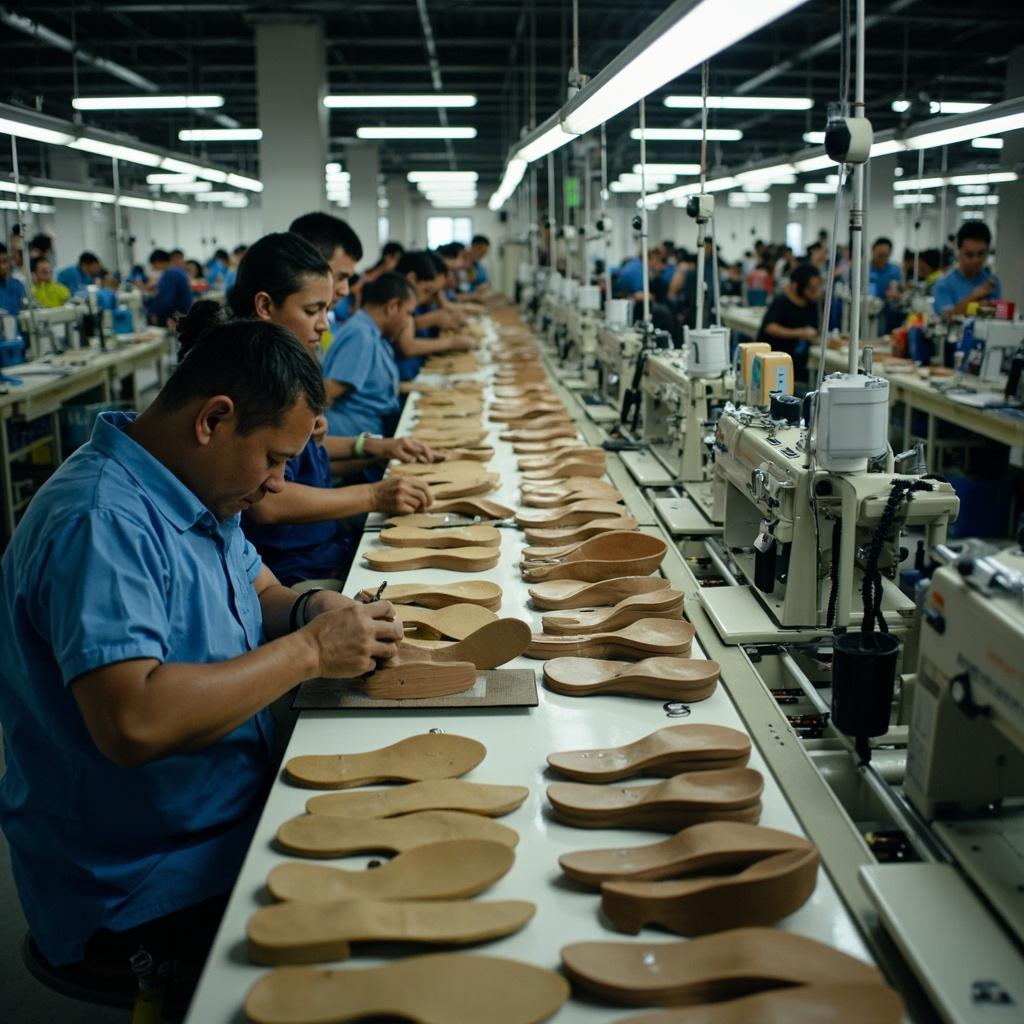
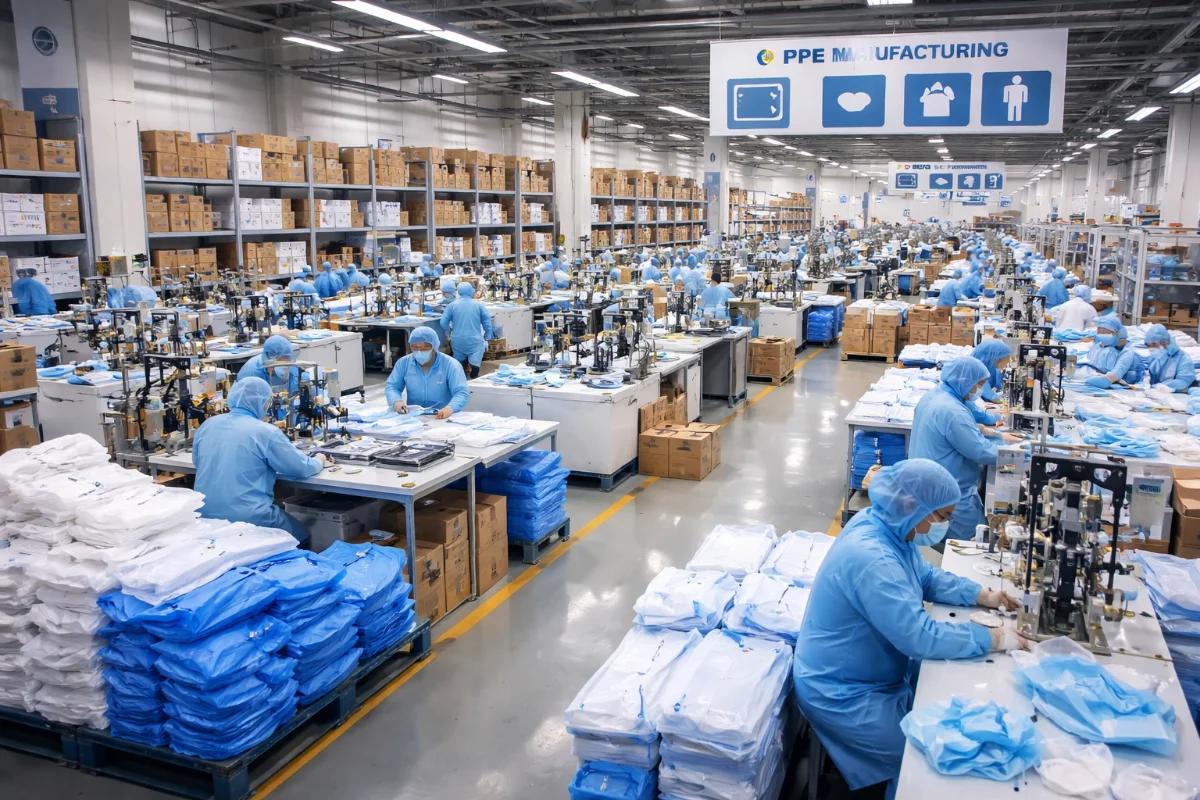
The global outdoor gear manufacturing sector, producing the technical apparel, footwear, and equipment for a $235 billion industry, operates in the shadows of the brands that consumers love—but it is in these factories, not in marketing departments, that the industry's most consequential battles for performance, sustainability, and cost are being fought. Brands tell the stories on the stage, but factories determine the outcome behind the scenes. The defining characteristic of outdoor gear manufacturing is the tension between technical performance requirements and labor-intensive production processes. A waterproof-breathable hard-shell jacket requires seam taping, laser-cut venting, and laminated zippers—processes that demand skilled operators and specialized machinery. A technical hiking boot involves 80+ separate manufacturing steps, from leather clicking to lasting to vulcanization, each with quality implications that compound through the assembly process. This technical intensity is why outdoor manufacturing, unlike basic apparel, has proven more resistant to full automation and more concentrated in specific regional clusters—Vietnam for footwear, Portugal for technical outerwear, China for tents and sleeping bags, and specialized pockets in Italy (Montebelluna for ski boots) and the Czech Republic (outdoor footwear). The sustainability imperative is transforming manufacturing economics: Bluesign and OEKO-TEX certifications have evolved from differentiators to table stakes, while the Higg Index and ZDHC programs are creating standardized environmental performance metrics that allow brands to compare factory environmental footprints with the same rigor they apply to unit costs. The circular economy is creating an entirely new manufacturing discipline: factories that once only assembled new products are now developing disassembly, refurbishment, and recycling capabilities as brands launch take-back and resale programs that require reverse-logistics manufacturing skills.

This industry holds an open secret: a brand's moat is often its supply chain's moat. Who masters seamless lamination technology holds the key to the high-altitude market. Who engineers a waterproof yet breathable membrane that is both ultra-thin and unyielding controls the future of the hard-shell category. The manufacturing landscape reveals a hierarchy defined by technological specialization, brand client portfolios, and operational sophistication. Shenzhou International, the world's largest vertically integrated knitwear manufacturer, operates a 48-hour rapid-response system for Nike, Adidas, and Uniqlo, processing 1.5 million garments daily at its Ningbo campus with efficiency metrics that have become the industry benchmark. Its competitive advantage is not just scale but a manufacturing technology ecosystem—proprietary knitting, dyeing, and finishing processes integrated under one roof—that brand companies cannot replicate cost-effectively. Huali Group, manufacturing for Nike, Deckers (HOKA), and VF Corporation, has perfected 15-day mold development cycles for footwear components, a speed that locks in top-tier clients whose product development calendars cannot tolerate longer lead times. Mobi Garden, China's leading outdoor equipment manufacturer, has defined the entry standard for Chinese camping with its "Cold Mountain" tent series, demonstrating that domestic manufacturers can build brands in their own right rather than remaining anonymous OEMs. Pou Sheng International and Yue Yuen Industrial, the footwear manufacturing giants, operate at scales where a single factory complex employs 50,000+ workers—a concentration that simultaneously creates cost advantages and supply chain risk that brands are now actively diversifying away from. In Europe, specialized manufacturers like Aku (Italian technical footwear), Salewa/Oberalp Group (vertical manufacturing from concept to finished product in their Italian facilities), and the Portuguese technical outerwear cluster represent a "Made in Europe" manufacturing strategy that trades cost competitiveness for proximity to design, quality assurance, and sustainability premium.

This ranking shifts the spotlight back to the source. We look beyond the brand's glossy exterior and delve into the world's core production hubs. We re-evaluate the true capabilities of top-tier outdoor gear manufacturers across four key dimensions. Our data comes from factory ESG audits, the capacity reports of manufacturing giants, public patent filings, and international certification databases. We want to show you the hands that build the multi-billion-dollar outdoor industry.

Our Ranking Methodology

VerityRank evaluates outdoor gear manufacturers across four equally weighted dimensions:

Production Scale (25%): Annual garment and gear output volume, facility count and manufacturing square footage, workforce size and skill composition, and capacity utilization and expansion investment trajectory.

Technological Integration (25%): Proprietary manufacturing technologies (seamless bonding, laser cutting), automation penetration in labor-intensive processes, R&D and prototyping capability embedded in manufacturing, and digital manufacturing maturity (3D design-to-production pipeline).

Supply Chain Reach (25%): Key brand client portfolio quality and relationship longevity, vertical integration depth, raw material and component sourcing network, and geographic manufacturing diversification and risk management.

Sustainability & Compliance (25%): Bluesign and OEKO-TEX certification coverage, carbon reduction targets and trajectory (SBTi), water treatment and chemical management (ZDHC), and labor and safety standards (WRAP, Fair Wear, SA8000).

Data Sources & References

Outdoor Industry Association — Supply Chain Data

Bluesign — Sustainable Textile Manufacturing Data

ZDHC — Chemical Management in Manufacturing

WRAP — Responsible Manufacturing Certification

ISPO — Global Outdoor Manufacturing Intelligence

Disclaimer: The data in this ranking is compiled from third-party authoritative sources, including national statistical agencies, industry association capacity reports, academic research from university supply chain management departments, AI-driven global patent and ESG audit data, and publicly listed company financial reports. The ranking results are derived from a multi-dimensional algorithmic model and are intended for reference and market decision support only. They do not constitute direct investment advice or an absolute endorsement of any single factory.

Top 10 Rankings

2026.05 Edition
1
Amer Sports, Inc.

Amer Sports, Inc.

Amer Sports, Inc. is a Finland-origin global multi-brand performance sports product group, now majority-owned and operationally driven by a Chinese consortium led by ANTA Sports. Functioning as a “brand empire” in the professional sports arena, its core strategy is to acquire, nurture, and synergistically manage a portfolio of iconic brands that hold absolute leadership in their respective niches, including Arc‘teryx, Salomon, Wilson, Atomic, and Suunto. Its business deeply spans outdoor equipment, ball sports gear, fitness machinery, and high-performance apparel and footwear. Operating a capital-light brand management and platform model, it distributes through a robust global supply chain, a rapidly expanding direct-to-consumer (DTC) retail network, and wholesale channels. Empowered by ANTA, the group has seen rapid growth, with Greater China becoming its largest market. Reaching €4.411 billion in revenue in 2024, it is advancing toward its €5 billion target for 2025, standing as a strategically sharp and execution-excellent growth paradigm in the global professional sports industry.
Strengths: Amer Sports’ core strengths lie in its nearly irreplicable portfolio of top-tier professional sports brands, where each subsidiary (e.g., Arc‘teryx, Salomon) possesses defining technical authority and “cult-like” user loyalty in its segment, creating a wide competitive moat; concurrently, the group has successfully driven brand premiumization and DTC transformation, and, leveraging the deep China market insight and growth resources from ANTA, achieves powerful synergy between its “global platform” and “China engine”.
Weaknesses: Amer Sports’ main weaknesses are its increasing growth reliance on the single China market, necessitating a balance between this explosive growth and steady development in other global markets to mitigate potential risks; simultaneously, in pushing the premiumization and cross-over of brands like Arc‘teryx, maintaining their core professional credibility to avoid brand dilution, along with the complex task of managing the culture and operations of multiple independent top brands, presents ongoing challenges.

Brand

Amer Sports

Founded

1950

Workforce

10K+

Presence

100+ Countries

Headquarters

Finland

Market

NYSE:AS

Key Product Categories
Fashion Accessories ManufacturersMen's Clothing IndustryMen's Outerwear IndustryMen's Sportswear IndustryWomen's Clothing IndustryWomen's Outerwear IndustrySports Gear BrandsMen's Clothing IndustryMen's Outerwear IndustryMen's Sportswear IndustryFashion Accessories ManufacturersMen's Clothing IndustryMen's Outerwear IndustryMen's Sportswear IndustryWomen's Clothing IndustryWomen's Outerwear IndustrySports Gear BrandsMen's Clothing IndustryMen's Outerwear IndustryMen's Sportswear Industry
2
Decathlon Groupe

Decathlon Groupe

The Decathlon Group, originating from France, is a unique global sports industry behemoth, recognized as the world's largest vertically integrated specialist sports goods retailer and manufacturer. It employs a fully integrated SPA model encompassing design, production, logistics, and retail, overseeing a "constellation" of over 20 in-house passion brands (e.g., Quechua, Kalenji) covering 80+ sports. Through extreme cost control enabled by its global proprietary production bases, extensive supply chain, and vast network of experiential megastores and e-commerce, the group successfully fulfills its "sport democratization" mission by offering one-stop, high-value solutions for all sports equipment. With annual revenue exceeding €16 billion and operations in 70+ countries, Decathlon is not only a commercial leader in scale but also a social enterprise exemplar that profoundly influences mass sports participation worldwide through business model innovation.

Strengths: Decathlon's core strengths are its unparalleled vertical integration and economies of scale across the entire supply chain, enabling supreme cost control from R&D to retail and establishing a leading global value-for-money barrier; concurrently, its complete sports ecosystem covering apparel, footwear, and professional equipment, coupled with its "warehouse-style" in-store experience, creates powerful one-stop shopping stickiness and the broadest family user base.

Weaknesses: Decathlon's main weaknesses are the inherent organizational complexity and agility challenges of its global "supertanker" operations, hindering rapid response to niche market trends; furthermore, its long-established core identity of "high value-for-money" creates resistance to brand premiumization for upmarket expansion, and its vast physical retail network faces ongoing optimization and rental cost pressures amid e-commerce competition.

Brand

Decathlon Groupe

Founded

1976

Workforce

100K+

Presence

70+ Countries

Headquarters

France

Market

1700+ StoresGlobal Stores Unlisted ( Family Business )

Key Product Categories
Outdoor Gear CompaniesMen's Clothing IndustryMen's Outerwear IndustryMen's Sportswear IndustryWomen's Clothing IndustryWomen's Outerwear IndustrySports Gear BrandsMen's Clothing IndustryMen's Outerwear IndustryMen's Sportswear IndustryOutdoor Gear CompaniesMen's Clothing IndustryMen's Outerwear IndustryMen's Sportswear IndustryWomen's Clothing IndustryWomen's Outerwear IndustrySports Gear BrandsMen's Clothing IndustryMen's Outerwear IndustryMen's Sportswear Industry
3
Anta Sports Products Limited

Anta Sports Products Limited

Anta Sports Products Limited is China's leading and globally top-three comprehensive sports goods group, headquartered in Fujian, founded in 1991, and listed on the Hong Kong Stock Exchange (2020.HK) in 2007. With a "single-focus, multi-brand, omni-channel" strategy, its portfolio includes Anta, FILA, Descente, Kolon, Arc'teryx (Amer Sports), and the newly acquired Jack Wolfskin (2025) and a stake in PUMA (2026). In 2025, group revenue reached approximately RMB 75–78 billion, with over 13,000 stores globally, ~65,000 employees, and annual footwear/apparel capacity of 140 million pairs and 100 million pieces respectively. As an official IOC uniform supplier, Anta is accelerating its transformation from a Chinese champion into a world-class sports group through multi-brand synergy and global M&A.

Strengths: Anta's core strengths lie in its exceptional multi-brand operation capabilities and global M&A integration expertise, leveraging the Anta, FILA, Descente, and Arc'teryx brand matrix to precisely target mass, fashion, and premium outdoor segments—strengthened by the 2025 PUMA stake acquisition and Jack Wolfskin purchase; its DTC transformation has achieved ~90% direct sales, demonstrating industry-leading channel control; deep partnerships with top IPs like NBA's Kyrie Irving and its role as consecutive Olympic Games uniform supplier build a formidable professional image moat; MSCI ESG rating upgraded to AA, highlighting outstanding supply chain sustainability.

Weaknesses: Anta's main weaknesses include inventory pressure, with average turnover days rising to 136 in 2025, presenting ongoing de-stocking challenges; multi-brand integration complexity, with FILA's growth slowing and newly acquired brands like Jack Wolfskin requiring time to digest; overseas expansion remains nascent, with brand awareness in Western markets far behind Nike and Adidas; R&D investment ratio still trails international giants, requiring continuous catch-up in core technologies for premium professional segments.
Brand

Anta

Founded

1991

Workforce

55K+

Presence

30+ Countries

Headquarters

China

Market

SEHK : 2020

Key Product Categories
Baby Clothing (0-24 Months) ManufacturersAthletic Shoes IndustryChildren's Shoes IndustryBackpacks IndustrySpecialty Bags IndustryBasic Hosiery IndustryChildren's Clothing (For Ages 2-12) BrandsAthletic Shoes IndustryChildren's Shoes IndustryBackpacks IndustryBaby Clothing (0-24 Months) ManufacturersAthletic Shoes IndustryChildren's Shoes IndustryBackpacks IndustrySpecialty Bags IndustryBasic Hosiery IndustryChildren's Clothing (For Ages 2-12) BrandsAthletic Shoes IndustryChildren's Shoes IndustryBackpacks Industry
4
Zhanjiang Maya Travel Products Co., Ltd(Kailas)

Zhanjiang Maya Travel Products Co., Ltd(Kailas)

KAILAS, under Zhanjiang Maya Travel Products Co., Ltd., is a China-origin, R&D-driven professional outdoor equipment brand with “climbing DNA” at its core. From its inception focused on mountaineering, it has built a complete product portfolio spanning professional climbing hardware (ropes, harnesses, carabiners), high-performance outdoor apparel (shell jackets, down jackets), footwear (mountaineering boots, trail running shoes), and gear. Employing a vertically integrated “core self-production + globally optimized supply chain” model, it operates a modern in-house production base in Zhanjiang, Guangdong, to ensure control over core technologies and quality. Leveraging its dominant position in China’s climbing sector, national team endorsements, and superior value-for-money proposition, KAILAS has become a market-leading local outdoor brand in China and is actively expanding globally with its professional products as the vanguard.

Strengths: KAILAS’s core strengths are its profound in-house R&D capabilities and technical barriers rooted in mountaineering (e.g., self-developed FILTERTEC fabric, climbing safety equipment), which have established indisputable professional authority and high user trust in the domestic market; concurrently, its successful translation of technologies proven in extreme environments into mass-market outdoor products achieves an exceptional combination of “professional performance, reliable quality, and accessible pricing,” granting it strong market penetration.

Weaknesses: KAILAS’s main weaknesses are its relatively short brand history and cultural heritage in the international arena, facing significant challenges in building premium brand recognition and pricing power comparable to Arc’teryx or Patagonia in mature markets like Europe and North America; furthermore, in the domestic market, it contends with pressure from price reductions by international giants as well as price wars from emerging local brands, resulting in an increasingly fierce competitive landscape.

Brand

Zhanjiang Maya Travel

Founded

2003

Workforce

2K+

Presence

30+ Countries

Headquarters

China

Market

100+ StoresGlobal Sales Network Unlisted ( Private Company )

Key Product Categories
Outdoor Gear CompaniesMen's Clothing IndustryMen's Outerwear IndustryMen's Sportswear IndustryWomen's Clothing IndustryWomen's Outerwear IndustrySports & Outdoor Gear CompaniesMen's Clothing IndustryMen's Outerwear IndustryMen's Sportswear IndustryOutdoor Gear CompaniesMen's Clothing IndustryMen's Outerwear IndustryMen's Sportswear IndustryWomen's Clothing IndustryWomen's Outerwear IndustrySports & Outdoor Gear CompaniesMen's Clothing IndustryMen's Outerwear IndustryMen's Sportswear Industry
5
Zhejiang Mobi Garden Outdoor Products Co., Ltd.

Zhejiang Mobi Garden Outdoor Products Co., Ltd.

Zhejiang Mobi Garden Outdoor Products Co., Ltd. is a leading vertically integrated camping gear manufacturer and brand operator in China, employing a unique dual-engine business model of “OEM/ODM manufacturing + owned brand”. As the first listed camping company on the A-share market, it focuses on tents, camping furniture, and full-range equipment, leveraging its modern in-house production base to serve international brands like Decathlon. Its owned “Mobi Garden” brand accurately captured and defined China’s “glamping” trend, becoming a national-level solution provider with aesthetic, user-friendly, and comprehensive products. In 2024, revenue reached 1.082 billion RMB, split roughly equally between brand and OEM/ODM businesses. While industry cooling led to short-term pressure, its solid manufacturing foundation and broad brand recognition form its core competency for cyclical resilience.

Strengths: Mobi Garden’s core strengths lie in its solid vertically integrated manufacturing capability and first-mover advantage as a “national brand”; its in-house factory and OEM experience for global brands ensure product quality, cost control, and rapid response, while its brand successfully captured the family user mindset during the camping boom, building a strong channel network and user base. The combined “B2B+B2C” model provides unique resilience against industry fluctuations.

Weaknesses: Mobi Garden’s main weaknesses are its growth being significantly impacted by the post-pandemic rationalization of camping demand, facing dual pressures of a shrinking incremental market and homogenized price competition; simultaneously, the brand struggles to break through its “high-value” mass perception to establish a premium technical image, while channel inventory optimization and operational efficiency are urgent short-term challenges.

Brand

Mobi Garden

Founded

2003

Workforce

1K+

Presence

30+ Countries

Headquarters

China

Market

SSE:603908

Key Product Categories
Sports & Outdoor Gear ManufacturersMen's Sportswear IndustryWomen's Activewear IndustryBackpacks IndustrySpecialty Bags IndustrySports & Outdoor Gear IndustrySports & Outdoor Gear ManufacturersMen's Sportswear IndustryWomen's Activewear IndustryBackpacks IndustrySpecialty Bags IndustrySports & Outdoor Gear Industry
6
Beijing Toread Outdoor Products Co., Ltd.

Beijing Toread Outdoor Products Co., Ltd.

Beijing Toread Outdoor Products Co., Ltd. is a leading comprehensive outdoor sports brand in China and the “first outdoor stock” listed on the Shenzhen Stock Exchange's ChiNext board. With the core asset of being the “Official Supplier to Chinese Antarctic and Arctic Research Expeditions,” its business spans a full range of outdoor performance apparel, footwear, and equipment, serving the mass market through an omnichannel network of over 1,000 stores. In 2024, the company’s strategy to refocus on its outdoor core proved effective, achieving revenue of 1.773 billion RMB, a year-on-year increase of 15.99%, with net profit also showing strong growth. As a national-level outdoor brand, Toread is driving a transformation from professional trust to fashionable appeal through its self-developed TiEF technology platform and brand rejuvenation initiatives, consolidating its leadership in the Chinese outdoor market.

Strengths: Toread’s core strengths are its exclusive professional endorsement as the “Official Supplier to Chinese Antarctic and Arctic Research Expeditions,” which forms a profound and hard-to-replicate brand trust asset; concurrently, its extensive offline retail network (over 1,000 stores) covering cities across all tiers in China, particularly in lower-tier markets, combined with its full-category product line, creates a strong channel barrier and the capability to meet family-oriented one-stop shopping needs.

Weaknesses: Toread’s main weaknesses are its brand image facing aging challenges, creating pressure in attracting fashion- and trend-conscious Generation Z consumers; simultaneously, its market positioning faces a “sandwich” competition, being squeezed by international brands in the high-end market while confronting intense competition from numerous emerging value-for-money brands in the mass market, and the transformation of its vast traditional channel network towards digitalization and experiential retail also presents significant challenges.

Brand

Toread Outdoor Products

Founded

1999

Workforce

1K+

Presence

30+ Countries

Headquarters

China

Key Product Categories
Sports & Outdoor Gear ManufacturersMen's Clothing IndustryMen's Outerwear IndustryMen's Sportswear IndustryWomen's Clothing IndustryWomen's Outerwear IndustrySports & Outdoor Gear ManufacturersMen's Clothing IndustryMen's Outerwear IndustryMen's Sportswear IndustryWomen's Clothing IndustryWomen's Outerwear Industry
7
Zhejiang Jasan Holding Group Co., Ltd.

Zhejiang Jasan Holding Group Co., Ltd.

Zhejiang Jasan Holding Group Co., Ltd. is a globally leading vertically integrated knitwear manufacturer, specializing in OEM/ODM services for international renowned sport and casual brands, focusing on sports socks and seamless activewear. Listed on the Shanghai Stock Exchange Main Board, the company employs a full industrial chain model from spinning to sewing, with modern self-owned production bases in China and Vietnam, where Vietnamese capacity exceeds 50%, forming an efficient global production layout. Its core business has successfully expanded from traditional strength in cotton hosiery to high-value-added seamless sports underwear and yoga pants. In 2024, revenue reached 2.318 billion RMB, with seamless apparel contributing 58.1%, becoming the primary growth driver. Jasan Group is a typical “hidden champion”, whose value lies in its powerful scale manufacturing capability, deeply embedded partnerships with top-tier clients, and operational resilience through industry cycles.

Strengths: Jasan Group’s core strengths are its ultimate vertical integration across the supply chain and forward-looking global production layout (China + Vietnam), which build formidable barriers in cost, quality, and delivery; concurrently, its long-term strategic partnerships with global top brands like Decathlon and PUMA provide a highly stable order base, and the company has successfully transformed from a “Cotton Sock King” to a higher-margin “Seamless Apparel Giant”, significantly enhancing profitability and risk resilience.

Weaknesses: Jasan Group’s main weaknesses stem from its pure B2B manufacturing nature, making its performance heavily reliant on the order and inventory strategies of a few downstream key brand clients, lacking consumer-facing brand buffering and pricing autonomy; simultaneously, the industry constantly faces pressures from cyclical fluctuations in global consumer demand, volatile raw material prices, and rising labor costs in production bases like Vietnam, necessitating continuous automation upgrades to maintain cost competitiveness.

Brand

Jasan Group

Founded

1994

Workforce

10K+

Presence

30+ Countries

Headquarters

China

Market

SSE:603558

Key Product Categories
Intimates & Hosiery ManufacturersMen's Clothing IndustryMen's Tops IndustryMen's Sportswear IndustryWomen's Clothing IndustryWomen's Tops IndustrySocks BrandsMen's Clothing IndustryMen's Tops IndustryMen's Sportswear IndustryIntimates & Hosiery ManufacturersMen's Clothing IndustryMen's Tops IndustryMen's Sportswear IndustryWomen's Clothing IndustryWomen's Tops IndustrySocks BrandsMen's Clothing IndustryMen's Tops IndustryMen's Sportswear Industry
8
Snow Peak, Inc.

Snow Peak, Inc.

Snow Peak, Inc. is a Japan-origin, globally top-tier outdoor lifestyle brand renowned for its “Live Like Snow Peak” philosophy. Listed on the Tokyo Stock Exchange, its business vertically integrates premium camping gear and “Yama-style” apparel, centered around self-produced titanium products (e.g., iconic titanium cups) and high-end tents. The company employs a hybrid model of “core craftsmanship in-house (Japan) + global premium supply chain collaboration,” selling through global flagship stores, its website, and select retailers. FY2024 revenue reached ¥36.7 billion (approx. $230 million), but profits fell sharply due to expansion investments and rising costs. Its brand influence is rooted in Japan, with the domestic market contributing about 85% of revenue, successfully elevating products from functional gear to an identity symbol blending wabi-sabi aesthetics with modern lifestyle.

Strengths: Snow Peak’s core strengths are its powerful brand philosophy and cultural appeal, which build deep emotional connections and community loyalty; concurrently, its premier titanium craftsmanship and unique Japanese minimalist aesthetics create an irreplicable product identity and value, and it has successfully crossed over from hardcore camping gear to apparel and home goods, forming a complete premium lifestyle ecosystem.
Weaknesses: Snow Peak’s main weaknesses are the imbalance between its growth model and profitability, with recent profit plunges exposing challenges in cost control amid brand building and expansion; simultaneously, its heavy reliance on the single Japanese market (85% of revenue) poses a significant risk, and as a high-priced lifestyle brand, it faces greater demand elasticity during economic downturns, making it vulnerable to weak consumption.

Brand

Snow Peak

Founded

1964

Workforce

400+

Presence

20+ Countries

Facilities

50+ Stores

Headquarters

Japan

Key Product Categories
Sports & Outdoor Gear ManufacturersMen's Sportswear IndustryWomen's Activewear IndustryBackpacks IndustrySpecialty Bags IndustrySports & Outdoor Gear IndustrySports & Outdoor Gear ManufacturersMen's Sportswear IndustryWomen's Activewear IndustryBackpacks IndustrySpecialty Bags IndustrySports & Outdoor Gear Industry
9
Helinox Co., Ltd.

Helinox Co., Ltd.

Helinox Co., Ltd. is a South Korea-origin global premium ultra-lightweight outdoor furniture and equipment brand, renowned for its revolutionary DAC aluminum alloy technology and top notch industrial design. As a privately held design and brand operating company, Helinox adopts a capital-light outsourced production model, focusing on R&D, design, and global channel management. Its product line is 100% concentrated on ultra-lightweight folding chairs, tables, camping cots, and other camping gear (6.5), redefining outdoor rest experiences and successfully transitioning from professional backpacker gear to an iconic symbol of global glamping and high-end outdoor lifestyle. With deep channel roots and exceptional brand premium in mature markets like North America, Europe, and East Asia, Helinox, though not publicly disclosing specific financials, is estimated by the industry to have annual sales in the $100-200 million range, making it a highly profitable “hidden champion” and the absolute leader and technical benchmark in its niche.

Strengths: Helinox’s core strengths lie in its nearly irreplicable top-tier product performance and design barriers, built upon patented DAC aluminum alloy technology and its exoskeletal frame structure, making it the undisputed definer in the lightweight outdoor furniture field; concurrently, the “cult-like” brand loyalty and powerful community word-of-mouth it has established among high-end outdoor circles support substantial product premiums, and it has successfully expanded from professional equipment to broader outdoor leisure scenarios, attracting high-net-worth consumers.

Weaknesses: Helinox’s main weaknesses stem from its ultimate premium positioning and high-price strategy, which naturally limit market size and growth potential, primarily serving a niche, high-spending customer base; simultaneously, the market faces significant pressure from low-quality counterfeits and “alternative” products, which not only erode the potential market but may also dilute the brand image, and balancing the expansion into urban leisure scenarios without diluting its core professional outdoor DNA is an ongoing challenge.
Brand

Helinox

Founded

2009

Workforce

1K+

Presence

50+ Countries

Headquarters

South Korea

Market

100+ StoresGlobal Sales Network Unlisted ( Private Company )

Key Product Categories
Sports & Outdoor Gear ManufacturersSports & Outdoor Gear IndustryPerformance Accessories IndustryCamping Gear IndustryUtility Accessories IndustrySleeping Bag IndustrySports & Outdoor Gear ManufacturersSports & Outdoor Gear IndustryPerformance Accessories IndustryCamping Gear IndustryUtility Accessories IndustrySleeping Bag Industry
10
Ningbo Fire-Maple Outdoor Supplies Co., Ltd.

Ningbo Fire-Maple Outdoor Supplies Co., Ltd.

Ningbo Fire-Maple Outdoor Supplies Co., Ltd. is a globally leading vertically integrated outdoor cookware manufacturer and brand, deeply specializing in the niche of “camping gear ” such as outdoor stoves, cooksets, and camping utensils. The company employs an integrated “design + manufacturing + branding” model, centering on its highly automated in-house production base in Ningbo for deep control over precision metalworking. Its business model combines robust OEM/ODM export services (supplying numerous global outdoor brands) with the worldwide operation of its own “Fire-Maple” brand. Its products are sold in over 60 countries, renowned for their exceptional reliability and value-for-money, with estimated annual sales between $150-300 million, solidifying its position as an undisputed “hidden champion” and supply chain pillar in the outdoor cookware sector.

Strengths: Fire-Maple’s core strengths are its ultimate vertical integration based on its own factories, which builds formidable barriers in cost control, quality consistency, and rapid delivery; concurrently, its dual-engine model of “OEM/ODM foundation + owned brand growth” provides both stable scale cash flow and higher brand profit margins, granting it near-monopolistic penetration and excellent word-of-mouth reputation in the global mid-range and entry-level outdoor cookware market.

Weaknesses: Fire-Maple’s main weaknesses stem from its long-established practical, “high-value-for-money” brand image, which creates significant consumer perception resistance when attempting to break into higher-priced, more design-oriented premium markets; simultaneously, as a manufacturing enterprise, its performance is vulnerable to fluctuations in raw material prices (e.g., aluminum, titanium) and global outdoor consumption sentiment, and it still faces the challenge of transitioning from a “fast follower” to a “category definer” in technological innovation.

Brand

Fire-Maple

Founded

2016

Workforce

500+

Presence

60+ Countries

Facilities

1 Factories

Headquarters

China

Market

Unlisted

Key Product Categories
Sports & Outdoor Gear ManufacturersSports & Outdoor Gear IndustryPerformance Accessories IndustryCamping Gear IndustryUtility Accessories IndustryOutdoor Cooking Equipment IndustrySports & Outdoor Gear ManufacturersSports & Outdoor Gear IndustryPerformance Accessories IndustryCamping Gear IndustryUtility Accessories IndustryOutdoor Cooking Equipment Industry

Frequently Asked Questions

What is the Sports & Outdoor Gear Industry, and what products does it include?
The Sports & Outdoor Gear Industry is a comprehensive sector that provides specialized apparel, footwear, gear, and equipment for various athletic activities and outdoor adventures, such as hiking, skiing, climbing, camping, and yoga. It goes beyond basic sportswear, integrating material science, ergonomics, and environmental technology. It is broadly categorized into six core segments: Performance Apparel (e.g., moisture-wicking shirts, yoga pants), Performance Outerwear (e.g., waterproof jackets, insulated parkas), Sports Footwear (e.g., hiking boots, trail-running shoes), Performance Accessories (e.g., backpacks, trekking poles), Camping Gear (e.g., tents, sleeping bags), and Specialized Sports Equipment (e.g., snowboards, climbing ropes). Its core mission is to offer safety, comfort, and professional support for human exploration and athletic pursuit.
What are the key gear differences between “lightweight hiking” and “backpacking\/trekking”?
The choice reflects a trade-off between “mobility efficiency” and “self-sufficient survival capability.” For lightweight hiking (day trips or simple overnights), the goal is speed and agility. Gear prioritizes minimal weight and bulk: lightweight trail shoes or hiking boots, a small backpack, and versatile, simplified items (e.g., a softshell instead of a full hardshell). For backpacking\/trekking (multi-day, remote routes), the priority is reliability and self-sufficiency. Gear must handle unpredictable weather and terrain: sturdy backpacking boots for support and protection, a large-capacity pack, a four-season tent, a warm sleeping bag, and a complete cooking system. Lightweight is about subtracting; backpacking is about adding essential security.
What does “sustainability” or “eco-friendly” mean in the outdoor gear industry?
In the outdoor industry, “sustainability” is an actionable framework, not just a marketing term. It encompasses: 1. Material Innovation: Using recycled materials (e.g., polyester from plastic bottles, Patagonia’s NetPlus® from fishing nets), biodegradable fabrics, or traceable natural materials (e.g., Responsible Down Standard certified down). 2. Durability & Repair: Manufacturing longer-lasting products and offering repair services (like Arc’teryx’s or Patagonia’s programs) to extend product life. 3. Cleaner Manufacturing: Reducing water, energy, and chemical use in production. 4. Circular Models: Implementing take-back, resale, or recycling programs (e.g., Patagonia’s Worn Wear). The core philosophy is to respect and minimize harm to the natural environment that the industry depends on and celebrates.
What Should Buyers Consider When Sourcing Sports & Outdoor Gear?
Sourcing sports and outdoor gear requires evaluating performance, durability, safety certifications, and brand authenticity.

1. Performance Specifications: Define activity-specific requirements - waterproofing, breathability, insulation, weight, packability, and durability.

2. Safety Standards: Verify compliance with UIAA/CE for climbing equipment, ASTM for helmets and protective gear, EN standards for EU market access.

3. Authenticity: Verify authorized distributor status, RFID/NFC authentication, and supply chain provenance to avoid counterfeits.

4. Warranty & Durability: Leading outdoor brands offer lifetime or limited lifetime warranties. Evaluate repair programs and spare parts availability.

5. Sustainability: Recycled materials, PFAS-free DWR treatments, Fair Trade certification, and supply chain transparency are increasingly baseline expectations for premium outdoor brands.
Which Regions and Countries Lead in the Global Sports & Outdoor Gear Industry?
The global sports & outdoor gear industry has a distinctive geographic footprint shaped by raw material access, manufacturing heritage, labor costs, and market proximity.

1. China: World''s largest producer — Nike, Adidas, and major brands manufacture here; domestic brands (Anta, Li-Ning, Xtep) growing rapidly.

2. Vietnam & Indonesia: Major manufacturing hubs for global athletic brands.

3. United States: Nike (Oregon), Under Armour, Columbia Sportswear, The North Face, Patagonia — brand and innovation leadership.

4. Germany: Adidas, Puma — Herzogenaurach; Jack Wolfskin, Vaude — outdoor specialists.

5. Taiwan: Major OEM/ODM manufacturer for athletic footwear (Pou Chen, Feng Tay).

Strategic Implications: Successful procurement in the sports & outdoor gear industry requires understanding regional specialization and maintaining diversified sourcing strategies that balance cost, quality, lead time, and geopolitical risk. Sustainability certifications and supply chain transparency are increasingly becoming prerequisites for market access in premium segments.