VerityRank

Top 10 Ceiling Integrated System Manufacturers

HomeBuilding Materials SuppliersTop 10 Ceiling Integrated System Manufacturers

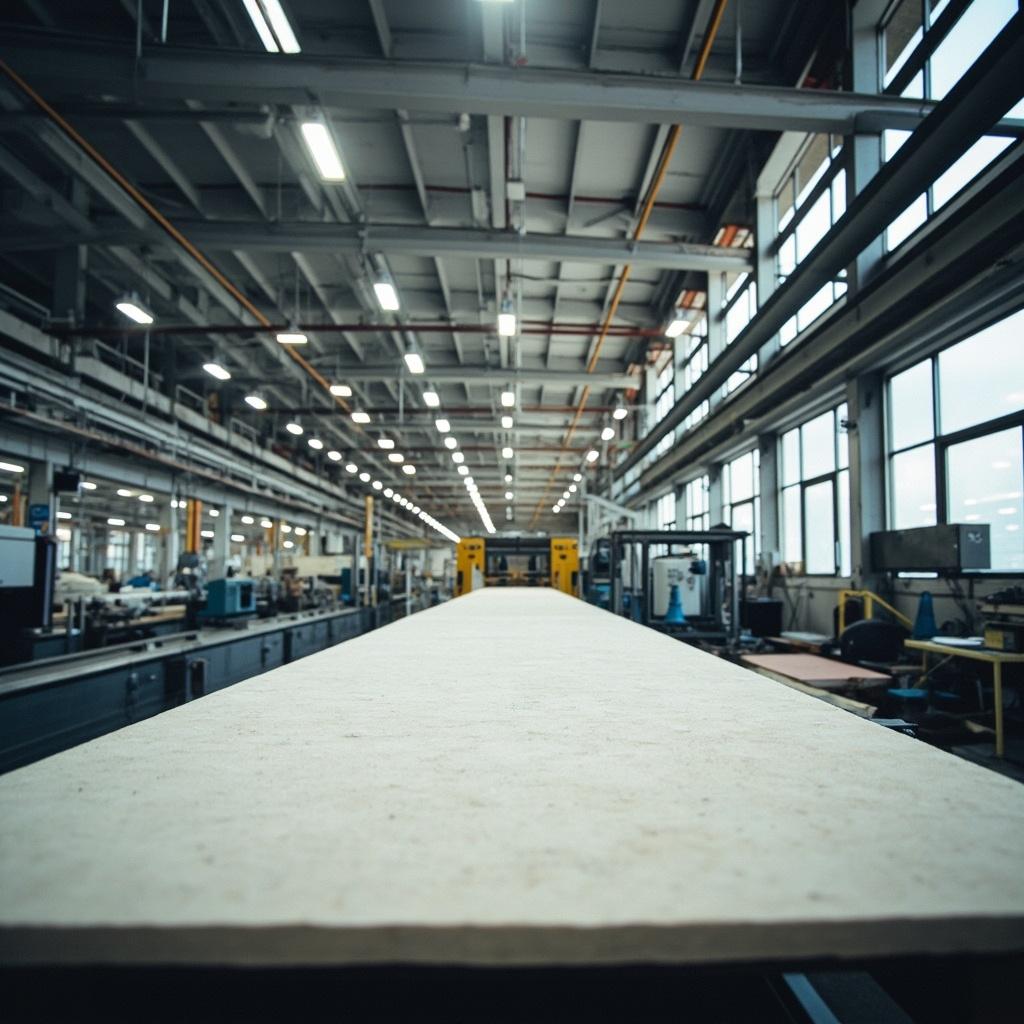
Behind every silent conference room, noise-controlled hospital ward, and acoustically perfected concert hall stands a manufacturing operation of staggering complexity. Ceiling integrated system manufacturing is not merely about pressing mineral fibers into tiles or extruding aluminum into T-bars — it is a precision industrial discipline that spans raw material chemistry, continuous-cast production lines spanning hundreds of meters, robotic perforation arrays capable of 50,000+ holes per panel, and finishing processes that must meet Class A fire ratings and NRC values of 0.90+ simultaneously. The global ceiling system manufacturing sector — valued at approximately $8-13 billion in 2025 — turns raw gypsum, basalt rock, recycled newsprint, aluminum ingots, and specialty polymers into engineered building components installed across millions of square meters daily.

This Verity Rank evaluation identifies the Top 10 Ceiling Integrated System Manufacturers — the industrial backbone of an industry where vertical integration depth, production automation sophistication, and quality control rigor separate industry leaders from commodity producers. Our multi-dimensional analysis weighs Manufacturing Scale & Capacity (annual square meter output, number of production lines, factory network geography); Technical Capability & Innovation (in-house R&D expenditure, patent portfolio, proprietary material formulations); Quality & Certification Breadth (ISO, CE, UL, seismic, and acoustic certifications held); and Sustainability & Supply Chain Excellence (recycled content utilization rates, carbon footprint reduction, circular economy adoption).

The manufacturers ranked here represent the world's most formidable ceiling production ecosystems. Armstrong World Industries operates the largest dedicated ceiling manufacturing network in North America with seven plants producing over 200 million square feet annually. Saint-Gobain leverages 1,200+ production facilities globally with ceiling-specific plants in 12 countries. Knauf, the world's largest gypsum manufacturer, runs 300+ plants with ceiling tile lines integrated into its broader drywall ecosystem. Rockwool operates 42 stone wool production facilities where ceiling tiles emerge from the same volcanic basalt melting process that produces their legendary insulation. USG (now a Knauf subsidiary) maintains dedicated R&D centers that developed Sheetrock® — the most specified gypsum panel brand in North America. Hunter Douglas controls aluminum smelting and roll-forming operations feeding its architectural metal ceiling lines. OWA runs one of Europe's largest single-site mineral fiber ceiling plants from Amorbach, Germany. Midea brings massive-scale Chinese smart manufacturing with 35+ global production bases. SAS International demonstrates that British precision engineering still commands premium pricing in global airport and transit hub projects. OPPLE Lighting integrates LED manufacturing directly into ceiling panel production — a convergence few Western manufacturers have achieved.

For architects specifying high-performance ceilings, contractors managing complex commercial builds, and procurement teams seeking reliable global partners, this manufacturing ranking provides the definitive guide to who actually builds the systems behind the brand names.

Disclaimer: The data in this ranking is compiled from third-party authoritative sources, including factory audit reports, ISO/CE certification databases, publicly listed company annual reports, industry association production statistics, and AI-driven global supply chain analysis. The ranking results are based on a multi-dimensional algorithm model and are intended for reference and market decision support only. They do not constitute direct investment advice or manufacturer endorsement.

Top 10 Rankings

2026.05 Edition
1
Armstrong World Industries, Inc.

Armstrong World Industries, Inc.

Armstrong World Industries, Inc. is the world's leading provider of ceiling and acoustic system solutions, listed on the New York Stock Exchange (ticker: AWI). Founded by Thomas Armstrong in 1860 in Lancaster, Pennsylvania, and headquartered in Lancaster, the company operates through in-house manufacturing and vertical integration, deeply focusing on ceiling integration and acoustic wall systems within the full spectrum of building materials. Through its Armstrong brand, the WAVE joint venture, and recent acquisitions including 3form, Zahner, and Geometrik, the company offers a comprehensive portfolio spanning mineral fiber acoustic ceilings, fiberglass panels, metal ceilings, wood acoustic wall panels, suspension systems (grids), translucent resin finishes, and custom metal architectural specialties. With 2025 global revenue of $1.621 billion and net income of $308.7 million, Armstrong operates 22 self-owned manufacturing plants and 7 joint venture grid facilities across North America, employs approximately 3,800 people, and serves major commercial markets worldwide. Powered by unassailable dominance in North American commercial ceilings (mineral fiber EBITDA margins reaching 42.1%), the industry-standard WAVE suspension systems for seismic applications, and a strategic acquisition-led expansion into high-margin Architectural Specialties, Armstrong is solidifying its position as the global leader in ceiling and acoustic systems through a century of acoustic expertise and unmatched pricing power.

Strengths: Armstrong's core strength lies in its unassailable dominance in the North American commercial ceiling market and an exceptionally high-profit moat, with mineral fiber business EBITDA margins consistently above 40% and industry-leading pricing power, while its Prelude and Suprafine grid systems have become the seismic standard for suspended ceilings. Its forward-looking "Architectural Specialties" acquisition strategy—acquiring 3form, Zahner, Geometrik, and Eventscape between 2024 and 2025—drove a 28% surge in that segment's revenue, successfully extending from standard mineral fiber into high-value custom solutions. Record free cash flow and profitability, with $346 million in free cash flow for 2025, provide robust support for ongoing acquisitions and shareholder returns.

Weaknesses: Armstrong's primary weaknesses include heavy concentration in the North American market, making it highly sensitive to local commercial real estate cycles and new construction starts. Despite record full-year results in 2025, fourth-quarter revenue and EPS narrowly missed extremely bullish analyst expectations, triggering a 9% single-day stock drop and highlighting market concerns about growth tolerance at its premium valuation. Its product portfolio remains heavily concentrated in ceilings and acoustic systems, with mineral fiber and grid products still accounting for the majority of revenue despite specialty segment growth. In Asian and emerging markets, direct penetration lags far behind its North American base, facing intense competition from regional and international players like BNBM and Knauf. Additionally, raw material price volatility (mineral wool, steel) continues to pressure gross margins.

Brand

Armstrong World Industries

Headquarters

USA

Founded

1860

Workforce

3.8K+

Presence

North America

Facilities

29+ FactoriesOwn

Key Product Categories
Wall Coverings​ BrandsWall PanelsWall Coverings IndustryAcoustic SolutionsCeiling PanelsCeiling Systems IndustryWall Coverings​ ManufacturersWall PanelsWall Coverings IndustryAcoustic SolutionsWall Coverings​ BrandsWall PanelsWall Coverings IndustryAcoustic SolutionsCeiling PanelsCeiling Systems IndustryWall Coverings​ ManufacturersWall PanelsWall Coverings IndustryAcoustic Solutions
2
Compagnie de Saint-Gobain S.A.

Compagnie de Saint-Gobain S.A.

Compagnie de Saint-Gobain S.A. is the absolute global leader in the building materials industry and a publicly traded company on Euronext Paris (ticker: SGO), tracing its origins back to 1665 when it was founded as the Royal Glassworks by King Louis XIV, headquartered in Courbevoie, France. Rooted in materials science, the company deeply focuses on the full spectrum of building materials, establishing a diversified product portfolio spanning architectural glass (energy-efficient glass, Low-E glass, specialty glass), plasterboard and light construction systems (Placo®), thermal and acoustic insulation (Isover glass wool, stone wool), exterior insulation systems, roofing materials, construction chemicals (Chryso), high-performance plastic piping, industrial ceramics, and abrasives (Norton). With 2025 global revenue of €56.0 billion, Saint-Gobain operates over 1,200 manufacturing facilities and more than 150 R&D centers across 76 countries, employing approximately 180,000 people. Powered by over 10,000 active patents and annual R&D investment exceeding €1.1 billion, Saint-Gobain is leading the global building materials industry's green transformation through its 350-year legacy of materials innovation and its "lightweight and sustainable" strategic focus.

Strengths: Saint-Gobain's core strength lies in its 350-year materials science heritage and full value chain integration, holding global technology and market leadership positions across its three core pillars: architectural glass, plasterboard, and insulation, with brands like Placo® and Isover serving as industry benchmarks. Its "materials + systems + services" solution model extends beyond individual products to complete building envelope systems (exterior insulation, partition walls, ceilings), significantly enhancing customer stickiness and project pricing power. With over €1.1 billion in annual R&D investment and more than 150 R&D centers worldwide, the company has built a formidable innovation moat, with advanced materials expertise in ceramics and fiberglass creating unique competitive advantages in industrial markets such as automotive and aerospace.

Weaknesses: Saint-Gobain's primary weaknesses include its complex organizational structure spanning both building and industrial markets across 76 countries, resulting in higher management complexity and greater sensitivity to global economic cycles compared to more specialized building materials companies. The company faces significant energy cost exposure, with glass melting and gypsum calcination processes highly dependent on natural gas prices, making margins vulnerable to European energy market volatility. In emerging markets, it faces intense price competition from local players like China National Building Material and Xinyi Glass, constraining market share expansion. Additionally, while its high-performance materials business holds technological leadership, its heavy concentration in cyclical industries such as automotive and aerospace limits risk diversification.

Brand

Saint-Gobain

Headquarters

France

Founded

1971

Workforce

180K+

Presence

76+ Countries

Facilities

1200+ Production Base

Market

Euronext Paris : SGO

Key Product Categories
Building Materials CompaniesCement & Tiles IndustryCement & Mixes IndustryWaterproofing Materials IndustryStone, Wood & Flooring IndustryEngineered Stone IndustryBuilding Materials SuppliersCement & Tiles IndustryCement & Mixes IndustryWaterproofing Materials IndustryBuilding Materials CompaniesCement & Tiles IndustryCement & Mixes IndustryWaterproofing Materials IndustryStone, Wood & Flooring IndustryEngineered Stone IndustryBuilding Materials SuppliersCement & Tiles IndustryCement & Mixes IndustryWaterproofing Materials Industry
3
Knauf Gips KG

Knauf Gips KG

Knauf Gips KG is the world's largest manufacturer of gypsum boards and building system solutions, and the undisputed leader in the gypsum building materials industry. Founded by Karl Knauf in 1932 in Iphofen, the company remains privately held by the Knauf family. Operating through system-based solutions, Knauf deeply focuses on gypsum board systems and thermal insulation systems within the full spectrum of building materials, offering a comprehensive portfolio spanning standard gypsum boards, fire-resistant and moisture-resistant specialty boards, light-gauge steel framing, partition and ceiling systems, mineral wool acoustic panels, stone wool, EPS insulation materials, and external thermal insulation composite systems (ETICS). With 2025 global revenue of approximately €15.0 billion, Knauf operates over 280 gypsum board plants, more than 150 insulation material facilities, and over 80 gypsum powder production lines across more than 90 countries, employs approximately 45,000 people, and has annual capacity of 3.5 billion square meters of gypsum board and over 5 million tons of insulation materials. Powered by the world's largest gypsum board production capacity, integrated "gypsum board + steel framing + insulation system" solutions, and a technology moat built on over 5,000 active patents, Knauf is solidifying its position as the global leader in gypsum building materials and building energy efficiency through its "systemic" approach and century-old family craftsmanship.

Strengths: Knauf's core strength lies in its absolute global leadership in the gypsum board market and unparalleled system solution capabilities, with annual capacity of 3.5 billion square meters far surpassing competitors, and providing complete drywall systems integrating gypsum boards, steel framing, and accessories to ensure optimal fire resistance, acoustics, and flatness. Its dual-driver vertical integration of "gypsum systems + insulation systems" creates powerful synergies across building energy efficiency and interior finishing, supported by over €500 million in annual R&D and more than 5,000 active patents. Global production network and deep family-owned enterprise roots, with over 280 plants across 90 countries enabling localized delivery and rapid response, while its century-old brand enjoys exceptional reputation among architects and contractors.

Weaknesses: Knauf's primary weaknesses include its status as a private family enterprise, resulting in limited financial transparency that makes it difficult to accurately assess profitability and debt structure. Its business is heavily concentrated in Europe (45% of revenue), making it highly sensitive to European construction cycles and facing macro pressures from reduced new projects in Germany and Central Europe. Raw material (gypsum, energy) cost volatility continues to pressure margins, while in emerging markets like China and Southeast Asia, it faces intense price competition from local giants such as BNBM and Taishan Gypsum. Additionally, in the prefabricated construction and green building materials sectors, it faces ongoing R&D and compliance cost pressures from evolving regulatory standards.

Brand

Knauf Gips KG

Headquarters

Germany

Founded

1932

Workforce

45K+

Presence

90+ Countries

Facilities

280+ Gypsum Board Factory

Market

Unlisted ( Family Business )

Key Product Categories
Building Materials SuppliersWall Coverings IndustryWall Panels IndustryAcoustic Solutions IndustryCeiling Systems & Integration IndustryCeiling Panels IndustryWall Coverings​ BrandsWall Coverings IndustryWall Panels IndustryAcoustic Solutions IndustryBuilding Materials SuppliersWall Coverings IndustryWall Panels IndustryAcoustic Solutions IndustryCeiling Systems & Integration IndustryCeiling Panels IndustryWall Coverings​ BrandsWall Coverings IndustryWall Panels IndustryAcoustic Solutions Industry
4
Rockwool A/S

Rockwool A/S

Rockwool A/S is the world’s largest manufacturer of stone wool insulation and a global benchmark in fire safety, acoustic comfort, and green building materials. Founded in 1937 in Denmark and listed on Nasdaq Copenhagen (ticker: ROCK-B), the company processes volcanic basalt into high-performance stone wool, deeply focusing on fireproofing, thermal insulation, and acoustic systems within the full spectrum of building materials. Through its brands—Rockfon (acoustic ceilings), Rockpanel (high-density exterior cladding), Grodan (hydroponic growing media), and Lapinus—Rockwool offers a comprehensive portfolio spanning external thermal insulation composite systems (ETICS), structural steel fire protection, acoustic wall panels, HVAC pipe insulation, suspended ceiling grids, and horticultural substrates. With 2025 global revenue of €3.877 billion and core operating profit of €570 million, Rockwool operates 42 manufacturing facilities worldwide, employs approximately 12,776 people, and serves over 120 countries. Powered by stone wool’s unique combination of A1 non-combustibility (melting point >1000°C), exceptional thermal and acoustic performance, and 100% recyclability, Rockwool is solidifying its position as the undisputed global leader in building fire protection and energy efficiency through Nordic industrial excellence.

Strengths: Rockwool’s core strength lies in its unassailable global leadership in stone wool manufacturing and unmatched product technology moat. Stone wool uniquely combines A1 non-combustibility (>1000°C melting point), superior thermal insulation, exceptional acoustic absorption, and 100% recyclability—making it indispensable for green buildings, passive houses, and fire-rated applications. Its Rockfon brand ranks among the world’s top three acoustic ceiling systems, while Rockpanel high-density stone wool cladding directly replaces traditional stone or metal facades, delivering “insulation + fire protection + decoration” integrated solutions. The company is a prime beneficiary of ESG and low-carbon policies, with its products serving as the standard material for net-zero buildings across Europe.

Weaknesses: Rockwool’s primary weaknesses include heavy geographic concentration in Europe and North America, with a €392 million impairment on Russian assets in 2025 due to geopolitical seizure, slashing net profit to just €28 million and exposing significant single-market policy risk. Its Asian market presence has been challenged by severe overcapacity and cost pressures, leading to the closure of its oldest Chinese coke-fired plant in late 2025, while a melt furnace accident at its Swiss facility disrupted operations. As a capital‑intensive, high-energy-consumption manufacturer, it faces escalating environmental compliance costs and heavy capital expenditure for green transitions, and stone wool remains less recognized in Asian markets compared to Europe and North America.

Brand

Rockwool A/S

Headquarters

Denmark

Founded

1937

Workforce

12.7K+

Presence

120+ Countries

Facilities

42+

Key Product Categories
Wall Coverings​ BrandsWall PanelsWall Coverings IndustryAcoustic SolutionsCeiling PanelsCeiling Systems IndustryWall Coverings​ ManufacturersWall PanelsWall Coverings IndustryAcoustic SolutionsWall Coverings​ BrandsWall PanelsWall Coverings IndustryAcoustic SolutionsCeiling PanelsCeiling Systems IndustryWall Coverings​ ManufacturersWall PanelsWall Coverings IndustryAcoustic Solutions
5
USG Corporation (United States Gypsum Corporation)

USG Corporation (United States Gypsum Corporation)

USG Corporation is the pioneering founder of modern gypsum board and the undisputed leader in North American wall and ceiling systems. Tracing its origins to 1902 with the invention of Sheetrock® gypsum board, the company was headquartered in Chicago before being acquired by Germany's Knauf Group in 2019 and delisted, now operating as Knauf's core North American business unit. Through vertically integrated manufacturing, USG deeply focuses on wall and ceiling systems within the full spectrum of building materials, offering a comprehensive portfolio through its brands—Sheetrock®, Durock®, Donn®, and Securock®—spanning paper-faced gypsum board, fire-rated board (Firecode®), mineral fiber acoustic ceilings, steel framing systems (Donn®), cement board, joint compounds, self-leveling underlayments, and ultra-low-carbon EcoSmart™ panels. With estimated 2025 North American revenue of $4.8-5.2 billion, USG operates over 50 manufacturing facilities (including gypsum mines, paper mills, and a dedicated shipping fleet) across North America, employing approximately 7,500 people. Powered by over 120 years of heritage, unrivaled brand equity where "Sheetrock" is synonymous with gypsum board, and the global resources of parent company Knauf Group, USG is solidifying its position as a foundational pillar of the global gypsum building materials industry through dominant North American market share and an unmatched vertically integrated supply chain.

Strengths: USG's core strength lies in its unassailable leadership in the North American gypsum board market and century-old brand moat, where "Sheetrock" has become the category name for gypsum board, commanding exceptional loyalty among professional contractors. Its extremely vertically integrated supply chain creates a nearly insurmountable cost barrier, with full control from owned gypsum quarries, dedicated shipping fleets, and paper mills to finished production lines, delivering overwhelming advantages in raw material and logistics costs. Backed by parent company Knauf Group's technical and capital resources, USG maintains leadership in green low-carbon products (EcoSmart™ panels with 25% lower carbon emissions) and circular economy initiatives, leveraging Knauf's global network for cross-regional technology and resource synergies.

Weaknesses: USG's primary weaknesses include heavy concentration in the North American market (US, Canada, Mexico), making it highly sensitive to regional housing cycles, with multiple price increases in 2024-2025 due to labor and transportation cost pressures leading to complaints from downstream contractors. Following the Knauf acquisition, brand independence has been diminished with constrained global expansion, as operations in Asia-Pacific and the Middle East have been fully integrated into the Knauf brand, limiting USG's footprint to its North American stronghold. As a traditional building materials company, legacy environmental issues related to historic asbestos-containing products are occasionally cited, requiring ongoing vigilance against health and environmental compliance scrutiny despite a full transition to asbestos-free, low-VOC products.

Brand

USG

Headquarters

Germany

Founded

1902

Workforce

7.5K+

Presence

North America

Facilities

50+ Factory

Market

Unlisted ( Delisted )

6
Hunter Douglas N.V.

Hunter Douglas N.V.

Hunter Douglas N.V. is the undisputed global leader in window coverings and architectural metal ceilings, and a design and technology benchmark in premium building materials. Founded by Henry Sonnenberg in 1919 in Germany and headquartered in Rotterdam, the Netherlands, the company was taken private by private equity giant 3G Capital in 2022 and delisted. Operating through highly vertically integrated manufacturing, Hunter Douglas deeply focuses on ceiling systems and intelligent window coverings within the full spectrum of building materials, offering a comprehensive portfolio through its brands—Hunter Douglas, NBK, and HeartFelt®—spanning metal ceilings (linear grilles, perforated acoustic panels, wood ceilings), architectural façades (terracotta panels, metal cladding), smart window coverings (PowerView® automation, Duette® honeycomb shades, Silhouette® sheer shades, wood blinds), and acoustic wall panels. With 2025 estimated global revenue of $4.8-5.0 billion, Hunter Douglas operates over 134 manufacturing and assembly facilities worldwide, employs approximately 23,500 people, and serves more than 100 countries. Powered by unassailable dominance in global commercial landmark metal ceilings (airports, high-speed rail stations, museums), technology leadership in premium window coverings (Duette® honeycomb shades as the category pioneer), and PowerView® smart systems fully integrated with the Matter protocol, Hunter Douglas is solidifying its position as a global leader in premium building materials and smart home solutions through a century of design heritage and unparalleled supply chain capabilities.

Strengths: Hunter Douglas's core strength lies in its unassailable dual-track market leadership in global metal ceilings and premium window coverings, holding a dominant share in commercial metal ceilings for landmarks (airports, rail stations, museums), while its category-defining Duette® honeycomb shades and Silhouette® sheer shades dominate the high-end window covering market. Its extremely vertically integrated global supply chain and exceptional brand premium, with over 134 self-owned manufacturing facilities controlling everything from aluminum smelting to fabric weaving, make its products the specified standard for world-class architectural projects. Forward-looking smart home integration and green technology innovation, with PowerView® smart systems fully compatible with the Matter protocol and seamless integration with Apple HomeKit and Google Assistant, alongside first-to-market 100% recycled aluminum ceilings and ocean plastic-recycled fabrics, sustain leadership in sustainable building materials.

Weaknesses: Hunter Douglas's primary weaknesses include heavy concentration in developed markets in Europe and North America, making it highly sensitive to commercial real estate and residential cycles in these regions. The 2024-2025 shift to comply with cordless safety regulations forced a costly transition from traditional corded products to motorized systems, raising retail prices and drawing consumer complaints. As a privatized entity, financial transparency is limited, with 3G Capital's profit-optimization focus leading to supply chain consolidation and workforce reductions that sparked localized protests. With its products positioned at the luxury tier of building materials, it faces intense price competition from local alternatives in Asian and emerging markets, creating a mismatch between its premium positioning and regional purchasing power.

Brand

Hunter Douglas

Headquarters

Netherlands

Founded

1919

Workforce

23.5K+

Presence

100+ Countries

Facilities

134+ Factories

Market

Unlisted ( Delisted )

7
OWA ( Odenwald Faserplattenwerk ) GmbH

OWA ( Odenwald Faserplattenwerk ) GmbH

OWA Odenwald Faserplattenwerk GmbH is a world-leading manufacturer of mineral fiber acoustic ceilings and acoustic systems, recognized as the quality benchmark for high-end commercial, healthcare, and education projects across Europe. Founded by a family in 1948 in Amorbach, Bavaria, the company remains privately held. Operating through highly concentrated in-house manufacturing, OWA deeply focuses on ceiling integration and acoustic environmental systems within the full spectrum of building materials, offering a comprehensive portfolio through its OWAcoustic®, OWAtecta®, and OWAconstruct® brands, spanning mineral fiber acoustic tiles, perforated metal ceilings, acoustic baffles and canopies, integrated lighting modules, proprietary steel suspension systems, and acoustic wall panels. With estimated 2025 global revenue of €150-250 million, OWA operates the world's most advanced single-site mineral fiber ceiling mega-factory in Amorbach, Germany, with annual capacity exceeding 25 million square meters, employs approximately 500-600 people, and exports to over 80 countries. Powered by exceptional acoustic performance, A2-class non-combustible fire ratings, the OWA Green Circle closed-loop recycling system, and the pioneering OWActive climate control ceiling technology, OWA is solidifying its position as a hidden champion in global high-end acoustic ceilings through German manufacturing excellence and relentless focus.

Strengths: OWA's core strength lies in its undisputed quality benchmark status in the global high-end mineral fiber acoustic ceiling market and its ultra-focused manufacturing DNA, with the Amorbach mega-factory ensuring zero color variation, no yellowing, and industry-leading acoustic data (NRC), earning deep trust among architects and designers. Its forward-looking circular economy and technological innovation, including the OWA Green Circle 100% closed-loop recycling system and the OWActive climate control ceiling integrating capillary tube networks into the grid, eliminate drafts from traditional HVAC and create a unique technology moat in green building and premium healthcare projects. German engineering precision and superior fire ratings, with full product lines achieving international A2-s1,d0 non-combustible certification, make OWA the preferred choice for high-standard commercial projects.

Weaknesses: OWA's primary weaknesses include heavy concentration in the European market and longer global logistics lead times (relying on a single German factory), making it difficult to compete on cost and delivery speed with multinational giants like Armstrong and Knauf in overseas markets. Its relatively small scale and exposure to raw material and energy cost volatility—mineral fiber production being energy-intensive—have severely squeezed margins amid recent European natural gas and electricity price fluctuations. The trend toward "exposed industrial ceilings" has reduced demand for fully clad mineral fiber ceilings, forcing a shift toward high-end custom products like acoustic canopies, which further raises project thresholds and limits competitiveness in price-sensitive markets.

Brand

OWA

Headquarters

Germany

Founded

1948

Workforce

500+

Presence

80+ Countries

Facilities

25 Million+ m²/Year

Market

Unlisted ( Family Business )

8
Midea Group Co., Ltd.

Midea Group Co., Ltd.

Midea Group Co., Ltd. (SZSE: 000333) is China's largest full-category smart home and technology conglomerate, headquartered in Foshan, Guangdong. Its business spans from core white goods like household air conditioners, refrigerators, and washing machines to kitchen appliances, cleaning appliances, and comprehensive smart home systems. It deeply penetrates the smart lighting sector through its subsidiary "Midea Intelligent Lighting," offering products and solutions ranging from ceiling lights and ambient lighting to whole-house smart lighting systems. With H1 2025 revenue reaching RMB 252.1 billion, it operates 63 production bases globally and employs approximately 195,000 people. As a vertically integrated global enterprise, Midea is leveraging its formidable manufacturing and R&D capabilities (e.g., GMCC compressors) to drive a comprehensive upgrade from single-product manufacturing to a whole-home intelligent ecosystem.

Strengths: Midea's core strengths are its unparalleled vertically integrated manufacturing capability and complete smart home ecosystem synergy; its in-house core component supply chain (e.g., the globally leading GMCC compressor) ensures cost and quality advantages, while the deep integration of lighting, appliances, and smart systems provides users with one-stop solutions.

Weaknesses: While Midea's lighting business benefits from the group's vast resources as one component of its ecosystem, the main "Midea" brand is predominantly perceived in the mass market as traditional home appliances, facing challenges in brand image and premium pricing power within the high-end lighting segment that values specialization and design, compared to dedicated lighting brands.

Brand

Midea Group

Headquarters

China

Founded

1968

Workforce

195K+

Presence

200+ Countries

Market

SZSE : 000333

Key Product Categories
Home Cleaning Appliances BrandsHome Lighting IndustryMain Lighting IndustryAmbient Lights IndustryTask Lighting IndustrySmart Lighting IndustryHome Cleaning Appliances ManufacturersHome Lighting IndustryMain Lighting IndustryAmbient Lights IndustryHome Cleaning Appliances BrandsHome Lighting IndustryMain Lighting IndustryAmbient Lights IndustryTask Lighting IndustrySmart Lighting IndustryHome Cleaning Appliances ManufacturersHome Lighting IndustryMain Lighting IndustryAmbient Lights Industry
9
SAS International Limited

SAS International Limited

SAS International Limited is a world-leading manufacturer of high-end metal ceilings and architectural metalwork, the preferred supplier for global transportation hubs, commercial landmarks, and corporate headquarters. Founded by a family in 1968 in Reading, England, the company remains privately held. Operating through UK-based in-house manufacturing, SAS deeply focuses on metal ceiling and acoustic systems within the full spectrum of building materials, offering a comprehensive portfolio spanning perforated acoustic metal panels, linear grilles and baffles, acoustic metal wall panels, custom architectural metalwork, radiant chilled ceilings, and proprietary concealed suspension systems. With estimated 2025 global revenue of $180-250 million, SAS operates three self-owned mega manufacturing facilities across England, Wales, and Scotland, employs over 800 people, and exports to more than 50 countries. Powered by world-leading metal fabrication precision, uncompromised UK-made quality assurance, deep integration of radiant cooling technology with building energy efficiency, and exceptional custom fabrication capabilities, SAS is solidifying its position as a hidden champion in global high-end metal ceilings through extreme focus and engineering excellence.

Strengths: SAS's core strength lies in its unrivaled quality benchmark in the global high-end metal ceiling market and ultra-focused manufacturing DNA, with UK-based in-house factories ensuring unmatched precision and color consistency across metal processing, perforation, and powder coating, making it the preferred choice for architects and major contractors on flagship airport and tech campus projects. Its forward-looking "ceiling + HVAC" cross-category integration, through radiant chilled ceiling systems that combine water-based temperature control with metal panels, creates a unique technology moat in zero-carbon buildings and LEED/BREEAM certified projects. Exceptional custom fabrication and engineering capabilities, with much of its capacity dedicated to non‑standard shapes, perfectly meet the bespoke demands of premium commercial spaces.

Weaknesses: SAS's primary weaknesses include heavy concentration in European and Middle Eastern premium markets, with reliance on UK-based manufacturing resulting in high global logistics costs and extended lead times, making it difficult to compete on price with Hunter Douglas or Armstrong which operate global supply chains. As a privately held company, financial transparency is limited, and post-Brexit customs complexity combined with high UK energy costs have significantly increased manufacturing expenses, translating into premium pricing that restricts mid-market penetration. With a highly focused product portfolio dominated by metal ceilings, SAS is acutely sensitive to commercial real estate and infrastructure cycles, while the rise of local competitors in emerging markets threatens its overseas share.

Brand

SAS

Headquarters

UK

Founded

1968

Workforce

800+

Presence

50+ Countries

Market

Unlisted ( Family Business )

Key Product Categories
Custom & Group Apparel CompaniesMen's Clothing IndustryWomen's Clothing IndustryProtective Products IndustryProtective Apparel IndustrySpecialized Gear IndustryCustom & Group Apparel ManufacturersMen's Clothing IndustryWomen's Clothing IndustryProtective Products IndustryCustom & Group Apparel CompaniesMen's Clothing IndustryWomen's Clothing IndustryProtective Products IndustryProtective Apparel IndustrySpecialized Gear IndustryCustom & Group Apparel ManufacturersMen's Clothing IndustryWomen's Clothing IndustryProtective Products Industry
10
OPPLE Lighting Limited

OPPLE Lighting Limited

OPPLE Lighting Limited (SSE: 603515) is a leading listed enterprise in China's lighting industry, headquartered in Shanghai. The company operates a vertically integrated model encompassing design, R&D, manufacturing, and sales, with its business absolutely focused on the home lighting sector and successfully transitioning toward becoming a "comprehensive smart lighting system solutions provider." With core production bases in Suzhou and Zhongshan, and an offline channel network covering over 110,000 stores, it achieved operating revenue of RMB 3.216 billion in the first half of 2025. Leveraging continuous investment in core technologies like SDL Smart Spectrum, deep channel penetration, and active digital transformation, OPPLE has established a formidable brand moat in the Chinese market and is expanding its business to over 70 countries worldwide.

Strengths: OPPLE's core strengths are its formidable market coverage and brand reach enabled by a nearly irreplicable offline channel network (over 110,000 stores), coupled with its strategic execution in successfully pivoting from traditional product manufacturing to higher-value-added smart lighting solutions and digital services based on this network.

Weaknesses: OPPLE's main weaknesses lie in the high correlation of its performance as an industry leader with the cycles of China's real estate market and domestic consumer demand, making it susceptible to short-term macroeconomic fluctuations; concurrently, despite initiating global expansion, its revenue and brand influence remain predominantly concentrated in the domestic market, requiring further depth in internationalization and contribution.

Brand

OPPLE Lighting

Headquarters

China

Founded

1996

Workforce

6K+

Presence

70+ Countries

Market

SSE : 603515

Key Product Categories
Home Lighting CompaniesHome Lighting IndustryMain Lighting IndustryAmbient Lights IndustrySmart Lighting IndustryOutdoor Lighting IndustryHome Lighting ManufacturersHome Lighting IndustryMain Lighting IndustryAmbient Lights IndustryHome Lighting CompaniesHome Lighting IndustryMain Lighting IndustryAmbient Lights IndustrySmart Lighting IndustryOutdoor Lighting IndustryHome Lighting ManufacturersHome Lighting IndustryMain Lighting IndustryAmbient Lights Industry

Frequently Asked Questions

How Do We Generate Our Rankings?
At VerityRank, we employ a rigorous multi-dimensional evaluation methodology that goes far beyond simple revenue comparisons or brand popularity polls. Our ceiling integrated system rankings are built upon four weighted assessment pillars:

1. Market Leadership & Financial Scale (30%): We analyze global revenue data, production capacity metrics, geographic market coverage, and installed base across commercial, institutional, and residential segments. Data is sourced from company annual reports, industry association databases (CISCA, FMMI), and third-party market intelligence.

2. Product Innovation & Technical Depth (30%): We evaluate acoustic performance ratings (NRC, CAC, AC), fire resistance certifications (ASTM E84, EN 13501), integrated technology portfolios (lighting, HVAC, IoT sensor integration), and patent holdings. Testing data is sourced from independent laboratories and certification bodies.

3. Sustainability & Compliance Credentials (20%): We assess recycled content percentages, low-VOC and formaldehyde-free certifications, Environmental Product Declarations (EPDs), LEED contribution scores, and circular economy initiatives. Data is sourced from published sustainability reports and green building certification databases.

4. Digital Brand Authority & User Sentiment (20%): We measure global search visibility, architect and specifier mindshare, installer satisfaction ratings, and online review sentiment across major platforms. Each metric is normalized, weighted according to its industry relevance, and aggregated into a composite score. Rankings are reviewed quarterly and updated when significant market developments warrant recalibration. Our goal is to deliver transparent, data-driven intelligence that architects, contractors, and procurement professionals can trust for strategic decision-making.
What is a ceiling integrated system?
A ceiling integrated system is a comprehensive, modular ceiling solution that combines the traditional functions of a suspended ceiling — acoustic control, fire protection, and aesthetic finish — with integrated building services including lighting fixtures, HVAC air distribution, fire sprinklers, smoke detectors, public address speakers, and increasingly IoT sensor networks — all designed to work together within a coordinated grid and panel framework. Unlike conventional ceilings where these services are independently installed and often clash visually and functionally, an integrated system is engineered from the ground up as a unified platform. Key components include: Suspension Grid System — the load-bearing metal framework (typically galvanized steel or aluminum T-bars) that supports all ceiling elements and is engineered for specific seismic zones and fire ratings.

Ceiling Panels — available in mineral fiber, fiberglass, metal (aluminum/steel), gypsum, wood, and specialty composites, each with distinct acoustic (NRC 0.50-1.00) and fire performance characteristics.

Integrated Service Modules — pre-engineered panels that incorporate LED lighting, linear air diffusers, sprinkler heads, and sensor housings that fit seamlessly within the grid pattern.

Perimeter Trim & Accessories — edge moldings, access hatches, seismic clips, and hold-down devices that complete the system's structural and aesthetic integrity. The primary advantage of an integrated system over piecemeal specification is coordination certainty: when all ceiling-plane services are designed and supplied as a single system, installation conflicts are eliminated, the plenum space is optimized for maintenance access, and the visual ceiling plane achieves a clean, architecturally coherent appearance that individual component specification rarely matches.
What are the main types of ceiling materials and their applications?
The ceiling integrated system industry utilizes five primary material categories, each offering distinct performance characteristics suited to specific building environments:

1. Mineral Fiber (Market Share: ~45%): The dominant ceiling material, composed of mineral wool, recycled content (often 50-85% post-consumer), starch binders, and perlite. Offers superior sound absorption (NRC up to 1.00) and excellent fire resistance (Class A, flame spread ≤25). Ideal for offices, schools, healthcare facilities, and retail spaces. Major producers include Armstrong, Knauf/AMF, OWA, and USG. Latest innovations include formaldehyde-free bio-based binders and ultra-high recycled content panels (85%+).

2. Metal (Aluminum & Steel, ~25% Market Share): Aluminum alloy and galvanized steel panels offering durability, moisture resistance, cleanability, and virtually unlimited perforation patterns. NRC values can reach 0.95 with acoustic backing. Dominant in airports, transit hubs, commercial kitchens, laboratories, and exterior soffits. Key manufacturers: Hunter Douglas, SAS International, Armstrong MetalWorks. Trends include anti-microbial powder coatings for healthcare and ultra-large format panels (up to 3m).

3. Gypsum (~15% Market Share): Provides seamless, monolithic aesthetic finishes with high fire resistance. Often used in premium commercial lobbies, theaters, and high-end residential. Key producers: Knauf, Saint-Gobain (CertainTeed), USG (Sheetrock®). Modern innovations include lightweight gypsum panels and mold-resistant formulations.

4. Fiberglass (~10% Market Share): Lightweight panels with high NRC values (up to 1.00), excellent sag resistance in high-humidity environments, and superior light reflectance (LR-1 up to 0.90). Key brand: Armstrong Ultima®. Popular in healthcare, clean rooms, and swimming pool enclosures.

5. Wood & Specialty Composites (~5% Market Share): Engineered wood veneer, solid wood slats, and wood-plastic composites for high-design architectural spaces, corporate HQs, and luxury hospitality. Key manufacturers: Hunter Douglas (3form), Armstrong WoodWorks®, various European specialists. Trends include FSC-certified acoustic wood slats and PET felt acoustic baffles from recycled plastic bottles.
What factors should be considered when choosing ceiling systems for commercial projects?
Selecting the right ceiling integrated system for a commercial project requires a multi-criteria evaluation that balances performance, compliance, cost, and aesthetics. The following five factors are critical:

1. Acoustic Performance (NRC, CAC, AC): This is typically the single most important specification criterion.

Noise Reduction Coefficient (NRC) measures sound absorption (0.00-1.00) — critical for open-plan offices, call centers, and classrooms; values of 0.70+ are considered high-performance.

Ceiling Attenuation Class (CAC) measures sound blocking between rooms through the ceiling plenum — essential for healthcare facilities, legal offices, and conference rooms; values of 35+ are recommended for speech privacy.

Articulation Class (AC) measures speech intelligibility in open spaces — important for auditoriums and lecture halls.

2. Fire Safety & Building Code Compliance: Ceiling systems must meet local fire codes. In North America, ASTM E84 Class A (flame spread ≤25, smoke developed ≤50) is the standard. In Europe, EN 13501-1 Euroclass A1 or A2-s1,d0 classifications apply. Additionally, the ceiling grid must maintain structural integrity during fire exposure — look for UL fire-resistance rated assemblies that specify the complete system (panels + grid + hanger wire).

3. Humidity & Environmental Resistance: For spaces like commercial kitchens, indoor pools, laboratories, and unconditioned corridors, select materials with high sag resistance (HumiGuard® Plus for mineral fiber, or metal panels). Relative humidity above 70% will degrade standard mineral fiber panels over time.

4. Seismic Performance: In seismic zones (California, Japan, New Zealand, etc.), the ceiling suspension system must meet IBC seismic design categories C-F. This requires heavy-duty grid systems, seismic separation joints, and perimeter containment using seismic clips and splay wires — typically adding $2-5/sq ft to installation costs.

5. Lifecycle Cost & Sustainability: Beyond initial material cost ($2-8/sq ft for panels, $1-3/sq ft for grid), consider maintenance requirements (cleanability, replacement ease), energy efficiency (light reflectance values of 0.85+ can reduce lighting energy by 15-20%), recycled content (LEED MR Credit 4), and end-of-life recyclability. Mineral fiber panels from major manufacturers now commonly contain 50-85% recycled content and can be returned through manufacturer take-back programs.
Which regions lead in ceiling system manufacturing and innovation?
The global ceiling integrated system industry exhibits a distinct three-hub manufacturing geography, each region contributing unique competitive advantages:

1. North America (~35% of Global Production): The United States dominates commercial ceiling manufacturing, anchored by Armstrong World Industries (7 plants, 200M+ sq ft annual capacity), USG (now Knauf subsidiary), and CertainTeed (Saint-Gobain). North American manufacturers lead in acoustic innovation, fire-rated assembly testing, and large-scale commercial specification infrastructure. The region's strength is bolstered by the CISCA industry association and close integration with the US Green Building Council's LEED rating system. Pennsylvania, Illinois, and Ohio form the traditional manufacturing corridor. Innovation focus: IoT-integrated smart ceilings, ultra-high recycled content, and healthcare-specific solutions.

2. Europe (~30% of Global Production): Germany leads European ceiling manufacturing through Knauf (world's largest gypsum producer, 300+ plants globally), OWA (premium mineral fiber specialist, Amorbach), Rockwool (stone wool technology pioneer, Denmark/Germany), and Saint-Gobain (French building materials conglomerate with 1,200+ facilities). The UK contributes SAS International (premium metal ceiling systems) and the Netherlands hosts Hunter Douglas. European manufacturers excel in sustainability certifications (EPD, Cradle to Cradle), fire performance (Euroclass A1/A2), and design aesthetics. Innovation focus: bio-based binders replacing formaldehyde, circular economy ceiling-to-ceiling recycling, and acoustic micro-perforation technologies.

3. Asia-Pacific (~30% of Global Production, Fastest Growing): China has emerged as the world's largest ceiling consumption market and a rapidly growing manufacturing base, led by Midea Group (smart appliance giant entering integrated ceiling space), OPPLE Lighting (LED-ceiling convergence), and numerous specialized manufacturers in Zhejiang and Guangdong provinces. Japan contributes precision engineering through the Knauf and Armstrong joint ventures. India represents the fastest-growing demand market fueled by massive infrastructure investments. Innovation focus: cost-effective mass production, smart home/IoT ceiling integration, and rapid customization for high-rise residential applications. The global ceiling system trade flows predominantly from manufacturing hubs in North America and Europe to construction markets worldwide, though Chinese manufacturers are increasingly exporting to Southeast Asia, the Middle East, and Africa with competitively priced, technically competent products.