VerityRank

Top 10 Doors & Windows Systems Manufacturers

HomeBuilding Materials SuppliersTop 10 Doors & Windows Systems Manufacturers

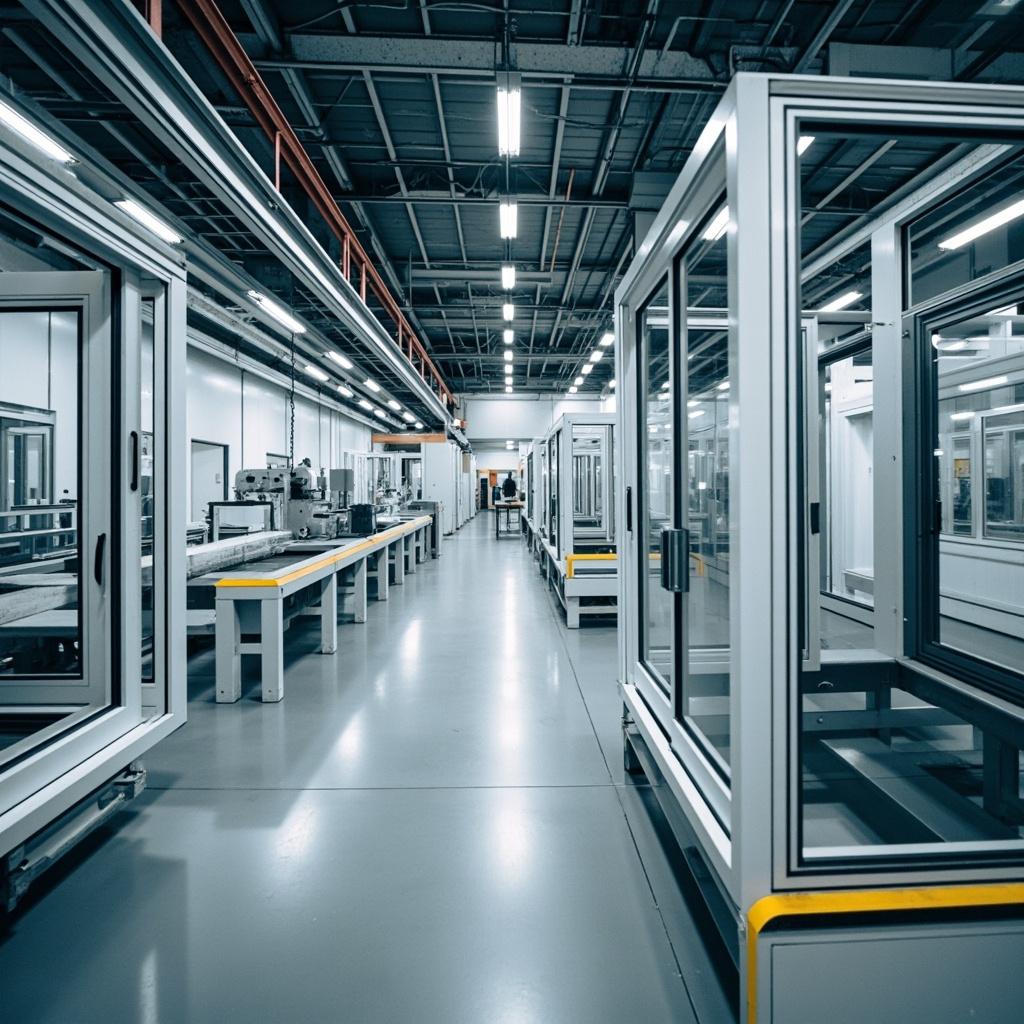
What separates a doors and windows systems manufacturer from a fabricator who simply assembles frame kits and glazing units? Vertical integration. Proprietary material science. Automated production precision. Testing infrastructure that simulates Category 5 hurricanes and Arctic winters. The manufacturers ranked in this Verity Rank assessment represent the industrial engine room of the $275 billion global fenestration industry — companies whose aluminum extrusion lines run 24/7, whose glass coating chambers deposit nanometer-thin low-E layers with atomic precision, whose thermal break technologies can reduce frame U-values by 80%, and whose testing labs subject every new system to 50,000+ open/close cycles, 150 mph wind-driven rain, and -40°F freeze-thaw simulation before a single unit reaches the market.

This Verity Rank evaluation identifies the Top 10 Doors & Windows Systems Manufacturers through a rigorous analysis that evaluates five manufacturing-specific dimensions: Production Scale & Automation Level (annual unit output, robotic automation penetration, factory count); Material Technology & R&D Investment (proprietary alloy formulations, glass coating patents, composite material development, R&D spend ratio); Quality Assurance & Certification Infrastructure (in-house testing capabilities, third-party certifications held, rejection rate data); Vertical Integration Depth (control over extrusion, coating, glazing, hardware production vs. outsourced components); and Sustainability & Supply Chain Resiliency (recycled aluminum usage, powder coating vs. anodizing environmental impact, regional manufacturing footprint for supply chain security).

The manufacturers ranked here operate at scales that are difficult to comprehend. Assa Abloy runs manufacturing operations in 70+ countries with facilities producing everything from mechanical lock cylinders to biometric access panels. Lixil Group operates 96 production sites across 19 countries. Andersen Corporation owns and operates its own vinyl extrusion, wood processing, and glass fabrication facilities — a degree of vertical integration that delivers tighter quality control than assembly-dependent competitors. JELD-WEN's 117 global manufacturing facilities form the industry's most extensive production network. YKK AP brings Japanese lean manufacturing philosophy to aluminum extrusion and thermal break technology, producing windows that achieve some of the industry's lowest U-values in aluminum frames. VELUX operates dedicated roof window factories across 11 countries with proprietary flashing systems that have achieved a Schüco, though primarily a system designer, maintains exacting quality control protocols over its licensed fabricator network — effectively turning hundreds of local fabricators into an extension of German manufacturing standards. Masonite operates 66 manufacturing and distribution facilities with advanced molded door skin technology. Hörmann runs 35+ specialized factories across Europe producing 15+ million doors and operators annually. Pella Corporation operates 17 manufacturing facilities in the United States with an integrated supply chain spanning lumber processing, vinyl extrusion, glass insulating, and final assembly.

For architects writing performance specifications, contractors navigating supply chain complexity, and procurement professionals evaluating manufacturing partners, this ranking provides the definitive industrial intelligence on who actually builds the doors and windows that shape our built environment.

Disclaimer: The data in this ranking is compiled from third-party authoritative sources, including factory audit reports, ISO 9001/14001 certification databases, patent office filings, publicly listed company annual reports, industry association manufacturing data, and independent testing laboratory records (UL, Intertek, ift Rosenheim). The ranking results are based on a multi-dimensional algorithm model and are intended for reference and market decision support only. They do not constitute direct investment advice or manufacturer endorsement.

Top 10 Rankings

2026.05 Edition
1
Assa Abloy AB

Assa Abloy AB

Assa Abloy AB (Nasdaq Stockholm: ASSA-B) is the world's leading access solutions provider and the undisputed global number-one door security conglomerate, headquartered in Stockholm, Sweden. Founded in 1994 through the merger of Sweden's ASSA and Finland's ABLOY — two historic lock manufacturers with roots dating back to the early 20th century — the group has grown into a world-class industrial powerhouse executing over 300 strategic acquisitions across more than 70 countries. Today Assa Abloy operates through five global divisions: EMEIA (Europe, Middle East, India & Africa), Americas, Asia Pacific, Global Technologies and Entrance Systems, employing approximately 63,000 colleagues worldwide. The company's industry-leading product portfolio covers the entire spectrum of mechanical locks, electromechanical locks, digital access control, hotel locking systems, automatic entrance and high-speed door systems, high-security doors and containers, citizen ID and identity management technologies, and smart home access solutions. Flagship brands include Yale (globally recognized as the No. 1 consumer smart lock brand), HID (the global standard in physical access control and citizen identification technologies), alongside ASSA ABLOY, August, Acorn, Core, Crawford, ASSA, FAB, Lockwood, TESA and amping, among many others. In fiscal year 2024, Assa Abloy achieved record group sales of approximately SEK 150 billion (circa USD 14 billion), representing 7% organic sales growth year over year, with continued margin expansion and strong free cash flow generation.

Strengths: Assa Abloy's core strength is its unassailable global market leadership in door opening solutions and access technologies — the company holds top-three or market-leading positions in virtually every country it operates in, creating an exceptionally wide and defensible competitive moat. The group's decentralized operating model enables each business unit to maintain focused local brand management and entrepreneurial agility while benefiting from group-wide procurement scale, R&D investment and capital allocation expertise. Its iconic brand portfolio — Yale, HID, ASSA ABLOY and 30+ other brands — spans all price points and customer segments from premium residential to institutional and high-security government and military applications, providing exceptional revenue diversification. The company's disciplined M&A track record of over 300 acquisitions has consistently created shareholder value by consolidating the highly fragmented global door and access market, with a rigorous four-pillar screening process ensuring strategic fit and financial discipline in every transaction. In the fast-growing digital access and smart building segment, HID and ASSA ABLOY's digital solutions are positioned as the de facto global standard for secure identity and building access in the era of IoT and cloud-based security management.
Weaknesses: Assa Abloy's primary structural vulnerability is its high correlation with new construction and renovation cycles: a significant share of the group's revenue is tied to new building construction and commercial renovation projects, which can suppress demand during periods of economic slowdown or rising interest rate environments. The group remains heavily concentrated in developed markets — with approximately 65% of sales generated in Europe and North America — limiting near-term growth potential in these mature, slow-growth regions and increasing sensitivity to European and U.S. economic conditions. Intensifying competition from Chinese manufacturers — particularly in the mid-market electromechanical lock and smart lock segment — presents a growing threat to Assa Abloy's market share in price-sensitive emerging markets, requiring ongoing investment in cost competitiveness. Geopolitical risks in certain emerging markets, including regulatory restrictions on foreign-owned enterprises and potential trade barriers, pose incremental challenges to the group's expansion plans. Finally, the group's ambitious acquisition strategy inherently carries integration management complexity and execution risk; the assimilation of culturally and operationally diverse businesses across 70+ countries requires sustained management attention and sophisticated governance.

Brand

Assa Abloy

Headquarters

Sweden

Founded

1994

Workforce

51,000+

Presence

100+ Countries

Facilities

200+ Production Bases

Key Product Categories
Doors & Windows Systems BrandsSecurity DoorsDoor & Window Hardware IndustryHome Security IndustryHousehold Hardware IndustrySmart Home Devices CompanyDoors & Windows Systems BrandsSecurity DoorsDoor & Window Hardware IndustryHome Security IndustryHousehold Hardware IndustrySmart Home Devices Company
2
Lixil Group Corporation

Lixil Group Corporation

LIXIL Corporation is a world-leading housing equipment and building materials group, and one of Asia's largest building material companies, formed through the integration of five major Japanese building material manufacturers in 2011 and headquartered in Tokyo, listed on the Tokyo Stock Exchange (ticker: 5938). Operating through vertically integrated manufacturing, the company deeply focuses on plumbing, sanitary ware, and window systems within the full spectrum of building materials, offering a comprehensive portfolio spanning smart toilets and thermostatic showers (INAX, GROHE, American Standard), thermal-break aluminum window systems (TOSTEM), system kitchens (SUNWAVE), eco-ceramic breathing tiles (ECOCARAT), outdoor fencing and sunrooms (TOEX), smart entry systems, and complete bathroom solutions. With FY2024/2025 revenue of JPY 1.504 trillion (approximately $10.0 billion) and core profit growth of 35.3% year-over-year, LIXIL operates 77 self-owned manufacturing facilities globally, employs approximately 48,660 people, and serves over 150 countries. Powered by a globally unrivaled water technology brand portfolio (GROHE, American Standard, INAX), dominant Japanese window systems and booming renovation business, and the proprietary functional material ECOCARAT breathing tile technology moat, LIXIL is solidifying its position as Asia's premier building materials and housing equipment leader through its unique "century-old craftsmanship + global integration" model.

Strengths: LIXIL's core strength lies in its unparalleled global water technology brand portfolio and comprehensive whole-home building materials integration. GROHE leads Europe's premium market, American Standard dominates North American mass channels, and INAX excels in Asia with smart toilets and ECOCARAT breathing tiles, creating a dominant position in hotel and spec home project tenders. Its dominant Japanese window systems (TOSTEM) and renovation business provide a stable profit foundation, with ultra-high insulation system windows capturing the renovation market as a key engine offsetting sluggish new housing starts. Proprietary products like ECOCARAT breathing tiles and GROHE water-saving systems offer significant differentiation advantages in green building procurement.

Weaknesses: LIXIL's primary weaknesses include heavy dependence on the Japanese domestic market, with aging population and persistently low new housing starts suppressing growth ceilings, forcing extensive structural reforms (plant closures in Thailand, exit from ceramic siding business, workforce reductions) that pressure short-term profitability. Its global integration progress has lagged expectations, with back-end supply chain and ERP system unification still underway across acquired brands like GROHE and American Standard, limiting synergy realization. It faces intense competition in Asian markets from specialized sanitary ware giants like TOTO and Kohler, with significant brand overlap and channel management complexity, while North American operations remain in an adjustment phase.

Brand

Lixil

Headquarters

Japan

Founded

1949

Workforce

58K+

Presence

150+ Countries

Market

TYO : 5938

Key Product Categories
Bathroom Fixtures BrandsLiving Room Furniture IndustrySeating Furniture IndustryStorage & Display Furniture IndustryBedroom Furniture IndustryWardrobes IndustryBathroom Fixtures ManufacturersLiving Room Furniture IndustrySeating Furniture IndustryStorage & Display Furniture IndustryBathroom Fixtures BrandsLiving Room Furniture IndustrySeating Furniture IndustryStorage & Display Furniture IndustryBedroom Furniture IndustryWardrobes IndustryBathroom Fixtures ManufacturersLiving Room Furniture IndustrySeating Furniture IndustryStorage & Display Furniture Industry
3
Andersen Corporation

Andersen Corporation

Renfro Brands is a global leader in sock design, manufacturing, and brand licensing management, headquartered in Mount Airy, North Carolina, USA. Founded in 1921, its core business comprehensively covers basic hosiery (fashion socks, athletic socks, dress socks) and functional hosiery (compression socks, diabetic socks, outdoor work socks), operating sock licenses for over 20 top-tier brands including Polo Ralph Lauren, Fruit of the Loom, and Dr. Scholl's. In 2025, sales reached approximately $660 million, with products sold in over 70 countries, ~2,200 employees, and annual capacity exceeding 150 million pairs. As a privately held company under The Renco Group, Renfro is accelerating its transformation from a century-old hosiery giant into a digitally-driven integrated apparel accessories platform through the acquisition of Soffe and its D2C platform Loops & Wales.

Strengths: Renfro's core strengths lie in its unparalleled brand licensing management capabilities, operating sock businesses for over 20 top-tier brands including Polo Ralph Lauren and Dr. Scholl's, commanding core share of the North American market; in functional hosiery, Dr. Scholl's monopolizes the U.S. diabetic sock and compression sock market, while Carhartt and Wolverine licensed lines deeply penetrate industrial protection scenarios; the 2024 acquisition of Soffe successfully expanded into military training wear and cheerleading apparel, creating "socks + activewear" synergies; century-old supply chain expertise and global sourcing networks ensure cost efficiency and quality consistency.

Weaknesses: Renfro's main weaknesses stem from its private ownership, which limits aggressive capital deployment and results in slower digital transformation compared to agile DTC brands; in 2025, consolidating production to Tennessee led to the closure of an Alabama facility with 455 layoffs, sparking public opinion pressure; business is heavily reliant on licensing agreements, with non-renewal of core licensed brands potentially causing significant revenue shocks; raw material price volatility narrowed 2025 margins by 2.1%, testing cost pass-through capabilities.

Brand

Andersen

Founded

1903

Workforce

13,500+

Presence

1 Countries

Facilities

1 Production Base

Market

Not Listed

Key Product Categories
Doors & Windows Systems BrandsWindow and Door System IndustryDoors & Windows Systems BrandsWindow and Door System Industry
4
JELD-WEN Windows and Doors

JELD-WEN Windows and Doors

JELD-WEN Holding Inc. is a leading global manufacturer of windows and doors, founded in 1960 and listed on the NYSE under ticker JELD, with headquarters in Charlotte, North Carolina. With approximately USD 4.0 billion in annual revenue, JELD-WEN operates across 20+ countries on four continents and employs over 18,000 people. The company's comprehensive product portfolio includes residential windows, commercial fenestration, entry doors, patio doors, folding walls, marine windows, architectural glass, and trusted brand portfolios such as JELD-WEN, LaCantina, and Vetter. Serving new construction, repair and remodel, and commercial real estate markets, JELD-WEN leverages digital specification tools adopted by 200,000+ architects and specifiers to generate a sustainable demand pipeline while maintaining localized manufacturing capabilities for supply chain resilience.

Strengths: JELD-WEN's core strength lies in its global manufacturing footprint spanning four continents, enabling localized supply chain operations and tariff mitigation while maintaining consistent quality standards. The company possesses the most comprehensive product portfolio in the industry, ranging from entry-level vinyl to architectural-grade aluminum and fiberglass windows, creating significant competitive barriers. With balanced revenue diversification split between new construction at 55 percent and repair and remodel at 45 percent, the company maintains natural revenue stability across market cycles. Its digital specification tools used by 200,000+ architects and specifiers create a recurring demand generation pipeline, while established relationships with top 20 US homebuilders including D.R. Horton, PulteGroup, and Lennar provide stable bulk volume and long-term revenue visibility.

Weaknesses: JELD-WEN's primary challenges include significant stock underperformance with shares declining over 40 percent from their historical peak, reflecting investor concerns about acquired brand integration and persistent market share pressure. The company carries substantial goodwill on its balance sheet, creating ongoing impairment risk should acquired brand valuations decline amid competitive pressures. With aluminum, steel, and glass representing over 35 percent of cost of goods sold, the company faces considerable margin volatility from commodity price fluctuations. Additionally, ongoing antitrust scrutiny limits the company's ability to pursue acquisitions in already-concentrated regional door and window markets, constraining strategic growth options.

Brand

JELD-WEN

Headquarters

USA

Founded

1960

Workforce

18,000+

Presence

20+ Countries

Facilities

10+ Production Bases

Market

NYSE:JELD
Key Product Categories
Doors & Windows Systems ManufacturersWindow and Door System IndustrySecurity DoorsDoors & Windows Systems ManufacturersWindow and Door System IndustrySecurity Doors
5
YKK Group

YKK Group

YKK Corporation is the world's largest manufacturer of fastening products and architectural products, founded in Tokyo in 1934 by the Yoshida family and remaining privately held. With approximately JPY 4,500 billion (USD 30 billion) in annual revenue, YKK operates 85+ production facilities across 70+ countries, employs over 44,000 people worldwide. As the global leader in zippers with an estimated 40 percent+ global market share in the fastening segment, YKK maintains dominant pricing power and formidable barriers to entry. The company's vertically integrated manufacturing from raw materials including aluminum smelting and polymer compounds to finished products ensures unparalleled quality consistency and cost control. YKK AP architectural products division ranks among the top 3 global curtain wall manufacturers, with iconic projects including Tokyo Skytree. Guided by the "Cycle of Goodness" philosophy emphasizing quality first, fair pricing, and on-time delivery, YKK serves leading global fashion brands including Zara, Uniqlo, and H&M.

Strengths: YKK's core strength lies in its absolute global leadership in fastening products with an estimated 40 percent+ market share, creating significant pricing power and high barriers to entry for competitors. Its fully vertically integrated manufacturing from raw materials including aluminum smelting and polymer extrusion to finished zippers and fasteners ensures unmatched quality consistency and cost efficiency that competitors cannot easily replicate. The company's strong brand equity in the fashion and apparel industry, where YKK zippers are considered a quality benchmark, creates consumer pull-through demand independent of retailer relationships. YKK AP architectural products division among top 3 global curtain wall manufacturers with participation in iconic global projects building credibility and technical expertise. With 85+ production facilities across 70+ countries, YKK provides unmatched global service capability for multinational customers and unmatched supply chain resilience.

Weaknesses: YKK's primary weaknesses include structural headwinds facing its fastening business as fast fashion brands increasingly pressure suppliers on cost, leading to share losses to lower-cost Asian competitors in Bangladesh, Vietnam, and Ethiopia. YKK AP architectural products division is losing market share in China and Southeast Asia to local competitors with significantly lower cost structures and faster delivery capabilities. The company faces relatively slow decision-making typical of traditional Japanese conglomerate structure limiting agility in responding to market disruptions. Additionally, limited digital transformation and e-commerce capabilities compared to direct-to-consumer apparel brands are disrupting traditional distribution channels and limiting growth opportunities in emerging digital markets.

Brand

YKK

Headquarters

Japan

Founded

1934

Workforce

44,000+

Presence

70+ Countries

Facilities

85+ Production Bases

Market

Not Listed

Key Product Categories
Doors & Windows Systems ManufacturersWindow and Door System IndustryDoor & Window Hardware IndustryHousehold Hardware IndustryDoors & Windows Systems ManufacturersWindow and Door System IndustryDoor & Window Hardware IndustryHousehold Hardware Industry
6
VELUX A/S

VELUX A/S

VELUX A/S is the world's leading manufacturer of roof windows, skylights, and daylight products for residential and commercial buildings, founded in 1941 by villum Kann Rasmussen in Hørsholm, Denmark, and remaining privately held under VKR Holding A/S, a private foundation. With approximately DKK 24.5 billion in revenue (EUR 3.3 billion/USD 3.5 billion), VELUX operates 11 production facilities across Europe, North America, and Asia, employing 11,800+ people and serving customers in 40+ countries. As the global market leader in residential roof windows with an estimated 50 percent market share in Western Europe, VELUX has achieved household name recognition exceeding 50 percent in most European countries, where the brand has become generically synonymous with roof windows in local languages. Committed to sustainability, VELUX targets net-zero carbon emissions by 2030 and uses 50 percent recycled content in plastic components, while maintaining a comprehensive dealer network of 30,000+ partners across 40+ countries.

Strengths: VELUX's core strength lies in its dominant global market position with an estimated 50 percent market share in Western Europe and leading positions in North America and Asia, creating unparalleled brand recognition and distribution scale. With household awareness exceeding 50 percent in most European countries, VELUX has achieved brand generic status in local languages, representing extraordinary household name recognition. Its comprehensive product ecosystem covering roof windows, manual and electric skylights, flat roof windows, sun tunnels, roller shutters, exterior awnings, indoor and blackout blinds, and smart home integration creates natural cross-selling opportunities and customer lock-in. With 30,000+ independent installer partners providing extensive market coverage, installation services, and after-sales support, VELUX maintains strong customer relationships. Its commitment to R&D with dedicated research facilities developing next-generation daylighting solutions including electrochromic glass and solar-powered ventilation ensures continued technological leadership.

Weaknesses: VELUX's primary weaknesses include narrow product focus on roof windows creating high concentration risk if residential construction and renovation markets decline structurally, and premium pricing strategy significantly limiting volume growth potential in price-sensitive emerging markets representing 60 percent of global housing starts. Limited product diversification beyond core daylighting category constrains growth vectors in adjacent building product categories, while exposure to European energy regulations affects renovation rates and window replacement cycle timing.

Brand

VELUX

Headquarters

Denmark

Founded

1941

Workforce

11,800+

Presence

40+ Countries

Facilities

11+ Production Bases

Market

Not Listed

Key Product Categories
Doors & Windows Systems BrandsWindow and Door System IndustryDoors & Windows Systems BrandsWindow and Door System Industry
7
Schüco International KG

Schüco International KG

Schüco International KG is the world's leading provider of door, window, and façade system solutions, and the undisputed technology benchmark in high-end building envelopes. Founded by Heinz Schürmann in 1951 in Bielefeld, the company remains privately held by the Schürmann family (under the German industrial group Otto Fuchs). Operating through system development and core component manufacturing, Schüco deeply focuses on door, window, and façade systems within the full spectrum of building materials, offering a comprehensive portfolio spanning thermal-break aluminum profiles, curtain wall mullions, passive house ultra-insulated window systems, BIPV photovoltaic façades, electromechanical smart windows (TipTronic), ballistic and fire-resistant specialty doors/windows, and sunroom framing systems. With 2024/2025 global revenue of approximately €2.15 billion, Schüco operates multiple large-scale aluminum extrusion and hardware facilities across Germany, France, and Italy, employs approximately 6,800 people directly, maintains over 10,000 certified fabricator partners globally, and serves more than 80 countries. Powered by its role as the industry's definer of "system windows," the material technology advantage from parent company Otto Fuchs (a core supplier to Porsche and Airbus), and digital innovations like Schüco Carbon Control (carbon footprint management) and IoF (Internet of Facades), Schüco is solidifying its position as the world's preeminent "system solution king" for building envelopes through exceptional brand premium and formidable technical barriers.

Strengths: Schüco's core strength lies in its world-leading system solution capabilities and unassailable technical moat. As the originator of the "system window" concept, its profiles, hardware, and seals form an integrated system that creates high technical barriers and user stickiness. Its access to premium aluminum materials through parent company Otto Fuchs provides decisive advantages in metallurgy and extrusion. Forward-looking low-carbon and digital strategies—Schüco Carbon Control for precise carbon footprint calculation and IoF (Internet of Facades) giving every window a digital ID—deliver overwhelming advantages in ESG building and smart building procurement. Its unmatched brand prestige among architects and top developers makes it the specified supplier for global landmarks such as Apple flagship stores and corporate headquarters.

Weaknesses: Schüco's primary weaknesses include heavy dependence on the European (particularly German) domestic market, with orders and margins under significant pressure in its home market due to the European construction downturn, high interest rates, and reduced new projects, forcing cost reduction initiatives. As a privately-held German family company, financial transparency is limited and expansion relies on internal cash flow, with weaker local presence in emerging markets compared to competitors. Its "system" closed ecosystem, while creating technical barriers, results in extremely high post-construction maintenance costs for end-users who must use proprietary parts, limiting competitiveness in price-sensitive markets. It also faces intense competition from local high-end brands in global markets such as Sayyas and Baikeluo in China.

Brand

Schüco

Headquarters

Germany

Founded

1951

Workforce

6.8K+

Presence

80+ Countries

Market

10,000+Global Licensed Processors/Partners Unlisted ( Family Business )

Key Product Categories
Metal Structural Materials CompaniesDoors & WindowsMetal Structural Materials IndustryRailings & FencingSolar MountingSecurity DoorsMetal Structural Materials CompaniesDoors & WindowsMetal Structural Materials IndustryRailings & FencingSolar MountingSecurity Doors
8
Masonite International Corporation

Masonite International Corporation

Masonite International Corporation is North America's largest manufacturer of residential door panels and building products, founded in Tampa, Florida in 1925 and having maintained a long-standing listing on the NYSE before its acquisition by Owens Corning in 2024. With approximately $3.9 billion in revenue at the time of acquisition, Masonite operates 70+ manufacturing facilities and 15 distribution centers across 5+ countries, employs over 10,000 people, and serves as a leading supplier to major home improvement retailers including Home Depot, Lowe's, and Menards. Now operating as a subsidiary of Owens Corning following the $3.9 billion acquisition, Masonite continues to solidify its position as the premier provider of comprehensive door solutions across the residential construction market.

Strengths: Masonite's core strength lies in its dominant 35% market share as North America's leading interior door panel manufacturer, creating substantial purchasing leverage and strong retailer relationships with major home improvement chains. With 70+ manufacturing facilities and 15 distribution centers, the company has built a comprehensive production footprint enabling just-in-time delivery capabilities that reduce inventory requirements for major retail customers. Its full product range spanning from entry-level hollow-core to premium solid-core, steel, and fiberglass doors serves multiple price segments and customer types. The Masonite Distributing Inc. (MDI) network provides value-added logistics, inventory management, and last-mile delivery services to smaller builders and remodelers across North America, extending market reach beyond major retail channels.

Weaknesses: Following the 2024 Owens Corning acquisition, Masonite now operates as a subsidiary, potentially losing entrepreneurial agility and brand independence that characterized its nearly 100-year history as a publicly traded company. The company faces extreme geographic concentration risk with 95%+ of revenue derived from North America, limiting diversification across global markets. Heavy dependence on the new residential construction market creates significant cyclical exposure, particularly given the sector's recent downturn. The $3.9 billion acquisition price creates substantial goodwill impairment risk if anticipated synergies fail to materialize or if market conditions deteriorate further.

Brand

Masonite

Headquarters

USA

Founded

1925

Workforce

10,000+

Presence

5+ Countries

Facilities

10+ Production Bases

Market

NYSE:OC
Key Product Categories
Doors & Windows Systems BrandsSecurity DoorsDoors & Windows Systems BrandsSecurity Doors
9
Hörmann Group

Hörmann Group

Hörmann Group is Europe's largest manufacturer of industrial doors, residential garage doors, and door frames, founded in Bielefeld, Germany in 1935 by the Hörmann family and remaining privately held under a KG ownership structure. With approximately €1.3 billion in annual revenue (USD 1.4 billion), Hörmann operates 20+ production facilities across Europe, North America, and Asia, employs over 6,000 people, and serves customers in 35+ countries. As Europe's undisputed market leader with number 1 positions in Germany, France, and the Benelux countries, Hörmann maintains an estimated 40%+ market share in Germany alone, demonstrating the formidable barriers to entry it has established through decades of brand-building and dealer network expansion.

Strengths: Hörmann's core competitive advantages stem from its unique combination of operational excellence and strategic patience. The family-owned KG structure provides long-term capital allocation flexibility without the short-term pressures of quarterly earnings reports, enabling investments in vertical integration including proprietary steel rolling mills and painting facilities that ensure consistent quality and cost efficiency. Its comprehensive brand portfolio spans from budget offerings like Estribor to premium Hörmann products, while its dealer network of 6,000+ specialized partners across Europe provides unparalleled installation and service capabilities. German engineering excellence remains central to Hörmann's identity, with typical product development cycles of 3-5 years for industrial doors reflecting the company's commitment to quality over speed.

Weaknesses: Hörmann faces significant geographic and product diversification challenges. The company's limited presence in Asian markets leaves it vulnerable to Chinese and Korean competitors who dominate with substantially lower cost structures. Its narrow focus on doors restricts revenue diversification opportunities compared to more diversified building materials peers. North American expansion remains in early stages with limited brand recognition against established regional players. The family ownership structure, while enabling strategic patience, also limits access to public capital markets for aggressive mergers and acquisitions that could accelerate geographic or product expansion.

Brand

Hörmann

Headquarters

Germany

Founded

1935

Workforce

6,000+

Presence

35+ Countries

Facilities

20+ Production Bases

Market

Not Listed

Key Product Categories
Doors & Windows Systems ManufacturersSecurity DoorsDoor & Window Hardware IndustryDoors & Windows Systems ManufacturersSecurity DoorsDoor & Window Hardware Industry
10
Pella Corporation

Pella Corporation

Pella Corporation is North America's leading premium window and door manufacturer, founded in 1925 by the Pella family in Pella, Iowa, and remaining privately held. With approximately USD 3.2 billion in annual revenue, Pella operates exclusively across the United States and Canada, employing over 11,000 people through 15 company-owned branches and a network of more than 200 independent dealers. The company's comprehensive product portfolio includes wood windows, fiberglass windows, vinyl windows, aluminum windows, entry doors, patio doors, commercial storefronts, architectural glass, Pella Catchers sports facility windows, and Pella Insulated Glass IGU production, serving everyone from luxury homebuilders to value-conscious homeowners. Pella's patented Endure by Pella fiberglass material delivers frames that are 40 percent stronger than competitors, backed by a Lifetime Limited Warranty, while consistently ranking at the top of J.D. Power Customer Satisfaction surveys for windows and doors.

Strengths: Pella's core strength lies in its premium brand positioning with the strongest customer loyalty and highest Net Promoter Score among major window brands in North America. The company's proprietary Endure by Pella fiberglass technology offers 40 percent stronger frames than competitors with a Lifetime Limited Warranty, demonstrating confidence in product durability. With 15 company-owned branches, Pella ensures consistent customer experience and installation quality control across all touchpoints. Its comprehensive product range spans from premium wood and fiberglass to mid-market vinyl, serving multiple customer segments from luxury homebuilders to value-conscious homeowners.

Weaknesses: Pella's primary weaknesses include exclusively North American operations with zero international presence, limiting growth opportunities in high-growth Asian and European markets. Its premium pricing strategy restricts market share in value-conscious segments where competitors like Milgard and Simonton have stronger positions. Additionally, Pella has limited commercial fenestration scale compared to architectural specialists like EFCO and Kawneer, while family ownership transition risks exist as the founding family evaluates succession planning.

Brand

Pella

Headquarters

USA

Founded

1925

Workforce

11,000+

Presence

1 Countries

Facilities

10+ Production Bases

Market

Not Listed

Key Product Categories
Doors & Windows Systems BrandsWindow and Door System IndustrySmart Home Devices CompanyDoor & Window Hardware IndustryDoors & Windows Systems BrandsWindow and Door System IndustrySmart Home Devices CompanyDoor & Window Hardware Industry

Frequently Asked Questions

How Do We Generate Our Rankings?
At VerityRank, we employ a rigorous multi-dimensional evaluation methodology that goes far beyond simple revenue comparisons or brand popularity polls. Our doors and windows systems rankings are built upon four weighted assessment pillars:

1. Market Leadership & Financial Scale (30%): We analyze global revenue data, manufacturing capacity metrics, geographic market coverage, and installed base across residential, commercial, and institutional segments. Data is sourced from company annual reports, industry association databases (WDMA, AAMA, FGIA, ift Rosenheim), and third-party market intelligence from Grand View Research and Mordor Intelligence.

2. Product Innovation & Technical Depth (30%): We evaluate thermal performance ratings (U-factor, SHGC, VT), structural performance (design pressure ratings, impact resistance), smart technology integration (IoT-enabled locks, automated shading, electrochromic glass), and patent portfolio breadth. Testing data is sourced from NFRC, Energy Star, Passive House Institute, and independent laboratories (UL, Intertek).

3. Sustainability & Compliance Credentials (20%): We assess energy efficiency certifications (Energy Star V7.0, Passive House), material sustainability (recycled aluminum content, FSC-certified wood, low-VOC finishes), Environmental Product Declarations (EPDs), and circular economy initiatives including take-back programs.

4. Digital Brand Authority & User Sentiment (20%): We measure global search visibility, architect and builder specification preference, installer satisfaction ratings, warranty claim rates, and online review sentiment across major consumer and professional platforms. Each metric is normalized, weighted according to its industry relevance, and aggregated into a composite score. Rankings are reviewed quarterly. Our goal is to deliver transparent, data-driven intelligence that architects, builders, and homeowners can trust for fenestration decisions.
What is a doors and windows system, and how does it differ from standard individual doors and windows?
A doors and windows system is a comprehensive, engineered building envelope solution where the framing profiles, glazing units, weatherstripping, thermal breaks, hardware interfaces, and installation accessories are designed, tested, and warranted as a single integrated product family — not as independently selected components that happen to fit together. This distinction is fundamental to building performance. The critical differences from standard individual products are:

1. System-Level Performance Testing: A true door/window system undergoes whole-unit certification testing — not just component-level checks. This includes air infiltration (ASTM E283), water penetration (ASTM E331), structural wind load (ASTM E330), forced entry resistance (ASTM F588), and thermal performance (NFRC 100/200) — all tested on the complete assembled unit as it leaves the factory. Individual doors and windows often lack this comprehensive testing.

2. Interoperability Across the Building Facade: Systems ensure that a building's entire fenestration — from fixed windows to operable casements, from entrance doors to curtain wall transitions — achieves consistent thermal performance, uniform sightlines, compatible hardware, and coordinated drainage planes. Without a system approach, thermal bridging can occur at junctions between different manufacturer products.

3. Thermal Break Technology: Modern aluminum systems incorporate polyamide thermal breaks (PA66 GF25) that physically separate interior and exterior aluminum profiles, reducing frame U-values from 5.0+ W/m²K (non-thermal) to below 1.5 W/m²K. This technology is engineered into the system profile design — it cannot be retrofitted to standard products.

4. Installation Integrity: Systems include proprietary mounting brackets, sill pans, end dams, and flashing components designed specifically for that system's drainage strategy. Standard windows often rely on generic installation methods that are the leading cause of water intrusion failures in buildings. In essence, choosing a system over individual products is the difference between specifying a fully crash-tested vehicle versus assembling one from parts catalogs.
What are the key energy efficiency standards for doors and windows systems?
Energy efficiency in doors and windows systems is governed by a comprehensive framework of international standards, rating systems, and certification programs that measure thermal performance, air leakage, and solar heat gain. The most important standards include:

1. U-Factor / U-Value (Thermal Transmittance): The primary metric for measuring heat loss through a window or door assembly.

Lower is better. Single-pane: ~5.7 W/m²K. Standard double-glazed: ~2.8 W/m²K. High-performance triple-glazed with argon fill and low-E coatings: 0.8-1.2 W/m²K.

Passive House certification requires ≤0.80 W/m²K for the complete installed unit. In North America, U-factor is measured in BTU/hr·ft²·°F; Energy Star V7.0 (effective 2024) requires U-factors of ≤0.22 in Northern zones.

2. Solar Heat Gain Coefficient (SHGC): Measures how much solar radiation passes through the glazing (0-1 scale).

Lower SHGC is better in cooling-dominated climates (to reduce AC loads); higher SHGC is better in heating-dominated climates (for passive solar gain). Modern low-E coatings allow independent optimization of SHGC and U-factor.

3. Air Leakage Rating (AL): Measured in cfm/ft² at a pressure differential of 1.57 psf (75 Pa). Energy Star requires ≤0.3 cfm/ft²; premium systems achieve ≤0.1 cfm/ft². This is often the most overlooked metric despite accounting for up to 25% of a building's heating/cooling energy loss.

4. Energy Star Certification (North America): The EPA/DOE program establishing climate zone-specific performance criteria. Version 7.0 (2024) represents the most stringent update in the program's history, requiring U-factors 20-30% lower than V6.0.

5. Passive House (Passivhaus) Certification: The gold standard for building envelope performance, requiring whole-window U-values ≤0.80 W/m²K (or ≤0.85 for Certified Passive House Component - windows). Major system manufacturers including Schüco, Andersen, and VELUX offer Passive House-certified product lines.

6. European Standards (EN 14351-1, EN ISO 10077): The harmonized European framework covering thermal transmittance calculation, air permeability classification (Class 1-4), watertightness (Class 1A-9A), and wind load resistance (Class 1-5). CE marking requires compliance with these standards for products sold in the EU/EEA.
How are smart technologies transforming modern doors and windows systems?
The integration of smart technologies into doors and windows systems represents the most significant transformation in the fenestration industry since the invention of insulated glazing. This evolution is creating products that are no longer passive building components but active, connected elements of a building's intelligence network:

1. Smart Access Control & Door Security: Led by Assa Abloy and YKK, modern door systems now integrate biometric authentication (fingerprint, facial recognition, iris scanning), NFC/Bluetooth mobile credentials, and cloud-based access management platforms. These systems enable keyless entry, temporary digital key sharing, real-time access logs, and integration with building management systems (BMS). The global smart lock market alone surpassed $3.5 billion in 2025.

2. Electrochromic & Dynamic Glazing: Smart glass technologies — including electrochromic (SageGlass® by Saint-Gobain), suspended particle device (SPD), and polymer dispersed liquid crystal (PDLC) — allow windows to tint electronically on demand or automatically based on sunlight intensity. These systems can reduce HVAC energy consumption by 20-30% while maintaining views and daylight access, eliminating the need for mechanical blinds in many applications.

3. IoT Sensor Integration: Windows and doors are becoming sensor platforms.

Integrated sensors monitor open/close status, glass breakage, temperature differentials, humidity, and air quality. These data streams feed into smart home ecosystems (Apple HomeKit, Google Home, Amazon Alexa) and commercial BMS platforms, enabling automated HVAC adjustment, security alerts, and predictive maintenance.

4. Motorized & Automated Operation: Hörmann and Assa Abloy lead in automated door operators for both residential and commercial applications. Smart windows from VELUX and Andersen integrate rain sensors that automatically close windows, temperature sensors that optimize natural ventilation, and smartphone control for hard-to-reach skylights and clerestory windows.

5. Building-Integrated Photovoltaics (BIPV): Emerging window technologies embed transparent photovoltaic cells within glazing units, enabling windows to generate electricity while maintaining transparency. While still at early adoption stages with 5-15% efficiency rates, companies like Onyx Solar and Ubiquitous Energy are demonstrating commercial viability in curtain wall applications. The convergence of these technologies is transforming the fenestration industry's value proposition — from selling physical products to delivering connected building envelope solutions that generate data, save energy, and enhance occupant experience.
What factors determine the quality and durability of doors and windows systems?
The quality and longevity of doors and windows systems are determined by a combination of material selection, manufacturing precision, component integration, and installation quality. The following factors are critical indicators of system quality:

1. Frame Material & Construction: The frame is the structural backbone.

Aluminum systems should use 6063-T5 or 6060-T6 alloys with minimum wall thickness of 1.5-2.0mm for commercial applications, with polyamide thermal breaks (PA66 GF25) of at least 24-34mm width. uPVC systems should use multi-chamber profiles (Class A wall thickness ≥2.8mm per EN 12608) with galvanized steel reinforcement in main frames.

Wood systems require engineered laminated timber with moisture content of 12-15% and factory-applied preservative treatment.

Fiberglass (GFRP) systems offer the lowest thermal expansion coefficient, virtually eliminating frame warping.

2. Weather Sealing System: A quality system employs triple-layer gasket design: a central primary seal (typically EPDM or silicone), an outer weather seal against driving rain, and an inner air seal for thermal performance. Look for co-extruded, welded-corner gaskets (not mechanically joined) which eliminate corner leakage — the most common failure point. Marine-grade Q-Lon® or Schlegel® foam compression seals add premium performance.

3. Hardware Quality & Cycle Testing: Hinges, locks, and operators should be certified for minimum 25,000-50,000 open/close cycles for residential and 100,000+ for commercial applications. Brands like Roto, Siegenia, GU, and Hoppe are recognized quality benchmarks.

Multi-point locking systems with at least 3-5 locking points provide superior security and compression sealing compared to single-point locks.

4. Glazing System Design: Quality systems feature structural glazing with dual-seal silicone (structural + weather seal), internally glazed designs (harder to remove from outside for security), and drainage and ventilation channels in the glazing rebate to prevent condensation damage. Insulating glass units should carry IGCC/IGMA certification with a minimum 10-year seal failure warranty.

5. Surface Finish Durability: Aluminum systems should use AAMA 2604 (minimum) or AAMA 2605 (premium) compliant coatings — either PVDF fluoropolymer (70% Kynar® 500) powder coating or architectural Class I anodizing (AA-M10-C22-A31 minimum 0.7 mil). Tested for 10+ years of Florida exposure without significant chalking or color fade.

6. Installation Integrity: Even the best system fails if installed incorrectly. Quality manufacturers provide comprehensive installation manuals, certified installer training programs, and proprietary installation components (sill pans, end dams, mounting clips) that are part of the warranted system — not left to jobsite improvisation.