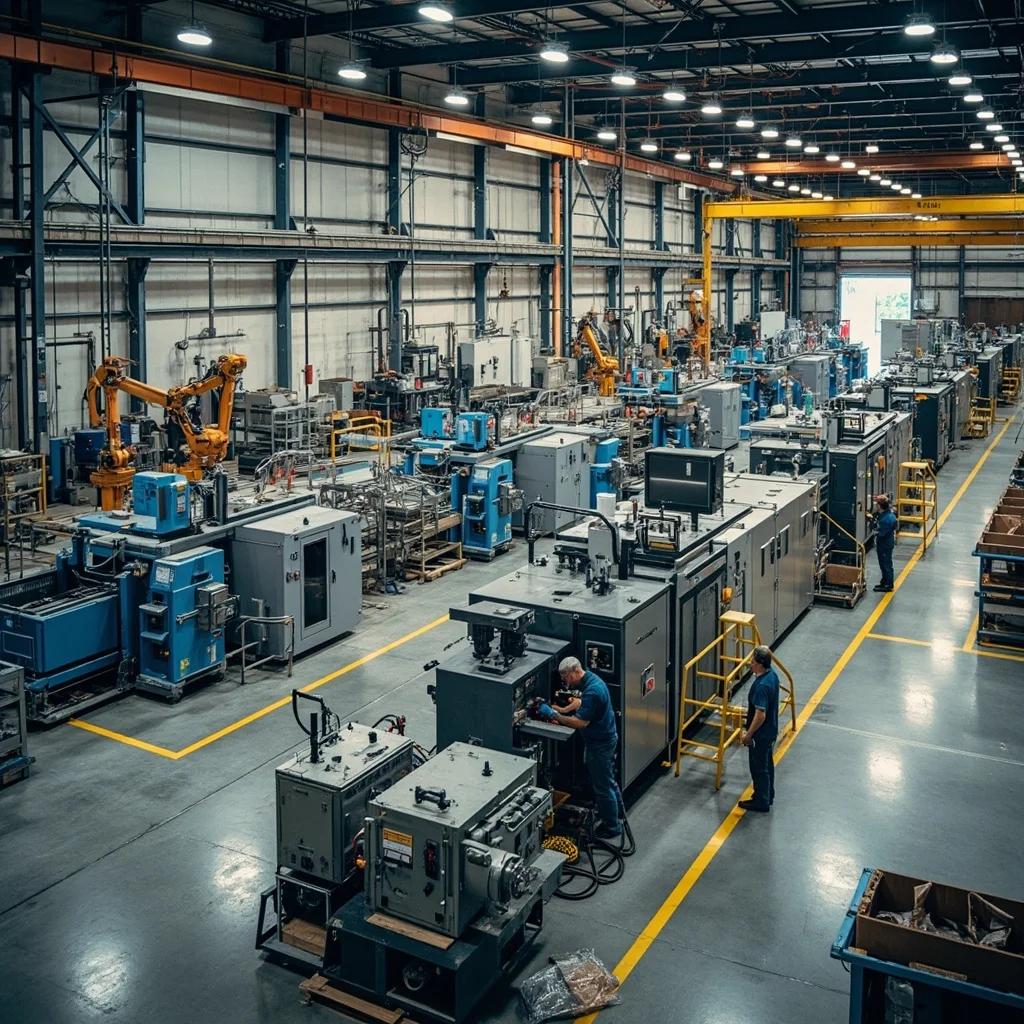
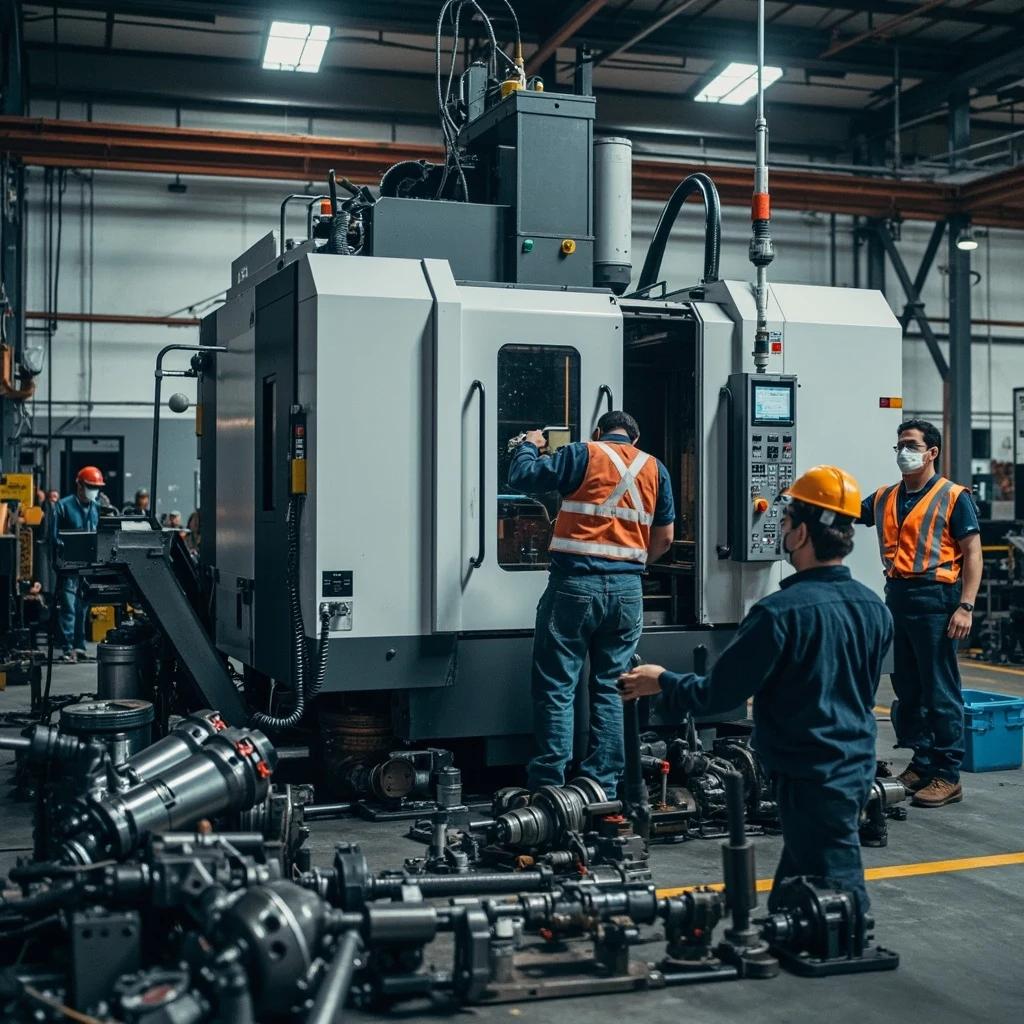
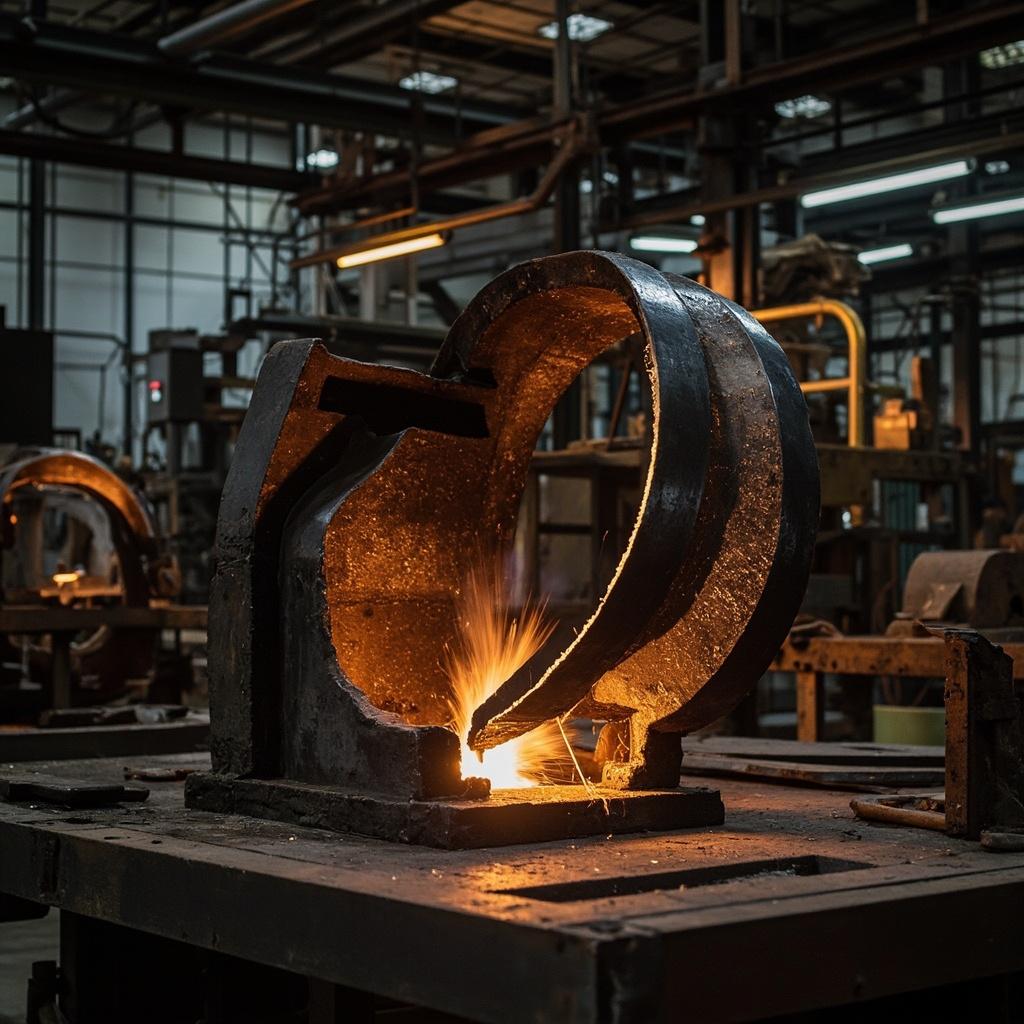
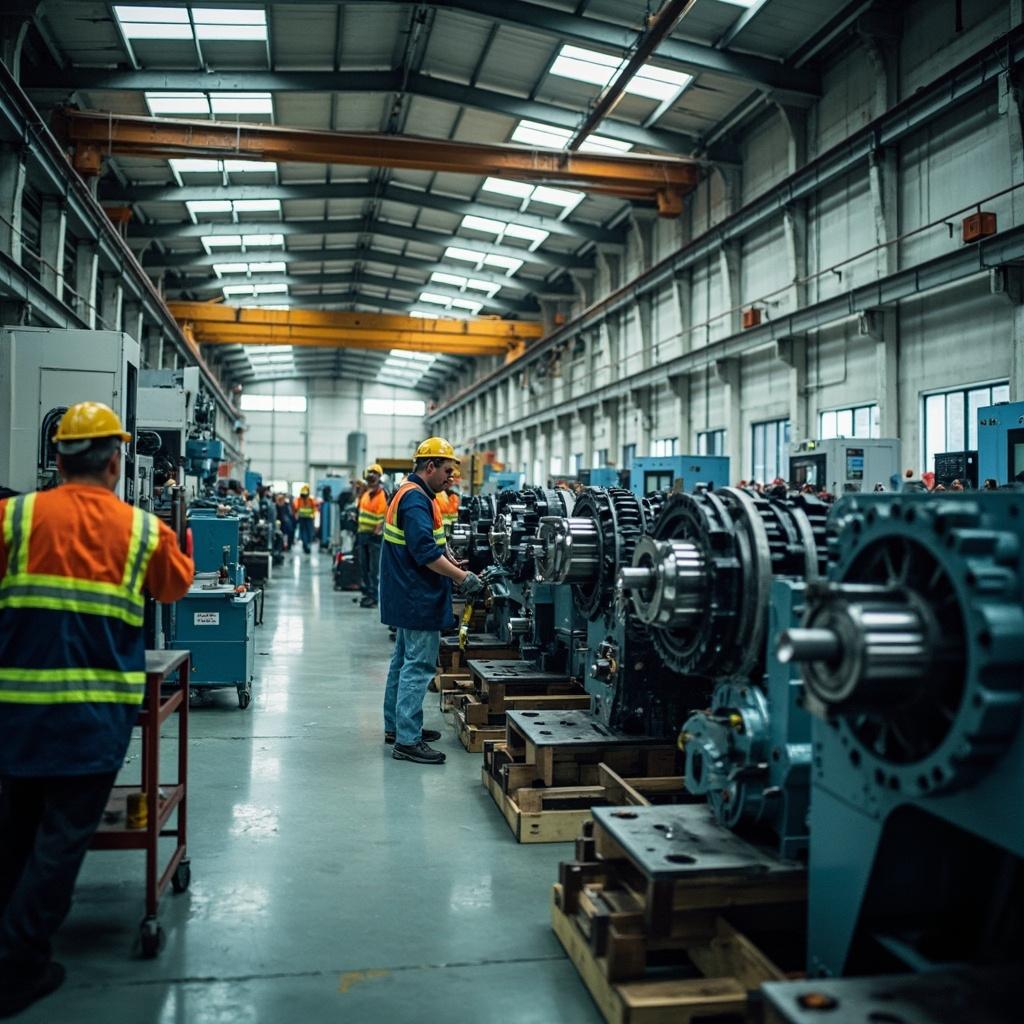
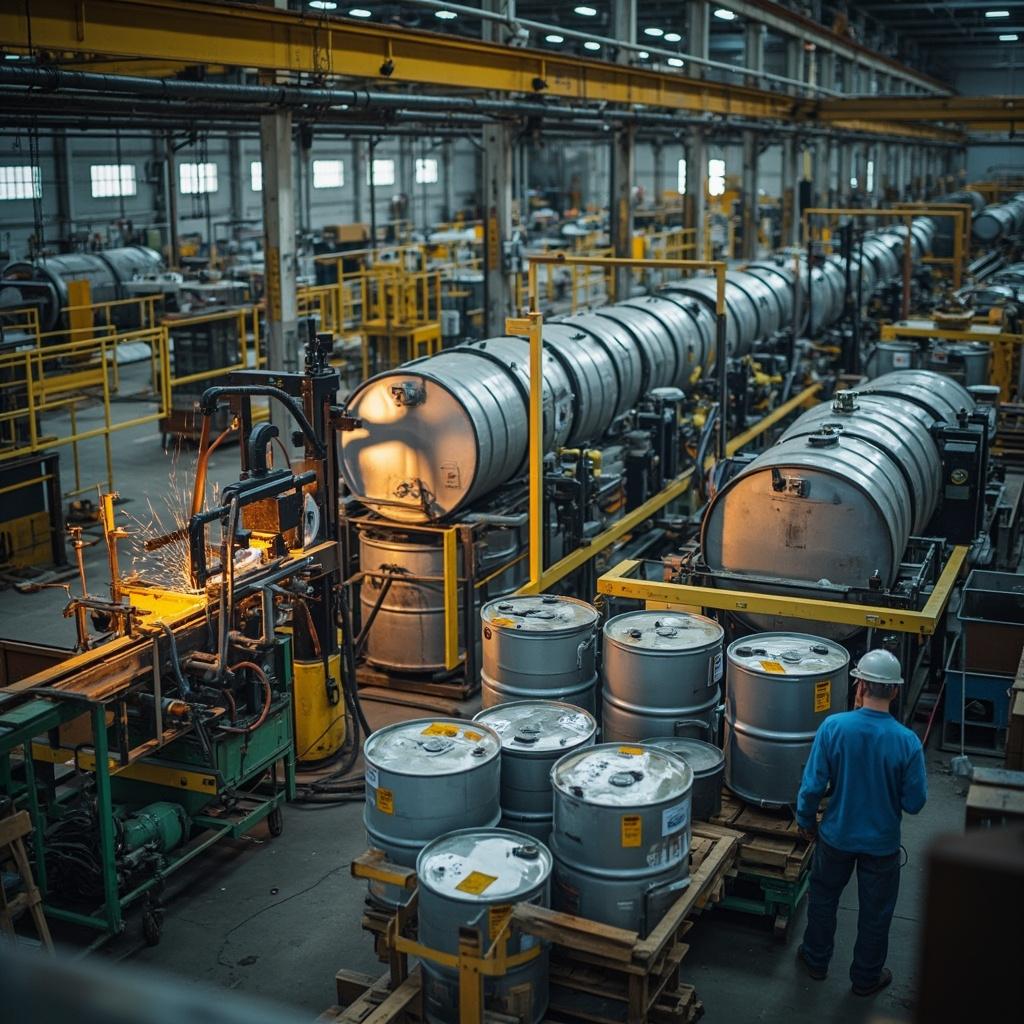
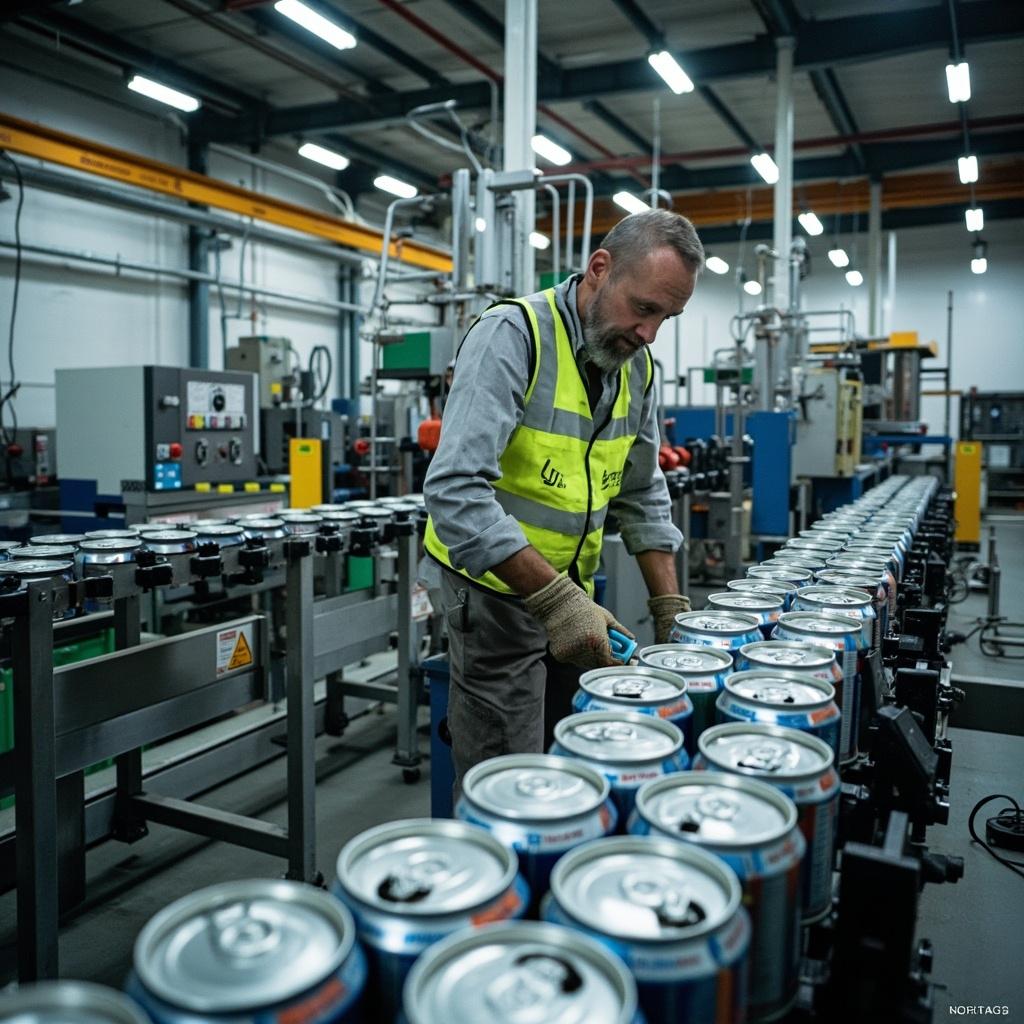
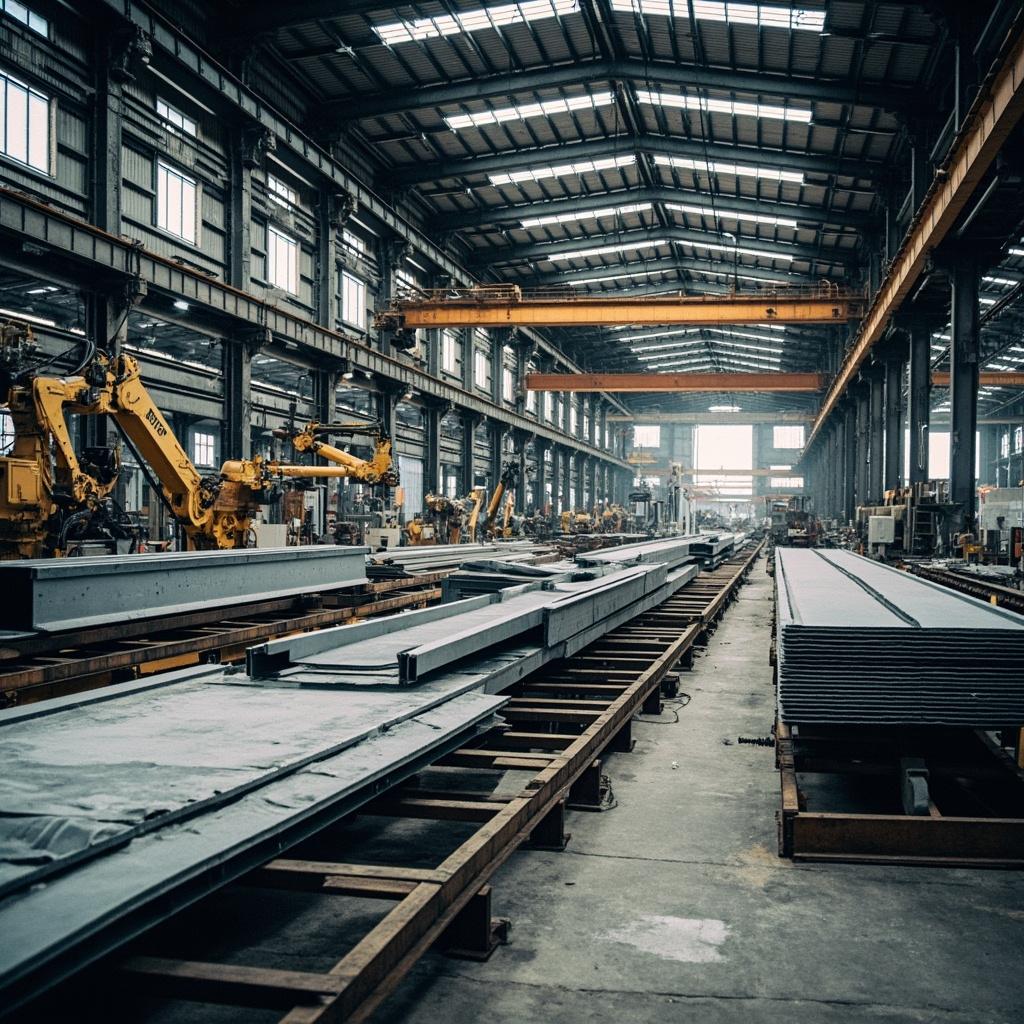
Our rankings are built on data, not opinions. VerityRank evaluates every industrial mechanical components manufacturer against a transparent four-dimension model, each weighted equally at 25%, with a deliberate focus on genuine production capability rather than brand marketing.
Production Scale (25%)
• Number of self-owned factories and precision machining sites — from Parker Hannifin's 250+ plants to SKF's 108 manufacturing sites
• Global workforce and vertical-integration depth, such as Hengli's full loop from iron smelting to micron-level machining
• Supply-chain resilience and multi-continent manufacturing redundancy
Market Influence (25%)
• Global revenue — Eaton's record $27.45 billion and Sandvik's SEK 120.7 billion in 2025
• Profitability and capital-market standing, including ITW's 26.3% operating margin
Technological Integration (25%)
• Mechatronic and digital-twin capability, such as SKF's sensor-embedded bearings
• R&D intensity and traction in new-energy and robotics applications
Sustainability & Compliance (25%)
• Factory decarbonization — SKF's six new net-zero plants — and certification breadth
Each manufacturer receives a composite 0-100 score. We deliberately exclude pure brand operators and OEM-only assemblers, verifying that every ranked company owns substantial heavy-asset production. Data is drawn from audited annual reports, stock-exchange filings, and verified industry databases, then editorially cross-checked and updated as new fiscal-year results appear.
Elite mechanical components manufacturers share five production capabilities that OEM-only assemblers cannot match.
1. Deep vertical integration. Hengli Hydraulic closes the full loop from iron smelting and sand casting to micron-level machining, and Neway Valve covers casting, forging, CNC machining, and final testing entirely in-house. This control over the whole chain guarantees quality consistency impossible for firms dependent on external subcontractors.
2. Multi-continent self-owned capacity. Parker Hannifin runs 250+ plants and Eaton manufactures across 175+ countries. In a deglobalizing world, the ability to build real factories on three continents — Hengli's 141,000 m² Mexico plant, Eaton's $1.5 billion North American expansion — is now a prerequisite for winning large OEM contracts.
3. Metallurgical and precision-machining mastery. Sandvik traces its cutting-tool dominance to 1862 specialty-steel metallurgy, and NSK produces ultra-precision ball screws irreplaceable in high-end CNC machines and semiconductor lithography. Decades of tribological and materials know-how create durable barriers.
4. Mechatronic and digital integration. The best manufacturers attach digital intelligence to metal: SKF embeds IoT sensors in bearings, SMC engineers AI-responsive fluid-control valves, and Sandvik books SEK 5.5 billion in software services — converting one-time equipment sales into recurring revenue.
5. Certification and extreme-condition capability. Neway delivered the world's first DNV-certified 25,000 PSI deep-sea ball valve and supplies ASME nuclear-grade valves to Hualong One. Class-society and nuclear certifications gate access to the highest-value projects and command premium pricing.
Buyers should treat these five capabilities as a supplier-audit framework: manufacturers strong across all five deliver superior quality stability, supply security, and lifetime cost than assemblers competing on unit price.
Three structural forces are redrawing the mechanical components manufacturing map in 2025-2026.
1. Nearshoring and physical supply-chain fragmentation. Under deglobalization and tariff walls, global supply chains are shifting from "lowest-cost offshore outsourcing" toward "regionalized, secure, in-house manufacturing." Hengli Hydraulic absorbed high start-up costs to build a 141,000 m² Monterrey, Mexico plant; Eaton invested $1.5 billion to rebuild US transformer and switchgear capacity; and SKF decarbonized six factories while regionalizing production. Manufacturers unable to invest real capital in multi-continent plants risk losing OEM qualification entirely.
2. The mechatronic and digital-twin transition. The industry is moving irreversibly from "pure physical metal structures" to "mechatronic, digitally integrated systems." SKF plants sensors in rotating bearings for predictive maintenance; SMC committed ¥120 billion to a Kashiwa-no-ha center for AI-responsive semiconductor valves; and Sandvik scaled software and digital-service revenue to SEK 5.5 billion. Adding "digital brains" to metal parts raises switching costs and shifts revenue toward lifecycle subscriptions.
3. Terminal-market divergence forcing bold strategic pivots. Demand is splitting sharply. Traditional ICE-vehicle gears and driveshafts are collapsing — Schaeffler closed precision-drive units and SKF is spinning off its entire automotive business — while emerging arenas boom: Eaton spent ~$13 billion on filtration and thermal firms to bet on AI data centers, Parker Hannifin paid $9.25 billion for Filtration Group to seize high-frequency consumables, Neway profits from Middle East LNG valves, and Hengli invested billions in precision ball screws for the coming humanoid-robot era.
Collectively, the factory-automation mechanical components market is projected to approach $943 billion by 2030 (4.3% CAGR), with the fastest, highest-margin growth concentrated in data-center power, EV thermal, and robotic motion applications.
Choosing a mechanical components manufacturer is a supply-security and total-cost decision, not a unit-price negotiation. Procurement teams should assess five factors systematically.
1. Verified production capacity and ownership. Confirm the supplier actually manufactures — with self-owned factories, casting, and machining — rather than subcontracting. Vertically integrated producers like Hengli (smelting to machining) and Neway (casting to testing) offer quality control that OEM-only assemblers cannot guarantee.
2. Regional footprint and delivery resilience. Ask where parts are made and whether the manufacturer has multi-continent capacity. Eaton's 175+ country network and Parker's 250+ plants insulate buyers from tariff and logistics shocks; nearshored plants like Hengli's Mexico facility shorten lead times for regional demand.
3. Certification and qualification depth. Verify components are certified for your duty cycle. Neway's DNV/ABS/CCS marine and ASME nuclear certifications, and SMC's semiconductor-grade qualifications, are gating requirements — a cheaper unqualified part costs far more after one failure or line stoppage.
4. Financial strength and scale premium. Check profitability and balance-sheet resilience. ITW's 26.3% operating margin and 62 consecutive years of dividend increases signal durable operational excellence; financially stressed single-plant suppliers are hidden liabilities in a bill of materials.
5. Technology roadmap and sustainability. Favor manufacturers investing in mechatronics and decarbonization — SKF's sensor bearings and net-zero factories, Sandvik's digital platforms — because these reduce lifetime cost and simplify your own Scope 3 compliance.
A disciplined scorecard across capacity, footprint, certification, financial strength, and technology consistently outperforms lowest-price sourcing across any multi-year horizon.
Sustainability leadership among mechanical components manufacturers is now measurable, and several producers stand clearly ahead.
SKF is the manufacturing decarbonization benchmark. In late 2025 it announced six new factories in Mexico, Malaysia, India, Italy, and the US that cut Scope 1 and 2 emissions by 95%, achieving fully decarbonized operation; combined with earlier plants in Austria, Spain, and Sweden, nearly 20% of its baseline manufacturing emissions are now net zero. This "green plus regionalized" production directly serves customers' low-carbon component requirements.
Sandvik reinvests roughly 4.5% of revenue into R&D and manufacturing-process upgrades, deploys battery-electric underground loaders that eliminate diesel emissions in mining, and grew aftermarket and consumables to 40% of revenue — extending tool life and reducing waste through circular reconditioning.
Eaton ties sustainability to its core products: switchgear, transformers, and Boyd Thermal liquid-cooling systems directly enable grid efficiency and data-center energy management, while its reshored plants are built to modern efficiency standards.
Schaeffler is executing a difficult but disciplined transition, closing overcapacity in legacy ICE components and redeploying capital toward e-mobility, hydrogen technology, and sensor-integrated mechatronic parts — a structural decarbonization of its product mix.
SMC engineers energy efficiency into its output through Green Pneumatics, cutting compressed-air carbon emissions by up to 40% — meaningful because compressed air is among the most energy-intensive factory utilities.
For procurement teams, these credentials matter practically: factory-level and product-level emissions data feed directly into Scope 3 inventories, and manufacturers with decarbonized plants, validated targets, and circular reconditioning programs materially simplify ESG compliance while typically delivering lower lifetime energy costs. When comparing otherwise similar manufacturers, verified decarbonization performance is an increasingly reliable proxy for overall production excellence.