VerityRank

Company Rankings in the Intimates & Hosiery Industry

HomeTextile & Apparel Industry BrandsCompany Rankings in the Intimates & Hosiery Industry

Welcome to Verity Rank’s Global Intimates & Hosiery Brand Rankings.

Intimates are no longer just “what’s underneath.” They’ve become statements of self-care, body autonomy, and the first step men take toward dressing smarter. From Victoria‘s Secret’s spotlight-driven fantasy to Jockey’s century-long comfort creed; from Triumph’s German-engineered lace curves to Cosmo Lady’s quiet companionship in China’s tier-3 cities—this industry sells products that live on skin, not shelves.

But real stories hide behind the labels. Who actually defines “comfort”? Whose “shapewear” sacrifices breathability for curves? Are those Instagram/TikTok darlings worth your hard-earned money?

This isn’t a PR campaign. We cross-validated 12 independent sources—audited financials, real-world user reviews (Amazon, Xiaohongshu), search trends (Google, TikTok), and supply chain ESG reports. Four metrics decide the final score: financial health, authentic reputation, technological moat, and global footprint.

You’ll see why Wacoal users say “I never want to take it off”; whether Oysho’s premium flows into fabric or just marketing; if Calvin Klein’s logo waistband is heritage or inertia; and why Aimer achieves 65% gross margin but still struggles with Gen Z.

We don’t tell you what to buy. We just make the invisible visible.

Disclaimer: Rankings are derived from third-party sources including national statistical bureaus, academic research institutions, AI-driven consumer sentiment analytics, and publicly traded company filings. Based on multi-dimensional algorithmic models, results are for reference and decision support only—not direct investment advice or brand endorsements.
Top 10 Rankings

2026.05 Edition
1
Victoria's Secret & Co.

Victoria's Secret & Co.

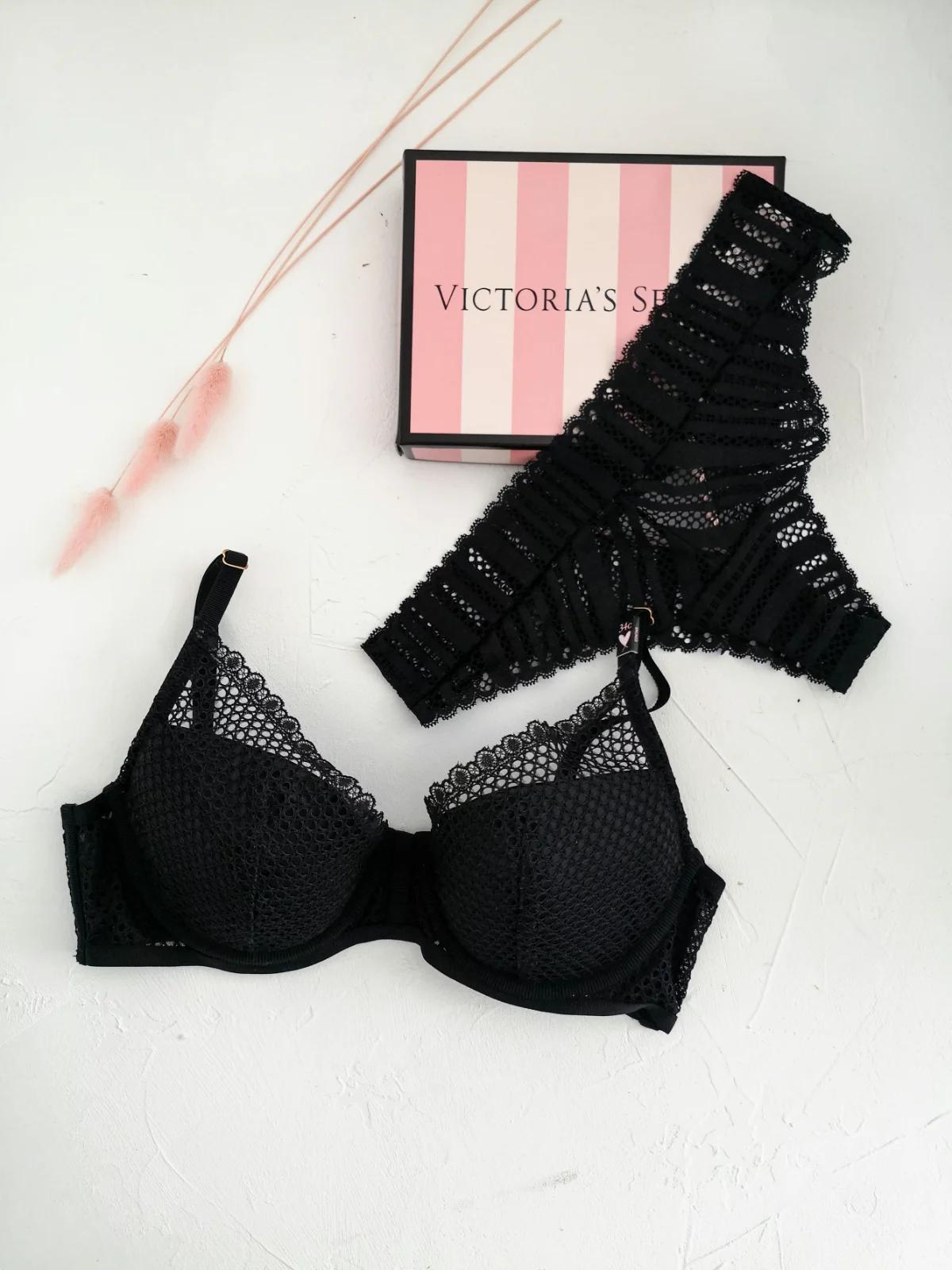
Victoria's Secret & Co., headquartered in Columbus, Ohio, USA, is a globally iconic specialty retailer of women's intimate apparel, sleepwear, and beauty products. Positioned to sell its self-designed fashion products through powerful brand marketing and an omnichannel retail network, its core business comprises women's lingerie and extended sleepwear and swimwear collections. As a company listed on the New York Stock Exchange, Victoria's Secret employs a capital-light global supply chain model, operating approximately 1,300 stores and online platforms in over 80 countries and regions, with annual sales exceeding $6 billion. The company is currently focused on driving a brand transformation towards greater inclusivity and diversity to consolidate its leadership in the global fashion consumer goods sector.

Strengths: Victoria's Secret's core strengths are its unparalleled global brand equity and cultural influence, which create a deep emotional connection and consumer perception moat; concurrently, its mature and extensive omnichannel retail network (brick-and-mortar and e-commerce) ensures broad market reach and efficient sales penetration.

Weaknesses: Victoria's Secret's main weaknesses are the challenging transformation of its brand image from a traditional "sexy" definition towards "inclusivity and empowerment," facing difficulties in reshaping consumer perception and loyalty; furthermore, the company's heavy reliance on the global supply chain under its capital-light model and intense competition from emerging DTC brands and comfort-focused lingerie giants present significant challenges.

Brand

Victoria's Secret &

Headquarters

USA

Founded

1977

Workforce

31K+

Presence

80+ Countries

Market

NYSE:VSCO

Key Product Categories
Homewear BrandsWomen's Clothing IndustryWomen's Activewear IndustrySwimwear IndustryIntimates & Hosiery IndustryWomen's Underwear IndustryIntimates & Hosiery CompaniesWomen's Clothing IndustryWomen's Activewear IndustrySwimwear IndustryHomewear BrandsWomen's Clothing IndustryWomen's Activewear IndustrySwimwear IndustryIntimates & Hosiery IndustryWomen's Underwear IndustryIntimates & Hosiery CompaniesWomen's Clothing IndustryWomen's Activewear IndustrySwimwear Industry
2
Hanesbrands Inc.(HBI)

Hanesbrands Inc.(HBI)

Hanesbrands is a global leader in vertically integrated innerwear & hosiery manufacturing, headquartered in Winston-Salem, NC, USA. Its iconic brands—Hanes, Maidenform, Bali, Playtex—comprehensively cover bras, panties, men's underwear, shapewear, everyday & functional socks, and loungewear. 2025 revenue reached approximately $3.53 billion. Operating production facilities across 30+ countries and employing ~65,000 people worldwide. Formerly listed on NYSE (HBI), the company was acquired by Gildan Activewear in late 2025 and now operates as a core Gildan division. Through unrivaled vertical integration and patented comfort technologies (X-Temp, FreshIQ), Hanesbrands has set the global benchmark for cost efficiency and quality in basic apparel.

Strengths:Hanesbrands' core strength is its rare apparel vertical integration (>70% in-house production), delivering superior cost control, speed-to-market, and quality consistency. Its brand portfolio holds #1 U.S. market share in men's underwear, bras, and shapewear. Patented comfort technologies (X-Temp, FreshIQ) provide strong product differentiation, creating dual moats of scale and innovation.

Weaknesses:Hanesbrands' main weaknesses: its mass-market brand image lacks premium appeal and relevance among younger demographics, with relatively weak fashion design credentials. Business is heavily concentrated in basic innerwear/hosiery, leaving it behind in athleisure expansion, localized emerging market operations, and DTC innovation compared to Nike and lululemon. Post-acquisition integration with Gildan also poses organizational and cultural challenges.

Brand

Hanesbrands Inc.(HBI)

Headquarters

USA

Founded

1901

Workforce

65K+

Presence

45+ Countries

Key Product Categories
Baby Clothing (0-24 Months) ManufacturersMen's Clothing IndustryMen's Tops IndustryMen's Outerwear IndustryMen's Bottoms IndustryMen's Sportswear IndustryHomewear BrandsMen's Clothing IndustryMen's Tops IndustryMen's Outerwear IndustryBaby Clothing (0-24 Months) ManufacturersMen's Clothing IndustryMen's Tops IndustryMen's Outerwear IndustryMen's Bottoms IndustryMen's Sportswear IndustryHomewear BrandsMen's Clothing IndustryMen's Tops IndustryMen's Outerwear Industry
3
Calvin Klein Inc.

Calvin Klein Inc.

Calvin Klein, Inc. is one of the world’s most iconic modern fashion brands, operating as a wholly-owned subsidiary of the listed PVH Corp. and headquartered in New York. Renowned for its minimalist aesthetic, iconic “CK” branding, and provocative marketing, its core business spans underwear, denim, ready-to-wear, and loungewear. Utilizing an asset-light global licensing and wholesale model, its products are sold in over 100 countries, generating annual revenue of approximately US$3.7 billion. As the core growth engine for PVH Corp., Calvin Klein is continuously attracting a new global generation of consumers through DTC transformation and innovative marketing while preserving its classic DNA.

Strengths: Calvin Klein's core strengths are its unparalleled global brand recognition and iconic status embedded within popular culture, which elevates its products (especially underwear) beyond mere utility to become powerful social and emotional symbols; concurrently, its successful asset-light licensing business model enables rapid global expansion and considerable profit returns with relatively low owned capital, contributing stable annual revenue of approximately US$3.7 billion and serving as a robust financial pillar for PVH Corp.

Weaknesses: Calvin Klein's main weaknesses lie in the challenging balance its brand image must strike between adhering to its classic minimalist DNA and continuously innovating to align with rapidly evolving fashion trends and the preferences of younger consumers; furthermore, its heavy reliance on a global network of third-party licensees for production introduces inherent risks and challenges in maintaining consistent product quality, supply chain ethics, and unified brand image control.

Brand

Calvin Klein

Headquarters

USA

Founded

1968

Workforce

120K+

Presence

100+ Countries

Market

NYSE:PVH

Key Product Categories
Home Textiles & Fabrics BrandsMen's Clothing IndustryMen's Tops IndustryMen's Bottoms IndustryWomen's Clothing IndustryWomen's Tops IndustryIntimates & Hosiery CompaniesMen's Clothing IndustryMen's Tops IndustryMen's Bottoms IndustryHome Textiles & Fabrics BrandsMen's Clothing IndustryMen's Tops IndustryMen's Bottoms IndustryWomen's Clothing IndustryWomen's Tops IndustryIntimates & Hosiery CompaniesMen's Clothing IndustryMen's Tops IndustryMen's Bottoms Industry
4
Jockey International, Inc.

Jockey International, Inc.

Jockey International, Inc. is the pioneer and global authority in the underwear and bodywear industry, headquartered in Kenosha, Wisconsin, USA. Founded in 1876 as Coopers Inc., it revolutionized men’s underwear by inventing the world’s first Y-Front brief in 1935. As a 150-year-old privately held family company, Jockey focuses intensely on the innerwear layer, covering men’s underwear, women’s lingerie, shapewear, loungewear, hosiery, and professional medical scrubs. Estimated 2025 global revenue reached approximately $5 billion, with products sold in 147 countries. Its vertically integrated supply chain ensures over 75% in-house production, supported by ~35,000 direct and authorized-ecosystem employees. Through patented innovations including Seamfree® seamless technology, Infinite Cool fabric, and Outlast® phase-change material, Jockey continues to set the global benchmark for comfort and quality in first-layer apparel.

Strengths: Jockey’s core strengths lie in its century-old heritage as the category creator of men’s briefs, commanding unparalleled brand equity and consumer trust worldwide; its hybrid model of vertical integration and master licensing (e.g., Page Industries in India) delivers dominant channel presence in key markets like North America and India; proprietary technologies (Seamfree®, Outlast®) create strong product differentiation; additionally, the Jockey Scrubs business serves as a high-margin niche differentiator, setting it apart from traditional innerwear competitors.

Weaknesses: Jockey’s main weaknesses stem from its private ownership, which limits aggressive capital expansion, and heavy reliance on licensing partners such as Page Industries, leading to uneven brand control in certain regions; its classic, conservative design aesthetic appeals less to younger, fashion-forward demographics; the brand has been slow in capturing athleisure and premium fashion trends, and its brand presence and localized operations in emerging markets like China require significant enhancement.

Brand

Jockey International

Headquarters

USA

Founded

1876

Workforce

35K+

Presence

147+ Countries

Market

Unlisted

Key Product Categories
Intimates & Hosiery CompaniesMen's Clothing IndustryMen's Tops IndustryMen's Outerwear IndustryMen's Bottoms IndustryMen's Sportswear IndustryIntimates & Hosiery CompaniesMen's Clothing IndustryMen's Tops IndustryMen's Outerwear IndustryMen's Bottoms IndustryMen's Sportswear Industry
5
Triumph International

Triumph International

Triumph International is a world-leading premium lingerie manufacturer and “body contouring engineer,” headquartered in Bad Zurzach, Aargau, Switzerland. Founded in 1886 by the Spiesshofer and Braun families and still privately held, the company focuses intensely on women’s innerwear and shapewear, covering bras, panties, shapewear, swimwear, sportswear, and the sloggi zero-feel collection. Renowned for its vertically integrated supply chain, in-house textile labs, and precision bra cup craftsmanship. 2025 estimated revenue reached €1.6–1.8 billion, with products sold in 120 countries, ~16,500 employees, and over 20 self-owned core manufacturing facilities. Leveraging its Anti-Gravity gel-strip technology, patented shaping fabrics, and sloggi Zero Feel seamless series, Triumph is deeply transforming from a traditional premium lingerie house into a global leader in comfort technology and sustainable fashion.

Strengths: Triumph’s core strengths lie in its 135+ years of accumulated bra cup engineering expertise and ergonomic R&D capabilities, building insurmountable patent barriers and size‑accuracy reputation in premium bras and shapewear; its global vertical manufacturing ecosystem and family‑owned governance ensure long‑term commitment to product innovation, fabric development, and brand equity; meanwhile, its multi‑brand portfolio—Triumph (professional shaping), sloggi (extreme comfort), Triaction (sports)—precisely targets distinct segments, while its swimwear business ranks among the world’s top OEM/ODM suppliers.

Weaknesses: Triumph’s main weaknesses stem from its private ownership, which limits aggressive capital deployment and slows digital marketing/DTC transformation compared to agile DTC lingerie startups; its brand image remains strongly associated with “mature elegance,” creating a generational gap in perceived fashionability among Gen Z consumers; its business portfolio is heavily concentrated in women’s lingerie, with minimal presence in menswear, kidswear, or home lifestyle extensions, lagging behind integrated innerwear giants like Hanesbrands and Jockey in cross‑category ecosystem synergy.

Brand

Triumph International

Headquarters

Switzerland

Founded

1886

Workforce

16.5K+

Presence

120+ Countries

Market

Unlisted ( Family Business )

Key Product Categories
Homewear ManufacturersMen's Clothing IndustryMen's Tops IndustryMen's Sportswear IndustryWomen's Clothing IndustryWomen's Tops IndustryIntimates & Hosiery CompaniesMen's Clothing IndustryMen's Tops IndustryMen's Sportswear IndustryHomewear ManufacturersMen's Clothing IndustryMen's Tops IndustryMen's Sportswear IndustryWomen's Clothing IndustryWomen's Tops IndustryIntimates & Hosiery CompaniesMen's Clothing IndustryMen's Tops IndustryMen's Sportswear Industry
6
Oysho España, S.A.

Oysho España, S.A.

Oysho España, S.A. is a global fast-fashion brand under the Spanish Inditex Group, specializing in fashionable apparel solutions for women centered around home, sport, and vacation scenarios. Positioned at the intersection of trend-driven design and comfort, its core business encompasses fashionable women's lingerie, sleepwear & loungewear, activewear, and swimwear collections. Leveraging the Group's powerful global supply chain and retail network, Oysho operates over 450 stores in more than 40 markets worldwide. Although benefiting from the Group's support system, the brand is undergoing strategic contraction and facing localization challenges in key markets like China, with global annual sales of approximately €740 million.

Strengths: Oysho's core strengths lie in its complete reliance on the Inditex Group's world-leading fast-fashion supply chain and retail management system, granting it unparalleled speed-to-market and cost efficiency; concurrently, its clear focus on a fashionable product portfolio for the female "home-sport-vacation" scenarios creates a differentiated market position and appeal to its target audience.

Weaknesses: Oysho's main weaknesses are its lack of a distinctive brand identity, as its positioning oscillates unclearly between fashion, basics, and sporty styles; furthermore, as a group brand, its strategic autonomy, localized marketing, and product adaptation in crucial regional markets (e.g., China) are insufficient, leading to significant business contraction and weaker competitiveness compared to specialized local brands.

Brand

Oysho España

Headquarters

Spain

Founded

2001

Workforce

2K+

Presence

40+ Countries

Market

BMAD : ITX

Key Product Categories
Homewear BrandsWomen's Clothing IndustryWomen's Tops IndustryDresses & Skirts IndustryWomen's Activewear IndustrySwimwear IndustryIntimates & Hosiery CompaniesWomen's Clothing IndustryWomen's Tops IndustryDresses & Skirts IndustryHomewear BrandsWomen's Clothing IndustryWomen's Tops IndustryDresses & Skirts IndustryWomen's Activewear IndustrySwimwear IndustryIntimates & Hosiery CompaniesWomen's Clothing IndustryWomen's Tops IndustryDresses & Skirts Industry
7
Wacoal Holdings Corp.

Wacoal Holdings Corp.

Wacoal Holdings Corp. is Asia's benchmark in ergonomic lingerie and precision manufacturing, headquartered in Kyoto, Japan. Founded in 1949, the company leverages its exclusive “Human Science Research Center” — with decades of body measurement data from tens of thousands of women — to redefine fit and comfort in bras, shapewear, and compression wear. Its core business comprehensively covers women's lingerie, men's underwear, functional shapewear, CW-X high‑performance compression gear, maternity care, and post‑surgical intimate solutions across the entire life cycle. FY2025 global revenue remained robust, with products sold in over 30 countries, ~19,000 employees, nearly 30 self‑owned factories, and a listing on the Tokyo Stock Exchange (3591). Driven by Asia's deepest human body database and a vertically integrated supply chain, Wacoal is evolving from a legacy lingerie powerhouse into a scientific body‑management and sustainable fashion leader.

Strengths: Wacoal’s core strengths lie in its decades‑long investment in the “Human Science” anthropometric database and the precision pattern‑making systems derived from it, creating globally unique technical moats in bra size accuracy, shapewear pressure distribution, and CW-X sports support; its life‑stage product matrix (first bra, maternity, post‑mastectomy) builds irreplaceable user loyalty; vertical manufacturing and co‑development with fiber giants like Toray ensure uncompromised quality, while Salute’s handcrafted lace is celebrated as the pinnacle of lingerie artistry.

Weaknesses: Wacoal’s main weaknesses stem from its brand image long associated with “mature and steady,” responding slowly to Gen Z fast‑fashion aesthetics, with young lines like Peach John yet to fully reshape brand perception; its global expansion remains cautious, capturing only modest share in the premium Western market compared to local players; although CW-X enjoys cult status, its revenue contribution is still limited, and diversifications like Success Walk functional shoes remain niche.

Brand

Wacoal Holdings

Headquarters

Japan

Founded

1949

Workforce

185K+

Presence

30+ Countries

Market

TYO : 3591

Key Product Categories
Homewear ManufacturersMen's Clothing IndustryMen's Tops IndustryMen's Bottoms IndustryMen's Sportswear IndustryWomen's Clothing IndustryIntimates & Hosiery CompaniesMen's Clothing IndustryMen's Tops IndustryMen's Bottoms IndustryHomewear ManufacturersMen's Clothing IndustryMen's Tops IndustryMen's Bottoms IndustryMen's Sportswear IndustryWomen's Clothing IndustryIntimates & Hosiery CompaniesMen's Clothing IndustryMen's Tops IndustryMen's Bottoms Industry
8
Cosmo Lady (China) Holdings Company Limited

Cosmo Lady (China) Holdings Company Limited

Cosmo Lady (China) Holdings Company Limited is the leading mass-market intimate apparel brand and a national household name in China, headquartered in Dongguan, Guangdong. With its brand portfolio—Cosmo Lady, Ordifen (premium), Cosmo Esquire, and Pure Cotton—the company comprehensively covers bras, panties, shapewear, thermal underwear, loungewear, and hosiery for the whole family. Estimated 2025 revenue reaches RMB 2.9–3.1 billion, supported by nearly 4,500 offline stores across 330+ Chinese cities and approximately 3,530 employees. Listed on the Hong Kong Stock Exchange (02298.HK), Cosmo Lady is transforming from a street-shop giant into a one-stop intimate solution leader through omni-channel digitalization, a partner store model upgrade, and brand repositioning as “China’s professional everyday lingerie.”

Strengths: Cosmo Lady’s core strengths lie in its unparalleled offline store density and national brand equity—4,500 outlets form the deepest distribution moat in China’s mass underwear market; its extreme value-for-money strategy, coupled with an intelligent logistics hub, ensures rapid turnover of over 120 million products annually; full-category coverage meets one-stop family shopping needs, with 5.1 push-up/soft-support bras and 5.3 thermal wear as stable cash cows; the premium Ordifen line adds margin in shapewear, while 2025’s explosive e‑commerce GMV growth (+243% YoY in H1) confirms its digital momentum.

Weaknesses: Cosmo Lady’s main weaknesses stem from its deep-rooted “affordable mass-market” brand image, creating strong inertia against premiumization and youth‑oriented reinvention; its product design and fashion appeal lag behind international labels and agile DTC players like Ubras and Banana‑in, making it difficult to capture Gen Z in high‑tier cities; overseas expansion remains negligible, with international presence far behind Hanesbrands, Wacoal, and peers; R&D investment is relatively limited—though holding 561 patents, its depth in fundamental ergonomic research still trails scientific‑driven leaders like Wacoal.

Brand

Cosmo Lady (China)

Headquarters

China

Founded

1998

Workforce

3.5K+

Presence

Greater China Region

Market

SEHK : 2298

Key Product Categories
Intimates & Hosiery CompaniesMen's Clothing IndustryMen's Tops IndustryMen's Bottoms IndustryMen's Sportswear IndustryWomen's Clothing IndustryPajama Set BrandsMen's Clothing IndustryMen's Tops IndustryMen's Bottoms IndustryIntimates & Hosiery CompaniesMen's Clothing IndustryMen's Tops IndustryMen's Bottoms IndustryMen's Sportswear IndustryWomen's Clothing IndustryPajama Set BrandsMen's Clothing IndustryMen's Tops IndustryMen's Bottoms Industry
9
Langsha Knitting Co., Ltd.

Langsha Knitting Co., Ltd.

Langsha Holding Group Co., Ltd. (SSE: 600137.SH) is a national-level brand and manufacturer in China's hosiery industry, widely known as the “Sock King of China.” With hosiery as its absolute core business, the company leverages its large-scale manufacturing prowess to successfully extend the brand into related categories such as underwear, loungewear, and home textiles. Its business model integrates in-house production with brand operations, distributing products through an extensive traditional nationwide network and online platforms. In 2024, its listed entity achieved operating revenue of RMB 321 million. Langsha has established a distinctive position in China's mass-market intimate apparel sector based on its household name recognition, dominant market share in its core category, and profound manufacturing heritage.

Strengths:Langsha's core strengths are the near-monopolistic national brand recognition and consumer mindshare it has built in the hosiery segment; concurrently, its world-class, scaled manufacturing capability forms a solid barrier for quality and cost efficiency, enabling deep and broad channel penetration, particularly in lower-tier markets.

Weaknesses:Langsha's main weaknesses stem from its aging brand image and lack of product innovation, which limit its appeal to younger consumer demographics; simultaneously, its main business faces growth stagnation, and its brand licensing model, if not rigorously managed, introduces quality control risks and potential long-term damage to brand reputation.

Brand

Langsha

Headquarters

China

Founded

1995

Workforce

2K+

Presence

Nationwide, China

Market

SSE:600137

Key Product Categories
Intimates & Hosiery CompaniesIntimates & Hosiery IndustryWomen's Underwear IndustryMen's Underwear IndustryLoungewear IndustryBasic Hosiery IndustryIntimates & Hosiery ManufacturersIntimates & Hosiery IndustryWomen's Underwear IndustryMen's Underwear IndustryIntimates & Hosiery CompaniesIntimates & Hosiery IndustryWomen's Underwear IndustryMen's Underwear IndustryLoungewear IndustryBasic Hosiery IndustryIntimates & Hosiery ManufacturersIntimates & Hosiery IndustryWomen's Underwear IndustryMen's Underwear Industry
10
Aimer Co., Ltd.

Aimer Co., Ltd.

Aimer Co., Ltd. (SSE: 603511.SH) is a leading Chinese branded intimate apparel and apparel group headquartered in Beijing. As a vertically integrated company and hailed as "the first share of China's underwear industry," it comprehensively covers all-scenario close-to-body categories including women's underwear, men's underwear, loungewear, activewear, and swimwear through its core brand "Aimer" and a multi-brand portfolio (e.g., imi's, Aimer Men, Aimer Kids, Aimer Sports, EMPERORIENT). Its business model integrates proprietary design, large-scale intelligent manufacturing (e.g., Huaian Smart Industrial Park), and an omni-channel retail network (over 1,700 stores). With annual revenue reaching RMB 3.455 billion in FY2023, Aimer has established its leadership in the underwear industry through deep understanding of the Chinese market, complete supply chain control, and formidable offline channel barriers.

Strengths: Aimer's core strengths lie in its complete vertical industry chain integration and powerful multi-brand operation capability, achieving deep control over product quality and supply chain from R&D and design to in-house manufacturing; concurrently, its extensive network of over 1,700 offline retail points constitutes its most solid market moat, enabling high brand recognition and customer reach.

Weaknesses: Aimer's main weaknesses stem from slowing growth in traditional department store channels, necessitating accelerated transition towards shopping malls and online platforms; simultaneously, it faces dual pressures from both international premium brands and emerging digital-native competitors in an intensely competitive market, while its brand internationalization process remains slow with limited global influence.

Brand

Aimer

Headquarters

China

Founded

1980

Workforce

5K+

Presence

Nationwide, China

Market

SSE:603511

Key Product Categories
Homewear BrandsWomen's Clothing IndustryWomen's Tops IndustryWomen's Pants IndustryWomen's Activewear IndustrySwimwear IndustryIntimates & Hosiery CompaniesWomen's Clothing IndustryWomen's Tops IndustryWomen's Pants IndustryHomewear BrandsWomen's Clothing IndustryWomen's Tops IndustryWomen's Pants IndustryWomen's Activewear IndustrySwimwear IndustryIntimates & Hosiery CompaniesWomen's Clothing IndustryWomen's Tops IndustryWomen's Pants Industry

Frequently Asked Questions

How Do We Generate Our Rankings?
At Verity Rank, our ranking methodology is built on data, not opinions. We aggregate and cross-validate information from four pillars: National Statistical Agencies, University-Affiliated Research Institutions, AI-Driven Global Consumer Sentiment Analysis, and Publicly Listed Company Financial Reports.

Four-Dimensional Scoring: Market Influence (25%), Brand Reputation (25%), Innovation & R&D (25%), Sustainability & Ethics (25%).

We do not accept payment for rankings. Rankings updated quarterly.

Disclaimer: The data is compiled from third-party authoritative sources and intended for reference and market decision support only. It does not constitute direct investment advice or brand endorsement.
What is the Intimates & Hosiery Industry and What Does It Include?
The intimates & hosiery industry is a vital segment of the global economy, encompassing the design, production, and distribution of essential products that serve diverse end markets worldwide.

Major Categories: Bras, panties/underwear, shapewear, hosiery (stockings, tights, pantyhose), socks, loungewear, thermal underwear, and sports/performance undergarments. The global intimate apparel market exceeds $80 billion.

Key Segments: The market spans mass-market basics, premium/luxury lingerie, athleisure/comfort-focused, medical/functional (post-surgery, maternity), and shapewear. E-commerce and DTC brands have transformed distribution, with virtual fitting technology reducing return rates.

Industry Dynamics: The intimates & hosiery sector is characterized by continuous innovation, evolving consumer demands, and increasing emphasis on sustainability. Companies that invest in technology, quality systems, and supply chain resilience are best positioned for long-term success in competitive global markets.
What Are the Key Factors, Technologies, and Quality Standards in the Intimates & Hosiery Industry?
The intimates & hosiery industry is shaped by several critical factors that determine competitive success — from raw material quality and manufacturing technology to regulatory compliance and market positioning.

1. Fabric Technology: Moisture-wicking, antimicrobial, seamless knitting, 4-way stretch, temperature regulation, and compression fabrics are key innovations.

2. Fit & Sizing: Intimate apparel requires precise fit — advanced pattern engineering, 3D body scanning, and extensive fit testing across diverse body types.

3. Comfort Engineering: Flat seams, bonded edges, tagless labels, breathable gussets, and strategic padding/underwire designs for all-day comfort.

4. Sustainability: Organic cotton, recycled nylon/polyester, plant-based dyes, and circular design for end-of-life recyclability.

5. Quality Standards: OEKO-TEX Standard 100, GOTS for organic, and rigorous wash/dimensional stability testing.

Quality Standards: Leading companies in the intimates & hosiery sector typically hold ISO 9001 certification as a baseline, with many also maintaining industry-specific certifications. Product testing, material traceability, and third-party inspection are essential quality assurance practices. Sustainability certifications are increasingly required by major buyers and regulators worldwide.
What Should Buyers Consider When Sourcing Intimates & Hosiery Products?
Sourcing intimates & hosiery products requires thorough evaluation of supplier capabilities, quality systems, cost structures, and compliance credentials.

1. Size Range & Inclusivity: Evaluate the breadth of size offerings — extended sizes and diverse fit models are essential for modern brands.

2. Material & Comfort Testing: Request wear-test results, fabric hand-feel evaluation, and durability testing (colorfastness, pilling, elastic recovery after repeated washing).

3. Compliance: Verify OEKO-TEX certification for skin-contact safety. CPSIA compliance for children''s products. Flammability standards for sleepwear.

4. Manufacturing Expertise: Intimate apparel requires specialized sewing skills, machinery, and quality control — evaluate the supplier''s category-specific experience.

5. Packaging & Presentation: Intimate products require hygienic packaging, discreet labeling, and hanger/display-ready presentation for retail.

Key Recommendations: Visit supplier facilities when possible, request and verify third-party certifications, start with trial orders before committing to large volumes, and build relationships with multiple qualified suppliers to reduce concentration risk. Establish clear quality specifications and inspection protocols in purchase agreements.

Which Regions and Countries Lead in the Global Intimates & Hosiery Industry?
The global intimates & hosiery industry has a distinctive geographic footprint shaped by raw material access, manufacturing heritage, labor costs, and market proximity.

1. China: Dominant production hub — Shantou (Guangdong) specializes in lingerie and underwear manufacturing.

2. Sri Lanka & Bangladesh: Major producers for global brands — Sri Lanka known for quality and ethical manufacturing, Bangladesh for competitive costs.
3. Turkey: Growing premium lingerie and hosiery production hub for European markets.

4. Italy & France: Luxury lingerie design (La Perla, Chantelle) — high-end design and branding.
5. Vietnam & Cambodia: Increasingly important production bases for mid-to-premium intimate apparel brands.

Strategic Implications: Successful procurement in the intimates & hosiery industry requires understanding regional specialization and maintaining diversified sourcing strategies that balance cost, quality, lead time, and geopolitical risk. Sustainability certifications and supply chain transparency are increasingly becoming prerequisites for market access in premium segments.