VerityRank

Top 10 Construction Tools & Equipment Manufacturers

HomeBuilding Materials SuppliersTop 10 Construction Tools & Equipment Manufacturers

The global construction tools manufacturing industry is undergoing a profound supply chain restructuring and technology revolution that is reshaping competitive dynamics across every segment of the value chain. With the global power tools market reaching 347.1 billion in 2025—projected to reach $722.7 billion by 2033 at a 9.9% CAGR—and the broader construction equipment market exceeding 2421.7 billion, manufacturing scale, technology ownership, and supply chain resilience have become the decisive factors separating industry leaders from followers.

Three structural megatrends are redefining manufacturing leadership. First, "China+1" near-shoring strategies have evolved from defensive tariff mitigation into offensive margin optimization, with leading manufacturers investing billions in new factories across Vietnam, Mexico, and Eastern Europe. TTI committed $289 million in 2025 capital expenditure to manufacturing network restructuring alone, while Chervon accelerated its Vietnam factory build-out to capture North American demand without tariff exposure. Second, battery platform ecosystems have become the ultimate competitive moat. Milwaukee's M18/MX FUEL, Makita's XGT, and Hilti's Nuron platforms each support 100+ tools from a single battery system, creating switching costs so high that once a professional contractor commits to a platform, the relationship typically spans decades. Third, vertically integrated original brand manufacturers (OBMs) are systematically out-competing pure contract manufacturers (OEMs). Companies that design, engineer, and produce their own brushless motors, battery management systems, and precision gearboxes in wholly-owned factories consistently deliver superior quality, higher margins, and greater supply chain resilience than those dependent on third-party production.

Our Manufacturer Assessment Methodology
VerityRank's Top 10 ranking evaluates construction tools and equipment manufacturers across four equally weighted dimensions, with a strict filtering criterion that excludes companies lacking core proprietary manufacturing capability:
Production Capability & Scale (25%): Total manufacturing facility footprint, number of global production sites, in-house production of critical components including brushless motors, battery cell packaging, precision forging, injection molding, and PCB assembly. Companies dependent on outsourced core component production are excluded.
Category Production Focus (25%): Concentration of revenue within construction tools and equipment classifications (11.1-11.5), measured against total corporate revenue to filter out conglomerates where tools represent a minor business line.
Brand Influence & Global Revenue (25%): Total 2025 fiscal-year global revenue inclusive of China market, market share across core geographic regions, professional contractor brand loyalty scores, and global search volume metrics.
Supply Chain Resilience & Innovation (25%): Geographic diversification of manufacturing assets, R&D investment as percentage of revenue, active patent portfolio in core tool technologies, and demonstrated speed of production relocation in response to trade disruptions.

Disclaimer: Rankings are based on publicly available data from company annual reports, industry databases, and market research. Revenue figures reflect the most recent fiscal year results announced through Q1 2026. Rankings are informational only and do not constitute investment advice or brand endorsement.

Data Sources & References
This ranking incorporates data from the following authoritative sources:
• TTI 2025 Annual Results
• Stanley Black & Decker Investor Relations
• Atlas Copco Group Investor Relations
• Chervon Holdings Investor Relations
• BuiltWorlds 2025 Tools & Equipment Top 50

Top 10 Rankings

2026.05 Edition
1
Techtronic Industries

Techtronic Industries Co. Ltd.

Techtronic Industries Co. Ltd. (TTI) is the world's leading cordless power tool and floorcare equipment company, founded in 1985 and headquartered in Hong Kong, China. With annual revenue of $15.26 billion (2025), TTI operates manufacturing facilities across China, Vietnam, the United States, Mexico, and Europe, employing 48,318 people globally. Its flagship brand portfolio includes MILWAUKEE (professional power tools), RYOBI (consumer/DIY power tools), AEG (professional power tools for EMEA), and HOOVER (floorcare).

Strengths: TTI's MILWAUKEE brand dominates the global professional cordless market with the industry's most comprehensive M18/MX FUEL battery ecosystem. The company achieved a remarkable 6.5% organic revenue growth in 2025, outperforming all major competitors. TTI's lithium-ion battery technology leadership — spanning 200+ active patents — provides a durable competitive moat that locks professional users into brand loyalty. Its regionalized production across 5 continents minimizes tariff exposure and supply chain risk.

Weaknesses: TTI's heavy concentration on professional contractor channels exposes the company to construction cycle downturns. The HOOVER floorcare business continues to face intense competition from iRobot and Dyson in the smart home segment. Currency fluctuations, particularly USD/HKD peg dynamics, create periodic earnings volatility.

Brand

Milwaukee, RYOBI, HART, AEG, Empire

Headquarters

Hong Kong

Founded

1985

Workforce

48,318

Presence

50+ countries

Facilities

Manufacturing across China, Vietnam, USA, Mexico, Europe

Key Product Categories
Construction Tools & Equipment BrandsBuilding Materials CompaniesBuilding MaterialsConstruction Tools & Equipment ManufacturersMetal ProductsMachinery & EquipmentElectronic EquipmentTransportation EquipmentBuilding Materials SuppliersConstruction Tools & Equipment ManufacturersConstruction Tools & Equipment BrandsBuilding Materials CompaniesBuilding MaterialsConstruction Tools & Equipment ManufacturersMetal ProductsMachinery & EquipmentElectronic EquipmentTransportation EquipmentBuilding Materials SuppliersConstruction Tools & Equipment Manufacturers
2
Stanley Black & Decker

Stanley Black & Decker, Inc.

Stanley Black & Decker, Inc. is a global diversified industrial company and the world's largest tool company, founded in 1843 and headquartered in New Britain, Connecticut, USA. With annual revenue of $15.13 billion (2025), the company operates over 100 manufacturing sites worldwide, employs approximately 43,500 people, and serves customers in more than 60 countries. Its powerhouse brand portfolio includes DEWALT (professional power tools), STANLEY (hand tools and storage), CRAFTSMAN (mechanic and DIY tools), and Cub Cadet (outdoor power equipment).

Strengths: Stanley Black & Decker's multi-brand portfolio spanning professional, industrial, and consumer segments provides unmatched market coverage and revenue diversification. The company operates 50+ manufacturing facilities in the United States alone, providing significant tariff resilience and Made-in-USA marketing advantage. DEWALT's FLEXVOLT 60V battery platform is the industry's highest-voltage cordless system, powering tools previously requiring corded or gas alternatives. The company's century-plus legacy in hand tools commands premium pricing and near-100% brand recognition among tradespeople.

Weaknesses: The company's 2025 restructuring program reflects challenges in right-sizing its cost base amid post-pandemic demand normalization. Heavy reliance on North American distribution channels creates geographic concentration risk. The complexity of managing 20+ distinct brands dilutes R&D focus compared to single-brand specialists like Hilti.

Brand

Stanley Black & Decker

Headquarters

USA

Founded

1843

Workforce

~43,500

Presence

60+ countries

Facilities

100+ manufacturing sites globally, 50+ in USA

Market

NYSE: SWK
Key Product Categories
Construction Tools & Equipment BrandsBuilding Materials CompaniesBuilding MaterialsConstruction Tools & Equipment ManufacturersMetal ProductsMachinery & EquipmentElectronic EquipmentTransportation EquipmentBuilding Materials SuppliersConstruction Tools & Equipment ManufacturersConstruction Tools & Equipment BrandsBuilding Materials CompaniesBuilding MaterialsConstruction Tools & Equipment ManufacturersMetal ProductsMachinery & EquipmentElectronic EquipmentTransportation EquipmentBuilding Materials SuppliersConstruction Tools & Equipment Manufacturers
3
Bosch Power Tools

Robert Bosch GmbH (Bosch Power Tools)

Bosch Power Tools, a division of the Bosch Group, is one of the world's leading power tool and accessory manufacturers, founded in 1886 and headquartered in Gerlingen, Baden-Württemberg, Germany. With the power tools division generating approximately €5.0 billion in revenue (2025), Bosch operates manufacturing facilities globally and employs approximately 17,300 people in its power tools business. The company is a wholly-owned subsidiary of Robert Bosch GmbH, which is 94% held by the charitable Robert Bosch Foundation. Its brand portfolio spans professional (Bosch Professional/blue) and DIY/consumer (Bosch/Green) power tools, accessories, and measuring instruments.

Strengths: Bosch's 18V lithium-ion battery alliance (AMPShare) — shared with more than 30 partner brands including Fein, Wagner, and Steinel — represents the industry's broadest cross-brand battery ecosystem, providing users unmatched flexibility. The company's engineering heritage produces class-leading hammer drilling, angle grinding, and jigsaw technologies with exceptional durability. Bosch Professional's BITURBO brushless motor technology delivers corded-equivalent power in cordless tools, critical for heavy construction applications. As part of the €90+ billion Bosch Group, the tools division benefits from shared R&D across automotive sensors, IoT, and advanced manufacturing technologies.

Weaknesses: Bosch Power Tools operates within the constraints of foundation ownership, which prioritizes long-term stability over aggressive market share growth, potentially ceding ground to faster-moving competitors. The dual-brand strategy (Blue professional vs. Green consumer) creates some market confusion, particularly in regions where both lines are sold. Bosch's DIY/consumer segment faces intense price competition from emerging Chinese brands and private-label offerings in home improvement retail channels.

Brand

Bosch

Headquarters

Germany

Founded

1886

Workforce

~17,300

Presence

50+ countries

Facilities

Global manufacturing network, 9 plants

Market

Private (Robert Bosch Foundation)

Key Product Categories
Construction Tools & Equipment BrandsBuilding Materials CompaniesBuilding MaterialsConstruction Tools & Equipment ManufacturersMetal ProductsMachinery & EquipmentElectronic EquipmentTransportation EquipmentBuilding Materials SuppliersConstruction Tools & Equipment ManufacturersConstruction Tools & Equipment BrandsBuilding Materials CompaniesBuilding MaterialsConstruction Tools & Equipment ManufacturersMetal ProductsMachinery & EquipmentElectronic EquipmentTransportation EquipmentBuilding Materials SuppliersConstruction Tools & Equipment Manufacturers
4
Makita Corporation

Makita Corporation

Makita Corporation is Japan's premier power tool manufacturer and a global leader in cordless tool technology, founded in 1915 and headquartered in Anjo, Aichi, Japan. With annual revenue of ¥753.1 billion (FY2025), Makita operates manufacturing facilities across Japan, China, Brazil, Romania, Thailand, the UK, and the United States, employing approximately 17,000 people globally. The company is publicly listed on the Tokyo Stock Exchange (6586). Makita's product portfolio spans over 1,000 models including cordless drills, impact drivers, circular saws, angle grinders, pneumatic tools, outdoor power equipment, and industrial dust extraction systems.

Strengths: Makita's LXT 18V and XGT 40V/80V dual-platform lithium-ion strategy provides unmatched battery compatibility — a single battery platform supports over 325+ tools. The company's fully in-house manufacturing model (motors, batteries, electronics, and injection molding) delivers exceptional quality control and cost efficiency that contract manufacturers cannot replicate. Makita maintains the industry's broadest cordless tool catalog, serving professional trades from framing and concrete to finish carpentry and landscaping. Its conservative financial management — zero debt, ¥400+ billion cash reserves — provides extraordinary resilience during economic downturns.

Weaknesses: Makita's late entry into the smart/IoT-connected tool segment leaves it trailing TTI/Milwaukee's ONE-KEY in fleet management and tool tracking capabilities. The company's heavy reliance on the Japanese and Asian markets creates geographic concentration risk, particularly amid yen currency volatility. Makita's conservative corporate culture slows decision-making speed compared to more agile competitors, potentially delaying responses to fast-moving market trends like dust regulation compliance and robotics integration.

Brand

Makita

Headquarters

Japan

Founded

1915

Workforce

~17,000

Presence

50+ countries

Facilities

10 manufacturing plants worldwide

Market

TSE: 6586
Key Product Categories
Construction Tools & Equipment BrandsBuilding Materials CompaniesBuilding MaterialsConstruction Tools & Equipment ManufacturersMetal ProductsMachinery & EquipmentElectronic EquipmentTransportation EquipmentBuilding Materials SuppliersConstruction Tools & Equipment ManufacturersConstruction Tools & Equipment BrandsBuilding Materials CompaniesBuilding MaterialsConstruction Tools & Equipment ManufacturersMetal ProductsMachinery & EquipmentElectronic EquipmentTransportation EquipmentBuilding Materials SuppliersConstruction Tools & Equipment Manufacturers
5
Hilti Corporation

Hilti Group / Hilti Corporation

Hilti Corporation is the world's premier manufacturer of professional construction tools, fastening systems, and firestop solutions, founded in 1941 and headquartered in Schaan, Liechtenstein. With annual revenue of CHF 6.3 billion (2025), Hilti operates a global direct-sales network serving professional contractors in more than 120 countries, employing approximately 34,000 people worldwide. Its product portfolio spans cordless rotary hammers, diamond coring systems, laser measuring instruments, direct fastening technology, and passive fire protection solutions.

Strengths: Hilti's direct-sales business model — with 300,000+ daily customer contacts through its fleet of field engineers — creates unparalleled customer intimacy and application expertise that no distributor-based competitor can match. The company reinvests 6%+ of annual revenue into R&D, producing industry-leading innovations like the Nuron 22V cordless platform that unifies its entire tool ecosystem. Hilti's fleet management and ON!Track asset management software create recurring SaaS-like revenue streams with high switching costs. The company commands premium pricing (typically 20-40% above competitors) justified by superior durability and lifetime service guarantees.

Weaknesses: Hilti's premium pricing positions it above the addressable market for price-sensitive contractors and DIY users, limiting volume growth potential. The direct-sales model requires heavy fixed-cost investment in field personnel, creating margin pressure during construction downturns. As a family-trust-owned private company, Hilti has limited access to public capital markets for large-scale acquisitions, constraining its ability to match the M&A-driven growth strategies of publicly traded competitors like Stanley Black & Decker.

Brand

Hilti

Headquarters

Liechtenstein

Founded

1941

Workforce

~34,000

Presence

120+ countries

Facilities

Global high-precision manufacturing, R&D centers

Market

Private (Family Trust)

Key Product Categories
Construction Tools & Equipment BrandsBuilding Materials CompaniesBuilding MaterialsConstruction Tools & Equipment ManufacturersMetal ProductsMachinery & EquipmentMining & MineralsBuilding Materials SuppliersConstruction Tools & Equipment ManufacturersBuilding Materials SuppliersConstruction Tools & Equipment BrandsBuilding Materials CompaniesBuilding MaterialsConstruction Tools & Equipment ManufacturersMetal ProductsMachinery & EquipmentMining & MineralsBuilding Materials SuppliersConstruction Tools & Equipment ManufacturersBuilding Materials Suppliers
6
Atlas Copco AB

Atlas Copco AB

Atlas Copco AB is a world-leading Swedish industrial group specializing in compressor technology, vacuum solutions, power tools, and assembly systems, founded in 1873 in Stockholm, Sweden. With group revenue of SEK 168.3 billion (~$15.8 billion, 2025), the company operates through four business areas serving customers in over 180 countries, employing approximately 56,000 people globally. Its Industrial Technique division provides professional power tools, material removal tools, and quality assurance systems for automotive, aerospace, and general manufacturing.

Strengths: Atlas Copco's century-plus engineering heritage and leadership in compressed air and industrial power tools creates unmatched application expertise across mission-critical manufacturing environments. The company's decentralized operating model—400+ independent business units—combines entrepreneurial agility with the resources of a $16 billion industrial group. Atlas Copco's acquisition-driven growth strategy has consistently delivered above-market organic revenue growth with industry-leading EBIT margins. Its deep penetration in automotive and aerospace manufacturing provides stable, long-cycle revenue visibility.
Weaknesses: Power tools represent a relatively small portion of Atlas Copco's total revenue compared to its dominant Compressor and Vacuum divisions, limiting R&D focus on tools-specific innovation. The company's premium positioning and industrial focus make it less visible in construction job-site channels compared to dedicated tool brands like Milwaukee or Hilti.

Brand

Atlas Copco, Chicago Pneumatic, Desoutter

Headquarters

Sweden

Founded

1873

Workforce

~56,413

Presence

180+ countries

Facilities

Global production across Industrial Technique division, 400+ business units

Key Product Categories
Construction Tools & Equipment ManufacturersConstruction Tools & Equipment ManufacturersBuilding Materials SuppliersConstruction Tools & Equipment ManufacturersBuilding Materials SuppliersBuilding MaterialsMetal ProductsMachinery & EquipmentConstruction Tools & Equipment ManufacturersBuilding Materials SuppliersConstruction Tools & Equipment ManufacturersConstruction Tools & Equipment ManufacturersBuilding Materials SuppliersConstruction Tools & Equipment ManufacturersBuilding Materials SuppliersBuilding MaterialsMetal ProductsMachinery & EquipmentConstruction Tools & Equipment ManufacturersBuilding Materials Suppliers
7
Chervon Holdings Limited

Chervon Holdings Limited

Chervon Holdings Limited is a fast-growing Chinese power tool and outdoor power equipment manufacturer, founded in 1994 and headquartered in Nanjing, Jiangsu, China. With annual revenue of $1.63 billion (2025), the company is publicly listed on the Hong Kong Stock Exchange (2285.HK), employing approximately 6,900 people. Chervon has successfully transformed from a pure OEM/ODM contract manufacturer into an own-brand powerhouse with its FLEX (professional), SKIL (consumer/DIY), and EGO (outdoor power equipment) brands.

Strengths: Chervon's EGO brand dominates the global cordless outdoor power equipment market with the industry's most powerful 56V battery platform, driving exceptional revenue growth. The company's dual OEM/ODM + own-brand manufacturing model provides revenue diversification and scale advantages that pure-brand competitors cannot match. Chervon's ongoing factory expansion in Vietnam demonstrates proactive supply chain de-risking ahead of tariff escalation. The company's 10%+ organic revenue growth in 2025 significantly outpaced the industry average, driven by strong North American and European demand.
Weaknesses: Chervon remains heavily dependent on the North American market (60%+ of revenue), creating geographic concentration risk from trade policy shifts. The FLEX professional brand lags far behind Milwaukee and DEWALT in brand awareness among US contractors, requiring sustained marketing investment. As a public company with a relatively short track record, Chervon faces higher cost of capital than established competitors for large-scale M&A.

Brand

DEVON, EGO, FLEX, SKIL, X-TRON

Headquarters

China

Founded

1994

Workforce

~6,887

Presence

50+ countries

Facilities

Manufacturing in Nanjing, China + expanding Vietnam operations

Key Product Categories
Construction Tools & Equipment ManufacturersConstruction Tools & Equipment ManufacturersBuilding Materials SuppliersConstruction Tools & Equipment ManufacturersBuilding Materials SuppliersBuilding MaterialsMetal ProductsMachinery & EquipmentConstruction Tools & Equipment ManufacturersBuilding Materials SuppliersConstruction Tools & Equipment ManufacturersConstruction Tools & Equipment ManufacturersBuilding Materials SuppliersConstruction Tools & Equipment ManufacturersBuilding Materials SuppliersBuilding MaterialsMetal ProductsMachinery & EquipmentConstruction Tools & Equipment ManufacturersBuilding Materials Suppliers
8
Koki Holdings

Koki Holdings Co., Ltd.

Koki Holdings Co., Ltd. (formerly Hitachi Koki) is a Japanese power tool and life-science instruments manufacturer, founded in 1948 in Tokyo, Japan. With annual revenue of approximately ¥191 billion (2025), the company was acquired by KKR & Co. in 2017 and operates as a private company employing approximately 9,000 people globally. Its brand portfolio includes HiKOKI (professional power tools for Asia-Pacific and emerging markets), Metabo HPT (professional power tools for North America), and Metabo (premium German-engineered professional power tools for Europe).

Strengths: The acquisition of Metabo (Germany, 2016) provided Koki Holdings with premium German engineering expertise, particularly in angle grinders, metalworking tools, and cordless battery systems. The MultiVolt 36V battery platform — supporting both 18V and 36V tools from a single battery — represents genuine innovation in cordless system architecture that competitors are now emulating. KKR's private equity backing provides access to growth capital and operational improvement expertise that was unavailable under Hitachi's conglomerate structure. The three-brand strategy (HiKOKI/Metabo HPT/Metabo) enables targeted positioning across different price tiers and regional markets.

Weaknesses: Managing three distinct brands across three regions creates marketing complexity and brand identity fragmentation, with potential customer confusion in overlapping markets. As a KKR portfolio company, Koki Holdings faces eventual exit pressure (IPO or sale) that may prioritize short-term financial engineering over long-term R&D investment. The company's market share in North America and Europe remains significantly below TTI/Milwaukee and Stanley Black & Decker/DEWALT, requiring sustained investment to close the gap. Brand transitions (Hitachi → HiKOKI/Metabo HPT) have caused temporary market share losses in some regions as customers adjust to new brand identities.

Brand

HiKOKI, Metabo, Metabo HPT

Headquarters

Japan

Founded

1948

Workforce

~9,000

Presence

40+ countries

Facilities

Manufacturing across Japan, China, Germany

Market

Private (KKR-owned)

Key Product Categories
Construction Tools & Equipment BrandsBuilding Materials CompaniesBuilding MaterialsConstruction Tools & Equipment ManufacturersMetal ProductsMachinery & EquipmentElectronic EquipmentConstruction Tools & Equipment ManufacturersBuilding Materials SuppliersConstruction Tools & Equipment BrandsBuilding Materials CompaniesBuilding MaterialsConstruction Tools & Equipment ManufacturersMetal ProductsMachinery & EquipmentElectronic EquipmentConstruction Tools & Equipment ManufacturersBuilding Materials Suppliers
9
Dongcheng Power Tools

Jiangsu Dongcheng Power Tools Co., Ltd.

Jiangsu Dongcheng Power Tools Co., Ltd. is China's largest domestic power tool manufacturer and a director member of the China Electric Tool Association, founded in 1995 in Nantong, Jiangsu, China. With annual revenue of approximately ¥6.86 billion (2025), the privately-held company operates 8 major manufacturing bases across China, employing 5,800 people. Its brand portfolio includes DongCheng (professional), DCA (value-oriented), and DCK (premium) power tool brands.

Strengths: Dongcheng commands dominant market share in China's power tool sector through a nationwide dealer network of thousands of distributors. The company's fully integrated manufacturing — spanning in-house motor winding, injection molding, electronics assembly, and aluminum die-casting — delivers competitive pricing that international brands struggle to match in developing markets. Dongcheng's dual OEM/ODM and own-brand strategy creates revenue diversification, serving major international brands while building its DongCheng, DCA, and DCK brand equity.

Weaknesses: Dongcheng remains heavily dependent on the Chinese domestic market, with limited international brand recognition outside OEM relationships. Competing with global giants in developed markets would require massive marketing and distribution investment that a privately-held company may find challenging. Brand quality perception challenges common to rapidly-scaling Chinese manufacturers may limit premium-channel expansion in Western markets.

Brand

DongCheng, DCA, DCK

Headquarters

China

Founded

1995

Workforce

~5,800

Presence

20+ countries

Facilities

8 major manufacturing bases in China

Market

Private

Key Product Categories
Construction Tools & Equipment BrandsBuilding Materials CompaniesBuilding MaterialsConstruction Tools & Equipment ManufacturersMetal ProductsMachinery & EquipmentElectronic EquipmentConstruction Tools & Equipment ManufacturersBuilding Materials SuppliersConstruction Tools & Equipment BrandsBuilding Materials CompaniesBuilding MaterialsConstruction Tools & Equipment ManufacturersMetal ProductsMachinery & EquipmentElectronic EquipmentConstruction Tools & Equipment ManufacturersBuilding Materials Suppliers
10
Positec Technology (China) Co., Ltd.

Positec Technology (China) Co., Ltd.

Positec Technology (China) Co., Ltd. is an innovative Chinese power tool and garden equipment manufacturer, founded in 1994 and headquartered in Suzhou, Jiangsu, China. With estimated annual revenue of $350-500 million, the privately-held company has received significant private equity investment and operates a fully integrated manufacturing base in China, employing approximately 4,000 people. Positec's flagship WORX brand is recognized globally for innovative consumer power tools and lawn & garden equipment, while its ROCKWELL brand serves the professional and DIY segments.

Strengths: Positec's WORX brand innovation engine has produced multiple award-winning products including the WG series of cordless lawn mowers and the Landroid robotic mower line, earning strong consumer loyalty. The company's fully integrated manufacturing operations—covering motor production, injection molding, PCB assembly, and aluminum die-casting—provide cost and quality control advantages over outsourced competitors. Recent PE backing from top-tier institutional investors provides growth capital for international expansion and brand building. Positec's e-commerce-first distribution strategy (Amazon, direct-to-consumer) bypasses traditional retail margins, enabling competitive pricing for premium-featured products.
Weaknesses: Positec remains almost entirely dependent on the Chinese manufacturing base with limited geographic production diversification compared to TTI or Chervon. WORX brand awareness in the professional contractor segment is minimal, limiting expansion into the higher-margin professional channel. As a private company with limited financial disclosure, Positec faces credibility challenges with large institutional buyers requiring audited supplier financials.

Brand

WORX, Kress, Rockwell Tools

Headquarters

China

Founded

1994

Workforce

~4,000

Presence

40+ countries

Facilities

Fully integrated manufacturing in Suzhou: motor, PCB, injection molding, die-casting

Market

Private (PE-backed)

Key Product Categories
Construction Tools & Equipment ManufacturersConstruction Tools & Equipment ManufacturersBuilding Materials SuppliersConstruction Tools & Equipment ManufacturersBuilding Materials SuppliersBuilding MaterialsMetal ProductsMachinery & EquipmentConstruction Tools & Equipment ManufacturersBuilding Materials SuppliersConstruction Tools & Equipment ManufacturersConstruction Tools & Equipment ManufacturersBuilding Materials SuppliersConstruction Tools & Equipment ManufacturersBuilding Materials SuppliersBuilding MaterialsMetal ProductsMachinery & EquipmentConstruction Tools & Equipment ManufacturersBuilding Materials Suppliers

Frequently Asked Questions

How Do We Generate Our Manufacturer Rankings?
At Verity Rank, our manufacturer ranking methodology evaluates production capability, supply chain depth, and technology ownership—not just brand popularity. We aggregate and cross-validate data from multiple authoritative sources to produce the most objective assessment of global manufacturing excellence.

1. Data Sources — Multi-Source Cross-Verification
Our primary data comes from four independent pillars:
Audited Annual Reports and SEC Filings: Verified financial statements provide factual data on revenue, capital expenditure, factory count, and employee numbers that cannot be manipulated.
Factory Production Capacity Filings: Publicly disclosed manufacturing capacity data from company filings and industry databases provide objective metrics on production scale.
Global Trade Statistics: Customs and trade flow data from national statistical agencies verify export volumes, manufacturing concentration, and supply chain geography.
Professional Contractor and Industrial Buyer Surveys: Independent feedback from end users across 40+ markets provides real-world validation of manufacturing quality and reliability.

2. The Four-Dimensional Scoring Model
Manufacturers are evaluated across four equally weighted dimensions, each incorporating quantitative indicators calibrated by industry relevance:
Production Capability & Scale (25%): Factory count, total manufacturing square footage, in-house production of critical components (brushless motors, battery cell packaging, precision forging), and annual unit output capacity.
Category Production Focus (25%): Percentage of total corporate revenue derived from construction tools and equipment categories, measured against total revenue to filter out conglomerates with minimal tools exposure.
Brand Influence & Global Revenue (25%): Total fiscal-year revenue, global market share, professional contractor brand loyalty scores, and search volume metrics in core geographic markets.
Supply Chain Resilience & Innovation (25%): Geographic diversification of manufacturing assets, R&D investment ratio, active patent portfolio, and demonstrated speed of production relocation in response to trade policy changes.

3. Stringent Exclusion Criteria
Companies that rely predominantly on third-party contract manufacturing for core components are excluded from this ranking. Only manufacturers with demonstrated in-house production of motors, battery management systems, or precision gearbox components qualify for inclusion.

4. Our Commitment to Independence
Verity Rank does not accept payment for rankings. No company can pay to improve its position. Our model operates entirely on publicly verifiable data sources and proprietary analytical algorithms.

Disclaimer: Rankings are based on publicly available data and are intended for reference and market decision support only. They do not constitute investment advice or brand endorsement.
What Defines Leading Construction Tools Manufacturers?
Leading construction tools manufacturers are distinguished by three interconnected capabilities: production infrastructure depth, proprietary technology ownership, and supply chain geographic diversification. The manufacturers ranked in our Top 10 represent the global elite across these dimensions.

Production Infrastructure Depth: The industry's leaders operate extensive, wholly-owned manufacturing networks spanning multiple continents. Techtronic Industries (TTI)—the world's largest pure-play power tool company with $15.26 billion in revenue and 40,000+ employees—operates manufacturing hubs in China (Dongguan), Vietnam, the United States (South Carolina), and Mexico, investing $289 million in 2025 CapEx alone to expand and automate production capacity. Stanley Black & Decker ($15.1 billion) operates more than 100 manufacturing sites globally, with over 50 facilities in the United States. Bosch Power Tools leverages the Bosch Group's €90+ billion industrial ecosystem, operating dedicated power tool plants across Germany, Switzerland, China, and Malaysia.

Technology Ownership: Industry leaders design and manufacture their own brushless motors, battery management systems (BMS), and precision gearboxes in-house. This vertical integration—pioneered by TTI's Milwaukee M18/MX FUEL ecosystem (200+ active patents) and advanced by Makita's fully in-house motor production (10 global plants)—creates a technology moat that contract manufacturers cannot replicate. Companies that outsource these critical components face inherent quality, cost, and innovation limitations.

Supply Chain Diversification: The 2025 manufacturing landscape reveals a clear hierarchy based on production geography. Leaders operate across at least three continents, while followers remain concentrated in single countries. Atlas Copco (Sweden, $15.8B group revenue) maintains global production across its Industrial Technique division. Chervon Holdings ($1.63B) is aggressively expanding its Vietnam factory to complement Chinese production, following the TTI blueprint. Hilti ($7.14B) combines Swiss precision engineering with globally distributed manufacturing and direct-sales integration. Koki Holdings, Jiangsu Dongcheng, and Positec round out the top 10 with varying degrees of in-house production capability and global market presence.

The key lesson from our analysis: In an era of escalating trade barriers and supply chain disruption, manufacturing geography is destiny. Companies with multi-continent production footprints consistently demonstrate superior margin profiles, faster recovery from disruptions, and greater pricing power than those concentrated in single manufacturing regions.
What Manufacturing Technologies Drive Quality in Power Tools?
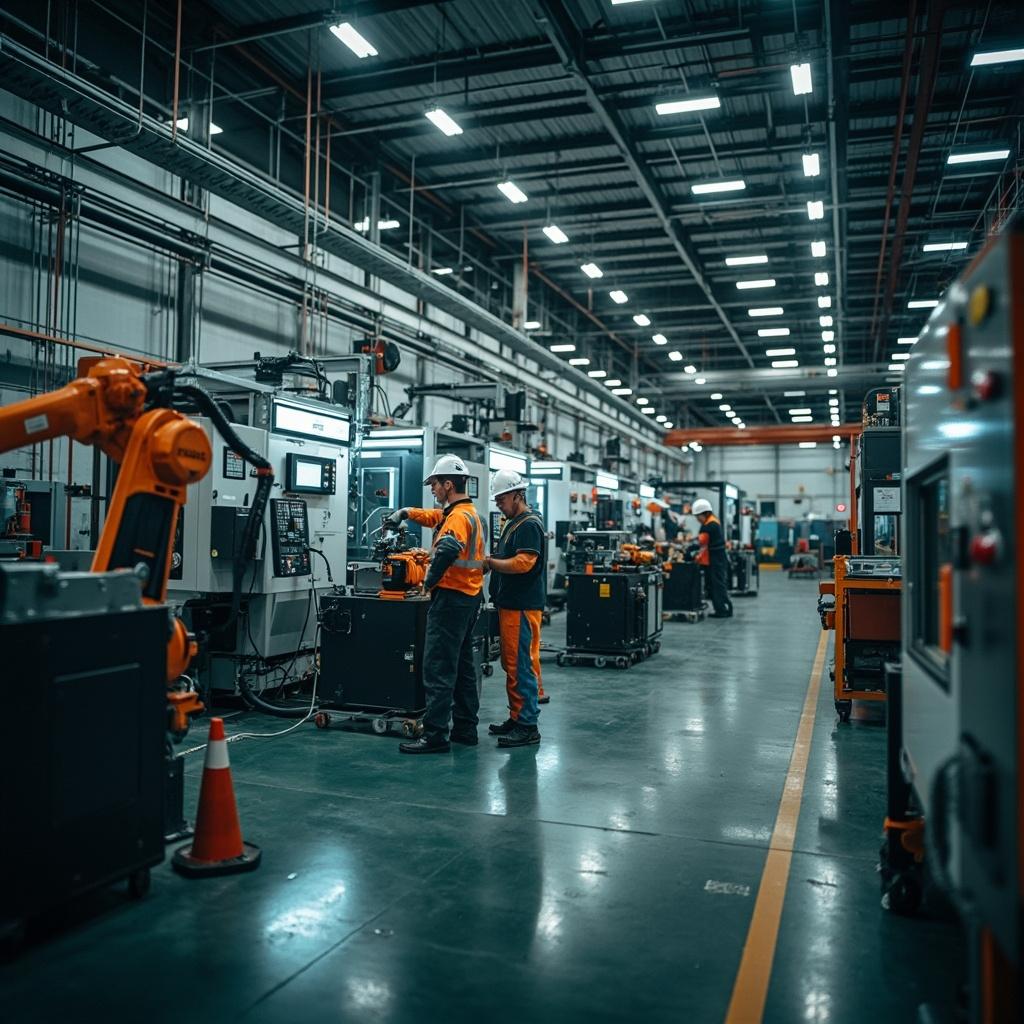
The quality of modern power tools is fundamentally determined by three core manufacturing technologies. Brushless Motor Production: In-house brushless motor design and winding delivers 30-50% longer runtime and 25% more power versus outsourced brushed motors. TTI, Makita, and Bosch each operate proprietary motor production lines with millions of units annual capacity. Battery Management Systems (BMS): Advanced BMS technology protects against overcharge, overheating, and cell imbalance—directly determining battery lifespan and safety. Precision Gearbox Manufacturing: Metal injection molding and CNC machining of planetary gear systems determines tool torque output and durability under heavy professional use.

Quality certifications such as ISO 9001, ISO 14001, and IEC 62841 safety standards indicate rigorous manufacturing process control. Factory automation levels—from PCB assembly robots to automated motor winding—directly correlate with product consistency. Companies investing in Industry 4.0 technologies demonstrate superior defect rates and production efficiency.
How Should Buyers Evaluate Tool Manufacturers for Sourcing?
When evaluating construction tool manufacturers for procurement or partnership, focus on production infrastructure, quality systems, and supply chain reliability. Verify factory certifications: ISO 9001 (quality management) and ISO 14001 (environmental management) are minimum requirements for professional-grade manufacturers. Audit production capability: Assess whether the manufacturer performs in-house motor winding, battery cell packaging, and precision machining—outsourced key components indicate quality risk. Evaluate supply chain diversification: Manufacturers with multi-country production footprints (China, Vietnam, Mexico, Eastern Europe) offer superior tariff resilience and logistics flexibility compared to single-country operations.

For OEM/ODM partnerships: Companies like Jiangsu Dongcheng and Positec have leveraged decades of contract manufacturing experience to build world-class production facilities. Request factory audit reports and quality control documentation covering defect rates, production capacity utilization, and on-time delivery performance. Negotiate minimum order quantities and exclusivity terms based on volume commitments. Leading manufacturers increasingly offer hybrid OEM/ODM + own-brand manufacturing arrangements.
Who Are the Leading Tool Manufacturers by Production Region?
Global construction tool production is concentrated in distinct regional manufacturing clusters, each with unique competitive advantages. Asia-Pacific: Hong Kong-based TTI operates the industry's most geographically diversified manufacturing network across China (Dongguan), Vietnam, USA (South Carolina), and Mexico. Japan's Makita (Anjo) and Koki Holdings (Tokyo) maintain advanced motor R&D facilities. China's manufacturing base includes Chervon Holdings (Nanjing, with growing Vietnam operations), Jiangsu Dongcheng (Nantong, 8 major bases), and Positec (Suzhou)—all transitioning from OEM heritage to own-brand production with substantial factory investments.

North America: Stanley Black & Decker operates 50+ US manufacturing facilities with significant Made-in-USA production. Europe: Germany's Bosch Power Tools (Gerlingen) and Sweden's Atlas Copco (Stockholm, industrial tools division) anchor European manufacturing excellence. Liechtenstein's Hilti (Schaan) combines Swiss-precision engineering with global direct-sales integration.

Manufacturing trends: The industry is experiencing historic capital reallocation as manufacturers invest billions in Vietnam, Mexico, and Eastern Europe to diversify beyond China. TTI's $289M 2025 CapEx and Stanley Black & Decker's ongoing restructuring demonstrate the scale of this manufacturing transformation.