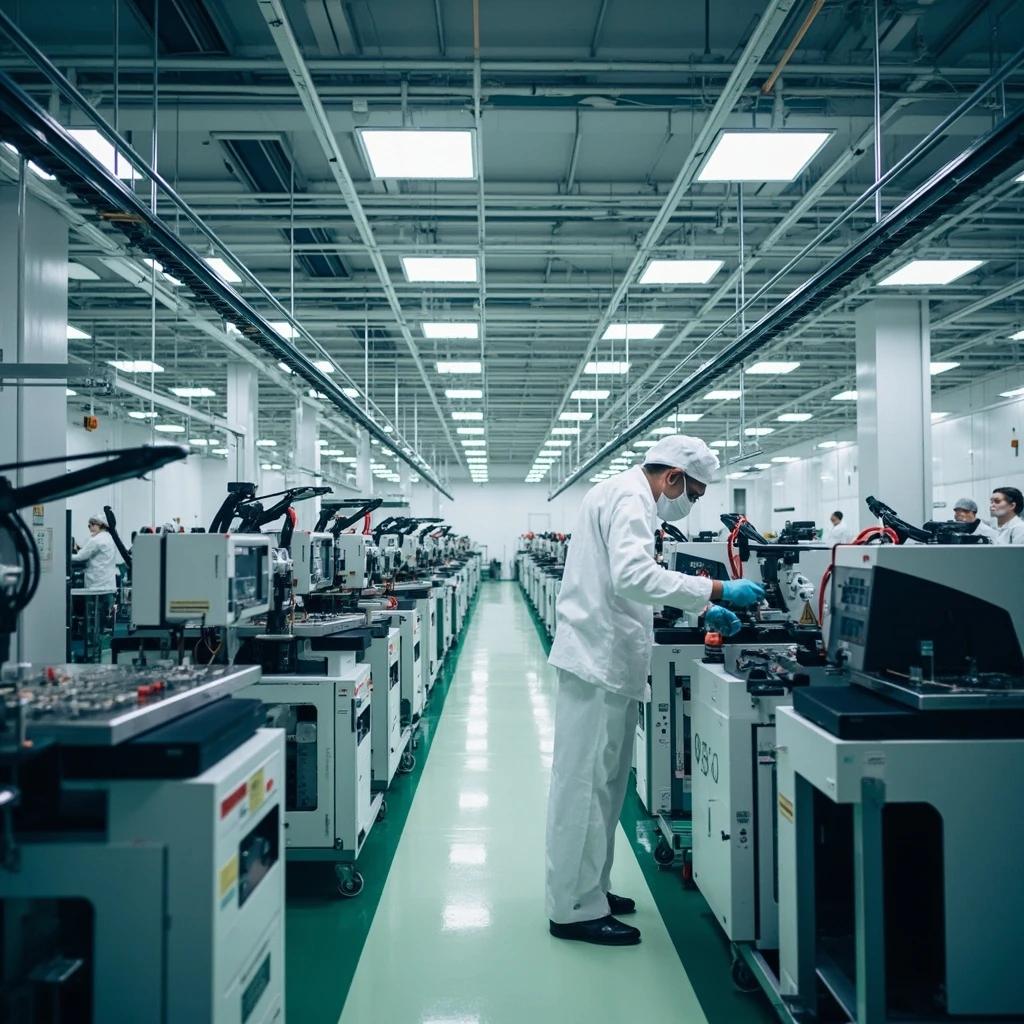
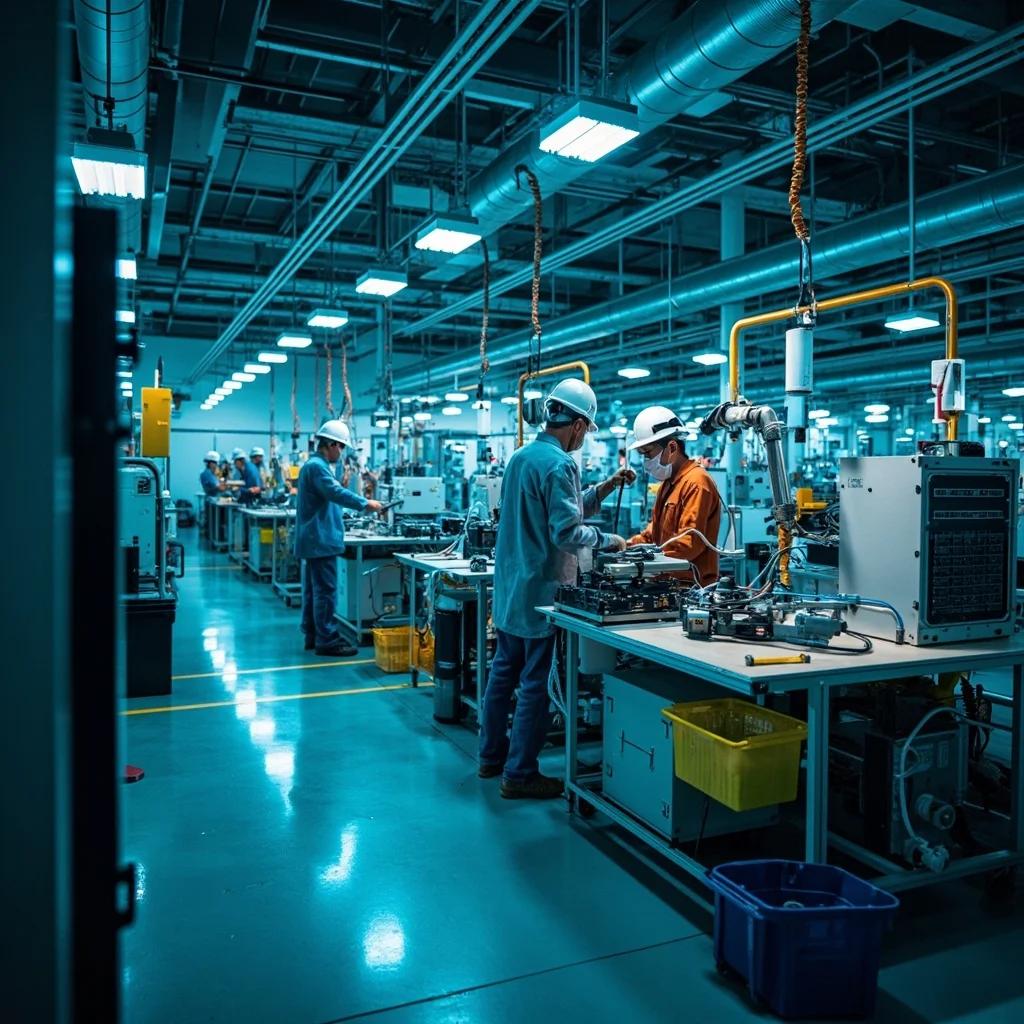
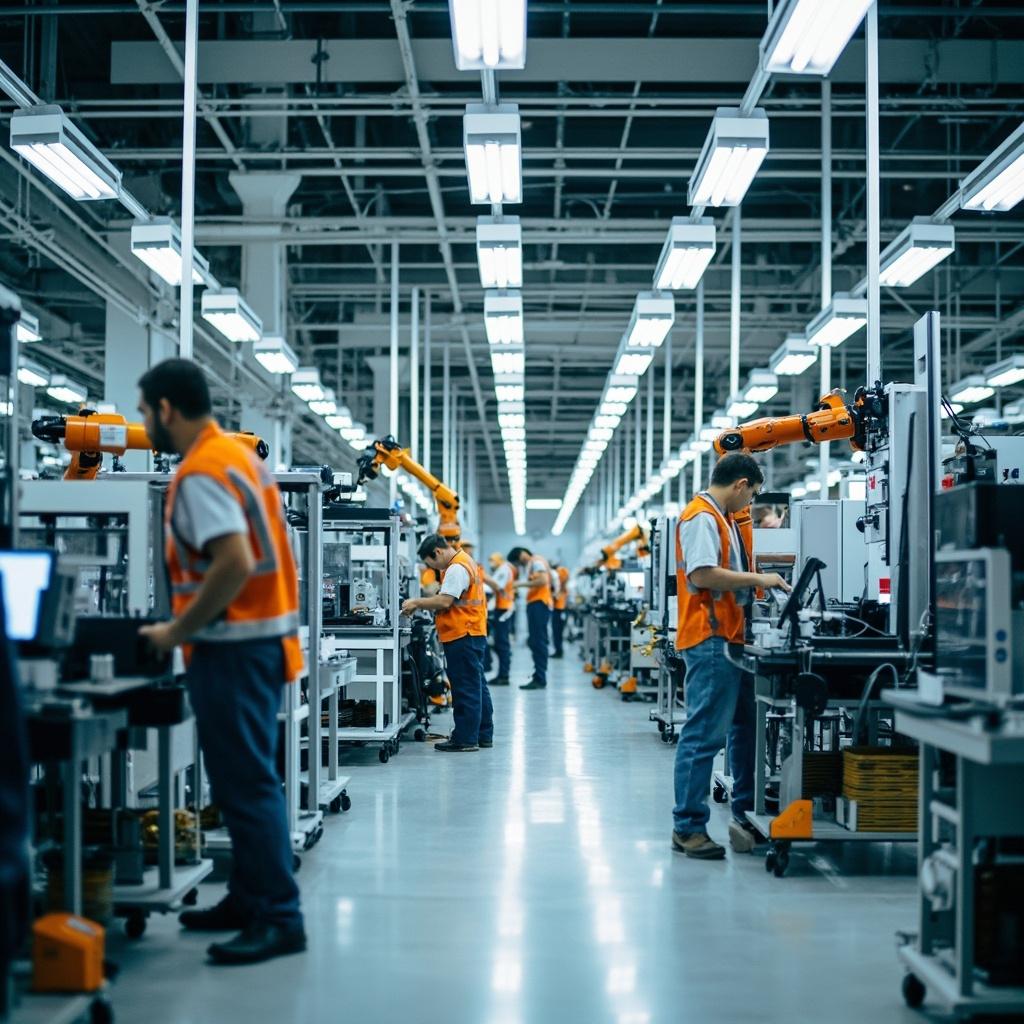
A genuine PCB equipment manufacturer designs and builds its core machines and process chemistry in-house, rather than assembling third-party modules under its own label. This ranking applies a strict heavy-asset test: the company must own factories, machine its own critical components, and control the process know-how that determines equipment performance. KLA manufactures its optical inspection systems around proprietary algorithms and optics; Han's CNC operates over 100,000 square meters of factories in Shenzhen and Xinfeng with self-supplied precision components; Via Mechanics casts and machines its own machine beds; and Ta Liang Technology develops its own servo controllers and drives rather than relying on generic CNC systems.
Vertical integration matters because PCB equipment performance depends on component-level precision. A drilling machine is only as good as its spindle bearings and feed control; an imaging system only as good as its optics and stage stability. Manufacturers that control these elements can iterate faster, guarantee consistency, and support customers better than assemblers dependent on outside suppliers.
The exclusion is deliberate: OEM/EMS fabricators such as Foxconn, Zhen Ding, and TTM dominate electronics manufacturing revenue but are equipment users, not equipment creators. This ranking also excludes pure brand-marketing companies without owned production. The ten manufacturers listed here each passed the self-manufacturing screen, which is why the list skews toward the United States, Germany, Japan, China, and Taiwan — the regions with deep precision-engineering ecosystems.
This ranking evaluates PCB equipment manufacturers on production strength and process-technology depth rather than brand recognition. The scoring model applies four weighted dimensions derived from the industry's own economics. Production Scale and Self-Manufacturing carries 35% weight: owned factory assets, vertical integration, capacity utilization — Han's CNC's 95.6% (Shenzhen) and 96.8% (Xinfeng) utilization rates, for example, demonstrate real delivery muscle. Technology Depth and Process Coverage carries 30%, rewarding manufacturers that serve multiple critical process steps from imaging and drilling to plating and testing.
Global Sales and Market Penetration carries 20%, measured across the world's PCB clusters in China, Taiwan, Japan, Korea, and Southeast Asia, with revenue scale as the proxy — from KLA's roughly $12.2 billion group revenue down to SCHMID's projected EUR 110 million. The final 15% evaluates the Innovation Pipeline: new platform launches, laser and AI integration, and advanced-packaging readiness, such as Schmoll's participation in the Fraunhofer IZM glass-substrate consortium or SCREEN's sixth-generation Ledia direct imaging systems.
All data is drawn from audited financial results, official company disclosures, and third-party industry research cited in the Data Sources section. Because several top firms are private or family-owned — notably Schmoll Maschinen — their scores rely on installation tracking, trade-fair evidence, and verified order disclosures rather than public filings.
Because PCB fabricators and PCB equipment manufacturers occupy fundamentally different positions in the value chain. Fabricators such as Foxconn, Zhen Ding, Unimicron, TTM, and others are among the largest electronics companies in the world by revenue — some exceed $200 billion — but they purchase equipment rather than create it. Their competitive advantage lies in manufacturing execution, yield management, and customer relationships, not in designing laser drillers, plating lines, or testers. This ranking isolates the upstream machinery and chemistry suppliers whose technology decides what fabricators can build.
The distinction is not merely semantic: equipment capability is the binding constraint on PCB advancement. When line widths shrink below 10 microns or layer counts exceed 30, fabricators are limited by what imaging, drilling, plating, and testing vendors can deliver. Ranking these equipment creators separately gives buyers and investors a clearer view of the enabling technology layer — the companies whose R&D budgets and production capacity ultimately set the pace for the entire PCB industry.
Readers will therefore find familiar names from electronics manufacturing absent from this list, not as a judgment on their excellence but because the ranking's scope is deliberately upstream. The same logic appears in this ranking's companion lists of PCB equipment companies, ensuring fabricators are never double-counted across both assessments.
PCB equipment manufacturing is concentrated in four precision-engineering regions, each with a distinct profile. Japan anchors the laser and precision-mechanics segment: Mitsubishi Electric leads CO2 laser drilling, SCREEN's Ledia direct-imaging systems hold roughly 70% share in advanced solder-mask and fine-line exposure, Hitachi High-Tech and Via Mechanics dominate high-end mechanical drilling, and Nidec Advance Technology leads substrate testing. Germany contributes ultra-precision machinery through Schmoll Maschinen — whose micron-level drilling accuracy and 3,200mm panel capability set industry benchmarks — and wet-process chemistry through SCHMID Group's InfinityLine for mSAP manufacturing.
The United States excels in inspection, imaging, and integrated process systems: KLA's Orbotech brand dominates AOI and direct imaging, while MKS Instruments uniquely combines laser drilling with plating chemistry. China and Taiwan have risen rapidly on cost, responsiveness, and AI-driven demand: Han's CNC holds the world's largest mechanical drilling shipment share, Dongwei Technology commands over 50% of China's VCP vertical continuous plating market, and Taiwan's C-Sun and Ta Liang have leveraged advanced-packaging and AI-server back-drilling booms for explosive growth.
Regional strength maps directly to industrial structure: Japan and Germany build on decades of precision manufacturing and deep component self-supply, the United States on semiconductor-adjacent technology leadership, and China and Taiwan on manufacturing scale and the world's largest PCB fabrication base. The next five years will test whether Chinese vendors can close the gap in ultra-high-end laser sources and whether European and Japanese leaders can defend substrate-grade positions as AI demand accelerates.
VerityRank updates its PCB equipment manufacturing rankings on an annual cycle aligned with the fiscal reporting calendar, with interim revisions when material events occur. The 2025-2026 edition reflects financial results through the most recent reporting quarters: KLA's fiscal 2025 revenue of approximately $12.2 billion, Han's CNC's CNY 5.77 billion 2025 revenue, MKS's full-year 2025 results including Atotech, SCREEN's fiscal year ended March 2026 with JPY 605.7 billion in sales, and Taiwan-listed C-Sun and Ta Liang's 2025 financials.
Between annual updates, the ranking undergoes point revisions only for substantive changes in competitive position — such as Via Mechanics' acquisition by AMADA in April 2026, which materially reshaped its capital, technology, and go-to-market posture, or SCHMID Group's July 2026 repeat order exceeding EUR 37 million from a Chinese customer, which validated its mSAP wet-process traction. Routine quarterly fluctuations in revenue do not trigger re-ranking.
Readers can track each company's latest financial disclosures through the Data Sources links accompanying every profile. The next full revision is scheduled to incorporate fiscal 2026 results, expected between March and June 2027, and will re-verify all ten manufacturers against the same self-manufacturing and technology-depth criteria applied in this edition.