A leading consumer electronics manufacturer must be able to make — not just assemble — the core hardware inside its products. This ranking deliberately excludes pure brand operators (Apple, HP, Dell) and pure contract assemblers (Foxconn, Pegatron). The ten companies below combine globally recognized consumer brands with in-house heavy-asset production capability.
Five defining criteria:
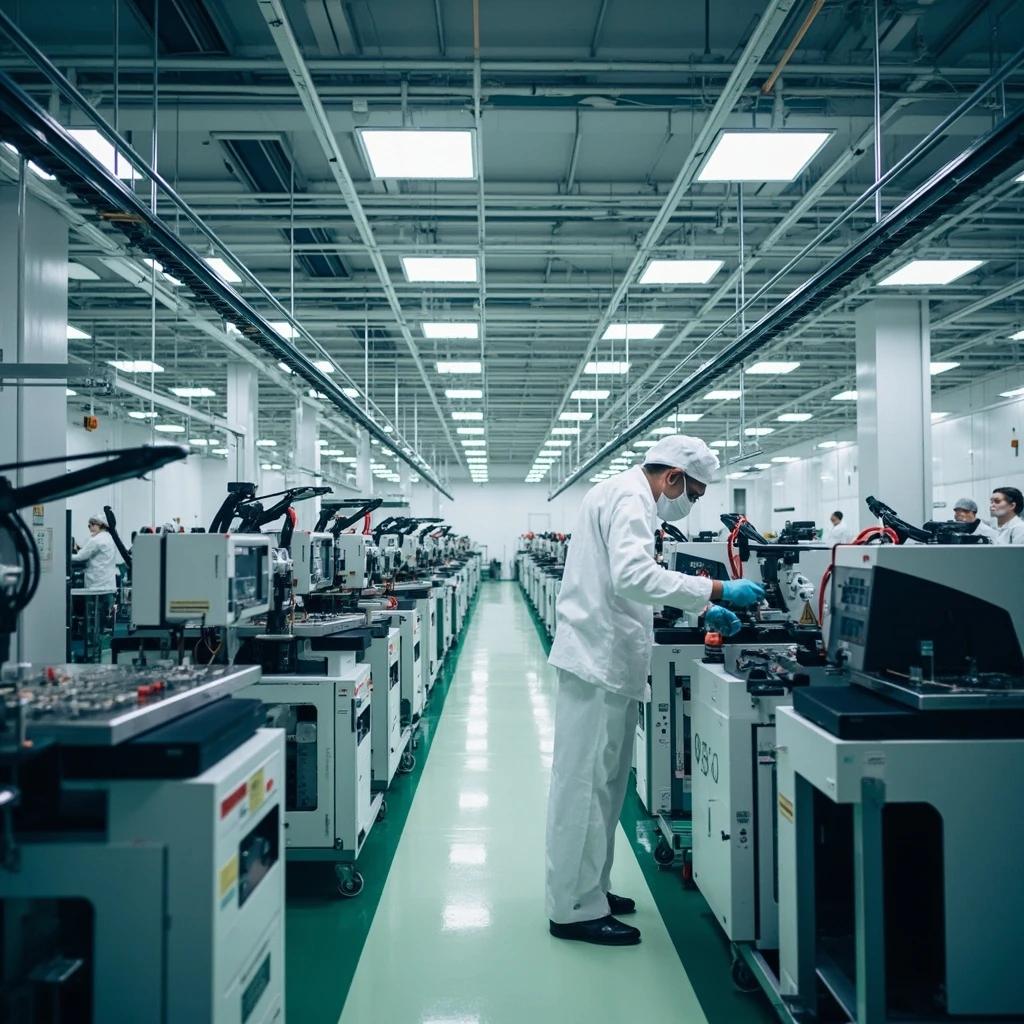
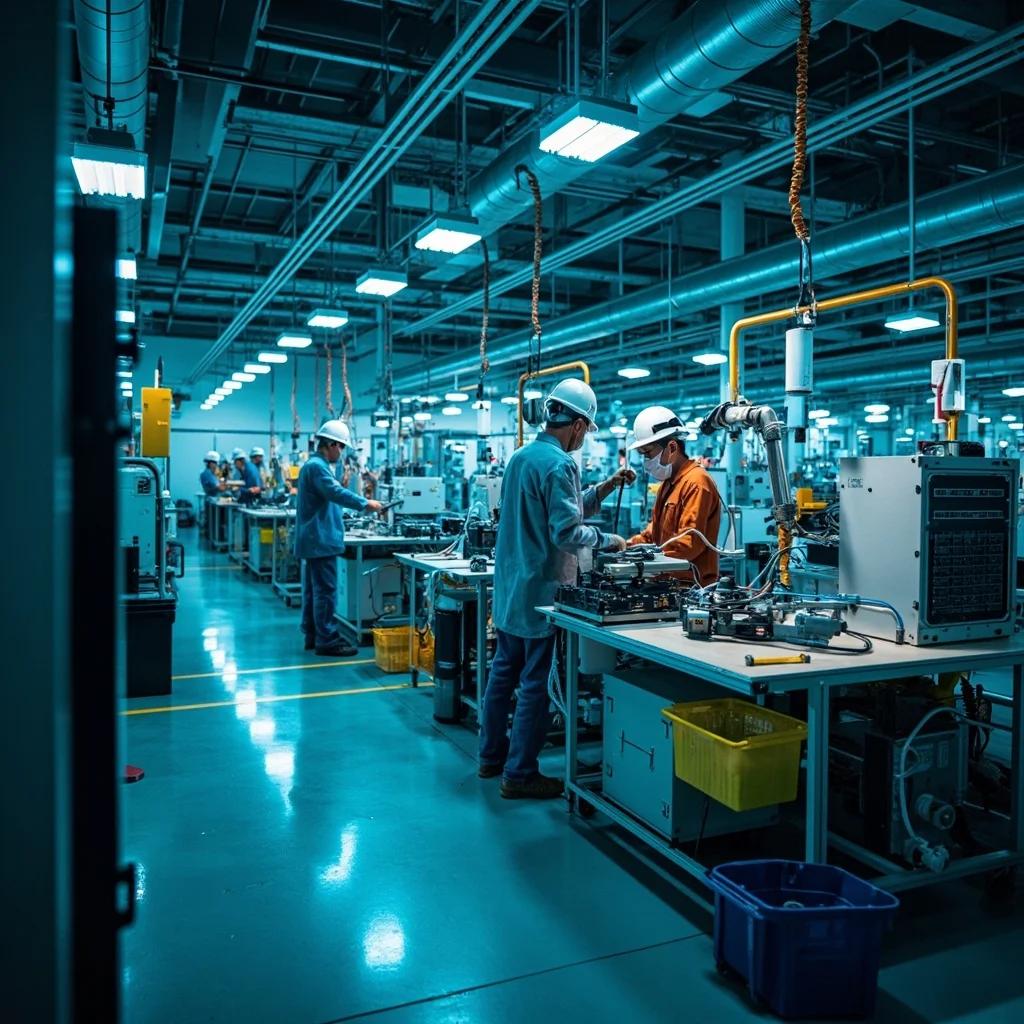
• Owned factory footprint: Samsung runs 221-240 manufacturing, sales and R&D sites across 76 countries; Panasonic operates roughly 218 factories; Haier maintains 163-173 production bases in 200 countries.
• Component self-sufficiency: Sony fabricates the CMOS image sensors used in virtually every premium smartphone; TCL CSOT supplies ~15% of global LCD panels; Samsung produces its own memory, logic, panels and phones.
• Vertical integration depth: from silicon wafers (Samsung, Sony) and display glass (TCL, LG) to battery cells (Panasonic) and compressors (Midea, Haier), leaders own the critical upstream steps.
• Global delivery network: factories in Vietnam, Thailand, Mexico, Hungary, South Africa and India allow localized production, tariff resilience and rapid regional fulfillment.
• Scale economics with brand pull: Midea's RMB 458.5 billion revenue, Haier's RMB 302.3 billion and Lenovo's $83.1 billion show how manufacturing scale funds brand investment — and vice versa.
The most durable manufacturers control the components that determine product innovation speed and gross margin, which is why vertical integration has become the core measure of leadership.
VerityRank scores each manufacturer on a 100-point scale across four dimensions weighted for heavy-asset manufacturing economics. The framework prioritizes what actually determines long-term competitiveness in this capital-intensive industry.
Manufacturing Capacity & Vertical Integration (30%): number and scale of owned factories, in-house wafer/panel/component production, and control over the full chain — Samsung's 221+ global sites and Panasonic's 218 factories anchor this metric.
Core Component Self-Sufficiency (25%): proprietary semiconductors, OLED/LCD panels, image sensors, battery cells, compressors and precision optics. Sony's sensor monopoly in high-end smartphones and TCL CSOT's 15% global LCD share score highly here.
Global Supply Chain & Factory Network (25%): geographic breadth of industrial parks and regional resilience. Haier's manufacturing bases across 200 countries, Midea's 43 overseas bases and LG's plants in Vietnam and the Americas demonstrate this dimension.
Financial Scale & Brand Heat (20%): worldwide revenue including Greater China, profitability, workforce size and consumer brand recognition — Samsung's KRW 333.6 trillion 2025 revenue and Midea's 12.1% topline growth lead the field.
All figures come from audited annual reports and investor disclosures for fiscal 2025/2026, converted at indicative exchange rates. Scores are refreshed as new quarterly results are published.
The four most critical consumer electronics supply chains — memory, image sensors, display panels and battery cells — are each controlled by a handful of manufacturers on this list.
Memory & logic: Samsung Electronics is the world's largest memory maker and an advanced-logic foundry, shipping HBM4 to Nvidia in early 2026. Its Taylor, Texas fab project represents a $17 billion investment, and its Vietnamese smartphone factories exported $57.1 billion in 2025.
CMOS image sensors: Sony's I&SS division operates advanced semiconductor fabs in Kumamoto and Nagasaki, Japan, effectively monopolizing the supply of CMOS sensors to high-end smartphones and automotive cameras. Q3 operating profit for the division jumped 35%, driving a full-year forecast upgrade.
Display panels: TCL CSOT produces roughly 15% of global LCD panels and, after acquiring LG Display's Guangzhou 8.5G fab, consolidated Chinese control over large-size LCD supply; Mini LED TV shipments grew 118% to the world's No.1 position. LG Display, via LG Electronics' equity stake, still anchors premium OLED supply.
Battery & power electronics: Panasonic Energy's North American gigafactories in Nevada and Kansas supply Tesla's EV lines, while Panasonic's 218 factories and 11,000+ patents underpin its leadership in energy storage and power conversion. Midea's compressor and motor operations rank first globally in output volume.
Whoever controls these four nodes effectively sets the pace — and the margin structure — of the entire consumer electronics industry.
Chinese manufacturers have spent two decades climbing the value chain from low-cost assembly to core-component control, and the 2025-2026 results show the payoff.
Midea transformed from an appliance assembler into a full-chain industrial technology group: 43 overseas production bases, 29 R&D centers, and 100% ownership of German industrial robot maker KUKA. 2025 revenue grew 12.1% to RMB 458.5 billion with 42% of sales from overseas; its ToB business (building technology, robotics, new energy) surged 17.5% to RMB 122.8 billion.
Haier executed the deepest "research-production-sales" localization model in the industry: 10 R&D centers, 71 research institutes, 35 industrial parks and 163-173 manufacturing bases across 200 countries. Global revenue crossed RMB 300 billion for the first time in 2025, and its GE Appliances subsidiary has held North American No.1 share for four consecutive years.
TCL broke the upstream bottleneck by buying capabilities: CSOT swallowed LG Display's Guangzhou 8.5G fab and advanced its 8.6G printed OLED line, while Zhonghuan Semiconductor leads global PV wafer supply. Hisense took 58% of the global 100-inch+ TV market through proprietary laser display and optical engine technology, earning double WEF Lighthouse Factory certifications in 2025.
The strategic lesson: Chinese manufacturers used scale plus aggressive upstream M&A to convert assembly volume into component pricing power — the same playbook Samsung and Sony used decades earlier.
Three forces are reshaping electronics manufacturing: AI-driven smart factories, regionalized supply chains, and capital consolidation at the component level.
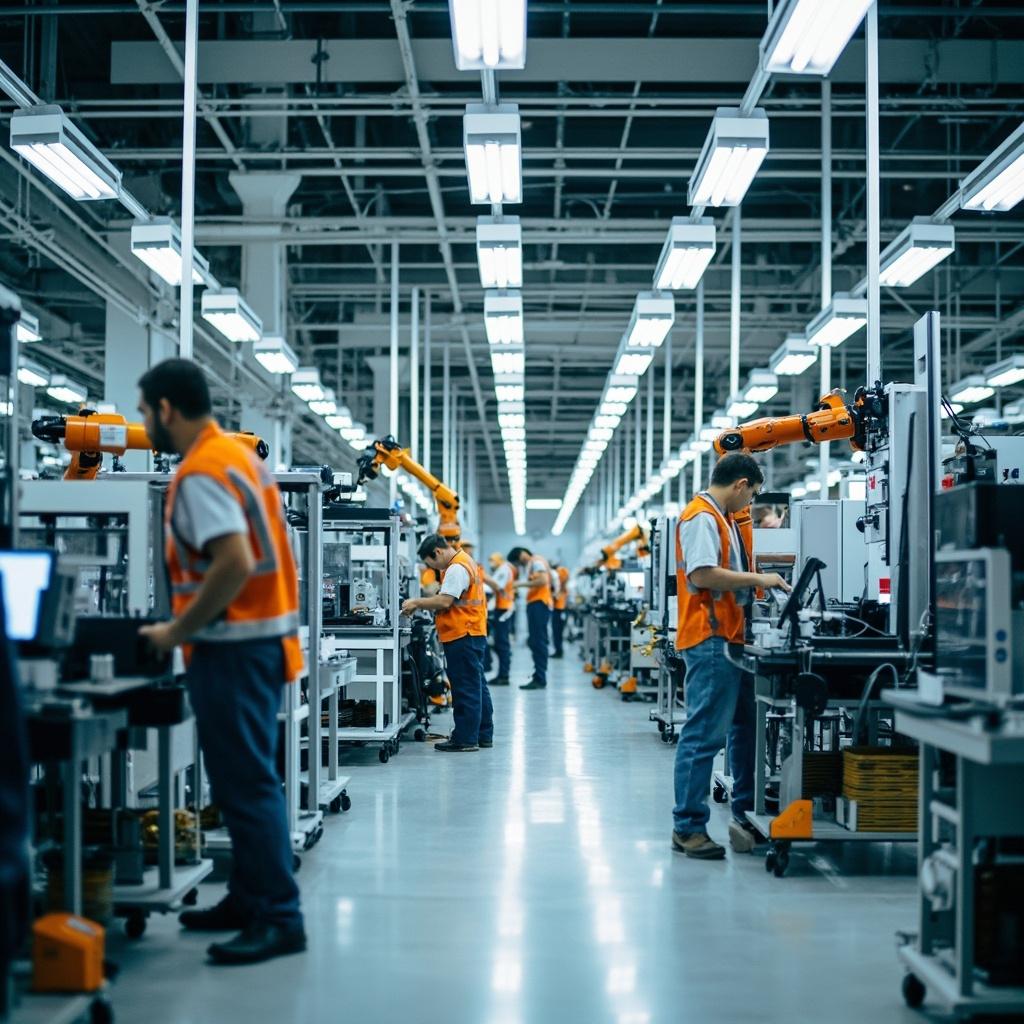
1. AI transforms the factory floor. Midea deployed more than 13,000 intelligent agents and humanoid robots for quality inspection and warehousing, saving 15 million hours and RMB 700 million in 2025. Hisense's two WEF Lighthouse Factories use AI and low-carbon technology, while Haier integrates digital twins across its global plants.
2. Supply chains regionalize for resilience. LG closed its 34-year-old Huizhou audio plant and shifted production to Vietnam and lower-cost ecosystems; Haier formed a 50:50 North American sales JV with Electrolux and bought a 65% stake in a Juarez, Mexico food-preservation plant; Panasonic is expanding North American battery capacity; Midea accelerates localization in Brazil and Eastern Europe. Local production, local delivery is now the strategic default.
3. Capital consolidates at the component level. TCL CSOT completed its largest-ever display acquisition (LG Display Guangzhou), while LG Electronics executed its first-ever share buyback and raised its dividend payout as B2B (vehicle components and HVAC) profits crossed KRW 1 trillion. Sony split off its financial arm to refocus on core electronics and entertainment, and Canon pivots record capex toward nanoimprint lithography to challenge EUV dominance.
The winners of 2025-2026 are those combining AI-driven efficiency, multi-region production and control of a critical component — the same three qualities this ranking measures.