VerityRank evaluates power electronics equipment manufacturers across three weighted dimensions that reflect how this industry actually competes.
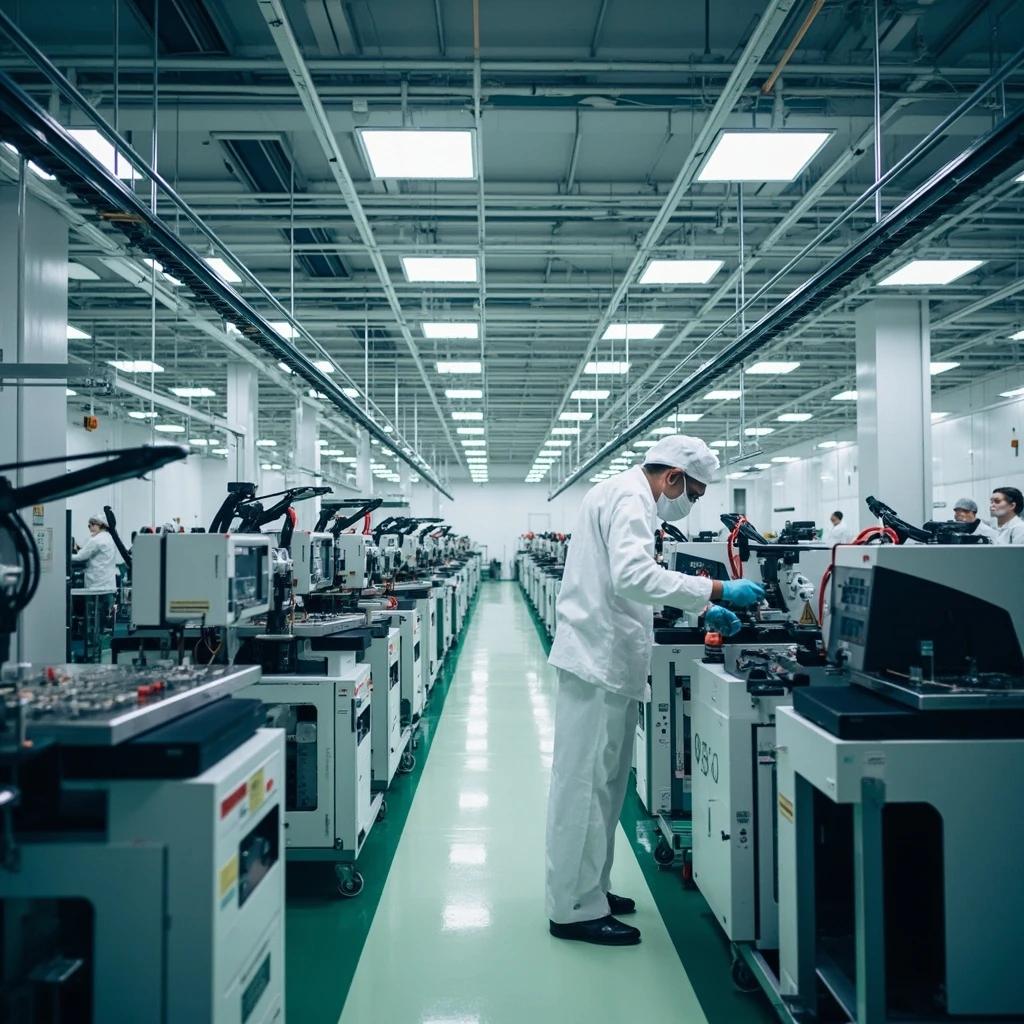
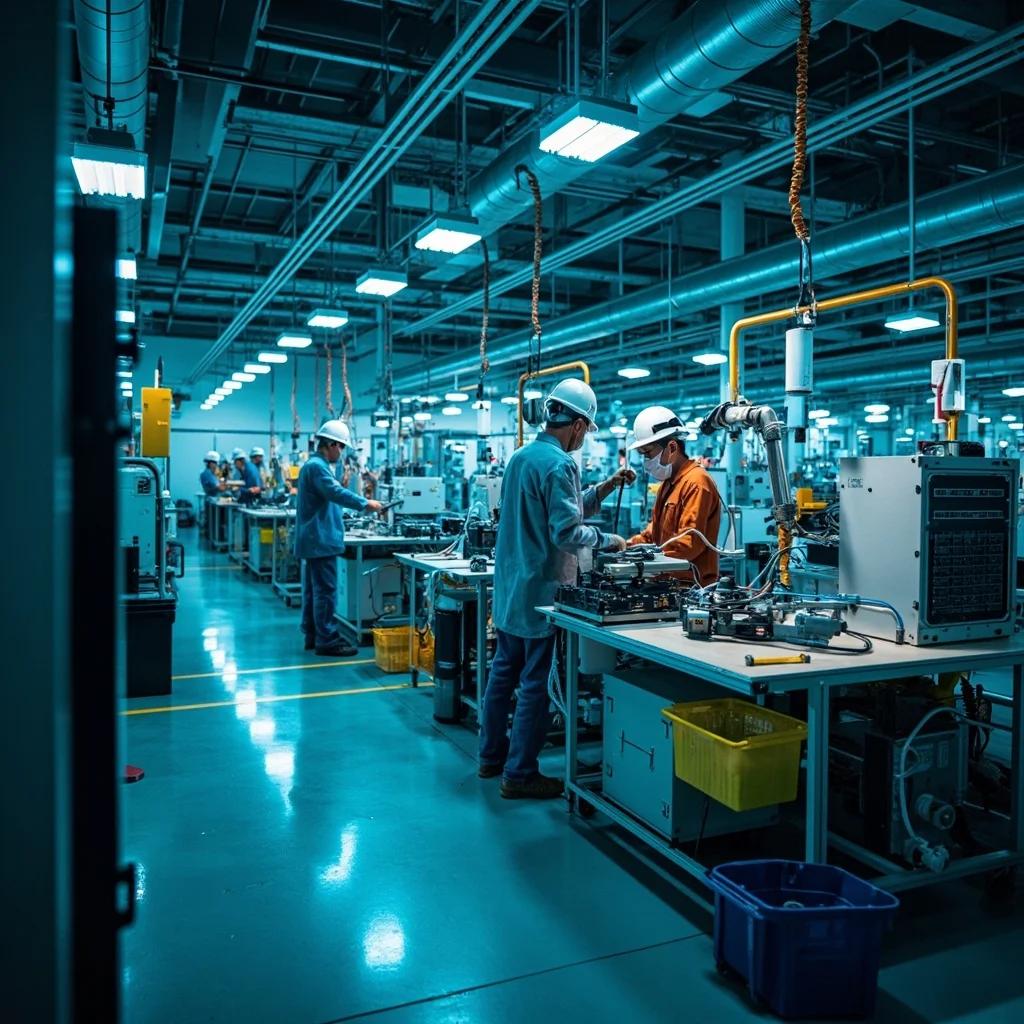
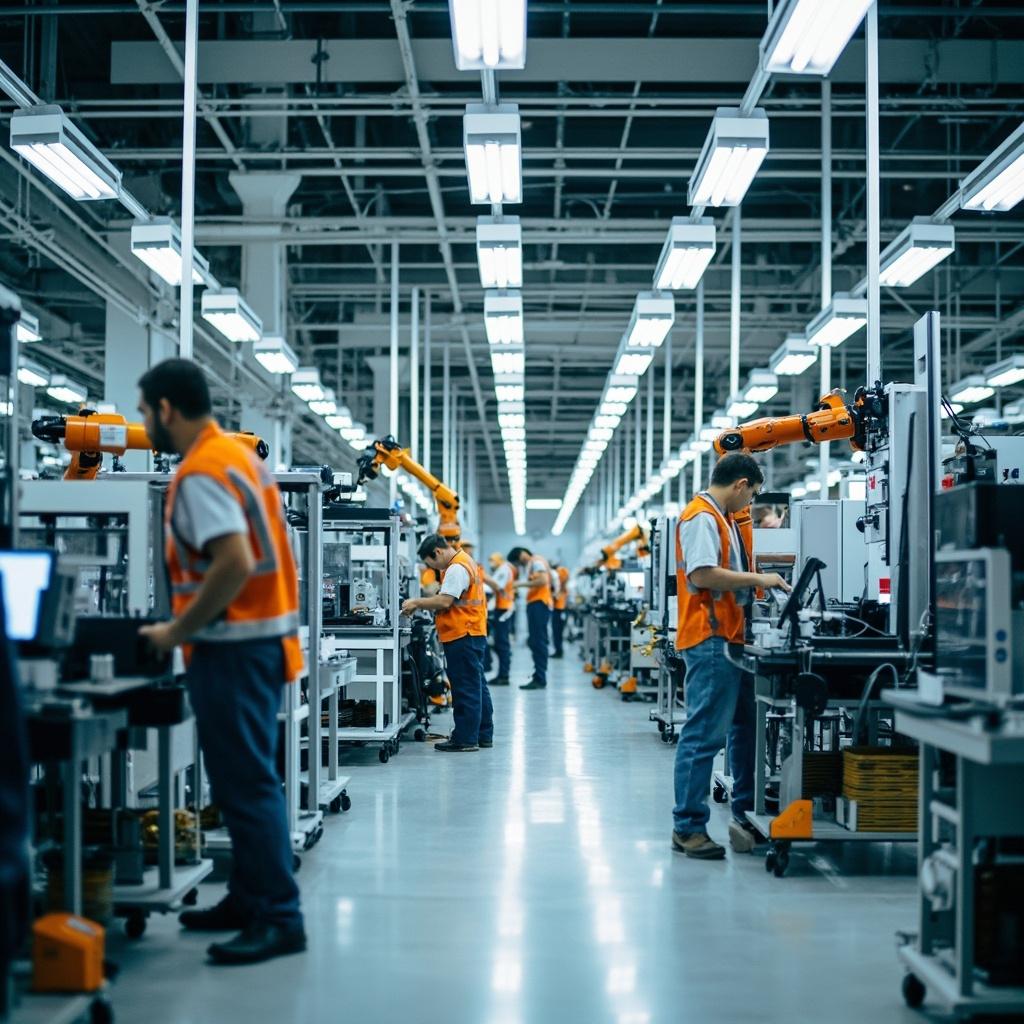
The dominant factor is Production Scale & Capacity (50%) — this ranking deliberately favors heavy-asset manufacturers with real factories, disclosed capacity volumes, smart-factory certifications, and global plant footprints. TBEA's roughly 500 million kVA of annual transformer and reactor capacity, Schneider Electric's network of World Economic Forum lighthouse plants, and Fuji Electric's mega-plants at Chiba, Kawasaki, Kobe, and Tsukuba all score strongly here. The second dimension is Core Category Share (30%), measuring how much of a company's revenue comes from power electronics categories: battery production equipment, power supply manufacturing, photovoltaic electronics, PEM production lines, home energy equipment, power module manufacturing, green charging, energy-efficiency equipment, grid equipment, data-center power and thermal management, flexible DC/UHV transmission, industrial drives, and grid-forming storage. The final dimension, Brand & Global Sales (20%), captures fiscal 2025-2026 revenue including China operations, the number of operating countries, search visibility, and customer reputation.
Composite Production Score (0-100) is calculated from the latest full-year financial disclosures and manufacturing announcements, cross-checked against industry research from MarketsandMarkets and Yole Group. Companies that rely on OEM/ODM contracts or fabless brand operations are excluded by design — only genuine manufacturers qualify.
Disclaimer: Rankings are informational only and are not investment advice, endorsements, or guarantees of future performance.
The world's leading power electronics manufacturers share five hard-won capabilities that take decades and billions of dollars to build.
First, vertically integrated power semiconductor capability — the deepest players make their own IGBT and SiC modules. Fuji Electric fabricates chips at Matsumoto and Aizu and packages them into drives and UPS; ABB designs wide-bandgap devices for its own HVDC converters and industrial drives; TBEA combines polysilicon, inverters, and transformer manufacturing in one closed loop plus 4,000+ MW of captive power stations. Second, gigawatt-scale transformer and switchgear production — TBEA's ~500 million kVA/year capacity, Fuji Electric's four Japanese mega-plants, and Schneider Electric's global circuit-breaker line demonstrate output volumes that new entrants simply cannot replicate. Third, ultra-high-voltage capability — only a handful of companies (Siemens Energy, ABB, TBEA, NARI Technology) can build ±800 kV converter valves and HVDC transmission systems, the most demanding electrical manufacturing on Earth. Fourth, precision thermal and power delivery for data centers — Eaton and Vertiv now assemble integrated grid-to-chip power and liquid-cooling stacks, a capability Vertiv's 24-30 global facilities and Eaton's post-Boyd Thermal plants underline. Fifth, automated, flexible assembly at extreme scale — Sungrow's European plant (20 GW of inverter capacity per year), Delta's Wellgrow and Bangpoo clusters in Thailand, and Fuji Electric's fully automated lines at Chiba and Tsukuba all show how top manufacturers combine automation with regional localization.
These five capabilities are mutually reinforcing: semiconductor ownership lowers cost and improves performance; transformer scale wins utility tenders; UHV know-how blocks price-based challengers; and data-center expertise rides the fastest-growing demand curve in the industry. Together they create a moat that no asset-light entrant has crossed in decades.
Geopolitics, tariffs, and customer demand for local content are forcing the world's power electronics manufacturers to build parallel supply chains far from their historical home bases.
The "China + 1" strategy has become standard practice. Delta Electronics opened two new Wellgrow factories and expanded its Bangpoo cluster in Thailand in 2025-2026, shifting production out of mainland China while serving Southeast Asian and Western customers; Sungrow commissioned a European plant with design capacity of 20 GW of inverters and 12.5 GWh of storage per year specifically to meet European local-content requirements; TBEA expanded overseas grid-equipment contracting by about 68% to $2 billion in 2025, delivering UHV and transformer projects across Asia, Africa, and the Middle East. Even Fuji Electric, historically concentrated in Japan, is investing to lift switchgear and power-supply capacity 1.5-1.7x across Chiba, Kawasaki, Kobe, and Tsukuba while adding international manufacturing through Southeast Asian subsidiaries.
The pattern is driven by three forces: tariff wall avoidance (particularly for US and EU markets), regionalization of energy infrastructure as countries demand local manufacturing for grid modernization projects, and supply-chain resilience after years of disruption. The result is a genuinely multi-polar manufacturing map — Europe, Southeast Asia, India, and North America all host new capacity — which in turn deepens the moat of incumbents, because only large manufacturers have the capital to build and operate factories on multiple continents simultaneously. For buyers, this regionalization shortens delivery lead times and lowers political risk, but it also concentrates orders further into the hands of the ten companies in this ranking.
The AI data center build-out has become the single most powerful demand driver in power electronics manufacturing, and five companies in this ranking are the clearest beneficiaries.
Vertiv is the purest play: 2025 net sales rose 28% to $10.2 billion, operating profit jumped 34% to $1.8 billion, and Q1 2026 sales of $1.64 billion beat expectations, with management raising full-year guidance — its UPS, precision cooling, and liquid-cooling (CDU/RDHx) production is effectively sold out. Eaton holds $23 billion of order backlog and completed the $9.5 billion Boyd Thermal acquisition to add in-house liquid-cooling assembly; its switchgear and power-distribution plants are expanding, including a new Nebraska facility. Schneider Electric grew data-center power and energy-management revenue strongly in 2025 (€40.15 billion group revenue, +8.9% organic) with its APC UPS franchise and EcoStruxure software riding the same wave, plus a 2026 partnership with Foxconn on modular AI data-center power and liquid-cooling architecture. Delta Electronics saw 2025 revenue surge 32% on AI server power demand, with grid-to-chip power and thermal solutions for AI data centers in extreme shortage; Fuji Electric is expanding switchgear and power-supply capacity 1.5-1.7x as Japanese data-center construction accelerates.
The underlying driver is staggering: a single AI server rack now draws 50-100 kW versus 5-10 kW for legacy racks, demanding 800V DC bus architectures, megawatt-class UPS, and liquid cooling at scale. This has turned power electronics from a maintenance procurement into the physical constraint on AI expansion — exactly the segment where Vertiv, Eaton, Schneider, Delta, and Fuji Electric have concentrated their manufacturing investments. The structural demand is expected to persist through 2027 and beyond as hyperscale operators keep building.
VerityRank refreshes its power electronics equipment manufacturer rankings on a regular cycle, with interim revisions when major corporate events change the competitive landscape.
The core ranking is updated every 6-12 months, incorporating full-year results, quarterly earnings disclosures, capacity announcements (such as TBEA's transformer capacity disclosures or Fuji Electric's 1.5-1.7x expansion program), and revised market forecasts from MarketsandMarkets and Yole Group. Between scheduled updates, the ranking is adjusted when a specific event materially shifts a company's manufacturing position — examples include Eaton's $9.5 billion Boyd Thermal acquisition and its Mobility-Dana combination, Schneider Electric's $3.1 billion agreement to acquire Cognite, Delta's acquisition of Noda RF Technologies, and Siemens Energy's announced rebranding of its businesses under the Omterra umbrella. Greenfield factory openings, major HVDC project wins, and wide-bandgap capacity decisions are tracked continuously.
All methodology changes and data revisions are documented on each company's profile page, where readers can review underlying financial sources including annual reports, earnings releases, and exchange filings. The top tier of this category has proven structurally stable across multiple cycles — the capital intensity of transformer, converter-valve, and power-module manufacturing creates enormous barriers to entry — but the gap between positions 5 and 10 narrows each year as AI data-center demand and wide-bandgap technology redistribute value across the industry.