This ranking isolates true manufacturers - companies with substantive owned factories, production lines, and capacity data - and scores them across three weighted pillars. Pure OEM or fabless brand operators were excluded by design, because education procurement increasingly demands supply-chain control, quality consistency, and delivery reliability that only vertical manufacturers can guarantee.
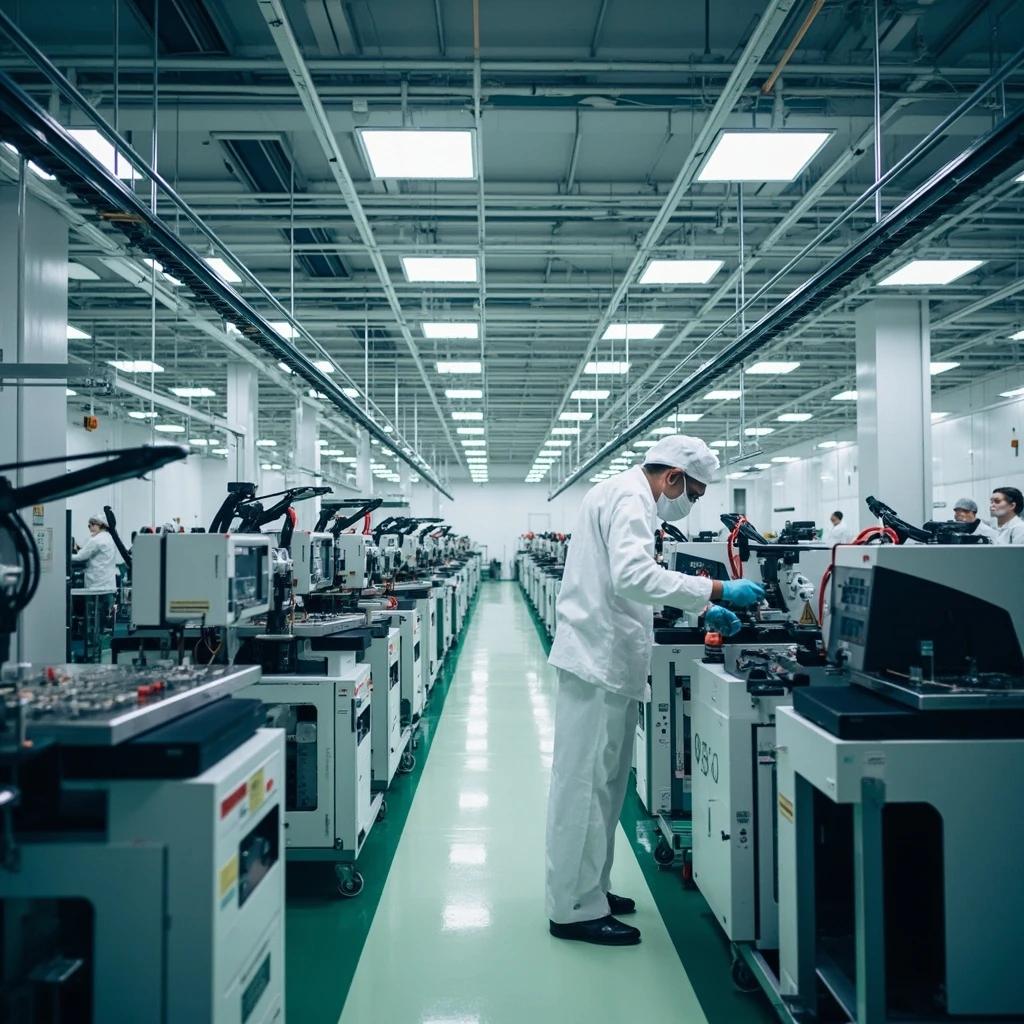
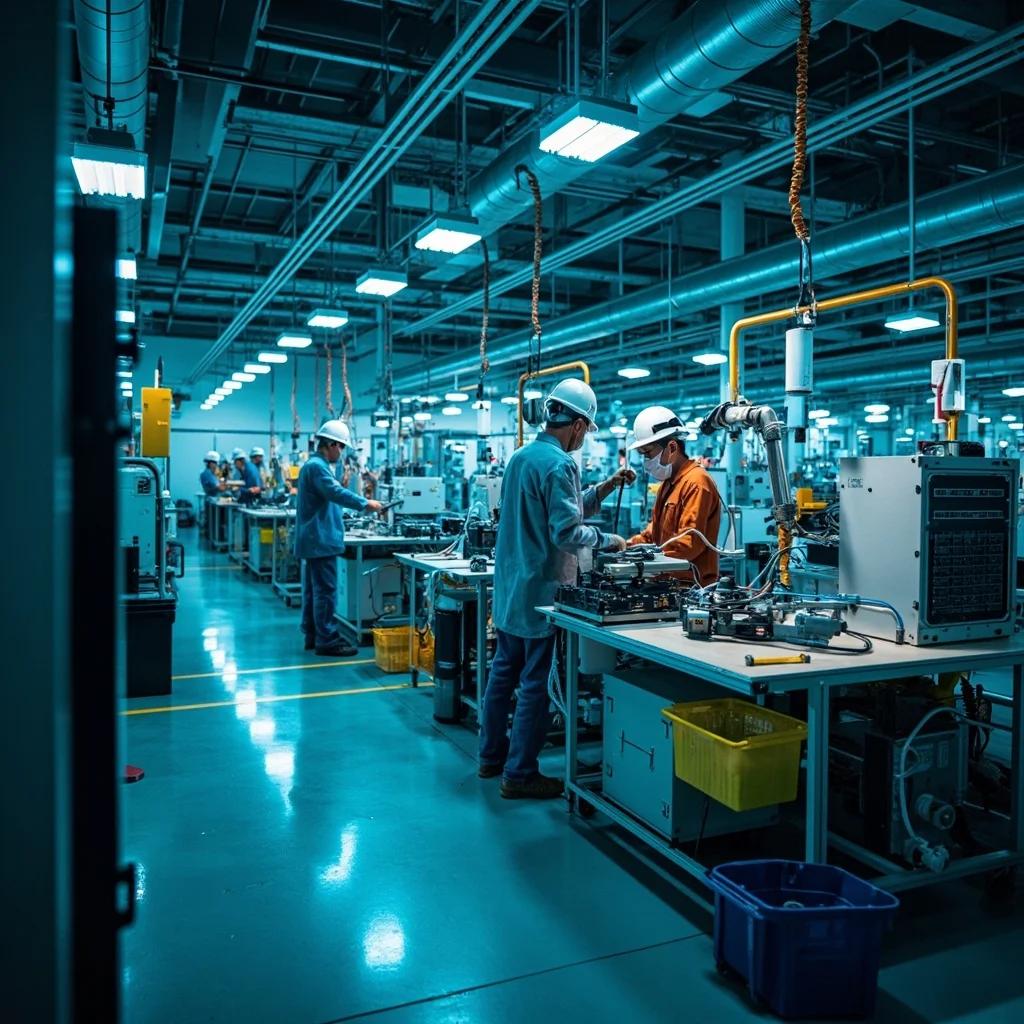
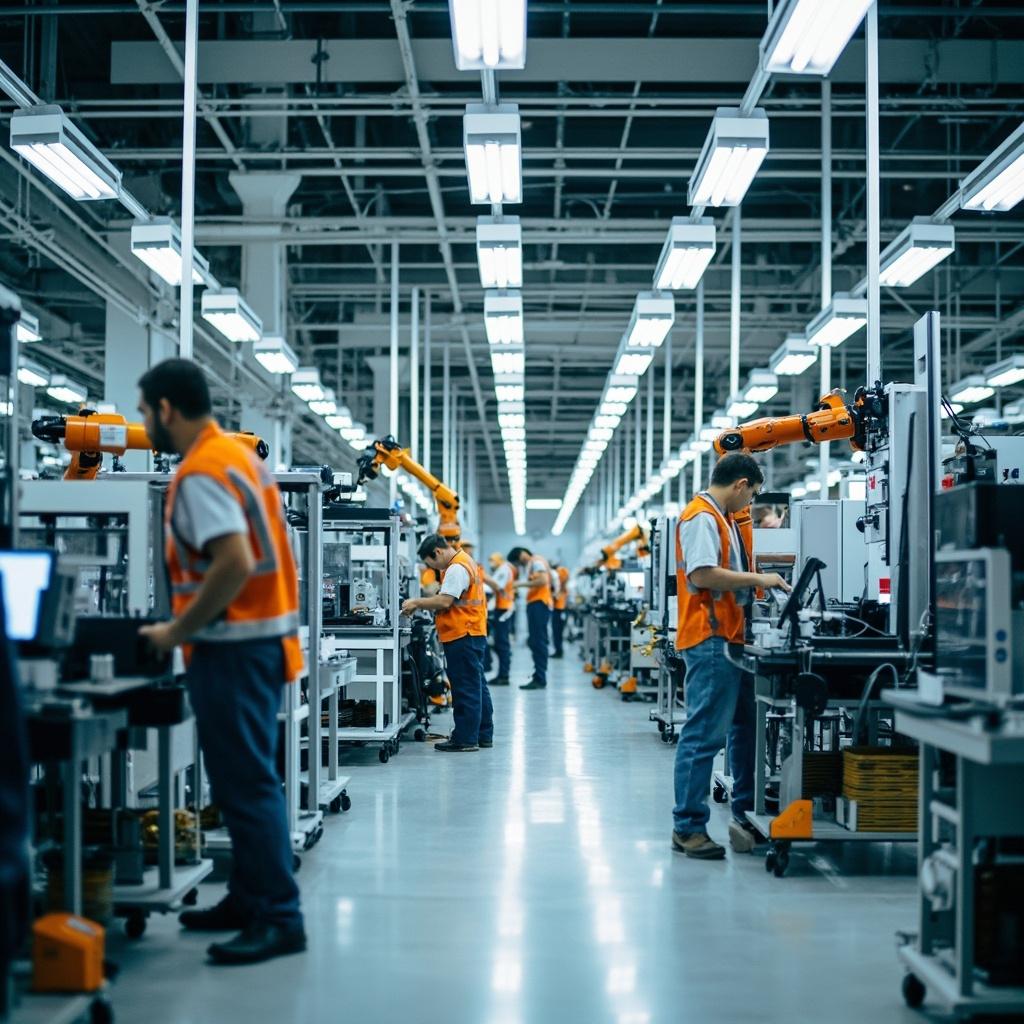
Production Capability & Scale carries 50% of the weight. It rewards owned factory area, automation line count, annual capacity, workforce size, and vertical-integration depth. CVTE's 320,000-square-meter smart manufacturing base in Guangzhou produces one interactive flat panel every 60 seconds with over 80% automation; Hitevision's Chuzhou base delivers million-unit annual capacity; LEGO's five owned mega-factories guarantee injection-molding precision; and Epson, Samsung, and LG command some of the world's largest display and optical production systems.
Category Production Focus counts 30%. The share of R&D and production devoted to education equipment, maker tools, robotics kits, and classroom hardware determines this score. Vertical specialists like LEGO Education, Hitevision, Creality, and Elegoo score highest here; diversified giants like Samsung and LG - whose education business is a small fraction of group revenue - are intentionally moderated despite exceptional production strength.
Brand Influence, Global Sales & Recognition carries the final 20%. It weighs 2025-2026 worldwide revenue, market share, education-sector penetration, search volume, and real user feedback. LEGO's 97/100 composite leadership stems from 62 million children learning with structured building toys and over 40% share in that segment; CVTE's Seewo has led China's interactive panel market for 14 consecutive years.
Disclaimer: Scores are a composite snapshot for 2025-2026 based on public information, not investment advice.
Five manufacturing capabilities separate the world's leading education equipment producers from the rest.
First, vertical integration from components to finished product. CVTE controls LCD main control boards (24.4% global share) and finished panels under one roof; Epson manufactures its own 3LCD optical engines and micro-piezo printheads; Samsung and LG extend control from glass substrates and driver ICs to final assembly. This integration protects margins and insulates supply during disruptions.
Second, automation and digital traceability. Leading plants integrate WMS, MES, and SCADA for full digital tracking from raw materials to shipment. CVTE's base exceeds 80% automation; Elegoo's 25,000-square-meter Longhua factory controls precision injection molding and resin quality in-house; LEGO's factories maintain the tightest tolerances in injection molding, enabled by decades of process refinement.
Third, scale capacity that matches global tender volumes. Hitevision's Chuzhou base produces over one million education displays annually; Samsung and LG command multi-million-unit panel capacity; Creality and Elegoo have each shipped over two million 3D printers. Consistent volume at quality is a prerequisite for national and district-level contracts.
Fourth, flexible mixed-model lines. The ability to switch between display sizes, touch technologies, and product families on the same lines - as CVTE and Hitevision do - lets manufacturers respond to tender diversity without separate factories.
Fifth, global production footprints. LEGO operates plants in Denmark, Hungary, Mexico, China (Jiaxing), and Vietnam (its new carbon-neutral base cutting APAC lead times ~25%); Epson manufactures across Japan, China, Indonesia, and the Philippines. Multi-region capacity hedges tariffs and logistics risk while optimizing delivery.
Education interactive displays are dominated by a mix of Chinese vertical specialists and Korean/Japanese display giants.
CVTE (Seewo/MAXHUB) is the global category leader: its Seewo brand holds ~17% revenue share in education interactive smart panels and has led China's interactive flat panel market for 14 consecutive years, manufactured at a 320,000-square-meter Guangzhou base with over 80% automation. Hitevision is the most category-concentrated player, devoting ~100% of capacity to K-12 education displays from its Chuzhou base, with its Newline brand strong in North America and Europe.
Samsung Electronics leads the global IFPD market with roughly 5.2% share, shipping its Google EDLA-certified AI education displays with Knox security from one of the world's largest display ecosystems. LG Electronics differentiates through the ultra-wide 105-inch 21:9 CreateBoard (5K, 50-point touch, EDLA-certified Android 13), leveraging its own LCD glass substrate supply chain. Epson remains the projection alternative, with 3LCD education projectors like the EB-870Ei interactive ultra-short-throw and the 5,200-lumen EB-L270F, all built on in-house optical engines.
BenQ (Qisda) combines antibacterial-screen education boards with the group's own EMS plants in Suzhou and Vietnam, while Epson, Sony, and LG anchor high-end projection and display segments. The competitive frontier is shifting toward AI-enabled panels with on-device processing, EDLA certification, and software ecosystems - capabilities that reward manufacturers with component control and software integration depth.
In the hands-on learning segments - robotics kits, coding tools, and maker equipment - three manufacturers define the global standard.
LEGO Education is the category's undisputed leader, with roughly 62 million children using structured educational building toys worldwide and over 40% market share in that segment. Its SPIKE Prime and SPIKE Essential robotics systems combine precision-molded bricks, motors, sensors, and hubs with block-based and Python coding, manufactured across five owned mega-factories that guarantee the tolerances the system depends on. The 2026 launch of a new computer science and AI-focused hands-on solution extends its reach into AI literacy education.
Creality is the maker-education 3D printing champion: with FDM and resin printers in STEM classrooms and university prototyping labs across 192 countries, 2025 revenue of RMB 3.127 billion (up 36.6%), and in-house production lines in Shenzhen and Huizhou, it has industrial-grade pricing for education budgets. Its May 2026 HKEX listing (first consumer 3D printing stock, 3,829x oversubscribed) funds further global expansion.
Elegoo dominates education resin printing: cumulative sales exceeding 2 million printers, over 90% of revenue from overseas developed markets, and 2025 revenue of RMB 2.3-2.5 billion from a 25,000-square-meter owned Longhua factory. Its Arduino-compatible kits and STEM science equipment complement the printer line, making it the affordable precision option for high schools and universities.
Sony plays a distinctive role through its KOOV programmable robotics kits, combining modular bricks with programming logic in designs adopted by top international schools - a niche where its precision motor and sensor manufacturing set the quality benchmark.
The manufacturing market is consolidating around asset-heavy, AI-capable, globally diversified producers - and punishing asset-light business models. Several structural shifts define the period.
Demand keeps compounding. The IFPD/interactive whiteboard market is growing at 7.4% CAGR toward $15.2 billion in 2026 and a projected $28.8 billion by 2035. Edtech hardware expands faster, driven by government digital-education spending, STEM mandates, and hybrid learning. Yet gains concentrate among manufacturers with owned capacity, because education buyers now rank system stability and manufacturer technical support among their top criteria.
AI is becoming a manufacturing differentiator. Leading factories embed AI at two levels: in the plant (WMS/MES/SCADA-driven smart manufacturing) and in the product (teaching large models, AI cameras, EDLA-certified Android platforms). CVTE's 220-billion-data-point education model and AI blackboards, Epson's ISE 2026 education projector line, and Samsung's Knox-secured AI displays exemplify the direction.
Chinese maker-equipment champions are going global and public. Creality's HKEX listing (May 2026) as the first consumer 3D printing stock and Elegoo's pre-IPO funding from Meituan, Hillhouse, and Shenzhen Capital signal a wave of Chinese education-hardware manufacturers using public markets to fund international capacity. Meanwhile, CVTE filed for A+H dual listing in July 2026.
Financial stress is filtering weaker players. Hitevision's net profit fell 76.67% in 2025 amid procurement-cycle adjustments, and pure ODM brands face margin compression as vertical manufacturers control component costs. The 2026-2030 refresh cycle will reward those with owned factories, AI capabilities, and multi-region production - and further marginalize those without.