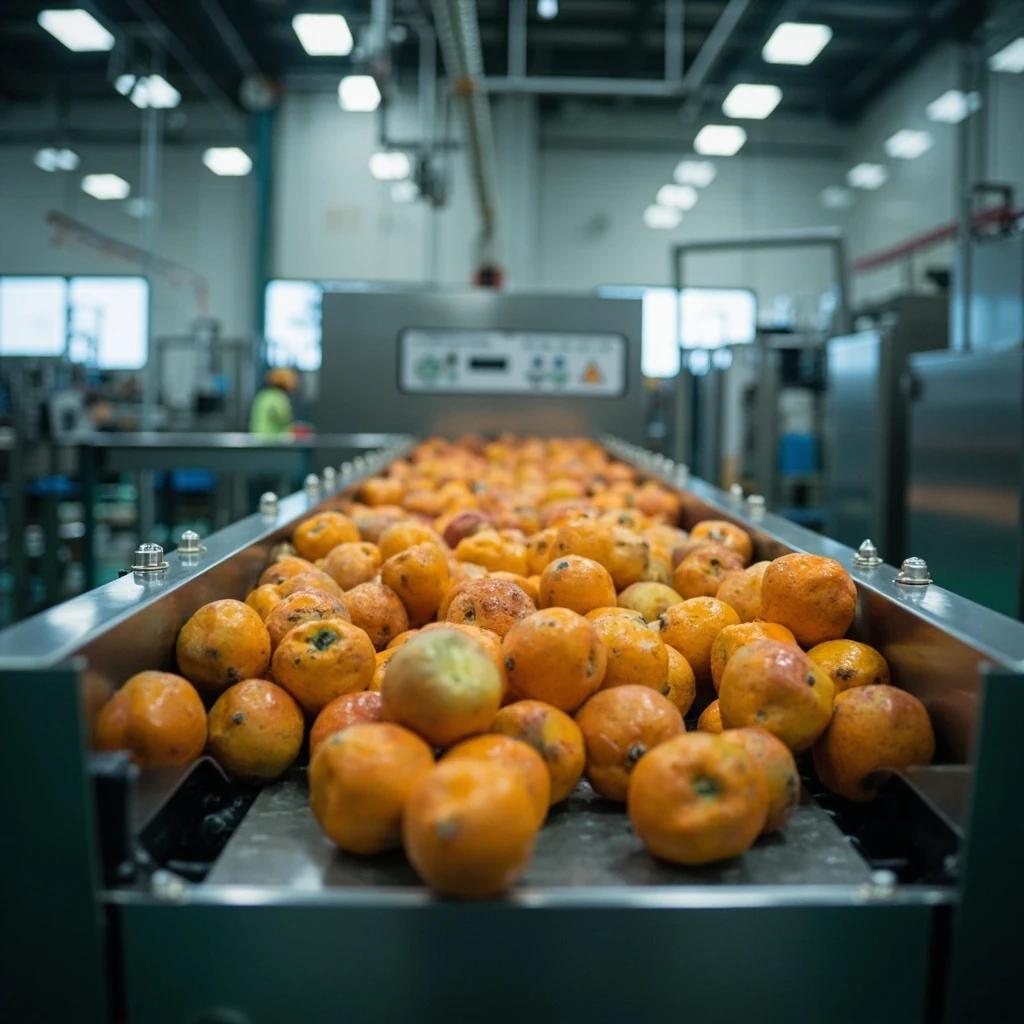
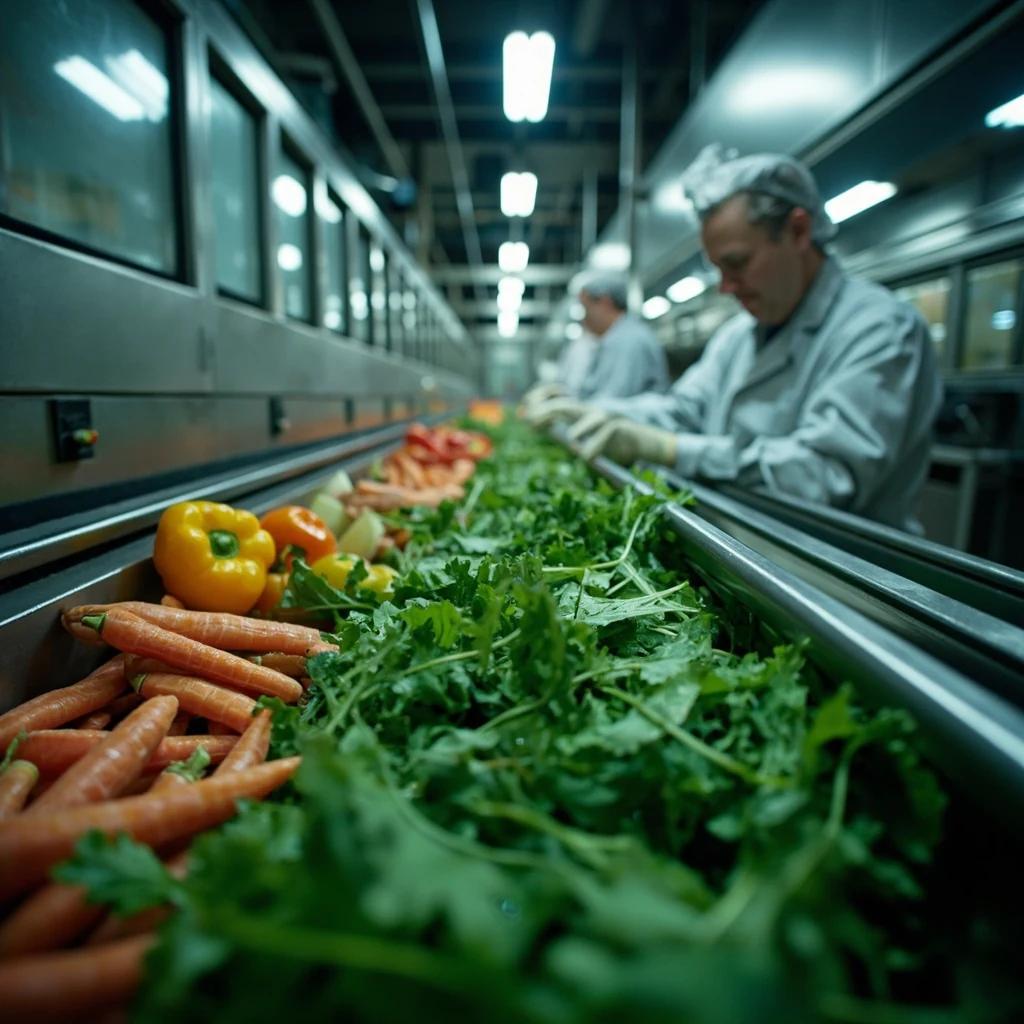
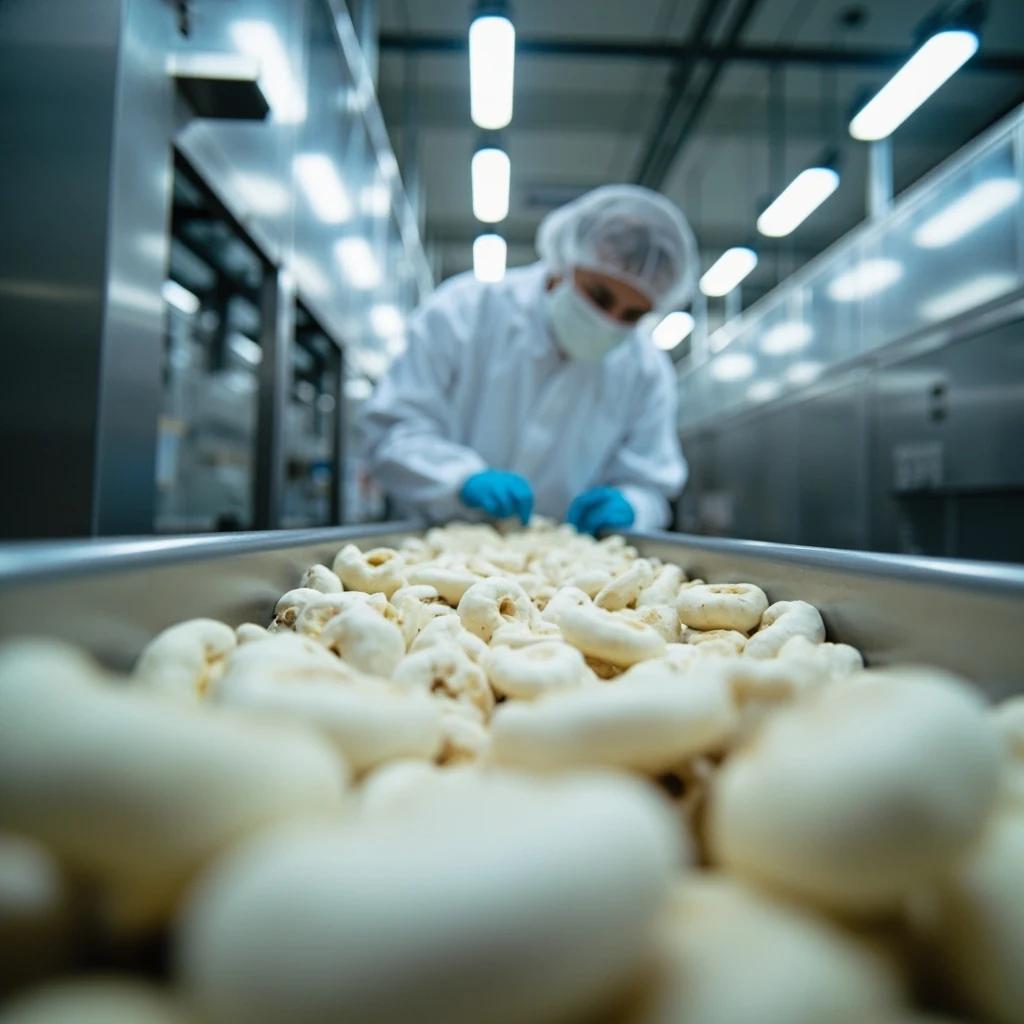
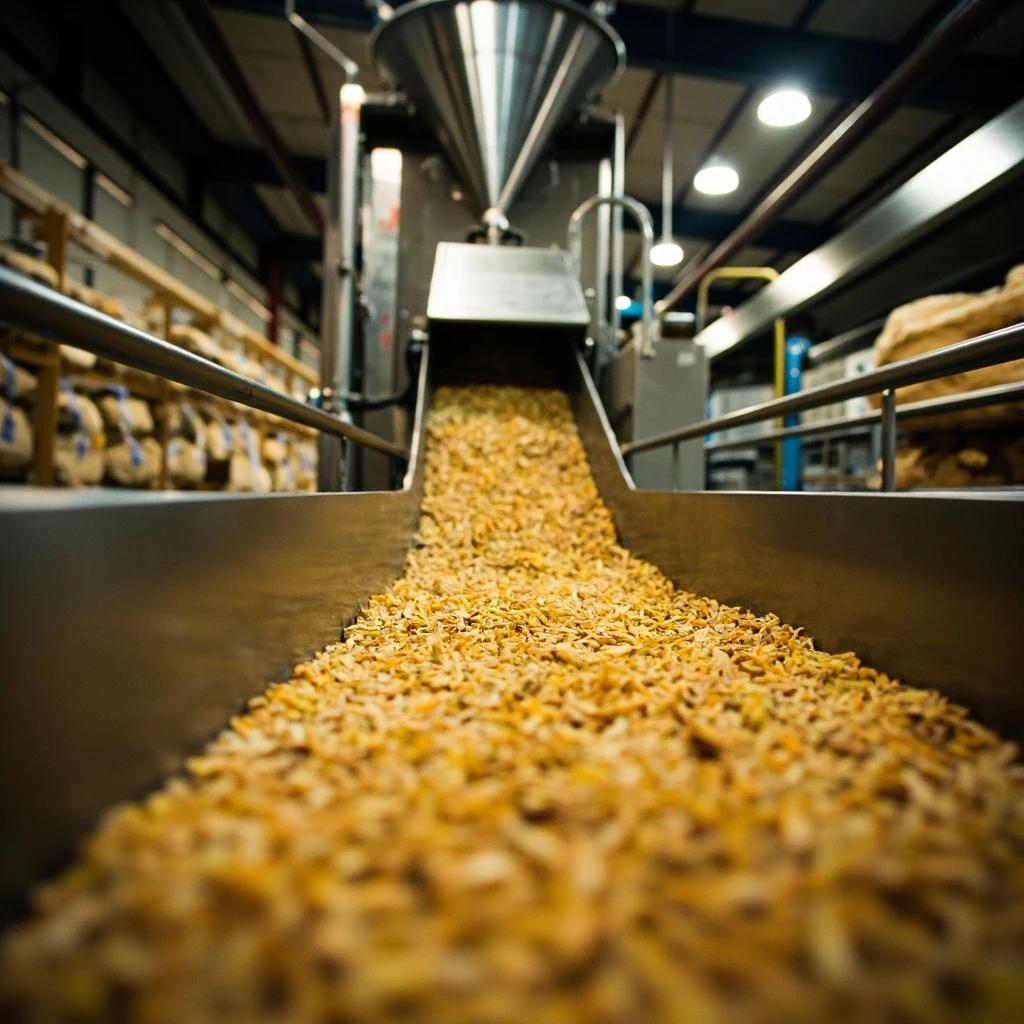
The 45 percent weight on the Animal Feed Owned-Capacity Index asks who owns the mill and how many tonnes it can physically push through in a year, and by that test Muyuan's 27.644 million self-used tonnes and Twins' 15.5 million externally sold tonnes both count as manufacturing strength — but they are paid for differently by the three smaller weights, which is why one company lands at 89 and the other at 85.
What The 45 Percent Actually Counts. The index is built on four weights: manufacturing strength and capacity scale at 45 percent, the share of output coming from agricultural and feed core categories at 25 percent, global consolidated sales and financial resilience at 15 percent, and global brand influence and industry reputation at 15 percent. The first weight is a physical question, answered with plants, lines and tonnes rather than with invoices. Capacity is credited to the entity that owns it, which is why these cards list Cargill's 211 dedicated compound feed plants and 22 specialist aquafeed plants, Haid's more than 350 feed mills and Twins' more than 150, and why a leased line or a tolling arrangement would not count.
The Closed End Of The Weight. Muyuan produced 27.644 million tonnes of compound feed in 2025 through more than 110 self-built intelligent feed workshops and consumed every tonne inside its own hog business. The design is unusual: feed leaves the mill through sealed positive-pressure pneumatic lines and insulated tankers that discharge straight into the silos of multi-storey barns, so there is no bagging, no warehouse and no third-party distribution step, and energy cost per tonne sits at the bottom of the industry. Its rations are balanced with industrial amino acids rather than soybean meal, held below 5 percent of the diet, and several sites in Henan and Inner Mongolia run near-infrared, millisecond-calibrated unmanned dark workshops. The fully loaded hog cost stayed below RMB 13 per kilogram in 2025, and group revenue was RMB 144.145 billion, about US$20.2 billion.
The Open End Of The Weight. Twins made 22 million tonnes and sold 15.5 million of them on the open market, which makes it the largest seller of commercial pig feed anywhere. Commercial feed revenue of about RMB 65 billion, roughly US$9.03 billion, is 54.5 percent of group revenue, and the strength is specific: creep feed for piglets, full-price feed for weaned piglets and quality sow feed, made in more than 150 mills across China and Southeast Asia and sold directly, with no toll manufacturing in the network. Bulk tanker delivery to the farm gate strips packaging and handling cost out of the price a small producer pays, and converting Jiangxi Zhengbang Technology's idle plants into Twins-standard sites added manufacturing density rather than another brand. Group revenue was RMB 119.2 billion, about US$16.5 billion.
Why The Gap Is Four Points And Not Ten. Both clear the 45 percent test, and the separation comes from the 25 percent productivity share, the 15 percent sales weight and the 15 percent reputation weight. A tonne that is sold carries a price, a customer and a margin that can be compared with a competitor's; a tonne that is fed disappears into the cost of a pig. The page shows the same discount in reverse. Wens makes more than 20 million tonnes of feed a year, all of it consumed by contract farms that are forbidden to feed anything else, and it scores 82, below Nutreco at roughly 10 million tonnes and De Heus at 11.5 to 13 million. A manufacturers index that counted only invoiced feed would delete three of the largest milling operations in the world from its own table, so the tonnage stays and the difference is priced through the remaining weights instead.
Because one is revenue and the other is a cost inside a farming margin. A tonne of feed sold leaves the gate with a price, a customer and a competitor, while a tonne fed is an input that vanishes into the cost of a pig or a chicken, and the Animal Feed Owned-Capacity Index counts both while paying for them differently — which is precisely why three closed-loop groups appear on this page without dominating it.
The Four Tonnages. New Hope Liuhe sells 29.74 million tonnes of feed a year, the 2,974 ten-thousand-tonne units its own annual report counts, and books RMB 76.019 billion from the feed segment, 71.14 percent of group revenue. Twins produces 22 million tonnes and sells 15.5 million externally. Muyuan makes 27.644 million tonnes and sells none of it, because no bagged Muyuan feed exists in any market. Wens makes more than 20 million tonnes, and the contract farms raising its chickens and pigs may feed nothing else, with outside feed forbidden from entering those sites. Four of the largest milling operations in the world, and only two of them turn feed into an invoice.
What A Sold Tonne Carries. Haid shipped 32.08 million tonnes in 2025, up 21 percent, the first feed manufacturer anywhere to move more than 30 million tonnes in a year, and 81.93 percent of its revenue comes from feed. New Hope's overseas volume reached 6.38 million tonnes, up 21 percent, with top-four positions in Indonesia, Vietnam and Egypt. CPF runs more than 120 automated feed mills across 17 countries and sells into more than 40 markets. Each one of those tonnes faces a rival product on price, so the feed formula, the delivery cost and the credit terms are contested line by line. That contest is what the 25 percent core-category productivity weight and the 15 percent consolidated sales weight read.
What A Fed Tonne Carries. An internal tonne has no market price, and the measure that matters is feed conversion and cost per kilogram of meat rather than price per tonne of feed. Muyuan held its fully loaded hog cost below RMB 13 per kilogram in 2025, and the sealed pneumatic lines and insulated tankers that carry its feed exist to protect biosecurity and remove packaging cost, not to win shelf space. Wens earned RMB 5.266 billion of net profit in 2025 and then reported a net loss of RMB 4.366 billion in the first half of 2026 as meat prices bottomed out. A fed tonne rides the livestock cycle, and its profitability is decided in the barn rather than in the feed market.
Why Both Belong Here Anyway. The page scores owned capacity, and excluding Muyuan would delete 27.644 million tonnes of milling that its owner genuinely built, along with more than 110 feed workshops designed to a specification no merchant mill needs. Including that tonnage without separating it from sold feed would let a cost centre outrank a product. The index therefore counts the asset and lets the other weights price the market exposure, which is the cleanest reading available: Muyuan at 89 and Wens at 82 sit where they do because what they actually sell is pigs and chickens, not feed.
Because the cost of a tonne of feed is decided before the feed is made, in the basis and the ocean freight attached to the soybeans and corn behind it, and no single Chinese feed manufacturer — not even one shipping 32.08 million tonnes a year — buys enough on its own to set those terms against the large international traders.
What Was Signed. In June 2025, Twins, Haid, Dabeinong, Tongwei and Xiamen C&D signed a supply-chain strategic cooperation memorandum and established a joint raw-material purchasing alliance for bulk agricultural inputs. The mechanics are deliberately practical: the members charter ocean-going bulk grain vessels together rather than bidding against one another for the same cargoes, they share port storage yards and silos so that a shipment can be split without each company paying for its own terminal capacity, and they negotiate as one buyer with the grain houses that originate the beans and the corn.
What They Are Bargaining Against. China imports the bulk of the soybeans it crushes, and the price of a delivered cargo is set by two layers that sit above the feed mill: the basis, which is the spread between a futures contract and the physical grain at a named port, and the ocean freight rate to get it there. Both layers are dominated by a small group of trading houses with their own vessels, terminals and origination networks. Cargill is the clearest illustration: its animal nutrition and health business turns over roughly US$16 billion, about 10 percent of a group reporting US$164.0 billion, because moving bulk commodities is the larger business. The alliance aims at that trading layer rather than at one another.
Why Xiamen C&D Is In The Room. The other four members bring feed demand; Xiamen C&D brings ports, warehousing, shipping and trade finance. A purchasing pool is only as strong as its ability to take a full Panamax cargo and store it, and a logistics partner with its own terminals turns five separate orders into one shipment that can actually be discharged and split. That is the difference between a joint declaration and a lower delivered cost per tonne.
What The Alliance Does Not Do. It does not merge the companies. Haid remains a separate listed entity scoring 89, Twins remains 85, and each keeps its own mills, formulas and brands. Dabeinong and Tongwei are not scored on this page at all, and New Hope Liuhe, ninth here, is not a party to the memorandum. VerityRank keeps one score per legal entity, so a purchasing alliance changes a cost line rather than a standing — unless the saving is large enough to show up in the margins that the 15 percent consolidated sales and financial resilience weight reads. The move is nonetheless the only horizontal action in this round that changes how the industry bargains, because it attacks the one input every manufacturer on the page buys.
Neutrality is the asset. A feed manufacturer that also farms is bidding against the people it sells to, and once an independent farmer suspects that his feed bill is funding a rival's expansion, the relationship converts into a price negotiation. De Heus and Nutreco both gave up farming to keep that relationship intact, and both kept growing capacity without it.
The Two Exits. De Heus, seventh here at 86, states that it will not compete with its customers and holds no commercial downstream farming operation anywhere. Its capital goes into owned feed mills, high-conversion rations and the independent farms that buy them: more than 100 feed mills in over 25 countries, 11.5 to 13 million tonnes of compound feed a year, and more than 95 percent of revenue from feed manufacturing alone. In October 2025 it agreed to take over CJ Feed & Care's Vietnamese and Indonesian operations, absorbing 17 modern feed plants and becoming the second-largest industrial feed producer in Southeast Asia, and it added a plant in Punjab in September 2025 at US$17 million for a first-phase 180,000 tonnes, a 240,000-tonne mill at Athi River in Kenya in February 2026 and East Africa's largest dedicated fish feed plant at Jinja in Uganda at 100,000 tonnes. Nutreco, fifth at 88, completed the sale of its Spanish IngaFood pig business in 2025 and returned to being a nutrition manufacturer only, through Skretting's aquafeed and Trouw Nutrition's young-animal, milk-replacer and premix lines, across more than 100 specialised plants in over 37 countries on EUR 7.9 to 8.5 billion, about US$8.6 to 9.2 billion.
What Neutrality Sells. A farmer who buys feed hands over his feed conversion data, his barn configuration and his margin structure. He will not hand that to a company that can use it to compete with him in the same livestock market. That is why the two European manufacturers can sell into 75 and 105 markets respectively without owning a single pig, and why the promise is repeated in every acquisition they make. It also protects them from the accusation that a feed price was set to advantage a captive herd.
The Opposite Model On The Same Page. Muyuan, Wens, CPF and New Hope run feed, farming and slaughter as one chain, and the feed is infrastructure rather than merchandise. Muyuan sells no bagged feed at all; Wens forbids outside feed from entering its contract farms. Both models work, but they sell different things: the Asian groups sell protein, and the European manufacturers sell nutrition plus the assurance that they will stay on their side of the fence.
What It Is Worth Here. De Heus at 86 and Nutreco at 88 sit mid-table rather than at the top, because purity is not a weight of its own on this index. It feeds the 25 percent core-category productivity share, while consolidated sales and financial resilience carry 15 percent, which is how a EUR 5 to 5.6 billion pure feed maker lands below a US$20.2 billion group with a mixed portfolio. Nutreco's ownership by SHV Holdings adds nothing to its score either, since a subsidiary starts from its own accounts. And the two are expanding fastest outside Europe, where nitrogen quotas cap livestock numbers at home — evidence that the no-farming promise is a growth strategy rather than a retreat.
They hedge different risks, so the honest answer is that each one fails where the other holds. The Asian low-soy route protects against the price and availability of soybean meal; the European by-product route protects against the commodity curve itself and against deforestation rules. A manufacturer that could run both would be exposed to neither, and none of the ten runs both at scale.
The Asian Route. Industrial crystalline amino acids — lysine, methionine, threonine and tryptophan — plus exogenous enzymes such as phytase and xylanase allow a nutritionist to formulate a diet with very little soybean meal while holding growth performance. Muyuan pushes soybean meal below 5 percent of its own rations, with some diets close to zero, and calibrates them in near-infrared, millisecond-controlled unmanned dark feed workshops. Haid, Wens and New Hope can each shift inclusion ratios within hours when a supply route breaks or a spread moves, and Wens applies complex hydrolytic enzymes including xylanase to release more energy when wheat and brown rice replace corn. The hedge is real: a ration that needs less soybean meal is less exposed to a South American crop failure or a freight spike. The vulnerability is upstream, because crystalline amino acids are themselves an industrial product whose price follows energy costs and a concentrated production base, so the route converts a soy dependency into a different dependency rather than removing one.
The European Route. The clearest example in this round of research is ForFarmers, whose CirQlar programme moves potato peel, beet pulp and brewer's grain into feed on inland bulk barges, shipping 10.648 million tonnes in 2025, including more than 4 million tonnes of wet and by-product circular feed, at a feed purity above 98 percent. Nutreco replaces fish oil and fish meal with microalgae oil and fermented single-cell protein at scale in Norway and Chile, and De Heus carries Dutch emission standards into new plants in Asia and Africa. These inputs are priced locally, by the food and brewing industries that generate them, so they do not track the soybean complex. The limit is geography: a by-product pool is only as large as the food processing around it, and the barges and silos that move wet feed cannot be replicated anywhere.
Where EUDR Cuts Across Both. The European deforestation regulation requires traceability back to the plot for soy, beef, palm, wood and other commodities placed on the European market, and Cargill's South American soy supply chain faces continuing review under it. European buyers have responded by reducing their reliance on high-risk South American soy and turning toward local by-product pools, so the same regulation acts as a compliance cost for a trader and as a barrier to entry for a recycler. A low-soy formulation also reduces exposure to the regulated chain, which makes the two routes complements at that point rather than rivals.
How This Page Reads It. Regulation exposure is not a weight on the Animal Feed Owned-Capacity Index. It is read through the 45 percent capacity weight and the 25 percent core-category productivity share, which is why Cargill's scale and origination reach still put it first at 94 despite the highest soy-chain exposure on the page, and why the European specialists sit at 88 and 86 on far smaller revenue. Formulation is a defence a manufacturer can run without owning anything new; by-product recycling is a defence that requires owning the mill next to the residue, the barge fleet and the silo. Both are ways to hold capacity without holding more tonnes, and the price spike decides which one pays.