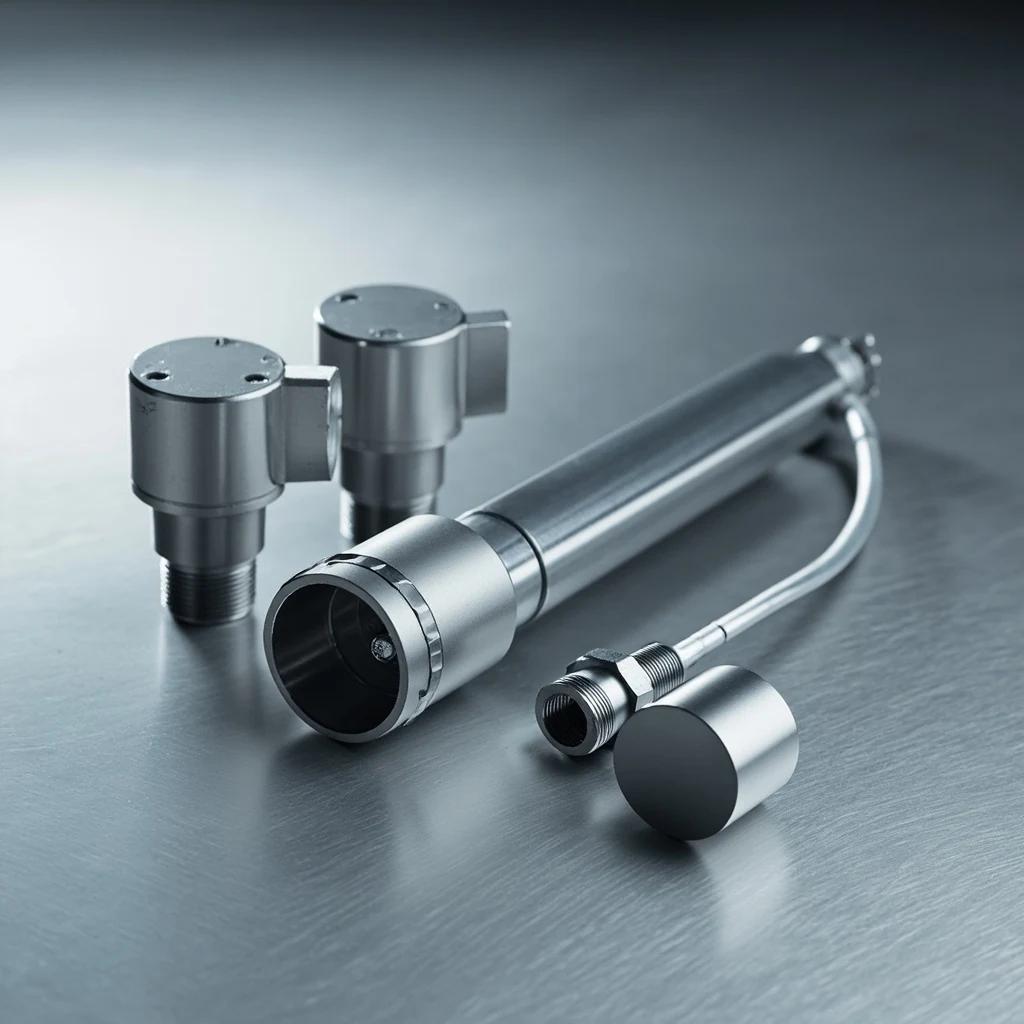
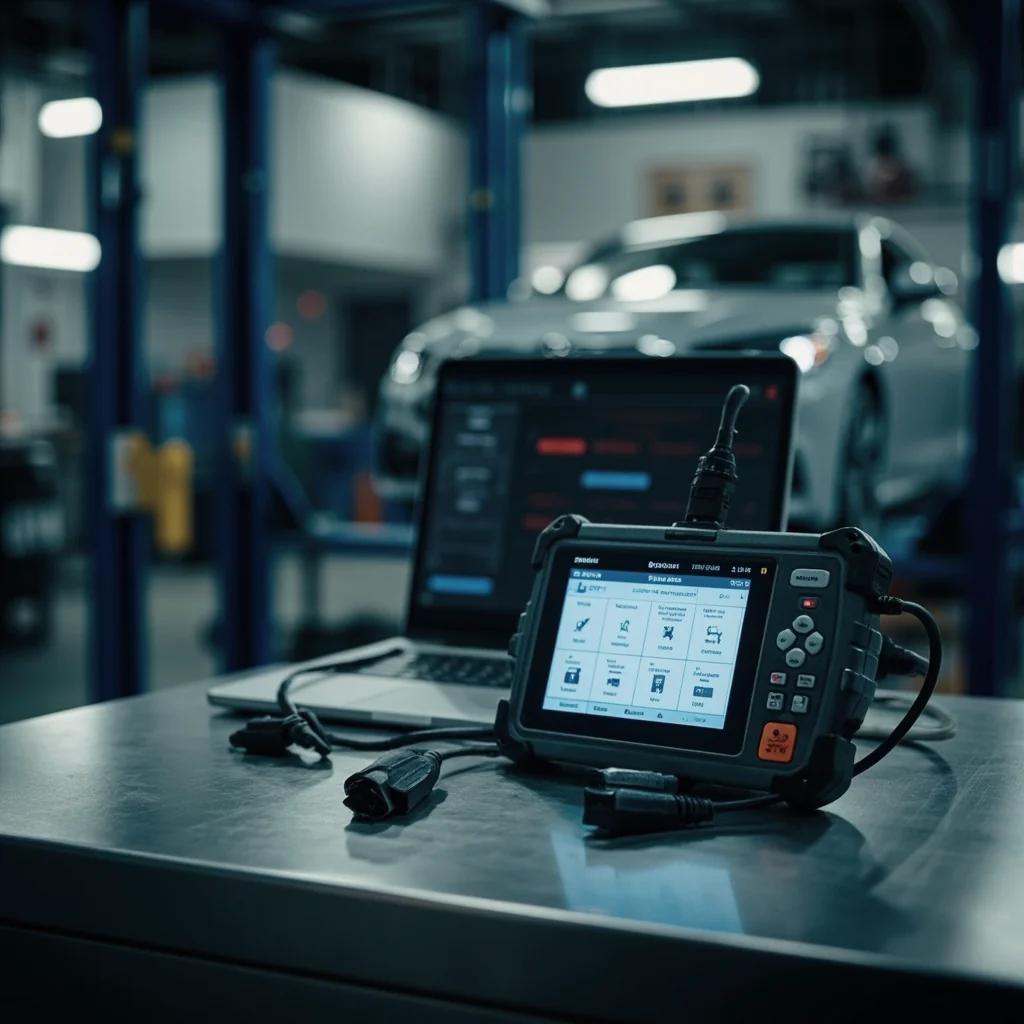
Because a scan tool's value now sits in the vehicle database, the diagnostic routines and the OEM access behind it rather than in the tablet and connectors in the box, every hardware sale has become a subscription sale with a down payment.
The hardware stopped being the differentiator. A professional diagnostic head is a ruggedised tablet, a vehicle communication interface, a set of licensed connectors and a power supply, and almost none of that is defensible any more. The electronic part can be built by contract manufacturers anywhere, so the bill of materials converges across brands and the resale value of a three-year-old handset falls faster than its usefulness. What does not converge is the software: the fault-code library, the bidirectional actuator tests, the coding and adaptation routines, the ADAS procedures and the security-gateway authentication paths. That is where the development cost now sits, and it is the part a workshop pays for again every year rather than once at the counter. The connector kit makes the same point in metal, because a multi-brand tool ships with a case of adapters for vehicles that are being scrapped, and the value of that case falls with the fleet it serves and not with the condition of the cables.
OEM authorisation turned part of the stack into rent by design. When a manufacturer's gateway will not answer a diagnostic session without a token issued by the manufacturer's own server, the tool vendor cannot deliver that function from its own resources. It has to license it, and the licence is priced per tool, per brand or per use. The same applies to SAE J2534 Pass-Thru reprogramming, where the physical interface is the cheap part and the manufacturer's repair and maintenance information subscription is the expensive one, sold by the hour, the day or the vehicle. A workshop therefore pays twice for the same job: once to the tool company for coverage, once to the carmaker for permission. That permission is narrow by design, because SAE J2534 was legislated to open reflashing for emissions-related control units rather than to hand over every convenience function, so a manufacturer can stay compliant while keeping immobiliser, gateway and security-related work behind a separate agreement.
The true cost of ownership is a five-year number, not a purchase price. Add the tool, the update renewal, the OEM portal access, any per-vehicle charge, and the months when a lapsed subscription quietly disables the functions the shop bought the tool for. The useful question at the counter is not what the tool costs but what one diagnosed vehicle costs: the five-year total divided by realistic annual throughput. Ask the vendor three things in writing. What happens when the subscription lapses, and do the read functions survive it? How long will the hardware platform keep receiving coverage for new model years? Is gateway access included or billed per use? A tool that ages out of the database in three years is not cheaper than one that keeps receiving model-year coverage for the life of the platform, because the second can be depreciated over the work it performs instead of written off early. That also explains why vendors retire platforms, since ending the database feed for an older handset is a sales decision rather than a technical failure, and why the residual value of a used scan tool is a poor hedge against a coverage gap.
A security gateway is an OEM-controlled barrier between the OBD connector and the vehicle's internal networks that refuses to open a diagnostic session it cannot authenticate, which turned the right to write to a car from a technical question into a commercial one.
What the gateway physically does. The connector in the footwell no longer reaches the powertrain and body buses directly. Requests pass through a gateway module that examines them. Reading the legislated emissions data defined by SAE J1979 and ISO 15031 still works, because the law requires it, but anything beyond that, including actuator tests, coding and adaptation, key learning, module replacement and calibration resets, needs a session the gateway can authenticate, usually through a challenge and response exchange with the manufacturer's server and a token bound to the vehicle that expires. Underneath, the tool is speaking ISO 14229 unified diagnostic services, and the gateway is really gating individual services, the seed-and-key exchange that guards security access and the routines that write configuration, rather than switching the whole bus off. Fiat Chrysler fitted one of the first widely discussed gateway modules on its 2018 model-year vehicles, and most major manufacturers have since followed with their own schemes.
Why the manufacturers built it. Once researchers demonstrated a remote takeover of a moving vehicle through its cellular connection, the diagnostic port stopped looking like a convenience and started looking like an attack surface. UN Regulations No. 155 and No. 156, adopted in 2021 and applied progressively in the European Union, now require manufacturers to operate a cyber security management system and to control software updates across a vehicle's life. A gateway is the cheapest place to enforce that control, because it is a single module that mediates every physical path into the networks. The second driver was theft: methods that inject fabricated messages on a bus, and the practice of programming blank keys from a cloned original equipment tool, are both blocked at the same point.
What it changed for the workshop. Coverage is no longer a purely technical property of a tool, it is a contractual one. A tool that speaks ISO 13400 DoIP and holds a stable SAE J2534 link may still be locked out of a vehicle because the shop lacks a manufacturer licence, and in the European Union access to security-related repair and maintenance information is now channelled through the SERMI accreditation scheme for independent operators. Some manufacturers sell their own gateway access to independent operators, and for security-related work the legitimate route runs through an accredited operator rather than a cracked token, so a vendor that can demonstrate the accredited path is telling the truth about its authorisation. Practically, the diagnosis bay needs a reliable network connection, because a session can depend on a server round trip that a workshop with a weak link will fail at random. A workshop should therefore treat OEM subscriptions as a fixed line in its budget and check, before buying any tool, whether the manufacturer licence it depends on is included, renewable and transferable to the next tool it buys.
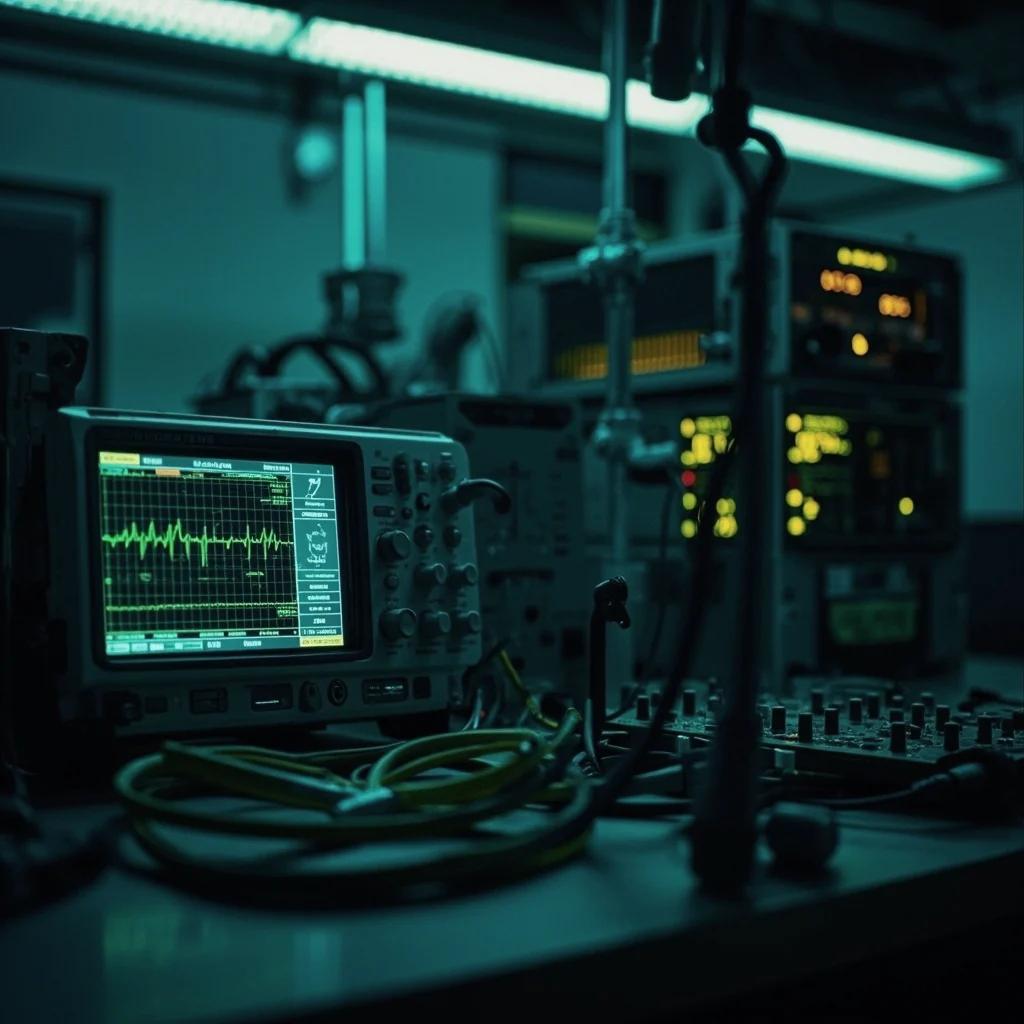
Because the parts that fail in an electric vehicle are insulated cables, cells and cooling circuits rather than combustion and exhaust, the useful instruments are measurement instruments such as insulation testers, milliohm meters and differential probes, not code readers.
OBD-II was legislated for a job an electric vehicle does not do. SAE J1979 and ISO 15031 define a deliberately small set of parameter IDs tied to emissions monitoring: fuel trim, oxygen sensor behaviour, misfire counts, catalyst and evaporative-system readiness. A traction battery has no place in that list, and the state of the pack is held by a battery management system reached through manufacturer-specific routines on other buses. Running a generic scan on a modern electric vehicle therefore returns very little of consequence, and the absence of fault codes says nothing about whether a module is drifting out of balance or a cable is degrading toward a short.
What actually has to be measured. Insulation resistance comes first, measured between the high-voltage conductors and the chassis, because a falling value is the earliest sign of a damaged cable or an ingress problem. ISO 6469-3 sets a minimum of 100 ohms per volt of working voltage for DC circuits, so a 400-volt pack is judged against 40 kilohms and an 800-volt pack against twice that. Next is the integrity of the equipotential bonding path, which needs a four-wire low-resistance measurement in milliohms rather than a continuity beep. Then come pack-level airtightness and coolant leak testing by pressure decay, thermal-management circuit flow and temperature behaviour, per-module voltage spread under load, and a state-of-health figure derived from usable capacity rather than from a single impedance reading. The high-voltage interlock loop and the pack's own insulation monitoring device belong to the same picture, and a resistance test has to be run at the test voltage the manufacturer's procedure specifies rather than at whatever the tester defaults to. Only after all of that does an oscilloscope matter, and only with isolated or differential channels rated for the voltage being probed.
The instrument set follows the safety regime. High-voltage work is governed by ISO 6469 as a family, by IEC 61851 for the conductive charging system and by SAE J1766 for battery integrity after a crash, and the equipment must be rated for the potential it will see. A passive probe referenced to chassis, the standard tool of the combustion era, will destroy itself and the instrument behind it. Regulation reinforces the point, since UN Regulation No. 100 covers the safety of electric vehicles and their battery systems, so the checks a workshop performs sit on the same ground as the evidence a manufacturer is required to keep. That is why the diagnostic market moved toward test gear with a stated measurement category and documented calibration, and why the operator must be trained to the manufacturer's de-energisation procedure. On an electric vehicle the diagnosis is a safety procedure before it is a data-collection exercise, and a tool that cannot prove its rating has no place in the bay.
Because ADAS calibration is a physical measurement of where a sensor points at a target in real space, it cannot be delivered as a download, and every windshield, bumper, suspension or geometry repair creates demand for the same bay, frame and target set.
The demand is manufactured by geometry. A forward camera mounted behind the windshield has to be told where the road is. Replace the glass, alter ride height, fit a different tyre size or disturb a bumper-mounted radar, and the sensor's mounting angle changes relative to the vehicle axis, so the system must be re-taught its reference before lane-keeping and automatic braking can be trusted. Manufacturers define the procedure themselves, and the definition includes a level floor, a specified distance and alignment to a target, controlled lighting, and sometimes preconditions such as fuel level and tyre pressure. Static procedures place target boards at measured distances in a dedicated bay; dynamic procedures require a drive under specified conditions. Either way, someone has to occupy floor space and technician time, and neither can be shipped as a file. Lidar and corner radar add a second layer, because rear-facing and side-mounted sensors on doors and quarter panels have their own mounting references, and a frame that is moved between bays during a job has to be re-levelled before the next vehicle can be measured against it.
Why it resists commoditisation. Targets are system specific rather than brand generic, because camera and radar geometry differs between vehicles and between generations of the same vehicle. A workshop cannot buy one universal frame and cover the fleet; it accumulates target sets, adapters and floor area, and it has to absorb a new procedure for each model that arrives. The work also consumes the two scarcest resources in a collision shop, bay area and skilled hours, which is why it is priced as a service rather than a part. Unlike a part sale the requirement recurs, because a vehicle returning after a second impact is calibrated again, so the revenue attaches to the repair event rather than to the vehicle itself. That recurring demand carries a training burden too, since the technician has to know which procedure the manufacturer requires for the exact vehicle in the bay and when a dynamic drive is the only correct method, and that knowledge does not transfer to a cheaper tool.
What it demands of a supplier. Coverage breadth and procedural accuracy beat hardware polish. The supplier must keep target geometry current as model years change, must show that a stored procedure matches the manufacturer's published method, and must give the technician a way to hold and verify the specified distance, height and alignment instead of leaving it to a tape measure. Because insurers and manufacturers increasingly expect evidence, the system should record the fault-memory scan taken before the work and the one taken after it. Buyers should also read claims carefully: SAE J3016 defines levels of driving automation, not calibration procedures, so its name on a specification sheet says nothing about whether a calibration is performed correctly.
By ignoring the coverage chart and testing the tool against named vehicles, deep functions and the renewal invoice before money changes hands.
Test the claim on cars you already service. Choose late-model vehicles from several different manufacturers and deliberately include one with a security gateway, one whose architecture is DoIP-based and one on a recently introduced platform. On each, check four things separately: whether the tool reads and clears codes, whether live data updates at a rate a technician can use, whether a bidirectional actuation test genuinely commands the actuator, and whether coding, adaptation or initialisation completes. The menu is the trap. Most overstated coverage appears as a function that exists in the menu but is greyed out, or a routine that starts, times out and never writes. Coverage means the function completes, not that the name appears. Check the mundane things as well, because that is where thin coverage collapses first: whether the tool identifies the vehicle from its VIN or asks the technician to type it, whether it reaches body and chassis modules or only the powertrain, and whether it will open a vehicle registered in the same week the shop first sees it.
Verify the authorisation as a document, not a feature. Ask which legal route the vendor uses for each function: SAE J2534 Pass-Thru for emissions-related reprogramming, a licensed connection to the manufacturer's server for gateway-protected work, or a reseller relationship for the original equipment software itself. Ask to see the current authorisation rather than a screenshot from a trade show, and ask which revision of the interface it implements, because SAE J2534-1 and J2534-2 are not the same promise, and a tool may or may not support ISO 22900-2 D-PDU API and ISO 13400 DoIP natively. Then test the online functions on the shop's own network, in the shop's own bay, at the shop's own connection speed, and establish whether a manufacturer token costs extra per vehicle or per session. Ask what the tool does when the vendor's server is unreachable, because a platform that degrades to nothing on a Saturday morning is a different asset from one that still reads and clears codes offline.
Price the whole lifetime before you sign. Confirm the update interval and the renewal price in writing, and ask what a lapsed subscription actually removes: read-only access to existing coverage, or the functions the shop depends on to earn. Ask what the tool will do about model years beyond its printed coverage, because a database that stops at the current year also tells you how the next renewal will be priced. Ask how long the vendor intends to support the hardware platform, and whether next year's model year will land in the same tool or require new hardware. Finally, insist on a demonstration using the shop's vehicles and the shop's own interface rather than a vendor-supplied unit on a vendor-supplied car, and ask two existing customers in the same repair segment what failed and how quickly it was fixed. Coverage that cannot survive that test is a brochure, not a capability.