A leading commercial vehicle brand is defined less by raw horsepower than by total cost of ownership, uptime and the courage to electrify.
Scale and global reach. The world's top truck makers — Daimler Truck, Volvo Group and Traton — sell in 150+ countries, hold #1 or #2 positions in their core markets, and generate USD 40-55 billion in annual revenue each. North America's Class 8 segment alone rewards brands that can combine dealer density, parts availability and financing muscle.
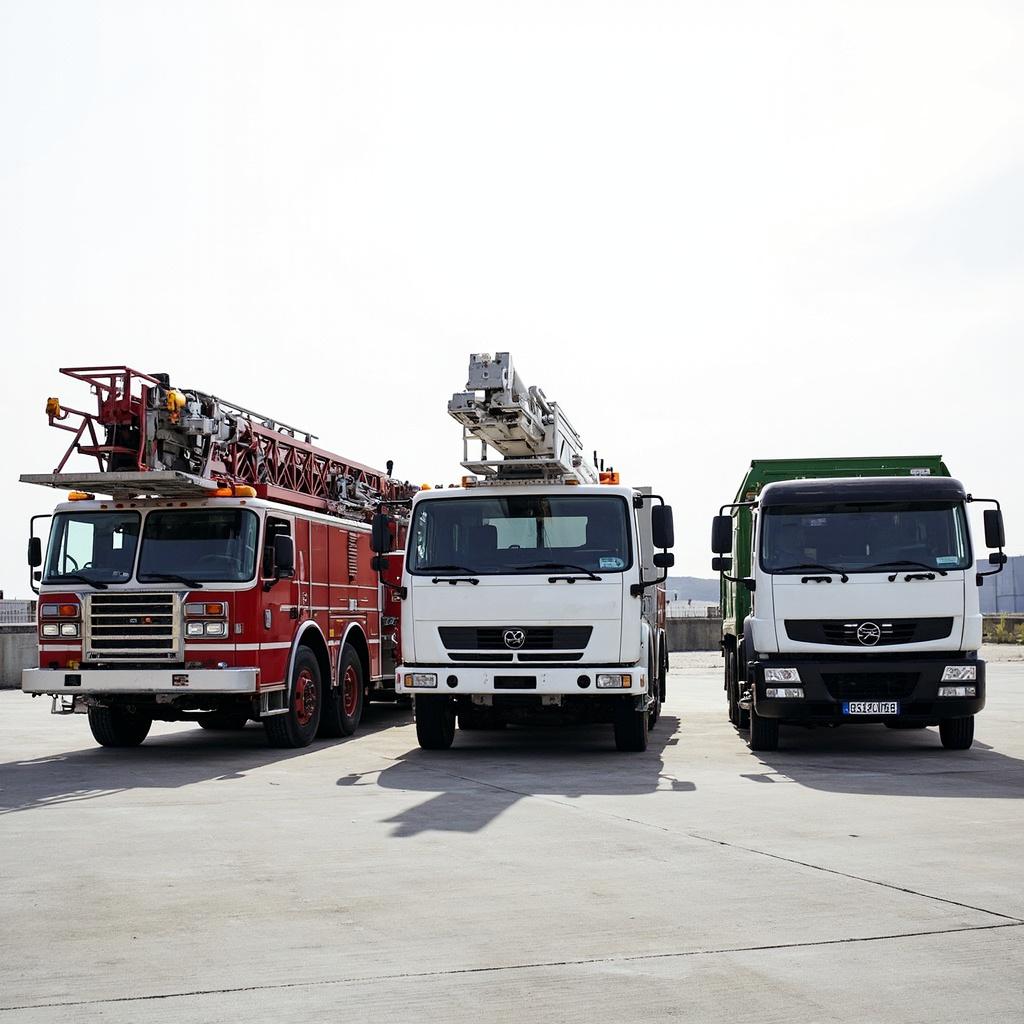
Product breadth across weight classes. Leaders cover the full spectrum: heavy tractors for linehaul, medium trucks for distribution, light trucks for last-mile, plus buses and special-purpose vehicles. This breadth lets a brand follow a fleet operator through every stage of growth and locks in lifecycle revenue.
Vertical integration and supply chain control. The strongest brands build their own engines, transmissions, axles and increasingly batteries or fuel cells. Daimler's global platform strategy, Traton's modular system and BYD's blade-battery-to-chassis integration all demonstrate how component control translates into cost, quality and delivery reliability.
Zero-emission readiness. By 2026, credible brands must offer production electric trucks or buses. Daimler's eActros 600, Volvo's FH Electric and BYD's T-series have moved from pilot programs to real fleet orders, and hydrogen programs like cellcentric signal where long-haul zero-emission freight is heading.
Financial resilience. Truck demand is brutally cyclical. The best brands — PACCAR is the classic example — build parts, services and financing arms that generate record profits precisely when new-truck sales fall, allowing them to invest through downturns while weaker rivals retreat.
Disclaimer: This ranking is compiled from publicly available company disclosures and independent market research, and is provided for informational purposes only; it does not constitute investment advice.
VerityRank scores each brand on a weighted model tuned to the commercial vehicle industry, not a generic corporate template.
Global sales and brand influence (35%). We weigh full-year revenue, vehicle deliveries, and market share in the world's major truck markets, plus brand strength measured through distribution footprint and search and media prominence. This is the single strongest predictor of competitive position because trucks are purchased on reputation, dealer support and proven uptime.
Segment focus and product breadth (30%). We assess how deeply a brand covers trucks, buses and special-purpose vehicles, and how much of the parent group's revenue comes from commercial vehicles. A pure-play truck maker like FAW Jiefang, where vehicles are 92% of revenue, scores higher on focus than a conglomerate where trucks are a sideline.
Supply chain and manufacturing control (20%). We examine factory count and locations, number of operating countries, workforce, and whether the brand controls proprietary engines, chassis, batteries or fuel-cell systems. Vertical integration proved its worth during 2021-2024 supply disruptions and remains a durable moat.
Zero-emission readiness (15%). We score production electric and hydrogen lineups, EV delivery volumes, and partnerships for charging and fueling infrastructure, reflecting the regulatory push that will reshape truck procurement over the next decade.
Data and verification. All figures draw from 2025-2026 annual reports, investor presentations, market research and company disclosures, cross-checked against independent sources. Scores are recalibrated annually as new financial results are published.
The July 2025 acquisition of Iveco Group by Tata Motors for EUR 3.8 billion (about USD 4.4 billion) was the largest consolidation move in commercial vehicles in years.
What Tata gained. Iveco brought Tata an instant European presence with premium heavy-truck brands, special-purpose and fire-appliance production, defense vehicles, and FPT Industrial — one of the world's largest independent powertrain suppliers. Tata's consolidated post-merger revenue is estimated above USD 60 billion with a workforce exceeding 90,000.
What it means strategically. European manufacturers like Volvo and Traton hold advanced decarbonization and autonomous technology but carry high European manufacturing costs, making them vulnerable in price-sensitive "Global South" markets. Tata pairs India's low-cost, high-volume supply base with Iveco's premium engineering — the same playbook Japan's Isuzu used in ASEAN decades ago, but on a global scale.
The industry impact. The deal accelerates price competition in emerging markets, gives India a credible global truck champion, and pressures incumbents to cut European cost structures faster. It also validates consolidation as the industry's answer to the enormous capital demands of electrification — expect further mergers among mid-size truck makers.
Electrification is splitting the commercial vehicle market into two distinct technology tracks, and brand positioning now depends on which track a manufacturer owns.
Battery-electric dominates urban and regional duty. For city buses and light- and medium-duty trucks with predictable routes and depot charging, batteries have already won. Roughly 70% of new electric commercial vehicles delivered in 2025 were battery-powered. BYD leads the no-compromise vertical-integration approach, Isuzu is electrifying its N-Series, and Volvo's FH Electric family is the benchmark for European municipal fleets.
Hydrogen fuel cells target long-haul. Battery weight makes pure-electric Class 8 tractors unviable for long-distance freight, so heavy-duty brands are betting on hydrogen. The cellcentric joint venture — owned equally by Daimler Truck, Volvo Group and Toyota — is developing the BZA375 fuel-cell system with a target cost below USD 80 per kilowatt by 2026-2030, the threshold for long-haul TCO competitiveness.
Who benefits and who is exposed. European and North American brands face tightening CO2 regulations that force electrification ahead of fleet economics, while Chinese exporters like Sinotruk still succeed with diesel and LNG in emerging markets. Brands without credible zero-emission programs risk being locked out of Europe's fleet tenders and losing their ESG-qualified customer base within a decade.
The aftermarket — parts, service, financing and telematics — has become the most reliable profit engine in commercial vehicles, and PACCAR is its undisputed champion.
The numbers tell the story. In 2025, while PACCAR's global truck deliveries fell 22.2% during the freight downturn, its PACCAR Parts division posted record revenue of USD 6.87 billion and financial services added another record USD 2.2 billion. Daimler Truck runs a similar playbook with its CharterWay rental and subscription models, packaging maintenance, telematics and charging into monthly "capacity as a service" contracts.
Why the aftermarket is counter-cyclical. When shipping rates fall and interest rates rise, fleet operators stop buying new trucks and extend the life of aging ones. Older trucks break more often, which drives demand for genuine OEM parts, dealer service and financing extensions. This is why the industry's most resilient franchises — PACCAR, Daimler Truck, Volvo Group — all treat aftermarket revenue as a strategic focus rather than an afterthought.
The software dimension. Connected services are transforming the aftermarket from reactive repairs to predictive maintenance. Daimler's digital uptime services, Volvo's connected fleet platforms and Traton's modular service contracts capture recurring revenue per truck per year, turning a one-time vehicle sale into a decade-long annuity — and deepening the moat that makes list rankings stable year over year.