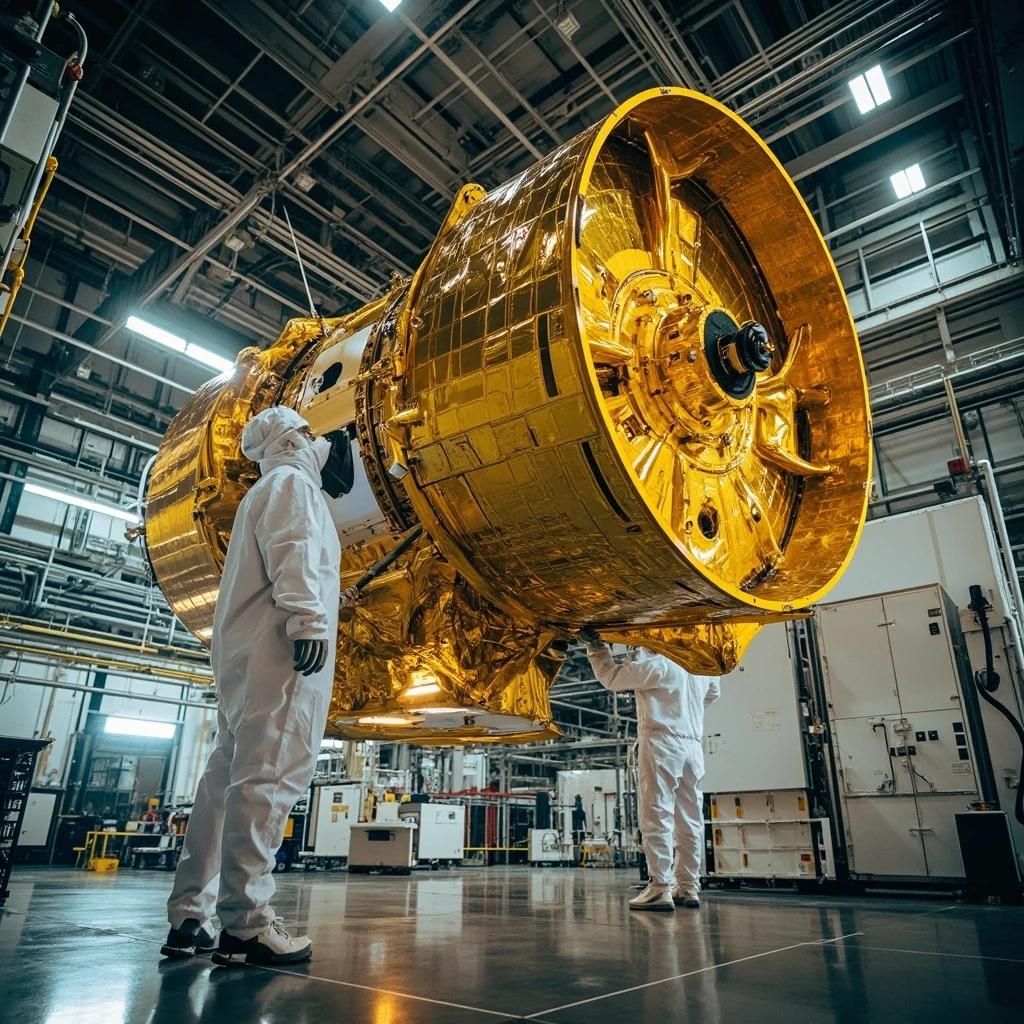
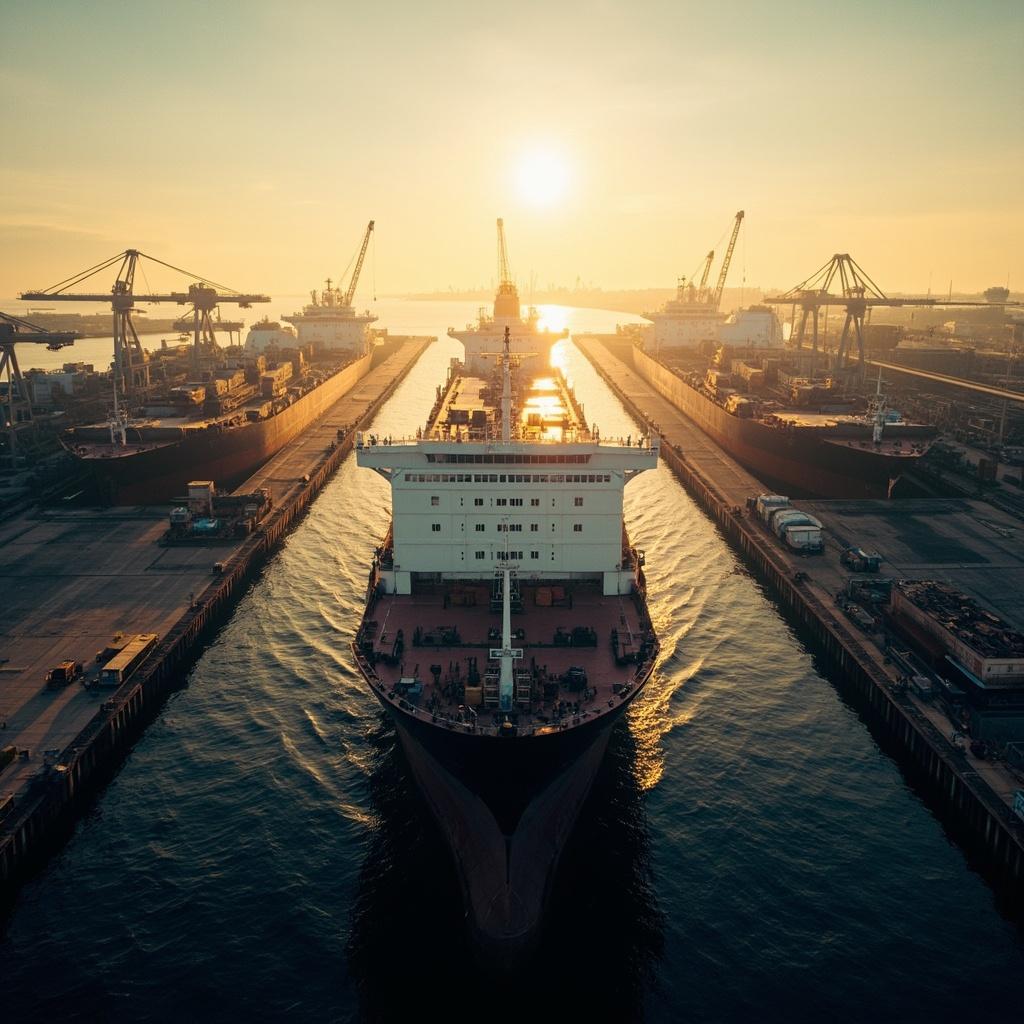
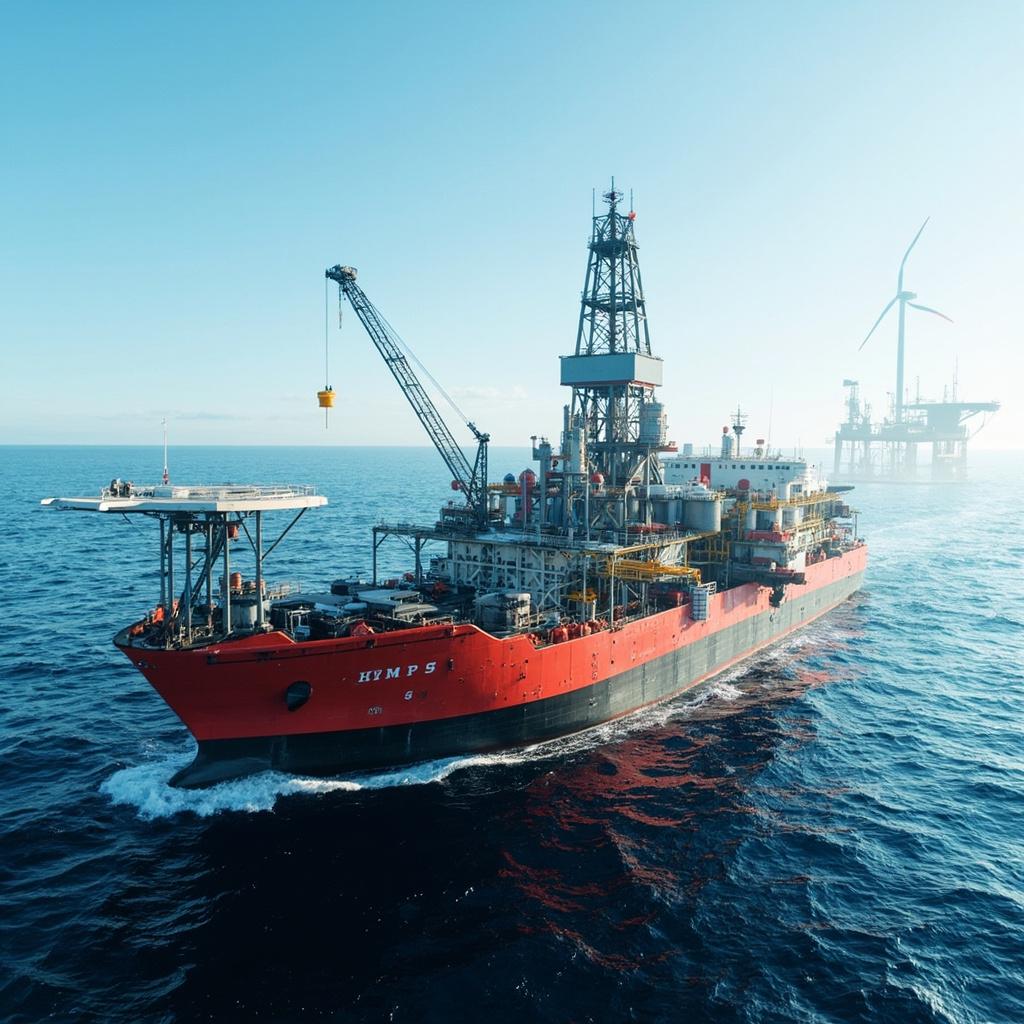
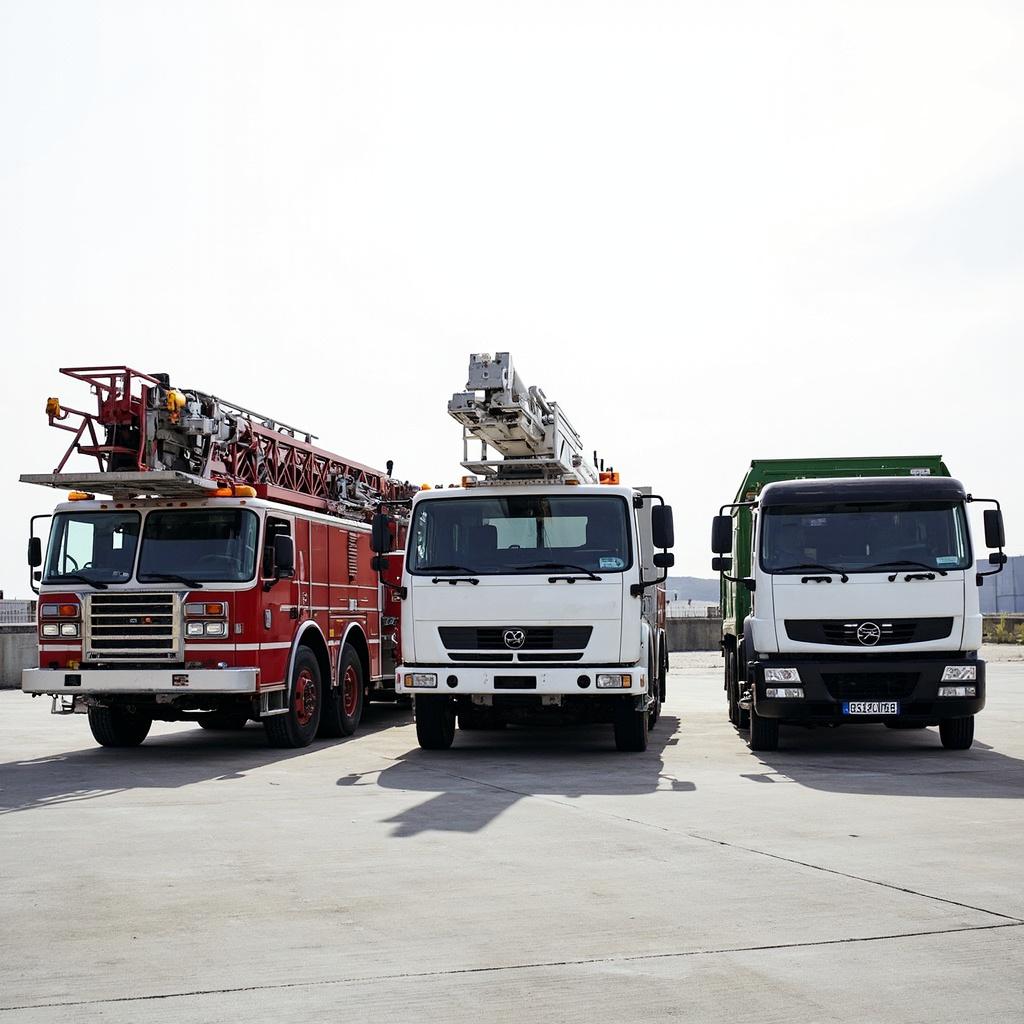
The dividing line is not the size of the vehicle but the nature of the work it performs and the way it is engineered. A commercial truck hauls freight on roads and is built to a general-purpose specification. A specialized work vehicle is engineered around a single duty cycle — collecting refuse, extinguishing fires, lifting workers to height, moving containers in a port, planting a field, or drilling rock — and everything from the chassis and suspension to the hydraulic circuit and the control software is configured for that one job.
VerityRank applies four weighted criteria when it places a brand on this list. Brand reach and global sales scale carry 40% of the score, because a manufacturer needs volume to fund the dealer network, parts logistics and field-service coverage that fleet buyers treat as a condition of purchase rather than a feature. Specialized-vehicle revenue purity carries 30% — the share of total revenue earned from work vehicles and heavy work equipment. This second criterion is the one that most sharply separates the field: a brand that also sells passenger cars, appliances or unrelated industrial lines scores lower even when its absolute revenue is larger, because its research spending and factory capacity are divided among competing priorities.
Manufacturing footprint and supply-chain autonomy account for 20%. A brand that casts its own engine blocks, machines its own hydraulic cylinders and builds its own specialty chassis controls its quality and its delivery schedule in a way that an assembler buying those components on the open market does not. We count owned plants, the number of countries served and total workforce as proxies for that control.
Technology and innovation momentum take the final 10%, and we score it on machines in commercial service rather than on announcements. An autonomous haul truck running on an operating mine, a hands-free tractor working a real field, or an electric loader delivering measurable diesel savings in a quarry counts; a concept vehicle shown at a trade fair does not.
What this framework deliberately excludes is equally important. We do not score advertising spend, sponsorship visibility, or social-media reach, because none of those influences whether a municipality's refuse truck completes its route or whether a mine's haul fleet hits its cost-per-tonne target. Fleet buyers make decisions on total cost of ownership over a ten-to-twenty-year service life, and the ranking is built to reflect that reality rather than consumer sentiment.
Disclaimer: The data behind this ranking is compiled from publicly available third-party sources including company filings, annual reports and independent industry research. It is provided for research and market-reference purposes only, does not constitute investment or procurement advice, and readers should verify specifications and commercial terms directly with manufacturers before purchasing.
Specialized work vehicles are the machines that perform a task rather than simply transport a person or a load from one place to another. The category sits inside the broader transportation equipment industry but behaves like industrial equipment, because the vehicle is defined by the work implement it carries. VerityRank maps the segment across ten product families, and almost every brand on this list is strong in several of them.
Municipal and sanitation vehicles cover refuse compaction trucks, street sweepers, gully and sewer cleaning units, and multi-function water trucks. Emergency and rescue vehicles span municipal fire apparatus, aircraft rescue and firefighting (ARFF) vehicles, wildland fire trucks, heavy rescue units and mobile command vehicles. Construction and engineering vehicles take in concrete boom pumps, mixer trucks, crawler and all-terrain cranes, rotary drilling rigs and pavers.
Agricultural machinery includes high-horsepower tractors, combine harvesters, self-propelled sprayers and forage harvesters. Airport ground support vehicles cover aircraft tow tractors, de-icing rigs, passenger stairs, ground power units and catering trucks. Specialized logistics vehicles run from heavy forklifts and order pickers to reach stackers, empty-container handlers and in-plant AGVs and AMRs.
Mining vehicles include ultra-class haul trucks, autonomous open-pit trucks, underground loaders and drilling jumbos. Aerial work platforms cover articulating and telescopic booms, scissor lifts and tracked spider lifts. Military and defence utility vehicles range from mine-resistant ambush-protected trucks to heavy tactical and armoured engineering platforms. Road maintenance and snow removal vehicles close the list with asphalt patchers, snowploughs, blowers, gritters and tunnel-cleaning units.
The reason this definition matters to a buyer is that it determines who can actually serve them. A manufacturer strong in construction equipment may have no certified fire-apparatus service centre within a thousand kilometres of a municipal customer, and a materials-handling specialist may have no earthmoving product line at all. Brand strength in one product family does not transfer automatically to another.
It also explains why the brands at the top of this ranking tend to be either very broad or very deep. Caterpillar, Komatsu, XCMG, SANY and Zoomlion compete by covering many families from a shared chassis, engine and hydraulics base. Oshkosh, KION and Volvo CE compete by concentrating almost entirely inside the segment, which is why they score highly on revenue purity even though their absolute revenue is smaller than that of a diversified industrial group.
Because the demand driver changed, and Caterpillar happened to own the capability that the new driver requires. For decades the growth of heavy work equipment tracked property construction, road building and mining capital spending. Since 2024 a fourth driver has appeared: the electricity demand created by artificial intelligence. Training and serving large models requires compute capacity that national grids in several markets cannot supply on their own, so data-centre operators have been buying gigawatt-scale diesel and gas generating sets as both prime and standby power.
The financial evidence is unusually clear. Caterpillar's second-quarter 2026 revenue of USD 20.543 billion was the highest quarterly figure in the company's history, and its power-generation business grew 72% in that single quarter. The group ended the period with a record order backlog of USD 72 billion — visibility that extends well beyond the construction cycle and gives management pricing power that a purely construction-facing manufacturer would not enjoy.
The strategic significance is that this demand is structurally uncorrelated with the traditional business. Data centres are financed by technology capital budgets, not municipal road programmes or property developers. When property construction in China weakened and European civil engineering slowed, the power business grew anyway. For a company carrying the fixed costs of engine, generator and control-system manufacturing, that counter-cyclicality is worth more than the revenue alone.
It also reinforces the vertical-integration argument that underpins the whole ranking. Caterpillar can take a data-centre order for a multi-megawatt generating set because it designs and casts its own engine blocks, machines its own crankshafts and builds its own control panels. A competitor without in-house engine production must queue for supply from an engine manufacturer who may also be supplying its rivals, and cannot schedule delivery with confidence when order books are full.
The watch item for buyers and analysts is concentration. Any business growing at 72% attracts competition, and grid-scale battery storage plus expanded transmission capacity are the two technologies most likely to reduce the long-run requirement for on-site generation. Caterpillar's defence is that the same engines and controls also serve mining, marine and rail customers, so a slowdown in one demand pool need not empty the order book — but the mix of the business has shifted, and it is now materially more exposed to technology-sector capital spending than it was three years ago.
The answer is visible in where the factories are going, not in where the headquarters are. Import duties have moved from an exception to a planning assumption across the sector, and the response has been a shift from exporting finished machines to manufacturing inside the market that buys them. Caterpillar estimates its 2026 tariff cost at USD 2.2 to 2.4 billion, up from roughly USD 1.7 billion in 2025; John Deere puts its own pre-tax tariff exposure at about USD 1.2 billion. Those are material numbers against operating margins in the low teens, and they have changed how capital is allocated.
Chinese manufacturers have moved fastest, because they had the most to lose. XCMG now operates more than twenty manufacturing bases with plants in Brazil and Germany alongside its Xuzhou complex, and its overseas revenue has passed RMB 40 billion. SANY runs more than thirty manufacturing bases including facilities in Germany through Putzmeister, the United States, Indonesia and India, with international revenue at 60.26% of the total. Zoomlion has built eleven production bases across eight countries — Italy through CIFA, Germany, India, Mexico, Belarus, Brazil, Turkey and the United States — with a Hungarian plant under construction, and overseas manufacturing capacity now valued above RMB 10 billion.
North American and European groups have rebalanced in the same direction, if more quietly. Oshkosh's 29 principal plants and roughly 130 facilities across 24 countries mean North American municipal and federal orders can be built on the continent, which matters when public procurement rules increasingly specify domestic content. Volvo CE manufactures in Sweden, France, Germany, China, the United States and Brazil; Liebherr spreads production across Germany, Austria, China and North America.
For fleet buyers, the practical consequence is a change in what a delivery promise is worth. A manufacturer building on the same continent as its customer can absorb a tariff shock, a shipping disruption or a border delay without pushing the schedule into the next budget year. Where two machines are technically comparable, manufacturing location has become a legitimate tiebreaker — and in some public tenders it is now a scoring criterion rather than a footnote.
The cost is duplication. Every additional plant carries its own tooling, quality systems, supplier qualification and management overhead, and splitting volume across more sites reduces the economies of scale that made the original single-plant model efficient. Manufacturers are accepting that penalty deliberately, on the judgment that tariff risk and supply-chain interruption are now the larger exposure.
Start from total cost of ownership over the service life, not from the purchase price. A specialized work vehicle typically stays in service for ten to twenty years, and across that period the acquisition price is usually a minority of what the operator spends. Fuel or electricity, consumables, planned maintenance, unplanned repairs, downtime penalties and the residual value at disposal together decide whether the machine was a good decision. A machine that costs 15% more to buy but returns 5% better availability over fifteen years is normally the cheaper asset.
The second question is service-network reach, and it is where global brands earn their premium. Caterpillar's dealer network spans more than 190 countries through 500-plus independent dealers and connects over 1.6 million machines; Caterpillar and John Deere have spent decades building parts depots and certified technician coverage that a regional specialist cannot match. For an operator running equipment in remote mining, agriculture or utility service, the distance to the nearest technician with the right diagnostic software is a hard constraint, not a preference. A 72-hour parts wait is an acceptable risk on a warehouse forklift and an unacceptable one on a snowplough in January.
The third question is whether the specialist actually specialises in your application. KION's materials-handling range spans counterbalance trucks from 1 to 52 tonnes, warehouse equipment, tow tractors and automated guided vehicles, serviced through more than 2,000 outlets worldwide — depth that a general construction equipment maker cannot offer from an adjacent product line. Oshkosh's advantage in airport rescue and firefighting vehicles comes from building the specialty chassis itself, including the TAK-4 independent suspension specified for extreme operating environments.
Then weigh the residual-value risk. Machines from established brands hold value predictably at resale or trade-in, which lowers the true cost of ownership and makes fleet financing cheaper. Emerging brands frequently offer stronger specification at a lower price and have improved sharply — XCMG, SANY and Zoomlion now build to international standards and have localised production in the markets they serve — but their resale markets are thinner outside their home regions, and that gap shows up at disposal rather than at purchase.
Finally, test the automation claim against your own operation. Autonomy is now sold as a productivity feature, and it delivers real value in repetitive, high-cycle work such as hauling, field cultivation or container handling inside a defined perimeter. It delivers much less in mixed public environments where work zones change daily. Ask for reference sites running the same duty cycle for more than a year, and ask what happens to the machine's availability when the connectivity it depends on is interrupted. The brands best positioned here are those with machines already in commercial autonomous service today rather than those with the most ambitious roadmap.