Offshore equipment brands cannot be scored like consumer companies, because the market is split between subsea technology and heavy fabrication.
VerityRank applies four sector-specific dimensions. Subsea & Systems Technology (30%) measures depth and autonomy of subsea production systems, control technology and digital operations - the arena where SLB's OneSubsea, Baker Hughes and TechnipFMC compete with proprietary hardware built largely in-house. Fabrication Scale & Delivery (25%) rewards dry-dock capacity and proven turnkey delivery of FPSOs, platforms and wind substations, favouring HD Hyundai Heavy Industries and Seatrium. Backlog & Financial Strength (25%) captures order-book visibility - TechnipFMC's USD 16.8 billion and MODEC's USD 25.5 billion backlogs score highly - plus revenue scale and balance-sheet resilience. Safety, Compliance & ESG (20%) reflects HSE track records, offshore-wind exposure and low-carbon project pipelines.
Because the sector is a duopoly of complementary skill sets, the ranking deliberately mixes Western subsea leaders with Asian fabricators and lease-operators: a brand can lead the world in one hemisphere without needing to dominate both.
All data draws on 2025 annual results, 2026 interim statements and independently published industry research, with financial figures cross-checked against company filings where available.
Offshore equipment is the machinery, structures and systems used to find, produce, store and deliver energy - and increasingly power - from the sea.
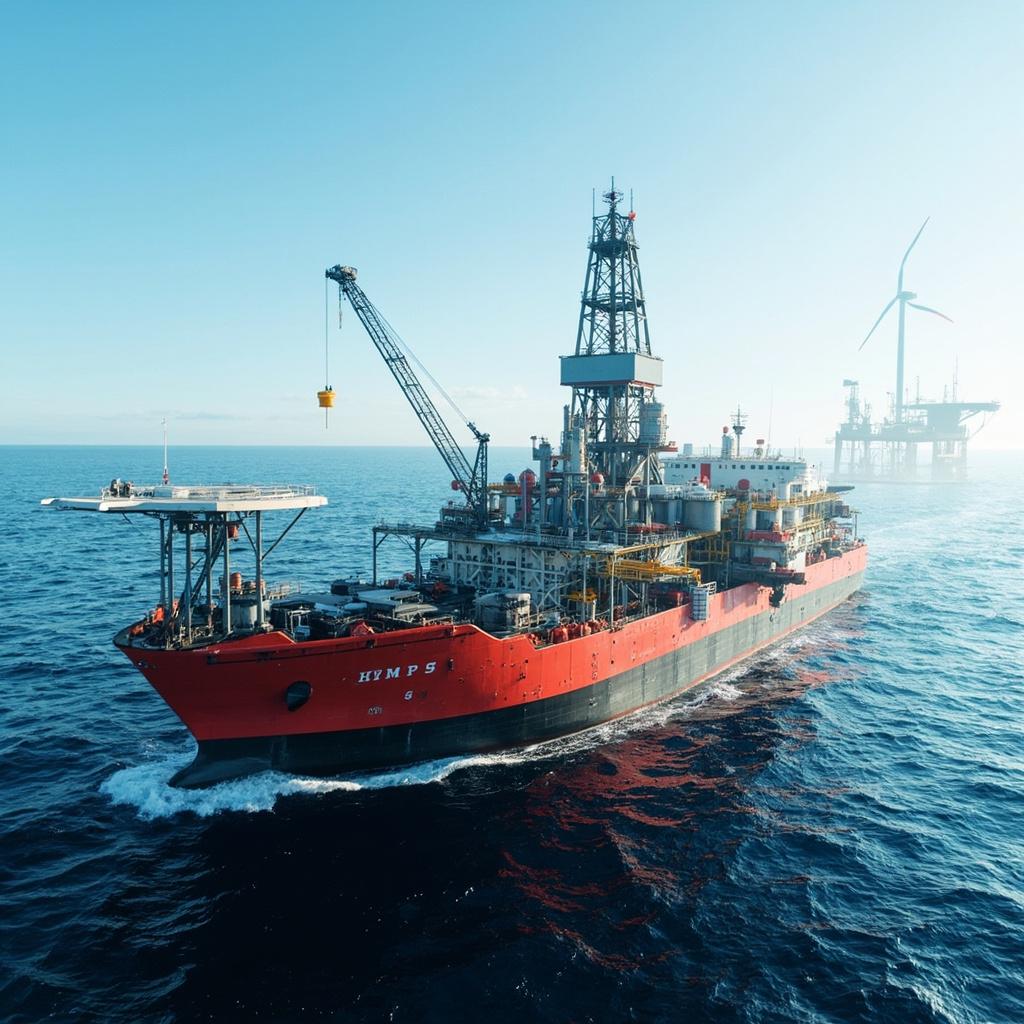
Five segments dominate the category. Oil & Gas Platforms includes FPSOs, FLNG units, fixed jackets and drilling vessels: HD Hyundai Heavy Industries, Seatrium, Hanwha Ocean, Samsung Heavy Industries and COOEC build most of the world's large tonnage. Subsea Operations Systems covers trees, wellheads, manifolds, production control and subsea processing - the domain of SLB's OneSubsea, TechnipFMC and Baker Hughes. Offshore Renewable Systems adds wind converter platforms and substations, where Seatrium and COOEC lead. Offshore Key Components spans flexible pipe, umbilicals, mooring systems and platform engines, with SBM Offshore's turret moorings and HD Hyundai's engines among the signature products. Finally, Offshore Maintenance Equipment covers intervention, inspection, repair and lifecycle upgrade services.
The lines blur by design: SBM Offshore and MODEC build, own, lease and operate FPSOs for 20-25 years, straddling fabrication, components and maintenance. Understanding which segment a company truly dominates is the first step to reading any offshore-equipment ranking correctly.
The industry's east-west divide is the most structural feature of offshore equipment economics.
Western majors used the last two decades of M&A to exit low-margin steel fabrication. SLB's OneSubsea retains the deepest subsea production-system supply chain, Baker Hughes holds about 26% of global subsea services, and TechnipFMC owns the leading flexible pipe and umbilical plants in Brazil and France. Their patents, test infrastructure and digital platforms make the subsea "brain" of a deepwater field effectively a Western monopoly.
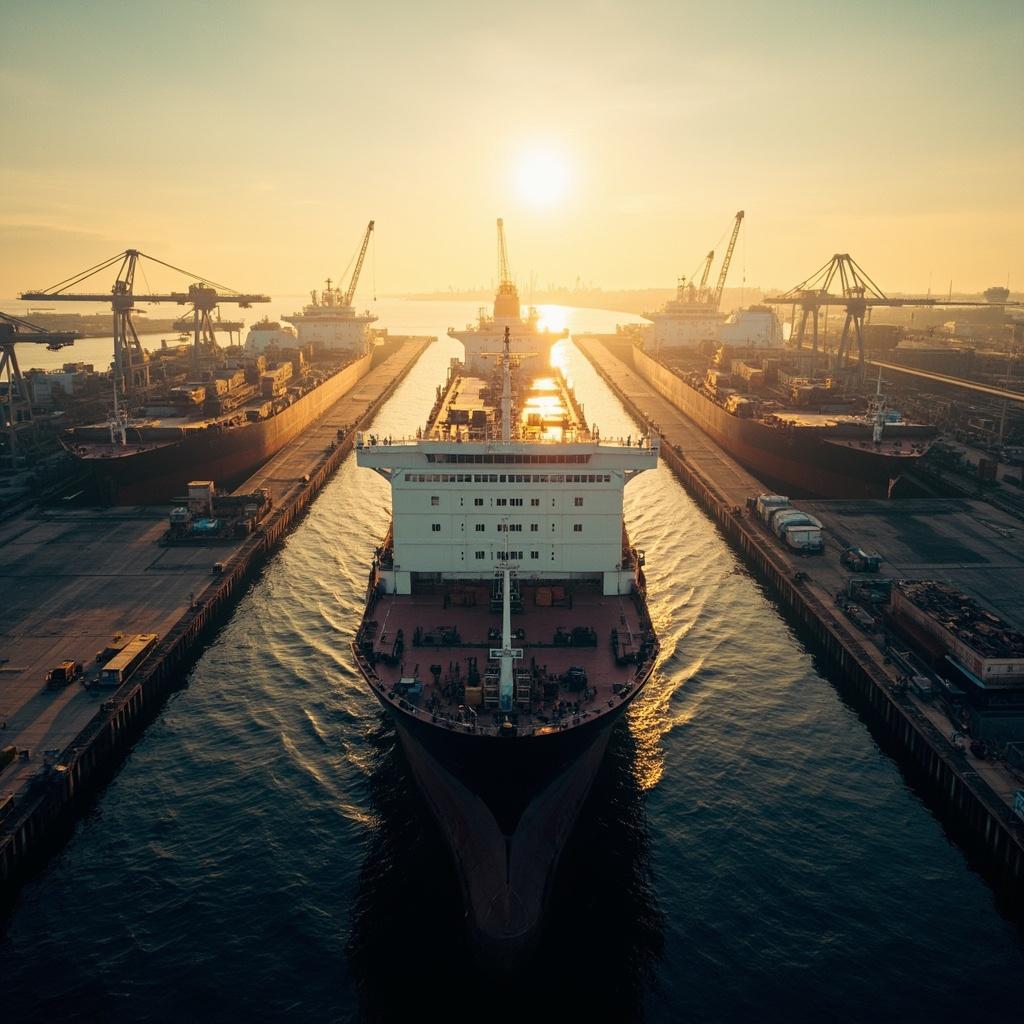
Asian builders went the other way. National capital programmes in Korea, Singapore and China created mega-yards with 10-plus super-large dry docks, Goliath-class cranes and state-backed ship finance, locking up the FPSO hull and topsides "body". HD Hyundai Heavy Industries, Seatrium, Samsung Heavy Industries, Hanwha Ocean and COOEC now deliver the majority of the world's floating production tonnage, typically at costs Western yards cannot match.
The cleverest players arbitrage the split. SBM Offshore designs in Europe, builds hulls in China through its Fast4Ward programme and integrates topsides in Singapore or Brazil; MODEC outsources hulls to Chinese yards while keeping design and 20-year operations in-house. This is not a weakness - it is the industry's winning playbook for the deepwater supercycle.
Two energy transitions are pulling the offshore equipment market in the same direction: more deepwater oil now, and more offshore wind soon.
Deepwater economics have rarely looked better. Pre-salt developments offshore Brazil, the Guyana-Suriname basin, and new African gas fields are sanctioning FPSOs at a record pace - Seatrium holds Petrobras P-series orders stretching to 2033, MODEC won Shell's Gato do Mato FPSO plus ExxonMobil's Hammerhead works in 2025, and SBM Offshore delivered three of the largest FPSOs ever built within six months. FLNG is the other bright spot: Samsung Heavy Industries controls over 50% of global FLNG fabrication capacity and is expected to book several multi-billion-dollar orders in 2026.
In parallel, offshore wind conversion platforms have become a manufacturing franchise of their own. Seatrium secured a fourth 2.2 GW HVDC platform from Germany's TenneT, and COOEC is building wind converter and booster stations off China's coast. Industry projections see the offshore equipment market growing from roughly USD 72.8 billion in 2025 to USD 121.4 billion by 2035.
The strategic insight: oil cash flows are funding wind platforms today, letting leaders like Seatrium and SBM Offshore hedge the energy transition while monetising the hydrocarbon cycle.
Lease-and-operate is the most important business-model innovation in offshore equipment since the FPSO itself.
Instead of selling a platform and walking away, SBM Offshore and MODEC design, build, own and run FPSOs for 20-25 years, charging operators a daily rate tied to production. The model converts the industry's historic feast-or-famine cycle into annuity-like cash flows: SBM operates 17 FPSOs producing a combined 2.7 million barrels per day, while MODEC controls about 21% of the global leased-FPSO market with ten-plus units. Because operators prefer pay-per-barrel certainty over billion-dollar capex, the model has become the default for Brazil and Guyana deepwater fields.
The financial edge is visible in the backlogs: SBM ended 2025 with USD 31.1 billion and MODEC with USD 25.5 billion of contracted work - each several times annual revenue - giving both companies multi-decade visibility that pure shipyards cannot match. The model also creates a natural barrier to entry: funding, operating and decommissioning dozens of floating assets requires balance-sheet scale, marine-operations expertise and a deep maintenance network that few competitors possess.
For buyers and investors, the lease fleet is effectively a toll road on deepwater oil: utilisation is high, contracts are long, and the operators keep a share of every barrel.