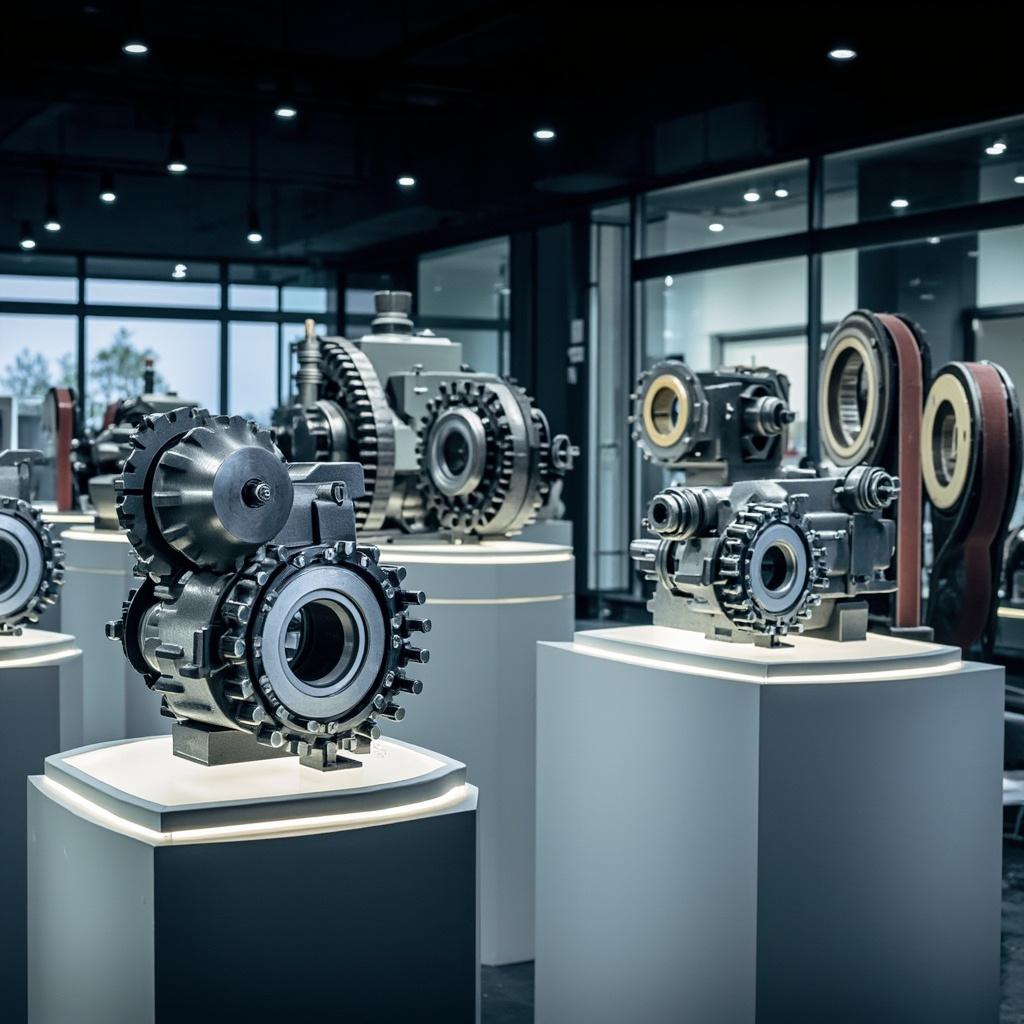
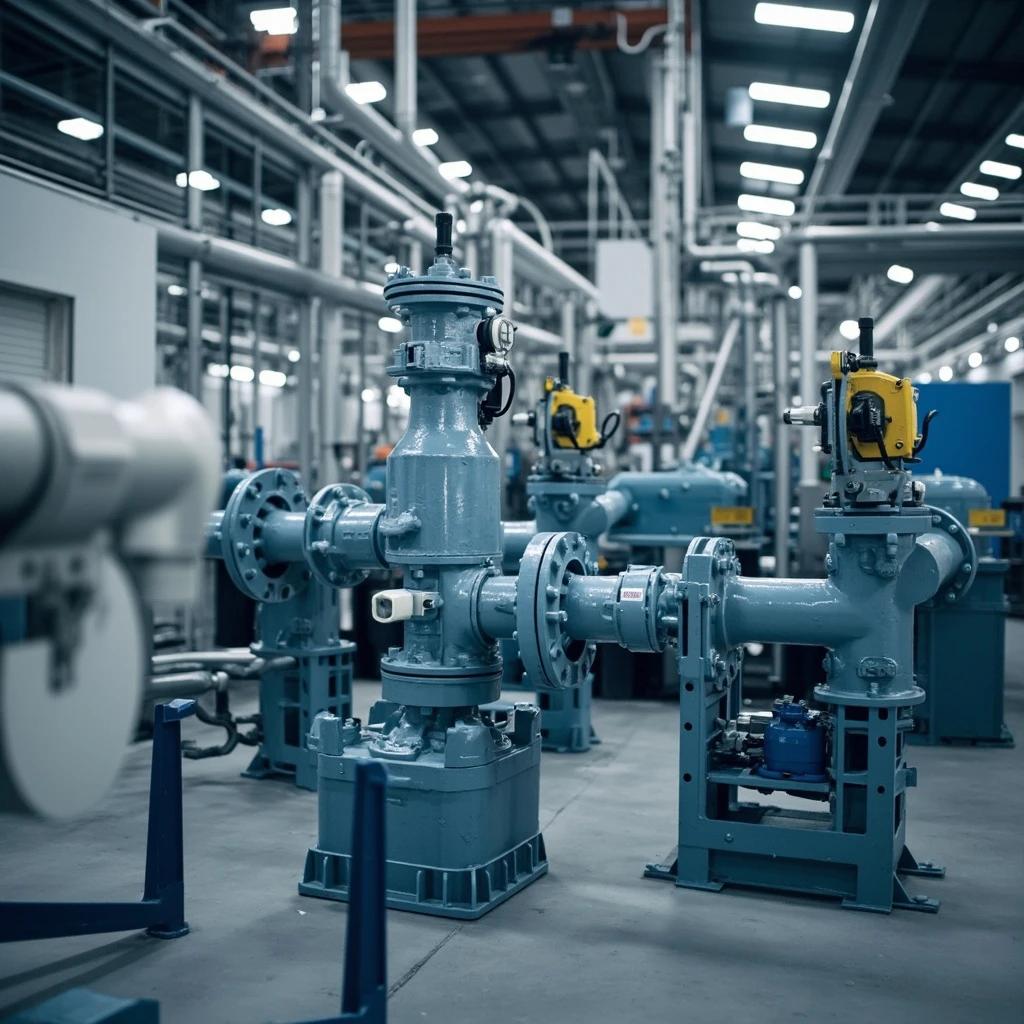
Our rankings are built on data, not opinions. VerityRank employs a multi-dimensional evaluation framework that aggregates and cross-references hundreds of quantitative and qualitative data points per company. The scoring model for critical machinery components is weighted across four equally important pillars: Revenue Scale & Brand Influence (25%), Category Specialization & Depth (25%), Manufacturing Footprint & Supply Chain Resilience (25%), and Innovation Intensity & Sustainability (25%).
Data Collection and Verification
Our research team extracts financial data directly from company annual reports, SEC filings (10-K, 20-F), stock exchange disclosures, and investor presentations. Revenue figures are normalized to USD equivalents using fiscal-year-end exchange rates. For privately-held companies like Freudenberg and Danfoss, we utilize their published annual financial statements and press releases. Manufacturing footprint data — including factory locations, employee counts, and production capacity — is verified through corporate sustainability reports, factory audit registries, and satellite imagery analysis of industrial facilities.
Category Specialization Scoring
Each company is mapped against a taxonomy of 15 sub-categories within critical machinery components — including rolling bearings, fluid power (hydraulics and pneumatics), industrial seals and gaskets, linear motion guides, power transmission (gears, couplings, belts), and motion control electronics. A company earns maximum specialization points when its core revenue is concentrated in these categories rather than diversified into unrelated industries such as consumer electronics or automotive assembly. For example, SKF receives a high specialization score because over 90% of its revenue derives from bearings, seals, and lubrication systems, while a diversified industrial conglomerate would score lower.
Innovation Assessment
R&D intensity is measured as a percentage of revenue and benchmarked against industry peers. Patent portfolio analysis, conducted using the World Intellectual Property Organization (WIPO) PATENTSCOPE database, counts active patents in IPC classes F16 (mechanical engineering), F15 (fluid-pressure actuators), and B23 (machine tools). Digital service maturity — including predictive maintenance platforms (e.g., SKF's condition monitoring), IoT-enabled smart components, and subscription-based software offerings — is factored into the innovation score. We also track participation in industry consortia such as OPC Foundation, ODVA, and Hydrogen Council as proxies for technology leadership.
Continuous Review Process
Rankings are reassessed on a rolling quarterly basis. Significant corporate events — such as mergers, divestitures, factory openings or closures, and major patent filings — trigger interim reviews. Our methodology is publicly documented and subject to annual third-party audit by independent data scientists to ensure reproducibility and freedom from commercial bias. No company can pay to influence its ranking position; VerityRank maintains strict editorial independence.
Becoming a top-tier critical machinery components manufacturer requires mastery across four interdependent dimensions: precision engineering, material science, systems integration, and global service. The companies ranked in our top 10 share several distinguishing characteristics that separate them from thousands of competing component suppliers worldwide.
1. Metallurgical and Polymer Expertise
The performance of a bearing, seal, or hydraulic valve is ultimately determined by the materials from which it is made. Schaeffler's proprietary bearing steels — developed over eight decades of tribology research — can withstand contact pressures exceeding 4,000 MPa while maintaining dimensional stability at temperatures ranging from -40°C to +250°C. Freudenberg's fluorocarbon elastomer (FKM) formulations, refined through its NOK-Freudenberg joint venture, achieve service lives of 15+ years in aggressive chemical environments. This level of material mastery cannot be replicated through reverse engineering alone; it requires sustained, multi-generational investment in metallurgy labs and polymer synthesis facilities.
2. Manufacturing Precision at Scale
Top manufacturers operate factories capable of holding tolerances measured in single-digit microns across millions of units per year. NSK's ball screw grinding lines produce shafts with lead accuracy of ±3 μm over 1,000 mm of travel — essential for the positioning stages inside ASML's EUV lithography machines that fabricate the world's most advanced semiconductors. Timken's tapered roller bearing lines in Canton, Ohio, have been continuously improved since 1899 and now incorporate in-line laser gauging that rejects any component deviating by more than 0.5 μm from specification. Achieving this precision at automotive-scale volumes (millions of units annually) while maintaining single-digit parts-per-million defect rates is the hallmark of a world-class manufacturer.
3. Systems Integration and Mechatronics
The boundary between mechanical components and electronic controls has dissolved. Parker Hannifin's aerospace division delivers complete fly-by-wire actuation systems where hydraulic servo valves, electric motors, position sensors, and flight control computers operate as a unified, safety-certified package. Bosch Rexroth's ctrlX AUTOMATION platform treats hydraulic cylinders, electric servo drives, and IoT sensors as nodes on a common Linux-based network, enabling factory-wide motion orchestration. Companies that cannot bridge the mechanical-electrical-software divide will be relegated to low-margin commodity component supply.
4. Global Responsiveness and Application Engineering
Critical components rarely fail at convenient times. A collapsed bearing in a Chilean copper mine crusher or a leaking hydraulic manifold on a North Sea oil platform can cost millions of dollars per hour in lost production. SKF maintains over 17,000 distributor locations and 100+ technical centers globally, while Danfoss operates authorized service centers in 100+ countries. More importantly, top manufacturers deploy application engineers — typically with 10+ years of field experience — who work on-site with customers to redesign machine subsystems for higher reliability. SMC's 8,000+ sales engineers worldwide conduct compressed air energy audits that reduce factory pneumatic consumption by up to 30%, creating measurable ROI that locks in customer loyalty.
5. Financial Resilience and Counter-Cyclical Pricing Power
The ability to maintain R&D spending and factory utilization during industry downturns separates the durable leaders from cyclical also-rans. During the 2025 industrial slowdown, Schaeffler maintained a 12.7% adjusted operating margin and generated €266 million in free cash flow through disciplined pricing and structural cost reductions. Parker Hannifin's "Win Strategy 3.0" lean management system delivered a 26.1% adjusted operating margin despite a 20% decline in on-road commercial vehicle sales. This pricing power — rooted in the mission-critical nature of their components — enables sustained investment that widens the competitive gap during each economic cycle.
The critical machinery components sector is being reshaped by four transformative forces that are fundamentally altering demand patterns, technology roadmaps, and competitive dynamics. The $300+ billion global market is projected to grow at a compound annual rate of 4-6% through 2030, but growth will be highly uneven across sub-segments.
1. The Rise of Embodied AI and Humanoid Robotics
Perhaps the most consequential new demand driver is the emergence of general-purpose humanoid robots. A single humanoid robot requires 28-40 rotary actuators at each joint — each actuator containing a precision planetary roller screw, a frameless torque motor, dual angular contact bearings, and a multi-turn absolute encoder. Hengli Hydraulic shipped over 5,500 linear actuator units for humanoid robot applications in 2025, making it the global leader in this nascent but explosively growing category. Schaeffler established a dedicated business unit for humanoid robotics and defense applications in early 2026. This market, projected to reach $30 billion by 2030 according to Goldman Sachs, represents a completely new demand vector for precision mechanical components that did not exist at commercial scale five years ago.
2. AI Data Center Thermal Management
The computational demands of large language models and generative AI have driven data center power densities from 5-10 kW per rack to 50-100 kW and beyond. Traditional air cooling cannot handle these thermal loads, forcing a wholesale transition to direct-to-chip liquid cooling and immersion cooling architectures. Danfoss reported that its data center-related fluid handling and cooling sales doubled in 2025, reaching 7% of total revenue. Parker Hannifin's thermal management division — expanded through the Filtration Group acquisition — is supplying liquid cooling distribution units (CDUs), precision control valves, and leak-detection systems to hyperscale data center operators. This segment, effectively non-existent for mechanical component suppliers five years ago, now represents a multi-billion-dollar annual addressable market growing at 30%+ CAGR.
3. Regionalization of Supply Chains
Escalating trade tensions between the United States, China, and the European Union have dismantled the "design anywhere, manufacture anywhere" model that defined the previous three decades of globalization. U.S. Section 232 tariffs on steel and aluminum, combined with European Carbon Border Adjustment Mechanism (CBAM) levies, have forced component manufacturers to build parallel supply chains. SKF closed its Monterrey, Mexico plant and concentrated North American production in Puebla, investing heavily in automation to offset higher labor costs. Hengli Hydraulic established manufacturing facilities in Germany, the United States, Japan, and Mexico — incurring significant startup losses and currency translation impacts — because local production has become a prerequisite for supplier qualification by OEMs like Caterpillar and John Deere. The cost of this regionalization is being passed through to end customers but is ultimately borne by smaller component suppliers who cannot afford multi-continent factory footprints.
4. Electrification of Mobile Machinery
Construction equipment, agricultural tractors, and mining trucks — traditionally powered by diesel engines driving hydraulic pumps — are transitioning to battery-electric and hybrid-electric architectures. This transition is profound for component suppliers because an electric excavator uses fundamentally different components than a diesel-hydraulic one: high-voltage electric swing motors replace hydraulic rotary actuators, electro-hydrostatic actuators (EHAs) replace central hydraulic systems, and lithium-ion battery thermal management systems require entirely new cooling circuits. Companies that successfully navigate this transition — like Bosch Rexroth with its electro-hydraulic pump units and Danfoss with its Editron electric drivetrain division — will capture disproportionate value as diesel-hydraulic architectures are phased out over the coming two decades.
5. Digital Services and Condition Monitoring
The integration of vibration sensors, temperature probes, and oil debris monitors into "smart" bearings and seals is transforming the aftermarket business model. SKF's condition monitoring platform analyzes real-time sensor data from installed bearings to predict failures weeks before they occur, enabling scheduled maintenance rather than emergency repairs. This data-as-a-service model generates recurring revenue at 70%+ gross margins — far higher than the 30-35% margins typical of component hardware sales. As 5G connectivity proliferates across factory floors, the addressable market for industrial IoT-enabled components is expanding at 25% annually, accelerating the shift from transactional parts supply to outcome-based service contracts.
Selecting a critical machinery component supplier is a multi-decade commitment that directly impacts product performance, warranty costs, and brand reputation. Unlike commodity fasteners or structural steel, critical components are deeply integrated into the design of the end machine — changing suppliers mid-program can require 12-18 months of re-validation testing and cost millions in engineering changes. A rigorous, multi-criteria evaluation process is essential.
Step 1: Define Technical Requirements Precisely
Begin by translating your machine's operating conditions into quantitative specifications. For a bearing selection, specify: radial and axial load magnitudes and directions (in kN), operating speed range (RPM), expected L10 life (in hours or millions of revolutions), operating temperature range, contamination environment (ISO 4406 cleanliness code for the lubricant), and any shock loading or vibration spectra. For a hydraulic system, specify: flow rate (L/min), maximum operating pressure (bar), fluid type and viscosity grade, ambient temperature range, duty cycle (continuous vs. intermittent), and required cleanliness level (ISO 4406 or NAS 1638 class). Suppliers who push back with detailed technical questions about your application are more valuable than those who simply quote a price — the questioning indicates genuine application engineering capability.
Step 2: Audit Manufacturing Quality Systems
Request a copy of the supplier's quality management system certifications — at minimum, ISO 9001:2015 is non-negotiable; IATF 16949 indicates automotive-grade process capability (defect rates below 10 PPM); AS9100D is mandatory for aerospace applications. Beyond certifications, conduct an on-site process audit: observe whether statistical process control (SPC) charts are actively maintained and acted upon at each machining cell; verify that CMM (coordinate measuring machine) and roundness testers are calibrated with NIST-traceable or PTB-traceable standards; check the cleanliness of the assembly area (ISO 14644 Class 8 or better for precision bearings; Class 5 for semiconductor-grade components). A factory that is tidy, well-lit, and organized is correlated with higher quality output — while not a guarantee, a disorganized, poorly-lit facility is a reliable predictor of quality problems.
Step 3: Evaluate Application Engineering Support
The best component suppliers function as extensions of your own engineering team. During the evaluation phase, present the supplier with a challenging technical problem from your current product line — perhaps a bearing that is failing prematurely or a hydraulic manifold that is cavitating. Evaluate the quality of their diagnostic process: do they request failed parts for laboratory teardown analysis? Do they perform FEA (finite element analysis) or CFD (computational fluid dynamics) simulations of your specific operating conditions? Do they propose design modifications backed by test data from their own validation facilities? Companies like SKF, Parker Hannifin, and Schaeffler maintain multi-million-dollar application engineering centers with dynamometers, environmental chambers, and accelerated life test rigs specifically for customer co-development projects. A supplier that invests in understanding your unique application physics will deliver far more value than one selling catalog components.
Step 4: Map the Supply Chain and Geopolitical Risk
For each critical component, create a supply chain map: where is the raw material sourced (bearing steel from Japan or Sweden vs. generic Chinese GCr15), where are the forgings or castings produced, where is finish machining and heat treatment performed, and where is final assembly and testing completed? The 2020-2025 period demonstrated that single-point-of-failure supply chains are existentially dangerous. Preferred suppliers operate at least two geographically separated manufacturing sites for any component classified as "sole-source" or "single-source" in your bill of materials. Assess the supplier's exposure to trade tariffs: components manufactured in China and exported to the U.S. may carry 25% Section 301 tariffs, while components manufactured in the EU and exported to the U.S. may face 10-25% tariffs on steel-intensive products. Suppliers like Timken and Schaeffler that have built substantial manufacturing capacity in North America, Europe, and Asia offer superior geographic diversification.
Step 5: Negotiate Lifecycle Costs, Not Unit Prices
The purchase price of a bearing or hydraulic pump typically represents only 5-15% of its total lifecycle cost. The dominant costs are: installation labor (including machine downtime), energy consumption over the operating life, lubrication and maintenance, unplanned downtime from premature failures, and end-of-life disposal. Request total cost of ownership (TCO) models from multiple suppliers and validate their assumptions with your own maintenance records. A component that costs 30% more upfront but delivers 3x longer service life and reduces unplanned downtime by 50% will generate a net present value that is orders of magnitude higher. Leading suppliers will provide guaranteed life calculations (e.g., SKF's Generalized Bearing Life Model or Timken's Syber analysis) backed by contractual performance warranties — insist on these as part of the supplier agreement.
Sustainability has evolved from a corporate social responsibility checkbox into a hard competitive differentiator in the critical machinery components industry. Environmental performance directly affects three business-critical dimensions: regulatory compliance (the European Union's Carbon Border Adjustment Mechanism taxes imports based on embedded carbon), customer procurement requirements (major OEMs now mandate supplier carbon disclosure and reduction targets), and operational cost (energy represents 5-12% of manufacturing cost for precision metal components). Our analysis identifies the following ESG leaders in the top 10.
Danfoss: The Decarbonization Benchmark
Denmark-based Danfoss has positioned sustainability as its core growth strategy rather than a compliance burden. The company has committed to becoming CO₂-neutral in its own operations (Scope 1 and 2) by 2030 — the most ambitious timeline in the industrial components sector. Its "Decarbonization-as-a-Service" program, which deploys Danfoss's own variable-speed drives, heat recovery systems, and thermal management solutions to reduce energy consumption at customer facilities, has already saved an estimated 500,000+ metric tons of CO₂ since inception. Danfoss's factories in Denmark, Finland, and China are increasingly powered by on-site renewable energy — its Nordborg headquarters campus achieves net-zero energy status through a combination of offshore wind power purchase agreements, ground-source heat pumps, and solar photovoltaic arrays. The company reports its ESG performance in alignment with the Task Force on Climate-related Financial Disclosures (TCFD) framework and Science Based Targets initiative (SBTi) standards.
SKF: Circular Economy Pioneer
SKF has embedded circular economy principles into its core bearing business through its "RecondOil" and "Remanufacturing" programs. The RecondOil technology removes sub-micron contamination particles from industrial lubricating oil, enabling closed-loop oil circulation that eliminates the need for oil changes in metalworking and bearing lubrication systems — reducing oil consumption by 99% and extending bearing life by 30-50%. SKF's bearing remanufacturing program takes used bearings returned by customers, disassembles them, re-grinds raceways to original specifications, replaces rolling elements and cages, and returns them to service with full new-bearing warranty. This program reduces raw material consumption by up to 80% and CO₂ emissions by up to 70% compared to manufacturing a new bearing. SKF operates dedicated remanufacturing centers in Sweden, Germany, the United States, India, and China. The company aims to achieve net-zero emissions across its full value chain (Scope 1, 2, and 3) by 2050, with an interim target of 50% reduction in Scope 1 and 2 emissions by 2030 from a 2019 baseline.
Freudenberg: Material Science for Sustainability
Freudenberg's sustainability contribution is distinctive because it occurs primarily at the material formulation level. The company's chemists have developed bio-based polyurethane formulations that replace petroleum-derived polyols with castor oil and other renewable feedstocks, reducing the carbon footprint of seal and gasket production by 30-40% without compromising mechanical properties. Freudenberg's Vibracoustic division has commercialized natural rubber-based air spring compounds that achieve equivalent fatigue life to synthetic rubber while reducing cradle-to-gate CO₂ emissions by 50%. The company has invested approximately €5.8 billion — 4.9% of annual sales — in R&D, with a growing share directed toward sustainable material innovation, hydrogen-compatible sealing technologies, and recyclable filtration media. Its newest technology center in Wuxi, China (opened 2025, €250 million investment), is purpose-built for developing hydrogen fuel cell gaskets, battery pack thermal interface materials, and robot joint seals — technologies that enable the broader energy transition.
Emerging ESG Challenges
Despite progress, the industry faces significant unresolved sustainability challenges. The hardening and grinding of bearing steel requires temperatures exceeding 800°C and consumes 5-8 MWh of energy per ton of finished product — processes that are extremely difficult to electrify at scale. The mining of rare earth elements (neodymium, dysprosium) for permanent magnet motors — increasingly used in electric actuators that replace hydraulic systems — carries well-documented environmental and human rights concerns in source countries. And the industry's reliance on mineral oil-based hydraulic fluids and lithium-complex greases creates ongoing spill and contamination risks that cannot be fully eliminated even with best-practice containment. The companies that develop economically viable solutions to these structural challenges — through high-temperature electric furnaces, rare-earth-free magnet chemistries, or bio-derived functional fluids — will earn significant competitive advantage in a procurement environment where carbon intensity is being priced into supplier selection decisions with increasing granularity.