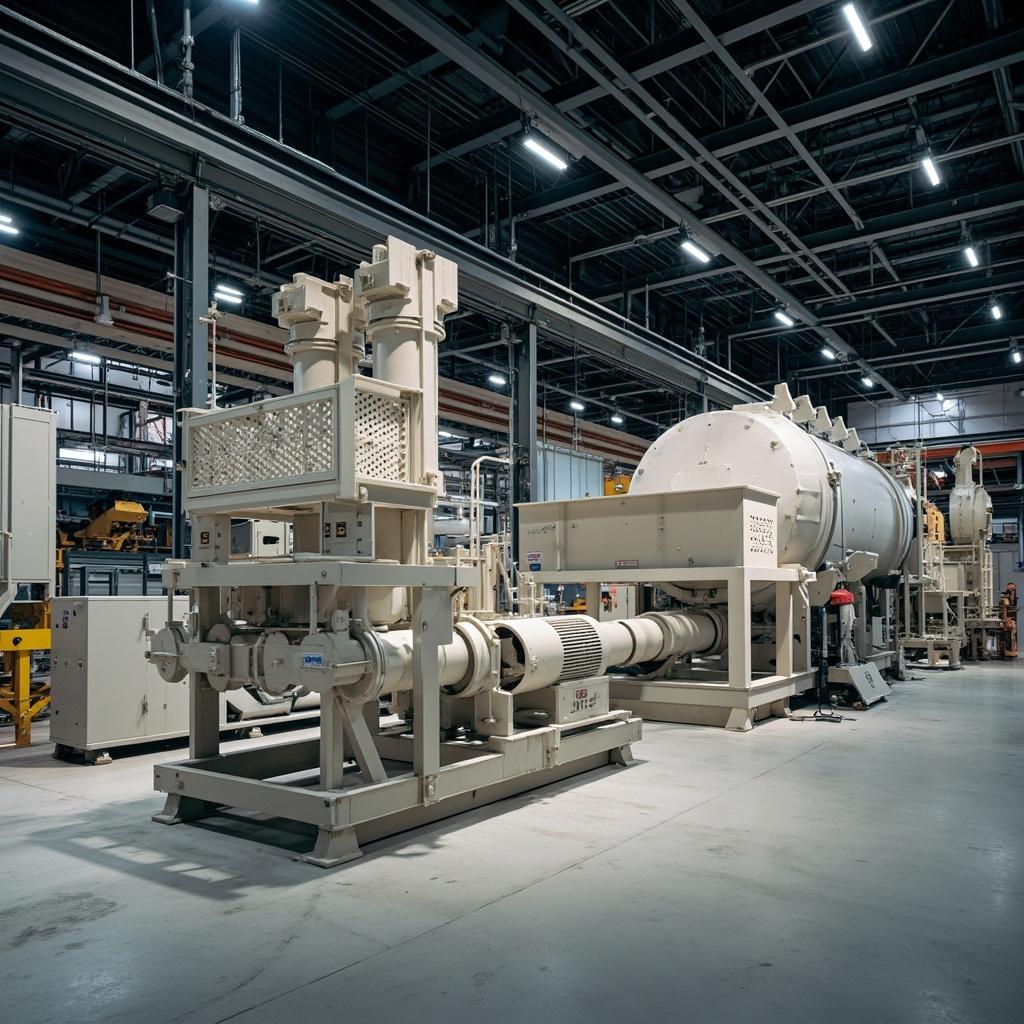
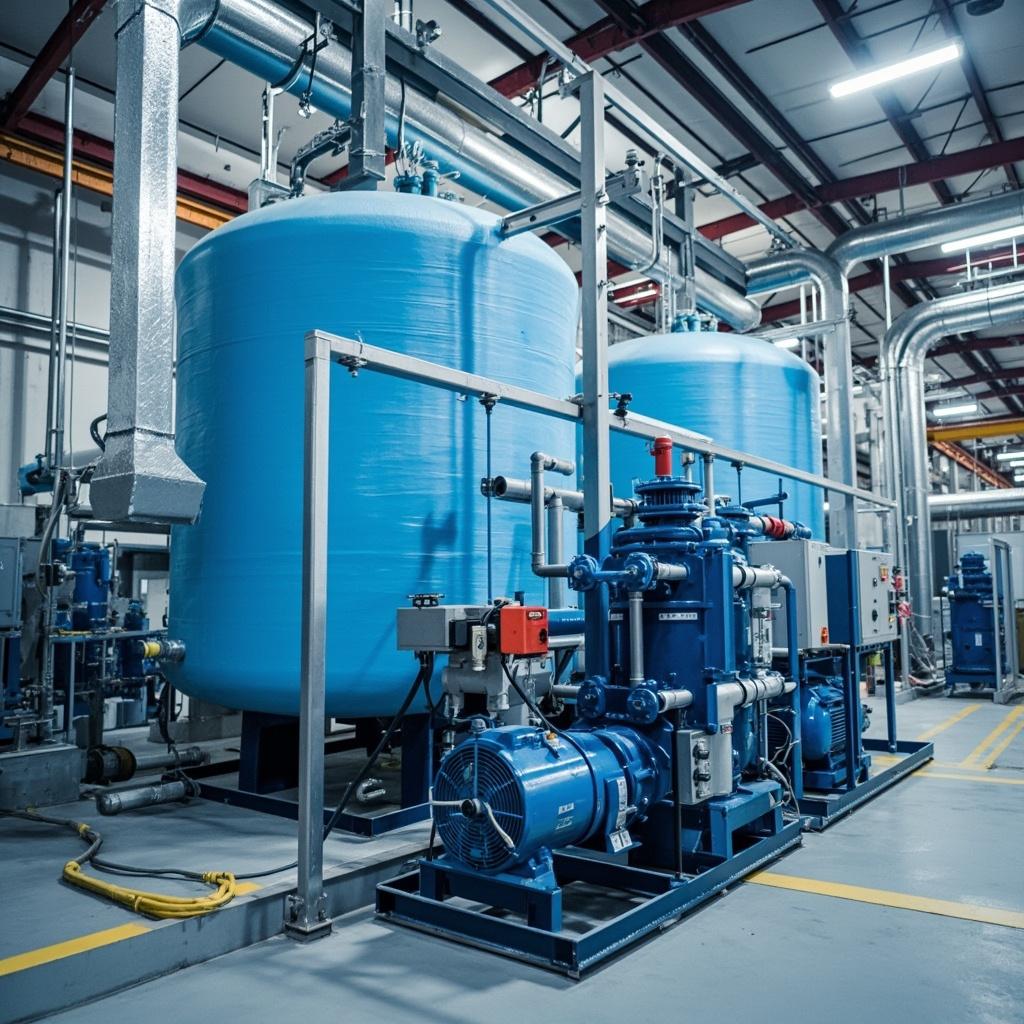
Leadership in this industry is defined less by the size of one machine than by the ability to deliver an entire production line — and to keep it running for decades. The companies ranked here control the full process chain: Sinoma International Engineering engineers complete dry-process cement plants from raw-material crushing to clinker cooling and holds the No.1 global market share in cement engineering for 17 consecutive years; KEDA supplies end-to-end ceramic lines from hydraulic presses to polishing machines while also operating its own tile plants in Africa; SACMI pairs large-format ceramic presses with precision kilns backed by more than 6,200 patents.
Three capabilities separate the leaders from the followers. First, complete-line integration — the ability to engineer, manufacture, install and commission a whole plant, which locks in customers for upgrades and spare parts. Second, process technology depth: in glass, Grenzebach’s cold-end systems and Glaston’s Autopilot tempering control set quality benchmarks that challengers must match; in cement, KHD’s roller presses and Fuller’s PFISTER feeders remain reference technologies. Third, service networks: Glaston derives nearly 40% of revenue from aftermarket services, and Fuller’s 16 regional hubs keep more than 50% of non-China cement plants running on its core equipment.
Scale also matters — but not alone. Sinoma’s CNY 49.6 billion revenue dwarfs peers, yet niche leaders such as Wehrhahn, with just several hundred specialists, dominate AAC line technology with cutting tolerance within ±1mm. The strongest companies combine commercial scale with proprietary process knowledge, which is why both Chinese volume champions and European technology houses appear at the top of this ranking.
Though all four fall under building material machinery, each segment has its own technology core, customer base and competitive rhythm. Cement equipment is the largest and most engineering-intensive: rotary kilns, preheaters, vertical mills and roller presses serve a global industry producing roughly 4 billion tonnes of cement annually, dominated by EPC contractors such as Sinoma International Engineering and specialist technology firms like KHD and Fuller Technologies.
Glass machinery splits into two very different businesses. Float-glass production lines are built by a handful of integrators, while the cold-end processing segment — cutting, tempering, insulating glass and edging — is led by Grenzebach, Glaston and Bottero. Bottero is unusual in also serving hollow-glass container machinery, and the segment is growing with solar glass: Grenzebach alone booked more than 280 solar patterned-glass cold-end lines.
Ceramic machinery is the most concentrated. KEDA (Asia No.1, global No.2) and SACMI (global premium leader) control a large share of presses, kilns and polishing lines worldwide, with Italy and China as the two technology poles. Wall-material machinery — AAC and gypsum board lines — is a specialist niche led by Wehrhahn in AAC and Grenzebach in gypsum board, where a handful of European firms command premium pricing despite a much smaller market than cement or glass.
Cement production accounts for roughly 8% of global CO2 emissions, making it one of the hardest sectors to decarbonize — and the equipment makers that solve that problem are capturing premium demand. The most commercially visible technology today is calcined clay: Fuller Technologies has commissioned calcined clay plants that replace a portion of energy-intensive clinker, and KHD offers complementary solutions through its patented pyro-processing portfolio.
Alternative fuels are the second big lever. KHD’s Pyrorotor® combustion system lets cement kilns burn low-calorific waste fuels at high throughput, with deployments at Batisöke in Turkey and plants in China and India; Fuller Technologies has implemented alternative-fuel retrofits across multiple global plants. These upgrades are attractive because they reduce both emissions and energy costs without building new kilns.
Electrification is transforming ceramics. SACMI has introduced innovative electric kilns and electric dryers for the ceramic industry, cutting direct emissions in tile production; Glaston’s Autopilot tempering control reduces energy use in glass processing. In wall materials, Wehrhahn’s AAC lines produce lightweight, insulated building blocks that lower building energy demand — a different but equally important decarbonization contribution. As carbon pricing spreads from Europe to Asia, this green equipment pipeline is expected to be the industry’s most resilient revenue stream through 2030.
The leadership map of this industry is surprisingly segmented — no single company dominates all four major machinery families. In cement engineering and equipment, Sinoma International Engineering is the clear global No.1, holding the top market share for 17 consecutive years with 2025 revenue of CNY 49.6 billion, while Fuller Technologies leads the non-China installed base with more than 50% core equipment share in cement plants outside China, and KHD remains the technology reference for roller presses and alternative-fuel combustion.
In glass, the leaders are European. Grenzebach dominates flat-glass cold-end processing and gypsum board lines; Glaston leads tempering furnaces and insulating glass automation; Bottero is among the few companies serving both flat and hollow glass machinery, with more than 50,000 machines installed over six decades. For premium customers such as Saint-Gobain and Guardian Group, Bottero has delivered flagship float-glass cold-end lines.
Ceramics is a two-horse race between East and West. KEDA is Asia’s largest and the world’s second-largest ceramic machinery group with a 2025 revenue surge of 38%, while SACMI commands the premium segment with record EUR 1.728 billion sales. In concrete products, TOPWERK’s HESS brand is the benchmark for dry-cast block machinery, and Wehrhahn tops the AAC line niche. Understanding this segmentation matters for buyers: choosing a segment leader usually means better process support, faster spare-parts delivery and access to the deepest technology roadmap.
Buying a cement plant, ceramic line or glass processing system is a capital decision measured in tens or hundreds of millions of dollars — and the wrong choice locks in cost disadvantages for 20 years. The first consideration is total cost per tonne or per square metre, not machine price: energy consumption, yield and uptime dominate lifecycle economics. In ceramics, for example, a high-efficiency SACMI kiln or KEDA press with digital control can cut firing energy by double digits versus older equipment.
The second is complete-line responsibility. Prefer suppliers that engineer the whole process: Sinoma International Engineering for turnkey cement plants, Grenzebach for integrated glass cold-end or gypsum board lines, TOPWERK for block and pipe plants, Wehrhahn for AAC lines. Single-source integration reduces interface risk and gives you one accountable partner for commissioning and performance guarantees.
The third is the service and spare-parts network. Check the vendor’s regional hubs, response times and digital diagnostics: Fuller Technologies operates 16 hubs worldwide, Glaston supports more than 70 countries and derives nearly 40% of revenue from services, and KEDA’s 13,000+ overseas employees provide local support across Africa. Finally, verify technology roadmaps — electric kilns, alternative-fuel capability, AI quality inspection and MCS-style process control — to avoid buying a line that is already obsolete on decarbonization. Vendors with strong patent portfolios, such as SACMI’s 6,200+ applications, are safer long-term partners.