A dominant civil engineering machinery brand is defined by four attributes that compound over decades: installed-base lock-in, vertical manufacturing depth, dealer-network density and technology leadership. The world's top brands share all four.
Installed-base lock-in is the foundation. Caterpillar keeps more than 118,000 employees and 500+ dealers busy supporting a fleet where a single D11 bulldozer or 797 haul truck operates for 30,000+ hours. Once a contractor standardizes on a brand's service network, switching costs are measured in millions of dollars of downtime risk. Komatsu's 16-center remanufacturing network similarly locks customers into lifecycle contracts.
Vertical manufacturing depth separates real giants from assemblers. Caterpillar casts its own engine blocks, forges drive shafts and machines hydraulic cylinders across 180+ facilities; Deere builds captive diesel engines and transmissions; Komatsu operates 71 manufacturing bases in 17 countries. Controlling core components means controlling quality, cost and delivery — the three things construction firms care about most.
Dealer-network density is the service moat. A construction machine that breaks down in a remote mine or highway site must be back online within days, not weeks. Caterpillar's 500+ independent dealers in 190+ countries, Volvo CE's 1,400-strong Swecon retail force and XCMG's 190+ country export network turn parts availability into a competitive weapon that software cannot replicate.
Technology leadership is the newest differentiator. Autonomous haulage (Komatsu FrontRunner, Caterpillar-NVIDIA), electric powertrains (SANY, Volvo CE, XCMG) and digital construction platforms (Komatsu Smart Construction, Deere Operations Center) are shifting the battle from iron to intelligence. Brands that lead all four dimensions — scale, manufacturing, service and technology — define the industry's direction for the next decade.
The civil engineering machinery industry spans at least eight distinct equipment families, each with its own technology curve, margin profile and competitive set. Understanding the segmentation is essential because very few companies lead in all of them.
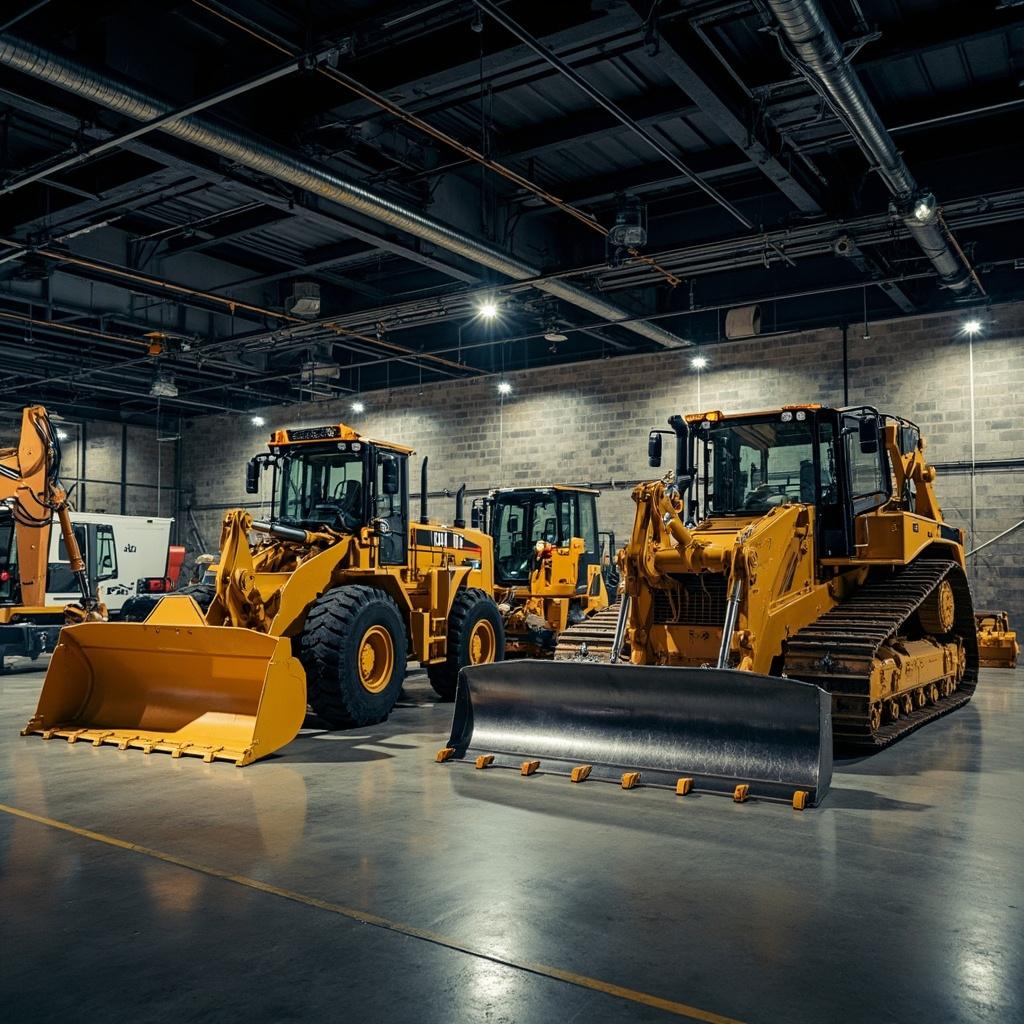
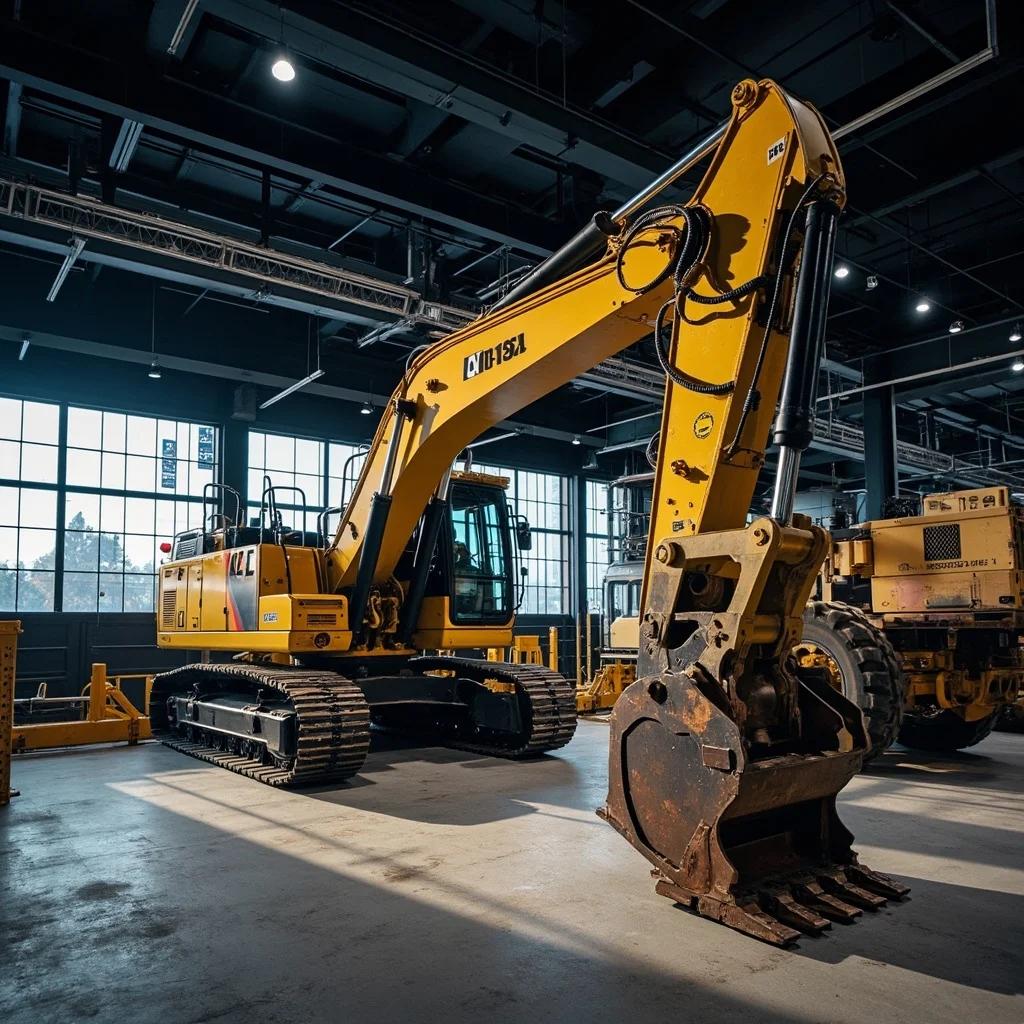
Earthmoving equipment is the largest segment, covering hydraulic excavators, bulldozers, wheel loaders and motor graders — the revenue backbone for Caterpillar, Komatsu, XCMG and Hitachi. Excavators alone represent roughly 40% of global construction equipment value, and China's domestic excavator market has been the world's largest for over a decade.
Cranes and hoisting machinery is where XCMG holds global #1 with RMB 20.98 billion in crane revenue, while Liebherr dominates the premium tower and crawler crane segment with six-to-twelve-month custom delivery lead times that reflect extreme engineering content.
Concrete machinery is SANY's fortress — global #1 for 15 consecutive years with pump trucks, mixers and batching plants, a franchise cemented by the 2012 Putzmeister acquisition. Road construction machinery, anchored by Deere's Wirtgen Group (cold milling, pavers, compactors), serves the highway and infrastructure cycle.
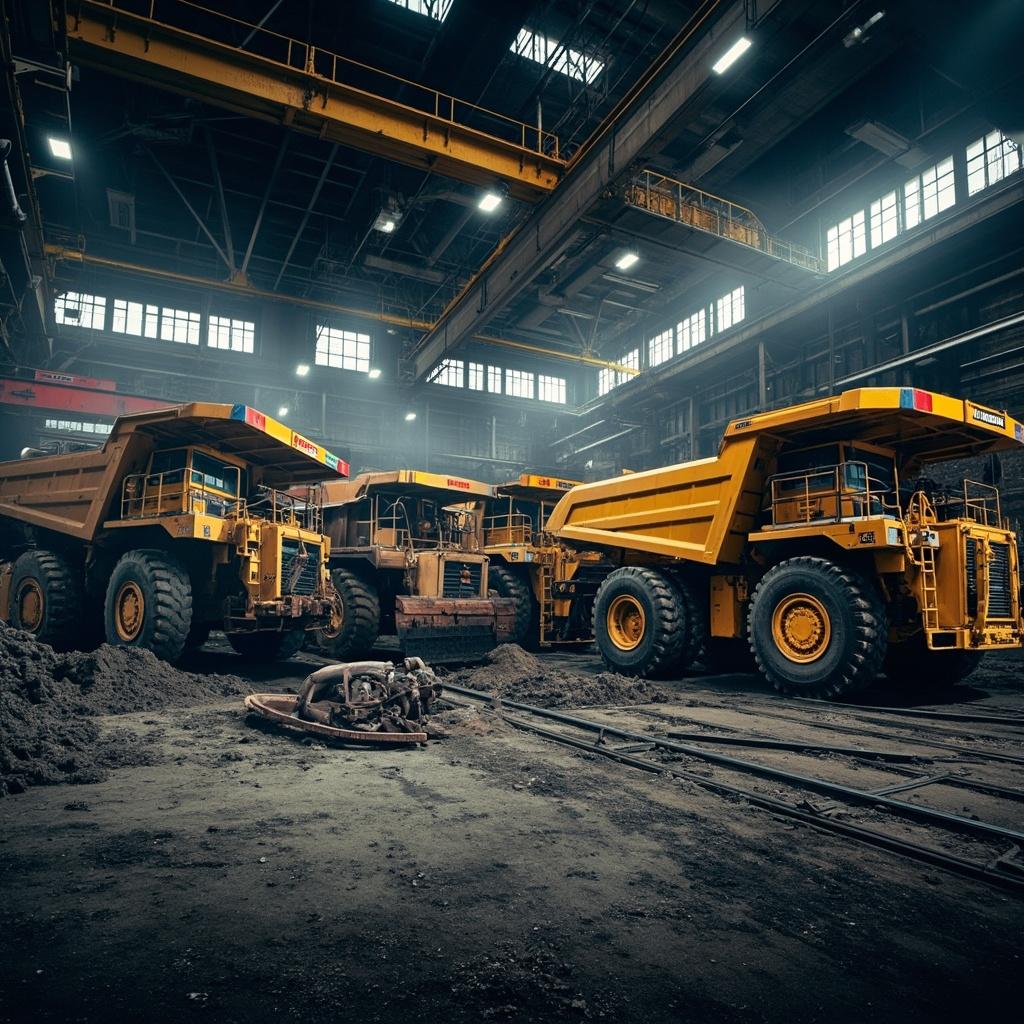
Mining and rock excavation connects civil engineering to commodities: Caterpillar's 797 ultra-class trucks, Komatsu's autonomous haulage fleets, Sandvik's underground drills, loaders and AutoMine automation, and Liebherr's R 9800 ultra-class hydraulic excavators. Drilling and piling machinery, compact equipment (JCB's backhoe loaders and telehandlers) and new-energy construction vehicles round out a sector where the boundaries between construction, mining and logistics equipment are increasingly blurred.
The US Supreme Court's rejection of IEEPA tariffs and the White House's immediate Section 122 response — a 10% across-the-board tariff on all imports — has become the single most disruptive supply-chain event for construction machinery since the industry globalized. The impact is reshaping where machines are built and which brands win.
The cost burden is enormous and concentrated. Caterpillar faces an estimated $2.2-2.4 billion in additional 2026 tariff costs directly compressing its resource-industry margins; Komatsu absorbed ¥81.6 billion in tariff-related costs from US steel and aluminum duties. For an industry where machines weigh hundreds of tonnes and shipping costs are already extreme, a flat 10% tariff changes plant-location economics overnight.
The strategic response is forced near-shoring. Deere shifted compact track loader production to Mexico; XCMG is expanding assembly in Europe and the Americas; JCB's CEO moved with "astonishing speed" to adjust its US supply chain after the tariff ruling, leveraging its four-continent, 22-factory footprint. Komatsu's 71 plants across 17 countries and Caterpillar's 180+ facilities provide the geographic optionality that single-country manufacturers lack.
The competitive consequence favors diversified footprints. Brands with deep localization — Chinese giants exporting from domestic super-factories, Japanese groups with US plants, European families with global assembly networks — can absorb tariff shocks through internal supply rebalancing. The tariff environment is also accelerating the "equipment as a service" shift, as manufacturers protect margins by monetizing software, parts and uptime rather than machine sales alone. For buyers, the lesson is clear: supply-chain resilience is now a first-order purchase criterion, not an afterthought.
Two technology waves — autonomy and electrification — are simultaneously transforming civil engineering machinery from purely mechanical assets into intelligent, software-defined production systems. Their convergence is the defining investment theme of the industry's next decade.
Autonomy has crossed from pilot to production. Komatsu's FrontRunner system operates more than 600 autonomous haul trucks across 6+ countries, removing drivers from the industry's most dangerous and expensive jobs; Caterpillar has partnered with NVIDIA on Physical AI for its mining fleet and acquired spatial-data firm Skycatch to extend autonomous site intelligence; Sandvik's AutoMine is the most widely deployed autonomous drilling and haulage platform in underground mining. Autonomous operation delivers 15-25% productivity gains and eliminates the industry's persistent labor shortages.
Electrification is moving fastest in compact and urban equipment. SANY's electric equipment sales doubled to RMB 8.64 billion (+115%) in 2025 — electric mixer trucks, dump trucks and excavators — leveraging China's mature battery supply chain; Volvo CE has committed to a fully electric compact equipment line and pioneered large battery-electric haulers; XCMG is shipping battery-powered machines into Europe, where emissions regulations for urban construction are strictest. Hydrogen is the frontier: Liebherr is converting its Bulle headquarters into a hydrogen capability center for non-road heavy machinery engines.
The convergence point is the digital construction site. Komatsu's Smart Construction platform integrates drone surveying, 3D design data and machine control for fully digitized workflows; Deere's Operations Center connects every machine to a data feedback loop; Caterpillar's telematics and remanufacturing ecosystem monetizes machine data across 500+ dealers. The strategic prize is control of the data layer: manufacturers that own the sensors, software and service relationship will capture recurring value long after the machine sale — which is precisely why Sandvik's aftermarket and digital revenue now exceeds 40% of its total.
China's two engineering machinery titans — XCMG and SANY — have climbed from domestic challengers to global top-6 players in under two decades, and their rise is fundamentally reshaping industry economics. The comparison with Western incumbents reveals both converging strengths and persistent gaps.
On scale and growth, China has won. XCMG is now global #3 in the KHL Yellow Table with $14.2 billion in construction machinery sales, having surpassed John Deere; SANY ranks #6 with $12.6 billion and is the world's #1 concrete machinery maker for 15 consecutive years. Both outgrew Western peers in 2025 — XCMG's overseas revenue surged 16.58% to RMB 48.6 billion (48.2% of total), while SANY's international sales hit RMB 55.9 billion, exceeding 64% of revenue for the first time. SANY's net profit jumped 41.2% and its operating cash flow hit a record RMB 19.98 billion.
On electrification, China leads decisively. SANY's electric equipment revenue doubled to RMB 8.64 billion (+115%), and XCMG's new-energy construction vehicles are winning European contracts on the strength of China's mature battery supply chain — a cost advantage Western diesel-centric incumbents are still building toward.
On premium engineering and service density, the West still leads. Caterpillar's 500+ dealer network in 190+ countries, Komatsu's 16-center remanufacturing system and Liebherr's custom engineering depth command premium pricing that Chinese brands have not yet matched in mature markets. Western brands dominate ultra-class mining equipment and the highest-specification crane and drilling segments, where decades of accumulated reliability data create trust that price alone cannot buy.
The strategic outlook is convergence. Chinese giants are investing heavily in autonomous and digital technologies — XCMG operates WEF-certified super-factories and SANY runs two Global Lighthouse Factories — while Western incumbents are adopting Chinese-style aggressive financing and localization. The next decade will decide whether the industry's center of gravity moves permanently to Asia.