Top 10 Daily Mineral Goods & Lifestyle Products Manufacturers & Suppliers

HomeMining & MineralsTop 10 Daily Mineral Goods & Lifestyle Products Manufacturers & Suppliers

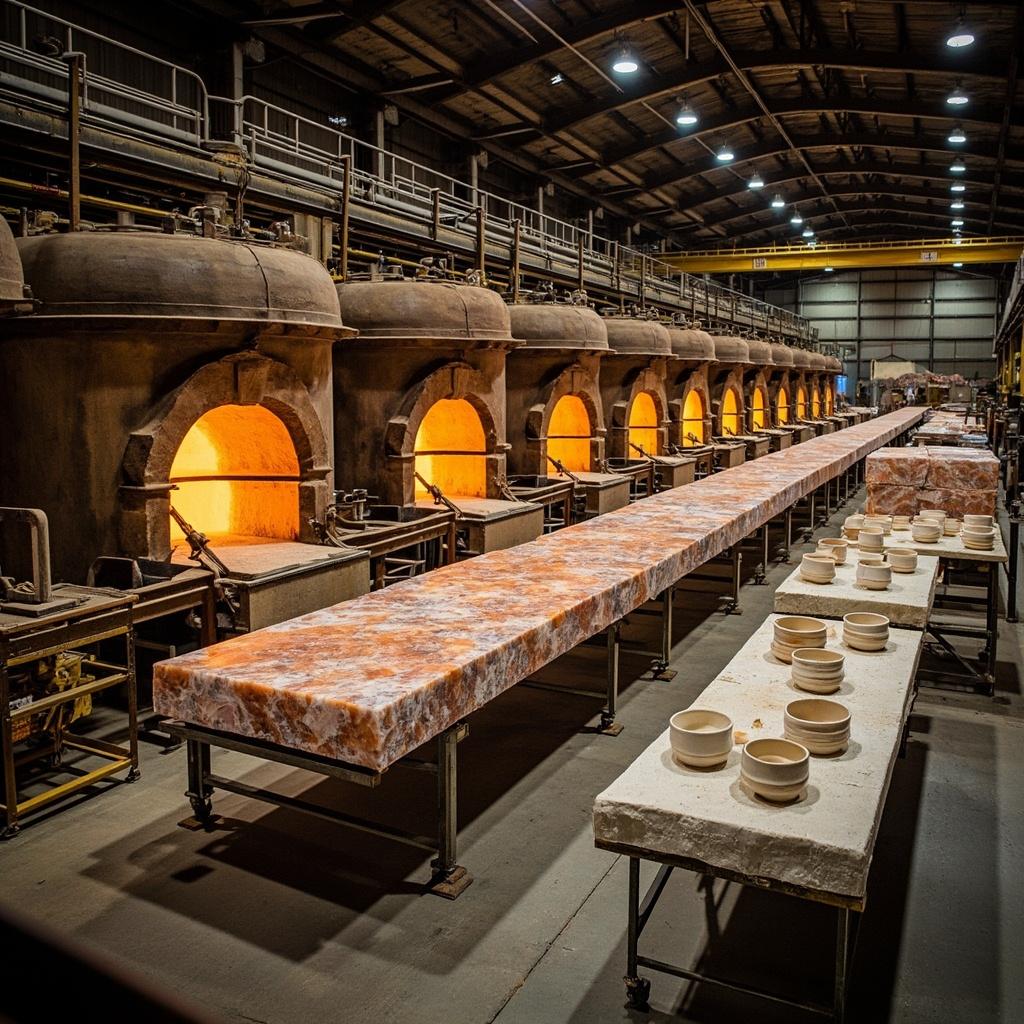
The global daily mineral goods manufacturing sector is defined by a critical divide: companies that own their mineral sources and operate in-house production facilities versus those that outsource manufacturing to third parties. This ranking exclusively evaluates manufacturers who maintain 100% self-owned mining operations and in-house processing facilities—eliminating pure brand licensors, contract manufacturers, and asset-light operators. As of 2025, the mineral-based consumer goods manufacturing industry surpassed 00 billion in combined output, driven by pet care minerals (.13 billion from Minerals Technologies alone), Himalayan salt products, and advanced ceramic consumer goods.

The competitive landscape centers on three structural advantages that separate manufacturing leaders from followers. First, mine-to-factory vertical integration—companies like Imerys (180 mines worldwide), Minerals Technologies (bentonite mines in Wyoming and Inner Mongolia), and Ittefaq (Himalayan salt mines) eliminate raw material quality variability by processing ore within the radius of their own extraction sites. Second, advanced kiln and furnace technologyKyocera's 50 billion yen investment in robotic ceramic sintering lines and Swarovski's world-first all-electric continuous crystal furnace represent the frontier of energy-efficient mineral processing. Third, regulatory-grade mineral purity systems—the FDA and EU's tightening asbestos screening requirements for consumer talc and kaolin products have created a compliance barrier that only vertically integrated manufacturers can economically sustain.

Our Ranking Methodology

VerityRank evaluates manufacturers across four equally weighted dimensions:

Manufacturing Self-Sufficiency (25%): Degree of vertical integration—from owned mines through in-house processing to finished product. Companies with 100% self-owned facilities score highest; those relying on contract manufacturing are excluded entirely.

Production Scale & Global Reach (25%): Total manufacturing output volume, number of owned production facilities worldwide, and geographic diversity of manufacturing operations.

Product Portfolio Depth (25%): Breadth of mineral-to-consumer product categories, from raw material processing through finished branded goods across multiple consumer segments.

Innovation & Sustainability (25%): Investment in energy-efficient kiln/furnace technology, mineral purity testing infrastructure (ICP-MS, asbestos screening), and carbon reduction initiatives in manufacturing operations.

Disclaimer: The data in this ranking is compiled from publicly available third-party authoritative sources including Tokyo Stock Exchange filings, NYSE disclosures, Euronext Paris reports, Pakistan export data, and corporate sustainability reports. Rankings reflect our proprietary methodology and are provided for informational purposes only.

Data Sources: This ranking draws on data from Tokyo Stock Exchange, New York Stock Exchange, Euronext Paris, SEC EDGAR, corporate annual reports, and industry market analyses.

Top 10 Rankings

2026.07 Edition
1
Kyocera

KYOCERA Corporation

KYOCERA Corporation is the undisputed global leader in advanced fine ceramics and electronic ceramic substrates, founded in 1959 in Kyoto, Japan. With annual revenue of approximately $133.5 billion, Kyocera operates 279 subsidiaries across multiple continents, employing 73,856 people worldwide. The company pioneered the full vertical integration of ceramic powder synthesis, tape casting, precision metallization, and 3D packaging for semiconductor applications.

Strengths: Absolute dominance in global ceramic substrate market share (>10%); breakthrough multilayer ceramic core substrate technology for AI semiconductors unveiled in 2026; unmatched vertical integration from ceramic powder to finished components; massive R&D investment with new smart factories under construction; commanding position in electronic, structural, aerospace, and medical ceramics.
Weaknesses: Significant operating profit decline in recent years due to legacy organic packaging business weakness (~¥43 billion impairment); strategic divestiture of non-core chemical business (sold to Sumitomo Bakelite); exposure to cyclical semiconductor and consumer electronics markets; heavy reliance on Japanese manufacturing base amid shifting geopolitics.

Brand

KYOCERA

Founded

1959

Workforce

73,856

Presence

Global (North America, Europe, Asia including China)

Facilities

279 subsidiaries worldwide, dozens of mega-factories across Japan, North America, Europe, and Asia (including multiple China sites)

Headquarters

Japan

Key Product Categories
Industrial Ceramic Substrates & Components CompaniesMining & Minerals CompaniesMining & MineralsMineral Powder Fillers & Functional Additives IndustryFunctional Mineral Materials & Smart Composites IndustryElectronic Chemical Materials CompaniesNew Energy & Eco-Materials CompaniesRefractory & High-Temperature Resistant Materials CompaniesRefractory & High-Temperature Resistant Materials IndustryThermal Insulation Materials IndustryIndustrial Ceramic Substrates & Components CompaniesMining & Minerals CompaniesMining & MineralsMineral Powder Fillers & Functional Additives IndustryFunctional Mineral Materials & Smart Composites IndustryElectronic Chemical Materials CompaniesNew Energy & Eco-Materials CompaniesRefractory & High-Temperature Resistant Materials CompaniesRefractory & High-Temperature Resistant Materials IndustryThermal Insulation Materials Industry
2
D. Swarovski KG

D. Swarovski KG

D. Swarovski KG is the world's most recognized manufacturer of precision-cut crystal, founded in 1895 in Wattens, Tyrol, Austria by Daniel Swarovski. The company operates three primary divisions—Swarovski Crystal Business (consumer jewelry and décor), Swarovski Optik (precision optical instruments), and Tyrolit (industrial abrasives and cutting tools)—and generates estimated annual revenue exceeding €2 billion. With its proprietary glass-cutting technology, Swarovski operates manufacturing facilities across Austria, Serbia, India, and China, employing approximately 34,000 people worldwide. Its globally integrated design, production, and retail network—spanning over 2,800 boutiques in more than 170 countries—makes it the largest non-public manufacturer in the lab-created decorative crystal segment. The company's transition into lab-grown diamond gemstones through its Swarovski Created Diamonds line marks a significant strategic expansion into the synthetic gemstone market.

Strengths: Century-spanning expertise in precision crystal synthesis and patented cutting formulas that achieve unmatched brilliance and consistency—widely considered the benchmark for artificial crystal optics. The company exercises complete vertical integration from proprietary crystal glass formulation to automated cutting, polishing, and global direct-to-consumer retail, ensuring quality control across the full value chain. Its B2B technical crystal division supplies precision optical components to luxury watchmakers (movements, watch crystals), automotive interior designers, and architectural lighting projects—a high-margin industrial revenue stream that diversifies beyond consumer retail. Swarovski's brand equity is among the top global luxury brands, with brand recognition exceeding 80% in key markets and the ability to sustain premium pricing in the face of low-cost lab-grown crystal competition.

Weaknesses: As a privately held family enterprise, Swarovski discloses limited financial data and operational metrics, reducing transparency for B2B procurement evaluations and industry benchmarking. Its consumer-facing crystal jewelry business faces mounting price pressure from mass-market lab-grown crystal producers in China and India, compressing margins in its core decorative segment. The company's recent organizational restructuring and workforce reductions in Europe signal operational efficiency challenges as it navigates the transition from traditional luxury retail to an omni-channel digital commerce model.

Brand

Swarovski

Founded

1895

Workforce

20K+

Presence

120+ Countries

Facilities

2700+ Stores

Headquarters

Austria

Market

Unlisted (Family-owned private business)

Key Product Categories
Synthetic & Lab-Created Mineral Materials CompaniesSynthetic & Lab-Created Mineral Materials Manufacturers & SuppliersMining & Minerals CompaniesMining & Minerals ManufacturersHome Decor BrandsFashion Accessories BrandDaily Mineral-Based Goods & Lifestyle Products BrandsDaily Mineral-Based Goods & Lifestyle Products Manufacturers & SuppliersSynthetic & Lab-Created Mineral Materials CompaniesSynthetic & Lab-Created Mineral Materials Manufacturers & SuppliersMining & Minerals CompaniesMining & Minerals ManufacturersHome Decor BrandsFashion Accessories BrandDaily Mineral-Based Goods & Lifestyle Products BrandsDaily Mineral-Based Goods & Lifestyle Products Manufacturers & Suppliers
3
Imerys S.A.

Imerys S.A.

Imerys is the world's leading industrial mineral solutions provider, headquartered in Paris, France. Operating across more than 40 countries with approximately 18,000 employees, Imerys generated €5.5 billion in revenue in FY2025 through an unmatched portfolio of over 20 industrial minerals processed into thousands of high-value-added products. The company dominates global markets for kaolin, calcium carbonate, talc, bentonite, and specialty alumina, serving diverse end-markets including paper, plastics, construction, cosmetics, pharmaceuticals, and environmental applications. Imerys has strategically expanded into energy transition minerals, including its landmark EMILI lithium project in France that has attracted French government co-investment.

Strengths: Unmatched industrial mineral portfolio spanning over 20 mineral types and 1,500+ product formulations creates formidable barriers to entry and customer switching costs; global operational footprint with 120+ mining sites and 150+ processing facilities across 40+ countries enables localized supply with global scale advantages; powerful pricing discipline demonstrated by 1.3% year-over-year price increases in FY2025 despite weak demand in European and North American construction markets; strategic diversification into energy transition minerals including the EMILI lithium project backed by the French government positions the company for structural growth; €50-60 million structural cost reduction program demonstrates proactive operational efficiency management in challenging macroeconomic conditions.
Weaknesses: Revenue base remains significantly smaller than major metal mining competitors at €5.5 billion, limiting absolute R&D investment scale; heavy exposure to cyclical European and North American construction and industrial activity (~40% of revenue from these regions) creates vulnerability to regional economic downturns; fragmented global industrial minerals market limits pricing power in commoditized product segments; acquiring Great Lakes Minerals and Chemviron assets involves integration execution risk and cultural alignment challenges across geographies; mineral reserves are geographically dispersed requiring ongoing exploration expenditure to maintain long-term resource base.

Brand

Imerys

Founded

1880

Workforce

12,300

Presence

40+ countries globally

Facilities

120+ mining sites and 150+ processing facilities across 40+ countries

Headquarters

France

Market

Euronext Paris: NK

Key Product Categories
Mining & Minerals CompaniesMetallic Ore Raw Materials IndustryRefractory & High-Temperature Resistant Materials IndustryCalcium Carbonate Powders IndustryTalc Powders IndustryBentonite Clays IndustryMining & Minerals ManufacturersMining & Minerals CompaniesMining & Minerals CompaniesMineral Powder Fillers & Functional Additives CompaniesMining & Minerals CompaniesMetallic Ore Raw Materials IndustryRefractory & High-Temperature Resistant Materials IndustryCalcium Carbonate Powders IndustryTalc Powders IndustryBentonite Clays IndustryMining & Minerals ManufacturersMining & Minerals CompaniesMining & Minerals CompaniesMineral Powder Fillers & Functional Additives Companies
4
TOTO Ltd.

TOTO Ltd.

TOTO LTD. is a world-leading manufacturer of premium bathroom products, renowned for inventing and defining the smart toilet category with its Washlet, headquartered in Kitakyushu, Fukuoka, Japan. The company deeply focuses on water and wellness-related living spaces, with its core pillar being the bathroom fixtures business encompassing smart toilets (e.g., the flagship Neorest series), thermostatic shower systems, integrated vanities, and high-end hardware, alongside significant operations in system kitchens and water treatment. With FY2025 consolidated net sales of ¥724.4 billion, approximately 30 manufacturing plants worldwide, about 30,000 employees, and a presence in over 50 countries, TOTO, listed on the Tokyo Stock Exchange (Code: 5332), is transitioning from a premium product manufacturer to a “Life Anew” holistic wellness living proposer. Its bathroom fixtures category represents the pinnacle of global smart toilet and water-saving technology.

Strengths:TOTO's core strengths are its near-monopolistic global brand recognition and technological leadership in the smart bathroom sector, particularly its Washlet product line, making it the worldwide synonym for smart toilets. Furthermore, its complete vertically integrated supply chain—from high-end ceramics to precision electronics—creates a formidable technology and quality moat.

Weaknesses:TOTO's main weaknesses stem from its heavy reliance on the kitchen and bathroom renovation market, which is tightly coupled with real estate cycles, making it vulnerable to macroeconomic fluctuations. The high price point resulting from its top-tier technology also limits mass-market penetration. Additionally, its pace in developing an open and interconnected smart home ecosystem is relatively traditional and conservative.

Brand

TOTO

Founded

1917

Workforce

30K+

Presence

50+ Countries

Headquarters

Japan

Key Product Categories
Bathroom Fixtures BrandsKitchen & Dining IndustryCabinetry IndustryCountertops IndustryWater Purifier IndustryWater Dispenser IndustryBathroom Fixtures ManufacturersKitchen & Dining IndustryCabinetry IndustryCountertops IndustryBathroom Fixtures BrandsKitchen & Dining IndustryCabinetry IndustryCountertops IndustryWater Purifier IndustryWater Dispenser IndustryBathroom Fixtures ManufacturersKitchen & Dining IndustryCabinetry IndustryCountertops Industry
5
Minerals Technologies Inc.

Minerals Technologies Inc.

Minerals Technologies Inc. (MTI) is the global pioneer of satellite-plant precipitated calcium carbonate (PCC) technology and a leading specialty bentonite solutions provider, spun off from Pfizer in 1992 and headquartered in New York, United States. With annual revenue of $2.072 billion, MTI operates 60+ production facilities across 34 countries, employing 4,000 people. The company's unique on-site satellite PCC manufacturing model at customer paper mills creates exceptionally high switching costs and customer retention.

Strengths: Proprietary satellite PCC manufacturing model co-located at customer paper mills delivers unmatched logistics efficiency and customer lock-in; world-class bentonite reserves powering high-growth pet care (SIVO brand), renewable fuel purification, and animal health mineral additives; diversified revenue streams spanning paper PCC, construction materials, metal casting, and consumer products; underlying operational margins remain healthy at 13.9% excluding one-time charges; ongoing $10 million annual operational efficiency program.

Weaknesses: $215 million talc litigation provision in Q1 2025 created significant GAAP earnings pressure (EPS -$0.59) and ongoing legal overhang; North American commercial construction slowdown reduced building materials additives demand by ~18%; legacy talc-related asbestos liability creates long-term balance sheet uncertainty despite settlement trust establishment.

Brand

Specialty Minerals (MTI)

Founded

1992

Workforce

4,000

Presence

Operations in 34 countries

Facilities

60+ major production facilities plus satellite PCC plants at customer paper mills worldwide

Headquarters

United States

Market

NYSE: MTX
Key Product Categories
Mining & Minerals CompaniesMineral Powder Fillers & Functional Additives CompaniesCalcium Carbonate Powders IndustryBentonite Clays IndustryRefractory & High-Temperature Resistant Materials IndustryMining & MineralsRefractory & High-Temperature Resistant Materials IndustryThermal Insulation Materials IndustryGlass Substrate Raw Materials & Industrial Base Glass IndustryConductive & EMI Shielding IndustryMining & Minerals CompaniesMineral Powder Fillers & Functional Additives CompaniesCalcium Carbonate Powders IndustryBentonite Clays IndustryRefractory & High-Temperature Resistant Materials IndustryMining & MineralsRefractory & High-Temperature Resistant Materials IndustryThermal Insulation Materials IndustryGlass Substrate Raw Materials & Industrial Base Glass IndustryConductive & EMI Shielding Industry
6
Villeroy & Boch AG

Villeroy & Boch AG

Villeroy & Boch AG is a European top-tier ceramics and luxury living brand with over 275 years of history, renowned as the “German Bathroom Jewel,” headquartered in Mettlach, Saarland, Germany. The company uniquely balances two historic core segments: the Bathroom & Wellness systems, contributing about 70% of revenue and represented by bathroom fixtures such as ViClean smart toilets, TitanCeram ceramic technology, and wall-hung systems that define high-end European bathroom standards; and the globally acclaimed premium tableware and dining lifestyle division. Following its 2025 acquisition of Ideal Standard, the group’s estimated annual sales surged to €1.5-1.6 billion, with approximately 20 production sites globally, 12,000 employees, and products sold in 125 countries. Listed on the Frankfurt Stock Exchange, Villeroy & Boch is now comprehensively covering the full price spectrum of the bathroom market from luxury to mid-high-end through its “dual-brand strategy.”

Strengths:Villeroy & Boch's core strengths in bathroom fixtures are its unparalleled brand heritage and luxury brand moat built upon top-tier European ceramic craftsmanship, making it the preferred choice for high-end residences and projects. Concurrently, its acquisition of Ideal Standard successfully achieved a leapfrog integration of production capacity, hardware technology, and market channels (from top luxury to professional projects), significantly enhancing business completeness and growth momentum.

Weaknesses:Villeroy & Boch's main weaknesses stem from its ultimate premium brand positioning and product pricing, confining it primarily to the niche luxury market with limited penetration and economies of scale in the mass consumer sector. Additionally, its two core businesses (bathroom and tableware), while sharing the brand, operate relatively independently, potentially dispersing management resources and limiting deep cross-business synergies.

Brand

Villeroy & Boch

Founded

1748

Workforce

12K+

Presence

125+ Countries

Facilities

20+ Factories

Headquarters

Germany

Market

Global Production Base FWB : VIB3

Key Product Categories
Bathroom Fixtures BrandsKitchen & Dining IndustryCabinetry IndustryCountertops IndustryDining Ware IndustryKitchen Tools IndustryBathroom Fixtures ManufacturersKitchen & Dining IndustryCabinetry IndustryCountertops IndustryBathroom Fixtures BrandsKitchen & Dining IndustryCabinetry IndustryCountertops IndustryDining Ware IndustryKitchen Tools IndustryBathroom Fixtures ManufacturersKitchen & Dining IndustryCabinetry IndustryCountertops Industry
7
Noritake Co., Limited

Noritake Co., Limited

Noritake Co., Limited represents the pinnacle of Japanese materials engineering, uniquely straddling the worlds of premium consumer tableware and advanced industrial ceramics. Founded in 1904 in Nagoya, Japan, the company has evolved from a single dinnerware manufacturer into a diversified technology conglomerate with annual revenue of ¥142.9 billion (~$1 billion). Listed on the Tokyo Stock Exchange (Prime Market), Noritake operates multiple advanced manufacturing campuses in Japan and overseas, employing approximately 5,200 people globally. The company's dual-engine model—premium bone china dinnerware and cutting-edge industrial ceramic materials—creates a uniquely resilient business portfolio.

Strengths: Dual-engine business model balancing stable consumer goods revenue with high-growth industrial ceramics (MLCC materials, grinding wheels, electronic substrates); exceptional profitability demonstrated by 8.8% operating profit growth and 9.6% net profit surge in FY2025; pioneering R&D in CO2 separation ceramic filters and hydrogen transport materials directly aligned with global decarbonization megatrends; world-class manufacturing culture including 78% male parental leave uptake rate—a revolutionary benchmark in Japanese heavy industry.

Weaknesses: Premium tableware division exposed to global luxury goods cyclical downturns and shifting consumer preferences; heavy capital expenditure requirements for advanced ceramic material production facilities constrain free cash flow; ESG risk exposure from water-intensive ceramic manufacturing processes in regions facing increasing water scarcity.

Brand

Noritake

Founded

1904

Workforce

~5,200 (global)

Presence

Products distributed in 80+ countries worldwide

Facilities

Miyoshi Plant (Aichi), Kurume and Yasu sites (Fukuoka), multiple Southeast Asia facilities

Headquarters

Japan

Market

Tokyo Stock Exchange Prime Market (5333.T)

Key Product Categories
Daily Mineral-Based Goods & Lifestyle Products BrandsDaily Mineral-Based Goods & Lifestyle Products Manufacturers & SuppliersDaily Mineral-Based Goods & Lifestyle Products BrandsDaily Mineral-Based Goods & Lifestyle Products Manufacturers & SuppliersIndustrial Ceramic Substrates & Components CompaniesMining & Minerals CompaniesGlass Substrate Raw Materials & Industrial Base Glass CompaniesRefractory & High-Temperature Resistant Materials CompaniesDining Room Furniture BrandsDaily Mineral-Based Goods & Lifestyle Products BrandsDaily Mineral-Based Goods & Lifestyle Products Manufacturers & SuppliersDaily Mineral-Based Goods & Lifestyle Products BrandsDaily Mineral-Based Goods & Lifestyle Products Manufacturers & SuppliersIndustrial Ceramic Substrates & Components CompaniesMining & Minerals CompaniesGlass Substrate Raw Materials & Industrial Base Glass CompaniesRefractory & High-Temperature Resistant Materials CompaniesDining Room Furniture Brands
8
Oil-Dri Corporation of America

Oil-Dri Corporation of America

Oil-Dri Corporation of America is the ultimate "dirt-to-dollars" success story—a vertically integrated mineral mining and processing company that transforms raw bentonite and diatomaceous earth clays into essential everyday products. Founded in 1941 and headquartered in Chicago, Illinois, Oil-Dri reported record annual revenue of $485.6 million in FY2025 (+11% YoY) with gross profit surging to $143.1 million. The company employs 928 people across its North American mining and processing operations and is listed on the New York Stock Exchange (ODC). The company's lightweight cat litter innovation has become a market-defining product, leveraging proprietary thermal processing to create high-absorption, low-density mineral granules.

Strengths: Unassailable mineral resource moat with owned mining rights to premium bentonite and diatomaceous earth deposits across North America; exceptional financial performance with 32.1% operating income growth and record second-quarter revenues in FY2026; vertically integrated operations from mine-to-bag providing complete quality control and cost optimization; light-weighting innovation in cat litter products simultaneously reducing consumer transportation burden and corporate carbon footprint.

Weaknesses: Heavy reliance on pet care (cat litter) as the primary revenue driver creates category concentration risk; mining operations face increasing environmental regulatory scrutiny and permitting challenges; relatively small workforce (928 employees) for a publicly traded company limits management bandwidth for diversification; commodity-linked input costs (natural gas for drying/calcining) create margin volatility.

Brand

Oil-Dri

Founded

1941

Workforce

928

Presence

Products distributed across North America and international markets

Facilities

Multiple large-scale mines with on-site crushing, drying, calcining, and milling plants across North America

Headquarters

United States

Market

New York Stock Exchange (ODC)

Key Product Categories
Daily Mineral-Based Goods & Lifestyle Products BrandsDaily Mineral-Based Goods & Lifestyle Products Manufacturers & SuppliersDaily Mineral-Based Goods & Lifestyle Products BrandsDaily Mineral-Based Goods & Lifestyle Products Manufacturers & SuppliersMining & Minerals CompaniesMineral Powder Fillers & Functional Additives CompaniesFunctional Mineral Materials & Smart Composites CompaniesVeterinary Pharmaceuticals & Pet Healthcare CompaniesEnvironmental Mineral Solutions & Natural Remediation Products CompaniesRefractory & High-Temperature Resistant Materials CompaniesDaily Mineral-Based Goods & Lifestyle Products BrandsDaily Mineral-Based Goods & Lifestyle Products Manufacturers & SuppliersDaily Mineral-Based Goods & Lifestyle Products BrandsDaily Mineral-Based Goods & Lifestyle Products Manufacturers & SuppliersMining & Minerals CompaniesMineral Powder Fillers & Functional Additives CompaniesFunctional Mineral Materials & Smart Composites CompaniesVeterinary Pharmaceuticals & Pet Healthcare CompaniesEnvironmental Mineral Solutions & Natural Remediation Products CompaniesRefractory & High-Temperature Resistant Materials Companies
9
Ittefaq Trading Co.

Ittefaq Trading Co.

Ittefaq Trading Co. is the world's largest vertically integrated manufacturer of Himalayan pink crystal salt lifestyle products, founded in 1983 in Lahore, Pakistan. With annual export revenue of approximately $35 million, the company operates its own massive Himalayan rock salt mines and employs 500 people across mining, hand-carving, and packaging operations. Ittefaq controls the entire value chain from raw mineral extraction through finished consumer products exported to 90+ countries. The company ranks among Pakistan's top three export earners and is the definitive global leader in Himalayan salt consumer goods manufacturing.

Strengths: Absolute ownership of Himalayan rock salt mines creating an irreplicable mineral resource moat; fully integrated operations from mine blasting through hand-carving to packaging eliminating any third-party dependency; dominant global export position with products in 90+ countries; diversified product portfolio spanning salt lamps, therapy stones, bath salts, cooking slabs, and animal lick blocks covering multiple consumer categories.

Weaknesses: Pakistan-based operations expose the company to regional geopolitical instability and trade route disruptions; hand-carving-intensive manufacturing limits scalability compared to automated competitors; relatively small revenue base ($35M) compared to global mineral conglomerates; limited brand recognition outside wholesale and specialty retail channels.

Brand

Ittefaq Salt

Founded

1983

Workforce

~500

Presence

Products exported to 90+ countries worldwide

Facilities

Self-owned Himalayan rock salt mines with on-site carving and packaging facility in Lahore

Headquarters

Pakistan

Market

Unlisted (Private Pakistani enterprise)

Key Product Categories
Daily Mineral-Based Goods & Lifestyle Products Manufacturers & SuppliersDaily Mineral-Based Goods & Lifestyle Products Manufacturers & SuppliersMining & Minerals CompaniesMineral Powder Fillers & Functional Additives CompaniesFunctional Mineral Materials & Smart Composites CompaniesEnvironmental Mineral Solutions & Natural Remediation Products CompaniesSynthetic & Lab-Created Mineral Materials CompaniesDaily Mineral-Based Goods & Lifestyle Products Manufacturers & SuppliersDaily Mineral-Based Goods & Lifestyle Products Manufacturers & SuppliersMining & Minerals CompaniesMineral Powder Fillers & Functional Additives CompaniesFunctional Mineral Materials & Smart Composites CompaniesEnvironmental Mineral Solutions & Natural Remediation Products CompaniesSynthetic & Lab-Created Mineral Materials Companies
10
Jianping Petstar Pet Products Co., Ltd.

Jianping Petstar Pet Products Co., Ltd.

Jianping Petstar Pet Products Co., Ltd. is China's premier vertically integrated manufacturer of premium sodium bentonite cat litter and pet mineral products, founded in 2005 in Jianping County, Liaoning Province, China. Operating a unique 'mine-to-factory' closed-loop production model directly atop the gold-grade bentonite deposits of Jianping, the company produces an estimated $150 million in annual revenue with approximately 800 employees. Petstar exports to 30+ countries and exemplifies China's growing dominance in mineral-based pet consumer goods. The company's 100% self-owned mining and processing facilities eliminate all third-party raw material quality risks.

Strengths: Unique 'front-mine-back-factory' operational model positioned directly on high-quality Jianping sodium bentonite deposits ensuring zero raw material transportation costs and absolute quality control; 100% self-owned vertically integrated manufacturing from mine extraction through finished pet product packaging; dominant position in the rapidly growing Chinese pet care market supplemented by strong export channels; cost-competitive manufacturing leveraging China's industrial infrastructure and bentonite resource abundance.

Weaknesses: Relatively small scale compared to global giants like Oil-Dri ($485M) and Minerals Technologies ($2B); limited international brand recognition outside B2B and white-label channels; single-site manufacturing concentration creates geographic risk; Chinese pet mineral product regulatory compliance requirements for Western markets add operational complexity.

Brand

Petstar

Founded

2005

Workforce

~800

Presence

Products exported to 30+ countries

Facilities

Integrated mine-to-factory sodium bentonite processing facility in Jianping, Liaoning Province

Headquarters

China

Market

Unlisted

Key Product Categories
Daily Mineral-Based Goods & Lifestyle Products Manufacturers & SuppliersDaily Mineral-Based Goods & Lifestyle Products Manufacturers & SuppliersMining & Minerals CompaniesMineral Powder Fillers & Functional Additives CompaniesFunctional Mineral Materials & Smart Composites CompaniesVeterinary Pharmaceuticals & Pet Healthcare CompaniesEnvironmental Mineral Solutions & Natural Remediation Products CompaniesDaily Mineral-Based Goods & Lifestyle Products Manufacturers & SuppliersDaily Mineral-Based Goods & Lifestyle Products Manufacturers & SuppliersMining & Minerals CompaniesMineral Powder Fillers & Functional Additives CompaniesFunctional Mineral Materials & Smart Composites CompaniesVeterinary Pharmaceuticals & Pet Healthcare CompaniesEnvironmental Mineral Solutions & Natural Remediation Products Companies

Frequently Asked Questions

How Do We Generate Our Manufacturer Rankings?
VerityRank employs a rigorous manufacturing-capability-focused methodology to evaluate and rank mineral-based consumer goods manufacturers worldwide. Unlike brand rankings that prioritize consumer-facing metrics such as marketing reach and social media engagement, our manufacturer assessment prioritizes production self-sufficiency, mine-to-factory vertical integration, in-house processing capabilities, and manufacturing technology infrastructure. This methodology is specifically designed to distinguish genuine manufacturing leaders from asset-light brand operators and contract manufacturing intermediaries.

Manufacturing Self-Sufficiency Assessment is the foundational evaluation criterion. We evaluate each company degree of vertical integration, from owned mineral extraction rights and mining operations through in-house crushing, milling, purification, and processing to finished consumer product manufacturing. Companies that rely on contract manufacturing or third-party toll processing for any critical production stage are excluded entirely from this ranking, regardless of their brand recognition or revenue scale. This exclusion criterion ensures that only companies with genuine manufacturing capabilities and direct control over their production quality and mineral supply chains appear in our manufacturer rankings.

Production Scale Verification analyzes quantitative manufacturing metrics. We examine total manufacturing output volumes measured in physical units or tonnage, the number and geographic distribution of owned production facilities worldwide, total manufacturing workforce as reported in corporate filings and stock exchange disclosures, and capital expenditure on manufacturing infrastructure as a percentage of revenue. These quantitative metrics are cross-validated against independent industry databases, satellite imagery of manufacturing facilities, and trade publication production estimates.

Technology and Purity Infrastructure Assessment evaluates manufacturing sophistication. We assess investment in advanced kiln and furnace technologies including electric arc and microwave-assisted systems, ICP-MS and XRF mineral purity testing systems for heavy metal and asbestos screening, robotic automation penetration in manufacturing lines, and carbon reduction initiatives including renewable energy adoption and waste heat recovery systems. Companies with in-house analytical chemistry laboratories and ISO-certified quality management systems receive significant scoring advantages.

Regular Updates: Rankings are updated annually to reflect new facility investments, mining right acquisitions, production capacity expansions, manufacturing technology upgrades, and regulatory compliance developments. Major corporate events such as factory divestitures or significant environmental compliance failures may trigger off-cycle review updates.
What Defines a True Vertically Integrated Mineral Products Manufacturer?
A true vertically integrated mineral products manufacturer controls every stage of production from raw mineral extraction through finished consumer product, a model fundamentally different from brand licensing or contract manufacturing that dominates many consumer goods categories. This distinction is critically important because mineral purity, processing consistency, and supply chain security depend entirely on manufacturing ownership and control, not brand marketing sophistication.

The gold standard of vertical integration is the mine-to-factory model, where processing and manufacturing facilities are built directly atop or within the immediate radius of mineral deposits to eliminate raw material transportation costs and third-party quality risks. Jianping Petstar in China exemplifies this approach with its front-mine-back-factory sodium bentonite operation in Liaoning Province, where raw clay is extracted, crushed, dried, and packaged into finished cat litter within a single integrated facility. Ittefaq Trading Co. in Pakistan owns and directly operates Himalayan rock salt mines with on-site block cutting and hand-carving facilities, controlling 100% of production from geological deposit to finished salt lamp or cooking slab.

Large-scale integrated manufacturers like Imerys demonstrate an even more ambitious model, operating approximately 180 mining and processing sites globally across 40 countries with 12,300 employees. Imerys controls the entire value chain from mineral exploration and mine development through advanced beneficiation and micronization to delivery of cosmetic-grade talc and kaolin to the world largest beauty brands. This scale of vertical integration creates barriers to entry that are essentially insurmountable for new market entrants, as replicating the mining rights, processing infrastructure, and regulatory permits would require decades and billions in capital investment.

In sharp contrast, asset-light brand operators represent the opposite end of the manufacturing spectrum. Companies like Dr Teal and bareMinerals own no manufacturing facilities whatsoever, employing fewer than 500 and 2,700 people respectively while generating hundreds of millions in revenue. They purchase commodity minerals from third-party suppliers and outsource all production to contract manufacturers. While this model enables rapid scaling and capital efficiency, it introduces mineral quality variability, supply chain disruption risks, and potential regulatory compliance gaps that vertically integrated manufacturers systematically avoid through direct operational control.

Our manufacturer ranking exclusively evaluates companies with substantial in-house production capabilities, rewarding those who invest capital and organizational resources in building and maintaining their own mining, mineral processing, and finished goods manufacturing infrastructure rather than outsourcing these critical functions to third parties.
How Are Energy Efficiency and Sustainability Transforming Mineral Manufacturing?
The mineral consumer goods manufacturing industry is undergoing a fundamental energy transition driven by the convergence of tightening carbon regulations, volatile natural gas prices, and the physics of high-temperature mineral processing. Traditional clay sintering, glass melting, and ceramic firing operations consume massive quantities of natural gas and electricity, making energy simultaneously the largest variable cost and the largest environmental impact for most mineral manufacturers.

Two breakthrough technologies are reshaping the industry energy paradigm. First, Swarovski has commissioned and successfully operates the world first fully electric continuous crystal glass furnace at its Wattens, Austria headquarters. This pioneering installation completely eliminates fossil fuel dependency from the core crystal melting process that has defined the company manufacturing heritage for over 125 years. The electric furnace maintains precise temperature control across the entire melt pool while reducing the facility Scope 1 carbon emissions to near zero for the melting operation. Second, Kyocera Corporation has invested 50 billion yen in fully robotic ceramic sintering lines with advanced heat recovery and cogeneration systems at its Shiga Higashiomi plant in Japan, dramatically reducing energy consumption per unit of finished ceramic output while simultaneously improving product quality consistency through elimination of human handling variability.

Villeroy and Boch participates in Germany KlimPro-Industrie II research consortium, developing microwave radio-frequency assisted drying systems that reduce water content in ceramic bodies before firing, and low-water-consumption ceramic slurry formulations incorporating secondary recycled clay minerals. These innovations have reduced kiln firing time by 15% and total energy consumption per finished ceramic piece by over 20%, demonstrating that sustainability investments can deliver simultaneous cost reduction and quality improvement benefits.

The competitive implications of this energy transition are profound and accelerating. Manufacturers who invested early in electric and hybrid heating technologies are now achieving lower per-unit energy costs than competitors still reliant on natural gas, particularly in regions where carbon pricing mechanisms are increasing fossil fuel costs. As carbon border adjustment mechanisms expand globally, manufacturers with verifiably lower carbon footprints will gain preferential market access while high-emission competitors face escalating cost disadvantages. Energy transition leadership has evolved from a corporate social responsibility initiative into a hard-nosed competitive advantage that will increasingly determine manufacturing viability in the mineral consumer goods sector.
What Regulatory and Purity Challenges Do Mineral Manufacturers Face?
Consumer mineral product manufacturers face an escalating regulatory compliance burden centered on trace contaminant detection, particularly asbestos fibers in talc and kaolin products used in cosmetics, personal care, and pharmaceutical applications. The regulatory landscape has been fundamentally reshaped by high-profile litigation against major mining companies, creating a compliance environment where inadequate purity testing infrastructure represents an existential business risk rather than a manageable operational concern.

The most consequential case study in mineral product liability is Minerals Technologies Inc. and its former talc subsidiary Barretts Minerals. Barretts Minerals, which operated talc mining and processing facilities supplying cosmetic-grade talc to global personal care brands, filed Chapter 11 bankruptcy protection after facing over 550 individual asbestos contamination lawsuits related to talcum powder products. MTI was forced to record a $215 million litigation reserve on its corporate balance sheet and subsequently divested the entire subsidiary to Riverspan Partners for just $32 million, representing a catastrophic loss of shareholder value. The Barretts case established that mineral purity failures can destroy hundreds of millions in enterprise value even at companies with otherwise strong financial fundamentals.

Leading manufacturers have responded by building proprietary purity testing infrastructure that creates regulatory compliance moats. Imerys has established dedicated pharmaceutical and cosmetic-grade mineral processing lines with full chain-of-custody traceability from specific mine faces through finished micronized powder, supported by in-house ICP-MS (Inductively Coupled Plasma Mass Spectrometry) laboratories capable of detecting trace contaminants at parts-per-billion concentrations. This level of purity testing infrastructure requires multi-million dollar capital investments and specialized scientific personnel that smaller competitors and contract manufacturers cannot economically replicate.

The FDA and EuropeanUnion have dramatically tightened asbestos screening requirements for cosmetic and personal care-grade minerals, mandating analytical methods capable of detecting amphibole asbestos fibers at concentrations below 0.1% by weight. These requirements effectively mandate the use of transmission electron microscopy (TEM) and X-ray diffraction (XRD) techniques that are available only in well-equipped analytical laboratories. Companies that invested early in these capabilities, including Kyocera and Noritake with their decades of advanced ceramic materials characterization expertise, now possess regulatory compliance advantages that will become increasingly valuable as global safety standards continue to tighten across all major consumer markets.
How Do Asian and European Mineral Manufacturers Compare in Global Markets?
The global mineral consumer goods manufacturing landscape reveals a striking geographic specialization pattern, with Japanese, European, Chinese, and South Asian manufacturers dominating fundamentally different segments of the value chain based on historical industrial development paths, natural resource endowments, and comparative institutional advantages. Understanding these geographic specializations is essential for procurement professionals, investors, and industry analysts evaluating manufacturing capabilities and competitive dynamics.

Japanese manufacturers including Kyocera, TOTO, and Noritake lead in advanced ceramic processing and precision manufacturing. These companies leverage decades of sustained investment in ultra-high-temperature sintering technology capable of exceeding 1,600 degrees Celsius, sub-micron mineral powder refinement using proprietary milling techniques, and comprehensive robotic automation developed through Japan world-leading industrial robotics industry. Kyocera alone operates nearly 30 fully owned ceramic manufacturing plants worldwide and produces over 60 million consumer ceramic items annually. Japanese manufacturers compete primarily on technological sophistication, material purity, and manufacturing precision rather than raw material cost or production volume, commanding premium pricing justified by superior product performance characteristics.

European manufacturers including Imerys, Villeroy and Boch, and Swarovski dominate high-purity mineral processing and luxury consumer goods manufacturing. Imerys controls approximately 180 mining and processing sites globally and supplies cosmetic-grade talc and kaolin meeting the most stringent pharmaceutical purity standards to the world largest beauty and personal care brands. Villeroy and Boch 277-year-old ceramic manufacturing heritage, supported by 15 owned production facilities and 11,783 employees, commands premium pricing in global luxury tableware and bathroom ceramics markets. European manufacturers benefit from centuries of accumulated technical knowledge, strong intellectual property protection, and premium brand positioning that allows them to maintain profitability despite higher labor and energy costs than Asian competitors.

Chinese manufacturers including Petstar and Songfa are rapidly emerging as cost-competitive production powerhouses. Leveraging China abundant bentonite, kaolin, and rare earth mineral deposits combined with world-class industrial infrastructure and increasingly sophisticated manufacturing automation, Chinese producers are progressively moving from B2B private-label manufacturing toward branded consumer products. Petstar front-mine-back-factory model in Liaoning Province eliminates raw material transportation costs that represent a significant expense for Western manufacturers, while Songfa transformation through reverse merger with Hengli Heavy Industry demonstrates Chinese manufacturers ability to access capital markets for rapid scaling.

South Asian manufacturers like Ittefaq Trading Co. in Pakistan leverage unique geographic mineral monopolies. Ittefaq ownership of Himalayan rock salt mines, combined with Pakistan position as the sole source of authentic pink Himalayan salt, creates an irreplicable geographic advantage. While revenue scale remains modest at approximately $35 million, the absolute geographic monopoly on Himalayan salt extraction provides pricing power and market positioning that no competitor can challenge without access to the same geological deposits. This geographic specialization pattern suggests that manufacturing leadership in mineral consumer goods will remain distributed across multiple regions, with each geography leveraging its unique combination of natural resources, technical expertise, and institutional advantages.