At Verity Rank, our ranking methodology is built on data, not opinions. We aggregate and cross-validate information from multiple authoritative third-party sources to produce the most objective industry ranking possible.
1. Data Sources — Multi-Source Cross-Verification
Our primary data comes from four pillars:
• National Statistical Agencies: We collect macro-level industry data from government statistical bureaus across major economies, including the U.S. Bureau of Economic Analysis, Eurostat, China''s National Bureau of Statistics, and Japan''s Ministry of Economy, Trade and Industry. These provide verified data on production volumes, trade flows, and industry revenues.
• University-Affiliated Research Institutions: We incorporate peer-reviewed studies and industry reports from leading academic institutions such as MIT''s Supply Chain Management Program, ETH Zurich, Tsinghua University''s School of Economics and Management, and the London School of Economics. These give us deep insights into technology trends, material innovations, and market dynamics.
• AI-Driven Global Consumer Sentiment Analysis: We deploy natural language processing algorithms to analyze millions of consumer reviews, social media posts, forum discussions, and professional buyer feedback across platforms in over 40 languages. This captures real-time market perception that traditional surveys miss.
• Publicly Listed Company Financial Reports: For publicly traded companies, we analyze SEC filings, annual reports, earnings call transcripts, and ESG disclosures. This gives us verified revenue data, R&D spending, profit margins, and sustainability commitments.
2. The Four-Dimensional Scoring Model
Each company is evaluated across four equally weighted dimensions:
• Market Influence (25%): Global market share, revenue scale, distribution network breadth, number of countries served, and year-over-year growth rate.
• Brand Reputation (25%): Consumer satisfaction scores, professional buyer ratings, industry awards and certifications, media sentiment analysis, and brand recognition surveys.
• Innovation & R&D (25%): Number of active patents, R&D investment as percentage of revenue, new product launch frequency, technology partnerships, and contributions to industry standards.
• Sustainability & Ethics (25%): Environmental certifications (ISO 14001, LEED, etc.), carbon footprint reduction targets, labor practices and fair trade compliance, supply chain transparency, and corporate social responsibility initiatives.
3. Our Commitment to Independence
We do not accept payment for rankings. No company can pay to improve its position or to be included in our rankings. Our research team operates independently from our commercial operations. Rankings are updated quarterly to reflect the latest available data.
Disclaimer: The data in this ranking is compiled from third-party authoritative sources, including national statistical agencies, university-affiliated research institutions, AI-driven global consumer sentiment analysis, and publicly listed company financial reports. The ranking results are based on a multi-dimensional algorithm model and are intended for reference and market decision support only. They do not constitute direct investment advice or brand endorsement.
The mining and minerals industry is the foundation of industrial civilization, extracting and processing the raw materials that make modern life possible — from the steel in skyscrapers to the lithium in electric vehicle batteries. With a global market value exceeding $1.8 trillion, this industry supplies the essential raw materials for construction, manufacturing, energy, technology, and agriculture.
Major Product Categories
• Ferrous Metals: Iron ore — the world''s most mined metal by volume (~2.5 billion tons annually), the primary feedstock for steelmaking..
Manganese and chromium — essential alloying elements for steel production (manganese for strength, chromium for stainless steel). Key producers include Rio Tinto, BHP, Vale, and Fortescue.
• Non-Ferrous Metals: Copper — the metal of electrification (conductivity, ductility), demand projected to double by 2035 due to EVs and renewable energy infrastructure..
Aluminum (bauxite → alumina → aluminum) — lightweight, corrosion-resistant, infinitely recyclable..
Zinc, lead, nickel, tin — essential for galvanization, batteries, alloys, and electronics.
• Precious Metals: Gold — store of value, electronics (connectors, bonding wire), dentistry..
Silver — industrial applications (solar panels, electronics, photography), investment..
Platinum Group Metals (PGMs) — platinum, palladium, rhodium — critical for catalytic converters, hydrogen fuel cells, and chemical processing.
• Battery & Critical Minerals: The fastest-growing segment, driven by the energy transition: Lithium (spodumene, brine — for Li-ion batteries), cobalt (battery cathodes), graphite (anode material), rare earth elements (REEs) — neodymium, praseodymium (permanent magnets for EV motors and wind turbines), dysprosium, terbium..
Nickel — increasingly important for high-energy-density battery cathodes.
• Industrial Minerals: Phosphate and potash — essential for fertilizer production, directly linked to global food security..
Limestone — cement production, steelmaking flux, construction aggregate..
Silica sand — glass manufacturing, foundry casting, hydraulic fracturing..
Gypsum, salt, talc, barite, fluorspar — diverse industrial applications.
• Construction Aggregates: Sand, gravel, and crushed stone — the most mined materials by volume (over 50 billion tons annually), the literal foundation of the built environment.
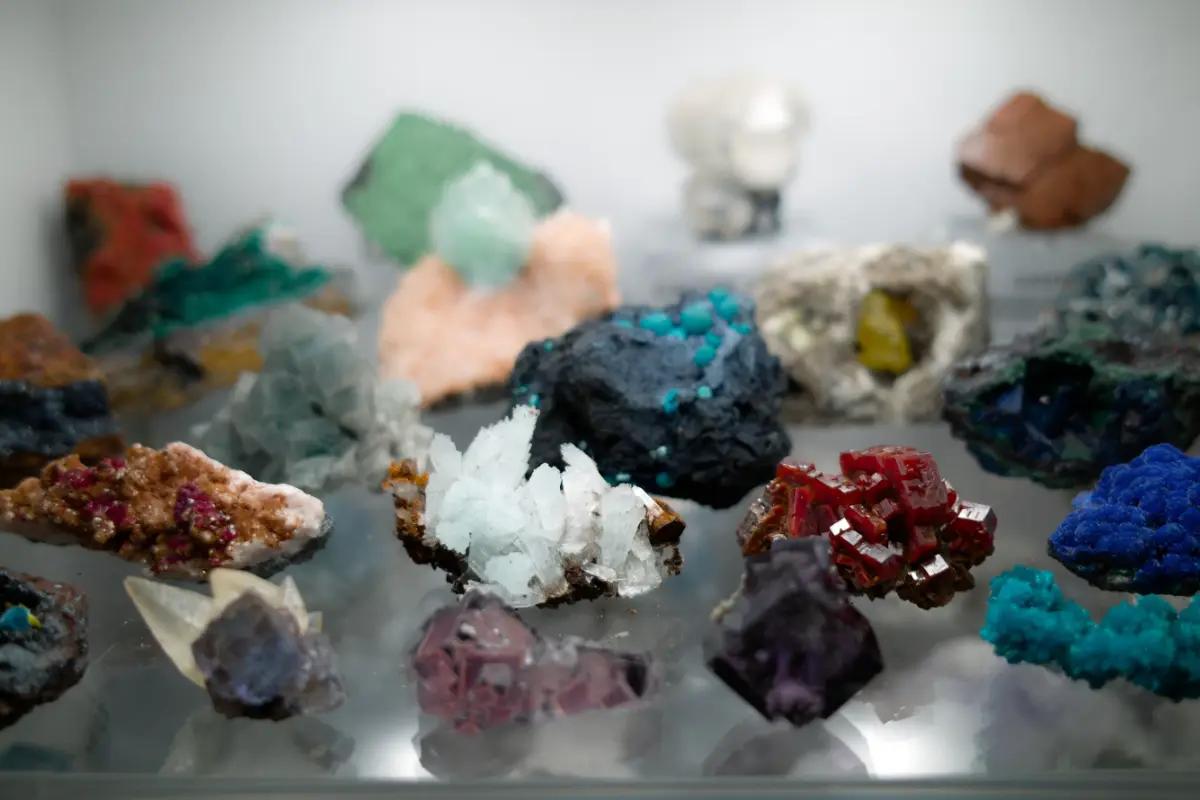
• Gemstones: Diamonds, rubies, sapphires, emeralds — a specialty mining segment with unique market dynamics.
Industry Characteristics
Mining is defined by extreme capital intensity (a new copper mine can cost $5-10 billion), long development timelines (10-20 years from discovery to production), geopolitical sensitivity (mineral deposits are where geology placed them — not always in politically stable regions), and cyclical commodity prices that drive boom-bust investment cycles. The industry is undergoing a fundamental transformation driven by the energy transition — demand for "green metals" (copper, lithium, nickel, cobalt, REEs) is projected to grow 4-6x by 2040. Simultaneously, the industry faces intense ESG scrutiny — carbon emissions, water usage, tailings management, biodiversity impact, and community relations are now as important as geology and metallurgy..
Automation and digitalization — autonomous haul trucks, remote operations centers, AI-driven exploration and mineral processing — are transforming productivity and safety.
The mining industry is being transformed by the convergence of digital technology, automation, and an increasingly urgent sustainability imperative — moving from a traditional "dig and ship" mentality to a technologically sophisticated, environmentally responsible industrial sector.
1. Exploration & Resource Definition
• Geophysical surveys: Modern exploration uses airborne magnetic, electromagnetic (EM), gravity, and radiometric surveys to identify subsurface mineral signatures. Hyperspectral imaging from satellites and drones maps mineralogy at regional scales.
• AI and machine learning: Mining companies now apply AI to integrate multiple geological, geophysical, and geochemical datasets to identify drill targets with higher probability of success. Companies like KoBold Metals (backed by Bill Gates and Jeff Bezos) use AI-driven exploration to discover critical minerals.
• Drilling technologies: Diamond core drilling, reverse circulation (RC) drilling, and sonic drilling are used for resource definition. Directional and deep-penetration drilling enables exploration at depths exceeding 2,000 meters.
2. Mining Methods
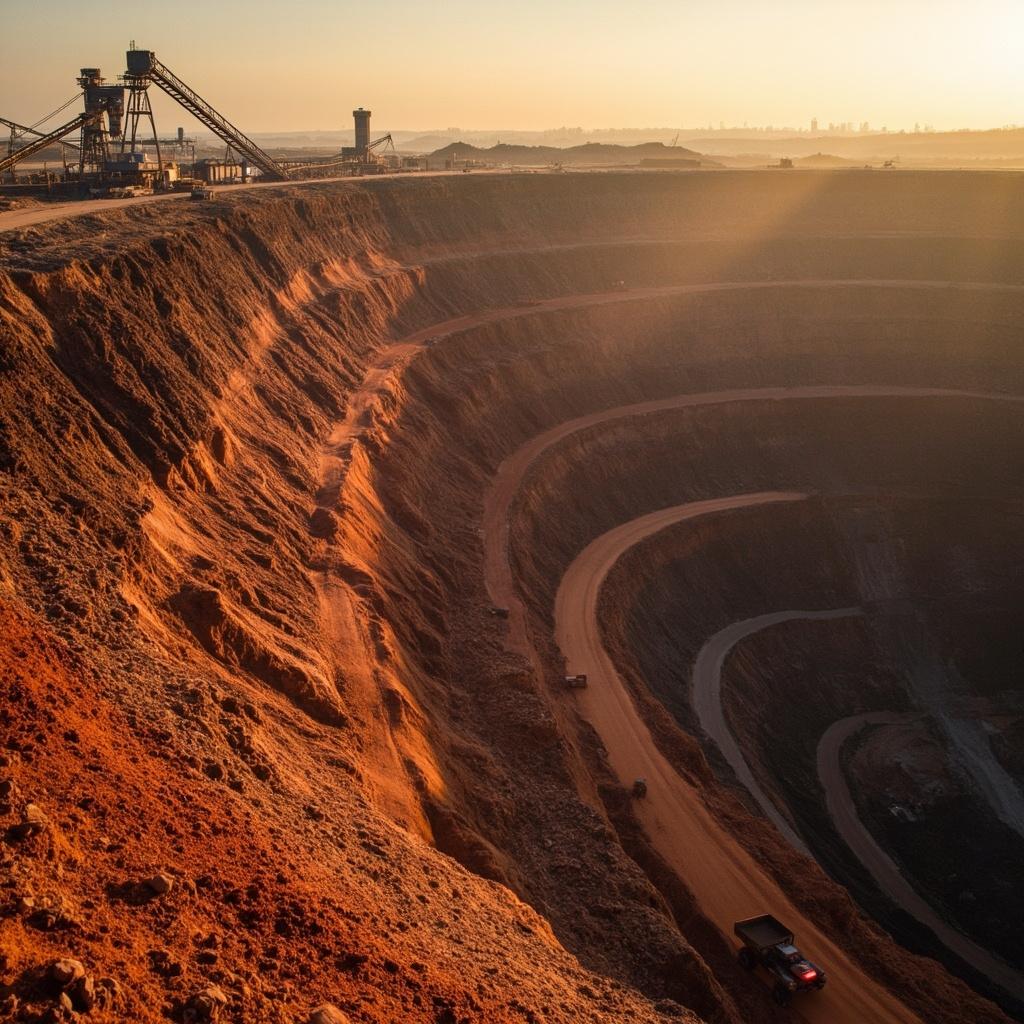
• Surface (Open-Pit) Mining: Accounts for ~80% of global metal production. Involves drilling, blasting, loading, and hauling overburden and ore. Modern open pits can exceed 1 km deep and 4 km wide (Bingham Canyon, Chuquicamata). Key technologies: autonomous haul trucks (Komatsu, Caterpillar — operating 24/7 with zero human drivers at sites like Rio Tinto''s Pilbara iron ore operations), autonomous drills, and dispatch optimization AI.
• Underground Mining: For deeper deposits — block caving, sublevel caving, cut-and-fill, and room-and-pillar methods. Automated longwall systems dominate coal mining. Battery-electric underground vehicles are replacing diesel to eliminate diesel particulate matter (DPM) exposure and reduce ventilation costs.
• In-Situ Recovery (ISR): Used for uranium and increasingly copper — injects leaching solution into the ore body through wells, pumps pregnant solution to surface for processing. Minimal surface disturbance, no waste rock, and lower energy use.
• Deep-Sea Mining: An emerging and controversial frontier — polymetallic nodules, cobalt-rich crusts, and seafloor massive sulfides contain significant critical mineral resources but face intense environmental opposition.
3. Mineral Processing & Metallurgy
• Comminution: Crushing and grinding — the most energy-intensive step, accounting for ~3-5% of global electricity consumption. Technologies like high-pressure grinding rolls (HPGR), stirred media mills, and microwave-assisted comminution reduce energy use by 30-50%.
• Flotation: The workhorse of sulfide mineral separation — uses chemical reagents (collectors, frothers, depressants) to selectively make target minerals hydrophobic, enabling separation in a froth phase.
• Hydrometallurgy: Leaching (heap, tank, pressure, bio-leaching) dissolves target metals from ore — critical for copper oxides, gold (cyanide), uranium, lithium, and REEs. Solvent extraction and electrowinning (SX-EW) produces high-purity copper cathode directly from leach solutions.
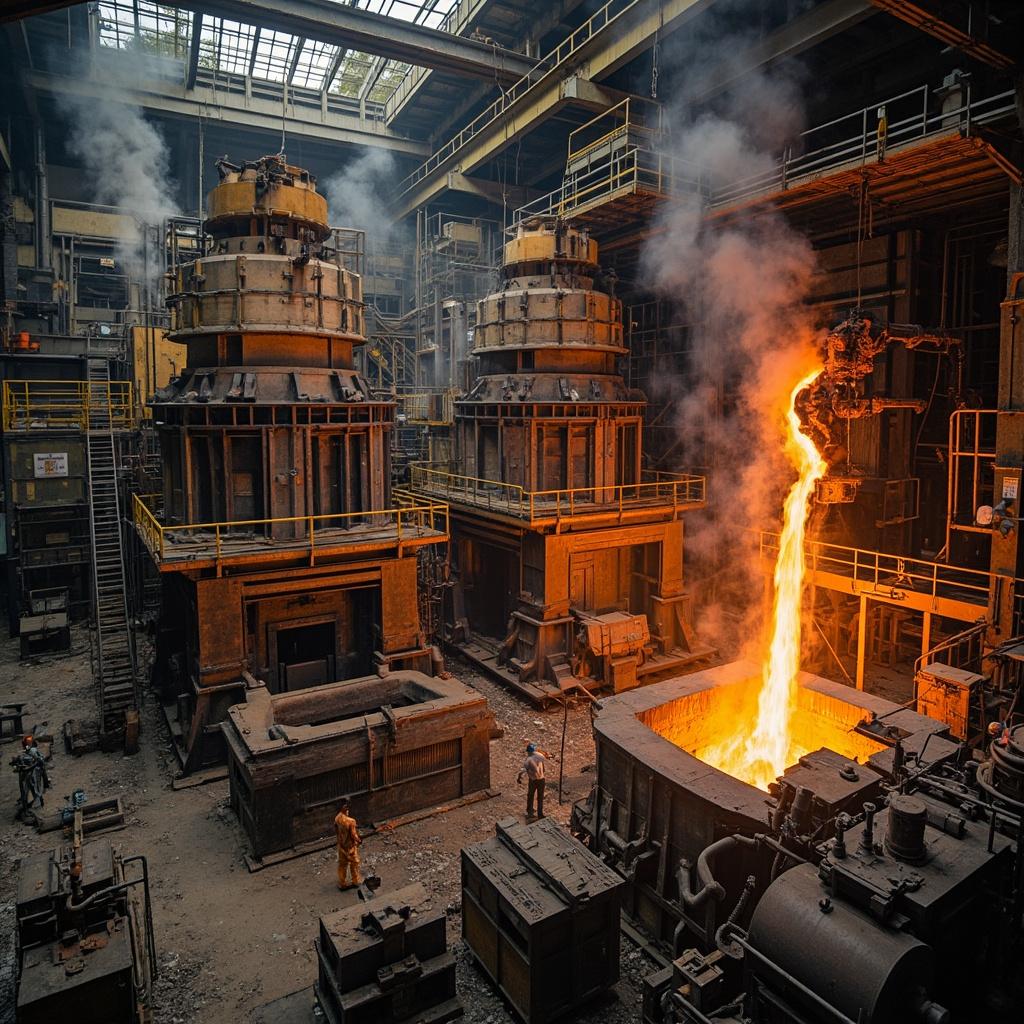
• Pyrometallurgy: High-temperature processing — smelting (iron blast furnaces, copper flash smelting), roasting, calcining, and refining. Electric arc furnaces are increasingly replacing fossil fuel-fired furnaces.
• Mineral Sorting: Sensor-based ore sorting (X-ray transmission, laser, near-infrared, color) separates ore from waste before processing, reducing energy and water consumption by 15-40%.
4. Tailings, Water & Environmental Management
• Tailings management: The Global Industry Standard on Tailings Management (GISTM), developed after the Brumadinho disaster, mandates zero-failure tolerance. Dry-stacked tailings, filtered tailings, and in-pit disposal are replacing conventional wet tailings dams. Satellite monitoring (InSAR) and real-time sensor networks provide early warning of structural issues.
• Water stewardship: Mining operations increasingly use closed-loop water systems, desalination (for Chilean copper mines), and dry processing to reduce freshwater consumption. Water reporting under frameworks like ICMM and CDP is becoming standard.
• Renewable energy: Mines are among the largest industrial energy consumers. Leading operators are transitioning to solar, wind, and battery storage hybrids — the BHP-Rio Tinto-Chile''s Escondida copper mine has committed to 100% renewable electricity. Green hydrogen is being piloted for haul truck fuel and processing heat.
Sourcing minerals and mining products — whether you''re a steel mill purchasing iron ore, a battery manufacturer securing lithium supply, or a construction company buying aggregates — requires navigating commodity price volatility, supply chain concentration risks, and increasingly stringent ESG requirements.
1. Supply Security & Concentration Risk
Critical minerals are often highly concentrated in a few countries: China controls ~60% of global rare earth mining and ~90% of processing; the Democratic Republic of Congo supplies ~70% of cobalt; Indonesia dominates nickel processing (over 40% of global capacity); Chile, Australia, and China account for ~90% of lithium production. Evaluate your supply chain''s geographic concentration and develop diversification strategies. Long-term offtake agreements with multiple suppliers across different jurisdictions provide supply security. For critical minerals, understand the geopolitical risk profile — sanctions, export controls, and resource nationalism can suddenly disrupt supply (Indonesia''s nickel ore export ban, China''s rare earth export controls).
2. Quality Specifications & Consistency
Mining products are natural materials — quality varies:
• Iron ore: Key specifications: Fe content (58-67%), silica, alumina, phosphorus, moisture, and physical characteristics (lump vs. fines ratio). Premium ores (>65% Fe) command significant price premiums as they reduce blast furnace coke consumption and emissions.
• Copper concentrate: Cu grade (20-40%), penalty elements (arsenic, mercury, bismuth, antimony), precious metals credits (gold, silver). High-arsenic concentrates face increasing smelter restrictions and discounts.
• Lithium: Spodumene concentrate (5.5-6% Li₂O) vs. lithium carbonate (battery-grade >99.5% Li₂CO₃) vs. lithium hydroxide (for high-nickel cathodes). Impurity profiles (sodium, potassium, calcium, magnesium, iron) critically affect battery performance.
• Steelmaking coal: Coking properties (CSR — Coke Strength after Reaction, CRI — Coke Reactivity Index), ash, sulfur, phosphorus, volatile matter, and fluidity. Blending different coals is common to achieve target coke quality.
3. ESG & Responsible Sourcing
• Tailings safety: After the Brumadinho (Vale, 2019 — 270 fatalities) and Mount Polley (2014) disasters, institutional investors and buyers increasingly require adherence to the Global Industry Standard on Tailings Management (GISTM) and independent third-party tailings audits.
• Conflict minerals: Dodd-Frank Section 1502 (US) and EU Conflict Minerals Regulation require due diligence on tin, tantalum, tungsten, and gold (3TG) from the DRC region. The scope is expanding — cobalt, lithium, and mica are under increasing scrutiny.
• Carbon footprint: Mining is energy-intensive. Understand the producer''s Scope 1 and 2 emissions intensity (CO₂ per ton of product), energy mix (renewable vs. fossil), and decarbonization roadmap. The CBAM (EU Carbon Border Adjustment Mechanism) will impose carbon costs on imports of iron/steel, aluminum, fertilizers, and cement from 2026 — increasing the premium on low-carbon production.
• Community relations and social license: Mining projects that lack community support face delays, shutdowns, and reputational damage. Evaluate Free, Prior, and Informed Consent (FPIC) with Indigenous communities, benefit-sharing agreements, local employment and procurement programs, and grievance mechanisms.
• Certification schemes: IRMA (Initiative for Responsible Mining Assurance), ICMM membership, TSM (Towards Sustainable Mining), RJC (Responsible Jewellery Council), and LBMA Responsible Gold Guidance provide frameworks for assessing responsible mining practices.
4. Commercial & Logistical Considerations
• Pricing mechanisms: Most metals are priced against exchange benchmarks — LME (London Metal Exchange) for base metals, COMEX (NYMEX) for gold/silver/copper, SGX and DCE for iron ore, and Fastmarkets/Platts/Argus/Asian Metal assessments for specialty and critical minerals. Understand the pricing formula: exchange price ± premium/discount for quality, delivery location, and market conditions.
• Logistics and infrastructure: Mining products are among the heaviest and most capital-intensive to transport. Evaluate port access, rail infrastructure, shipping routes (Panama Canal, Cape of Good Hope), and demurrage terms. Iron ore and coal are typically shipped in Capesize vessels (150,000-400,000 DWT), while concentrates use Handymax/Supramax (40,000-60,000 DWT).
• Hedging and price risk: Mining commodity prices can swing 50%+ in a year. Consider fixed-price contracts, index-linked with floors/caps, prepayment structures, or financial hedges (futures, options, swaps) to manage price risk.
The global mining industry is dominated by a handful of diversified majors, state-owned enterprises, and specialized producers that control the world''s most valuable mineral deposits and processing infrastructure. Understanding this competitive landscape is essential for procurement strategy and market analysis.
1. The Diversified Majors
• BHP Group (Australia): The world''s largest mining company by market capitalization (~$150B). Diversified across iron ore (Western Australia — the world''s lowest-cost major iron ore producer), copper (Escondida in Chile — the world''s largest copper mine, Spence, Olympic Dam), coal (metallurgical and thermal), and nickel. BHP''s strategy focuses on "future-facing commodities" — copper, nickel, and potash.
• Rio Tinto (UK/Australia): Second-largest mining company. Dominant in iron ore (Pilbara operations rival BHP), aluminum (integrated from bauxite mining through alumina refining to aluminum smelting), copper (Oyu Tolgoi in Mongolia — one of the world''s largest copper-gold deposits, Kennecott in Utah, Resolution in Arizona), and lithium (Rincon project in Argentina, Jadar project in Serbia — currently stalled). Rio Tinto also produces diamonds, titanium dioxide, and borates.
• Glencore (Switzerland): Unique among majors for its dominant commodity trading business alongside mining operations. Major producer of copper, cobalt (DRC — Mutanda, Katanga), zinc, nickel, and thermal coal. Glencore''s trading arm gives it unrivaled market intelligence and pricing power across dozens of commodities.
• Anglo American (UK/South Africa): Diversified across copper, platinum group metals (PGMs), diamonds (De Beers — 85% ownership), iron ore, and steelmaking coal. Currently undergoing a radical restructuring focused on copper, premium iron ore, and crop nutrients.
• Vale (Brazil): The world''s largest iron ore producer and a major nickel and copper producer. Vale''s Carajás mine in Brazil produces some of the world''s highest-grade iron ore (67%+ Fe). Vale is also a significant producer of nickel (Canada, Indonesia) and copper.
2. Regional & Commodity Specialists
• Fortescue Metals Group (Australia): The world''s fourth-largest iron ore producer, focused exclusively on Western Australia''s Pilbara region. Aggressively investing in green hydrogen and renewable energy through Fortescue Future Industries.
• Freeport-McMoRan (US): The world''s largest publicly traded copper producer, anchored by the Grasberg mine in Indonesia (the world''s second-largest copper mine and largest gold mine). Also operates major copper mines in North and South America.
• Newmont and Barrick Gold: The world''s two largest gold producers, with operations spanning the Americas, Africa, and Australia-Pacific.
• Albemarle, SQM, Ganfeng Lithium, Tianqi Lithium: The "Big Four" of lithium — controlling a significant share of global lithium extraction and processing capacity.
• MMC Norilsk Nickel (Russia): The world''s largest producer of palladium and high-grade nickel, and a major producer of platinum and copper. Sanctions and self-sanctioning by western buyers have significantly disrupted its market access since 2022.
• China''s State-Owned Enterprises: China Minmetals, Chinalco (Aluminum Corporation of China), Zijin Mining, CMOC (China Molybdenum) — Chinese SOEs have aggressively acquired mining assets globally, particularly in Africa (DRC cobalt/copper, Guinea bauxite) and South America (Peru copper, Argentina lithium). China''s control over rare earth mining and processing (~60% of mining, ~90% of processing) makes it uniquely dominant in this critical mineral category.
3. Key Mining Jurisdictions
• Australia: The world''s leading mining jurisdiction — largest exporter of iron ore, lithium, and metallurgical coal; second-largest exporter of bauxite; top-5 producer of gold, copper, nickel, zinc, and rare earths. Attractive regulatory framework, skilled workforce, and proximity to Asian markets.
• Chile: World''s largest copper producer (~27% of global supply) and second-largest lithium producer. Stable mining investment framework, though recent royalty increases and constitutional reform discussions create policy uncertainty.
• Peru: Second-largest copper producer, major producer of gold, zinc, and silver. Political instability and community opposition have challenged recent mining investments.
• Democratic Republic of Congo: Dominant in cobalt (~70% of global supply) and a major copper producer. Significant governance, infrastructure, and human rights challenges.
• Indonesia: World''s largest nickel producer (driven by Chinese investment in nickel processing — HPAL and RKEF) and a major coal, copper (Grasberg), and tin producer. Resource nationalism — export bans on unprocessed minerals — has forced downstream investment but created supply chain concentration risks.
• Canada, USA, Brazil, South Africa, Russia, Kazakhstan: All major diversified mining jurisdictions with distinct strengths and risk profiles.
Strategic Implications
The mining industry is entering a super-cycle driven by the energy transition — demand for copper, lithium, nickel, cobalt, rare earths, and graphite will grow 4-6x by 2040. Supply responses are constrained by long development timelines, declining ore grades, and ESG pressures. This structural supply-demand imbalance creates both opportunities (for producers with quality assets) and risks (for buyers facing supply scarcity and price volatility). Resource nationalism, supply chain regionalization, and ESG requirements will be the defining themes of mining procurement for the next decade.