We Use Cookies 🍪
We Use Cookies And Other Similar Technologies To Improve Your Browsing Experience And The Functionality Of Our Site. Learn More In Our Privacy Policy.

Rankings of Factories in the Men's Apparel Industry

Last Updated: March 25, 2026


Welcome to the Global "Men's Apparel Industry Factory Ranking" by Verity Rank.
The logo on the tag shines bright, but what truly defines a garment's quality is often a name you've never heard: the manufacturer. They are the deep roots of the fashion industry, the silent giants behind the brands. The Dri-FIT technology in your Nike training tee was likely born in a Shenzhou International lab. The perfect oxford cloth in your Ralph Lauren shirt probably came from a Lu Thai loom.
The world's irony is this: we cheer for the stars on stage, but rarely shine a light on the artisans who build it. Whether it's fast fashion's 7-day delivery or luxury's century-old craftsmanship, it's all powered by the manufacturers' silent revolutions—from waterless dyeing technology to 48-hour quick-response smart factories, and global production networks spanning Asia.
This ranking is our tribute to these "hidden champions." We venture deep into factory hubs in Ningbo, Dongguan, and Shandong, and travel to vast campuses in Vietnam and Bangladesh, using data to measure their true capabilities:
• Vertical Integration Depth: Are they simple assemblers or do they control the entire chain?
• Technology & Innovation: How many patents do they hold?
• Client Stickiness: Why can't giants like Nike or Uniqlo operate without them?
• Global Capacity Footprint: How resilient is their production network?
Here, we don't tell brand stories; we reveal manufacturing truths. Because the starting point of a great garment isn't on a designer's sketchpad, but beneath the needle of a sewing machine in a factory.
Disclaimer: This ranking is compiled from authoritative third-party sources, including corporate financial reports, industry association capacity data, global supply chain ESG audits, academic textile engineering research, and supplier scorecards from key clients like Nike and Uniqlo. The results are based on a multi-dimensional algorithmic model for reference and business decision support only, and do not constitute direct investment advice.

Shenzhou International Group

Shenzhou International Group Holdings Limited is the "invisible champion" of global knitwear manufacturing, headquartered in Ningbo, Zhejiang, China. As a Hong Kong Stock Exchange-listed company (SEHK:02313), its core business focuses on Textile & Apparel categories including men's performance T-shirts, women's yoga wear, underwear, and loungewear, providing vertically integrated OEM/ODM services from fabric R&D, dyeing and finishing to garment sewing for global sportswear brands like Nike, Uniqlo, Adidas, and Puma. In 2025, Shenzhou achieved estimated revenue of RMB 32.5-34 billion, employing over 110,000 people across 13 large-scale integrated factories in Ningbo, Anhui, Vietnam, and Cambodia, producing approximately 550 million garments and 250,000 tons of fabric annually. Its top four clients contribute about 82% of revenue. Leveraging ultimate vertical integration efficiency and quick response capabilities, Shenzhou defines the manufacturing benchmark behind global brands.
Strengths: Shenzhou's core strength in Textile & Apparel lies in its extreme vertical integration model, controlling the entire value chain from fabric R&D, dyeing and finishing to garment sewing, building a triple moat of efficiency, quality, and cost in knitwear categories like performance T-shirts and yoga wear. Annual production scale of 550 million garments and 250,000 tons of fabric, combined with overseas capacity in Vietnam and Cambodia, makes it an irreplaceable core supplier for global brands like Nike and Uniqlo, with its share in client supply chains growing through shortened lead times and quick response capabilities.
Weaknesses: Shenzhou's main weaknesses stem from its business model's heavy reliance on its top four clients (Nike, Adidas, Uniqlo, Puma), with customer concentration reaching 82%, making performance highly susceptible to core brand order fluctuations. As a B2B manufacturer lacking end-consumer brand recognition, its gross margin is compressed by rising labor costs and initial depreciation of overseas new factories, slightly declining to 27.1% in H1 2025. It also faces uncertainty risks from cross-border raw material tariffs amid changing global trade environments.
Shenzhou
Shenzhou
Brand Name
Ningbo, Zhejiang Province, China
Address
2005
Founded
110K+
Number of Employees
3+ Countries
Core Production and Operation Countries
13+ Factory
Large-scale Integrated Production Base
Official Website
Men's Clothing Industry
Men's Tops Industry
Polo Shirt
Men's Knitted Top
Men's Casual Wear
Men's Sports T-shirt
Men's Sportswear Industry
Women's Clothing Industry
Women's Tops Industry
Women's Vest
Women's Knitted Top
Ladies' Sports T-shirt
Women's Activewear Industry
Yoga Wear
Intimates & Hosiery Industry
Women's Underwear Industry
Men's Underwear Industry
Sports Bra
Homewear
Loungewear & Sleepwear Industry Sustainable Fashion Industry
Loungewear Industry
Recycled Fabrics Industry
Men's Clothing Industry
Men's Tops Industry
Polo Shirt
Men's Knitted Top
Men's Casual Wear
Men's Sports T-shirt
Men's Sportswear Industry
Women's Clothing Industry
Women's Tops Industry
Women's Vest
Women's Knitted Top
Ladies' Sports T-shirt
Women's Activewear Industry
Yoga Wear
Intimates & Hosiery Industry
Women's Underwear Industry
Men's Underwear Industry
Sports Bra
Homewear
Loungewear & Sleepwear Industry Sustainable Fashion Industry
Loungewear Industry
Recycled Fabrics Industry

Crystal International Group Limited

Crystal International Group Limited is a globally leading apparel manufacturer headquartered in Hong Kong, listed on the Hong Kong Stock Exchange. Employing a vertically integrated model, it provides design and manufacturing services for international brands like UNIQLO, specializing in casualwear, sportswear and intimates. With 20 production bases across Vietnam, China, Cambodia and other locations, it employs ~70,000 people, reported $2.5 billion revenue in 2024, and has an annual capacity of ~400 million garments. Leveraging its vertical integration, global footprint and leading sustainability practices, it maintains an important competitive position in global apparel manufacturing.
Strengths: Crystal International's core strengths are its strong vertical integration enabling end-to-end services from fabric development to garment manufacturing; significant global footprint with 70% capacity in Vietnam and other strategic locations effectively diversifying risks; leading sustainability practices with notable achievements in eco-certifications and carbon reduction recognized by brand clients.
Weaknesses: Crystal International faces persistent cost control pressures from rising labor and material costs impacting profitability; international trade environment uncertainties with geopolitical factors affecting global supply chain stability; intensifying industry competition squeezing profit margins while relatively low OEM model margins constrain development.
Crystal Group
Crystal Group
Brand Name
Hong Kong, China
Hong Kong, China
Address
1970
Founded
70K+
Number of Employees
7+ Countries
Business Scope
20+ Factory
Processing Facilities
Official Website
Men's Clothing Industry
Men's Tops Industry
Men's Knitwear
Men's T-shirt
Men's Casual Wear
Polo Shirt
Men's Sportswear Industry
Women's Clothing Industry
Women's Tops Industry
Ladies' Knitted Sweater
Women's T-shirt
Ladies' Casual Wear
Dresses & Skirts Industry
Dress
Women's Pants Industry
Women's Activewear Industry
Intimates & Hosiery Industry
Women's Underwear Industry
Men's Underwear Industry
Loungewear & Sleepwear Industry
Loungewear Industry
Sustainable Fashion Industry
Recycled Fabrics Industry
Men's Clothing Industry
Men's Tops Industry
Men's Knitwear
Men's T-shirt
Men's Casual Wear
Polo Shirt
Men's Sportswear Industry
Women's Clothing Industry
Women's Tops Industry
Ladies' Knitted Sweater
Women's T-shirt
Ladies' Casual Wear
Dresses & Skirts Industry
Dress
Women's Pants Industry
Women's Activewear Industry
Intimates & Hosiery Industry
Women's Underwear Industry
Men's Underwear Industry
Loungewear & Sleepwear Industry
Loungewear Industry
Sustainable Fashion Industry
Recycled Fabrics Industry

Gildan Activewear Inc.

Gildan Activewear Inc. is a world-leading vertically integrated manufacturer of activewear and basic apparel, headquartered in Montreal, Quebec, Canada. Its core business focuses on blank T‑shirts, fleece, bottoms, underwear, and hosiery serving the B2B printwear market, wholesale distributors, and major retailers. Estimated 2025 revenue reached approximately $3.4–$3.5 billion (excluding HanesBrands), with ~49,000 employees and nearly 30 self‑owned factories. Listed on the TSX and NYSE (NYSE : GIL), Gildan completed the acquisition of HanesBrands in late 2025, creating a combined entity with ~$6.9 billion annual revenue, further solidifying its dominance in basics through end‑to‑end vertical integration and a strong commitment to sustainability.
Strengths: Gildan’s core strengths lie in its rare, fully integrated manufacturing model—self‑owned factories contribute over 90% of sales, delivering unparalleled cost control and consistent quality; as the world’s largest supplier of blank apparel, it holds near‑monopoly scale and channel dominance in the B2B printwear market; the 2025 HanesBrands acquisition integrates iconic labels (Hanes, American Apparel), making underwear/hosiery a robust second pillar and creating a full‑category moat from basics to innerwear.
Weaknesses: Gildan’s main weaknesses stem from its long‑standing B2B/wholesale orientation, resulting in weak brand recognition and fashion appeal in direct‑to‑consumer channels; business is heavily concentrated in North America, with insufficient localized depth in emerging markets despite a broad distribution network; the 2024–2025 proxy fight incurred significant costs, and exposure to U.S. tariff policy shifts adds geopolitical supply‑chain risk; licensing volatility (e.g., termination of the Under Armour sock license) temporarily disrupts revenue streams.
Gildan
Gildan
Brand Name
Montreal, Quebec, Canada
Address
1984
Founded
49K+
Number of Employees
60+ Countries
Business Scope
30+ Factories
Production Base
Official Website
Men's Clothing Industry
Men's Tops Industry
Men's Outerwear Industry
Men's Bottoms Industry
Men's Sportswear Industry
Women's Clothing Industry
Women's Tops Industry
Women's Outerwear Industry
Women's Pants Industry
Women's Activewear Industry
Intimates & Hosiery Industry
Women's Underwear Industry
Men's Underwear Industry
Basic Hosiery Industry
Children's Everyday Wear Industry
Fashion Accessories Industry
Head Accessories Industry
Neck Accessories Industry
Wrist & Hand Industry
Loungewear & Sleepwear Industry
Sleep Sets Industry
Loungewear Industry
Custom & Group Apparel Industry
Group Uniforms Industry
Personalized Gear Industry
Men's Clothing Industry
Men's Tops Industry
Men's Outerwear Industry
Men's Bottoms Industry
Men's Sportswear Industry
Women's Clothing Industry
Women's Tops Industry
Women's Outerwear Industry
Women's Pants Industry
Women's Activewear Industry
Intimates & Hosiery Industry
Women's Underwear Industry
Men's Underwear Industry
Basic Hosiery Industry
Children's Everyday Wear Industry
Fashion Accessories Industry
Head Accessories Industry
Neck Accessories Industry
Wrist & Hand Industry
Loungewear & Sleepwear Industry
Sleep Sets Industry
Loungewear Industry
Custom & Group Apparel Industry
Group Uniforms Industry
Personalized Gear Industry

Kering S.A.

Kering S.A. is a global leading luxury group headquartered in Paris, France, and listed on Euronext Paris. Operating as a “house of brands,” Kering's core business is brand portfolio management—it does not manufacture products but strategically acquires, owns, and empowers a collection of premier luxury houses including Gucci, Saint Laurent, Balenciaga, Bottega Veneta, and Boucheron. The group focuses on fashion, leather goods, jewelry, and watches, generating €19.95 billion in revenue in 2024 (down 4% on a comparable basis), solidifying its position as the world's second-largest luxury conglomerate. Its central strategy is to provide centralized operational and financial support while preserving each brand’s creative autonomy, with a growing emphasis on developing its jewelry division as a key future growth pillar and driving sustainability transformation across the group.
Strengths: Kering's core strengths lie in its portfolio of iconic, trend-defining luxury brands with a clear strategic hierarchy, coupled with a proven, exceptional track record in brand revitalization and value creation; furthermore, its sophisticated group platform provides comprehensive strategic empowerment—from retail networks to digital innovation—for its brands, supported by a powerful network of creative talents that continuously drives industry influence.
Weaknesses: Kering's main weaknesses are its excessive dependence on the performance of its flagship brand, Gucci, whose current transformative phase introduces significant earnings volatility and uncertainty for the entire group; simultaneously, the group is highly vulnerable to consumer sentiment shifts in key markets (notably Greater China) and faces intensely fierce direct competition from giants like LVMH across all major product categories.
Kering
Kering
Brand Name
Paris, France
Paris, France
Address
1962
Founded
47K+
Number of Employees
120+ Countries
Business Scope
1700+ Stores
Global Stores
Official Website
Men's Clothing Industry
Men's Tops Industry
Men's Outerwear Industry
Men's Bottoms Industry
Men's Formalwear Industry
Women's Clothing Industry
Women's Tops Industry
Dresses & Skirts Industry
Women's Outerwear Industry
Women's Pants Industry
Formalwear Industry
Footwear Industry
Men's Shoes Industry
Women's Shoes Industry
Athletic Shoes Industry
Luggage & Accessories Industry
Backpacks Industry
Handbags Industry
Luggage Industry
Wallets & Card Holders Industry
Intimates & Hosiery Industry
Women's Underwear Industry
Men's Underwear Industry
Fashion Accessories Industry
Head Accessories Industry
Neck Accessories Industry
Waist Belts Industry
Sustainable Fashion Industry
Organic Materials Industry
Recycled Fabrics Industry
Biodegradable Industry
Natural Dyes Industry
Closed-Loop Industry
Eco-Innovation Industry
Men's Clothing Industry
Men's Tops Industry
Men's Outerwear Industry
Men's Bottoms Industry
Men's Formalwear Industry
Women's Clothing Industry
Women's Tops Industry
Dresses & Skirts Industry
Women's Outerwear Industry
Women's Pants Industry
Formalwear Industry
Footwear Industry
Men's Shoes Industry
Women's Shoes Industry
Athletic Shoes Industry
Luggage & Accessories Industry
Backpacks Industry
Handbags Industry
Luggage Industry
Wallets & Card Holders Industry
Intimates & Hosiery Industry
Women's Underwear Industry
Men's Underwear Industry
Fashion Accessories Industry
Head Accessories Industry
Neck Accessories Industry
Waist Belts Industry
Sustainable Fashion Industry
Organic Materials Industry
Recycled Fabrics Industry
Biodegradable Industry
Natural Dyes Industry
Closed-Loop Industry
Eco-Innovation Industry

LVMH Moët Hennessy Louis Vuitton SE

LVMH Moët Hennessy Louis Vuitton SE is the absolute global leader in the high-end consumer goods industry, headquartered in Paris, France. As a publicly traded European company (Euronext Paris: LVMH), its core business is centered on Textile & Apparel and leather goods. In 2025, despite market adjustments, the group achieved €80.8 billion in revenue, with its Fashion & Leather Goods division, the primary profit engine, contributing 74% of operating profit. Its flagship brand, Louis Vuitton, retained the global fashion crown with a brand value of $40.7 billion. Operating 6,283 boutiques across 81 countries and leveraging the vertical integration of 117 French artisan workshops, LVMH defines the standards of global luxury fashion in women's wear, footwear, and its absolute core: leather bags and accessories.
Strengths: LVMH's core strength in Textile & Apparel lies in its monopolistic matrix of prestigious brands like Louis Vuitton and Dior, enabling full-chain vertical integration from design to production for women's wear, footwear, and its profit cornerstone, leather goods. This, combined with the artisanal mastery of its French ateliers and traceability of premium raw materials, creates an unassailable brand premium and high industry barriers.
Weaknesses: LVMH's primary weakness is its hypersensitivity to macroeconomic fluctuations due to its ultra-luxury positioning, evidenced by a 5% revenue decline in its core Fashion & Leather Goods division in 2025, revealing vulnerability during economic downturns. Furthermore, its core business is heavily concentrated on Western European artisanal capacity, creating potential operational risks from over-reliance on a single manufacturing region amid geopolitical tensions and global supply chain restructuring.
Louis Vuitton
Louis Vuitton
Brand Name
Paris, France
Paris, France
Address
1987
Founded
215K+
Number of Employees
81+ Countries
Business Scope
117+ Workshop
Handmade Production Workshop in Mainland France
Official Website
Men's Clothing Industry
Men's Tops Industry
Men's Outerwear Industry
Men's Bottoms Industry
Men's Formalwear Industry
Men's Sportswear Industry
Women's Clothing Industry
Women's Tops Industry
Dresses & Skirts Industry
Women's Outerwear Industry
Women's Pants Industry
Formalwear Industry
Footwear Industry
Men's Shoes Industry
Women's Shoes Industry
Athletic Shoes Industry
Luggage & Accessories Industry
Backpacks Industry
Handbags Industry
Luggage Industry
Wallets & Card Holders Industry
Specialty Bags Industry
Fashion Accessories Industry
Head Accessories Industry
Neck Accessories Industry
Waist Belts Industry
Formal Neckwear Industry
Wrist & Hand Industry
Designer Collabs Accessories Industry
Sustainable Fashion Industry
Organic Materials Industry
Men's Clothing Industry
Men's Tops Industry
Men's Outerwear Industry
Men's Bottoms Industry
Men's Formalwear Industry
Men's Sportswear Industry
Women's Clothing Industry
Women's Tops Industry
Dresses & Skirts Industry
Women's Outerwear Industry
Women's Pants Industry
Formalwear Industry
Footwear Industry
Men's Shoes Industry
Women's Shoes Industry
Athletic Shoes Industry
Luggage & Accessories Industry
Backpacks Industry
Handbags Industry
Luggage Industry
Wallets & Card Holders Industry
Specialty Bags Industry
Fashion Accessories Industry
Head Accessories Industry
Neck Accessories Industry
Waist Belts Industry
Formal Neckwear Industry
Wrist & Hand Industry
Designer Collabs Accessories Industry
Sustainable Fashion Industry
Organic Materials Industry

Anta Sports Products Limited

Anta Sports Products Limited is China's leading and globally top-three comprehensive sports goods group, headquartered in Fujian, founded in 1991, and listed on the Hong Kong Stock Exchange (2020.HK) in 2007. With a "single-focus, multi-brand, omni-channel" strategy, its portfolio includes Anta, FILA, Descente, Kolon, Arc'teryx (Amer Sports), and the newly acquired Jack Wolfskin (2025) and a stake in PUMA (2026). In 2025, group revenue reached approximately RMB 75–78 billion, with over 13,000 stores globally, ~65,000 employees, and annual footwear/apparel capacity of 140 million pairs and 100 million pieces respectively. As an official IOC uniform supplier, Anta is accelerating its transformation from a Chinese champion into a world-class sports group through multi-brand synergy and global M&A.
Strengths: Anta's core strengths lie in its exceptional multi-brand operation capabilities and global M&A integration expertise, leveraging the Anta, FILA, Descente, and Arc'teryx brand matrix to precisely target mass, fashion, and premium outdoor segments—strengthened by the 2025 PUMA stake acquisition and Jack Wolfskin purchase; its DTC transformation has achieved ~90% direct sales, demonstrating industry-leading channel control; deep partnerships with top IPs like NBA's Kyrie Irving and its role as consecutive Olympic Games uniform supplier build a formidable professional image moat; MSCI ESG rating upgraded to AA, highlighting outstanding supply chain sustainability.
Weaknesses: Anta's main weaknesses include inventory pressure, with average turnover days rising to 136 in 2025, presenting ongoing de-stocking challenges; multi-brand integration complexity, with FILA's growth slowing and newly acquired brands like Jack Wolfskin requiring time to digest; overseas expansion remains nascent, with brand awareness in Western markets far behind Nike and Adidas; R&D investment ratio still trails international giants, requiring continuous catch-up in core technologies for premium professional segments.
Anta
Anta
Brand Name
Quanzhou, Fujian Province, China
Address
1991
Founded
65K+
Number of Employees
30+ Countries
Business Scope
1000+ Factory
Group Supply Chain Network
Official Website
Men's Clothing Industry
Men's Sportswear Industry
Women's Clothing Industry
Women's Activewear Industry
Footwear Industry
Athletic Shoes Industry
Luggage & Accessories Industry
Backpacks Industry
Specialty Bags Industry
Intimates & Hosiery Industry
Basic Hosiery Industry
Functional Socks Industry
Sports & Outdoor Gear Industry
Sports Apparel Industry
Outerwear Industry
Footwear Industry
Performance Accessories Industry
Sports Equipment Industry
Kids & Baby Clothing Industry
Children's Everyday Wear Industry
Functional Wear Industry
Fashion Accessories Industry
Head Accessories Industry
Technical Fabrics Industry
Custom & Group Apparel Industry
Group Uniforms Industry
Sustainable Fashion Industry
Recycled Fabrics Industry
Men's Clothing Industry
Men's Sportswear Industry
Women's Clothing Industry
Women's Activewear Industry
Footwear Industry
Athletic Shoes Industry
Luggage & Accessories Industry
Backpacks Industry
Specialty Bags Industry
Intimates & Hosiery Industry
Basic Hosiery Industry
Functional Socks Industry
Sports & Outdoor Gear Industry
Sports Apparel Industry
Outerwear Industry
Footwear Industry
Performance Accessories Industry
Sports Equipment Industry
Kids & Baby Clothing Industry
Children's Everyday Wear Industry
Functional Wear Industry
Fashion Accessories Industry
Head Accessories Industry
Technical Fabrics Industry
Custom & Group Apparel Industry
Group Uniforms Industry
Sustainable Fashion Industry
Recycled Fabrics Industry

Youngor Group Co., Ltd.​

Youngor Group Co., Ltd. is a diversified industrial group headquartered in Ningbo, China, and listed on the Shanghai Stock Exchange (SSE: 600177). The group operates under a unique "trinity" business model, with branded apparel as its core, complemented by real estate development and financial investments. In the apparel sector, Youngor has achieved vertical integration spanning from the cultivation of special fibers like hemp, through high-end fabric R&D, to intelligent garment manufacturing and retail. Its flagship brand is the absolute leader in the Chinese men's dress shirt and suit market. With total revenue reaching RMB 14.36 billion in 2024, the group demonstrates the robust strength of a domestic industrial giant through deep vertical integration and synergistic diversification, while simultaneously facing the critical challenge of brand rejuvenation and intergenerational appeal.
Strengths: Youngor's core strengths are its unparalleled vertically integrated apparel supply chain, which creates deep moats in quality, cost, and supply chain resilience; concurrently, its "trinity" business model of "apparel + real estate + investment" provides stable cash flow and risk-hedging capabilities, granting profound financial foundation and strategic patience for its core business development.
Weaknesses: Youngor's main weaknesses lie in the relatively traditional and aging image of its flagship brand, presenting a significant challenge in attracting younger consumers and achieving intergenerational renewal; its heavy reliance on the domestic market makes it vulnerable to local economic cycles and consumption trends, while the management complexity of its diversified operations and the cyclical volatility of its real estate segment pose additional operational risks.
Youngor
Youngor
Brand Name
Ningbo, Zhejiang, China
Address
1979
Founded
20K+
Number of Employees
Nationwide, China
Business Scope
5+ Production Base
Production Facilities
Official Website
Men's Clothing Industry
Men's Tops Industry
Men's Outerwear Industry
Men's Bottoms Industry
Men's Formalwear Industry
Women's Clothing Industry
Women's Tops Industry
Dresses & Skirts Industry
Women's Outerwear Industry
Intimates & Hosiery Industry
Men's Underwear Industry
Functional Socks Industry
Fashion Accessories Industry
Neck Accessories Industry
Formal Neckwear Industry
Custom & Group Apparel Industry
Personalized Gear Industry Rankings
Men's Clothing Industry
Men's Tops Industry
Men's Outerwear Industry
Men's Bottoms Industry
Men's Formalwear Industry
Women's Clothing Industry
Women's Tops Industry
Dresses & Skirts Industry
Women's Outerwear Industry
Intimates & Hosiery Industry
Men's Underwear Industry
Functional Socks Industry
Fashion Accessories Industry
Neck Accessories Industry
Formal Neckwear Industry
Custom & Group Apparel Industry
Personalized Gear Industry Rankings

Lu Thai Textile Co., Limited

Lu Thai Textile Co., Limited is a globally leading premium yarn-dyed fabric manufacturer headquartered in Zibo, Shandong, listed on the Shenzhen Stock Exchange. It employs a vertically integrated model covering the entire chain from spinning, weaving, dyeing to garment manufacturing, specializing in high-end yarn-dyed fabrics and shirts. Operating in global major markets with 8 production bases and ~15,000 employees, it reported RMB 8.5 billion revenue in 2024 with annual fabric capacity of 200 million meters. Leveraging its complete industrial chain integration, advanced R&D capabilities, and premium client resources, it maintains absolute leadership in the global yarn-dyed fabric market.
Strengths: Lu Thai's core strengths are its comprehensive vertical integration enabling full control from spinning to garments, ensuring excellent quality stability and rapid response; leading R&D capabilities with 500+ valid patents and sustained investment; premium client resources maintaining long-term partnerships with international brands like UNIQLO and Burberry.
Weaknesses: Lu Thai faces raw material price volatility, particularly cotton costs directly impacting profitability; persistent cost pressures from rising energy, labor, and environmental investments; international trade uncertainties from exchange rate fluctuations and geopolitical factors affecting global business stability.
Lutal
Lutal
Brand Name
Zibo City, Shandong Province, China
Address
1987
Founded
15K+
Number of Employees
Nationwide, China
Business Scope
8+ Factory
Production Facilities
Official Website
Men's Clothing Industry
Men's Tops Industry
Men's Formalwear Industry
Women's Clothing Industry
Women's Tops Industry
Home Textiles & Fabrics​​ Industry
Bedding Sets Industry
Protective Products Industry
Technical Fabrics Industry
Custom & Group Apparel Industry
Corporate Workwear Industry
Group Uniforms Industry
Sustainable Fashion Industry
Recycled Fabrics Industry
Natural Dyes Industry
Men's Clothing Industry
Men's Tops Industry
Men's Formalwear Industry
Women's Clothing Industry
Women's Tops Industry
Home Textiles & Fabrics​​ Industry
Bedding Sets Industry
Protective Products Industry
Technical Fabrics Industry
Custom & Group Apparel Industry
Corporate Workwear Industry
Group Uniforms Industry
Sustainable Fashion Industry
Recycled Fabrics Industry
Natural Dyes Industry

Industria de Diseño Textil, S.A. (Inditex S.A.)

Inditex S.A. is the world’s largest fashion retail group, headquartered in Arteixo, Spain, and listed on the Madrid Stock Exchange (BME: ITX). As the pioneer of the fast-fashion business model, the group centers around its flagship brand ZARA and has built an ultra-rapid, vertically integrated system—from design and collaborative external production to proprietary advanced logistics (e.g., the “City of Fashion” hub) and a fully owned retail network—enabling a weeks-long journey from concept to store. Its multi-brand portfolio (including Massimo Dutti, Bershka, etc.) comprehensively covers men’s, women’s, and children’s apparel, homeware, and beauty, generating a record €35.9 billion in revenue in FY2024 and defining the global mass fashion industry with its unparalleled supply chain speed, operational efficiency, and full-price selling capability.
Strengths: Inditex's core strengths are its unparalleled supply chain speed and flexibility, which form its deepest competitive moat; its powerful vertical integration and fully owned retail model enable complete control over consumer experience, profit, and data flow; coupled with exceptional financial performance and a healthy multi-brand synergy, these underpin its global leadership.
Weaknesses: Inditex's main weaknesses stem from growing environmental and ethical consumer criticism of its fast-fashion model, presenting significant pressure for sustainable transformation; as the world's largest retailer, growth space in its core markets is gradually narrowing; simultaneously, it faces intense, multi-front competition from emerging online ultra-fast-fashion players and the digital transformation of traditional brands.
Inditex
Inditex
Brand Name
Arteixo, Galicia, Spain
Address
1985
Founded
160K+
Number of Employees
200+ Countries
Business Scope
5800+ Stores
Global Stores
Official Website
Men's Clothing Industry
Men's Tops Industry
Men's Outerwear Industry
Men's Bottoms Industry
Men's Sportswear Industry
Women's Clothing Industry
Women's Tops Industry
Dresses & Skirts Industry
Women's Outerwear Industry
Women's Pants Industry
Formalwear Industry
Women's Activewear Industry
Swimwear Industry
Footwear Industry
Men's Shoes Industry
Women's Shoes Industry
Athletic Shoes Industry
Luggage & Accessories Industry
Backpacks Industry
Handbags Industry
Wallets & Card Holders Industry
Intimates & Hosiery Industry
Women's Underwear Industry
Men's Underwear Industry
Basic Hosiery Industry
Kids & Baby Clothing Industry
Infant Clothing Industry
Children's Everyday Wear Industry
Fashion Accessories Industry
Head Accessories Industry
Neck Accessories Industry
Waist Belts Industry
Wrist & Hand Industry
Loungewear & Sleepwear Industry
Sleep Sets Industry
Loungewear Industry
Sustainable Fashion Industry
Recycled Fabrics Industry
Men's Clothing Industry
Men's Tops Industry
Men's Outerwear Industry
Men's Bottoms Industry
Men's Sportswear Industry
Women's Clothing Industry
Women's Tops Industry
Dresses & Skirts Industry
Women's Outerwear Industry
Women's Pants Industry
Formalwear Industry
Women's Activewear Industry
Swimwear Industry
Footwear Industry
Men's Shoes Industry
Women's Shoes Industry
Athletic Shoes Industry
Luggage & Accessories Industry
Backpacks Industry
Handbags Industry
Wallets & Card Holders Industry
Intimates & Hosiery Industry
Women's Underwear Industry
Men's Underwear Industry
Basic Hosiery Industry
Kids & Baby Clothing Industry
Infant Clothing Industry
Children's Everyday Wear Industry
Fashion Accessories Industry
Head Accessories Industry
Neck Accessories Industry
Waist Belts Industry
Wrist & Hand Industry
Loungewear & Sleepwear Industry
Sleep Sets Industry
Loungewear Industry
Sustainable Fashion Industry
Recycled Fabrics Industry

Eclat Textile Co. Ltd.

Eclat Textile Co., Ltd. is a globally leading vertically integrated manufacturer of functional knitted fabrics and apparel, headquartered in Taoyuan, Taiwan, China, and listed on the Taiwan Stock Exchange (TWSE: 1476). Operating under a "R&D in Taiwan, Manufacturing in Southeast Asia" model, it provides one-stop ODM/OEM services from functional yarn R&D and high-end knitted fabric production to garment design and manufacturing, serving as a core innovation and manufacturing partner for top global sportswear and yoga brands like Nike and Lululemon. Revenue reached NT$33.96 billion (approx. $1.08B) in 2024, and despite short-term pressure from industry cycles, its profound technical moat and exceptional profitability solidify its status as a technology-driven “hidden champion” in the global textile supply chain.
Strengths: Eclat's core strengths are its deep vertical integration from yarn to finished garment and top-tier R&D and innovation capabilities, building a formidable technical moat and product premium power; concurrently, its strategic symbiotic relationships with benchmark clients like Nike and Lululemon ensure deep order binding and co-development opportunities, granting the company profitability and industry standing beyond that of a traditional contract manufacturer.
Weaknesses: Eclat's main weaknesses are its heavy revenue concentration on a few top-tier clients and the North American market, making its performance directly vulnerable to their strategic shifts and end-consumer cyclical fluctuations; furthermore, as an upstream manufacturer, it cannot fully avoid the inventory and demand cycles of the consumer goods industry, and its production reliance on Vietnam also introduces certain geopolitical and operational concentration risks.
Eclat
Eclat
Brand Name
Taichung, Taiwan
Taichung, Taiwan
Address
1977
Founded
16K+
Number of Employees
5+ Countries
Business Scope
10+ Factory
Processing Facilities
TWSE : ​​1476​
Listing Status
Official Website
Men's Clothing Industry
Men's Sportswear Industry
Women's Clothing Industry
Women's Activewear Industry
Footwear Industry
Men's Shoes Industry
Women's Shoes Industry
Athletic Shoes Industry
Intimates & Hosiery Industry
Women's Underwear Industry
Men's Underwear Industry
Basic Hosiery Industry
Functional Socks Industry
Sports & Outdoor Gear Industry
Sports Apparel Industry
Footwear Industry
Men's Clothing Industry
Men's Sportswear Industry
Women's Clothing Industry
Women's Activewear Industry
Footwear Industry
Men's Shoes Industry
Women's Shoes Industry
Athletic Shoes Industry
Intimates & Hosiery Industry
Women's Underwear Industry
Men's Underwear Industry
Basic Hosiery Industry
Functional Socks Industry
Sports & Outdoor Gear Industry
Sports Apparel Industry
Footwear Industry

Men's Apparel Factories

Men's Apparel Factories
New
Men's Apparel Factories
from
$0.00
Ex Tax: $0.00
  • Stock: In Stock
  • Model: 2.1.1
Create unlimited custom product blocks and display them in accordions or tabs or open blocks. Each block can be assigned to all products at once or specific products according to advanced criteria.

Shenzhou International Group

Crystal International Group Limited

Gildan Activewear Inc.

Kering S.A.

LVMH Moët Hennessy Louis Vuitton SE

Anta Sports Products Limited

Youngor Group Co., Ltd.​

Lu Thai Textile Co., Limited

Industria de Diseño Textil, S.A. (Inditex S.A.)

Eclat Textile Co. Ltd.

Men's Clothing Manufacturers

Global Men's Clothing Manufacturers & Wholesale Suppliers Ranking | Verity Rank

Authoritative ranking of the world’s leading men‘s apparel manufacturers and wholesale suppliers. Compare giants like LVMH, Kering, PVH, and Zegna on scale, vertical integration, and production models for informed sourcing decisions.

men's clothing manufacturers, wholesale clothing suppliers, apparel manufacturers ranking, global fashion brands, vertical integration, production models, B2B sourcing, supply chain, brand portfolio, clothing factory

Write a review

Please login or register to review

Builder in Product TAB

NEW! Since Journal 3.2, the much improved T.A.B (Tabs Accordion Blocks) system supports the page builder inside the tab content. Unlimited Blocks, Tabs or Accordions with any HTML content or the builder interface (supporting custom rows/columns/modules) can be assigned to any individual product or to certain groups of products, like entire categories, brands, products with specific options, attributes, price range, etc.You can indicate any criteria via the advanced product assignment mechanism and only those products matching your criteria will display the modules.Also, any module can be selectively activated per device (desktop/tablet/phone), customer login status and other criteria. Imagine the possibilities.

FAQ

Verity Rank is committed to delivering authentic, transparent, and verifiable industry insights. This ranking is not based on subjective opinions but on a rigorous multi-dimensional evaluation model. We systematically collect and cross-verify public data and authoritative information from global sources, conducting quantitative analysis on key dimensions for each company, including financial performance, market influence, supply chain control, consumer sentiment, and innovative sustainability. Our data sources include, but are not limited to: public financial filings of listed companies, reports from international market research authorities, statistics from government and industry bodies, specialized research from leading universities and think tanks, as well as global public sentiment and search trend data integrated via AI technology. All data undergoes cleaning and weighted calculation to ensure the objectivity and neutrality of the final ranking, presenting you with a credible panorama of the industry.
1. A Vast Industry Far Beyond "Making Clothes"
When people mention the "men's apparel industry," most immediately think of suits, T-shirts, and jeans hanging in stores. However, this is just the tip of the iceberg. The industry comprises a complete value chain: from the upstream raw materials (like cotton farming, wool ranching, and petrochemicals for synthetic fibers), to the midstream processes of textile spinning, weaving, dyeing, and cutting, and finally to the downstream activities of brand operations, design and development, marketing, wholesale and retail, and after-sales service. This entire ecosystem is what we define as the men's apparel industry. It's not just manufacturing; it's a comprehensive business ecology integrating fashion, technology, culture, and commerce.
2. Core Product Categories: More Than Just Covering the Body
According to Verity Rank's industry classification, the product lines in the men's apparel sector are rich and diverse, primarily divided into these key areas:
• Men's Tops: The most numerous category in a man's wardrobe. From dress shirts for formal occasions to everyday essentials like T-shirts and Polos, and style-defining pieces like denim and flannel shirts, the material, cut, and design of tops directly shape a man's overall image.
• Men's Outerwear: Often considered a man's "armor." Whether it's suit jackets and trench coats for business, bomber, denim, or utility jackets for casual moments, or down jackets and parkas for harsh weather, outerwear provides not only warmth but also serves as a key medium for expressing personal style and identity.
• Men's Bottoms: The crucial link between top and shoes. Jeans symbolize freedom and rebellion, chinos and khakis strike a balance between casual and business, and dress trousers represent professionalism and respect. Recently, joggers blending sport and leisure have gained immense popularity.
• Men's Suits & Formalwear: The pinnacle of menswear craftsmanship. This category includes suits, tuxedos, dress shirts, neckties, and bow ties. It demands the highest standards of tailoring, fabric, and technique, often representing the ultimate level of etiquette and personal taste.
• Men's Sportswear & Performance Wear: The tech-driven growth engine. From professional training tops and compression gear to outdoor hardshell jackets and UV protection shirts, and everyday athletic hoodies, this segment combines textile technology with ergonomics to meet modern men's diverse needs for health, sports, and functionality.
3. The Dual Nature: Utility vs. Fashion
The men's apparel industry possesses a unique dual identity. On one hand, it's a utilitarian industry; the basic function of clothing is to provide warmth, modesty, and protection. On the other hand, it's a fashion industry; style, color, brand stories, and cultural connotations satisfy the spiritual needs of men for self-expression, status signaling, and aesthetic pursuit in social interactions. This duality is precisely what gives the men's apparel industry its immense market vitality and constant potential for evolution.
A seemingly ordinary men's shirt or jacket undertakes a long and complex cross-border journey before it reaches your hands. Every step in this supply chain profoundly impacts the final product's quality, price, and style. Here is the typical path:
1. The Starting Point: Inspiration & Design (R&D)
The journey begins in the brand's design studio. Designers, based on forecasts of next season's trends (colors, fabrics, silhouettes) and brand identity, create sketches. This stage involves significant R&D: sourcing or developing suitable fabrics (e.g., Uniqlo's HEATTECH developed with Toray), creating samples, and refining patterns until the desired outcome is achieved.
2. From Fiber to Fabric (Raw Materials & Textile Mills)
Once the design is set, it needs to be realized. This starts with raw materials—cotton farming, wool shearing, or petroleum for synthetics. These materials are then sent to textile mills to be spun into yarn and woven into greige fabric. For high-end menswear, this process often occurs within vertically integrated factories to ensure quality control, like Lu Thai controlling the chain from cotton fields to weaving.
3. The Magic of Color (Dyeing & Finishing)
The woven greige fabric, typically off-white, must be dyed and finished to achieve its final color and properties. Dyeing houses apply the designer's specified colors. Finishing processes then impart special hand-feel or performance characteristics, such as softening, anti-shrinkage, non-iron (DP) treatment, or water/stain resistance. This is a technologically intensive and environmentally challenging step, making innovations like waterless dyeing a key industry focus.
4. From Fabric to Garment (Cutting & Sewing)
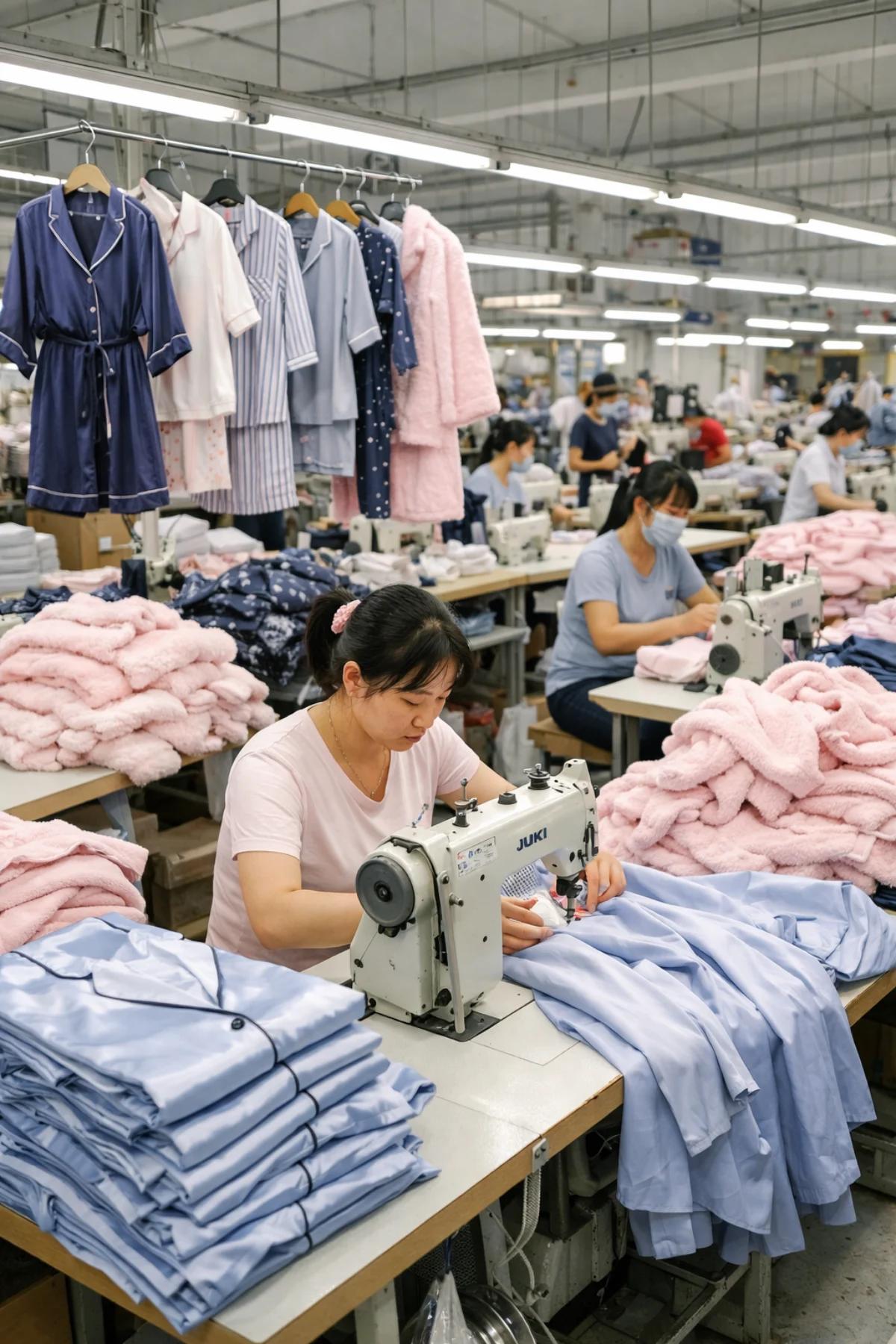
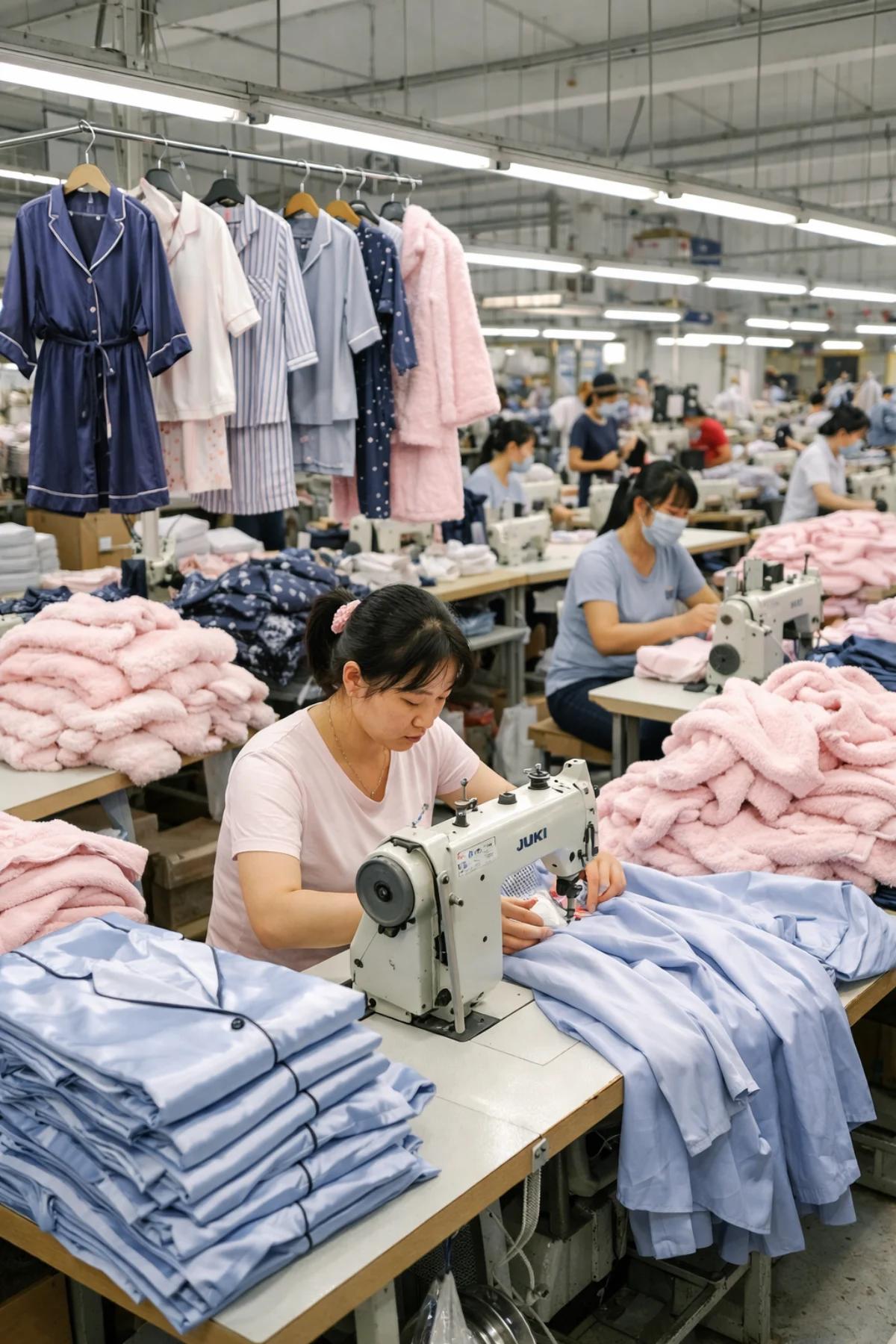
The finished fabric is sent to garment factories. Here, workers or automated machines cut the fabric according to patterns, and then sew the pieces into a complete garment. This is the most labor-intensive stage, so factories are often located in regions with lower labor costs like parts of China, Vietnam, Bangladesh, and Cambodia. Giants like Shenzhou International build their 48-hour quick-response capabilities here.
5. The Brand's Final Check (Quality Control & Logistics)
After production, garments are shipped to warehouses owned by the brand or third-party logistics providers. They undergo strict quality inspections to ensure workmanship, size, and color meet standards. Approved products are then sorted, packed, and, based on orders, dispatched via complex logistics networks to global retail stores or e-commerce fulfillment centers.
6. The Destination: Your Closet (Retail)
Finally, after its long journey, the garment arrives on a store rack or in an e-commerce warehouse, waiting for you to choose it and give it its ultimate purpose.
So, when you pick up a piece of clothing, you're holding the result of a global collaboration involving countless workers and engineers.
Walking into a mall, you can find shirts ranging from $20 fast fashion to $2000 luxury brands. Sometimes they even look similar, yet the price gap is enormous. This difference goes far beyond simple "brand premium." They operate on fundamentally different value logics across multiple dimensions.
1. The Fabric Divide: Substance vs. Surface
• Luxury Menswear: Pursues the ultimate in natural materials. They use premium long-staple cottons (like Egyptian or Sea Island cotton), precious cashmere, high-quality Merino wool, and even rare vicuña. These fibers are scarce and offer unparalleled softness, luster, warmth, and breathability.
• Fast Fashion Menswear: To control costs and enable rapid production, they heavily use standard cotton and synthetic blends (like polyester). While technology has improved the hand-feel of synthetics, they still lag significantly in breathability, next-to-skin comfort, durability, and long-term wear compared to top-tier natural fibers.
2. The Craftsmanship Chasm: Made vs. Crafted
• Luxury Menswear: Obsesses over cut and construction. A fine suit involves hundreds of steps, often including substantial handwork (like hand-stitched lapels or buttonholes). A Zegna bespoke suit can take dozens of hours. Even a simple T-shirt has strict standards for thread count, stitch density, and overall finish.
• Fast Fashion Menswear: Prioritizes "speed" and "affordability." Therefore, the focus is on standardized, highly automated production. Patterns are designed for mass production efficiency with less attention to nuanced detailing. Seams on a T-shirt might pucker or loosen after a few washes.
3. The Design Philosophy: Leading vs. Following Trends
• Luxury Menswear: Often defines the trends. Creative directors and design teams invest heavily in trend forecasting and original creation, especially for runway collections. The clothes represent the brand's artistic vision and cultural values.
• Fast Fashion Menswear: Excels at rapid response. Design teams act like "fashion detectives," constantly monitoring runways, celebrity street style, and social media to quickly translate popular elements into affordable, mass-market products. They are followers and democratizers of trends.
4. The Brand Soul: Heritage vs. Efficiency
• Luxury Menswear: Often boasts decades or centuries of heritage. Hermès carries 180 years of leather craftsmanship; Burberry's trench coat embodies British gentleman culture. Buying into a luxury brand means buying into that history and its cultural symbolism. It offers identity and social capital.
• Fast Fashion Menswear: Brands are typically younger. Their core assets are powerful supply chain management and vast retail networks. Their value proposition is "the latest trends, at the cheapest price, the fastest." Brand loyalty is often tied to specific styles or value, not deep cultural identity.
5. Summary: Two Different Value Propositions
In essence, luxury menswear operates on a "value-driven" logic. Your payment covers premium raw materials, exquisite craftsmanship, original design, and cultural heritage. Fast fashion menswear operates on an "efficiency-driven" logic. Your payment primarily covers the rapid manufacturing and global logistics costs. They cater to completely different consumer needs—neither is inherently "better"; the right choice depends entirely on what you value most.

In the world of men's apparel manufacturing, OEM and ODM are two of the most frequently used terms. They describe two fundamentally different partnership models between brands and the factories behind them. Understanding these concepts helps clarify who truly holds the "design rights" and "manufacturing rights" for a piece of clothing.
1. OEM (Original Equipment Manufacturer): Your Design, My Execution
OEM is often simply called "contract manufacturing." In this model, the brand is the "brain," and the manufacturer is the "hands."
• Workflow: The brand completes all product designs, technical specifications, and even specifies the fabrics. They then place a detailed order with the manufacturer. The factory strictly produces according to the brand's blueprints, with no autonomy over the product's design.
• Analogy: It's like ordering a dish at a restaurant. You (the brand) tell the chef (manufacturer) exactly what you want from the menu (design). The chef's job is to execute it perfectly in the kitchen. The credit for the recipe's creativity belongs to you.
• Industry Example: The partnership between Nike and Shenzhou International for certain core products is a classic OEM model. Nike provides the technology (like Dri-FIT) and design; Shenzhou handles the high-quality production.
2. ODM (Original Design Manufacturer): My Solution, Your Choice, My Production
ODM goes a step further. Here, the manufacturer not only produces but also deeply participates in the design process. In this model, the manufacturer acts as a "product solution provider," and the brand acts more like a "curator."
• Workflow: Based on their understanding of market trends and technological expertise, manufacturers develop and design multiple products themselves (including styles, fabrics, and patterns). They then present these "ready-made solutions" to brands. The brand selects the styles that fit its identity, perhaps requests minor modifications (like changing a color or adding a logo), and places the order.
• Analogy: Think of shopping at IKEA (the manufacturer). IKEA has already designed various styles of sofas and tables (its own designs). You (the brand) choose one you like, buy it, and put your own label on it. The core design originates from IKEA.
• Industry Example: Crystal Group's services for brands like Uniqlo and H&M heavily involve ODM. Crystal, based on its fabric R&D and trend analysis, proactively proposes designs to brands. Once selected, the brand markets them under its own name.
3. Why Distinguish Between These Two Models?
• The OEM model requires the brand itself to possess strong design and R&D capabilities. They control the core technology and design soul; the manufacturer is an extension of their production capacity. This is a brand-led partnership.
• The ODM model tests the manufacturer's design innovation and market insight. They are no longer passive executors but active creators. This is highly attractive for brands looking to rapidly expand product lines but with limited in-house design resources.
So, next time you look at a piece of clothing, consider: is this the brand's own original creation (OEM), or a ready-made solution from a manufacturer that the brand selected (ODM)? These two models together weave the intricate and efficient division of labor in today's global menswear industry.
Gone are the days when menswear was confined to a monotonous world of blue, black, and gray. Driven by evolving lifestyles, technological innovation, and shifting consumer values, today's men's fashion landscape is incredibly diverse and dynamic. Several key trends are reshaping the modern man's wardrobe.
1. Trend 1: Blurring Boundaries – Genderless and Ageless Style
• Genderless Design: Traditional gender norms in clothing are dissolving. Men are embracing pieces with softer silhouettes and colors, such as silk shirts, oversized tailoring, and even occasional skirt elements in avant-garde collections. This isn't about subverting masculinity, but about offering more diverse avenues for self-expression, emphasizing that clothing should serve personal style, not gender labels.
• Ageless Style: Classic items once associated with older generations, like chore coats or polo shirts, are being reinterpreted with modern cuts and styling, finding new favor with younger demographics. Conversely, vibrant streetwear elements are integrating into mature wardrobes. Style is increasingly decoupled from age, with fit, appropriateness, and personal expression becoming the new guidelines.
2. Trend 2: Function First – Technical Fabrics Go Daily
Performance fabrics, once reserved for professional outdoor activities, are now becoming standard in everyday menswear. This reflects a deep-seated male consumer desire for ultimate comfort and utility.
• All-Day Comfort: Whether for commuting, office work, or leisure, a shirt or pant featuring four-way stretch, moisture-wicking, and wrinkle-resistant properties is now preferred over traditional cotton by many men.
• Everyday Protection: Sun-protective clothing is no longer exclusive to summer travel; lightweight and breathable UPF sun-protective jackets have become daily essentials for urban men to cope with the ever-changing ultraviolet rays. Waterproof and windproof softshells also play an important role in spring and autumn.
• Thermoregulation: From Uniqlo's HEATTECH to various phase-change materials, clothing that helps maintain a comfortable body temperature is moving from "high-tech novelty" to "wardrobe staple."
3. Trend 3: Style Revival – The Cyclical Return of Classics
Fashion is cyclical, and menswear is no exception. Many classic styles are making powerful comebacks, refreshed for the modern era.
• Workwear's Enduring Reign: Utility jackets, cargo pants, and multi-pocket designs, born from workwear's rugged aesthetic, remain firmly in the spotlight. Beyond traditional canvas, these features are now widely applied to denim, twill, and other fabrics.
• Retro Sportswear: The "dad shoe" trend has spread to apparel. Retro-paneled track jackets, vintage sweatshirts, and relaxed-fit sweatpants, heavily influenced by 90s and Y2K aesthetics, are a key way for younger generations to express individuality.
• Quiet Luxury's Influence: Spearheaded by brands like Loro Piana and Zegna, "Quiet Luxury" emphasizes top-tier fabrics, impeccable craftsmanship, and minimalist, logo-free design. Its influence is trickling down, encouraging more men to focus on the essence of clothing—quality itself—rather than ostentatious branding.
4. Trend 4: Sustainable Fashion – From Concept to Concrete Action
Environmental consciousness is no longer just a slogan; it's a critical trend actively influencing consumer choices and industry development.
• Eco-Material Adoption: Brands are increasingly using recycled fibers (like recycled nylon/polyester), organic cotton, and Tencel (lyocell). Companies like Anta are pushing their supply chains toward more sustainable material sourcing.
• Supply Chain Transparency: Consumers are asking, "Who made my clothes, and from what?" Brands and manufacturers face growing pressure to disclose supply chain information. ESG (Environmental, Social, and Governance) performance is becoming a key metric for evaluating corporate value.
In summary, the men's wear industry today offers an unprecedented array of choices. Whether you're a tech enthusiast seeking ultimate comfort, a vintage enthusiast fond of classic styles, or an environmental activist concerned about the future of our planet, you can find your own trendy expression in your wardrobe.