Top 10 Refractory & High-Temperature Resistant Materials Companies

HomeMining & MineralsTop 10 Refractory & High-Temperature Resistant Materials Companies

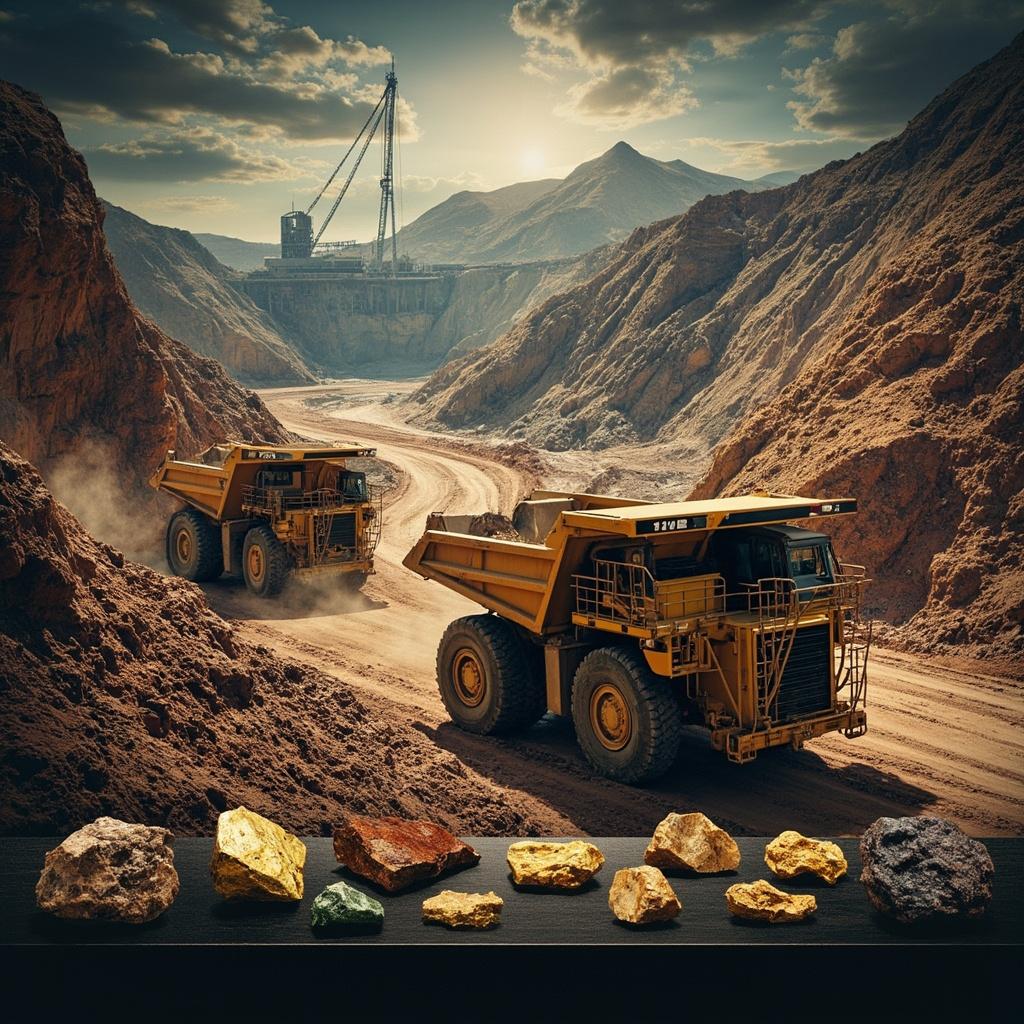
The global refractory and high-temperature resistant materials industry is undergoing a profound structural transformation, with the 2025 market estimated at approximately $35 billion and projected to grow steadily driven by steel decarbonization, cement capacity expansion, and advanced ceramic demand from semiconductor and aerospace sectors. This foundational industry — which supplies the lining materials enabling steelmaking furnaces to operate continuously at 1,600°C, cement kilns to produce clinker at 1,450°C, and glass melting tanks to run for years without shutdown — has moved far beyond simple firebrick manufacturing into a sophisticated ecosystem of engineered ceramics, monolithic castables, thermal insulation fibers, and intelligent furnace service solutions.

The competitive landscape is being reshaped by three transformative forces: vertical integration into raw material mining, localization of manufacturing to bypass trade barriers, and the decarbonization-driven technology transition from blast furnace to electric arc furnace (EAF) steelmaking. RHI Magnesita, the undisputed global #1 with €3.5 billion in revenue, leverages over 50% raw material self-sufficiency from owned magnesite and dolomite mines — a structural cost advantage that competitors cannot easily replicate. Vesuvius, with its £1.81 billion in flow control refractories and advanced sensors, has embedded its engineers on-site at the worlds top steel plants, creating customer switching costs that transcend price competition. Simultaneously, Saint-Gobain and Morgan Advanced Materials are redefining the premium tier with ultra-high-purity ceramics for semiconductor fabrication, nuclear reactor components, and aerospace thermal protection — segments where material performance, not price, determines supplier selection.

The industry is experiencing an unprecedented wave of capital-intensive localization investments driven by trade policy and carbon regulation. RHI Magnesitas €391 million acquisition of Resco in the United States, PRCOs greenfield automated factory in Kentucky, Calderys CAPES mega-facility in India, and Shinagawa Refras simultaneous acquisitions in the Netherlands (Gouda) and Brazil (Reframax) all reflect a collective industry recognition that the era of transcontinental bulk refractory shipping is ending. The EUs Carbon Border Adjustment Mechanism (CBAM), effective from 2026, and tightening US import restrictions are making "Local-for-local" manufacturing — producing refractories in the same region they are consumed — a competitive necessity rather than an option. Companies with existing multi-region production footprints, such as RHI Magnesita, Calderys, and Vesuvius, are structurally advantaged in this new trade environment.

Chinas refractory giants — Beijing Lier and PRCO — are emerging as formidable global competitors with fundamentally different competitive models. Beijing Lier (¥69.7 billion revenue, +25.86% net profit growth) has perfected the Total Refractory Contracting model, bundling design, manufacturing, installation, and lifetime maintenance into multi-year service agreements that create deep customer lock-in. PRCO controls 48 million tonnes of high-grade magnesite reserves and has achieved what few Chinese industrial companies have — operating a fully automated, tariff-bypassing factory in Kentucky, USA — demonstrating that Chinese refractory companies can compete successfully through localization, not just low-cost exports.

Our Ranking Methodology
VerityRank evaluates refractory and high-temperature materials companies across four equally weighted dimensions:
Market Influence (25%): Global revenue scale, annual production capacity in tonnes, geographic manufacturing footprint diversity, and market share in key end-use segments (steel, cement, glass, non-ferrous).
Brand Reputation (25%): Supplier qualification status with top-tier steelmakers and cement producers, longevity and stability of key customer relationships, strength of on-site technical service networks, and third-party quality certifications.
Innovation & R&D (25%): Patent portfolio strength in advanced refractory formulations, investment in hydrogen-compatible and low-carbon refractories, digitalization of manufacturing and service delivery (Industry 4.0), and new product introduction velocity.
Sustainability & Ethics (25%): Raw material self-sufficiency and mine rehabilitation practices, refractory recycling rates and circular economy programs, carbon intensity per tonne of product, and occupational safety performance.

Disclaimer: The data in this ranking is compiled from third-party authoritative sources, including publicly listed company annual reports (FY2025), regulatory filings with the SEC, Euronext, LSE, TSE, and SZSE, industry association databases (World Refractories Association, IMA), independent market research from Fortune Business Insights and IMFORMED, and corporate sustainability disclosures. The ranking results are based on a multi-dimensional algorithm model and are intended for reference and market decision support only. They do not constitute direct investment advice or brand endorsement.

Data Sources: This ranking is compiled from publicly available data sources including: Wikipedia: Refractory Materials, World Refractories Association (WRA), Fortune Business Insights: Refractories Market.

Top 10 Rankings

2026.06 Edition
1
RHI Magnesita NV

RHI Magnesita NV

RHI Magnesita NV is the global market leader in refractory products and solutions, formed through the merger of Austria''s RHI and Brazil''s Magnesita. Headquartered in Vienna, Austria, the company operates 47 production sites and 70+ sales offices across 35+ countries, employing approximately 13,500 people. RHI Magnesita produces over 3 million tonnes of refractory materials annually for high-temperature industrial processes including steelmaking, cement production, glass manufacturing, and non-ferrous metal processing. The 2025 acquisition of Resco Group for EUR 271 million significantly expanded its North American footprint, adding 9 plants and 2 raw material sites while boosting regional revenue by 22%.

Strengths: Unquestioned global refractory leadership with the largest production capacity and broadest product portfolio; Local-for-Local strategy through Resco acquisition creates tariff-resistant regional supply chains in North America; circular economy leadership with 15.9% refractory recycling rate exceeding industry targets, reducing CO2 emissions to 1.54t per tonne; backward integration into magnesite and dolomite raw material mines secures cost advantages over competitors; essential supplier status — no steel, cement, or glass can be produced without refractories.
Weaknesses: High correlation with global steel production cycles creates earnings volatility during industrial downturns; heavy European manufacturing concentration exposes margins to regional energy cost inflation; significant acquisition debt from Resco integration increases financial leverage risk.

Brand

Brand

Founded

1834 (RHI) / 2017 (merger)

Workforce

16,000

Presence

20+ countries across Europe, Americas, Asia, and Africa

Facilities

47 production sites across 20+ countries

Headquarters

Austria

Market

LSE: RHIM
Key Product Categories
Mining & Minerals CompaniesMetallic Ore Raw Materials IndustryRefractory & High-Temperature Resistant Materials IndustryThermal Insulation Materials IndustryMineral Wool Materials IndustryMining & Minerals ManufacturersMining & Minerals CompaniesMining & Minerals ManufacturersRefractory & High-Temperature Resistant Materials IndustryRefractory & High-Temperature Resistant Materials CompaniesMining & Minerals CompaniesMetallic Ore Raw Materials IndustryRefractory & High-Temperature Resistant Materials IndustryThermal Insulation Materials IndustryMineral Wool Materials IndustryMining & Minerals ManufacturersMining & Minerals CompaniesMining & Minerals ManufacturersRefractory & High-Temperature Resistant Materials IndustryRefractory & High-Temperature Resistant Materials Companies
2
Vesuvius plc

Vesuvius plc

Vesuvius plc is the global leader in molten metal flow engineering and high-temperature technology, headquartered in London, United Kingdom. Founded in 1916, the company operates 50+ manufacturing sites across 30+ countries, employing approximately 11,000 people. With annual revenue of £1.81 billion (FY2025), Vesuvius specializes in flow control refractories, advanced ceramics, and sensor technologies that are indispensable to steel continuous casting, foundry operations, and glass manufacturing. The companys technology portfolio includes slide gates, shrouds, stoppers, and submerged entry nozzles (SEN) that directly determine the quality of premium steel grades. In 2025, Vesuvius launched 33 new products with new product sales reaching 20.5% of total revenue while achieving £17.8 million in structural cost savings.

Strengths: Unrivaled technology leadership in flow control refractories with the deepest patent portfolio in submerged entry nozzle and slide gate systems, making it an irreplaceable partner for top-tier steelmakers; high-value service model with an extensive on-site technical service network creating deep customer lock-in and recurring revenue; innovation velocity demonstrated by 33 new product launches in 2025 reaching 20.5% of revenue; carbon reduction leadership with CO₂ emission intensity reduced 27% versus 2019 baseline, positioning ahead of EU CBAM requirements; strong balance sheet with disciplined capital allocation enabling strategic bolt-on acquisitions (MMS, PiroMET integration).
Weaknesses: Heavy exposure to global steel production cycles creates earnings volatility — FY2025 trading profit declined 17.0% due to European and South American foundry market weakness; concentrated customer base among top-tier steel producers amplifies demand shocks in specific end-markets; pricing pressure from Chinese refractory exports compresses margins in commoditized product segments.

Brand

Vesuvius

Founded

1916

Workforce

~11,000

Presence

Global — serving steel, foundry, and glass industries in 100+ countries

Facilities

50+ manufacturing sites in 30+ countries

Headquarters

United Kingdom

Market

LSE: VSVS
Key Product Categories
Mining & Minerals CompaniesRefractory & High-Temperature Resistant Materials IndustryThermal Insulation Materials IndustryMineral Wool Materials IndustryMining & Minerals ManufacturersMineral Powder Fillers & Functional Additives CompaniesMineral Powder Fillers & Functional Additives Manufacturers & SuppliersRefractory & High-Temperature Resistant Materials CompaniesRefractory & High-Temperature Resistant Materials Manufacturers & SuppliersMining & Minerals CompaniesRefractory & High-Temperature Resistant Materials IndustryThermal Insulation Materials IndustryMineral Wool Materials IndustryMining & Minerals ManufacturersMineral Powder Fillers & Functional Additives CompaniesMineral Powder Fillers & Functional Additives Manufacturers & SuppliersRefractory & High-Temperature Resistant Materials CompaniesRefractory & High-Temperature Resistant Materials Manufacturers & Suppliers
3
Compagnie de Saint-Gobain S.A.

Compagnie de Saint-Gobain S.A.

Compagnie de Saint-Gobain S.A. is the global leader in lightweight and sustainable construction materials, founded in 1665 and headquartered in Courbevoie, France. With annual revenue of EUR 46.5 billion (FY2025), the company operates 900+ manufacturing sites across 80 countries, employing approximately 160,000 people worldwide. Listed on Euronext Paris (SGO), Saint-Gobain completed EUR 1.2 billion in strategic acquisitions in 2025 including Cemix (North America) and FOSROC (India/Middle East), driving its construction chemicals division to 15.9% growth. Over 70% of its product portfolio directly contributes to energy-efficient and low-carbon building systems.

Strengths: Saint-Gobain's 350-year legacy of material science innovation provides unmatched R&D depth across glass, gypsum, insulation, and construction chemicals that competitors cannot replicate without equivalent infrastructure. The company's EUR 1.2 billion acquisition strategy in 2025—targeting high-margin construction chemicals in fast-growing markets—demonstrates disciplined capital allocation that has delivered above-market organic growth. Saint-Gobain's 80-country local manufacturing footprint provides tariff resilience and supply chain flexibility that single-region competitors lack. The company's digital energy modeling platform directly supports customer LEED and BREEAM certification, creating a value-added service moat.
Weaknesses: Saint-Gobain's exposure to European construction cycles—still its largest revenue region—creates periodic volume volatility when macroeconomic conditions soften. The company's extensive product portfolio breadth across dozens of categories dilutes management focus compared to pure-play specialists. Rising carbon compliance costs under EU ETS create margin pressure on energy-intensive flat glass and gypsum production lines.

Brand

Saint-Gobain

Founded

1665

Workforce

~160,000

Presence

80 countries

Facilities

900+ manufacturing sites globally, 160+ in North America

Headquarters

France

Market

Euronext Paris: SGO

Key Product Categories
Building Materials CompaniesCement & Tiles IndustryCement & Mixes IndustryWaterproofing Materials IndustryStone, Wood & Flooring IndustryEngineered Stone IndustryBuilding Materials SuppliersCement & Tiles IndustryCement & Mixes IndustryWaterproofing Materials IndustryBuilding Materials CompaniesCement & Tiles IndustryCement & Mixes IndustryWaterproofing Materials IndustryStone, Wood & Flooring IndustryEngineered Stone IndustryBuilding Materials SuppliersCement & Tiles IndustryCement & Mixes IndustryWaterproofing Materials Industry
4
Calderys

Calderys Group

Calderys is a global leader in monolithic (unshaped) refractories and continuous casting fluxes, formed through the transformative 2023 merger of Calderys and HarbisonWalker International (HWI). Headquartered in Paris, France, and backed by private equity firm Platinum Equity, Calderys operates 60+ production sites across Europe, the Americas, and Asia, employing approximately 7,000 people with estimated annual revenue of €1.6 billion. The company holds the #1 global market position in monolithic refractories and is a top-tier supplier of tundish fluxes, mold powders, and ladle lining solutions. The 2025 commissioning of CAPES — the worlds largest single-site greenfield refractory facility in Odisha, India — dramatically expanded its capacity to serve the fast-growing Asian steel market.

Strengths: Unmatched global leadership in monolithic refractories with the broadest castable, gunning, and ramming mix portfolio; transformative HWI merger that created a truly three-continent manufacturing footprint with dramatically improved Americas market access; CAPES flagship facility in India representing the industrys largest single-site greenfield investment, with integrated solar power and rainwater harvesting for green manufacturing; diversified end-market exposure spanning steel, cement, foundry, petrochemical, aluminum, and waste-to-energy — reducing single-sector cyclicality; strong financial flexibility demonstrated by successful $300 million senior unsecured notes issuance with stable S&P credit rating outlook.
Weaknesses: Private equity ownership structure creates medium-term exit pressure and potential leverage risks; post-merger integration complexity from combining Calderys and HWI operations, systems, and cultures may temporarily impact operational efficiency; limited exposure to advanced ceramic and ultra-high-temperature segments compared to Saint-Gobain PCR and Morgan Advanced Materials.

Brand

Calderys

Founded

2023 (merger with HWI)

Workforce

~7,000

Presence

Global — steel, cement, foundry, petrochemical, and incineration industries

Facilities

60+ production sites globally across Europe, Americas, and Asia

Headquarters

France

Market

Private (Platinum Equity)

Key Product Categories
Mining & Minerals CompaniesRefractory & High-Temperature Resistant Materials IndustryThermal Insulation Materials IndustryMineral Wool Materials IndustryMining & Minerals ManufacturersMineral Powder Fillers & Functional Additives CompaniesMineral Powder Fillers & Functional Additives Manufacturers & SuppliersRefractory & High-Temperature Resistant Materials CompaniesRefractory & High-Temperature Resistant Materials Manufacturers & SuppliersMining & Minerals CompaniesRefractory & High-Temperature Resistant Materials IndustryThermal Insulation Materials IndustryMineral Wool Materials IndustryMining & Minerals ManufacturersMineral Powder Fillers & Functional Additives CompaniesMineral Powder Fillers & Functional Additives Manufacturers & SuppliersRefractory & High-Temperature Resistant Materials CompaniesRefractory & High-Temperature Resistant Materials Manufacturers & Suppliers
5
Krosaki Harima Corporation

Krosaki Harima Corporation

Krosaki Harima Corporation is Japans largest refractory manufacturer and a global leader in integrated furnace engineering, headquartered in Kitakyushu, Fukuoka, Japan. Founded in 1918, the company is a major consolidated subsidiary of Nippon Steel Corporation, Japans largest steelmaker. Krosaki Harima operates 20+ production sites across Japan, India, and Southeast Asia, employing approximately 7,800 people with estimated annual revenue of ~¥170 billion. The company is renowned for its end-to-end Furnace Business model — combining refractory manufacturing, engineering design, construction, and lifecycle maintenance for blast furnaces, coke ovens, and steel ladles. Its Indian subsidiary TRL Krosaki is the countrys largest refractory producer, strategically positioned in the worlds fastest-growing steel market.

Strengths: Deep integration with Nippon Steel providing captive demand, co-development funding, and real-world testing at scale for next-generation refractories; dominant Indian market position through TRL Krosaki, capturing growth in the worlds only major steel market still expanding double-digits; total furnace engineering capability spanning design, refractory supply, installation automation (robotics), and predictive maintenance — creating high-value, bundled service contracts; advanced R&D in hydrogen-compatible refractories for H₂-based direct reduced iron (DRI) and hydrogen blast furnace injection; strong balance sheet backed by Nippon Steels ¥7 trillion market capitalization and AAA credit rating.
Weaknesses: Heavy dependence on Japanese domestic steel production, which faces secular decline due to demographic headwinds and regional overcapacity; pending full acquisition by Nippon Steel (TOB) may reduce strategic autonomy and independent innovation agility; limited brand recognition outside Asia-Pacific compared to European rivals RHI Magnesita and Vesuvius, constraining growth in Americas and European markets.

Brand

Krosaki Harima

Founded

1918

Workforce

~7,800

Presence

Japan, India, China, Southeast Asia — steel, cement, glass, and non-ferrous metals

Facilities

20+ production sites in Japan, India (TRL Krosaki), China, and Southeast Asia

Headquarters

Japan

Key Product Categories
Mining & Minerals CompaniesRefractory & High-Temperature Resistant Materials IndustryThermal Insulation Materials IndustryMineral Wool Materials IndustryMining & Minerals ManufacturersMineral Powder Fillers & Functional Additives CompaniesMineral Powder Fillers & Functional Additives Manufacturers & SuppliersRefractory & High-Temperature Resistant Materials CompaniesRefractory & High-Temperature Resistant Materials Manufacturers & SuppliersMining & Minerals CompaniesRefractory & High-Temperature Resistant Materials IndustryThermal Insulation Materials IndustryMineral Wool Materials IndustryMining & Minerals ManufacturersMineral Powder Fillers & Functional Additives CompaniesMineral Powder Fillers & Functional Additives Manufacturers & SuppliersRefractory & High-Temperature Resistant Materials CompaniesRefractory & High-Temperature Resistant Materials Manufacturers & Suppliers
6
Shinagawa Refra Co., Ltd.

Shinagawa Refra Co., Ltd.

Shinagawa Refra Co., Ltd. is a 150-year-old Japanese refractory powerhouse that in 2025 rebranded from Shinagawa Refractories to reflect its strategic transformation from a traditional brick manufacturer into a diversified high-temperature materials and engineering solutions company. Headquartered in Tokyo, Japan, and founded in 1875, the company operates 15+ production sites across Japan, China, the Netherlands, and Brazil, employing approximately 3,500 people with estimated annual revenue of ~¥150 billion. Shinagawa Refra holds the global benchmark position in continuous casting mold powders and has executed the most aggressive overseas M&A strategy among Japanese refractory companies — acquiring Gouda Refractories (Netherlands) and Reframax Engenharia (Brazil) to build a truly global manufacturing footprint.

Strengths: Global mold powder leadership with unrivaled technology in continuous casting fluxes that directly determine steel surface quality; boldest overseas M&A among Japanese refractory peers — the Gouda and Reframax acquisitions created immediate European and South American production capability, driving parent net profit up 166.6% to ¥26.07 billion; strategic partnership with Saint-Gobain for blast furnace systems in India, combining Japanese precision engineering with French industrial ceramics expertise; 150-year brand heritage and deep customer trust in quality-critical Asian steelmaking markets; diversification into advanced ceramics and insulation equipment insulating the company from pure refractory commodity cycles.
Weaknesses: Relatively small employee base (~3,500) limits global service network density compared to larger rivals; heavy dependence on Japanese steel industry which faces persistent domestic crude steel production declines; post-acquisition integration risk from simultaneously absorbing Gouda (Netherlands) and Reframax (Brazil) operations with different corporate cultures and technical standards.

Brand

Shinagawa Refra

Founded

1875

Workforce

~3,500

Presence

Global — steel, cement, glass, non-ferrous metals, and waste incineration

Facilities

15+ production sites in Japan, China, Netherlands (Gouda Refractories), and Brazil (Reframax)

Headquarters

Japan

Market

TSE: 5351
Key Product Categories
Mining & Minerals CompaniesRefractory & High-Temperature Resistant Materials IndustryThermal Insulation Materials IndustryMineral Wool Materials IndustryMining & Minerals ManufacturersMineral Powder Fillers & Functional Additives CompaniesMineral Powder Fillers & Functional Additives Manufacturers & SuppliersRefractory & High-Temperature Resistant Materials CompaniesRefractory & High-Temperature Resistant Materials Manufacturers & SuppliersMining & Minerals CompaniesRefractory & High-Temperature Resistant Materials IndustryThermal Insulation Materials IndustryMineral Wool Materials IndustryMining & Minerals ManufacturersMineral Powder Fillers & Functional Additives CompaniesMineral Powder Fillers & Functional Additives Manufacturers & SuppliersRefractory & High-Temperature Resistant Materials CompaniesRefractory & High-Temperature Resistant Materials Manufacturers & Suppliers
7
Morgan Advanced Materials plc

Morgan Advanced Materials plc

Morgan Advanced Materials plc is a UK-based advanced materials technology company specializing in thermal ceramics, specialty carbon/graphite products, and technical ceramics for the most demanding high-temperature and high-performance applications. Headquartered in Windsor, Berkshire, United Kingdom, and founded in 1856, the company operates 40+ manufacturing sites in 20+ countries, employing approximately 7,500 people with annual revenue of ~£1.1 billion (FY2025). Unlike bulk steel refractory producers, Morgan focuses on ultra-premium thermal insulation and engineered ceramic components for semiconductor wafer fabrication, aerospace turbine engines, medical imaging equipment, and nuclear energy systems — segments where material performance requirements justify dramatically higher price points and margins.

Strengths: Dominant position in high-margin niche applications — semiconductor thermal management, aerospace ceramic matrix composites, and medical X-ray tube components — where price sensitivity is low and qualification barriers are extreme; Thermal Ceramics division is the global leader in lightweight ceramic fiber insulation for industrial furnaces, petrochemical reformers, and fire protection; transformation under new CEO Damien Caby delivering £16 million in structural cost savings with global ERP harmonization; healthy ROIC of 14.1% demonstrating disciplined capital allocation despite challenging end-market conditions; strategic portfolio review of Thermal Products division could unlock significant shareholder value through potential divestiture or partnership.
Weaknesses: Organic revenue contraction of 3.3% in FY2025 driven by semiconductor cycle downturn and weak European industrial demand; smaller overall scale in traditional refractories compared to RHI Magnesita or Calderys, limiting procurement leverage in raw material markets; ongoing portfolio restructuring creates execution risk and potential management distraction — the divested Molten Metal Systems (MMS) business and pending Thermal Products strategic review represent significant organizational change.

Brand

Morgan Advanced Materials

Founded

1856

Workforce

~7,500

Presence

Global — semiconductor, aerospace, medical, energy, and industrial thermal management

Facilities

40+ manufacturing sites in 20+ countries

Headquarters

United Kingdom

Market

LSE: MGAM
Key Product Categories
Mining & Minerals CompaniesRefractory & High-Temperature Resistant Materials IndustryThermal Insulation Materials IndustryMineral Wool Materials IndustryMining & Minerals ManufacturersMineral Powder Fillers & Functional Additives CompaniesMineral Powder Fillers & Functional Additives Manufacturers & SuppliersRefractory & High-Temperature Resistant Materials CompaniesRefractory & High-Temperature Resistant Materials Manufacturers & SuppliersIndustrial Ceramic Substrates & Components CompaniesMining & Minerals CompaniesRefractory & High-Temperature Resistant Materials IndustryThermal Insulation Materials IndustryMineral Wool Materials IndustryMining & Minerals ManufacturersMineral Powder Fillers & Functional Additives CompaniesMineral Powder Fillers & Functional Additives Manufacturers & SuppliersRefractory & High-Temperature Resistant Materials CompaniesRefractory & High-Temperature Resistant Materials Manufacturers & SuppliersIndustrial Ceramic Substrates & Components Companies
8
Refratechnik Holding GmbH

Refratechnik Holding GmbH

Refratechnik Holding GmbH is the worlds largest privately owned refractory company and the undisputed global leader in cement industry refractories. Headquartered in Munich, Germany, and founded in 1950, the family-owned company operates 8 highly automated production sites across Germany, India, China, and Turkey, employing approximately 2,500 people with estimated annual revenue of ~€800 million. Refratechnik serves customers in over 100 countries and holds the definitive technology leadership position in basic bricks (magnesia-spinel, dolomite, magnesia-chrome) for cement rotary kilns. In 2025, the company celebrated its 75th anniversary, marking three-quarters of a century of family-owned independence. Its Indian subsidiarys Vizag greenfield factory successfully scaled from a trading office to a fully operational 60,000-tonne-per-year manufacturing base within 18 months.

Strengths: Unrivaled global cement refractory market leadership with technology and market share dominance in magnesia-spinel and dolomite bricks for rotary kiln burning zones; family-owned independence enabling patient, multi-decade investment horizons free from quarterly earnings pressure — a critical advantage in capital-intensive refractory manufacturing; German engineering and manufacturing excellence represented by Industry 4.0 automated production facilities with minimal human intervention; highly successful Indian manufacturing localization — Vizag plant reached 50%+ capacity utilization within 18 months, proving that India-made magnesia-carbon bricks match European quality standards; diversified end-market expansion from pure cement dominance into steel, non-ferrous metals, and environmental incineration.
Weaknesses: Smaller absolute scale (~€800 million) compared to publicly traded giants RHI Magnesita and Vesuvius, limiting R&D spending capacity; concentrated ownership structure creates succession risk — family-owned businesses face generational transition challenges; limited North American manufacturing presence compared to Calderys (post-HWI) and RHI Magnesita (post-Resco), potentially constraining growth in the US market.

Brand

Refratechnik

Founded

1950

Workforce

~2,500

Presence

100+ countries — cement, steel, lime, non-ferrous metals, and environmental

Facilities

8 production sites in Germany, India, China, and Turkey

Headquarters

Germany

Market

Private (family-owned)

Key Product Categories
Mining & Minerals CompaniesRefractory & High-Temperature Resistant Materials IndustryThermal Insulation Materials IndustryMineral Wool Materials IndustryMining & Minerals ManufacturersMineral Powder Fillers & Functional Additives CompaniesMineral Powder Fillers & Functional Additives Manufacturers & SuppliersRefractory & High-Temperature Resistant Materials CompaniesRefractory & High-Temperature Resistant Materials Manufacturers & SuppliersMining & Minerals CompaniesRefractory & High-Temperature Resistant Materials IndustryThermal Insulation Materials IndustryMineral Wool Materials IndustryMining & Minerals ManufacturersMineral Powder Fillers & Functional Additives CompaniesMineral Powder Fillers & Functional Additives Manufacturers & SuppliersRefractory & High-Temperature Resistant Materials CompaniesRefractory & High-Temperature Resistant Materials Manufacturers & Suppliers
9
Beijing Lier High-Temperature Materials Co., Ltd.

Beijing Lier High-Temperature Materials Co., Ltd.

Beijing Lier High-Temperature Materials Co., Ltd. is Chinas largest independent refractory technology company and the pioneer of the total refractory contracting model. Headquartered in Beijing, China, and founded in 1999, the company is listed on the Shenzhen Stock Exchange (SZSE: 002392) and operates 15+ production sites across China with an annual production capacity of 850,000 tonnes. Employing approximately 5,000 people, Beijing Lier achieved remarkable FY2025 financial results with revenue of ¥69.7 billion (up 10.17% YoY) and net profit of ¥4.01 billion (up 25.86% YoY). The companys groundbreaking Total Refractory Contracting model — providing end-to-end design, manufacturing, installation, and lifecycle maintenance for steel plant refractory systems — revolutionized Chinas refractory service industry and created deep, multi-year customer partnerships.

Strengths: Chinas #1 independent refractory contractor with pioneering total service model creating high switching costs and recurring revenue; exceptional financial performance — FY2025 revenue up 10.17% to ¥69.7 billion and net profit surging 25.86% to ¥4.01 billion, defying industry margin compression trends; massive 850,000-tonne annual capacity making it one of the worlds largest refractory producers by volume; heavy R&D investment in low-carbon/no-carbon refractories for clean steel production and intelligent manufacturing process upgrades; diversified product portfolio covering steelmaking, cement, non-ferrous metals, petrochemical, and power generation refractories.
Weaknesses: Heavy concentration in Chinese domestic market with limited international manufacturing presence compared to European and Japanese competitors; ¥69.7 billion revenue in Chinese market context reflects volume scale but still trails global leaders on an international revenue basis; commodity-like pricing pressure in standard refractory products within Chinas intensely competitive domestic market, potentially compressing margins in non-contracted segments.

Brand

Beijing Lier

Founded

1999

Workforce

~5,000

Presence

China, Southeast Asia, Middle East — steel, cement, non-ferrous metals, and petrochemicals

Facilities

15+ production sites across China with 850,000-tonne annual capacity

Headquarters

China

Key Product Categories
Mining & Minerals CompaniesRefractory & High-Temperature Resistant Materials IndustryThermal Insulation Materials IndustryMineral Wool Materials IndustryMining & Minerals ManufacturersMineral Powder Fillers & Functional Additives CompaniesMineral Powder Fillers & Functional Additives Manufacturers & SuppliersRefractory & High-Temperature Resistant Materials CompaniesRefractory & High-Temperature Resistant Materials Manufacturers & SuppliersMining & Minerals CompaniesRefractory & High-Temperature Resistant Materials IndustryThermal Insulation Materials IndustryMineral Wool Materials IndustryMining & Minerals ManufacturersMineral Powder Fillers & Functional Additives CompaniesMineral Powder Fillers & Functional Additives Manufacturers & SuppliersRefractory & High-Temperature Resistant Materials CompaniesRefractory & High-Temperature Resistant Materials Manufacturers & Suppliers
10
Puyang Refractories Group Co., Ltd. (PRCO)

Puyang Refractories Group Co., Ltd.

Puyang Refractories Group Co., Ltd. (PRCO) is Chinas most internationally ambitious refractory company and a global leader in upstream raw material vertical integration. Headquartered in Puyang, Henan, China, and founded in 1988, PRCO is listed on the Shenzhen Stock Exchange (SZSE: 002225) and operates 20+ production sites across China and the United States, employing approximately 6,000 people with estimated annual revenue of ~¥55 billion. PRCOs defining competitive advantage is its control over 48 million tonnes of high-grade magnesite reserves in central and western China — providing unmatched raw material cost insulation and quality consistency. The companys Kentucky, USA manufacturing plant (PRCO America) is a landmark achievement as one of the few Chinese-owned refractory factories in the United States, with 50,000-60,000-tonne annual capacity producing resin-bonded magnesia-carbon bricks for North American steel mills.

Strengths: Massive raw material advantage — control over 48 million tonnes of high-grade magnesite reserves providing cost insulation and quality assurance that few global competitors can match; trailblazing US manufacturing presence through PRCO America in Kentucky, uniquely positioned to serve North American customers tariff-free while competitors face import barriers; exceptional international revenue contribution — overseas sales of ¥17.29 billion (~$2.4 billion) representing one of the highest export ratios among Chinese refractory companies; fully integrated mine-to-customer supply chain from magnesite mining through dead-burned magnesia processing to finished refractory brick manufacturing; Mississippi River logistics advantage for the Kentucky plant enabling cost-efficient distribution to both US Midwest steel mills and Gulf Coast export terminals.
Weaknesses: Slower-than-planned capacity ramp-up on domestic smart manufacturing projects (e.g., 10,000-tonne high-performance slag dam); geopolitical risk exposure — as a Chinese company operating in the US, PRCO America faces potential escalation in bilateral trade tensions and investment screening; brand recognition gap versus century-old European and Japanese refractory brands in developed markets outside China and the US.

Brand

PRCO

Founded

1988

Workforce

~6,000

Presence

China, USA, Europe, Southeast Asia, Middle East, Russia — steel, cement, and non-ferrous metals

Facilities

20+ production sites in China and a fully automated plant in Kentucky, USA (PRCO America)

Headquarters

China

Key Product Categories
Mining & Minerals CompaniesRefractory & High-Temperature Resistant Materials IndustryThermal Insulation Materials IndustryMineral Wool Materials IndustryMining & Minerals ManufacturersMineral Powder Fillers & Functional Additives CompaniesMineral Powder Fillers & Functional Additives Manufacturers & SuppliersRefractory & High-Temperature Resistant Materials CompaniesRefractory & High-Temperature Resistant Materials Manufacturers & SuppliersMining & Minerals CompaniesRefractory & High-Temperature Resistant Materials IndustryThermal Insulation Materials IndustryMineral Wool Materials IndustryMining & Minerals ManufacturersMineral Powder Fillers & Functional Additives CompaniesMineral Powder Fillers & Functional Additives Manufacturers & SuppliersRefractory & High-Temperature Resistant Materials CompaniesRefractory & High-Temperature Resistant Materials Manufacturers & Suppliers

Frequently Asked Questions

How Do We Generate Our Rankings?
The VerityRank evaluation methodology for refractory and high-temperature materials companies employs a rigorous, multi-dimensional framework designed specifically for the industrial minerals and high-temperature processing sector. Our ranking process begins with comprehensive data collection from multiple authoritative sources including company annual reports (FY2025), regulatory filings with the SEC, LSE, Euronext, TSE, SZSE, and SSE, World Refractories Association (WRA) member databases, International Magnesia Association (IMA) trade statistics, and third-party market research from Fortune Business Insights, IMFORMED, and Grand View Research.

Our proprietary scoring algorithm then processes each company through four equally weighted evaluation pillars. Market Influence (25%) measures global revenue volume, annual production capacity in tonnes, geographic manufacturing footprint diversity across continents, and market share in key end-use segments including steelmaking, cement production, glass manufacturing, and non-ferrous metal processing. Brand Reputation (25%) assesses supplier qualification status with top-tier steelmakers (ArcelorMittal, Nippon Steel, POSCO) and cement producers (Holcim, Heidelberg Materials, Cemex), average duration and stability of key customer contracts, depth and geographic coverage of on-site technical service networks, and third-party certifications including ISO 9001, ISO 14001, and ISO 45001. Innovation & R&D (25%) evaluates patent portfolio strength in advanced refractory formulations, R&D expenditure as a percentage of revenue, demonstrated investment in hydrogen-compatible and low-carbon refractories for next-generation steelmaking, digitalization of manufacturing and service delivery (AI-driven performance monitoring, automated installation), and new product introduction velocity. Sustainability & Ethics (25%) quantifies raw material self-sufficiency ratios and mine rehabilitation practices, refractory recycling rates as a percentage of total production, carbon dioxide emission intensity per tonne of refractory output, and occupational safety incident frequency rates.

The final composite score (0-100) integrates quantitative financial metrics with qualitative assessments of strategic positioning and technological capability. Unlike simple revenue-based rankings, our methodology specifically weights the proportion of each companys revenue derived directly from refractory and high-temperature materials — ensuring that diversified industrial conglomerates with incidental refractory exposure do not outrank pure-play refractory technology specialists. All data points are verified through cross-referencing of at least three independent sources, with discrepancies flagged for manual analyst review before final scoring.
What Are Refractory Materials and Why Are They Essential to Modern Industry?
Refractory materials are specialized heat-resistant ceramics and composites capable of withstanding extreme temperatures exceeding 1,500°C (2,732°F) while maintaining structural integrity, chemical resistance, and thermal insulation properties. These materials form the critical inner linings of all high-temperature industrial furnaces, kilns, reactors, and molten metal handling systems — without which steelmaking, cement production, glass manufacturing, non-ferrous metal smelting, petrochemical refining, and waste incineration would be physically impossible. The global refractory industry produces over 50 million tonnes annually, valued at approximately $35 billion in 2025, supporting an estimated $15 trillion in downstream industrial output.

Refractories are broadly categorized into shaped (bricks) and unshaped (monolithic) products, each serving distinct industrial functions. Shaped refractories — including magnesia-carbon bricks for steel converters, magnesia-spinel bricks for cement kilns, and silica bricks for coke ovens — are pre-formed and fired to precise dimensions, offering predictable performance and straightforward installation. Unshaped or monolithic refractories — such as castables, gunning mixes, ramming mixes, and plastics — are supplied as dry powders or wet mixes that are installed in-situ and hardened through chemical or thermal setting, offering faster installation, greater design flexibility, and superior repairability. The modern refractory industry has evolved far beyond simple firebrick production into a sophisticated materials science discipline encompassing nanotechnology, computational thermodynamics, and robotic installation automation.

The steel industry alone accounts for approximately 70% of global refractory consumption, making it the dominant demand driver. A single integrated steel plant consumes thousands of tonnes of refractories annually across its blast furnace, basic oxygen furnace (converter), ladle furnace, tundish, and continuous casting systems. Each steel tonne produced requires approximately 10-15 kg of refractories. The cement industry represents the second-largest consumer, with a modern 5,000-tonne-per-day cement kiln consuming 800-1,200 tonnes of refractories per lining campaign. Glass melting furnaces operate continuously for 8-12 years between rebuilds, making refractory quality and durability the single most critical factor in glass production economics.

The selection of appropriate refractory materials is extraordinarily complex, involving the optimization of multiple competing parameters. Key material properties include refractoriness (maximum service temperature), thermal shock resistance, corrosion resistance to specific molten slags and gases, mechanical strength at temperature, thermal conductivity (for either insulation or heat transfer), and dimensional stability. The wrong refractory choice can lead to catastrophic furnace failure — a single "breakout" of molten steel through a failed ladle lining can cause tens of millions of dollars in damage, plant downtime, and safety hazards. This is why top-tier steelmakers and cement producers maintain rigorous supplier qualification processes and multi-year contractual relationships with proven refractory manufacturers.
What Key Technologies and Innovations Are Transforming the Refractory Industry?
The refractory industry is experiencing a technology renaissance driven by three powerful megatrends: decarbonization of steelmaking, digitalization of manufacturing and service delivery, and the convergence of traditional refractories with advanced structural ceramics. Companies that fail to invest in these technology shifts risk obsolescence within the next decade as customers demand lower-carbon, longer-lasting, and intelligently monitored refractory solutions.

The most disruptive technology shift is the transition from blast furnace (BF-BOF) to electric arc furnace (EAF) steelmaking, which fundamentally changes refractory demand profiles. EAF steelmaking — which produces steel by melting scrap using electric arcs rather than reducing iron ore with coal — consumes significantly more monolithic (unshaped) refractories and fewer traditional bricks. EAFs operate at higher temperatures with more aggressive slag chemistry, requiring advanced magnesia-carbon compositions with antioxidant additives and nano-engineered bonding systems. Companies with strong monolithic portfolios — Calderys, Vesuvius, and RHI Magnesita — are structurally advantaged. Simultaneously, hydrogen-based direct reduced iron (H₂-DRI) pilots are creating demand for refractories resistant to hydrogen embrittlement and water vapor corrosion — a completely new material challenge that RHI Magnesita, Krosaki Harima, and Saint-Gobain are actively researching.

Digitalization and Industry 4.0 technologies are transforming refractory manufacturing from an artisanal craft into a precision science. Automated isostatic pressing with robotic handling, laser-based dimensional inspection, and AI-driven quality prediction models are reducing defect rates and improving product consistency. In service delivery, embedded sensors in refractory linings now provide real-time temperature, stress, and wear monitoring — enabling predictive maintenance that replaces fixed-interval relining schedules with condition-based interventions. Vesuvius leads in molten metal sensor integration, while Krosaki Harima is pioneering robotic automated gunning and brick-laying equipment for hazardous furnace environments. These technologies reduce plant downtime, improve safety, and lower total cost of ownership for customers.

Refractory recycling and circular economy programs are transitioning from regulatory compliance exercises to genuine competitive advantages. Spent refractories — previously considered industrial waste destined for landfill — are increasingly processed into secondary raw materials for new refractory production, construction aggregates, and slag conditioning agents. RHI Magnesita achieved an 18.8% refractory recycling rate in 2025 (up from 15.5% in 2024), targeting 25% by 2030 — each percentage point representing tens of thousands of tonnes diverted from landfill and equivalent virgin raw material mining avoided. Vesuvius reduced CO₂ emission intensity by 27% versus its 2019 baseline through a combination of recycling, renewable energy procurement, and process optimization. These metrics increasingly factor into steelmaker and cement producer supplier scorecards as they pursue Scope 3 emissions reductions.

The boundary between traditional refractories and advanced structural ceramics is rapidly dissolving, creating premium market segments with higher margins and stronger moats. Morgan Advanced Materials and Saint-Gobain Performance Ceramics & Refractories exemplify this convergence — producing ultra-high-purity alumina and silicon carbide components for semiconductor wafer fabrication equipment, nuclear reactor core assemblies, and aerospace thermal protection systems. These products may share the "ceramic" label with conventional firebricks, but their performance requirements — sub-micron dimensional tolerances, parts-per-billion purity levels, and zero-defect quality standards — place them in an entirely different competitive universe. Companies straddling both worlds have greater earnings stability and higher average margins than pure-play bulk refractory producers.
How Should Procurement Professionals Evaluate and Select Refractory Suppliers?
Selecting the right refractory supplier is one of the most consequential procurement decisions in heavy industry — a poor choice can result in catastrophic furnace failure, multi-million-dollar production losses, and serious safety incidents. Based on extensive analysis of global procurement patterns and supplier performance data, we identify seven critical evaluation dimensions that go beyond simple price-per-tonne comparisons.

1. Technical alignment with your specific process conditions is the foundational filter. A refractory that performs excellently in a basic oxygen furnace may fail rapidly in an electric arc furnace due to different slag chemistry and thermal cycling patterns. Top-tier suppliers maintain dedicated application engineering teams that analyze your specific operating parameters — steel grades produced, slag composition, temperature profiles, campaign length targets — before recommending products. Suppliers that offer on-site technical service with embedded engineers (Vesuvius, RHI Magnesita, Krosaki Harima) consistently outperform those supplying through distributors.

2. Raw material vertical integration directly impacts supply security and price stability. Magnesite, bauxite, and flake graphite — the three critical raw materials for refractories — are subject to significant price volatility and geopolitical supply risk (China controls ~70% of global magnesite production). Suppliers with owned mines (RHI Magnesita, PRCO) or long-term mine off-take agreements provide greater price predictability and supply assurance than those dependent on spot market raw material purchasing.

3. Manufacturing localization and logistics reliability have become critical due to trade policy uncertainty. The EU CBAM, US Section 232 tariffs on steel, and potential escalation of US-China trade restrictions make cross-continental refractory shipping increasingly costly and unreliable. Evaluate whether your supplier has manufacturing capacity in your region — suppliers with "Local-for-local" production (RHI Magnesita in US via Resco, PRCO in Kentucky, Calderys in US via former HWI plants) offer structurally lower logistics risk.

4. Total cost of ownership (TCO) — not purchase price — should drive decisions. A lower-priced refractory that lasts 30% fewer heats and requires more frequent furnace downtime is almost always more expensive on a TCO basis. Sophisticated buyers calculate cost-per-tonne-of-steel (or cement, or glass) — factoring in lining life, installation time, energy efficiency differences (insulating vs conductive refractories), and disposal costs. The trend toward Total Refractory Contracting (pioneered by Beijing Lier) bundles all these variables into a single per-tonne-of-steel service fee.

5. Innovation pipeline assessment is essential for long-term partnerships. As the steel industry transitions to EAF and hydrogen-based production, your refractory supplier must be developing compatible products now — not after your process changes. Review supplier R&D spending, patent filings in hydrogen-compatible and low-carbon refractories, and participation in industry decarbonization consortia. Suppliers with active hydrogen-refractory R&D programs (RHI Magnesita, Krosaki Harima, Saint-Gobain) are better positioned for the industrys technology transition.

6. Sustainability credentials increasingly determine market access. Major steelmakers and cement producers now mandate supplier sustainability disclosures covering carbon intensity, recycling rates, and mine rehabilitation practices. Suppliers with third-party verified sustainability data and published decarbonization roadmaps are gaining preferential status in procurement decisions — particularly in Europe where CBAM compliance requires detailed carbon accounting.

7. Financial stability and long-term viability protect your supply chain continuity. The refractory industry has experienced significant consolidation and financial distress. Evaluate supplier balance sheet strength, debt levels, and parent company support. Publicly listed suppliers with diversified revenue bases (Vesuvius, RHI Magnesita, Morgan Advanced Materials) generally offer greater supply continuity assurance than highly leveraged private equity-owned entities or single-market-dependent companies.
What Is the Regional and Competitive Landscape of the Global Refractory Industry?
The global refractory industry exhibits a distinct regional competitive landscape shaped by raw material access, steel production geography, trade policy, and technology specialization. Understanding this geography is essential for procurement strategy, competitive benchmarking, and investment analysis in the high-temperature materials sector.

Europe remains the global technology and quality leader, hosting four of the top ten global refractory companies — RHI Magnesita (Austria), Vesuvius (UK), Calderys (France), and Refratechnik (Germany). European refractory leadership is built on three structural advantages: proximity to demanding customers (ArcelorMittal, thyssenkrupp, SSAB), strong academic materials science institutions (RWTH Aachen, University of Leoben), and the regions leadership in environmental regulation — which has forced early investment in low-carbon and recycled-content refractories that now provide competitive differentiation. However, Europe faces significant headwinds from high energy costs, stringent carbon pricing (EU ETS), and the secular decline of blast furnace steelmaking. The CBAM mechanism, effective from 2026, will reshape European refractory trade flows by penalizing carbon-intensive imports.

Asia-Pacific is the dominant volume market, accounting for approximately 65% of global refractory consumption, driven by Chinas 1-billion-tonne steel industry and Indias rapidly growing steel capacity. China alone hosts thousands of refractory companies — from top-tier enterprises like Beijing Lier and PRCO to hundreds of small, low-quality producers. The Chinese governments ongoing refractory industry consolidation policy — closing sub-scale, polluting plants — is gradually professionalizing the market, benefiting larger, technology-driven companies. Japans refractory industry (Krosaki Harima, Shinagawa Refra) compensates for domestic steel production decline through aggressive overseas expansion, particularly in India and Southeast Asia. India represents the worlds most attractive refractory growth market, with steel capacity expected to double to 300 million tonnes by 2030, attracting major greenfield investments from Calderys (CAPES), TRL Krosaki, and Refratechnik (Vizag).

North America is experiencing a refractory supply chain renaissance driven by trade policy, reshoring incentives, and EAF steelmaking growth. The United States produces approximately 70% of its steel via electric arc furnaces — the highest EAF share of any major steelmaking nation — creating structurally different refractory demand from the blast-furnace-dominated markets of Asia and Europe. US trade policy (Section 232 steel tariffs, tightening Chinese investment screening) is reshaping refractory supply: RHI Magnesitas acquisition of Resco, PRCOs greenfield Kentucky plant, and Calderys inherited HWI network all reflect strategies to serve US customers from domestic manufacturing bases. The Inflation Reduction Acts "Buy America" provisions for infrastructure steel further incentivize localized refractory supply chains.

South America, the Middle East, and Africa represent emerging refractory markets with distinct growth drivers. Brazils steel industry (Gerdau, CSN, Usiminas) and cement sector (Votorantim, InterCement) support regional refractory champions like Reframax (now part of Shinagawa Refra) and Saint-Gobains Brazilian operations. The Middle Easts aluminum smelting industry (EGA, Alba, Maaden) creates specialized demand for non-ferrous metal refractories, while Saudi Arabias NEOM and infrastructure megaprojects are driving cement demand and associated refractory consumption. Africas nascent industrialization — particularly in Nigeria, South Africa, and Ethiopia — represents a long-term growth opportunity as the continent develops domestic steel and cement capacity.

The competitive dynamics within each region increasingly favor companies with multi-region manufacturing footprints over pure exporters. As trade barriers rise and carbon costs escalate, the "Local-for-local" model — owning production assets in the regions you serve — is becoming a structural competitive requirement. Companies that have already invested in regional manufacturing capacity (RHI Magnesita, Calderys, PRCO) are positioned to capture market share from competitors still reliant on transcontinental shipping. This regionalization trend is likely to accelerate M&A activity as companies seek to acquire local production assets rather than building greenfield plants.