


Airbus SE
Airbus SE is Europe's aerospace champion and one of only two global manufacturers of large commercial airliners, with its operational headquarters in Blagnac, France, and legal registration in the Netherlands. Founded in 1970 as a consortium to break the American monopoly in civil aviation, Airbus has grown into a diversified aerospace group delivering 793 commercial aircraft in 2025 with EUR 73.4 billion in revenue and a record order backlog of 8,754 aircraft — enough to sustain production for more than a decade.
Brand
Airbus
Founded
1970
Workforce
~166,900
Presence
Customers in over 100 countries
Facilities
Final assembly lines in Toulouse, Hamburg, Tianjin, Mobile
Headquarters
France
Market
Euronext Paris: AIR
The Boeing Company
The Boeing Company is the world's largest aerospace company and one of only two manufacturers of large commercial jetliners, headquartered in Arlington, Virginia. Founded in 1916 by William Boeing in Seattle, the company has grown into a global leader spanning commercial airplanes, defense systems, space exploration, and aviation services, generating US$89.5 billion in revenue in 2025 and delivering 600 commercial aircraft — its highest output since 2018.
Strengths:
• Duopoly market position – B…
Brand
Boeing
Founded
1916
Workforce
~170,000
Presence
Customers in more than 150 countries
Facilities
Final assembly in Everett, Renton, Seattle, South Carolina
Headquarters
United States
Market
NYSE: BA
Lockheed Martin Corporation
Lockheed Martin turns a record backlog of roughly US$193.6 billion in signed defense orders into cash flow that rises and falls with Western security budgets rather than the commercial air travel cycle. Formed in 1995 by the merger of Lockheed and Martin Marietta, the company generates US$75.05 billion in annual revenue (2025) and commands US$193.6 billion, far deeper than any purely commercial aircraft maker. Its Aeronautics division operates the world's most advanced stealth fighter production line in Fort Worth, Texas, where the F-35 Lig…
Brand
Lockheed Martin
Founded
1995
Workforce
~123,000
Presence
Defense support in 50+ countries
Facilities
F-35 final assembly in Fort Worth, Texas; C-130J in Marietta, Georgia; Sikorsky helicopters in Stratford, Connecticut
Headquarters
United States
Market
NYSE: LMT
Aviation Industry Corporation of China, Ltd.
AVIC — Aviation Industry Corporation of China — is the industrial backbone of Chinese aviation, a state-owned colossus that is simultaneously the country's leading military aircraft maker and the largest Tier-1 structural supplier to the global commercial duopoly. Headquartered in Beijing and tracing its roots to 1951, the group and its 100-plus subsidiaries, including 27 listed companies, employ roughly 500,000 people and rank among the Fortune Global 500 with revenue around US$82.65 billion. AVIC builds China's fighter jets, transport air…
Brand
AVIC
Founded
2008
Workforce
~400,000
Presence
Operations across China with defense exports to 40+ countries
Facilities
Nationwide factories: Chengdu (J-20), Shenyang (J-16), Xi'an (Y-20), plus titanium and composite aero-structure plants
Headquarters
China
Market
Group not listed; subsidiaries listed (e.g. AVIC UAS SH:688297)
General Dynamics Corporation
When the world's billionaires, heads of state and Fortune 500 boards need to cross oceans on their own schedule, they turn to Gulfstream — the business-jet brand owned by General Dynamics, the US$52.55 billion defense and aerospace conglomerate headquartered in Reston, Virginia. Gulfstream is the crown jewel of GD's Aerospace segment, which generated US$13.1 billion in 2025 revenue (up 16.5% year over year) on deliveries of 158 large- and mid-cabin jets, spanning the flagship ultra-long-range G800, the G700, and the new G30…
Brand
Gulfstream
Founded
1952
Workforce
~110,000
Presence
Global operations with defense customers in 60+ countries
Facilities
Gulfstream manufacturing in Savannah, Georgia; Electric Boat submarines in Groton, Connecticut; Bath Iron Works destroyers in Maine
Headquarters
United States
Market
NYSE: GD
Leonardo S.p.A.
Leonardo spans the widest arc of any European aerospace manufacturer — from AgustaWestland helicopters and M-346 jet trainers to radars, cybersecurity and half of the ATR regional-airliner alliance — making it the essential industrial partner of both NATO air forces and the global civilian rotorcraft market. The Rome-based group, listed on Euronext Milan (LDO), generated €19.50 billion in 2025 revenue (about US$21 billion, up ~10%), took €23.8 billion of new orders (+15%), and ended the year with a record backlog of €46.6 billion
Brand
Leonardo
Founded
1948
Workforce
~63,480
Presence
Operations in 30+ countries, customers in 150+ nations
Facilities
Helicopter assembly in Cascina Costa, Vergiate, Yeovil (UK) and PZL-Świdnik (Poland); trainer production in Venegono; 100+ industrial sites across Italy, UK, Poland and US
Headquarters
Italy
Market
Euronext Milan: LDO
Bombardier Inc.
From a sprawling conglomerate that once built trains, regional airliners and snowmobiles, Bombardier has transformed itself into a pure-play luxury business-jet manufacturer — and the bet is paying off. The Montreal-based company, founded in 1942 and listed on the Toronto Stock Exchange (TSX: BBD.B), generated roughly US$9.55 billion in 2025 revenue with a backlog of US$17.5 billion. Its Global and Challenger families command roughly half of the ultra-long-range and large-cabin segments, and the Global 8000 — the fastest civil jet in histor…
Brand
Bombardier
Founded
1942
Workforce
~18,000
Presence
Worldwide service network across North America, Europe and Asia
Facilities
Global 7500/8000 final assembly in Dorval, Quebec; Challenger production and completion facilities in Montreal, Canada
Headquarters
Canada
Market
TSX: BBD.B
Embraer S.A.
Embraer is the Southern Hemisphere's aerospace champion and the world's third-largest commercial aircraft manufacturer, a position it defends from its industrial heartland in São José dos Campos, Brazil. Founded in 1969 and listed on both the NYSE and Brazil's B3 exchange, Embraer generated roughly US$7.6 billion in 2025 revenue on a record backlog of US$31.6 billion, powered by the E-Jets E2 family (70–150 seats), the Phenom series of light jets, the C-390 military transport, and its Eve Air Mobility subsidiary's 2,900+ eVTOL letters of in…
Brand
Embraer
Founded
1969
Workforce
~19,000–21,000
Presence
Customers in 120+ countries across the Americas, Europe, Asia-Pacific and Africa
Facilities
E-Jets E2 and executive jet assembly in São José dos Campos, São Paulo; Eve eVTOL development in Gavião Peixoto
Headquarters
Brazil
Market
NYSE: ERJ / B3: EMBR3
Dassault Aviation
Dassault Aviation is the last independent builder of both top-tier business jets and front-line fighter aircraft under one roof — a fusion of French military engineering and ultra-luxury commercial craft that no rival can copy. Founded in 1929 and listed on Euronext Paris (EPA: AM), Dassault generates €7.42 billion in consolidated 2025 revenue (+19%), split between Falcon business jets and the Rafale fighter franchise. The Falcon 10X, the company's flagship ultra-long-range jet with the widest cabin in the segment, entered its final certification phase in 2…
Brand
Dassault
Founded
1929
Workforce
~15,024
Presence
Falcon jets and Rafale fighters operating in 90+ countries
Facilities
Falcon and Rafale assembly in Mérignac and Bordeaux, France; Falcon completion center in Little Rock, Arkansas, USA
Headquarters
France
Market
Euronext Paris: AM
Commercial Aircraft Corporation of China, Ltd.
COMAC — the Commercial Aircraft Corporation of China — is the most consequential challenger the Airbus-Boeing duopoly has ever faced, the vehicle through which China is spending billions to build a homegrown large-commercial-aircraft industry. Established in Shanghai in 2008, the state-owned company delivered 15 C919 narrowbodies in 2025 amid severe Western supply-chain pressure, raising cumulative C919 deliveries past 22 aircraft with more than 1,500 firm and intent orders in hand. Its C909 (formerly ARJ21) regional jet has entered service with Indonesian …
Brand
COMAC
Founded
2008
Workforce
~20,000+
Presence
China (primary); C909 in service in Indonesia and Laos
Facilities
C919 final assembly in Shanghai Pudong (Zhuqiao); second final assembly line under construction in Shanghai Lingang
Headquarters
China
Market
Not listed
Frequently Asked Questions
Why Does Manufacturing Capability Matter More Than Brand Name in Aircraft?
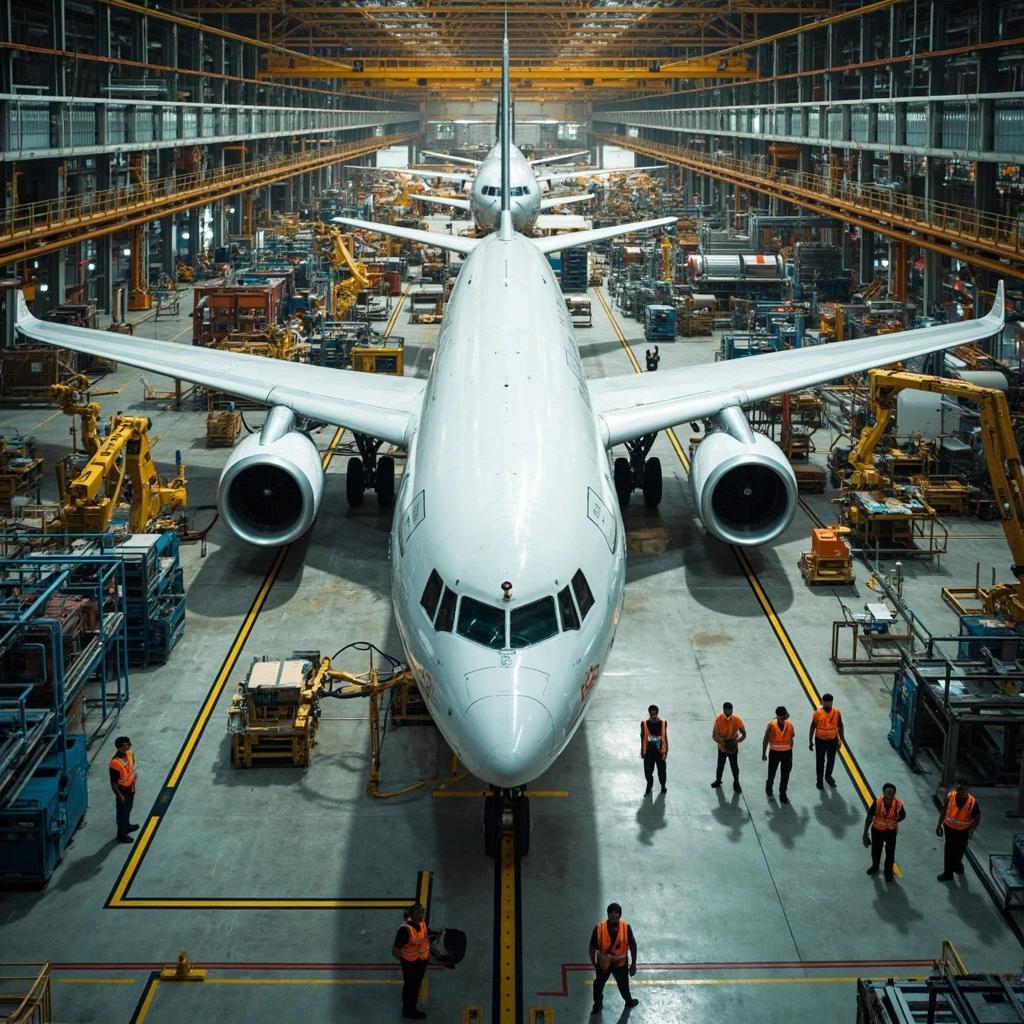
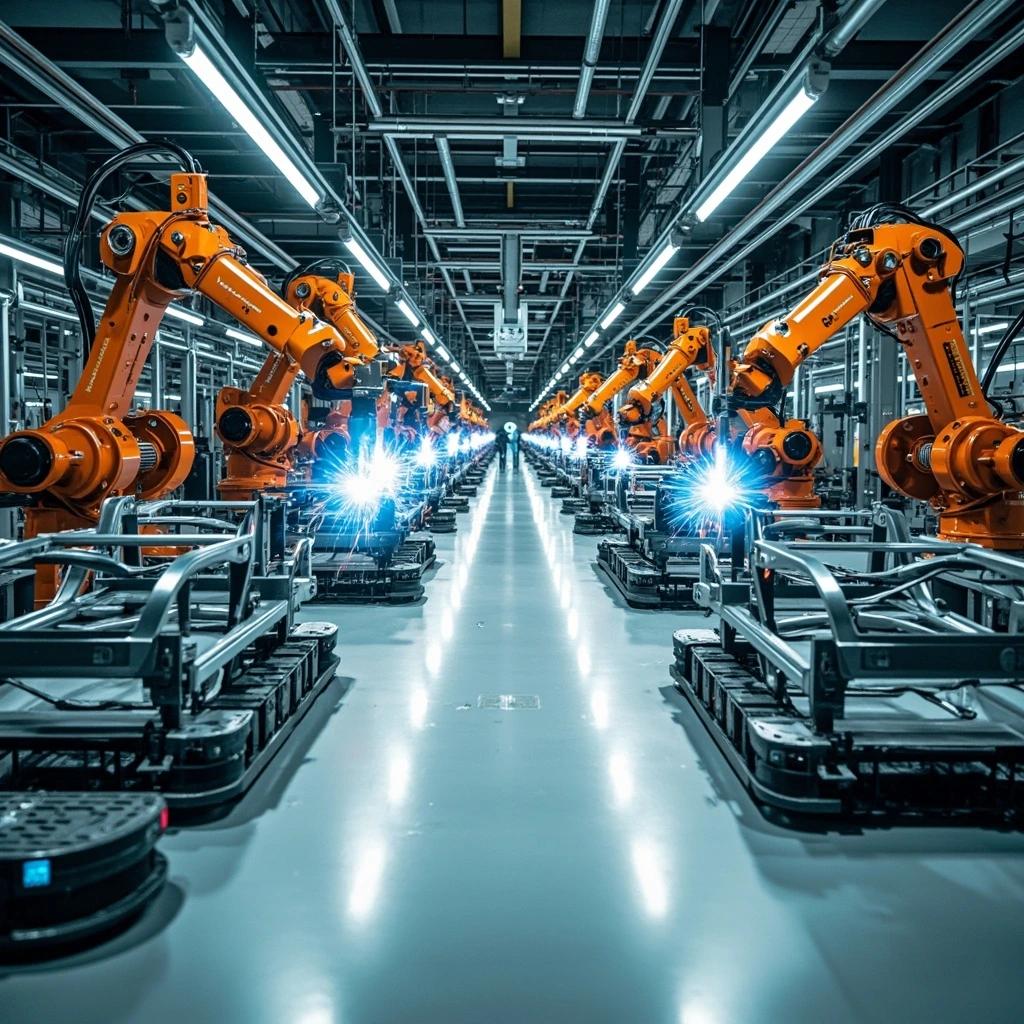
Physical production is the true barrier to entry. Unlike consumer brands that can license logos, aircraft manufacturers must operate billion-dollar final assembly lines, structural fabrication plants and flight-test facilities. Boeing's Everett campus covers 98.3 acres under one roof; Airbus operates ten A320 final assembly lines across Toulouse, Hamburg, Mobile and Tianjin; Lockheed Martin's Fort Worth plant is more than a mile long. These assets take decades and tens of billions of dollars to replicate, which is why no new large-airliner brand has entered the market since the 1980s.
The supply-chain crisis proved the point. Pratt & Whitney's GTF engine shortage grounded nearly-new A320neo aircraft and forced airlines to dismantle them for parts, while Boeing's fuselage-quality problems traced directly to outsourced structure manufacturing. The response was vertical integration: Boeing reacquired Spirit AeroSystems for US$8.3 billion to bring 737 and 787 structure fabrication back in-house, and Airbus absorbed Spirit's A220 wing and A350 fuselage plants in Belfast and France.
Certification is anchored to the factory. FAA, EASA and CAAC type certificates are issued to manufacturers, not brands, and every production change must be re-validated at the physical plant. A company that controls its factories controls its certification, its delivery schedule and ultimately its reputation — which is why this ranking weights production capability at 40%.
Where Are the World's Biggest Aircraft Assembly Lines Located?
Boeing's North American campuses. The Everett, Washington plant — the world's largest building by volume — assembles the 787 Dreamliner and 777X widebodies, while Renton, Washington produces the 737 MAX at a rate of roughly 42 aircraft per month, and Charleston, South Carolina hosts a second 787 line. Boeing's Zhoushan, China facility handles 737 completion and delivery for the Chinese market.
Airbus's transcontinental network. Airbus runs ten A320-family final assembly lines: four in Hamburg, two in Toulouse, two in Mobile, Alabama and two in Tianjin, China, with the second Tianjin line opened in October 2025 to support the 75-per-month production goal. Widebody A350 assembly is concentrated in Toulouse, and the Beluga transport fleet moves fuselage sections between European plants.
The defense and business-jet giants. Lockheed Martin's Fort Worth, Texas facility is the world's largest fighter production line, delivering 191 F-35s in 2025. Gulfstream's Savannah, Georgia campus covers 7.8 million square feet of business-jet design, fabrication, final assembly and completion. Leonardo operates helicopter assembly in Italy, the UK and Poland, while China's COMAC assembles the C919 at its Shanghai Pudong campus — scaled to reach 200 aircraft per year by 2029 with a second Lingang line.
How Is Vertical Integration Reshaping Aircraft Manufacturing?
Boeing's historic reversal. Two decades ago Boeing spun off Spirit AeroSystems to pursue a lean, asset-light model. The experiment ended badly — fuselage quality lapses contributed to the 737 MAX grounding and the 2024 Alaska Airlines door-plug incident. In December 2025 Boeing completed the US$8.3 billion reacquisition of Spirit, bringing control of 737 fuselages and 787 nose sections back to Wichita, Kansas, North Carolina and Malaysia.
Airbus and the structural arms race. Airbus simultaneously absorbed Spirit's Belfast and French plants producing A220 wings and A350 fuselage components, extending its own structural control. The duopoly is effectively competing on who owns more of the physical airframe — a reversal of the 2000s trend toward modular supply chains.
Specialists were always vertical. Gulfstream, Dassault, Leonardo and Lockheed never outsourced their core processes. Gulfstream does its own composite fuselage fabrication, interiors and completion in Savannah; Dassault builds Falcon and Rafale aerostructures in-house in Bordeaux; Leonardo maintains full rotorcraft manufacturing chains from blade fabrication to final assembly. The lesson of 2025-2026 is unambiguous: integrated manufacturers weathered the engine crisis and quality scandals far better than their outsourced peers.
How Do Defense and Civilian Programs Balance at the Top Aircraft Makers?
The Lockheed model: defense first. Lockheed Martin's US$75 billion revenue base is almost entirely defense, and its record US$194 billion backlog funds F-35 production, next-generation air dominance systems and hypersonics without any dependence on airline ordering cycles. This is the most defense-heavy structure in the top ten.
The Boeing and Airbus balance. Both duopoly players pair enormous commercial programs with substantial defense divisions — Boeing's fighters, tankers and spacecraft, and Airbus's military aircraft, helicopters and space systems. The commercial side drives volume; the defense side stabilizes trough years and supplies government-grade engineering talent that flows back into civil programs.
The European specialists. Dassault derives roughly 82% of its €46.6 billion backlog from the Rafale fighter franchise, allowing civilian Falcon business jets to be developed with military-funded engineering. Leonardo's rotorcraft, electronics and space divisions serve both worlds. General Dynamics routes submarine profits into Gulfstream's business-jet development. This cross-subsidization is why the top manufacturers can sustain decade-long R&D cycles that single-market specialists cannot match.
Why Is Aircraft Manufacturing Capacity Shifting to Asia?
The demand math is decisive. China is forecast to need roughly 9,000 new aircraft over the next 20 years — the largest single-country demand pool on earth. No manufacturer can ignore that market, and Airbus has made Tianjin its Asian production hub with two A320 final assembly lines, while Boeing operates a 737 completion center in Zhoushan.
COMAC is the indigenous challenger. The C919 program — with more than 1,500 firm and intent orders — is scaling its Shanghai Pudong line from 15 deliveries in 2025 toward 45-55 in 2026, with a second Lingang assembly line targeting 200 aircraft per year by 2029. The C909 regional jet has entered service in Indonesia and Laos, giving Chinese manufacturing its first international aircraft platforms.
Supply-chain localization follows assembly. Airbus's Tianjin expansion has pulled AVIC and other Chinese suppliers deeper into global narrowbody manufacturing — AVIC now accounts for more than half of Airbus's in-China industrial cooperation — while COMAC's CJ-1000A engine program aims to replace Western powerplants by 2028-2030. If that engine achieves certification, Asia will hold something it has never had: a complete, self-sufficient large-aircraft manufacturing ecosystem.