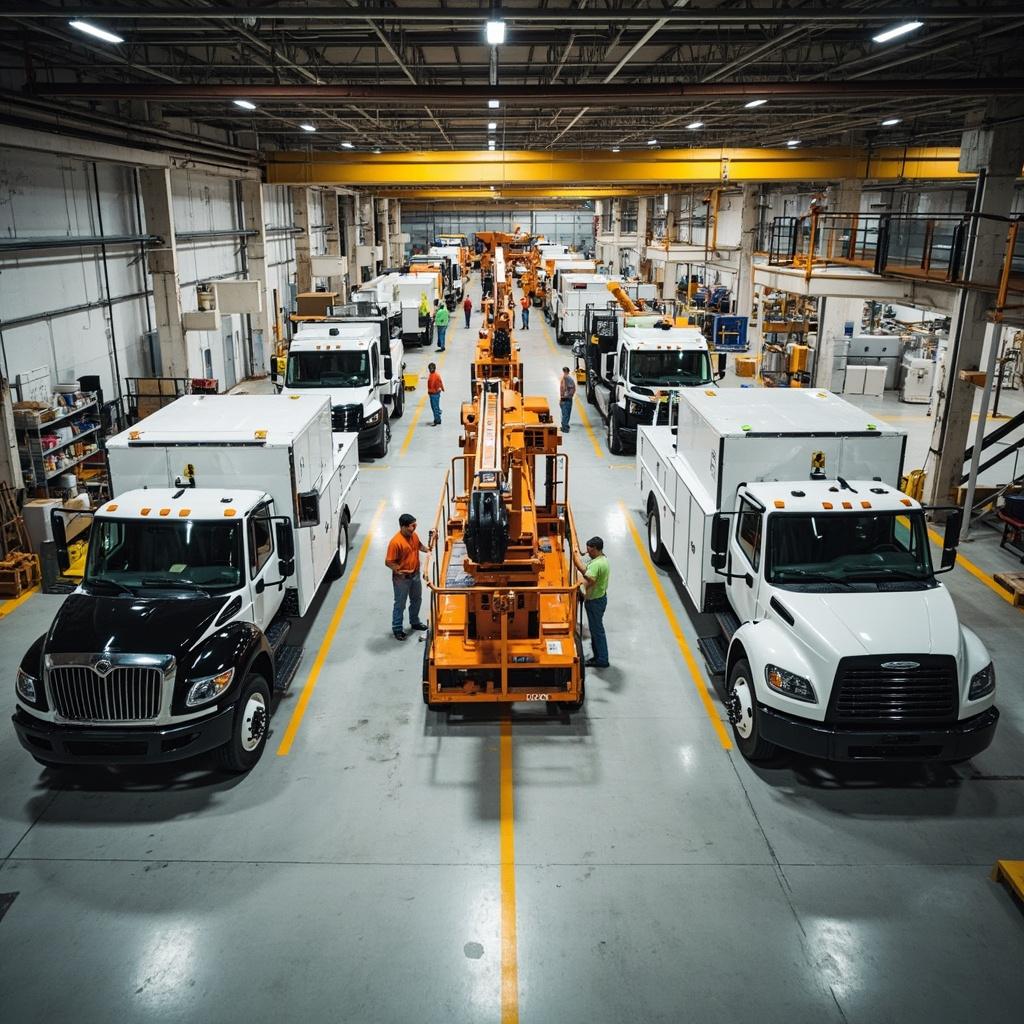
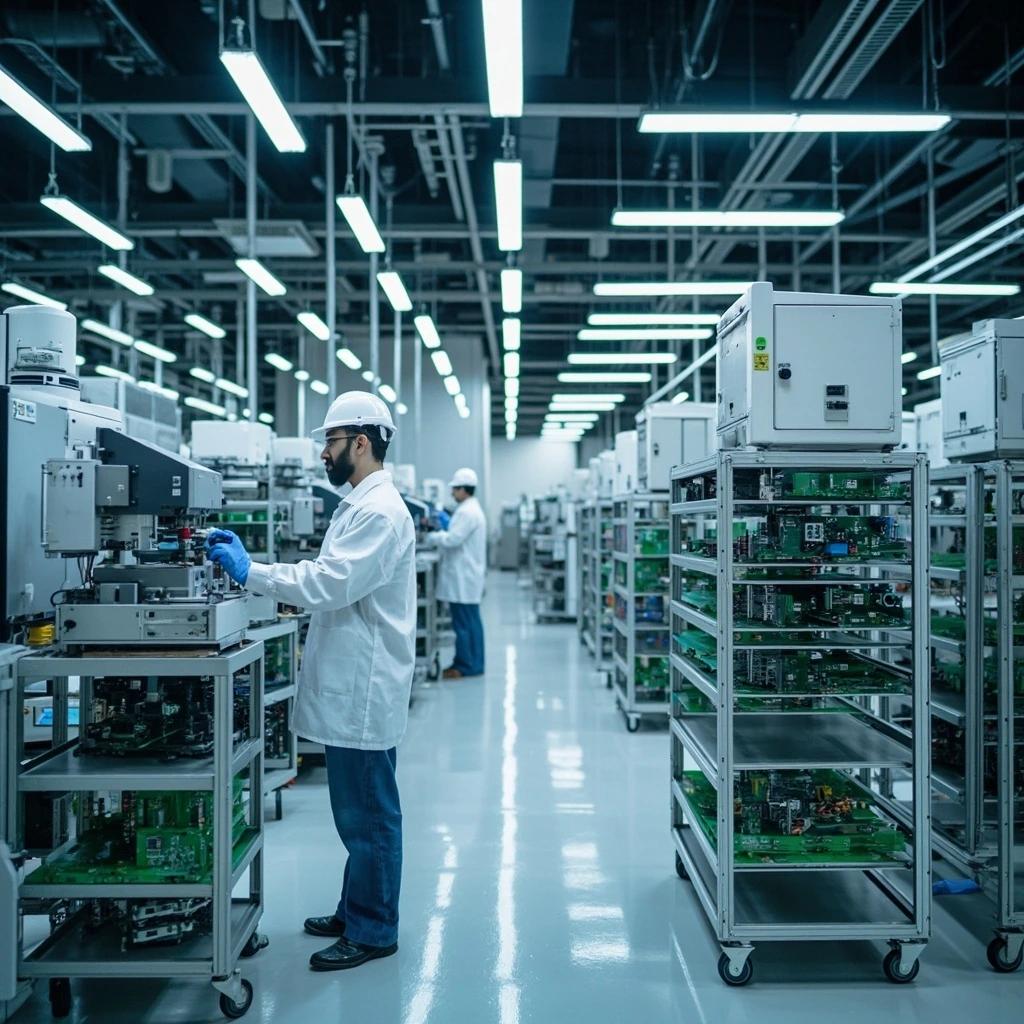
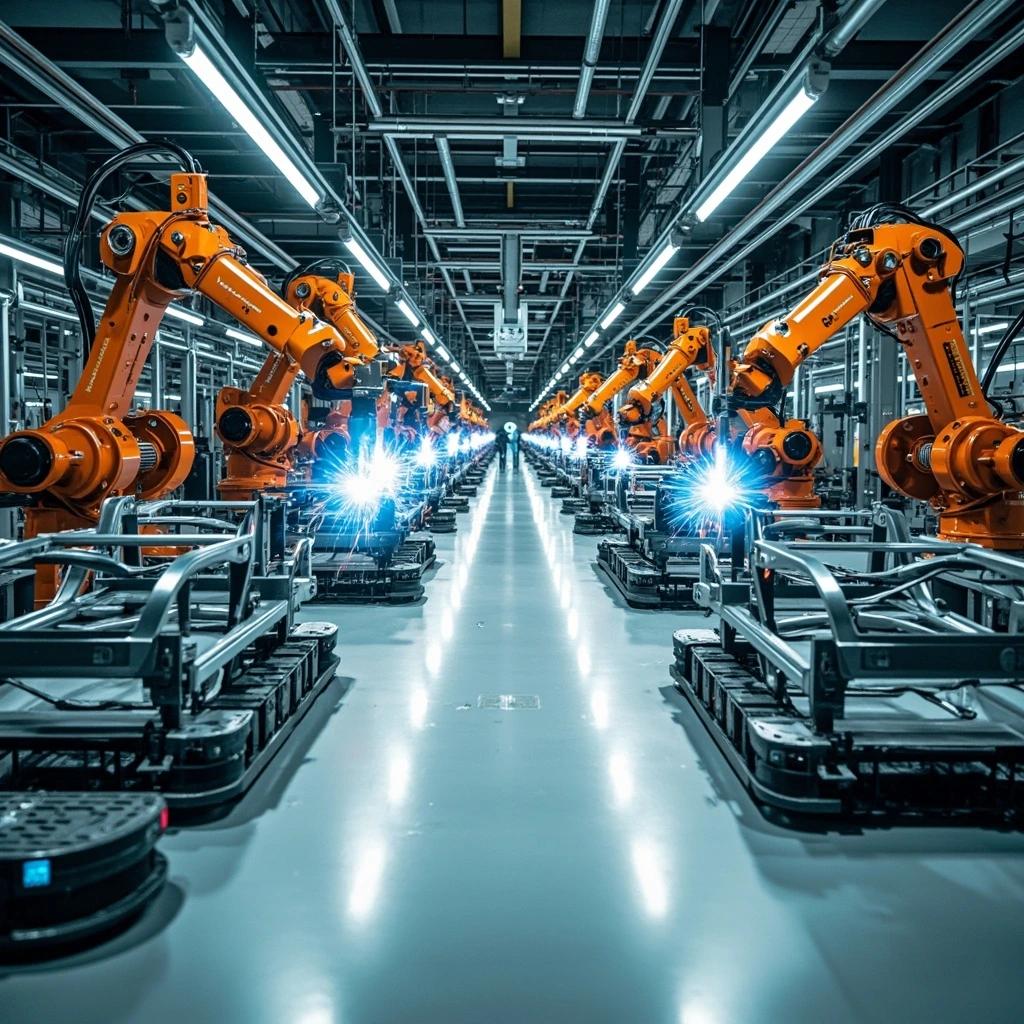
In rail equipment, the distinction between a manufacturer and a brand is a question of production capability, not marketing. A rail manufacturer owns the factories, tooling, engineering teams and supply chains that physically build trains, locomotives, bogies and signalling systems. A brand may simply commission, badge or license products from third-party factories — an increasingly common model in emerging markets where local content rules force foreign firms to partner with domestic assemblers. This ranking deliberately excludes brands without in-house production, because the industry's decisive competitive variables — capacity, cost curves, quality control and delivery reliability — are all determined on the factory floor.
The difference has real commercial consequences. A manufacturer controls its own cost structure, can respond to custom engineering requirements, and carries full liability for safety-critical production. It also captures the engineering value that flows from iterative learning: each new production run improves welding processes, assembly sequencing and defect rates. Brands, by contrast, carry margin risk from their contract manufacturers and are limited in how deeply they can customise products. When a metro authority or national railway evaluates suppliers, manufacturing depth is therefore the first screen applied.
There are nuances at the top of the market. Groups like Siemens Mobility and Hitachi Rail integrate manufacturing with systems design, signalling and services, blurring the line between "manufacturer" and "systems integrator". Component specialists like Knorr-Bremse manufacture nothing that resembles a complete train yet are indispensable to every one that exists. This ranking grades across that spectrum, rewarding companies that combine genuine production scale with control of the highest-value technology layers.
VerityRank evaluates manufacturers on a production-weighted framework that deliberately differs from brand rankings. The heaviest dimension, Production Scale & Capacity (35%), measures wholly owned factories, floor space, annual output of vehicles, bogies and locomotives, and global workforce. CRRC scores highest here with about 160,000 employees and annual locomotive capacity exceeding 1,530 units — including 1,000 at its Zhuzhou plant alone and 600 at Dalian — followed by Alstom's roughly 70 sites in 63 countries and its 10,000 bogies-per-year capacity. The second dimension, Category Coverage (25%), measures how many of the industry's ten product lines a company supplies, from high-speed trains to core components, plus new-energy vehicles (hydrogen/battery) and digital signalling. The third, Financial Health & Global Reach (25%), is built on 2024-2025 revenue, order backlog, margins and market performance: Alstom's €95 billion backlog and Wabtec's 2025 revenue of over US$11 billion score strongly here. The fourth, Supply-Chain Autonomy (15%), rewards vertical integration in traction systems, IGBT/SiC power semiconductors, bogies and braking.
Scores are normalised to 0-100 using audited financial statements and exchange filings current to the 2025-2026 review window. For unlisted divisions such as Siemens Mobility, parent-company segment disclosures are used; for publicly listed entities, stock-exchange quotation pages verify the financial data. All manufacturers in this ranking must demonstrate in-house production capability — contract assemblers are excluded by design.
A note on comparability: revenue alone does not determine placement. Wabtec and Knorr-Bremse score highly despite being smaller in revenue than CRRC because their component and aftermarket franchises carry exceptional pricing power and margins. Conversely, conglomerates such as Kawasaki Heavy Industries are evaluated only on rail-relevant production rather than group-wide industrial output.
The global production map is dominated by four companies by four companies — CRRC, Alstom, Siemens Mobility and Hitachi — which together operate several hundred factories across more than 60 countries. CRRC's footprint is unmatched in scale: dozens of heavy manufacturing bases across China, including the Zhuzhou and Dalian locomotive plants, Qingdao Sifang's high-speed vehicle assembly lines and Changchun's passenger-car factories, sustained by roughly 160,000 employees and a wholly owned component chain that extends to IGBT power semiconductors through its Zhuzhou Times Electric subsidiary.
Alstom, enlarged by the Bombardier Transportation acquisition, operates more than 70 manufacturing and R&D sites in 63 countries, with bogie technology centres in France and Germany producing 10,000 bogies a year and complete-vehicle plants from La Rochelle to Savigliano, Italy. Siemens Mobility anchors European production at Munich-Allach — one of the world's most automated locomotive lines, delivering Vectron locomotives at above 85 units per year — with additional plants in Krefeld, Vienna and Sacramento, California. Hitachi Rail, the most globally dispersed Asian manufacturer, owns full-scale assembly plants in the UK (Newton Aycliffe), Italy (Naples, Pistoia), the US and South Korea, inherited from AnsaldoBreda and expanded after its Thales GTS acquisition.
Below the giants, the specialist tier maintains remarkably focused footprints. Wabtec operates about 50 heavy manufacturing plants worldwide and holds an installed base of more than 24,600 operating locomotives; Stadler runs Swiss plants plus facilities in Germany, Poland, Spain and the US; CAF produces from Beasain and Zaragoza with localised assembly in Mexico, Brazil, the US, France and Algeria. Knorr-Bremse, meanwhile, spans 100+ engineering sites in 30+ countries — the invisible manufacturing backbone inside virtually every train built today.
The geo-economic walls now rising around rail manufacturing are tougher than any technical challenge the industry has faced. In the United States, Buy America policy requires federally funded rail projects to use a high proportion of US-made components with final assembly on American soil. The rule has compelled CRRC, Kawasaki and Stadler to build expensive US factories — CRRC's Springfield plant, Kawasaki's Lincoln, Nebraska facility and Stadler's Salt Lake City operation all exist primarily to clear this barrier — effectively granting incumbents with compliant plants a cartel-like protection from Asian price competition. In Europe, the EU's Foreign Subsidies Regulation (FSR) operates differently: rather than imposing local content, it subjects foreign bidders to deep subsidy investigations. Its rail applications have hit CRRC directly, forcing withdrawal from Bulgarian locomotive tenders and the Lisbon light-rail project, and signalling that European infrastructure procurement now includes political-trust review alongside price and technology.
These policies are accelerating a structural shift from "product export" to "capacity export". Chinese manufacturers are moving from shipping complete trains to building local partnerships, licensing technology and establishing joint ventures in target markets. European and American OEMs, in turn, are consolidating production inside each region to reduce exposure. The commercial logic is unambiguous: a manufacturer's factory footprint — where it builds, and with whom — is now as important as what it builds.
The cost consequence is equally clear: regionalisation raises industry-wide capital expenditure and lowers returns on fixed assets. But for manufacturers that navigated the shift early — Stadler with its US plant, Hitachi with its UK factory, Siemens with Sacramento — localisation has become a durable competitive moat rather than a compliance burden.
The rail manufacturing supply chain is being re-sliced at its most valuable seams — power semiconductors, hydrogen fuel-cell systems, bogies and digital train control. The most strategically important component is the insulated-gate bipolar transistor (IGBT) and silicon-carbide (SiC) power module, the heart of every modern traction converter. CRRC's subsidiary Zhuzhou Times Electric has achieved full in-house production of these modules — its automotive IGBT install base already holds 13.7% of China's market — giving CRRC a vertical-integration advantage that no Western OEM can currently match. This "descending strike" capability lets CRRC deploy the same semiconductor technology across rail traction, electric-vehicle drives and photovoltaic inverters, spreading R&D cost across enormous markets.
Braking and safety components define a second, equally essential chain. Knorr-Bremse controls more than half of the world's rail braking market, supplying every major OEM with pneumatic and electronic braking, doors and HVAC — a safety-certified franchise with extreme pricing power. Wabtec, through GE Transportation heritage, owns the complementary freight chain: locomotives, braking, couplers and the increasingly digital train-control layer, with a 24,600-locomotive installed base generating recurring aftermarket revenue. The European Digital Automatic Coupling programme — a retrofit of more than 300,000 wagons by 2030 at EUR 3,000-6,500 per vehicle — is now converting the humble coupler into a data and power gateway, handing these component leaders a decade of upgrade demand.
The third chain is hydrogen and battery propulsion. Alstom's Coradia iLint remains the world's only hydrogen train in commercial service; Stadler's RS ZERO hybrid architecture and FLIRT H2 set range records; Hyundai Rotem leverages Hyundai Motor's fuel-cell stacks. Together these technologies are displacing diesel-engine suppliers and creating a new tier of component champions in fuel-cell stacks, high-pressure hydrogen storage and battery packs — the supply-chain battleground that will define rail manufacturing through 2035.