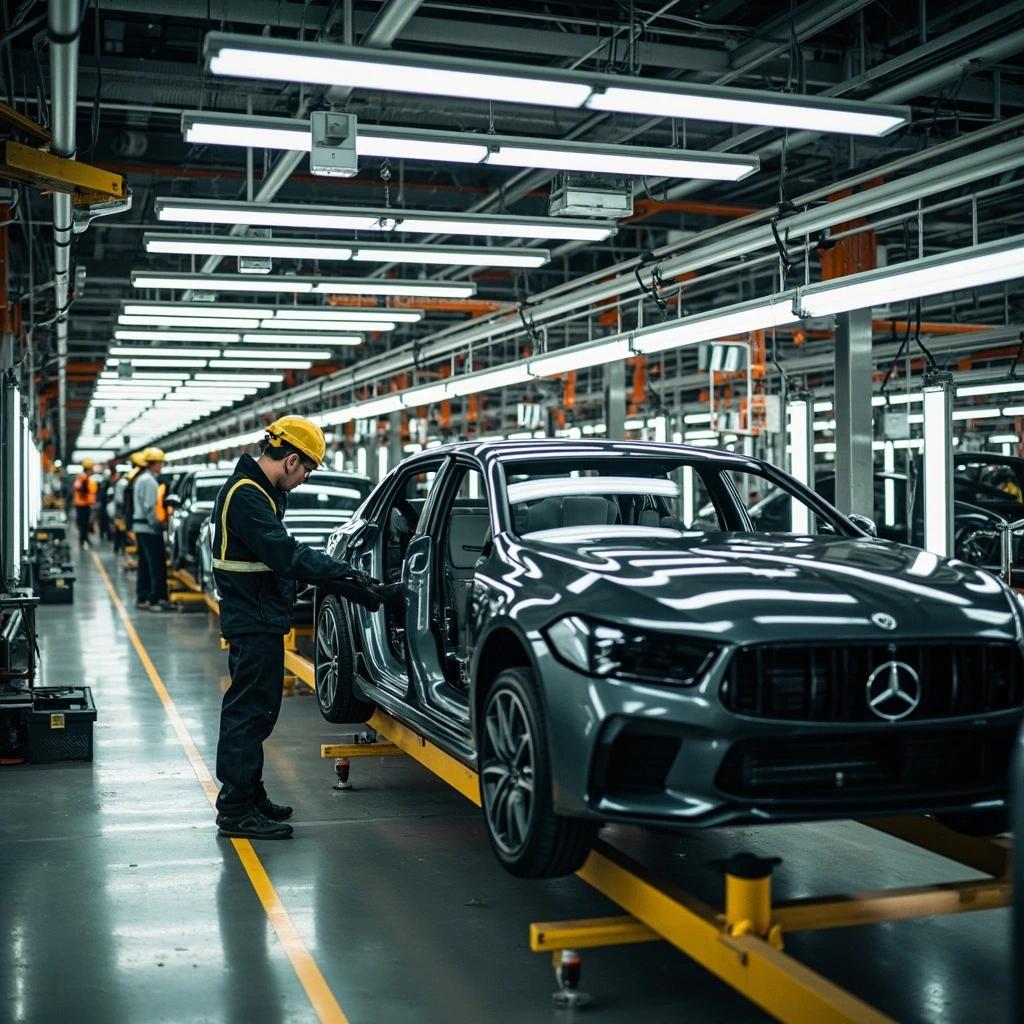
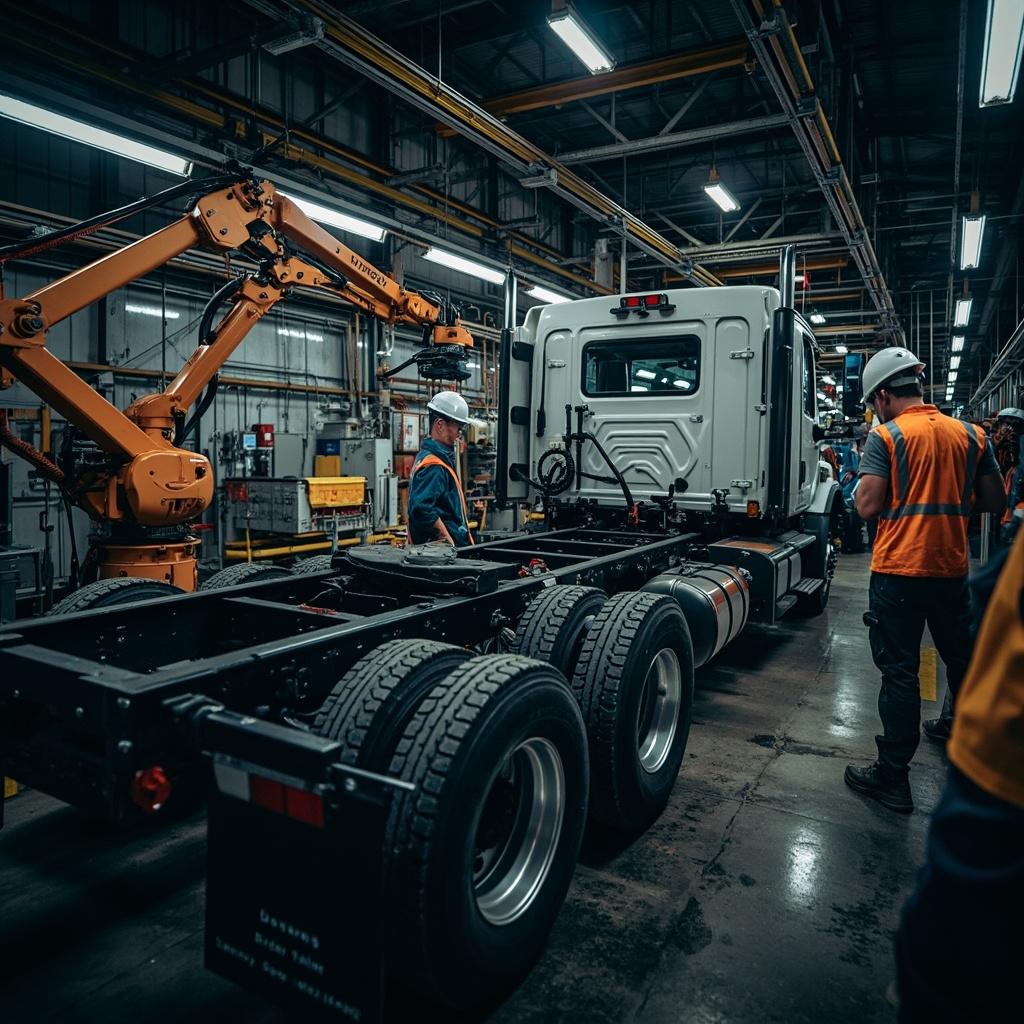
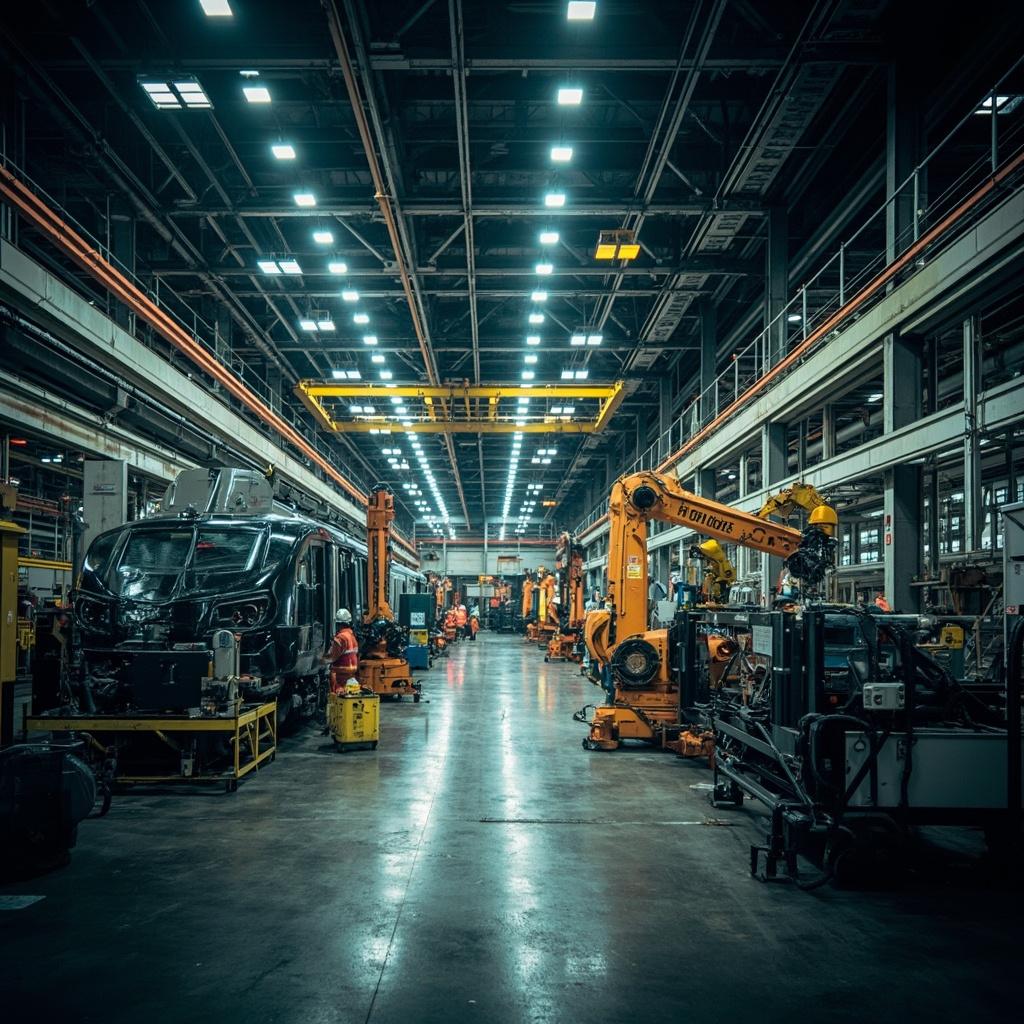
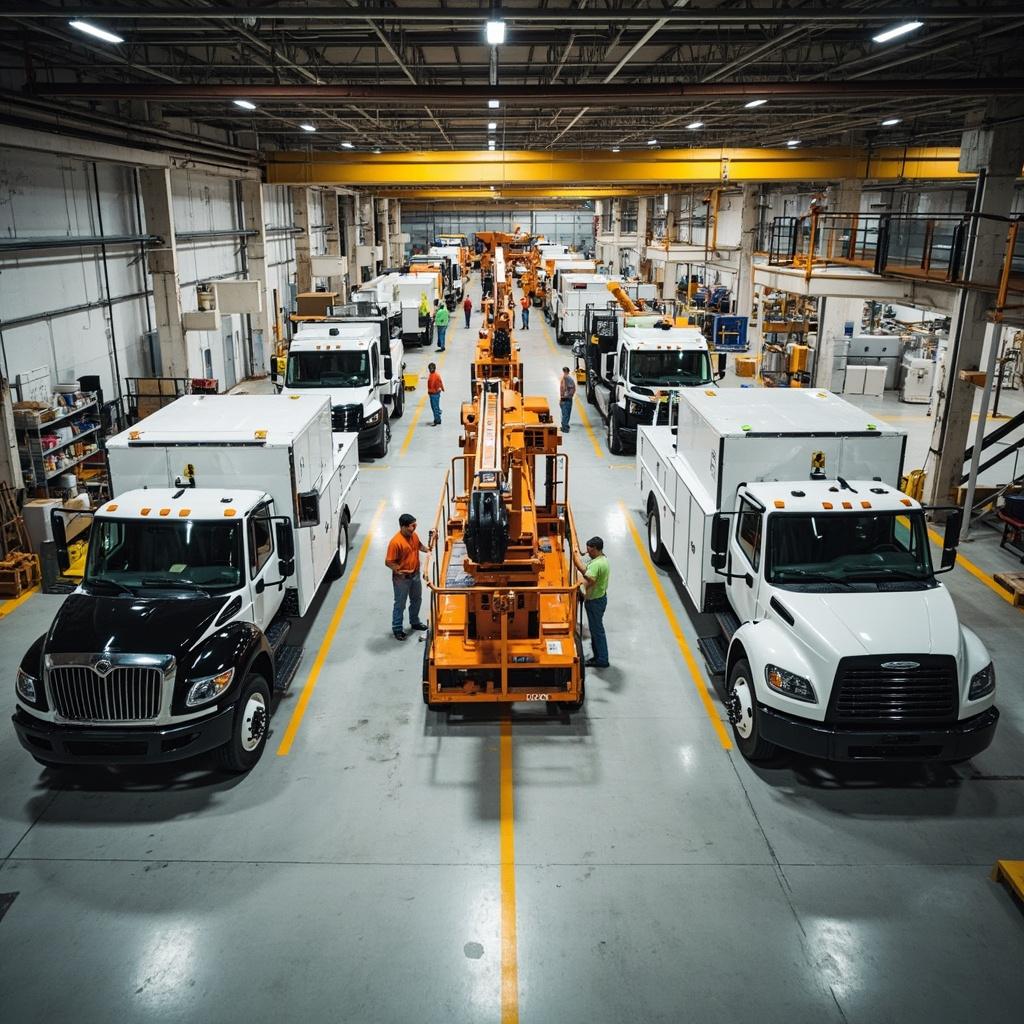
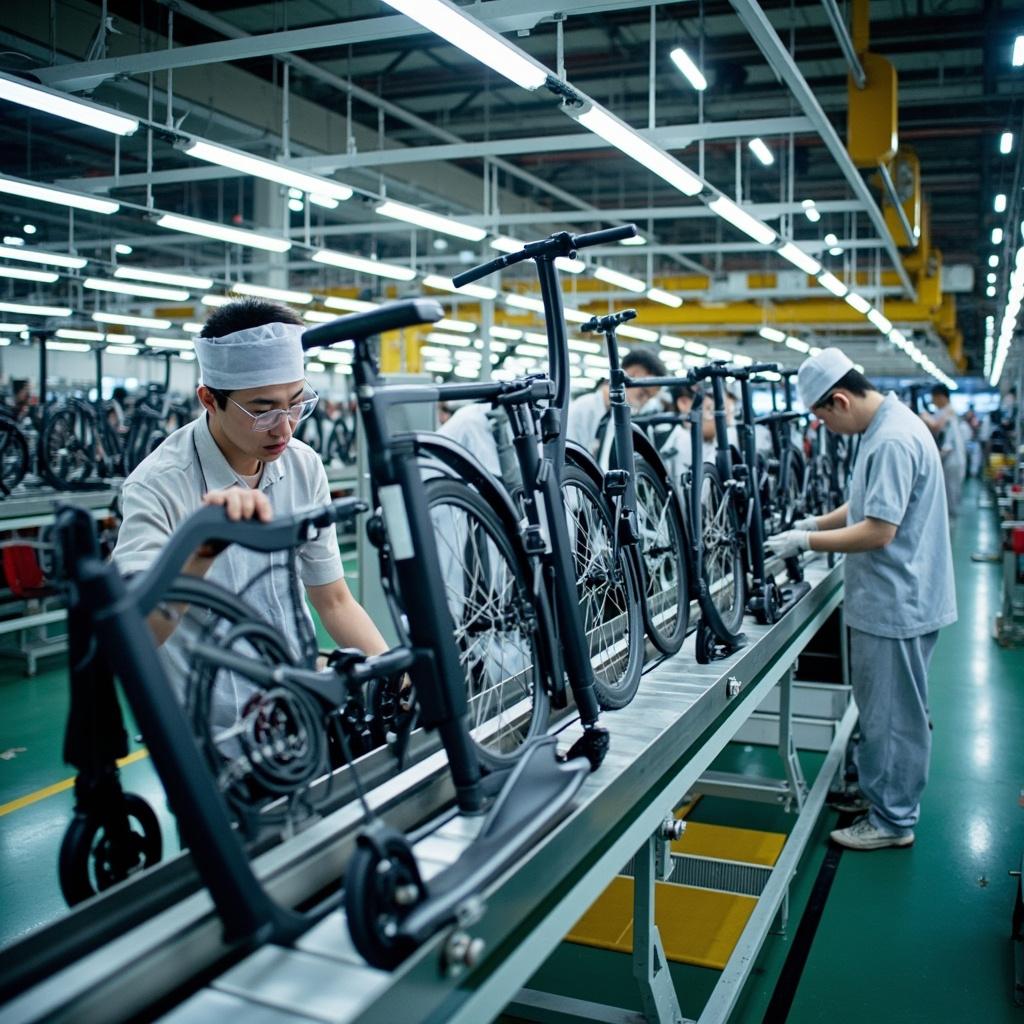
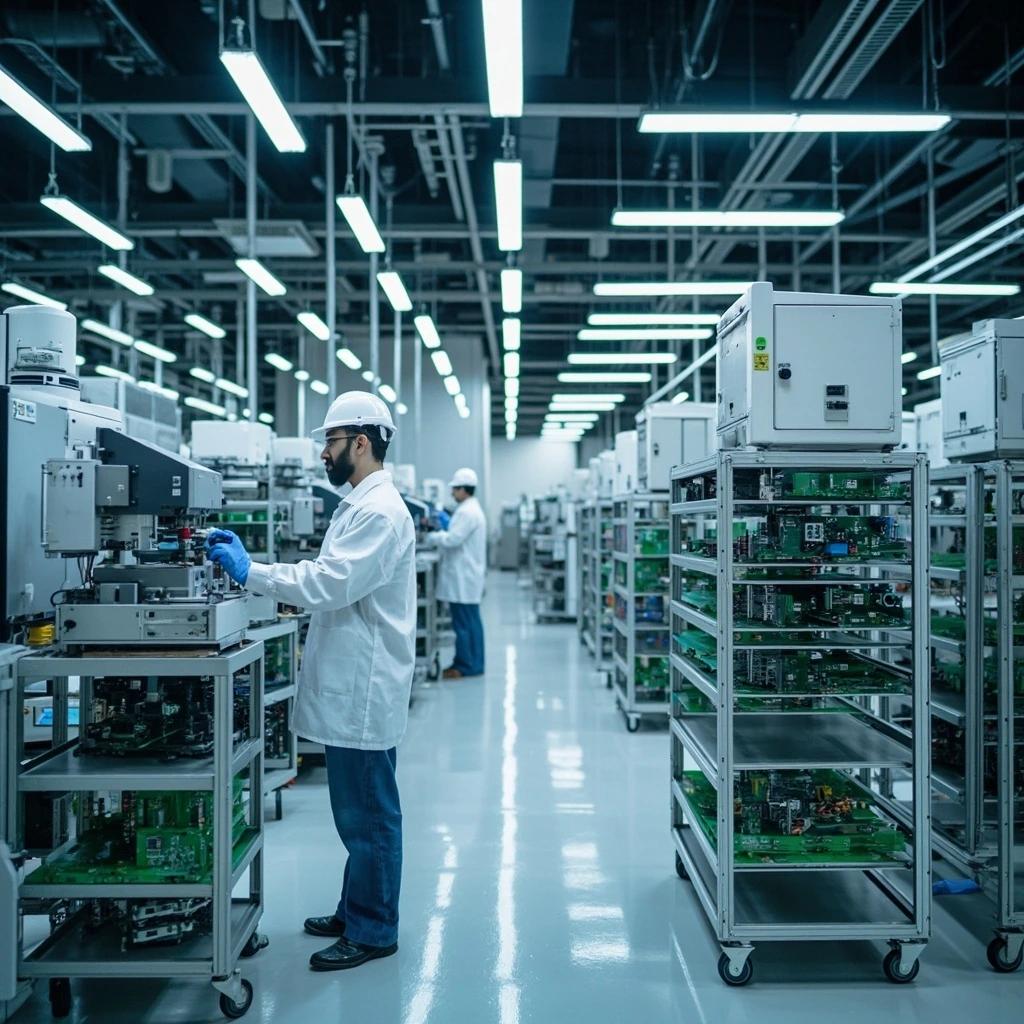
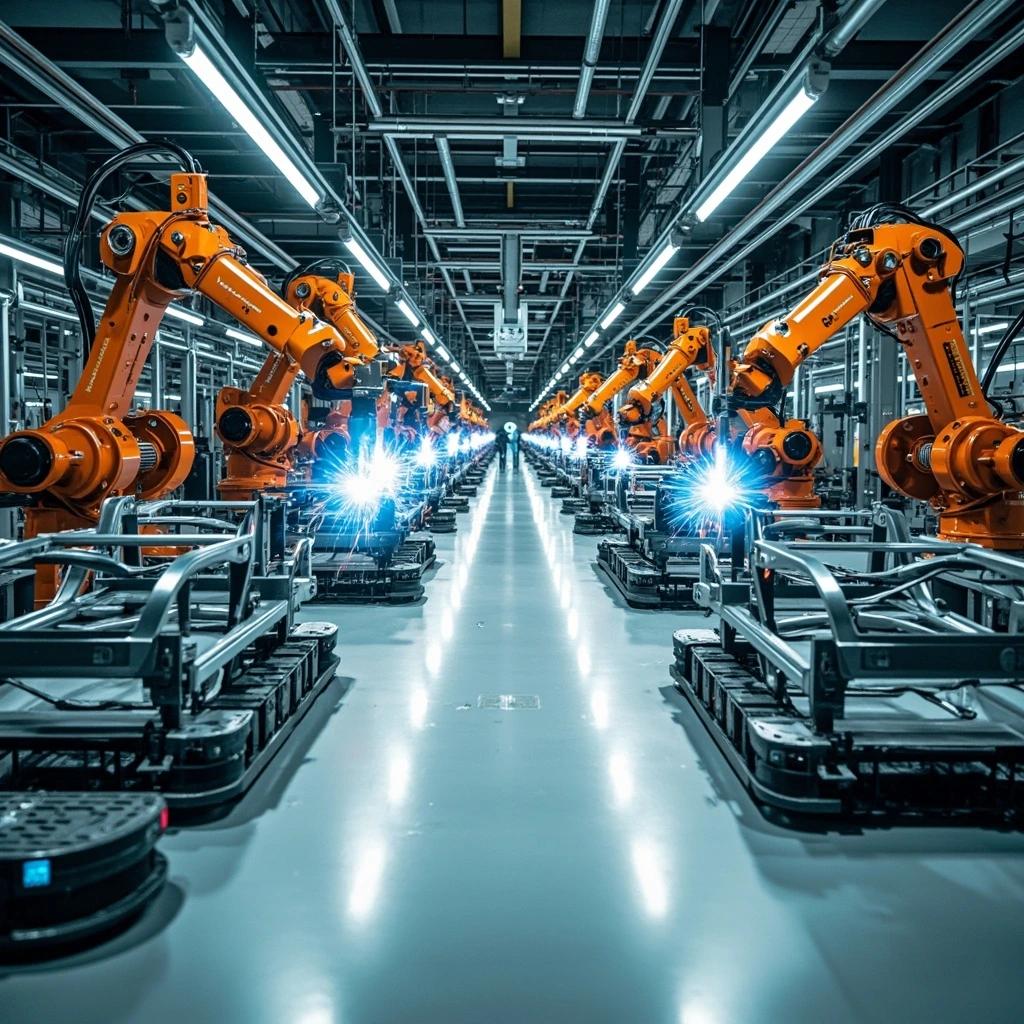
True commercial vehicle manufacturers own the heavy assets: stamping presses, welding lines, paint shops, engine plants and increasingly battery factories — while assemblers bolt together bought-in parts.
Manufacturing depth is the dividing line. The world's top ten truck makers — Daimler Truck, Volvo Group, Traton, PACCAR, Isuzu, Sinotruk and others — operate their own stamping, welding, painting and final assembly facilities, and control the core components that define a truck's performance, durability and cost: engines, transmissions, axles and cab structures. PACCAR builds its own engines for Kenworth and Peterbilt; Isuzu is one of the world's largest diesel engine manufacturers; Sinotruk links Weichai Power engines, Fast Gear transmissions and Hande axles into one integrated supply chain.
Vertical integration determines resilience. During the 2021-2024 supply crises and the current tariff environment, manufacturers with captive component production kept building while assemblers idled. The new frontier is batteries: Daimler, PACCAR and Accelera invested USD 2-3 billion in Amplify Cell Technologies' 21 GWh LFP plant in Mississippi, and Volvo Group moved early on both battery-electric trucks and hydrogen fuel cells through cellcentric.
Scale is self-reinforcing. Only manufacturers producing hundreds of thousands of units per year can amortize the USD 1-2 billion annual R&D budgets needed for Euro 7, EPA27 and zero-emission drivelines. This capital intensity is why the industry is consolidating into fewer, larger producers — and why the distinction between manufacturer and assembler has never mattered more to fleet buyers evaluating long-term reliability and resale value.
Disclaimer: Rankings rely on the latest publicly reported financial and manufacturing data as of 2025-2026 and are for reference only; they do not constitute investment guidance.
VerityRank scores manufacturers on a weighted model built around heavy-asset manufacturing, not marketing strength.
Production scale and facilities (30%). We evaluate the number, capacity and technology level of owned plants — stamping, welding, painting, assembly and powertrain facilities — plus annual production volume. Daimler Truck operates 35+ major sites; FAW Jiefang runs four vehicle plants and three powertrain bases; Foton maintains nationwide assembly capacity across China.
Vertical integration (30%). The core score is how much of the vehicle is made in-house: engines, gearboxes, axles, cabs, and now batteries or fuel cells. Volvo Group's proprietary drivelines, Isuzu's engine manufacturing, and Sinotruk's golden supply chain all score highly; manufacturers dependent on external powertrains score lower.
Global footprint and localization (20%). We assess the number of manufacturing countries and tariff-resilient production clusters. PACCAR builds in the U.S., Netherlands, UK and Brazil; Volvo invested USD 1 billion in a Mexican plant; Scania opened in China; Sinotruk runs KD plants in Nigeria and beyond — each example of building where fleets buy.
Technology and compliance leadership (20%). We score zero-emission drivelines (battery, hydrogen, natural gas), digital manufacturing, and readiness for Euro 7, EPA27 and China's China VI-B emission standards. Iveco's natural-gas leadership, Foton's ZF e-axle partnership and Daimler's eActros 600 and cellcentric fuel-cell program all reflect this dimension.
Data sources. Rankings draw on 2025-2026 annual reports, investor presentations, plant announcements, market research and industry press, verified against independent sources and company disclosures.
The top manufacturers run genuinely global production networks, with North America, Europe and Asia serving as the three anchor regions.
Daimler Truck holds the broadest footprint with more than 35 major production and assembly sites spanning Germany (Wörth, Stuttgart), the United States (Portland, Ohio, Texas), Mexico, Japan, India and Turkey — an architecture deliberately built to absorb Section 232 tariffs through local production. Its North American subsidiary (DTNA) localizes heavy-truck assembly for the U.S. market entirely within free-trade territory.
Volvo Group manufactures in 17-18 countries including Sweden, France, the United States, Brazil and India, and announced a USD 1 billion Mexican heavy-truck plant in 2025 to deepen North American localization. Traton concentrates in Germany, Sweden, the United States and Brazil — 26 core sites across 13 countries — and opened Scania's first wholly owned Chinese plant in Rugao in late 2025.
PACCAR maintains its famous regional cluster: Kenworth in Washington state, Peterbilt in Texas, DAF in the Netherlands and UK, plus DAF Brazil. Among Chinese manufacturers, FAW Jiefang operates four vehicle bases (Changchun, Qingdao, Chengdu, Liuzhou) and three powertrain bases; Foton has plants across most Chinese provinces plus overseas KD assembly; Iveco Group builds in Italy, Spain, France, Brazil and China. The industry's direction is unambiguous: the largest footprints, localized inside tariff walls, are winning market share.
Section 232 tariffs and regional trade rules have turned "build where you sell" from a slogan into the industry's dominant manufacturing strategy.
The U.S. tariff shock. The 25% U.S. tariff on imported heavy trucks made cross-border truck exports uneconomical, rewarding manufacturers with deep North American production. PACCAR — which builds Kenworth and Peterbilt in Washington and Texas, supported by Canadian and Mexican plants — and Daimler Truck's DTNA, which localizes in Ohio, Texas, Mexico and Canada, both kept most U.S. sales inside free-trade territory, turning a cost threat into a competitive moat against importers.
The China response. Chinese manufacturers responded with two strategies: localized KD (knocked-down) assembly in Nigeria, Southeast Asia and other markets, and direct investment abroad. Sinotruk runs multiple overseas KD plants; Traton's Scania built a wholly owned factory in Rugao, China, to serve the world's largest medium- and heavy-duty market.
The Mexico effect. Volvo Group's USD 1 billion investment in a new Mexican heavy-truck plant reflects the broader race to build inside the USMCA free-trade zone. As tariffs spread beyond the U.S., similar localization is accelerating in Europe (EU CBAM carbon tariffs) and across ASEAN. For manufacturers, the lesson of 2025-2026 is clear: global scale plus local production equals tariff resilience, while pure exporters face margin erosion and shrinking addressable markets.
Five manufacturing trends are reshaping truck plants worldwide: in-house batteries, hydrogen powertrains, modular platforms, digital factories and localized autonomy-ready assembly.
1. Battery plants move inside truck makers. The biggest structural shift is vertical integration into cell production. Daimler Truck, PACCAR and Accelera's Amplify Cell Technologies (21 GWh, Mississippi) marks the first time truck OEMs directly own LFP cell capacity, securing the cost-critical component of electric trucks and squeezing out independent suppliers.
2. Hydrogen gains assembly-line realism. Daimler's NextGen H2 trucks entered regular service with DACHSER in 2026 (10-15 minute refueling, 1,000+ km range), and cellcentric — the Daimler-Volvo-Toyota fuel-cell venture — targets sub-USD 80/kW stack costs by 2026-2030. Expect dedicated fuel-cell assembly lines within five years.
3. Modular manufacturing becomes standard. Traton's Modular System and Daimler's Global Platform Strategy allow multiple brands to share chassis and powertrains on common assembly lines, cutting capex per model and enabling flexible production of electric and diesel variants on the same line.
4. Digital and software-defined factories. Volvo and Daimler jointly created Coretura, a common commercial-vehicle digital platform; connected factory data is improving quality, predictive maintenance and build-to-order flexibility across all top manufacturers.
5. Autonomy-ready assembly. Chinese pioneers lead in autonomy-ready trucks: Sinotruk's L4 mining trucks (METAMINE) run in mixed fleets, and FAW Jiefang partners with autonomous-logistics platforms on highway trucking pilots. The manufacturers that prepare their plants and architectures for these trends — not necessarily the largest today — will dominate the next decade of commercial vehicle production.