Every candidate must first pass a single qualification screen, and only then is it scored on four weighted dimensions. The screen is the part that matters most, because it removes companies that most published rankings include.
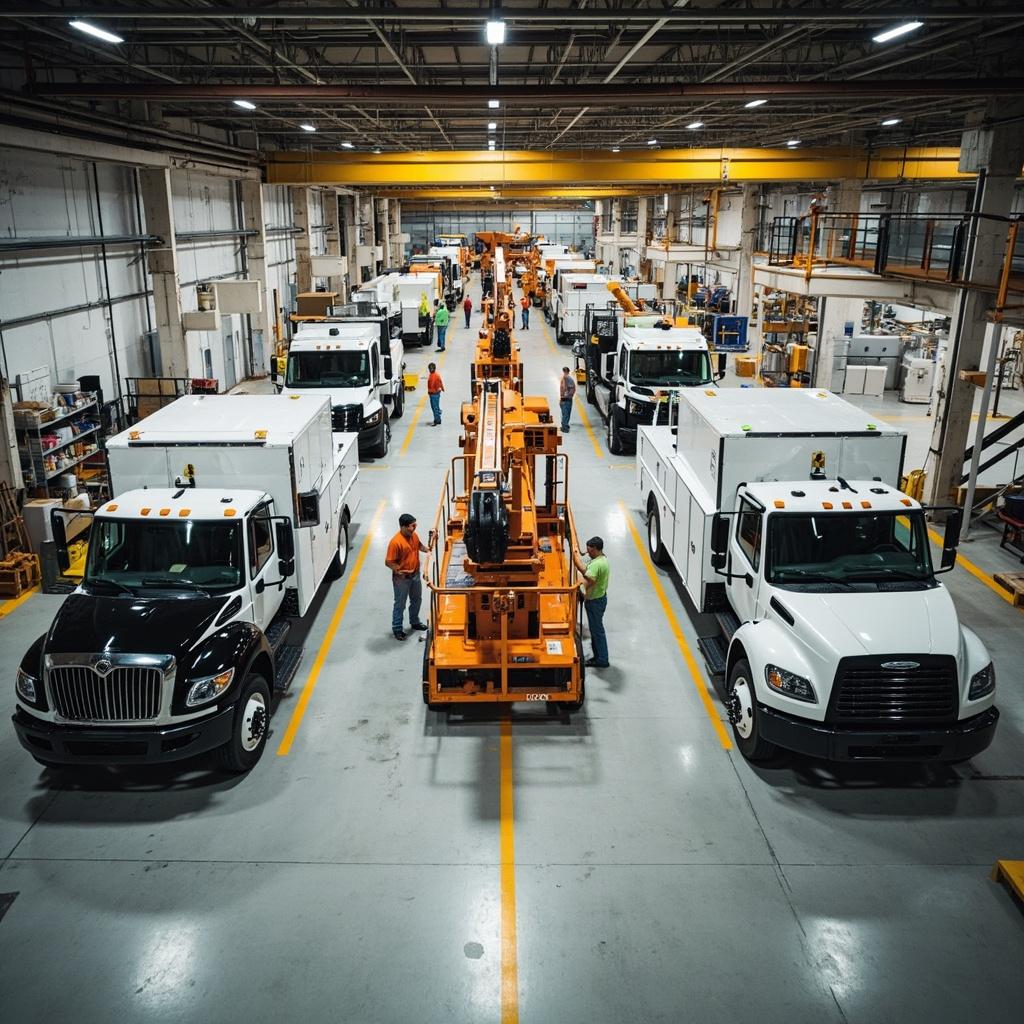
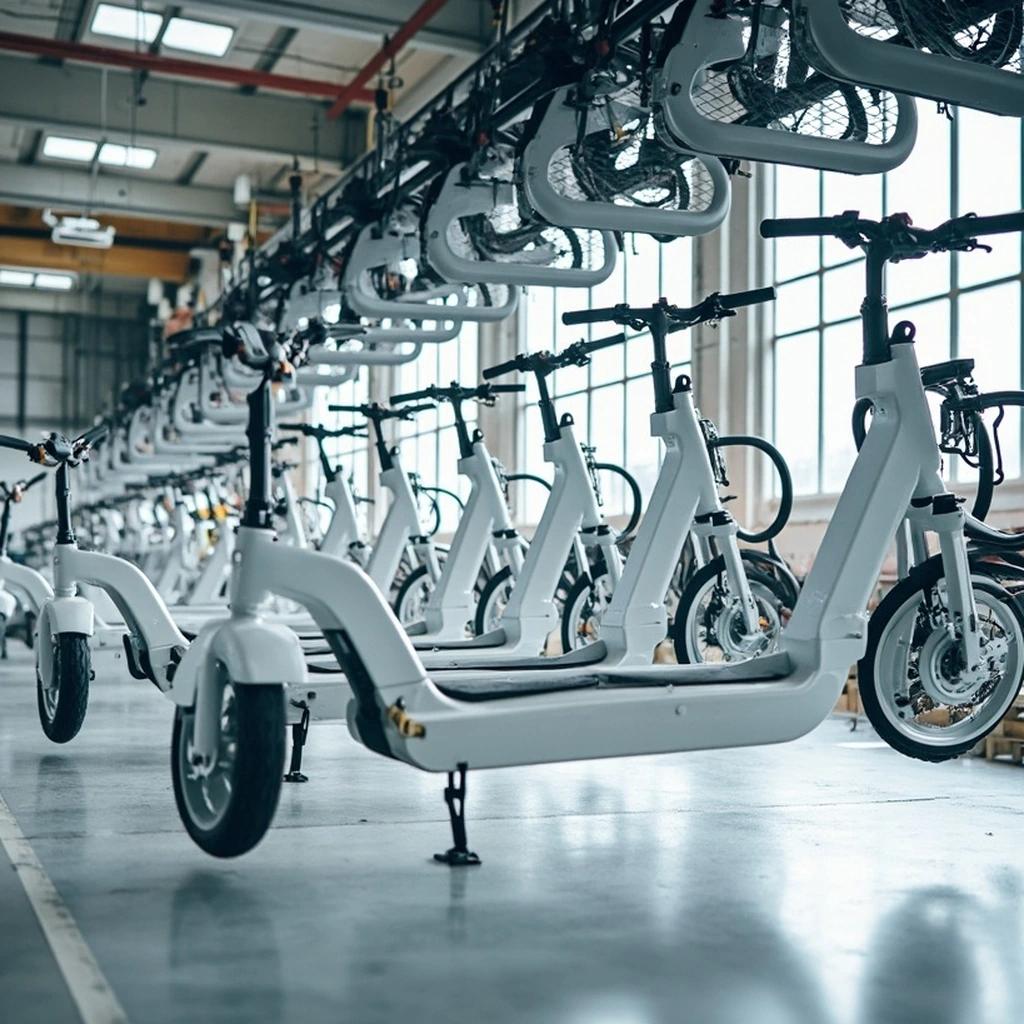
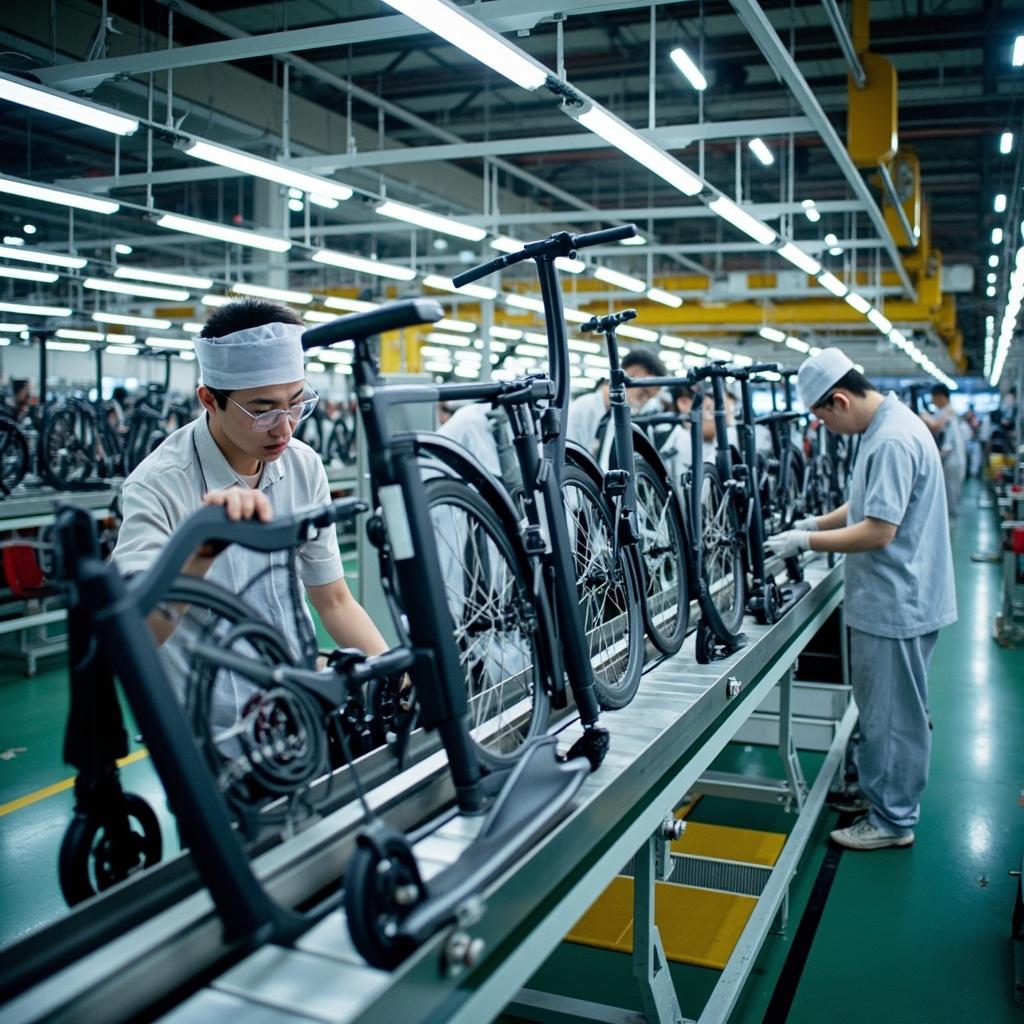
The screen: owned manufacturing. A company qualifies only if it owns and operates the facilities that build its vehicles. That single rule excludes pure brand owners that outsource production, licensing platforms that place their name on someone else's product, and shared-mobility operators that buy or commission fleets. It also means this list cannot be read as a ranking of the biggest names in micromobility — several of the most recognised brands in the world do not appear at all, for the specific reason that they do not own a factory.
The four scoring dimensions
• Owned Manufacturing Footprint & Output (35%) — number and size of owned plants, total plant area, annual capacity, utilisation and actual unit output
• Micromobility Production Concentration (25%) — the share of output and revenue made up of e-bikes, e-scooters, e-mopeds, micromobility components and light electric vehicles
• Drivetrain Self-Sufficiency (20%) — in-house motors, battery packs, battery management systems and controllers
• Global Sales Scale & Distribution Reach (20%) — revenue, profitability, cash generation, countries with real distribution and service coverage, and workforce scale
Why drivetrain control carries its own 20% weight. In this industry the motor, battery pack and controller determine unit cost, safety certification and supply stability at the same time. A manufacturer that assembles from purchased drivetrains is exposed to component price movements and to any supplier's certification failure, no matter how many vehicles it ships. Companies that build these parts themselves can redesign to meet a new standard instead of waiting in a supplier's queue.
Data comes from primary disclosure wherever it exists. Yadea, Aima, Giant, Merida, SUNRA and Tao Motor file audited reports with the Hong Kong, Shanghai, Shenzhen and Taiwan exchanges; NIU files with the US Securities and Exchange Commission. Pon.Bike and Accell Group publish nothing comparable, so their assessment relies on trade reporting, regulatory filings and verified employment data. Capacity figures are stated as reported by the manufacturer rather than estimated independently.
Disclaimer: Ratings are compiled from publicly available third-party information and are published for research and market-reference purposes only. They do not constitute investment, procurement or legal advice, and product specifications, certification and commercial terms should always be verified directly with the manufacturer before purchase.
Because none of them manufactures the vehicles it sells, and this ranking measures manufacturing. The exclusion is the defining feature of the list rather than a side note, and it removes companies that appear in almost every other published ranking of micromobility players.
Xiaomi is a brand owner and sales channel, not a producer. Its electric kick scooters are manufactured by Segway-Ninebot and other contract manufacturers, and the company operates no owned vehicle plant of its own. It appears in this ranking's supply chain — as a customer of one of the companies on the list — but not on the list.
Lime, Bird, Dott, Voi and Swapfiets are service businesses. They operate shared or subscription fleets, and their competencies are permit acquisition, city-by-city logistics, app development and unit economics. The hardware they deploy is custom-ordered from third-party manufacturers including Okai and Segway-Ninebot. When Bird Global filed for bankruptcy in 2023, no production line stopped — the operator failed, not the factory. Subscription and leasing platforms such as Swapfiets sit in the same category.
Razor and Apollo Scooters design but do not build. Razor USA, one of the best-known names in American micromobility, outsources its production lines entirely to OEM and ODM partners in mainland China and Southeast Asia. Canada's Apollo Scooters concentrates on product design and software while its hardware is produced by partner factories in Zhejiang, China. Both are legitimate businesses with real product reputations; neither owns the capacity that converts steel, aluminium and cells into vehicles.
The distinction has practical consequences for buyers. When a brand outsources production, certification, recall handling and quality control become contracts rather than capabilities. Recalls are executed through third parties, and a factory change can alter a product without any change to the brand on the frame. That is not automatically worse — several outsourcing brands deliver excellent products — but it changes who is accountable when a battery pack or a brake system fails.
Where excluded companies do count as customers. Segway-Ninebot, Yadea and NIU all sell both retail and fleet volumes, and a meaningful share of contract-manufactured micromobility product in the world comes out of the same Chinese and Taiwanese plants that build the brands on this list. The line drawn here is ownership of production, not importance to the market.
It changes unit cost, certification timing and safety liability all at once — which is why the companies on this list invest heavily in making their own motors, battery packs and controllers. The electric drivetrain is the most valuable and the most regulated part of a micromobility vehicle, and controlling it is what separates a manufacturer from an assembler.
Cost control is the most direct effect. Motors, packs and controllers typically represent the largest share of a light electric vehicle's bill of materials. A manufacturer that produces them in-house captures that margin itself and is insulated from supplier price increases — a decisive advantage in a market where Chinese commuter e-bikes are sold at razor-thin spreads. It is also why Yadea and Aima, which each ship several million vehicles a year, develop their own motor and battery families rather than buying generic systems.
Certification speed is the second effect, and it became critical in 2025. China's revised national standard for electric bicycles tightened requirements on vehicle mass, speed limits, electrical safety and fire resistance, requiring redesign across the entire domestic supply chain. Manufacturers controlling their own drivetrains could re-engineer to the new rules on their own schedule. Companies dependent on purchased components had to wait for suppliers to re-certify, which is a commercial disadvantage measured in months of lost selling season. The same dynamic applies to the EU Battery Regulation and to US Consumer Product Safety Commission requirements, both of which push documentation and traceability obligations up the supply chain.
Battery chemistry has become a competitive battleground. Yadea's sodium-ion battery system, marketed as Polar Sodium 1, is rated above 100 kilometres of range with more than 1,500 charge cycles, and the company has paired it with a battery-swap network that exchanges packs in about 15 seconds. Sodium chemistry matters because it reduces dependence on lithium pricing and because it behaves better in cold weather — a genuine constraint for commuters in northern China and Europe. Building such a system requires owning pack design and battery management, which is precisely the capability the drivetrain dimension measures.
Connected-vehicle features depend on the same control. Anti-theft tracking, remote diagnostics and over-the-air updates all require firmware that talks directly to the motor controller and battery management system. Segway-Ninebot holds 4,009 patents across its short-distance mobility portfolio, and NIU builds its battery packs on its own Changzhou lines specifically so that the app can monitor pack health remotely. A manufacturer assembling from third-party systems has to negotiate access to that data.
The trade-off is capital intensity. Owning drivetrain production means funding motor lines, cell testing and battery-pack assembly alongside vehicle plants, and carrying the liability when a pack fails. That is one reason smaller and financially stretched manufacturers often outsource instead — and one reason the companies at the top of this list tend to stay there.
Because Accell Group financed a decade of acquisitions with debt, and the European e-bike market then spent three years correcting. The group's difficulties are the clearest illustration of the structural split running through global micromobility manufacturing: scale and self-sufficiency on one side, leverage and inventory exposure on the other.
The portfolio was assembled by acquisition. Accell Group, formed in 1998 and headquartered in Heerenveen in the Netherlands, bought its way into almost every European cycling segment: Haibike for performance e-MTB, Lapierre for road and racing, Batavus and Winora for Dutch and German commuters, Koga for premium touring, and Babboe and Carqon for family and cargo cycling. Revenue peaked at EUR 1.29 billion in 2023, and in 2022 the business was taken private by a KKR-led consortium.
Then demand reversed. European bicycle demand had been pulled forward by the pandemic, and from 2023 onward the industry worked through excess inventory with heavy discounting. Accell's revenue fell to roughly EUR 1.05 billion across 2024-2025 while its debt remained fixed. The group carried EUR 419 million of payment-in-kind obligations — a structure that defers interest by adding it to the principal, which leaves no room to absorb a downturn. A recall affecting the Babboe cargo-bike brand added remediation costs and reputational damage in a segment that had been a growth story.
The response has been industrial consolidation and financial negotiation at the same time. Accell concentrated high-volume assembly at its Tószeg plant in Hungary, where capacity exceeds one million units a year at a materially lower cost than the Dutch factories it replaced, and converted the Heerenveen and Helmond sites into engineering and R&D centres. It sold the titanium brand Van Nicholas to Velo-ce in January 2026, launched the "One Accell" programme to centralise purchasing and cut duplicate SKUs, and its Lapierre brand filed separately for reorganisation. In 2026 the group entered a debt restructuring under which equity passed to its creditor institutions.
What this reveals about the wider industry. Accell was not uncompetitive on product — Haibike and Lapierre are genuinely strong marques. It was uncompetitive on balance sheet. The manufacturers moving up this ranking are generally those that funded factories from operating cash flow rather than debt, and that kept their revenue concentrated in markets where they control distribution. Accell's 90%-plus European revenue concentration gave it no geographic offset when Europe stopped buying, which is a lesson the Asian manufacturers building plants in Vietnam, Mexico and Hungary have clearly absorbed.
For dealers and buyers the practical question is continuity. Restructurings of this kind usually preserve brands and service networks while changing ownership and, often, sourcing. Anyone holding fleet contracts or warranty commitments with an affected brand should confirm which legal entity now stands behind them.
The ones that already build their own packs and firmware, because both technologies require control of the drivetrain rather than access to it. Sodium-ion chemistry and connected-vehicle features are the two developments most likely to reshape micromobility manufacturing economics over the next three years, and the same capability underpins both.
Sodium-ion batteries address the industry's two hardest constraints. The first is lithium price volatility: lithium carbonate has swung by multiples within single years, and every manufacturer buying cells on the open market absorbs that volatility directly. Sodium is abundant, cheap and geographically dispersed, which matters to companies planning supply chains across China, Southeast Asia, Europe and the Americas. The second constraint is cold-weather performance. Lithium packs lose a substantial share of usable capacity below freezing, which limits the addressable market in northern China, Scandinavia, Canada and the northern United States — precisely the markets where micromobility displaces the most car journeys. Yadea's Polar Sodium 1 system, launched at EICMA in 2025, is rated above 100 kilometres of range with over 1,500 charge cycles, and Yadea has paired it with a battery-swap network that completes an exchange in roughly 15 seconds.
Battery swapping changes the business model, not just the battery. A swappable pack converts an energy purchase into a subscription and removes charging time as a barrier for delivery riders and high-mileage commuters. It also keeps pack ownership with the manufacturer, which creates a durable aftermarket revenue stream and makes end-of-life recycling the manufacturer's responsibility — an obligation the EU Battery Regulation will enforce regardless. Only companies that build and track their own packs can operate such a network.
Connected-vehicle features are already differentiating the leaders. Segway-Ninebot holds 4,009 patents across its short-distance mobility portfolio and integrates its own battery management system with in-house motor control. NIU was the first Chinese micromobility brand to build a consumer software relationship around its vehicles, using the Niu app for GPS anti-theft tracking, remote fault diagnosis and firmware updates — accessories, spare parts and services reached RMB 95.1 million in the fourth quarter of 2025 alone. SUNRA has taken a partnership route instead, integrating with Huawei's HarmonyOS Connect ecosystem to add smartphone control and diagnostics without building the platform itself.
What to watch. Three indicators will show which manufacturers are genuinely positioned. First, whether a company's sodium packs reach volume production rather than concept launches. Second, whether battery-swap networks extend beyond a single home market. Third, whether connected features generate measurable recurring revenue rather than being bundled free. The manufacturers on this list that already own their drivetrain production start with the capability all three require; the ones that buy drivetrains will have to negotiate for it.