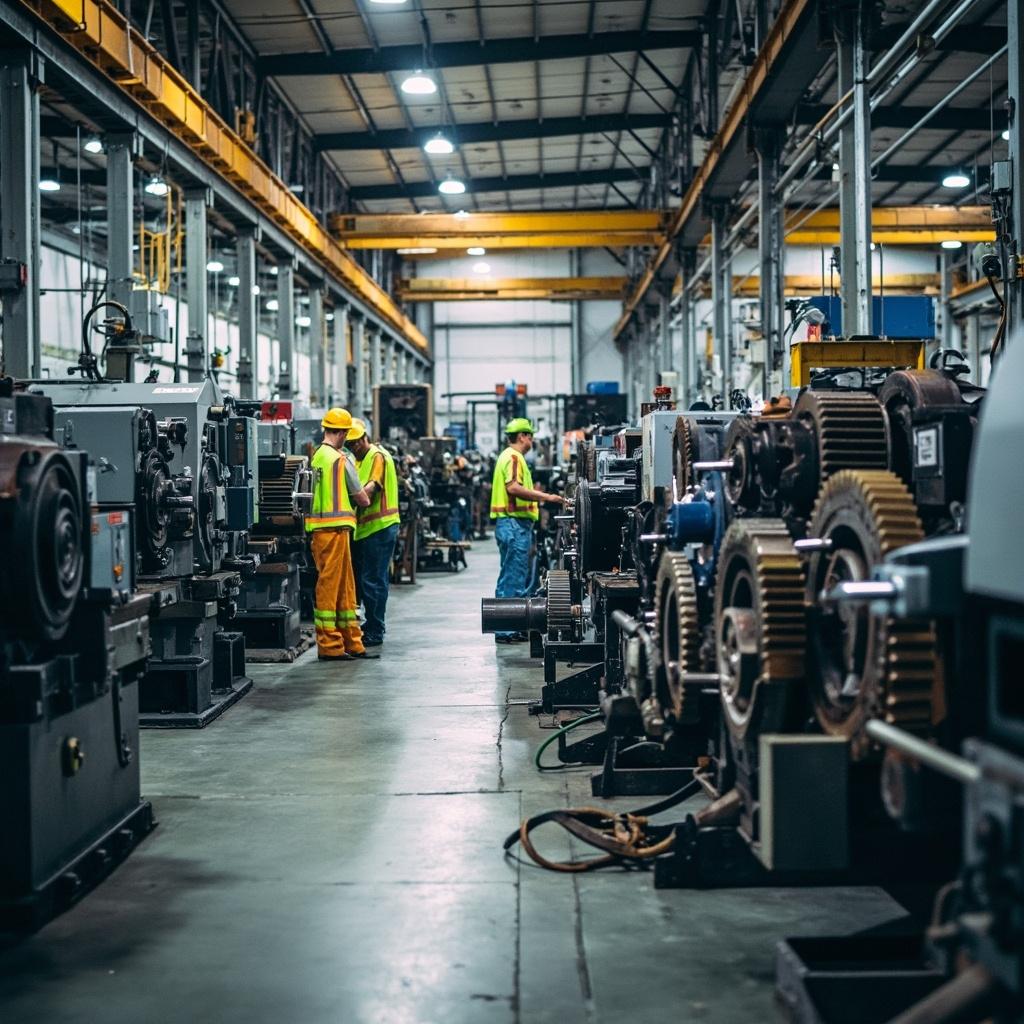
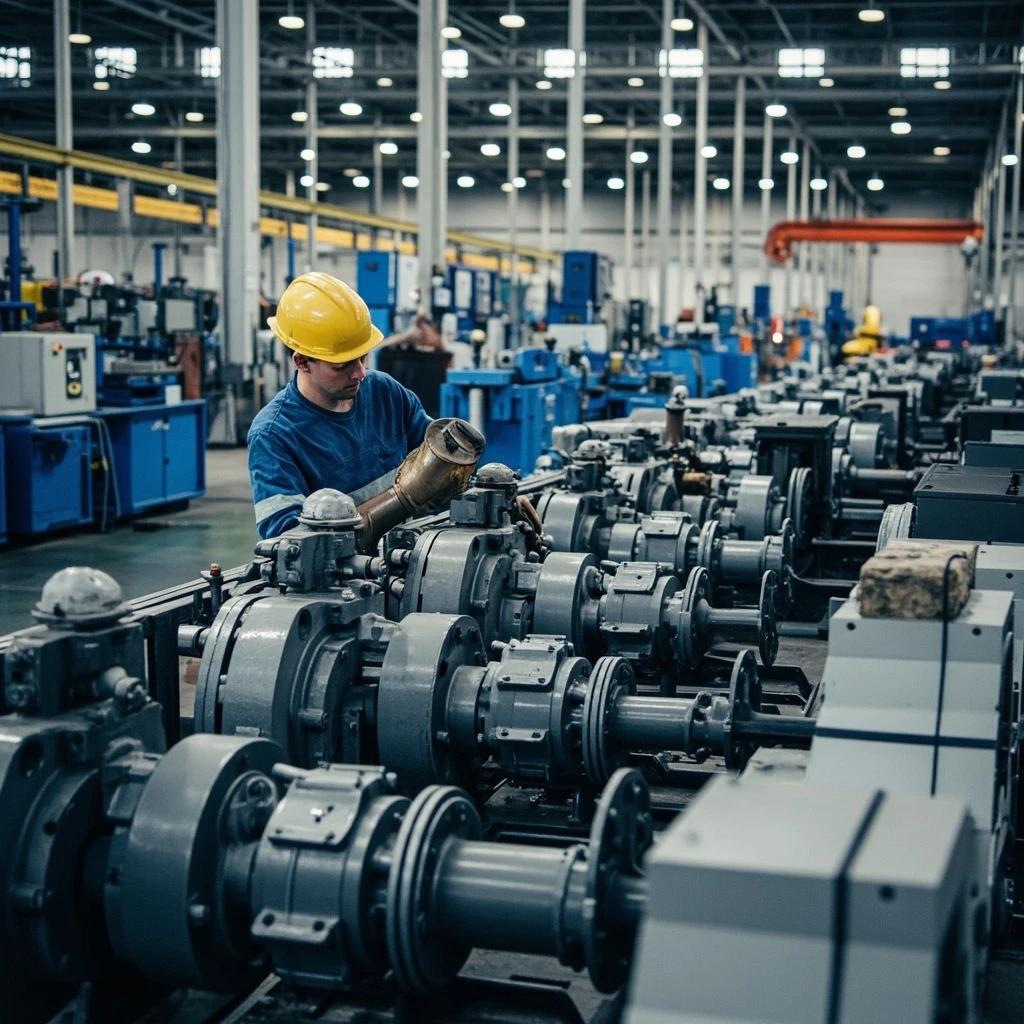
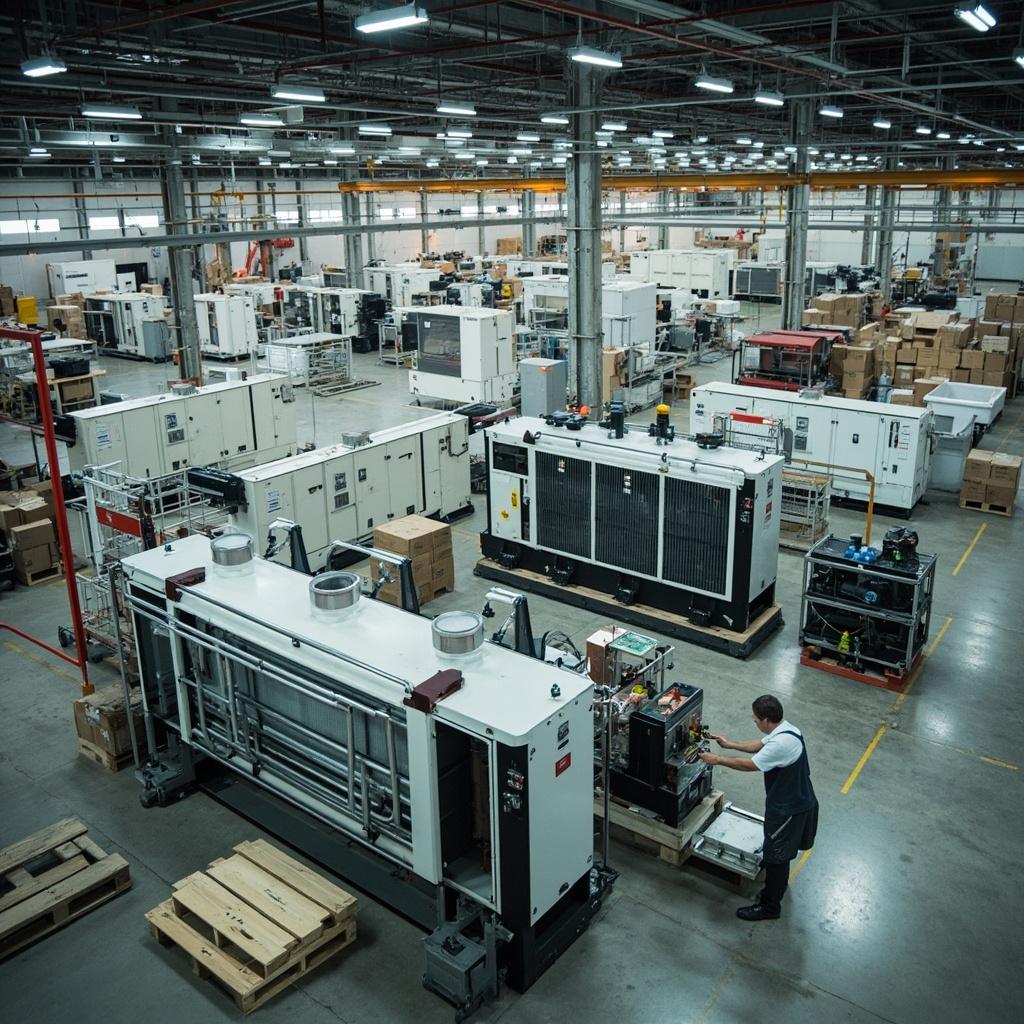
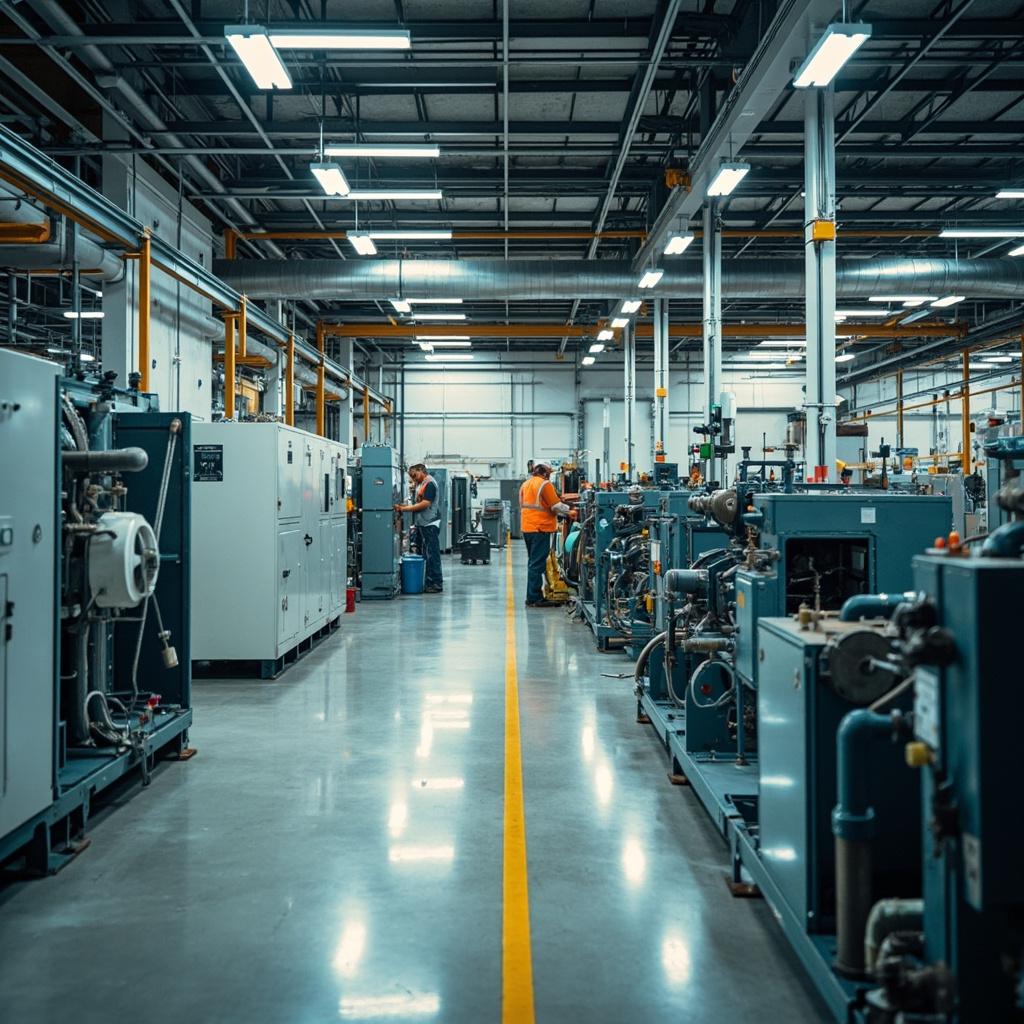
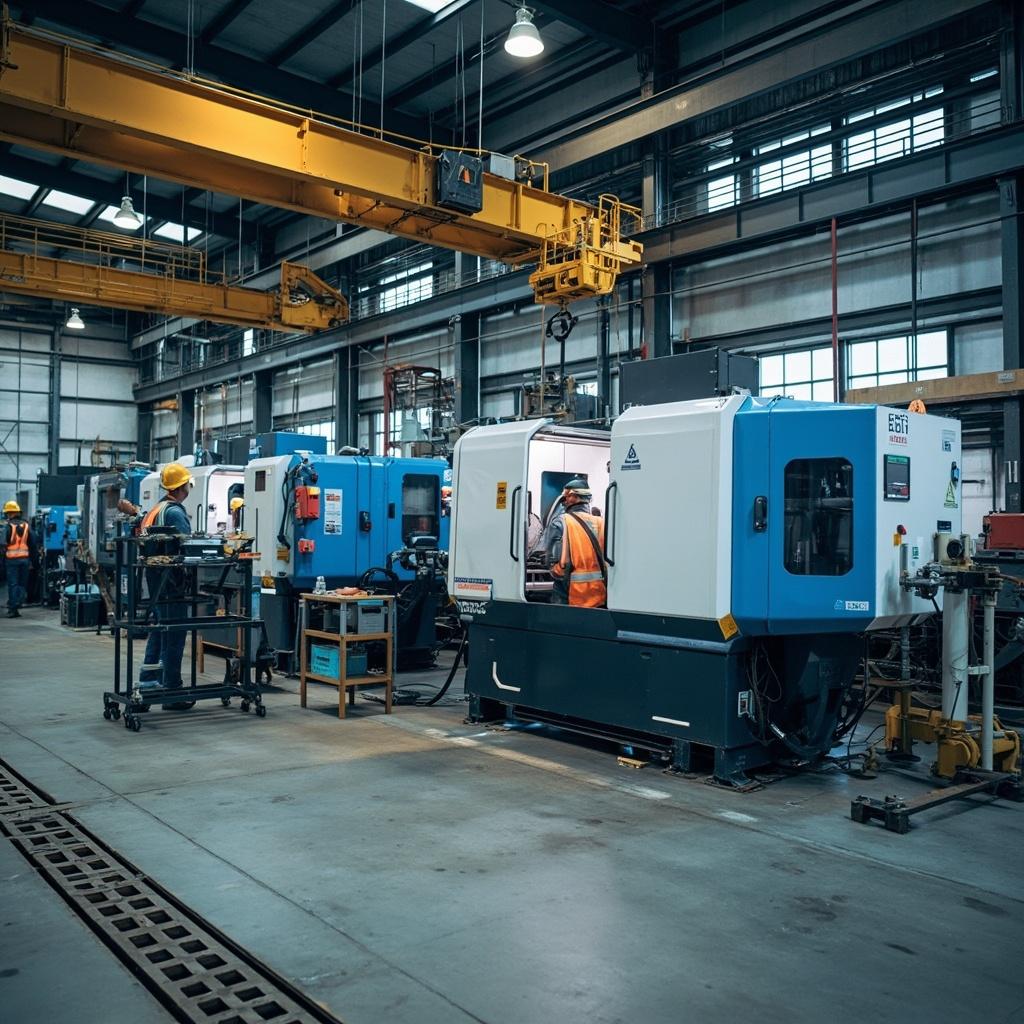
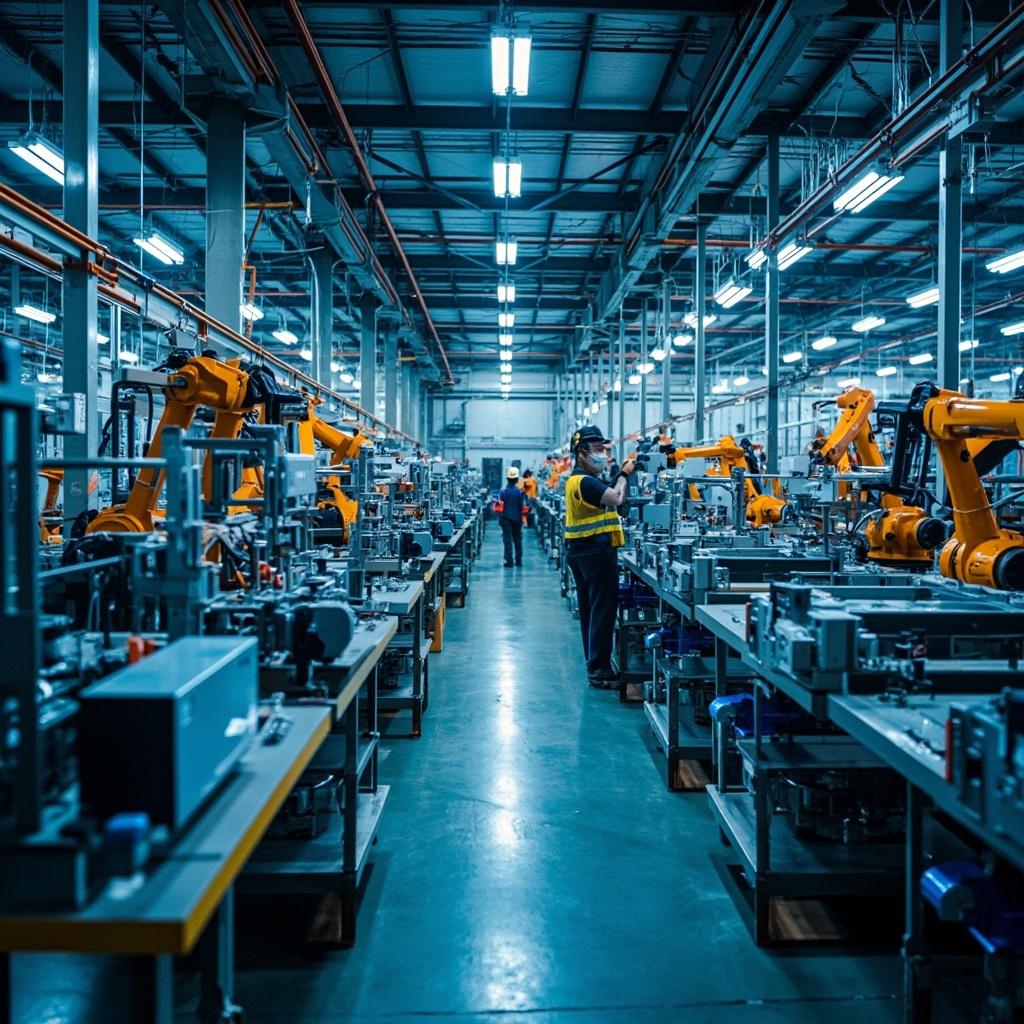
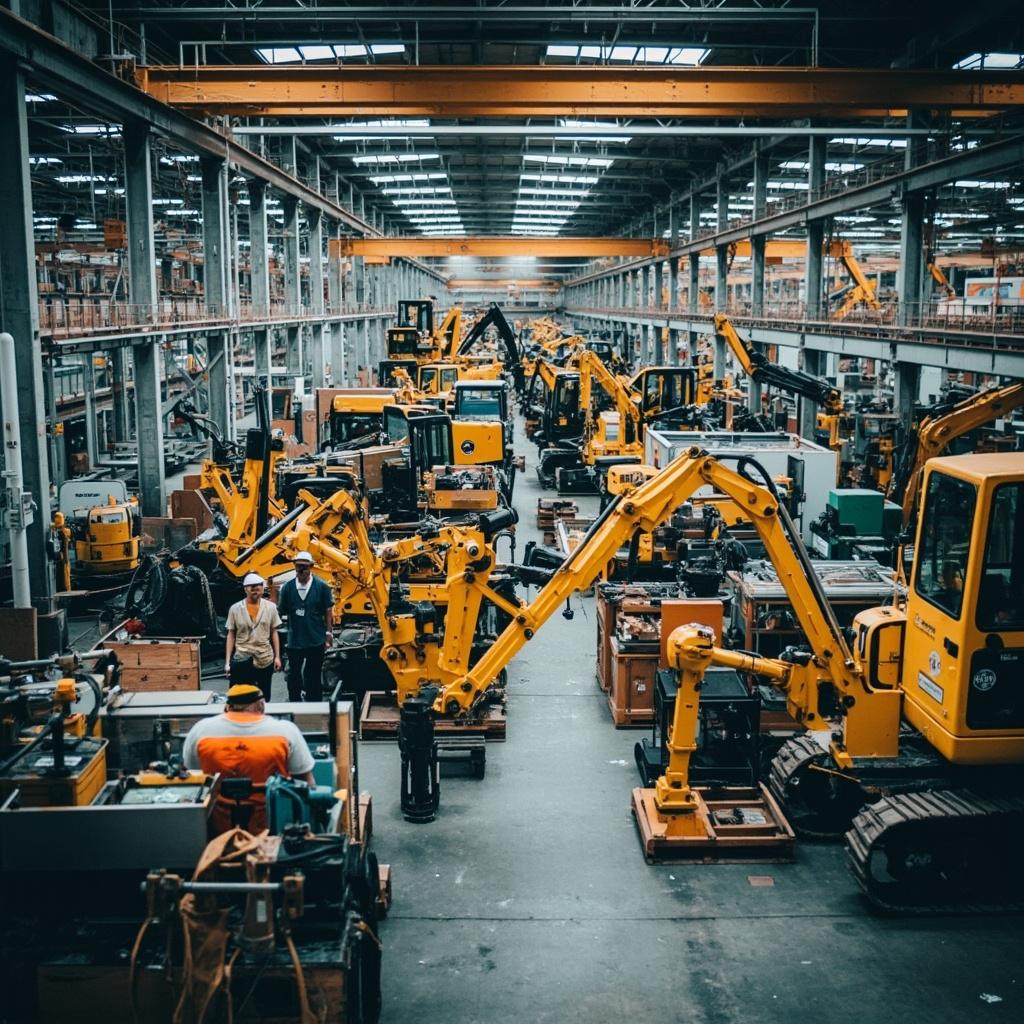
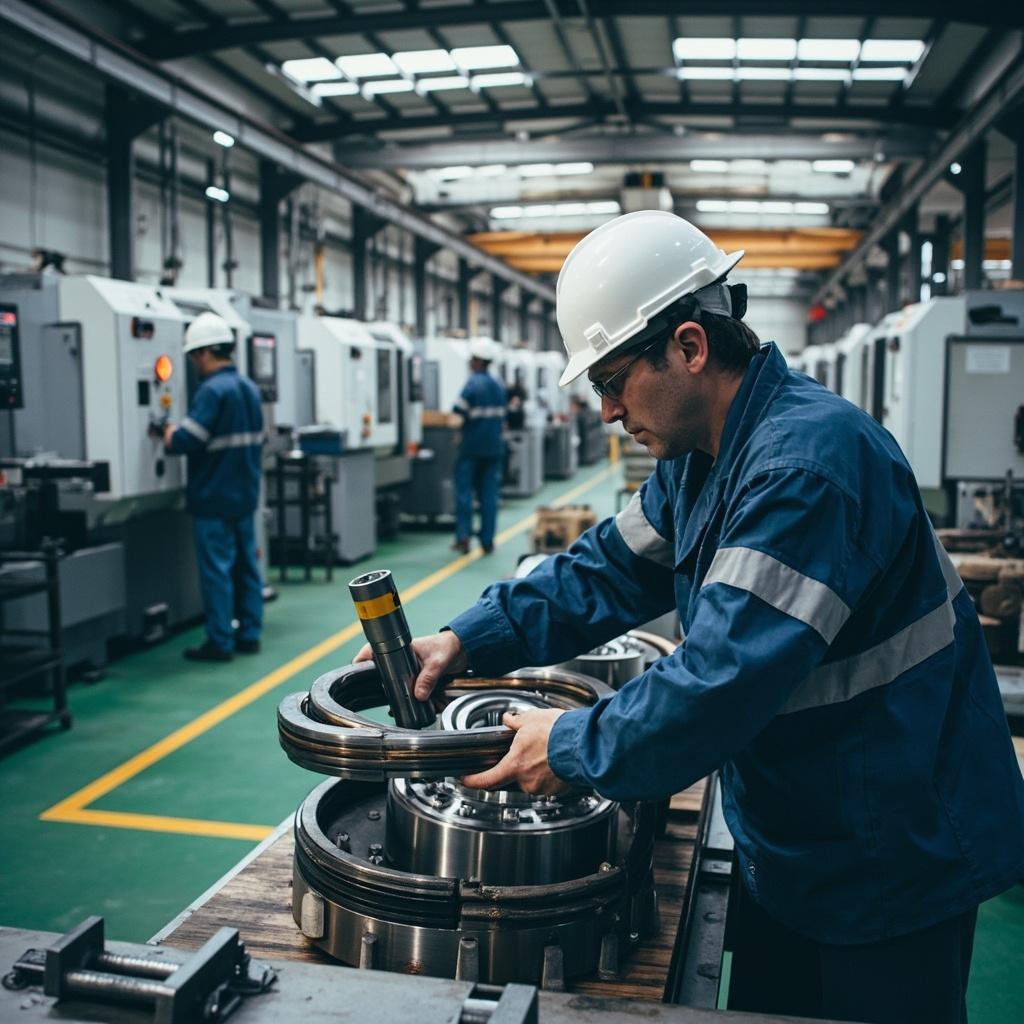
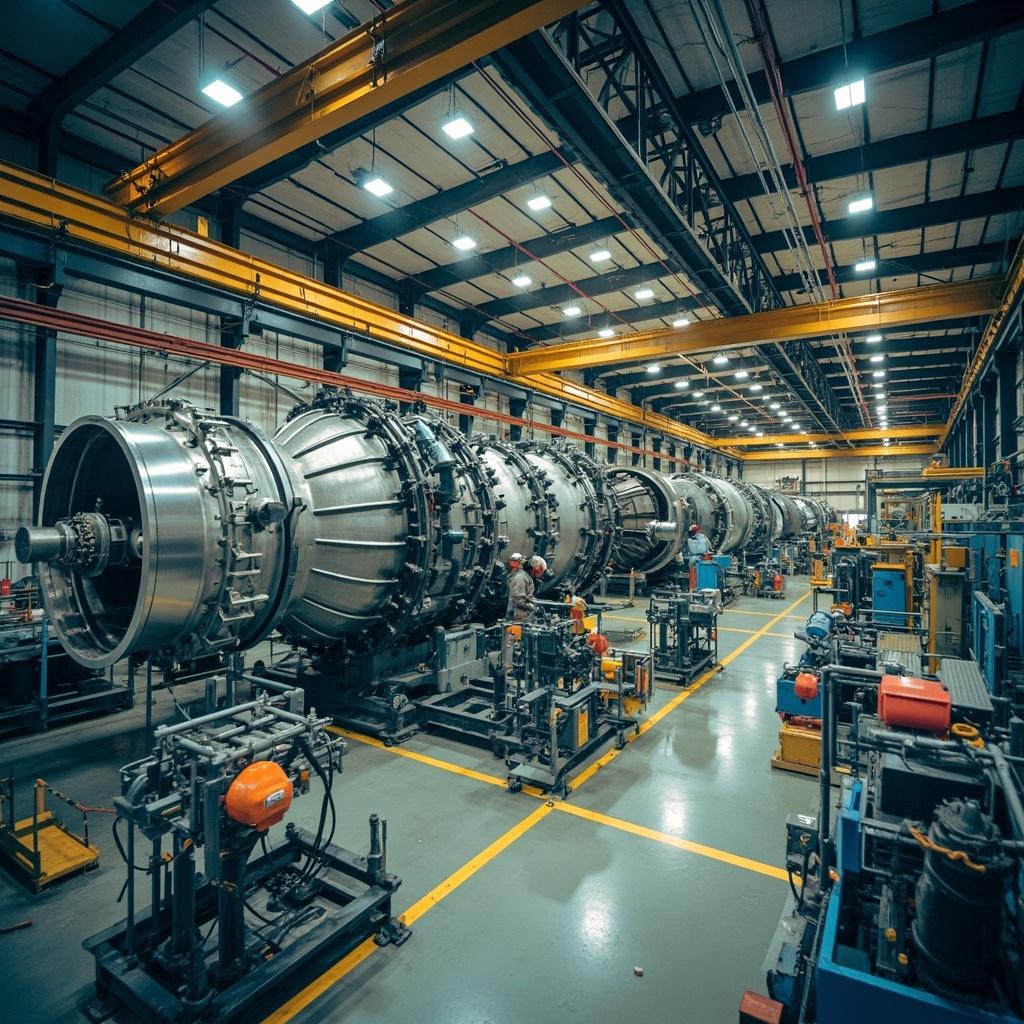
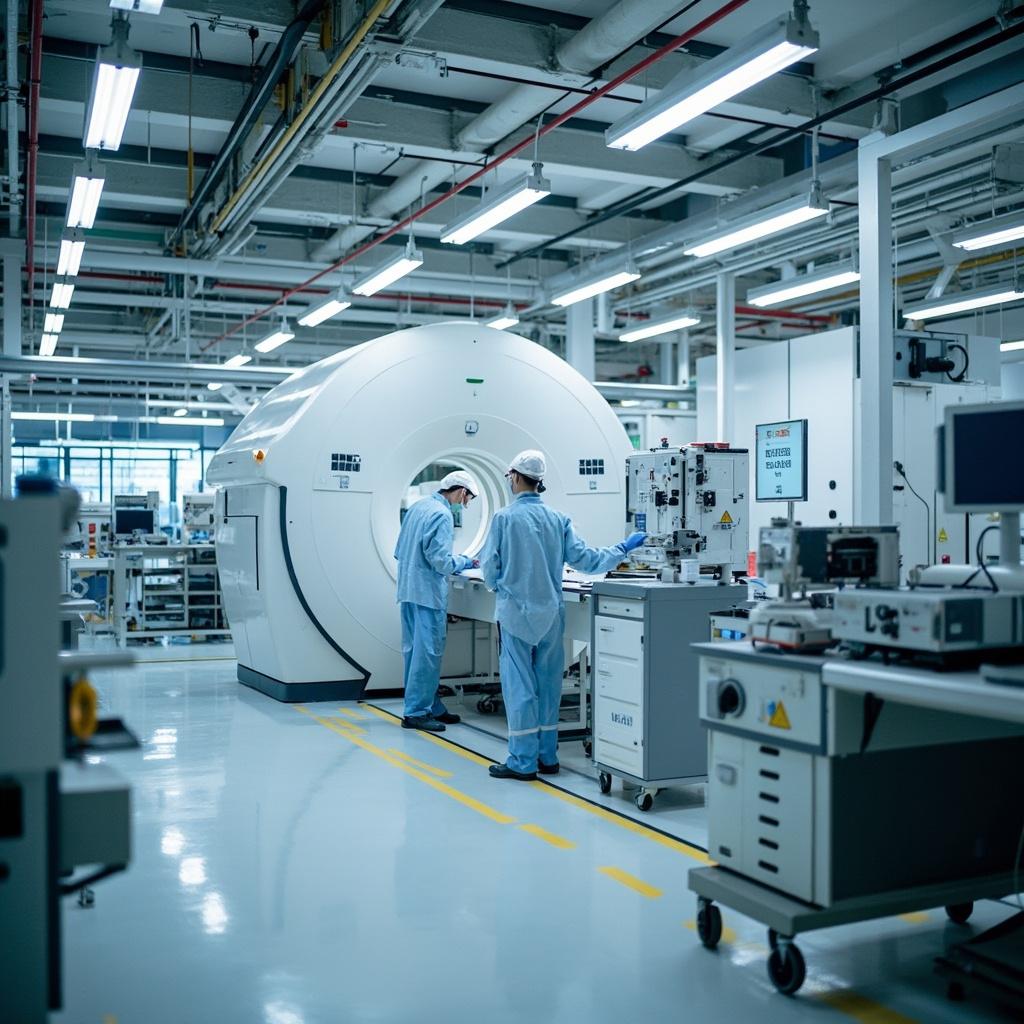
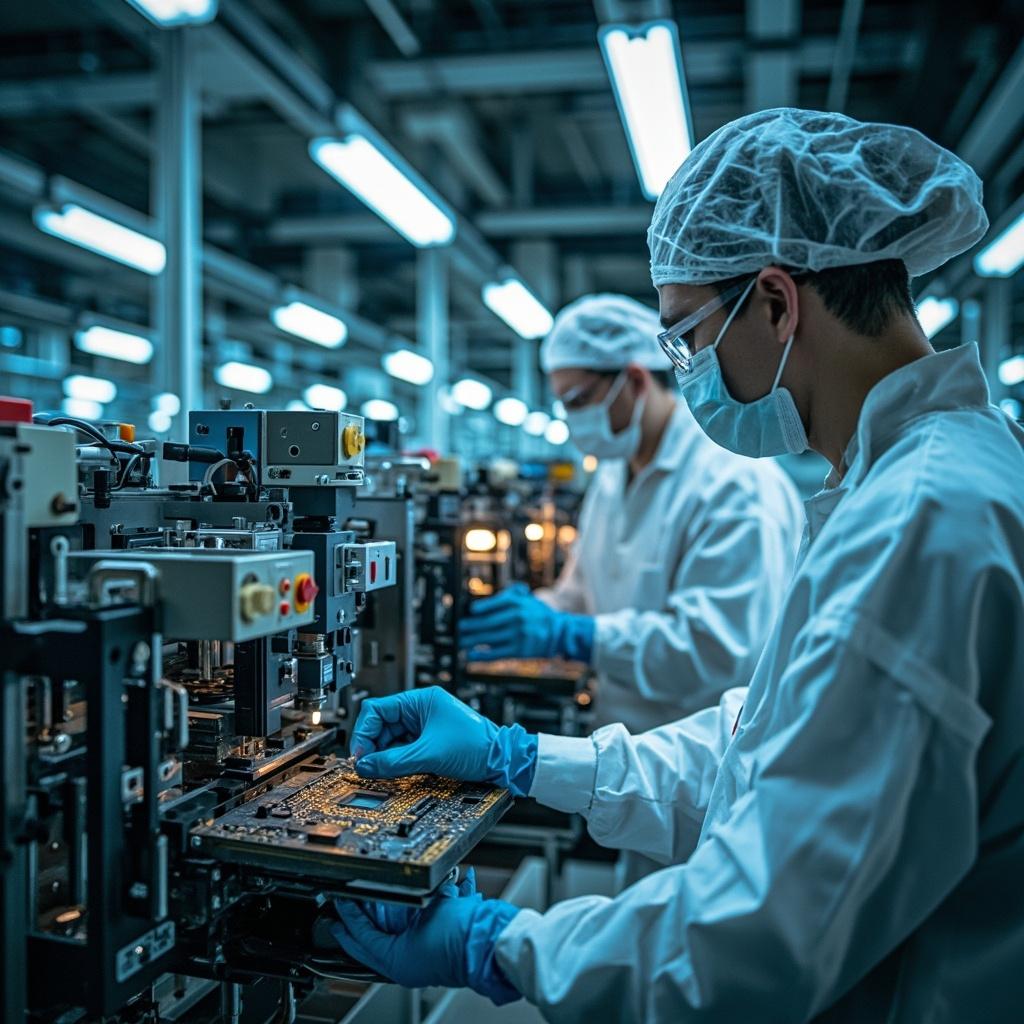
Our manufacturer rankings are built on production-floor data, not marketing claims. VerityRank applies a three-dimensional evaluation framework specifically designed for heavy-asset manufacturing enterprises. The scoring model weights Production Scale & Manufacturing Footprint at 50%, Category Specialization & Component Purity at 30%, and Innovation Intensity & Market Leadership at 20%. This weighting deliberately emphasizes physical manufacturing capacity — the number of self-operated factories, capital expenditure, workforce, and demonstrated production volumes — because in the precision components industry, ownership of proprietary heat treatment lines, internal grinding capacity, and in-house metallurgical labs is the true source of competitive advantage.
Production Scale Assessment
We evaluate each manufacturer's global factory network using corporate annual reports, sustainability disclosures, and third-party industrial database verification. Key metrics include: total number of self-operated manufacturing sites (excluding distribution warehouses and sales offices), annual capital expenditure as a percentage of revenue (indicating reinvestment in manufacturing capability), total direct manufacturing workforce, and square footage of climate-controlled precision machining floor space. For example, Schaeffler's network of 200+ production sites across 50 countries with €9.74 billion in 2025 capital expenditure demonstrates a fundamentally different level of manufacturing commitment than a company with five factories and outsourced heat treatment.
Component Purity Calculation
We map each manufacturer's revenue against our taxonomy of 20 machinery equipment sub-categories. A manufacturer earns maximum purity points when over 80% of its revenue derives from core mechanical component categories — bearings (10.1), seals (10.2), power transmission (1.0), fluid control (2.0), and linear motion. Companies with significant revenue from unrelated segments (consumer products, automotive assembly, electronics manufacturing services) are penalized proportionally. SKF, for instance, achieves near-perfect purity because over 90% of its revenue comes from bearings, seals, and lubrication systems — precisely the categories under evaluation.
Innovation and R&D Intensity
We analyze R&D expenditure as a percentage of revenue, active patent count in IPC classes F16 (mechanical engineering) and F15 (fluid-pressure actuators) via WIPO PATENTSCOPE, and participation in advanced manufacturing consortia. Investments in Industry 4.0 technologies — including in-line laser gauging, automated optical inspection, and AI-driven predictive maintenance platforms — receive additional weighting. Companies that have established dedicated research centers for emerging technologies such as humanoid robot joint actuators, hydrogen-compatible sealing materials, and AI-optimized fluid power systems are recognized for forward-looking innovation commitment.
The boundary between a tier-1 critical components manufacturer and a commodity parts supplier is defined by four non-negotiable capabilities: captive metallurgy, in-house precision grinding, application co-engineering, and supply chain sovereignty. Understanding these distinctions is essential for procurement professionals who must qualify suppliers for safety-critical or performance-critical applications where component failure carries six- or seven-figure consequences.
1. Captive Metallurgy and Heat Treatment
Tier-1 manufacturers operate their own steel mills, forging presses, and heat treatment lines rather than purchasing pre-processed material from third-party steel service centers. Parker Hannifin's internal materials science division develops proprietary alloy formulations for aerospace hydraulic components that must withstand 5,000+ PSI at temperatures from -65°F to +275°F. Schaeffler's bearing steel compositions, refined over eight decades, achieve hardness profiles that commodity GCr15 steel cannot replicate. When a supplier controls the metallurgical process from melt to finished component, they can guarantee traceability, optimize microstructures for specific load cases, and rapidly iterate on material improvements. Commodity suppliers that purchase off-the-shelf steel bar stock cannot offer this level of material assurance.
2. In-House Precision Grinding and Superfinishing
The difference between a bearing that lasts 5,000 hours and one that lasts 50,000 hours is often measured in surface finish variations of less than 0.1 μm Ra. NSK's ball screw grinding lines produce lead accuracy of ±3 μm over 1,000 mm of travel — a capability that cannot be outsourced to a general-purpose grinding shop. SKF operates dedicated superfinishing cells where bearing raceways are processed to surface roughness below 0.05 μm Ra, producing a mirror finish that reduces friction by 30-40% compared to standard ground surfaces. Tier-1 manufacturers invest millions in Studer, Kellenberger, and JUNG grinding machines with in-process gauging that rejects any component exceeding micron-level tolerances. A supplier that sends components to an external grinding house cannot maintain the process control required for aerospace, medical device, or semiconductor equipment applications.
3. Application Co-Engineering Capability
Tier-1 manufacturers deploy field application engineers — typically with 10-20 years of domain expertise — who work on-site at customer facilities to redesign subsystems, troubleshoot failures, and validate new materials. Timken's Syber bearing analysis software models contact stresses, lubrication regimes, and thermal behavior for customer-specific load cases before a single prototype is manufactured. Danfoss Application Development Centers in Denmark, the United States, and China operate multi-million-dollar dynamometer labs where customer machines are instrumented and tested under real-world duty cycles. This co-engineering capability transforms a supplier relationship from transactional (price-per-part) to strategic (total cost of ownership optimization).
4. Supply Chain Sovereignty
The 2020-2025 period conclusively demonstrated that single-point-of-failure supply chains are existentially dangerous. Tier-1 manufacturers operate at least two geographically separated production sites for any component designated as safety-critical, maintaining regional autonomy in raw material sourcing, processing, and finished goods inventory. Freudenberg's dual-sourcing strategy for fluorocarbon elastomer compounds ensures that a disruption at any single polymer production facility does not halt seal manufacturing globally. During the 2025 Red Sea shipping crisis, manufacturers with redundant production capacity in Asia, Europe, and North America were able to re-route supply within days, while competitors dependent on single-region manufacturing faced months-long backorders. This supply chain resilience is not an optional feature — it is the defining characteristic that separates strategic partners from replaceable vendors.
The critical machinery components manufacturing sector is being fundamentally restructured by four converging megatrends: production regionalization, mega-merger consolidation, AI-driven smart manufacturing, and the emergence of robotics as a demand driver. Each of these trends carries profound implications for procurement strategy, supplier qualification, and total cost modeling.
1. Production Regionalization and Near-Shoring
Escalating trade tariffs — particularly U.S. Section 232 tariffs on steel and aluminum and the European Carbon Border Adjustment Mechanism (CBAM) — have rendered the 'manufacture anywhere, ship everywhere' model economically obsolete. SKF closed its Monterrey, Mexico bearing plant and consolidated North American production in Puebla, investing heavily in automation to offset higher labor costs. Hengli Hydraulic established greenfield factories in Germany, the United States, Japan, and Mexico simultaneously — incurring substantial startup losses and foreign exchange impacts — because local production has become a non-negotiable prerequisite for supplier qualification by OEMs such as Caterpillar and John Deere. The cost of this regionalization, estimated at 15-25% above centralized Asian production, is being passed through supply chains. For procurement teams, this means that total landed cost calculations must now incorporate tariffs, logistics, and supplier regional capacity as primary variables rather than afterthoughts.
2. The Mega-Merger Wave
The 2026 announcement that NSK and NTN — Japan's two largest bearing manufacturers — will merge via a joint holding company in 2027 represents the most consequential consolidation in mechanical component manufacturing history. The combined entity will control over ¥1.7 trillion in annual revenue and employ nearly 50,000 workers globally. This merger is driven by structural necessity: the transition from internal combustion engines to electric vehicles is eliminating demand for dozens of traditional bearing and transmission component categories, while simultaneously creating demand for entirely new component types that require massive, shared R&D investment. Parker Hannifin's multi-billion-dollar acquisitions of CIRCOR Aerospace, Filtration Group, and Curtis Instruments follow the same logic — consolidate overlapping manufacturing capacity, eliminate redundant overhead, and concentrate R&D firepower on the highest-margin aerospace, defense, and clean energy segments. For industrial buyers, supplier consolidation means fewer alternatives but potentially stronger, more financially stable partners with broader technology portfolios.
3. AI-Enabled Smart Manufacturing
Precision component factories are transitioning from 'operator-dependent' to 'algorithm-driven' production models. SMC's digital transformation program has deployed AI-based visual inspection systems across its Japanese manufacturing campuses, achieving defect detection rates exceeding 99.7% while reducing quality inspection labor by 60%. Danfoss has embedded machine learning algorithms into its CNC grinding cells that predict tool wear and automatically compensate in real-time, extending grinding wheel life by 40% and eliminating dimensional drift between quality checks. Freudenberg is applying generative AI to polymer formulation — training models on decades of proprietary compound test data to predict seal material performance under novel chemical and thermal conditions, compressing development cycles from months to days. Manufacturers that are not investing aggressively in AI-driven process control will face an insurmountable quality-cost gap within five years.
4. Humanoid Robotics and the Next-Generation Component Demand
The emergence of general-purpose humanoid robots — exemplified by Tesla Optimus and Unitree — has created an entirely new demand category for precision mechanical components that did not exist at commercial scale three years ago. A single humanoid robot requires 28-40 rotary actuators, each containing a planetary roller screw, a frameless torque motor, dual angular contact bearings, and a multi-turn absolute encoder. SKF formed a joint venture with Chinese precision gear manufacturer Leaderdrive specifically to address this market. Hengli Hydraulic shipped over 5,500 linear actuator units for humanoid robot applications in 2025 alone. Goldman Sachs projects the humanoid robot market will reach $30 billion by 2030, with precision mechanical components representing 15-25% of bill-of-materials cost. For component manufacturers, this represents a completely new multi-billion-dollar addressable market that rewards the combination of micro-precision grinding capability and high-volume automotive-scale production economics.
Qualifying a critical machinery component manufacturer is a multi-month process that, when done correctly, prevents multi-million-dollar field failures and warranty claims. The following structured framework has been developed from best practices observed across the automotive (IATF 16949), aerospace (AS9100D), and heavy equipment industries.
Phase 1: Desktop Audit (Weeks 1-2)
Request and review the following documents: ISO 9001:2015 and IATF 16949 or AS9100D certificates (verify validity dates and scope), the most recent third-party quality system audit report with non-conformance findings and corrective actions, a complete list of manufacturing sites with addresses, square footage, and principal processes performed at each location, and three years of audited financial statements demonstrating sufficient working capital and R&D investment. Reject any supplier that cannot produce a current quality certificate or that operates with negative working capital. Additionally, request a capacity utilization report for the specific production lines that would manufacture your components — a supplier operating at 95%+ utilization will struggle to accommodate your volume ramp.
Phase 2: On-Site Process Audit (Week 3)
Conduct a multi-day, cross-functional on-site audit. The audit team should include a quality engineer, a manufacturing engineer, and a supply chain specialist. Key inspection points include: the incoming raw material inspection area (verify spectrometer calibration, hardness tester certification, and material certificate traceability system); the heat treatment department (observe furnace temperature uniformity survey records, quench oil condition monitoring, and case depth measurement procedures); the grinding department (verify in-process gauging system calibration, grinding wheel balancing records, and coolant filtration micron rating); the final inspection area (confirm CMM calibration certificates, surface roughness measurement capability, and NDT — magnetic particle or eddy current — equipment functionality); and the clean assembly room (measure airborne particle count, verify positive air pressure differential, and observe operator gowning procedures). A factory with organized tool boards, clean floors, and active SPC charts at every machining cell is a reliable predictor of product quality. A factory with coolant leaks on the floor, unlabeled chemical containers, and CNC machines with overdue maintenance tags is a reliable predictor of quality escapes.
Phase 3: Production Part Approval Process — PPAP (Weeks 4-12)
Require a full Production Part Approval Process submission per AIAG PPAP Level 3 guidelines, including: design records, engineering change documentation, process flow diagram, Process Failure Mode and Effects Analysis (PFMEA), control plan, measurement system analysis (Gage R&R), dimensional results for a statistically significant sample (minimum 30 pieces from a production-representative run), material and performance test results, initial process capability study (Ppk ≥ 1.67), and a Part Submission Warrant (PSW) signed by the supplier's quality manager. For safety-critical components, require additional validation: accelerated life testing to demonstrate B10 or L10 life at rated load, contamination sensitivity testing (for bearings and hydraulic components), and thermal cycling validation across the full specified operating temperature range.
Phase 4: Ongoing Surveillance (Continuous)
Establish a supplier scorecard that tracks: on-time delivery (target ≥ 98%), PPM defect rate (target ≤ 50 for non-critical, ≤ 10 for critical), cost reduction ideas implemented per year, and responsiveness to corrective action requests (target: 8D report within 48 hours of notification). Conduct annual re-audits with reduced scope for high-performing suppliers and full-scope re-audits for any supplier with a major quality escape. Implement a 'two is one, one is none' policy for safety-critical components — every single-sourced component must have a qualified second source with completed PPAP, even if the second source never ships production volume. The cost of maintaining a qualified second source is a fraction of the cost of a single production line shutdown caused by a sole-source supplier quality failure.
Manufacturing sustainability in the precision components sector has evolved from a marketing differentiator to a hard operational and regulatory requirement. The European Carbon Border Adjustment Mechanism (CBAM), increasing OEM Scope 3 emissions disclosure mandates, and the direct correlation between energy efficiency and manufacturing cost competitiveness are driving unprecedented investment in green manufacturing technologies. Our analysis identifies the following leaders across the top 10.
Danfoss: The Electrification and Decarbonization Benchmark
Denmark-based Danfoss has embedded sustainability into its manufacturing DNA and its product portfolio simultaneously. The company has committed to achieving CO₂-neutral operations (Scope 1 and 2) by 2030 — the most ambitious timeline among major component manufacturers. Its Nordborg headquarters campus operates at net-zero energy status, powered by offshore wind purchase agreements, ground-source heat pumps, and rooftop solar photovoltaic arrays. Danfoss's factory in Wuqing, China has been fully powered by renewable electricity since 2024. The company reports comprehensive ESG data aligned with the Task Force on Climate-related Financial Disclosures (TCFD) framework and the Science Based Targets initiative (SBTi). Beyond its own operations, Danfoss deploys its variable-speed drives, heat recovery systems, and thermal management solutions at customer facilities through its Decarbonization-as-a-Service program, which has saved an estimated 500,000+ metric tons of CO₂ since inception — creating a virtuous cycle where its own products become the primary tools for industrial decarbonization.
SKF: Circular Economy Pioneer in Bearing Manufacturing
SKF has operationalized circular economy principles through its RecondOil and bearing remanufacturing programs. RecondOil technology removes sub-micron contamination particles from industrial lubricating oil, enabling closed-loop circulation that eliminates oil change requirements — reducing oil consumption by approximately 99% while simultaneously extending bearing service life by 30-50%. The bearing remanufacturing program accepts used bearings returned by customers, disassembles them, re-grinds raceways to original specifications, replaces rolling elements and cages, and returns them to service with full new-bearing warranty coverage. This process reduces raw material consumption by up to 80% and CO₂ emissions by up to 70% compared to manufacturing a new bearing. SKF operates dedicated remanufacturing centers in Sweden, Germany, the United States, India, and China, with plans to establish additional centers in Southeast Asia and South America. The company targets net-zero emissions across its full value chain (Scope 1, 2, and 3) by 2050, with an interim target of 50% Scope 1 and 2 reduction by 2030 from a 2019 baseline.
SMC: Energy Efficiency Through Pneumatic System Optimization
SMC's contribution to manufacturing sustainability is distinctive because it occurs primarily through product performance rather than factory operations. Pneumatic systems account for approximately 15-20% of total electricity consumption in a typical automated factory. SMC's latest generation of energy-saving pneumatic components — including air preparation units with digital flow sensors, high-efficiency directional control valves with reduced pilot air consumption, and vacuum ejectors with integrated energy-saving circuits — can reduce compressed air consumption by 25-40% compared to previous-generation components. The company's 8,000+ field sales engineers worldwide conduct compressed air energy audits at customer facilities, identifying leakage points and optimization opportunities that typically achieve payback periods of 12-18 months. In its own manufacturing operations, SMC has implemented ISO 50001 energy management systems across all major production sites and has committed to reducing CO₂ emissions by 30% by 2030 from a 2019 baseline.
Emerging Challenge: The Hard-to-Abate Processes
Despite leadership from companies like Danfoss, SKF, and SMC, significant structural sustainability challenges remain unsolved across the industry. The carburizing, quenching, and tempering of bearing steel requires sustained temperatures exceeding 800°C and consumes 5-8 MWh of energy per ton of finished product — energy intensities that are extremely difficult to electrify at production scale. The grinding process consumes cubic boron nitride (CBN) and diamond abrasive wheels that cannot be economically recycled. And the industry's reliance on mineral oil-based quenching oils, cutting fluids, and lithium-complex greases creates persistent environmental contamination risks. The manufacturers that develop economically viable high-temperature electric furnaces, closed-loop grinding fluid recycling systems, and bio-derived functional fluids will earn significant competitive advantage as carbon pricing mechanisms become more aggressive and procurement carbon-intensity requirements become more granular.