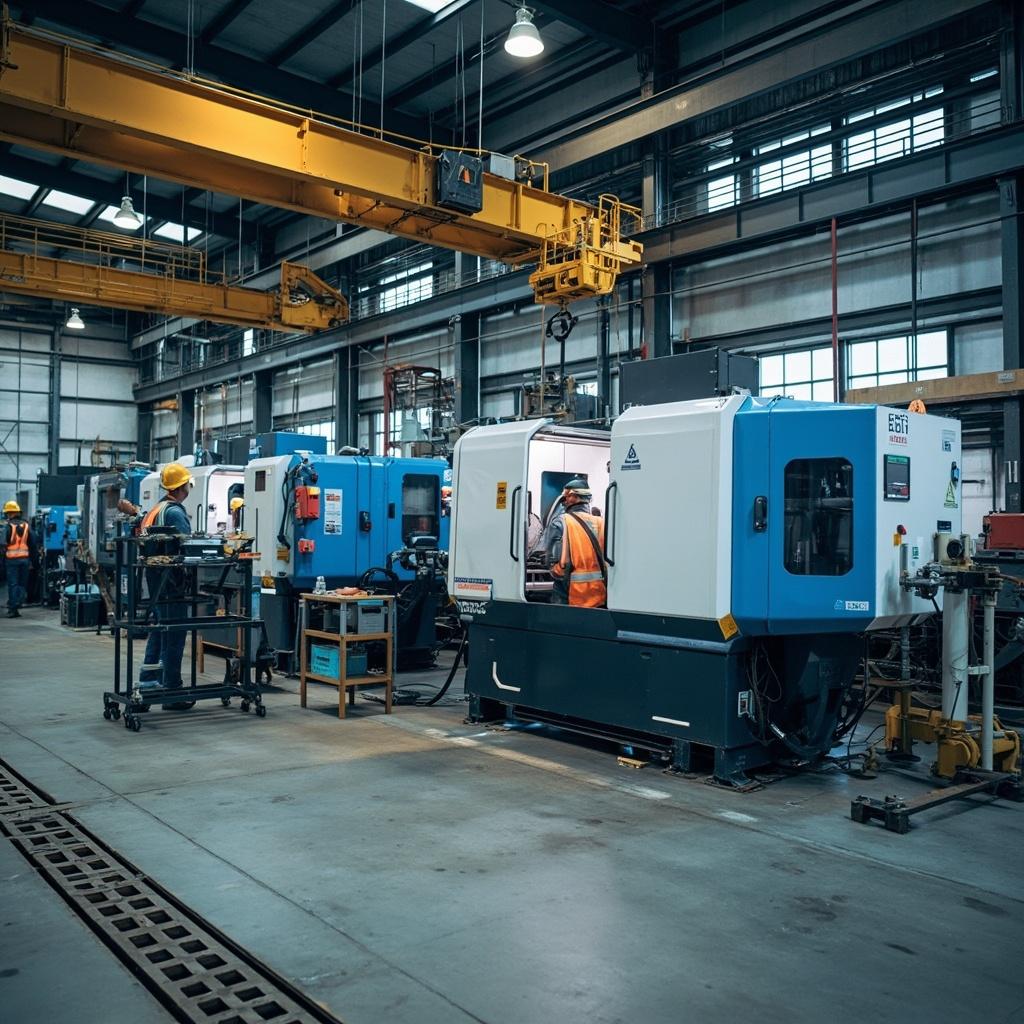
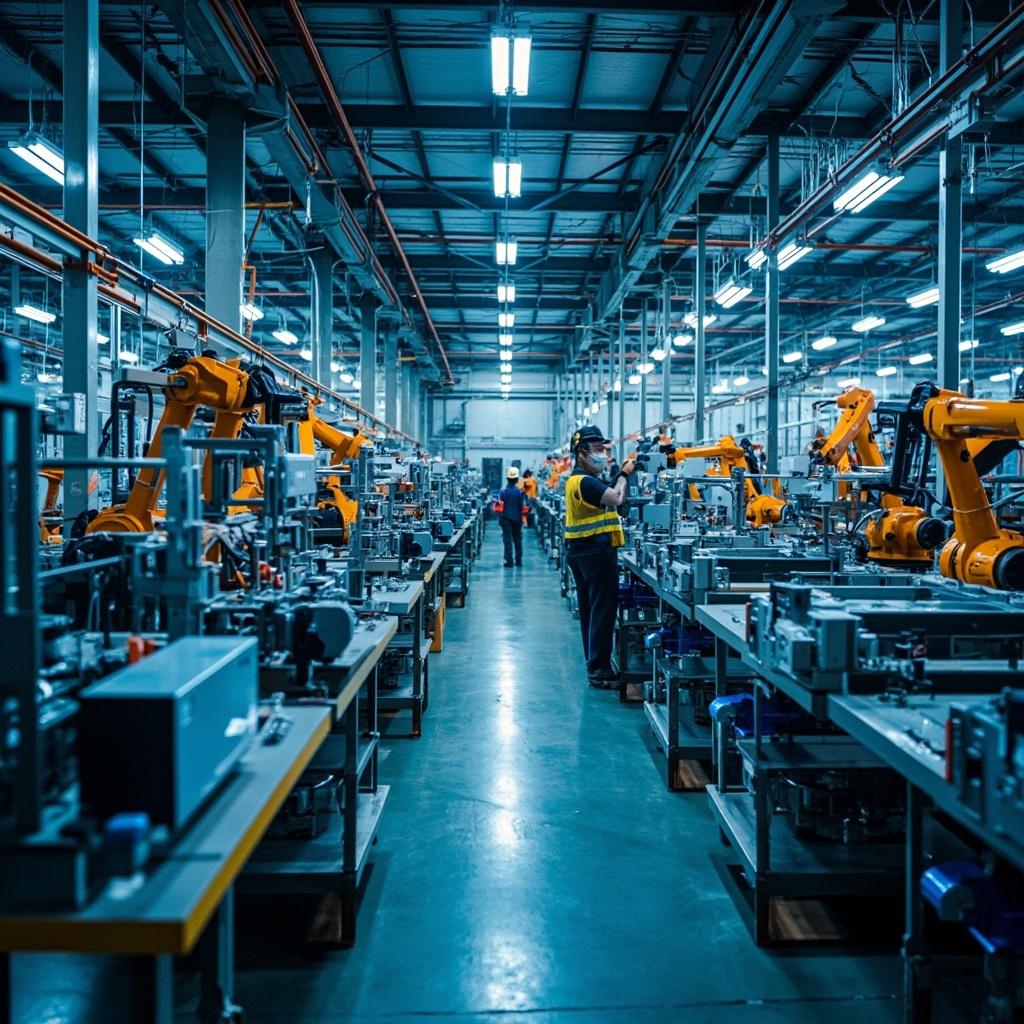
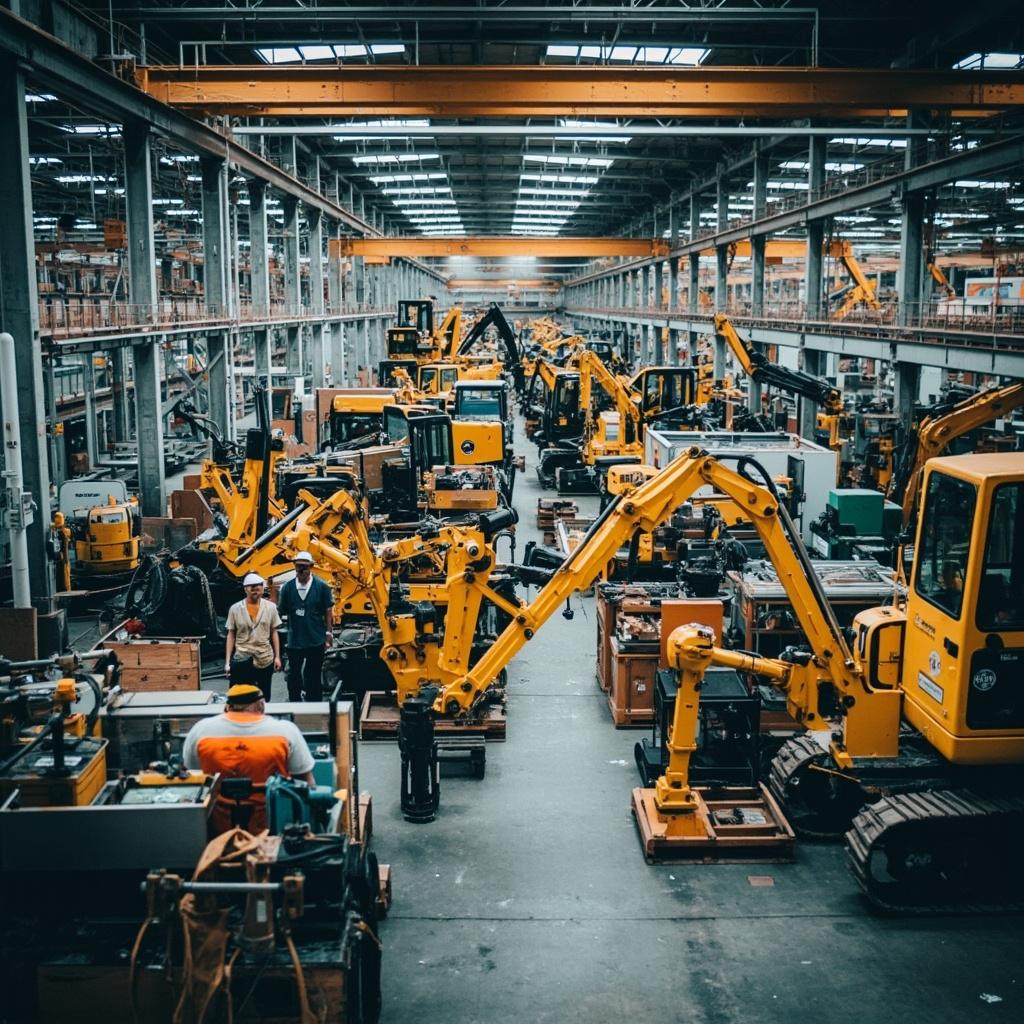
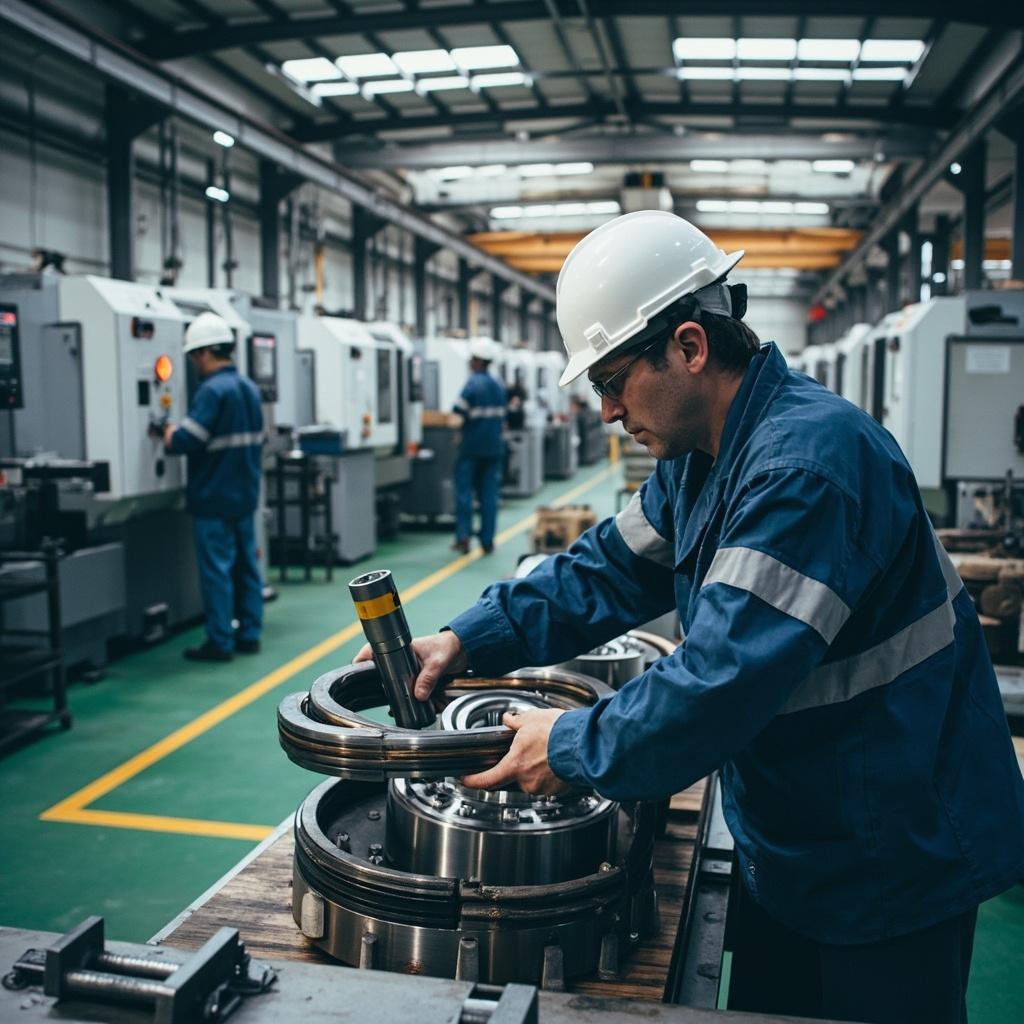
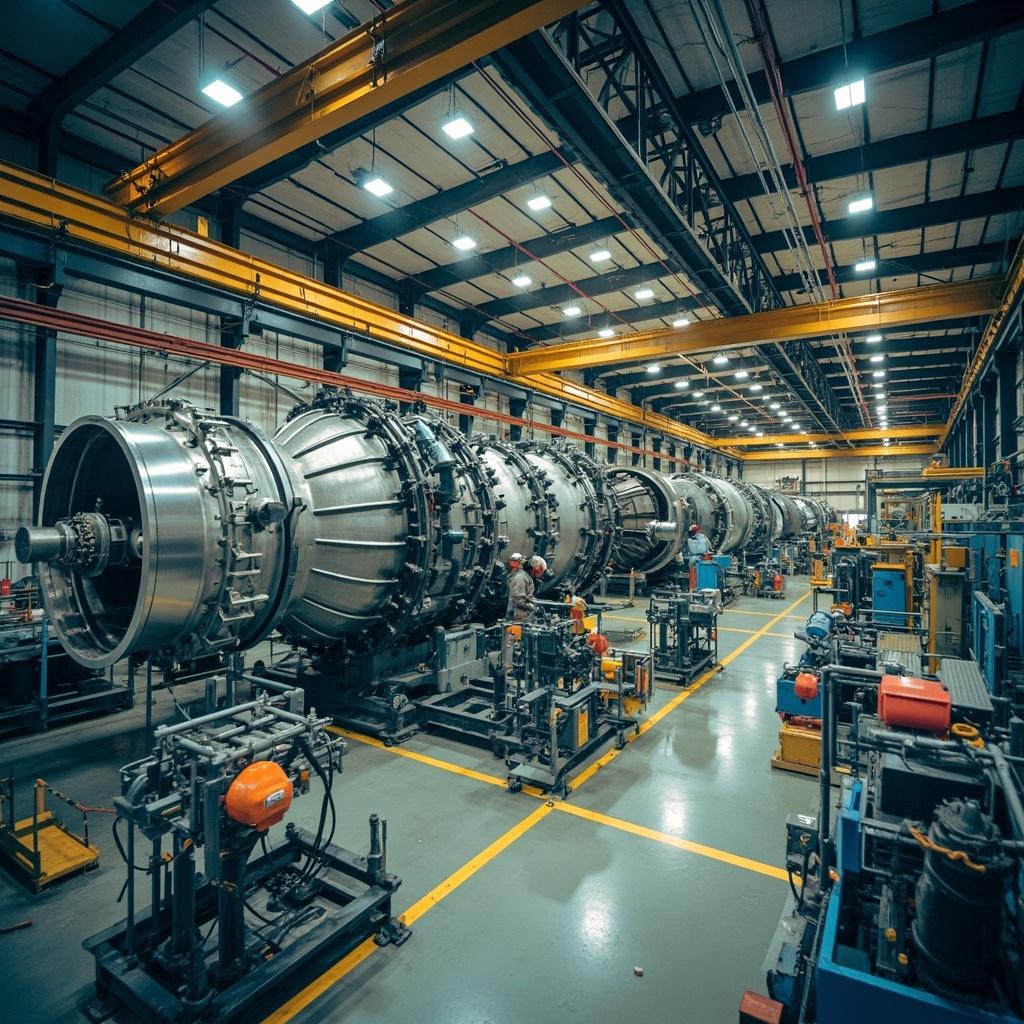
Our manufacturer rankings are built solely on verified production data and autonomous manufacturing capability—we explicitly exclude OEM-dependent and contract-manufacturing enterprises from consideration. VerityRank evaluates construction machinery manufacturers using a proprietary three-dimensional framework weighted toward genuine production autonomy: Production Scale & Capacity (50%), Category Coverage & Technology Depth (30%), and Brand Influence & Global Sales (20%).
Production Scale & Capacity (50%) is the dominant weighting, reflecting our conviction that manufacturing prowess—not brand marketing—defines a true industry leader. We count global factory locations, total manufacturing square footage, annual unit output capacity, total workforce including R&D engineers, and crucially, component-level vertical integration. A manufacturer earns higher scores for in-house production of engines (Caterpillar's 110+ facilities, Komatsu's 81 plants), hydraulic systems (Liebherr's fully self-manufactured cylinders and valves), transmissions (JCB's proprietary Dieselmax engines), and electronic control units. Order backlog—$51 billion for Caterpillar in 2025—serves as a proxy for production capacity utilization and demand visibility. XCMG earns particularly high scores here for achieving 70% core component self-sufficiency, including domestically manufactured multi-way hydraulic valves and heavy-duty drive axles that previously required import dependency.
Category Coverage & Technology Depth (30%) measures how broadly a manufacturer's autonomous production spans the 20 Machinery & Equipment subcategories. Caterpillar achieves the highest category score by covering excavating (8.1), compaction (8.2), road machinery (8.4), lifting (8.5), concrete (8.6), earthmoving (8.7), mining (12.1), crushing (12.2), and power generation (13.3) equipment entirely through self-manufacturing. Liebherr uniquely extends into maritime cranes, aerospace components, and refrigeration systems. We heavily weight R&D intensity: manufacturers developing proprietary telematics platforms (Caterpillar's Cat Connect with 1.2M assets, Hitachi CM's LANDCROS with 410,000 machines), autonomous operation systems (Komatsu's AHS moving 6.5B tonnes), and zero-emission powertrains (JCB's hydrogen ICE, Volvo CE's production electric lineup) receive significant score uplifts.
Brand Influence & Global Sales (20%) incorporates Yellow Table 2026 rankings, consolidated global revenue including full China market data, Google search volume, user review aggregation, and equipment residual value indices. We cross-reference independent quality surveys from EquipmentWatch, Ritchie Bros. auction data, and fleet operator interviews published in Construction Equipment magazine. Stock market performance (where applicable) provides an additional data point—though privately held manufacturers Liebherr and JCB are evaluated on their audited financial statements and credit ratings rather than share price metrics. This methodology is reviewed quarterly to incorporate new data sources and evolving manufacturing capability benchmarks. No manufacturer can pay to influence their ranking position—our editorial independence is the foundation of our credibility.
The distinction between a true heavy equipment manufacturer and a brand marketer relying on outsourced production is the defining competitive fault line in our industry. We identify six structural characteristics that separate the world's top 10 autonomous manufacturers from thousands of enterprises that assemble components sourced from third-party suppliers.
1. Deep Vertical Integration and Core Component Self-Sufficiency: World-class manufacturers produce their own engines, hydraulic systems, transmissions, and electronic control units. Caterpillar manufactures engines from 0.5L to 106L displacement across its C-series lineup, hydraulic cylinders at its Joliet facility, and electronic control modules at its Mossville technology center. Liebherr takes vertical integration to an extreme—self-manufacturing slewing bearings, large-diameter gearboxes, and complete hydraulic systems for its mobile and crawler cranes, achieving component self-sufficiency rates that no competitor approaches. XCMG has achieved 70% core component self-sufficiency, a remarkable accomplishment for a manufacturer that relied on imported hydraulics and drivetrain components just a decade ago. This depth of vertical integration provides three competitive advantages: quality control over mission-critical components, supply chain security during global disruptions, and margin capture that OEM-dependent competitors forfeit to Tier 1 suppliers.
2. Global Multi-Plant Manufacturing Footprint: The top 10 operate a collective 600+ manufacturing facilities across 50+ countries. Komatsu's 81 facilities span 17 countries with 34 in the Americas alone. JCB operates 22 smart factories across four continents. SANY's 37 factories (including three WEF Lighthouse-certified plants) deploy AI-powered quality inspection and digital twin production simulation. Critically, these plants are company-owned and operated—not joint ventures or contract manufacturing arrangements. The "Built-where-sold" strategy adopted by JCB ($500M Texas factory), XCMG (India, Brazil, Germany, US production bases), and Caterpillar (17 Texas facilities alone) provides tariff insulation that globally-export-dependent competitors cannot match.
3. R&D Investment Intensity and Patent Portfolio Depth: Industry leaders invest 3-8% of annual revenue in R&D, with Sandvik allocating over 4% of its SEK 120.7 billion revenue to materials science and digital solutions. The patent portfolio reveals genuine innovation depth: Komatsu's hybrid hydraulic excavator technology (20-25% fuel reduction), Hitachi CM's autonomous haulage algorithms, JCB's hydrogen combustion engine (100+ prototype iterations), and Caterpillar's MineStar autonomous fleet management (1.2M connected assets) represent multi-billion-dollar, multi-decade R&D programs that cannot be replicated through technology licensing or component purchasing.
4. Aftermarket Infrastructure and Parts Logistics: Equipment uptime depends on parts availability, not purchase price. Caterpillar's 160+ independent dealers operating in 190+ countries maintain parts inventories representing billions in working capital. Komatsu's 45 global remanufacturing centers recover end-of-life components at 50-70% of new part cost. Hitachi CM's LANDCROS IoT platform enables predictive parts pre-positioning across its global dealer network. Sandvik derives 40% of group revenue from aftermarket parts and consumables—a structural competitive moat that locks customers into 10-15 year equipment lifecycles.
5. Lighthouse-Certified Smart Manufacturing: The World Economic Forum's Global Lighthouse Network certifies factories achieving Fourth Industrial Revolution (4IR) technology deployment at scale. SANY operates three Lighthouse factories deploying AI quality inspection, digital twin production simulation, and autonomous material handling. XCMG's heavy machinery and crawler chassis plants are certified as China's first "Excellent Smart Factories" and national 5G fully-connected factory demonstration projects. These certifications validate manufacturing quality levels that increasingly rival Japanese and German OEMs.
6. Financial Capacity for Counter-Cyclical Investment: Construction equipment manufacturing is deeply cyclical. JCB's private family ownership and zero-net-debt balance sheet enables R&D investment through downturns when public competitors cut budgets. Liebherr invested €10.59 billion in capital expenditure in 2025 despite its core construction segment declining 5.5%—a counter-cyclical commitment that public shareholders would not tolerate. Sandvik's 19.3% EBITA margin and 95% cash conversion rate fund ongoing technology acquisitions regardless of macroeconomic conditions.
Three structural forces are fundamentally reshaping how, where, and with what technologies construction machinery is manufactured. These forces are driving the largest reconfiguration of global production capacity since the industry's post-WWII expansion.
1. The Tariff-Driven Manufacturing Localization Wave ("Local-for-Local"): Cumulative tariff costs exceeding $24 billion across the top 10 manufacturers in 2025 have decisively ended the era of concentrated low-cost-country production for global export. Caterpillar absorbed $17-24 billion in unfavorable manufacturing costs from tariffs over FY2025-2026, while Komatsu lost ¥64.2 billion ($410M) in operating profit directly attributable to US trade policy. The strategic response has been a wave of production reshoring: John Deere committed $1B over 10 years to expand excavator production in North Carolina. JCB is building a $500M, 720,000 sq ft super factory in San Antonio, Texas. XCMG established a €36M European R&D center in Krefeld, Germany. Volvo CE made the most radical move—divesting its 70% stake in Chinese OEM partner SDLG for $836M, then acquiring European dealer Swecon for $735M to vertically integrate distribution. Hitachi CM dissolved its 30-year Deere Americas joint venture, building an independent manufacturing and distribution network from scratch that has nearly tripled Americas sales. The cost of not manufacturing locally now exceeds the cost of doing so across every major equipment market.
2. Smart Manufacturing and Industrial AI Deployment: The World Economic Forum's Lighthouse factory certifications have become a meaningful differentiator in manufacturing quality assessment. SANY's three Lighthouse factories in Shanghai, Changsha, and Beijing deploy AI-powered quality inspection systems that analyze weld integrity, paint thickness, and assembly tolerances in real time—achieving defect detection rates exceeding 99.5%. Digital twin production simulation models entire assembly lines, enabling virtual commissioning of new production processes before physical implementation, reducing new model introduction time by 30-40%. XCMG's 5G fully-connected factories integrate industrial IoT sensors across every production station, feeding a centralized digital operations center that optimizes throughput, energy consumption, and maintenance scheduling. The iGSP digital supply chain platform at SANY manages nearly 6,000 suppliers across 30+ countries, providing real-time material availability visibility and automated procurement that reduces inventory carrying costs by 15-20%. These smart manufacturing investments are not marginal efficiency gains—they represent a structural cost advantage that compounds annually as AI models accumulate production data.
3. The Powertrain Technology Race—Hydrogen vs. Battery vs. Hybrid: Manufacturing strategy is increasingly shaped by powertrain technology choices that require fundamentally different production capabilities. Battery-electric equipment manufacturing demands expertise in high-voltage systems, battery thermal management, and charging infrastructure integration—areas where Volvo CE (with its parent company's electric truck expertise and Hitachi Energy grid integration partnership) and SANY (with its acquired lithium battery subsidiary) hold advantages. Hydrogen combustion engine manufacturing, championed by JCB with over £100M investment and 100+ prototype iterations, leverages existing internal combustion engine production infrastructure while achieving zero CO2 emissions—a pathway that preserves manufacturing employment and supply chain relationships in traditional engine-producing regions. Hybrid systems, pursued by Komatsu (HB series excavators with kinetic energy recovery) and Caterpillar (Power Agnostic 930E mining truck concept), bridge the transition by reducing fuel consumption 20-25% without requiring the complete manufacturing retooling that full electrification demands. Fleet owners making 10-15 year purchasing decisions face genuine strategic uncertainty about which technology pathway will dominate by 2035—and their choices will determine which manufacturer's production investments prove prescient.
Selecting a heavy equipment manufacturer requires a procurement methodology that extends far beyond unit pricing to assess total manufacturing quality, supply chain resilience, and lifecycle support infrastructure. Our evaluation framework draws on best practices from major mining companies, global construction contractors, and government infrastructure procurement agencies.
1. Manufacturing Facility Audit (On-Site Verification): For contracts exceeding $50M in equipment value, physical factory audits should verify: (a) the proportion of components manufactured in-house versus outsourced—a manufacturer claiming "full production capability" but outsourcing engines, hydraulics, and electronics to Tier 1 suppliers should be downgraded accordingly; (b) quality management system certifications (ISO 9001:2015 minimum, IATF 16949 for precision components, ISO 14001 for environmental management, ISO 45001 for occupational health and safety); (c) actual production capacity utilization versus stated capacity—Caterpillar's $51B order backlog provides genuine demand visibility while manufacturers claiming "full capacity" without commensurate backlog data warrant skepticism; (d) workforce skill composition—R&D engineer headcount as a percentage of total workforce (XCMG at 25%, Sandvik with 41,801 total employees and extensive materials science PhD staffing).
2. Supply Chain Resilience Assessment: Evaluate three dimensions of supply chain robustness: (a) Geographic diversification of production—Komatsu's 81 facilities across 17 countries versus manufacturers concentrated in 2-3 countries present fundamentally different tariff and disruption risk profiles; (b) Single-source dependency on critical components—manufacturers dependent on a single country or supplier for engines, hydraulic pumps, or electronic controllers carry disproportionate supply interruption risk; (c) Remanufacturing and circular supply chain capability—Komatsu's 45 global remanufacturing centers and Caterpillar's Cat Reman program (150M+ pounds processed annually) provide component supply security that pure new-part supply chains cannot match during disruptions.
3. Technology Trajectory Alignment: Match manufacturer technology roadmaps to project timelines: (a) For urban construction projects in jurisdictions with tightening zero-emission zones (EU Stage VI evolution, California CARB, London ULEZ), prioritize manufacturers with production-ready electric equipment—Volvo CE (four electric models in series production), SANY (electric excavators and loaders at commercial scale); (b) For remote mining operations, evaluate autonomous capabilities—Komatsu's AHS (6.5B tonnes moved autonomously) and Caterpillar's Command for Hauling represent proven, deployed technology versus prototype-stage claims; (c) For fleet management across mixed OEM environments, prioritize AEMP 2.0 (ISO 15143-3) telematics standard compatibility enabling unified data integration.
4. Total Lifecycle Cost Modeling (10-15 Year Horizon): Our recommended TCO model weights: purchase price (25%), fuel/energy consumption (20%), scheduled maintenance and consumables (20%), unscheduled downtime risk based on manufacturer reliability data (15%), residual value at planned replacement intervals (15%), and operator training/safety compliance costs (5%). Caterpillar and Komatsu equipment consistently achieves 15-25% higher auction values than comparable regional brands—a performance differential that can represent $50,000-$100,000 per machine at trade-in, entirely reversing any initial purchase price advantage of lower-cost alternatives.
5. Aftermarket Service Level Agreement (SLA) Verification: For large fleet operations, negotiate and verify: (a) Guaranteed parts availability metrics—95%+ same-day fill rate within 100km of job site; (b) Maximum equipment downtime commitment—48-hour repair-or-replace guarantees on critical path equipment; (c) Technician training and certification—manufacturer-certified technicians at dealer locations with documented continuing education; (d) Telematics data access and ownership—fleet operators should retain ownership of their equipment operational data with the right to port data between manufacturer platforms.
Sustainability leadership in construction machinery manufacturing spans three dimensions: product emissions (the equipment itself), production emissions (the factories making it), and circular economy practices (what happens to equipment at end-of-life). Our analysis identifies leaders and emerging challengers across each dimension.
Product Electrification Leaders: Volvo CE operates the industry's most comprehensive commercially available zero-emission portfolio—the L120 Electric wheel loader, EC230 Electric excavator, ECR25 Electric compact excavator, and L25 Electric compact wheel loader are all in series production with real-world customer deployments. Volvo CE's SBTi-validated commitment targets 35% electric vehicle sales by 2030 and net-zero value chain emissions by 2040. SANY achieved 86.4 billion yuan ($12.1B) in new energy product sales in 2025, representing 115% year-over-year growth, with electric excavators, electric loaders, and hybrid concrete pumps in mass production. XCMG generated 133 billion yuan ($18.6B) in new energy equipment revenue in 2025 (23.6% YoY growth), deploying hydrogen-powered mining trucks alongside battery-electric construction equipment. JCB has taken the most technically differentiated path—investing over £100M in proprietary hydrogen internal combustion engine technology that preserves traditional engine manufacturing infrastructure while achieving zero tailpipe CO2, with production-ready prototypes completing commercial trials.
Manufacturing Emissions Reduction: SANY's three Lighthouse factories have achieved 14.7% clean energy utilization across manufacturing operations, reducing energy intensity per unit of output through AI-optimized production scheduling and waste heat recovery systems. Caterpillar's 2025 Sustainability Report documented a 25% reduction in recordable injuries since 2020 and progressive decarbonization of its 110+ global manufacturing facilities, though detailed Scope 3 supply chain emissions data remains less granular than European peers. Sandvik reported a Total Recordable Injury Rate of 1.8 in 2025 and has integrated sustainability KPIs into executive compensation across all business areas—a governance mechanism that aligns management incentives with emissions reduction targets.
Circular Economy and Remanufacturing Excellence: Caterpillar's Cat Reman program, processing 150+ million pounds of end-of-life components annually, recovers 85-95% of original material value while reducing greenhouse gas emissions by 61% versus new part manufacturing. Komatsu's 45 global remanufacturing centers (expanded through the SRC of Lexington acquisition in 2026) form the industry's second-largest component recovery network. Hitachi CM's component rebuild programs extend major structure lifecycles by 2-3 rebuild cycles—effectively tripling the service life of high-value engines, transmissions, and hydraulic cylinders. JCB's hydrogen combustion engine approach offers a unique circular economy advantage: by retaining traditional internal combustion engine architecture, it preserves existing remanufacturing tooling, workforce skills, and supply chains that would be stranded by a wholesale transition to battery-electric powertrains.
Supply Chain Sustainability and Transparency Gaps: European manufacturers (Volvo CE, Sandvik, Liebherr) lead in supply chain sustainability disclosure, with Sandvik auditing 96% of critical suppliers against its Supplier Code of Conduct. Chinese manufacturers XCMG and SANY have made significant recent improvements in sustainability reporting quality and ESG disclosure through Hong Kong Stock Exchange listing requirements post-IPO, though Scope 3 supply chain emissions data and conflict mineral traceability still lag behind European peers. Private manufacturers Liebherr and JCB, as non-public entities, disclose less granular ESG data than listed competitors—fleet operators prioritizing sustainability metrics in procurement decisions should request supplementary ESG documentation directly from these manufacturers during the RFP process.