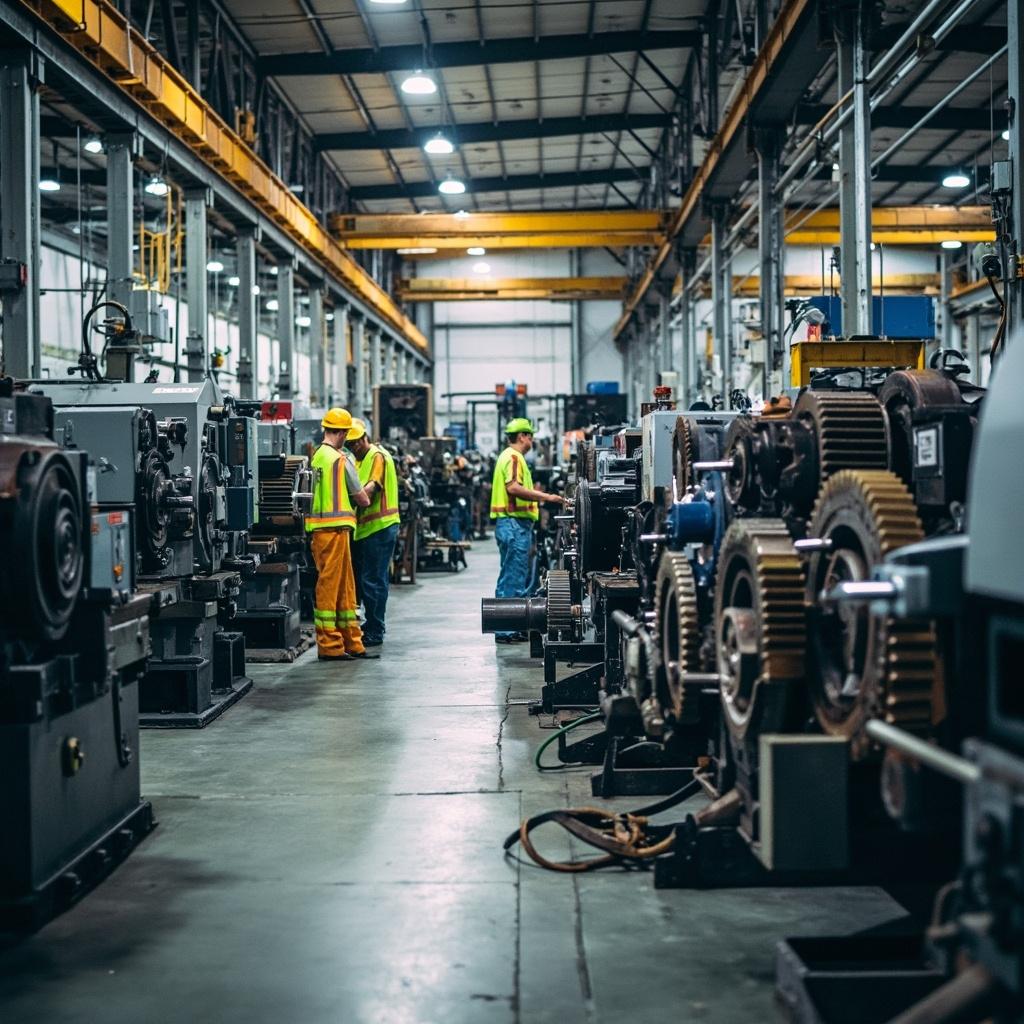
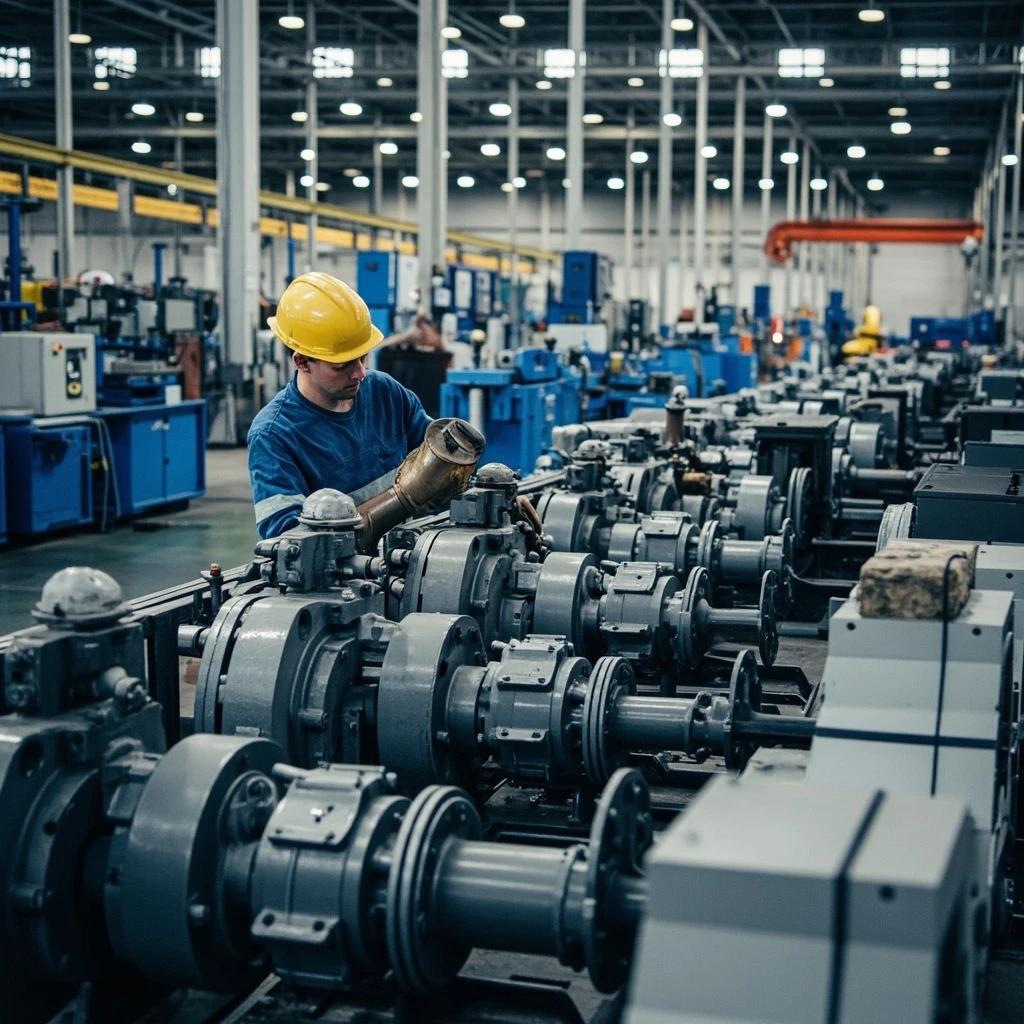
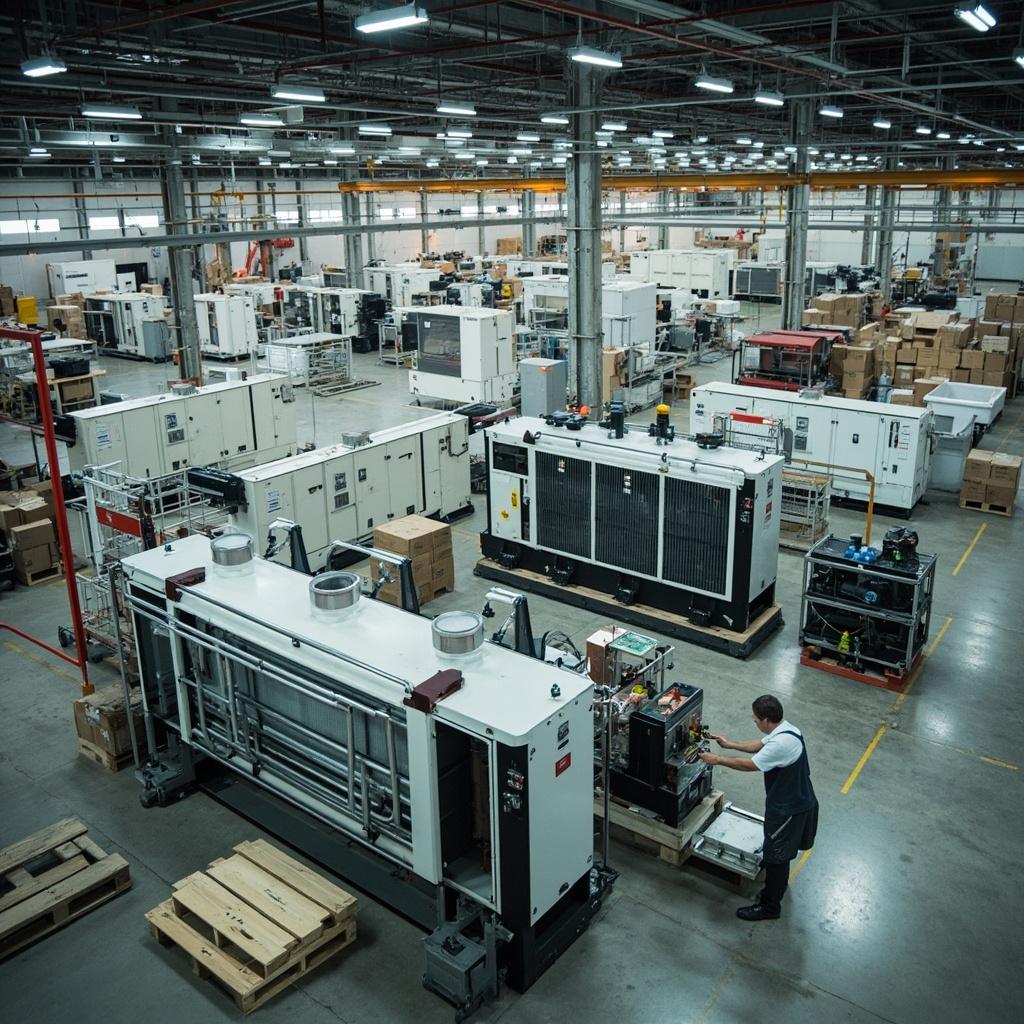
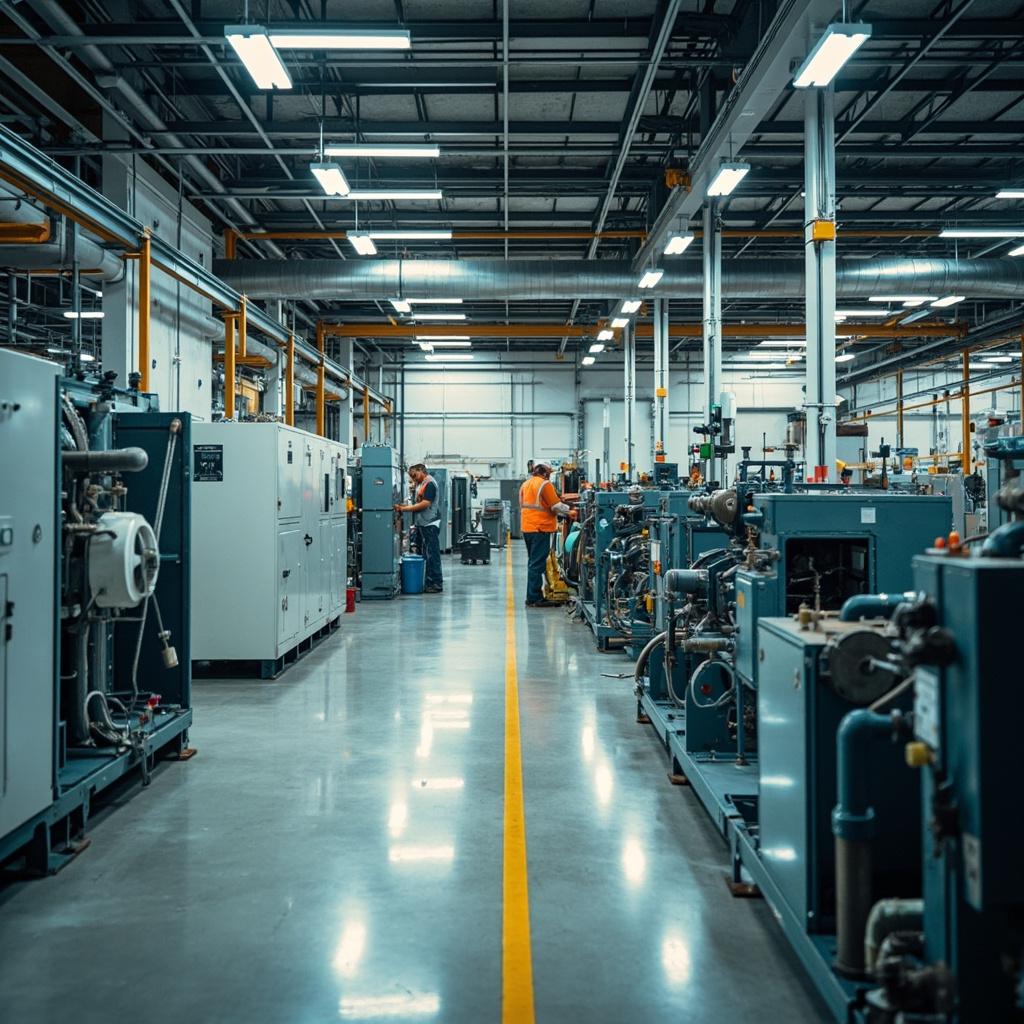
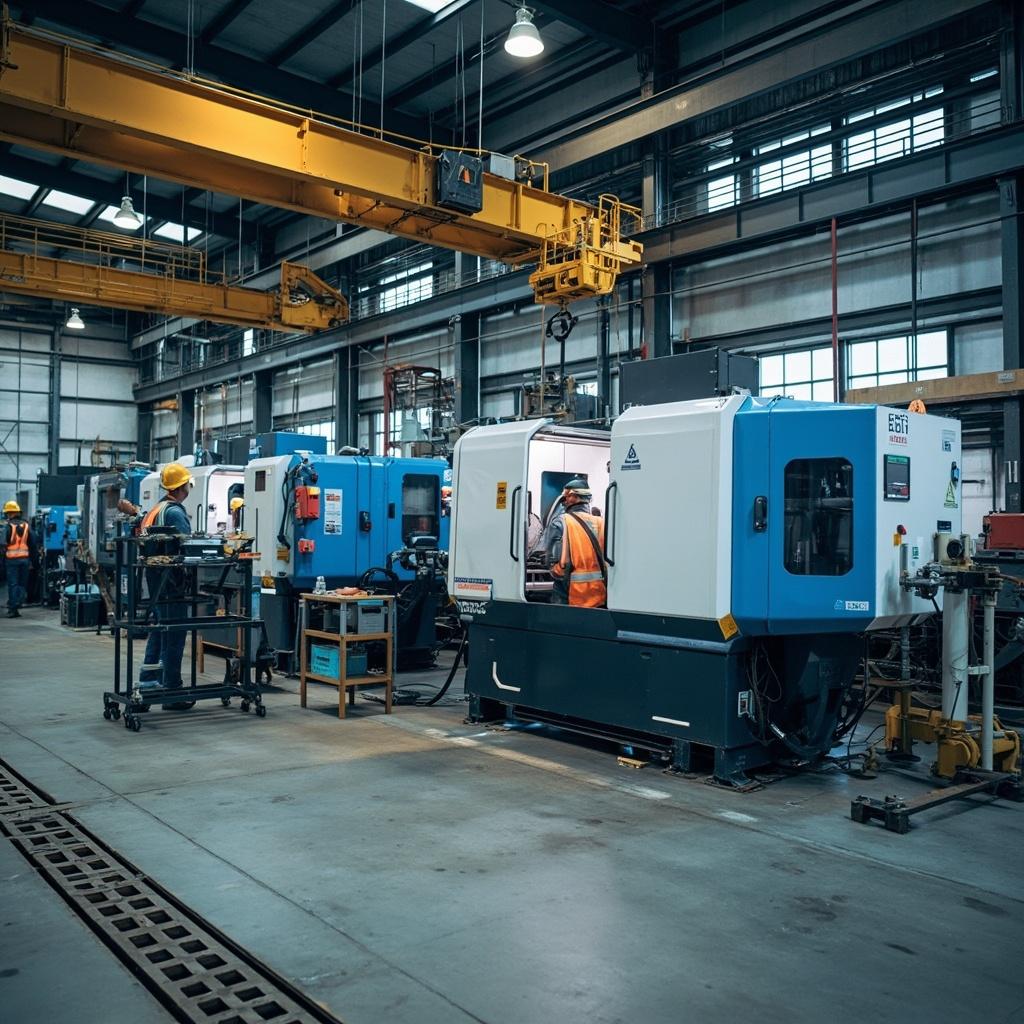
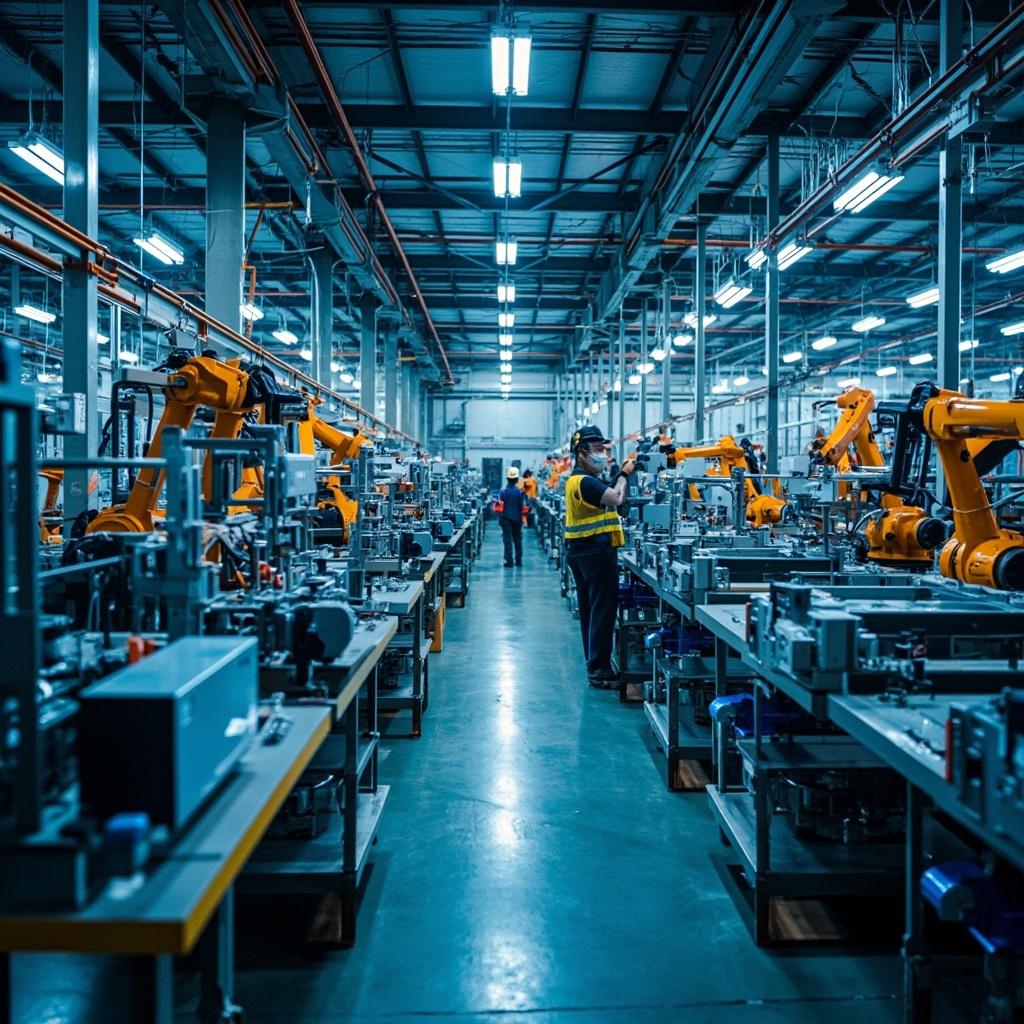
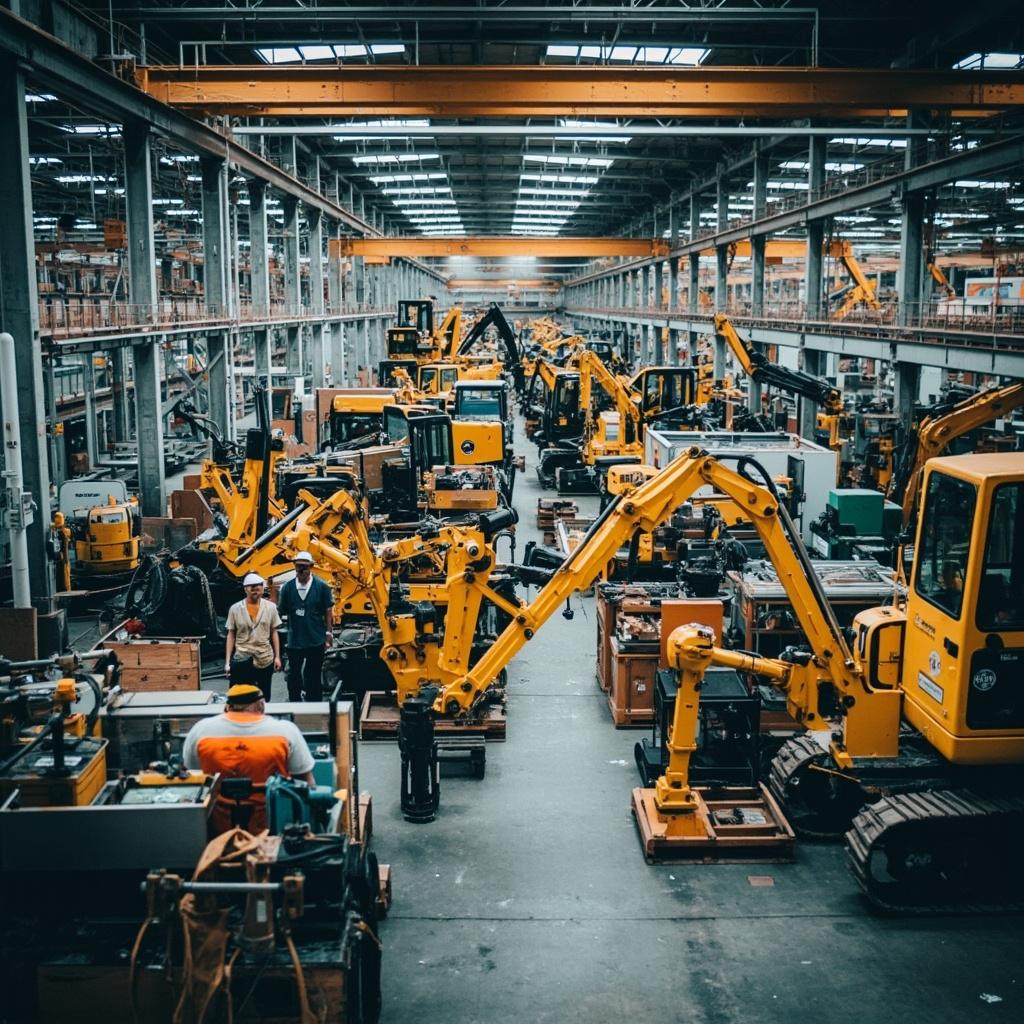
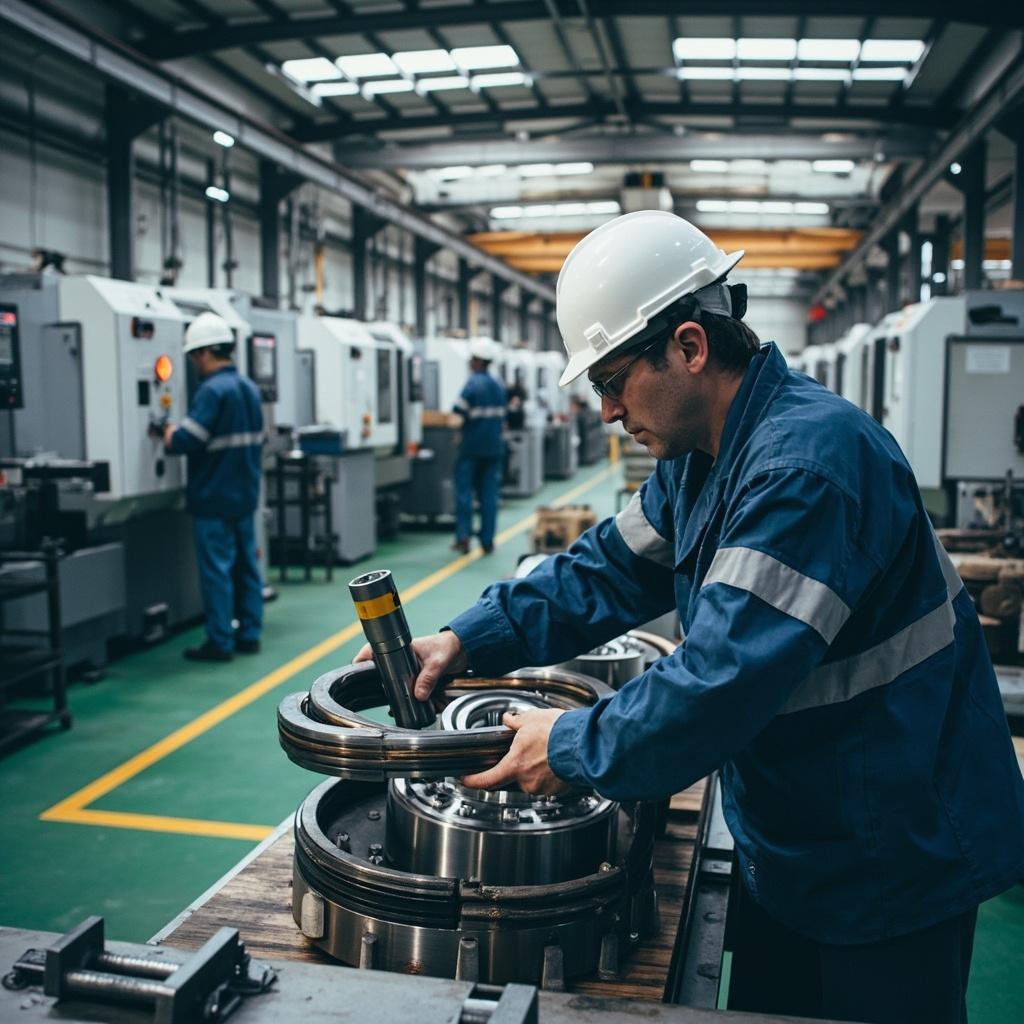
Our manufacturing rankings are based on independently verified data. VerityRank evaluates the top 10 agricultural and food processing equipment manufacturers across four equally weighted dimensions: Production Scale (25%) measuring factory count, production capacity, and in-house manufacturing depth — brand-only and OEM-dependent operators are strictly excluded from this ranking, ensuring every listed company operates real heavy-asset production; Technological Integration (25%) assessing precision agriculture, automation, machine vision, and powertrain self-sufficiency including in-house engines, transmissions, and electronics; Supply Chain Reach (25%) evaluating global factory footprint, localized production networks, and supply chain autonomy; and Sustainability & Compliance (25%) tracking ESG programs, emissions reduction, and responsible manufacturing practices.
Financial inputs are drawn from independently verified 2025 annual reports and Q1 2026 disclosures: Deere's FY2025 results ($45.684 billion), CNH Industrial's 2025 Annual Report ($18.095 billion), AGCO's full-year release ($10.08 billion), Kubota's financial statements (¥3.018 trillion FY2025), GEA's Annual Report 2025 (€5.495 billion), CLAAS Annual Report 2025 (€4.917 billion), Bühler Annual Report 2025 (CHF 2.753 billion), Weichai Lovol public disclosures (¥17.39 billion 2024), and YTO's 2025 results (¥10.823 billion). Each manufacturer receives a Composite Manufacturing Score (0-100) reflecting aggregate performance across all four dimensions.
Disclaimer: Rankings are based on publicly available data compiled from company reports, market research from Global Market Insights, Grand View Research, and Fortune Business Insights, industry association statistics, and AI-assisted sentiment analysis. They are provided for reference and market decision support only and do not constitute investment advice, purchase recommendations, or brand endorsement.
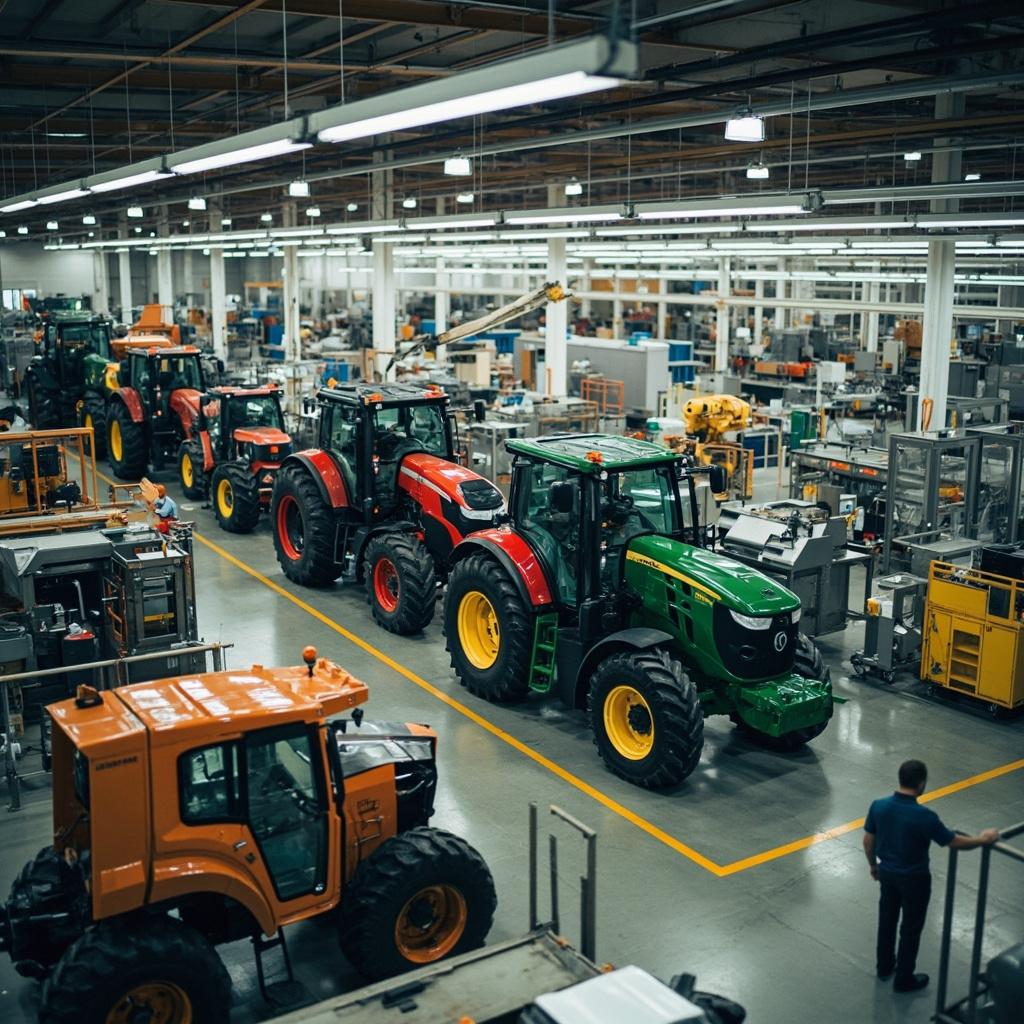
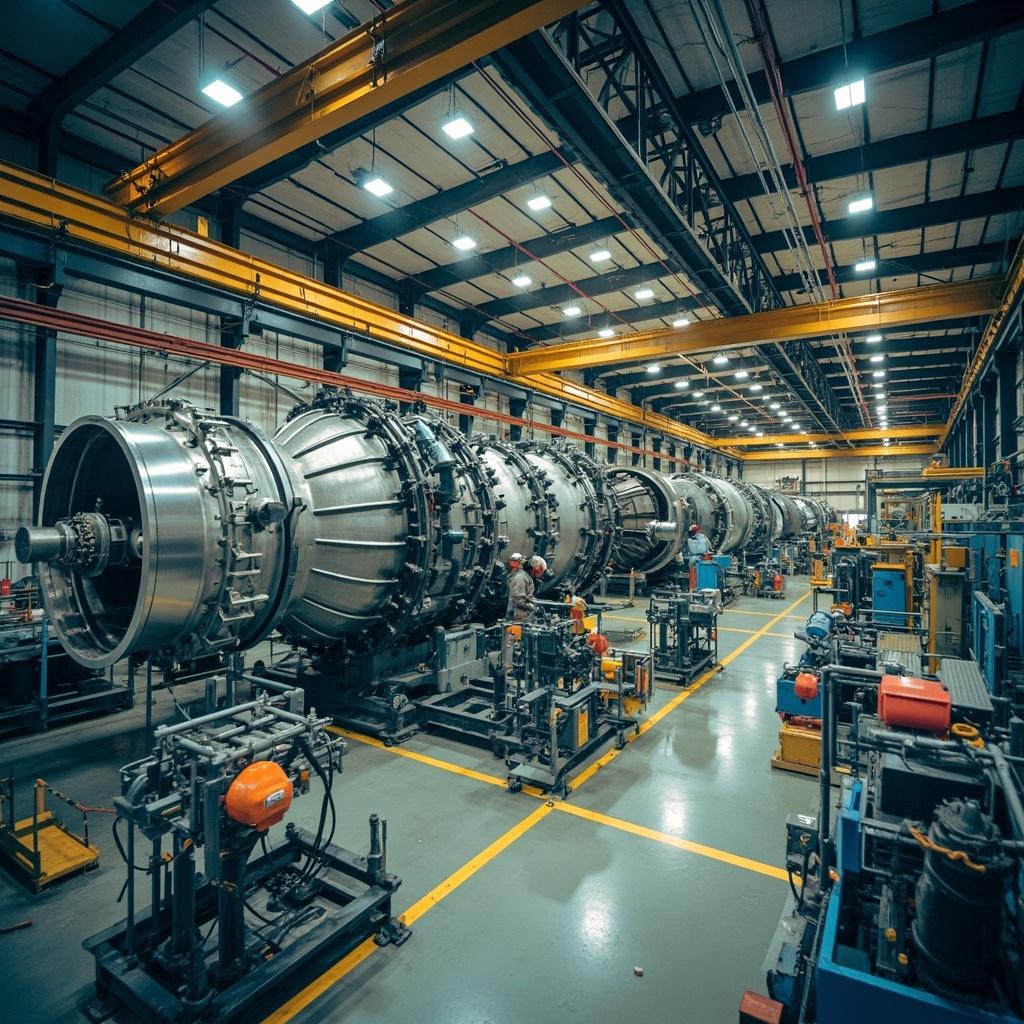
Top manufacturers in this industry are defined by five core manufacturing capabilities. First, vertical integration of powertrain and drivetrain components: Deere builds its own engines, transmissions, and electronics in-house at its Waterloo and Coffeyville plants, while Weichai Lovol integrates parent Weichai Power's golden powertrain system — capabilities that control cost, quality, and supply security simultaneously. Second, high-volume factory networks: Kubota operates 50+ core manufacturing plants worldwide, CLAAS maintains 35 locations across 20 countries, and Tetra Pak runs 52 production sites including 27 packaging material plants and 13 processing and packaging equipment plants.
Third, captive foundry and precision casting: Kubota's Sakai and Hirakata foundries produce ductile iron pipe and engine blocks using proprietary casting technology — a capability few competitors match — while CNH Industrial's FPT Industrial powertrain division supplies standardized engines and transmissions across its global plant network. Fourth, large-horsepower drivetrain mastery: Weichai Lovol's CVT tractors up to 320 HP broke the Western monopoly in high-end agricultural transmissions with 18% fuel savings and a Red Dot Design Award, while AGCO's Fendt brand commands premium European margins and CLAAS's LEXION combines lead European harvesting technology.
Fifth, process engineering depth: GEA's food-grade stainless steel separation and heat-exchange systems process approximately one-third of global chicken-nugget protein, and Bühler's grain milling and optical sorting lines serve roughly 2 billion daily consumers — capabilities that cannot be outsourced and create decades-long installed bases with recurring service revenue.
Global manufacturers deploy six interconnected quality systems to maintain consistency across facilities. First, standardized manufacturing execution systems (MES): Deere's Smart Industrial strategy connects every machine to the John Deere Operations Center, creating a data feedback loop where field performance continuously informs manufacturing quality, while GEA and Bühler deploy digital twin systems to validate food-grade stainless steel processing lines. Second, ISO 9001 quality management certification across all production sites, complemented by ISO 14001 environmental management and industry-specific certifications such as ISO 22000 for food-processing equipment manufacturers.
Third, common component platforms: CNH Industrial's FPT Industrial division supplies standardized engines and transmissions to plants worldwide, ensuring identical drivetrain quality from Brazil to India to the US, and Weichai Lovol standardizes on Weichai Power engines across all its tractor lines. Fourth, regional quality hubs: CLAAS dual sources between Germany and China — its Gaomi plant exports high-quality components back to the German supply chain, proving cross-facility quality parity, and Deere's Tianjin and Jiamusi plants in China serve Asian markets with the same quality standards as its US plants.
Fifth, automated inspection and testing: Kubota's foundries use automated casting inspection, Krones' filling lines undergo end-to-end leak and fill-level testing, and Bühler's optical sorters are calibrated against certified reference samples. Sixth, supplier quality programs: AGCO integrates 1,500+ suppliers through its 4flow iTMS transport management system, GEA's Local-for-Local strategy sources 85% of procurement from regional suppliers under consistent quality audits, and CNH maintains a global supplier qualification matrix — enforcing consistent inbound quality standards across every production region.
Five transformative trends are reshaping the industry. First, the shift from hardware to software-as-a-service: Deere's precision agriculture subscriptions and Bühler's lifecycle services (38.3% of 2025 revenue, with over 3,000 long-term service agreements signed) convert one-time equipment sales into recurring, high-margin revenue — GEA's service revenue reached 40.0% of total sales in 2025. Second, local-for-local supply chains: manufacturers are building plants in China, India, and the US to hedge tariffs and shipping risk — Kubota's controlling stake in India's Escorts Kubota aims to make India a global compact-tractor supply hub, while Deere expanded its North American parts and distribution network in 2025.
Third, the agricultural downturn vs. food processing resilience: Deere's FY2025 revenue fell 12% and CNH's fell 9% as farm incomes dropped, while GEA grew 1.4% with a 16.5% EBITDA margin and Krones grew 7.0%, as downstream food automation investment accelerates — the "steel at the planting end vs. automation at the processing end" divergence is the industry's defining structural feature. Fourth, Chinese manufacturers going global: Weichai Lovol's overseas revenue surged 37.2% in 2024 with CVT technology breakthroughs, and YTO continues winning Belt & Road mechanization tenders, reshaping emerging-market supply at 37%+ export growth rates.
Fifth, sustainable manufacturing: GEA achieved its Scope 1-2 emissions targets ahead of schedule, YTO cut Scope 2 emissions 22.9% in 2025, Bühler's service-led model reduces customer energy consumption, and CLAAS maintains production in Russia despite sanctions pressure — citing food security — while investing €319 million annually in fuel-efficiency R&D.
VerityRank updates this manufacturer ranking quarterly, with full reviews every 6-12 months. The quarterly refresh captures new financial results, factory openings, major order announcements, and M&A activity, while the comprehensive annual review — typically aligned with fiscal year-end reporting between February and June — recalibrates scores based on full-year audited results, updated production capacity data, and verified factory counts. Data sources are refreshed continuously: company investor relations pages, annual reports, SEC filings (for NYSE-listed Deere, CNH, and AGCO), JPX filings (Kubota), HKEX and SSE filings (YTO), and market research from Global Market Insights and Grand View Research are monitored for material changes as they are published.
Mergers and acquisitions trigger mid-cycle adjustments — for example, Kubota's controlling acquisition of Escorts Kubota in India (approximately ¥10 billion investment for 54.07% control) and CLAAS's sale of its Chandigarh plant to Yanmar would be reflected within one quarter of closing. Score changes are always accompanied by updates to the corporate report and methodology notes, and significant capacity expansions — such as Weichai Lovol's new plants ahead of its Hong Kong IPO or Deere's 2025 North American parts network expansion — are incorporated as soon as verifiable public disclosures are available.
Users can track score revisions and their rationale in the changelog section of each corporate report.