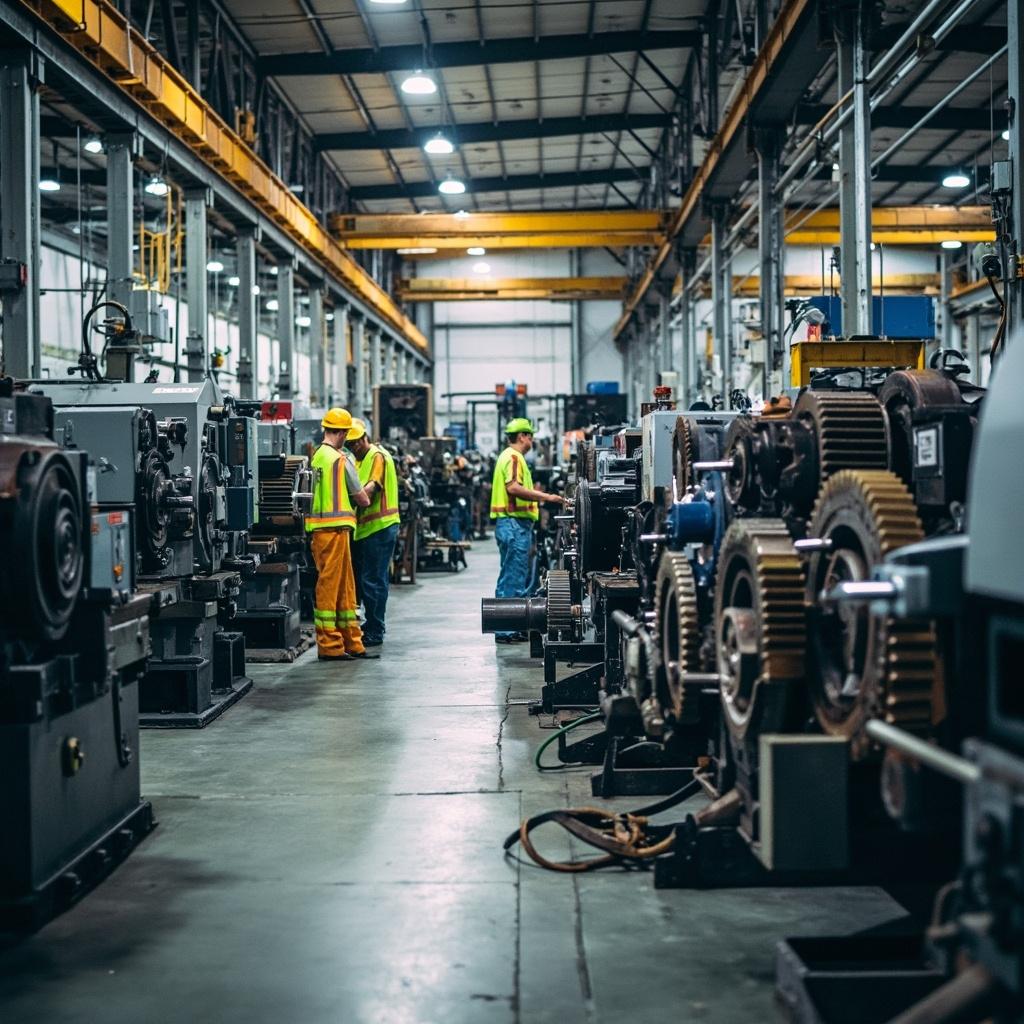
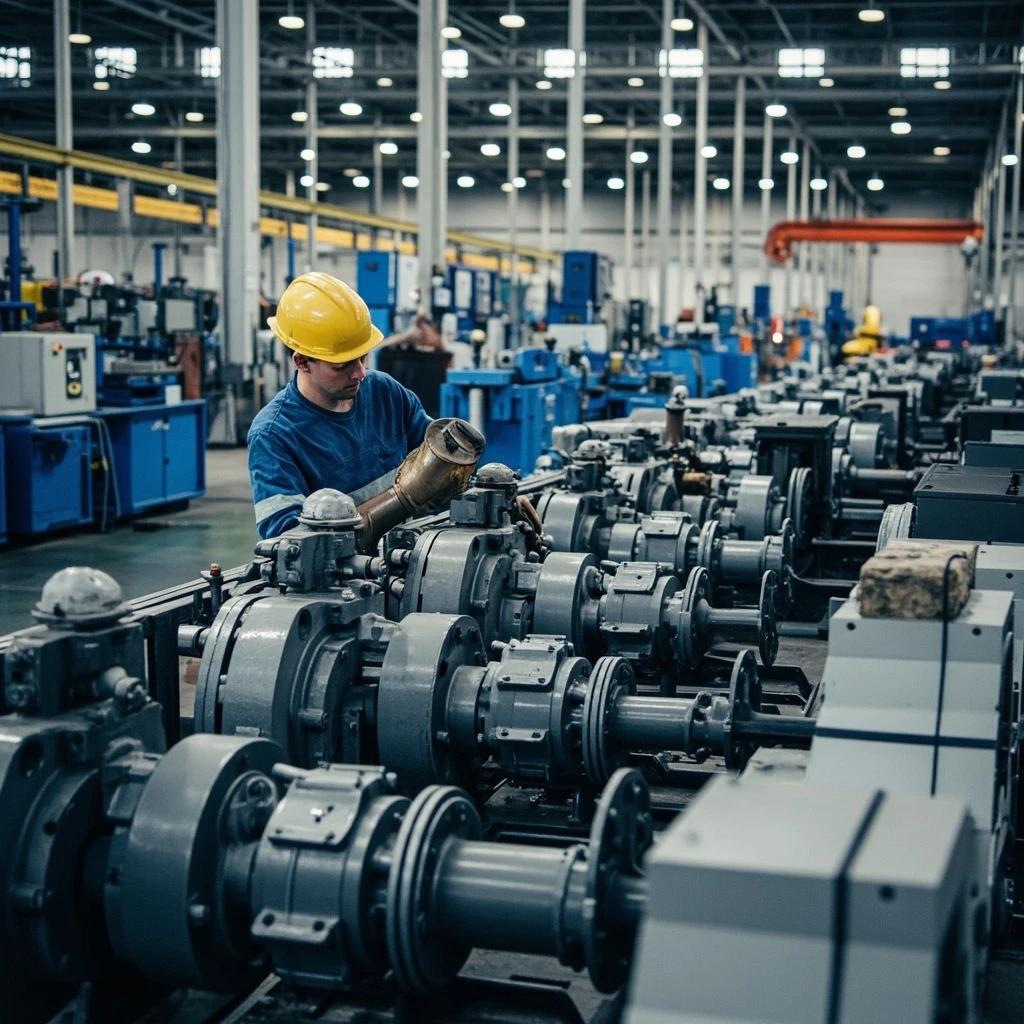
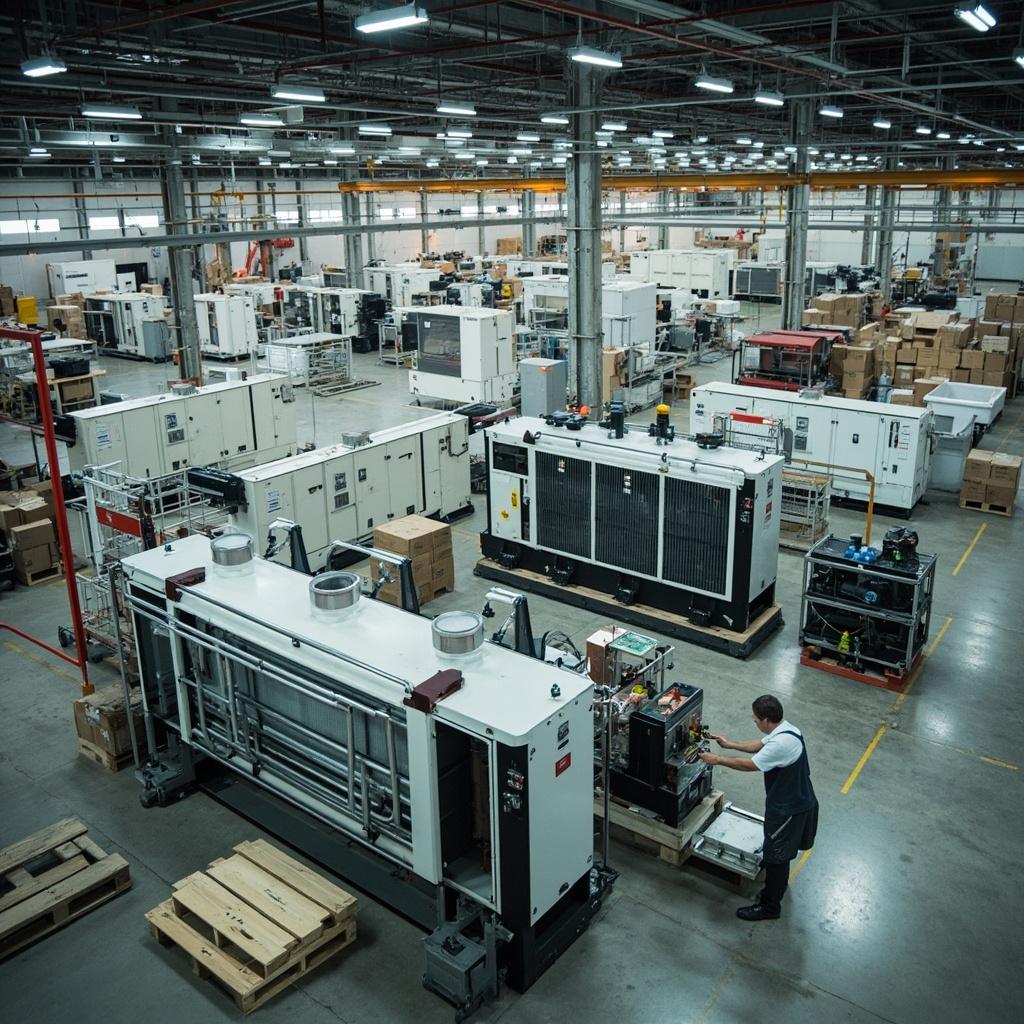
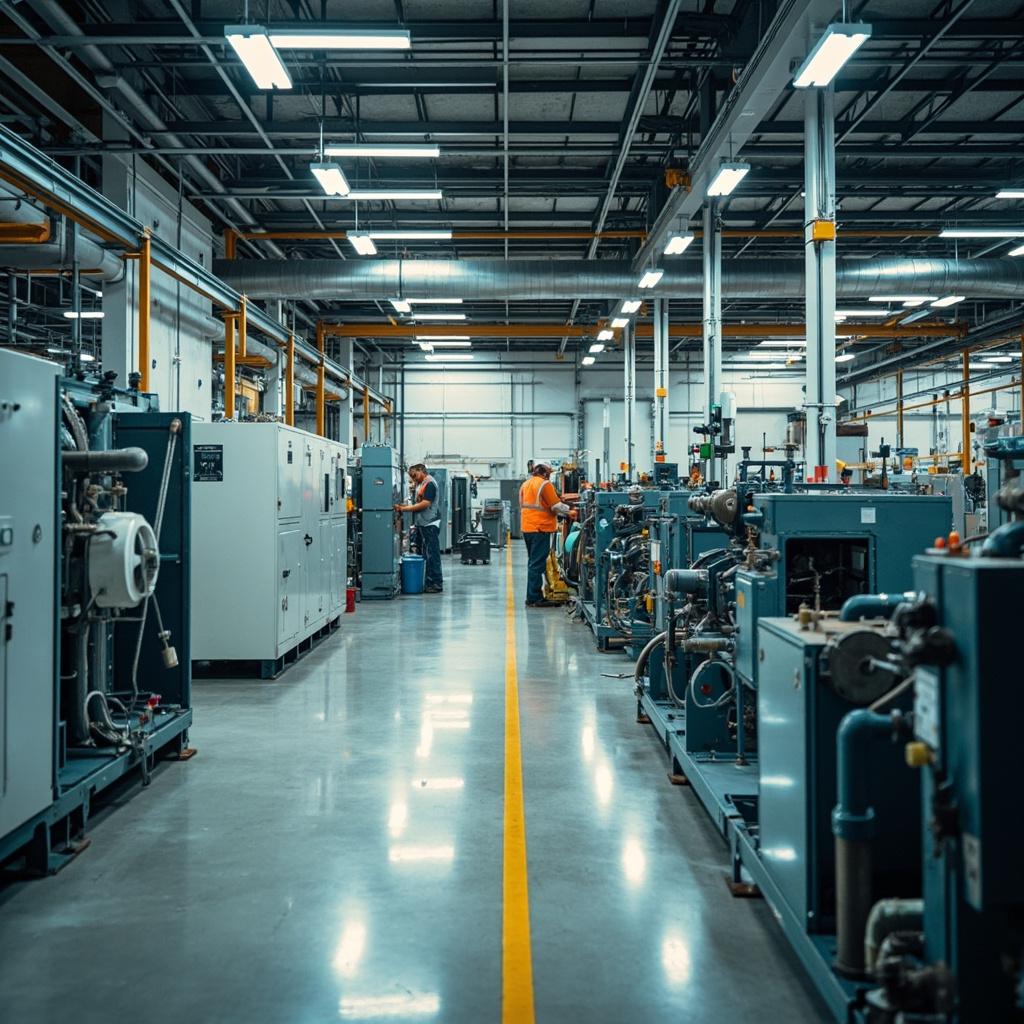
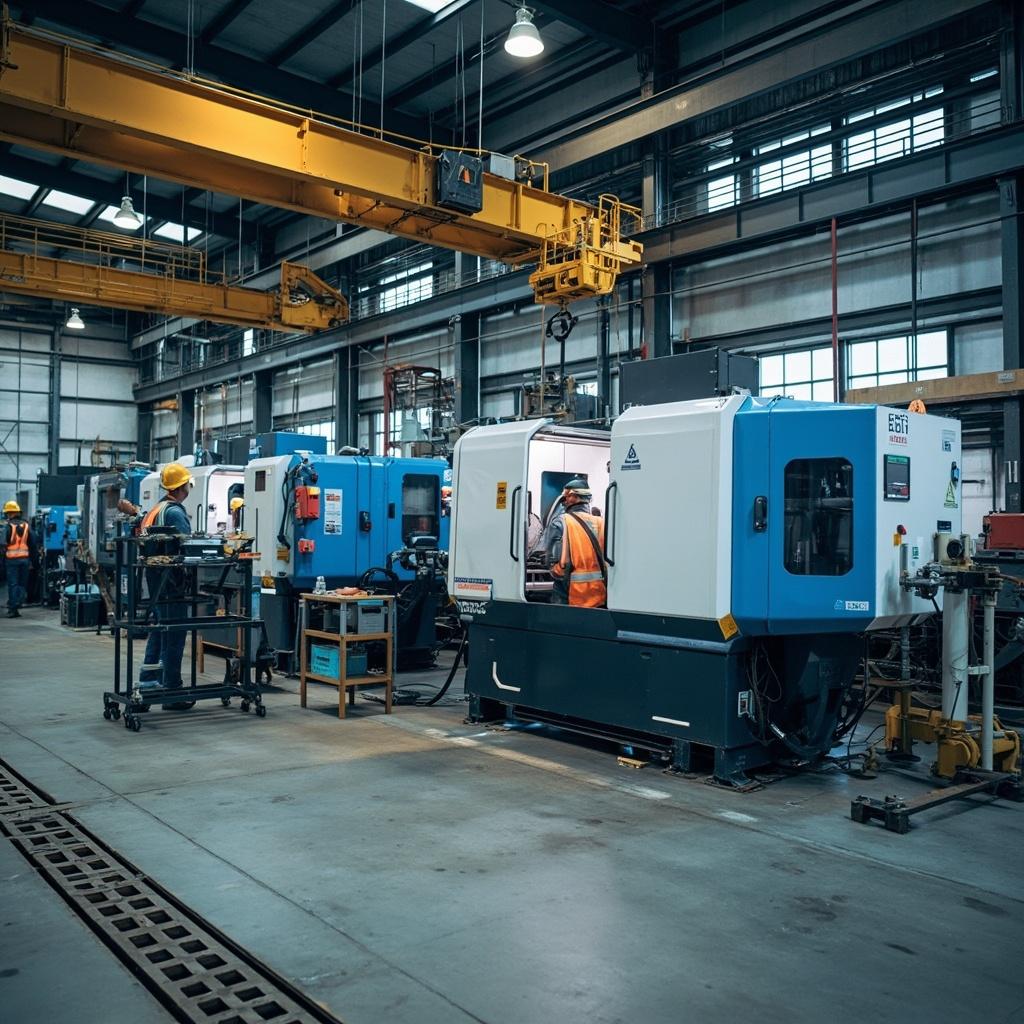
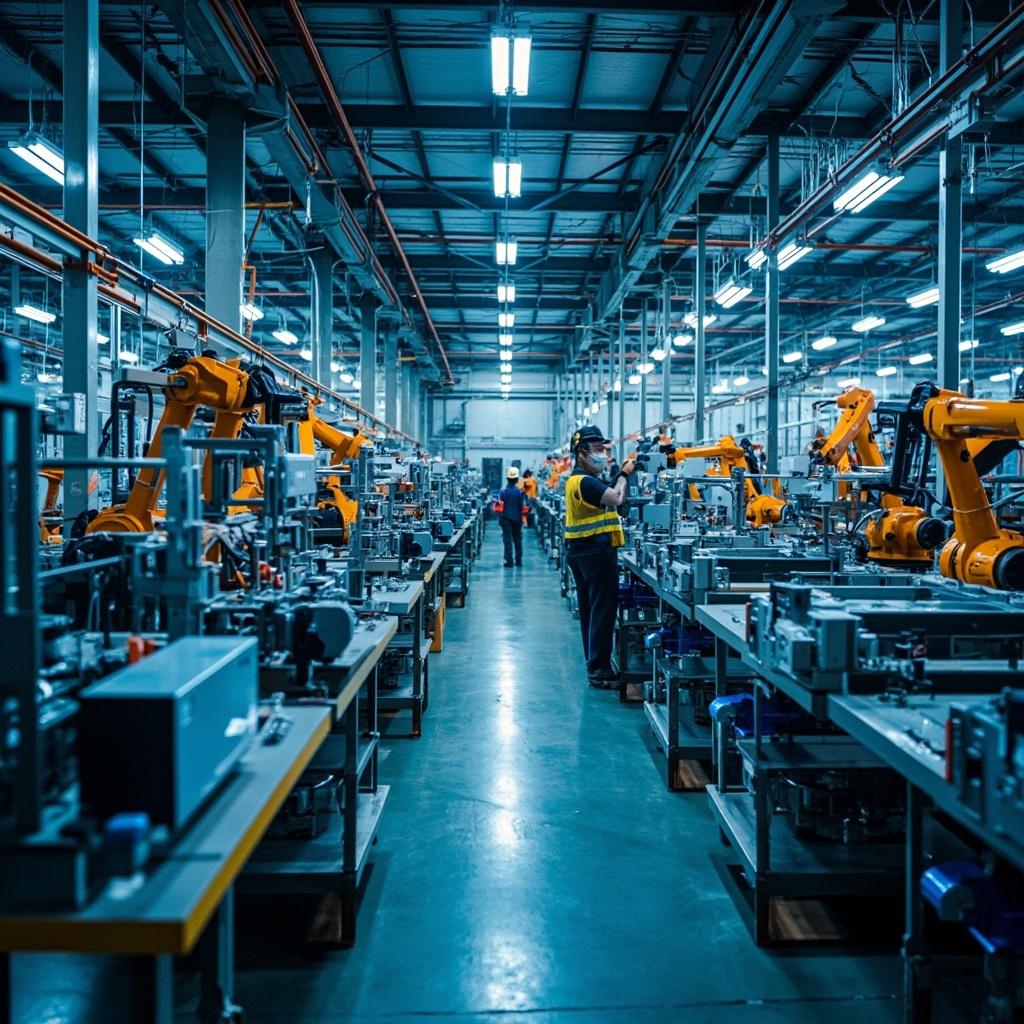
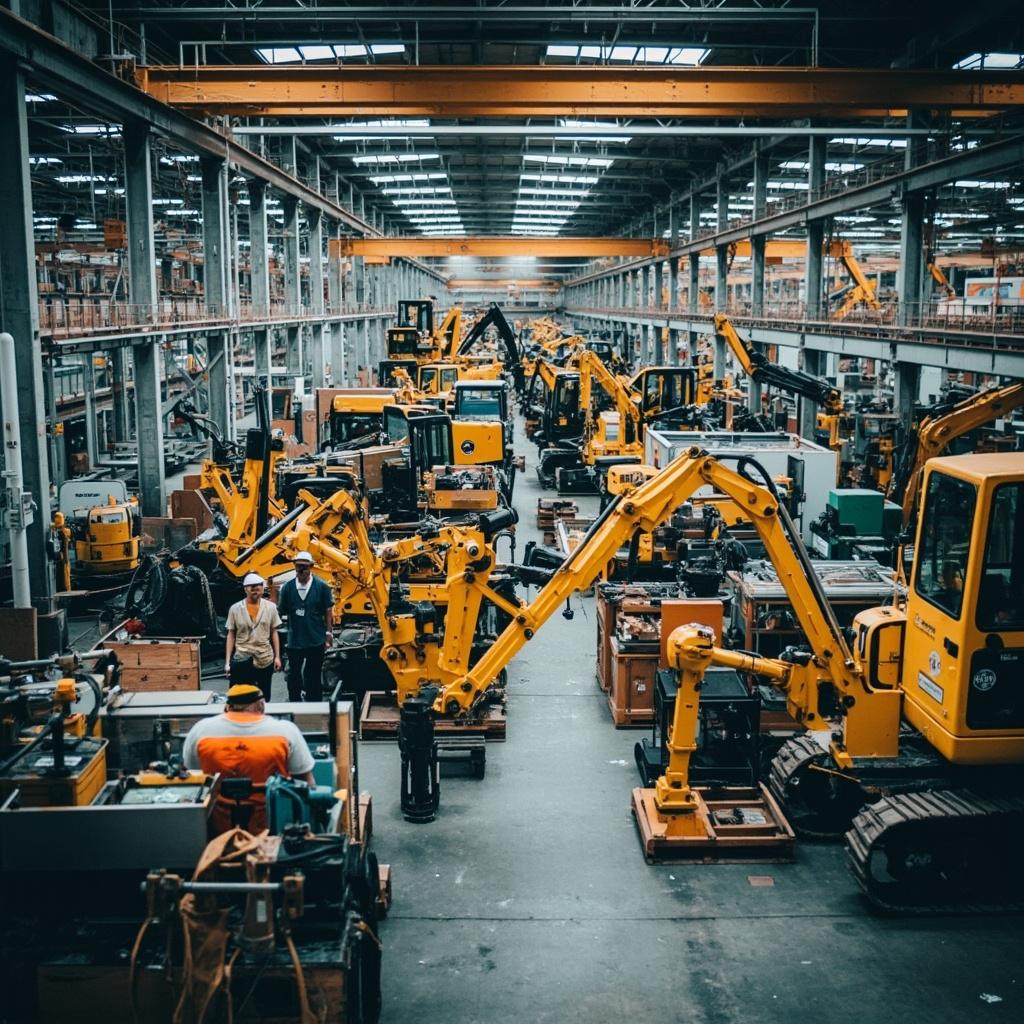
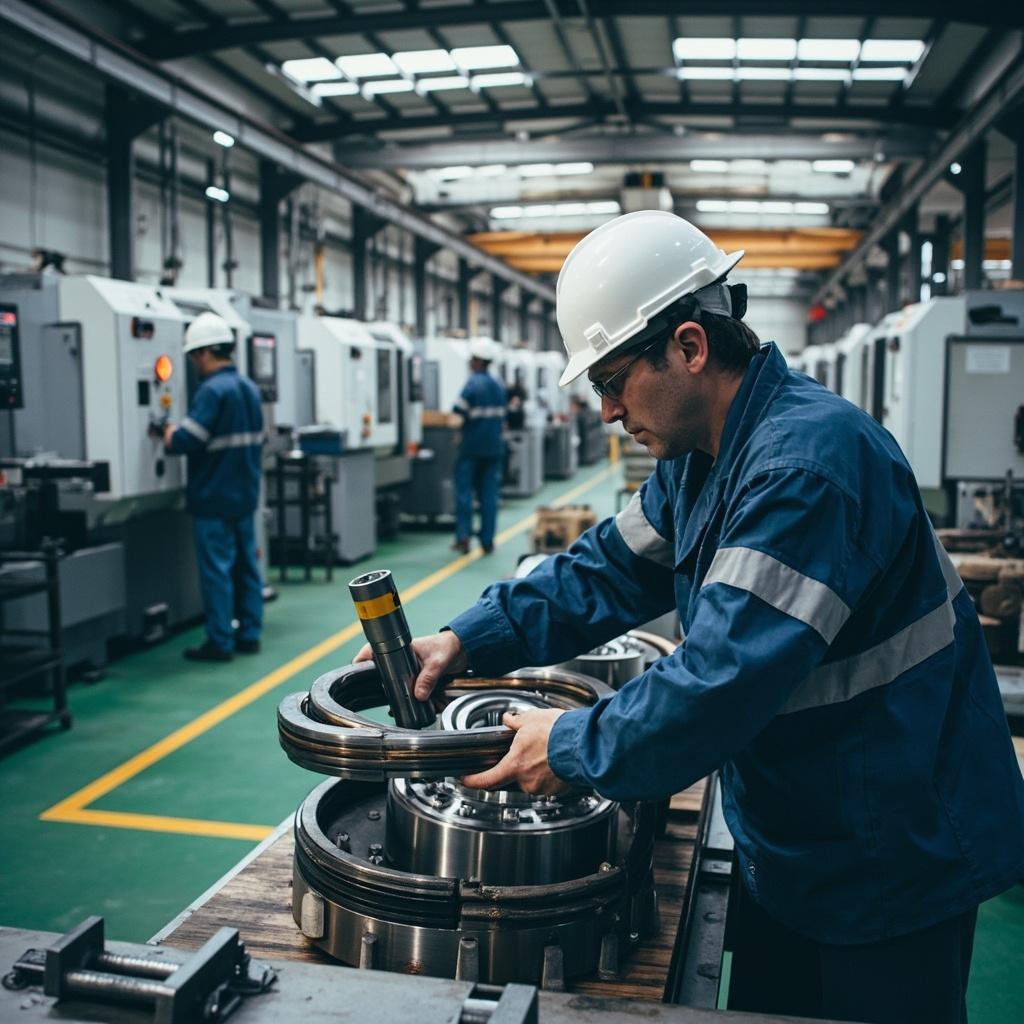
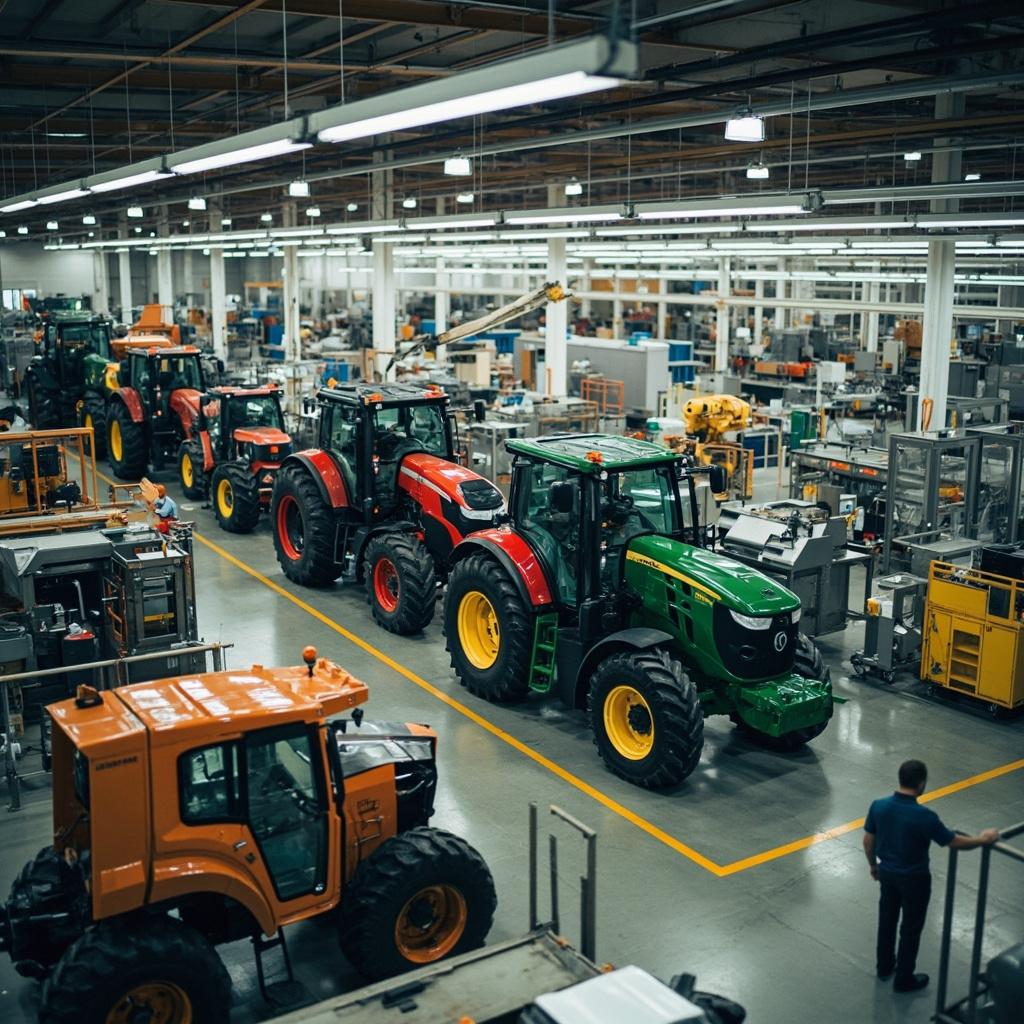
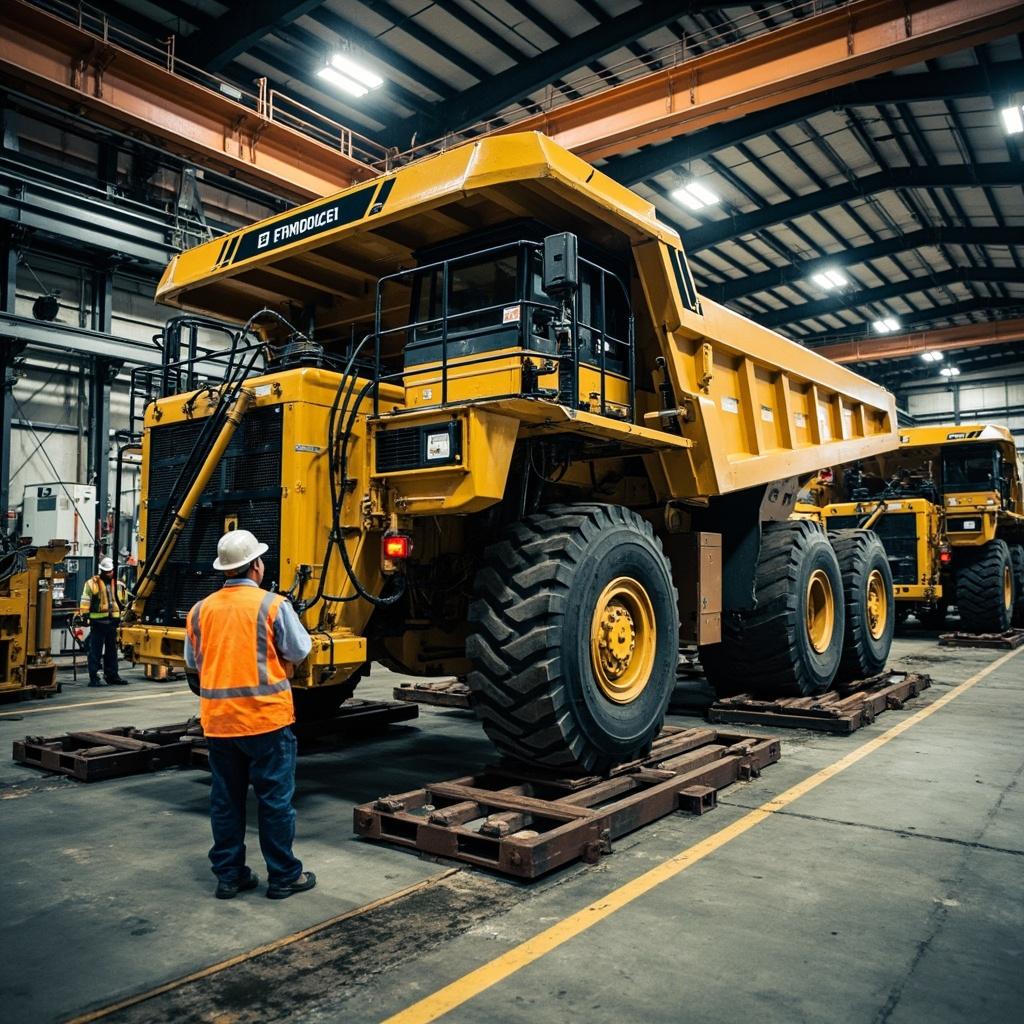
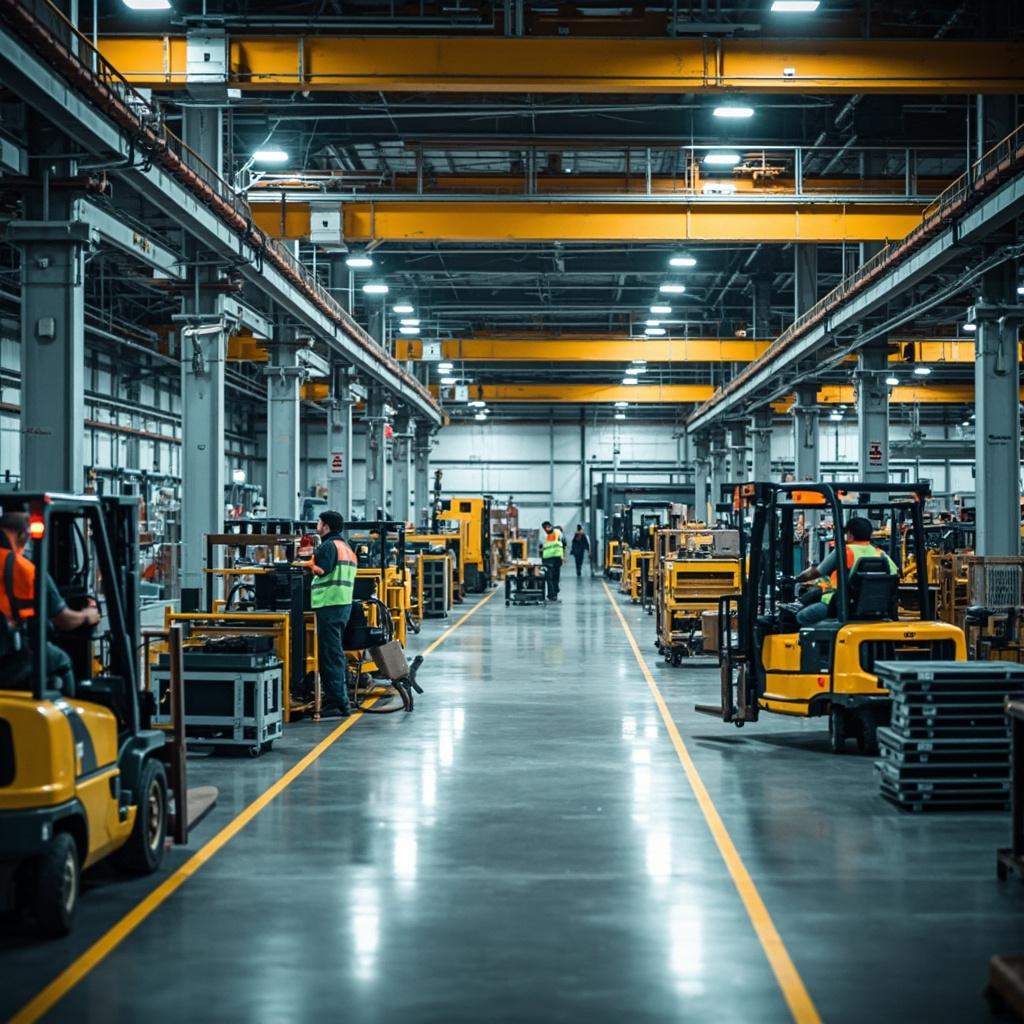
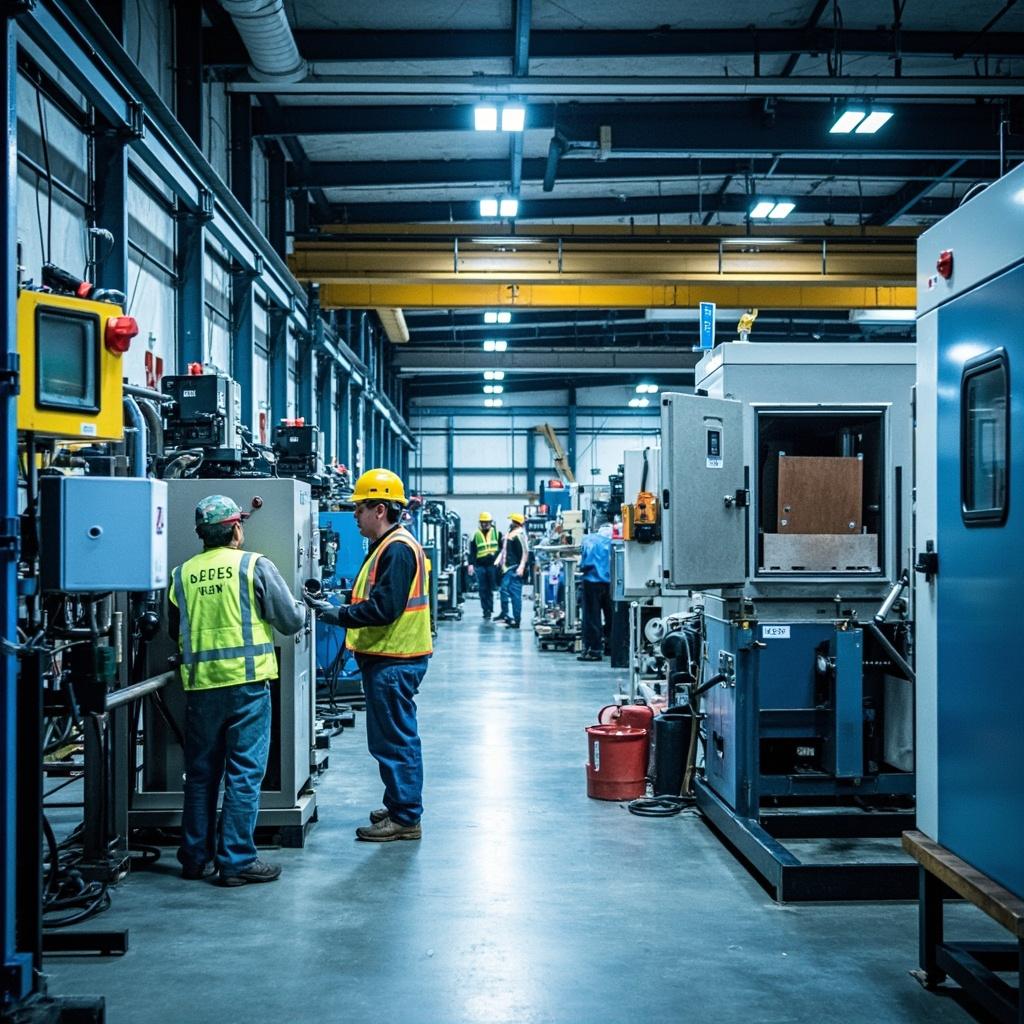
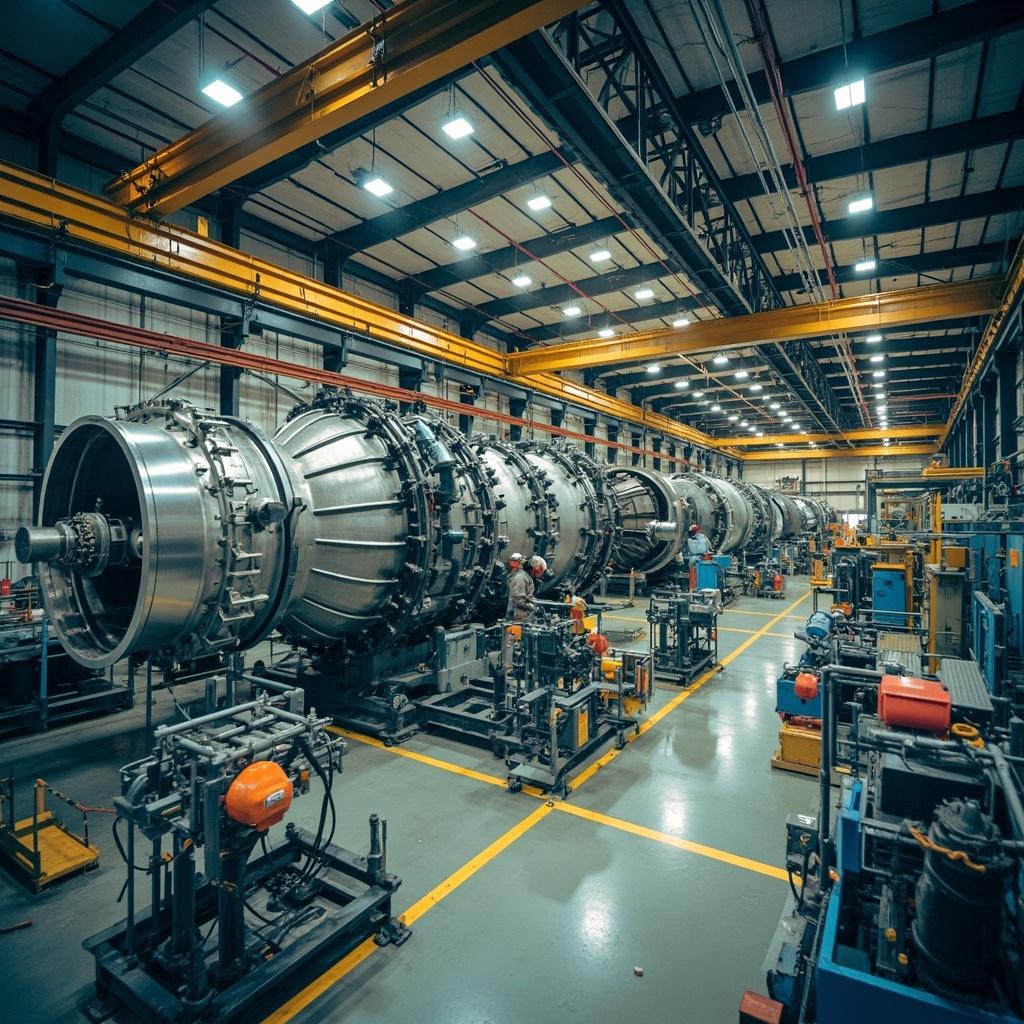
This ranking applies a deliberately strict test: companies must build the machines themselves, not just assemble or brand them. OEM-dependent firms, brand-only operators and businesses lacking core heavy fabrication have been excluded. That means every company listed here operates its own foundries, machine shops and assembly plants — Sinoma International Engineering achieves about 67% self-sufficiency across ten core host equipment categories; Biesse fabricates its own spindles and develops its own control software; Breton builds its mother machines in-house at its Treviso headquarters; and QGM insists on high-strength cast steel frames with proprietary servo-hydraulic systems.
The production test matters because it predicts everything else. In-house manufacturing means control over quality, cost and delivery — decisive in an industry where a cement kiln or ceramic press must run for decades. It also determines resilience: vertically integrated manufacturers can support their installed base with spare parts and upgrades long after competitors have exited a market. This is why production strength carries 45% weight in our methodology, far above brand perception.
Scale alone does not qualify a company. A machinery maker that generates most of its revenue from unrelated businesses — mining, packaging or general engineering — is ranked lower on category productivity share. Fuller Technologies, for example, benefits from extreme category purity: after its carve-out from FLSmidth, 100% of its assets serve building material machinery, focused on cement equipment, calcined clay and alternative fuels.
Cement equipment is the most engineering-intensive: a complete dry-process plant spans crushers, raw mills, preheaters, rotary kilns, clinker coolers and finish grinding systems. The leaders here are Sinoma International Engineering — the global No.1 for 17 consecutive years — thyssenkrupp Polysius with its polycom® high-pressure grinding rolls, and Fuller Technologies, which holds more than 50% core equipment share in cement plants outside China. KHD’s patented roller presses and alternative-fuel burners also shape the segment, though it ranks lower on production scale.
Ceramic machinery is the most concentrated. SACMI and KEDA dominate presses, kilns and polishing lines worldwide — SACMI from Italy with more than 6,200 patent applications and record 2024/25 sales of EUR 1.728 billion, KEDA from China as Asia’s No.1 with nearly one million square meters of coordinated manufacturing. Both control core component production in-house: SACMI machines its own heavy hydraulic cylinders and kiln burner nozzles, while KEDA builds presses, kilns and polishing lines across its brand portfolio.
Glass and stone equipment are specialist niches. Glaston leads tempering furnaces and insulating glass lines, Biesse dominates CNC processing of glass, wood and stone with its Rover series, and Breton is the standard-setter for engineered quartz surfacing through its Bretonstone® vacuum vibration pressing technology. In concrete products, TOPWERK’s HESS brand and QGM’s Zenith lines lead block and paver machinery. Each niche rewards deep specialization over breadth — which is why the global top 10 contains both CNY-50-billion giants and focused family-owned champions.
Cement production alone accounts for roughly 8% of global CO2 emissions, and the machinery that can cut that footprint has become the industry’s hottest product category. thyssenkrupp Polysius went furthest in 2026 by carving out its sustainable process technologies — including Oxyfuel all-oxygen combustion — into a dedicated entity, thyssenkrupp Calvion GmbH, betting that carbon-capture-ready kiln designs will define the next generation of cement plants. Fuller Technologies similarly pivoted its entire strategy to calcined clay plants and alternative-fuel systems, which replace part of energy-intensive clinker and burn waste-derived fuels at scale.
Regulation is forcing the change. The EU Carbon Border Adjustment Mechanism (CBAM) imposes tariffs on carbon-intensive imports, while the US Inflation Reduction Act subsidizes domestic low-carbon manufacturing. Emerging-market cement producers in India, the Middle East and Southeast Asia are therefore buying new equipment not just for capacity but for “green premium” access — a shift that favors manufacturers with proven decarbonization technology.
Ceramics and wall materials are electrifying too. SACMI has introduced electric kilns and dryers for tile production, KEDA launched digital factory control systems, and Wehrhahn-type AAC lines produce lightweight insulating blocks that cut building energy demand. The commercial logic is simple: equipment that lowers unit energy consumption or raises waste-replacement rates commands premium pricing, and over the next five years the industry’s value anchor is shifting from “tonnes per hour” to “carbon saved per tonne.”
Cement equipment is a China-vs-Europe story. Sinoma International Engineering holds the global No.1 market share in cement engineering with 2025 revenue near CNY 50 billion, while thyssenkrupp Polysius and Fuller Technologies represent European engineering with deep installed bases — Fuller alone holds more than 50% core equipment share in cement plants outside China. KHD remains the technology reference for roller presses and alternative-fuel combustion, though smaller in scale.
Ceramic machinery is split between Italy and China. SACMI commands the premium segment from Italy with record EUR 1.728 billion sales and a 6,200-plus patent fortress, while KEDA is Asia’s largest and the world’s second-largest ceramic machinery group, growing 38% in 2025 and building plants in Africa and Indonesia. In glass processing, European specialists dominate: Glaston leads tempering from Finland, Biesse leads CNC glass and stone processing from Italy, and Breton controls engineered stone equipment from its Treviso headquarters.
Concrete products machinery has two poles. TOPWERK’s HESS and Masa brands represent the German premium standard for block and paver machines, while China’s QGM — which wholly owns German brand Zenith — combines Chinese manufacturing scale with German engineering to serve 120+ countries. For buyers, segment leadership usually means deeper process knowledge, faster spare parts and a more advanced technology roadmap — which is why the top 10 list reflects production strength and category focus rather than mere brand familiarity.
Start with the factory, not the brochure. Verify whether the supplier actually manufactures core components in-house — heavy castings, precision hydraulic cylinders, CNC-machined spindles — or merely assembles outsourced parts. Companies like Breton (in-house mother machines), Biesse (in-house spindles) and QGM (cast steel frames, own servo-hydraulics) pass this test; assembly-only firms should be treated with caution, especially for capital equipment expected to run for decades.
Check the installed base and service network. A large installed base means proven technology and a sustainable spare-parts supply. Glaston supports 70+ countries and derives nearly 40% of revenue from services; Fuller operates 16 regional hubs; Sinoma’s global service platform and KEDA’s 13,000+ overseas employees provide local support. Ask about response times, digital diagnostics (like Biesse’s Sophia or SACMI’s Industry 4.0 systems) and spare-parts availability before signing.
Evaluate the technology roadmap for decarbonization. Carbon regulations will only tighten. Prefer suppliers with credible green technology — Oxyfuel combustion (thyssenkrupp Calvion), calcined clay lines (Fuller), electric kilns (SACMI), permeable paver plants for “sponge city” projects (QGM) — and check whether their equipment can be retrofitted as regulations evolve. Finally, compare total lifecycle cost per tonne or per square metre — energy consumption and yield usually matter far more than machine price over a 20-year plant life.