VerityRank

Manufacture Rankings in the ​​Custom & Group Apparel Industry

HomeTextile & ApparelManufacture Rankings in the ​​Custom & Group Apparel Industry

Welcome to Verity Rank's Global “Custom & Group Apparel Industry Manufacturer Rankings”. This list goes beyond brands to identify the foundational production powerhouses. We assess manufacturers on hard metrics: production capacity, vertical integration, technical expertise, quality control, and elite client portfolios. Find partners for bulk orders or specialized technical apparel. Our rankings are built from industry analyses, trade data, patent reviews, and AI-driven intelligence, offering an objective reference for your sourcing decisions.

Top 10 Rankings

2026.06 Edition
1
Gildan Activewear Inc.

Gildan Activewear Inc.

Gildan Activewear Inc. is a world-leading vertically integrated manufacturer of activewear and basic apparel, headquartered in Montreal, Quebec, Canada. Its core business focuses on blank T‑shirts, fleece, bottoms, underwear, and hosiery serving the B2B printwear market, wholesale distributors, and major retailers. Estimated 2025 revenue reached approximately $3.4–$3.5 billion (excluding HanesBrands), with ~49,000 employees and nearly 30 self‑owned factories. Listed on the TSX and NYSE (NYSE : GIL), Gildan completed the acquisition of HanesBrands in late 2025, creating a combined entity with ~$6.9 billion annual revenue, further solidifying its dominance in basics through end‑to‑end vertical integration and a strong commitment to sustainability.

Strengths: Gildan’s core strengths lie in its rare, fully integrated manufacturing model—self‑owned factories contribute over 90% of sales, delivering unparalleled cost control and consistent quality; as the world’s largest supplier of blank apparel, it holds near‑monopoly scale and channel dominance in the B2B printwear market; the 2025 HanesBrands acquisition integrates iconic labels (Hanes, American Apparel), making underwear/hosiery a robust second pillar and creating a full‑category moat from basics to innerwear.

Weaknesses: Gildan’s main weaknesses stem from its long‑standing B2B/wholesale orientation, resulting in weak brand recognition and fashion appeal in direct‑to‑consumer channels; business is heavily concentrated in North America, with insufficient localized depth in emerging markets despite a broad distribution network; the 2024–2025 proxy fight incurred significant costs, and exposure to U.S. tariff policy shifts adds geopolitical supply‑chain risk; licensing volatility (e.g., termination of the Under Armour sock license) temporarily disrupts revenue streams.

Brand

Gildan Activewear

Founded

1984

Workforce

49K+

Presence

60+ Countries

Headquarters

Canada

Key Product Categories
Children's Clothing (For Ages 2-12) ManufacturersMen's Clothing IndustryMen's Tops IndustryMen's Outerwear IndustryMen's Bottoms IndustryMen's Sportswear IndustryCustom & Group Apparel CompaniesMen's Clothing IndustryMen's Tops IndustryMen's Outerwear IndustryChildren's Clothing (For Ages 2-12) ManufacturersMen's Clothing IndustryMen's Tops IndustryMen's Outerwear IndustryMen's Bottoms IndustryMen's Sportswear IndustryCustom & Group Apparel CompaniesMen's Clothing IndustryMen's Tops IndustryMen's Outerwear Industry
2
Cintas Corporation

Cintas Corporation

Cintas Corporation (NASDAQ: CTAS) is a leading U.S.-based provider of workplace solutions, whose core business model revolves around renting, cleaning, delivering, and managing the full lifecycle of uniforms, corporate apparel, and protective clothing for businesses. As a B2B integrated service provider rather than a traditional apparel manufacturer, it transforms textile products into a highly sticky, subscription-based service via an extensive network of over 400 operational facilities across North America. With fiscal 2024 revenue of $9.57 billion and a consistently strong market valuation, Cintas has become a benchmark in the corporate services sector, renowned for its operational excellence, stable recurring revenue, and near-dominant market position in North America.

Strengths:Cintas’ core strengths are its dense, integrated service network across North America, which creates an exceptionally high operational and competitive barrier; concurrently, its ‘rental + service’ subscription business model generates remarkably stable recurring revenue and high customer retention, with significant switching costs for clients.

Weaknesses:Cintas’ main weaknesses stem from its heavy geographic concentration in the North American market, which limits growth potential and exposes it to regional economic cycles; simultaneously, as a labor-intensive service enterprise, it faces persistent pressures from rising labor costs and recruitment challenges, and the efficacy of replicating its service model in other global markets remains unproven.

Brand

Cintas

Founded

1929

Workforce

48K+

Presence

North America

Headquarters

United States

Key Product Categories
Custom & Group Apparel CompaniesMen's Clothing IndustryWomen's Clothing IndustryProtective Products IndustryProtective Apparel IndustryRespiratory Protection IndustryCustom & Group Apparel ManufacturersMen's Clothing IndustryWomen's Clothing IndustryProtective Products IndustryCustom & Group Apparel CompaniesMen's Clothing IndustryWomen's Clothing IndustryProtective Products IndustryProtective Apparel IndustryRespiratory Protection IndustryCustom & Group Apparel ManufacturersMen's Clothing IndustryWomen's Clothing IndustryProtective Products Industry
3
Cimpress plc

Cimpress plc

Cimpress plc is a world-leading provider of mass customization solutions and a Nasdaq-listed company (ticker: CMPR), with its flagship brand Vistaprint dominating the global customized print and personalized apparel market. Incorporated in County Louth, Ireland, with operational headquarters in Waltham, Massachusetts, the company was founded by Robert Keane in 1995. Its core business focuses on on-demand production through its Mass Customization Platform (MCP), deeply covering Custom & Group Apparel, including corporate workwear (logo POLO shirts), event apparel (marathon performance tees), personalized gear (photo T-shirts, embroidered caps), and small-batch customization (one-piece orders). With FY2025 global revenue of $3.403 billion, the company operates over 10 large-scale flexible manufacturing centers and employs approximately 15,000 people worldwide. Leveraging its software-driven production processes and generative AI design tools, Cimpress is accelerating its transformation from "print customization" to "AI-powered branded apparel solutions."

Strengths: Cimpress's core strength lies in its proprietary Mass Customization Platform (MCP), which perfectly integrates flexible manufacturing with economies of scale, enabling seamless switching from one-piece orders to bulk production and building formidable operational barriers in the custom apparel sector. Additionally, its generative AI Logo tool launched in 2026 further empowers micro-businesses, consistently ranking among the global top tier for keywords like "Custom T-shirts" and "Logo Apparel."

Weaknesses: Cimpress's primary weaknesses are its relatively low brand recognition in the end-consumer market as a B2B2C platform, with business growth highly dependent on the fluctuating marketing budgets of micro-businesses. Furthermore, its global operations face multiple external risks, including customs tariff changes, raw material cost volatility, and regional political instability, resulting in a net income of only $12.9 million in FY2025, with profit margins significantly squeezed by exchange rates and interest expenses.

Brand

Vistaprint

Founded

1995

Workforce

15,000

Presence

20+ countries across North America, Europe, Australia and Asia

Facilities

Mega-scale flexible manufacturing plants and service centers in 20+ countries

Headquarters

Ireland

Key Product Categories
Custom-made Clothing BrandsMen's Clothing IndustryMen's Tops IndustryMen's Outerwear IndustryMen's Bottoms IndustryMen's Sportswear IndustryCustom-made Clothing ManufacturersMen's Clothing IndustryMen's Tops IndustryMen's Outerwear IndustryCustom-made Clothing BrandsMen's Clothing IndustryMen's Tops IndustryMen's Outerwear IndustryMen's Bottoms IndustryMen's Sportswear IndustryCustom-made Clothing ManufacturersMen's Clothing IndustryMen's Tops IndustryMen's Outerwear Industry
4
Youngor Group Co., Ltd.​

Youngor Group Co., Ltd.​

Youngor Group Co., Ltd. is a diversified industrial group headquartered in Ningbo, China, and listed on the Shanghai Stock Exchange (SSE: 600177). The group operates under a unique "trinity" business model, with branded apparel as its core, complemented by real estate development and financial investments. In the apparel sector, Youngor has achieved vertical integration spanning from the cultivation of special fibers like hemp, through high-end fabric R&D, to intelligent garment manufacturing and retail. Its flagship brand is the absolute leader in the Chinese men's dress shirt and suit market. With total revenue reaching RMB 14.36 billion in 2024, the group demonstrates the robust strength of a domestic industrial giant through deep vertical integration and synergistic diversification, while simultaneously facing the critical challenge of brand rejuvenation and intergenerational appeal.

Strengths: Youngor's core strengths are its unparalleled vertically integrated apparel supply chain, which creates deep moats in quality, cost, and supply chain resilience; concurrently, its "trinity" business model of "apparel + real estate + investment" provides stable cash flow and risk-hedging capabilities, granting profound financial foundation and strategic patience for its core business development.

Weaknesses: Youngor's main weaknesses lie in the relatively traditional and aging image of its flagship brand, presenting a significant challenge in attracting younger consumers and achieving intergenerational renewal; its heavy reliance on the domestic market makes it vulnerable to local economic cycles and consumption trends, while the management complexity of its diversified operations and the cyclical volatility of its real estate segment pose additional operational risks.

Brand

Youngor Group Co., Ltd.​

Founded

1979

Workforce

20K+

Presence

Nationwide, China

Headquarters

China

Market

SSE : 600177

Key Product Categories
Custom & Group Apparel CompaniesMen's Clothing IndustryMen's Tops IndustryMen's Outerwear IndustryMen's Bottoms IndustryMen's Formalwear IndustryCustom & Group Apparel ManufacturersMen's Clothing IndustryMen's Tops IndustryMen's Outerwear IndustryCustom & Group Apparel CompaniesMen's Clothing IndustryMen's Tops IndustryMen's Outerwear IndustryMen's Bottoms IndustryMen's Formalwear IndustryCustom & Group Apparel ManufacturersMen's Clothing IndustryMen's Tops IndustryMen's Outerwear Industry
5
Dayang Group - Trands

Dayang Group - Trands

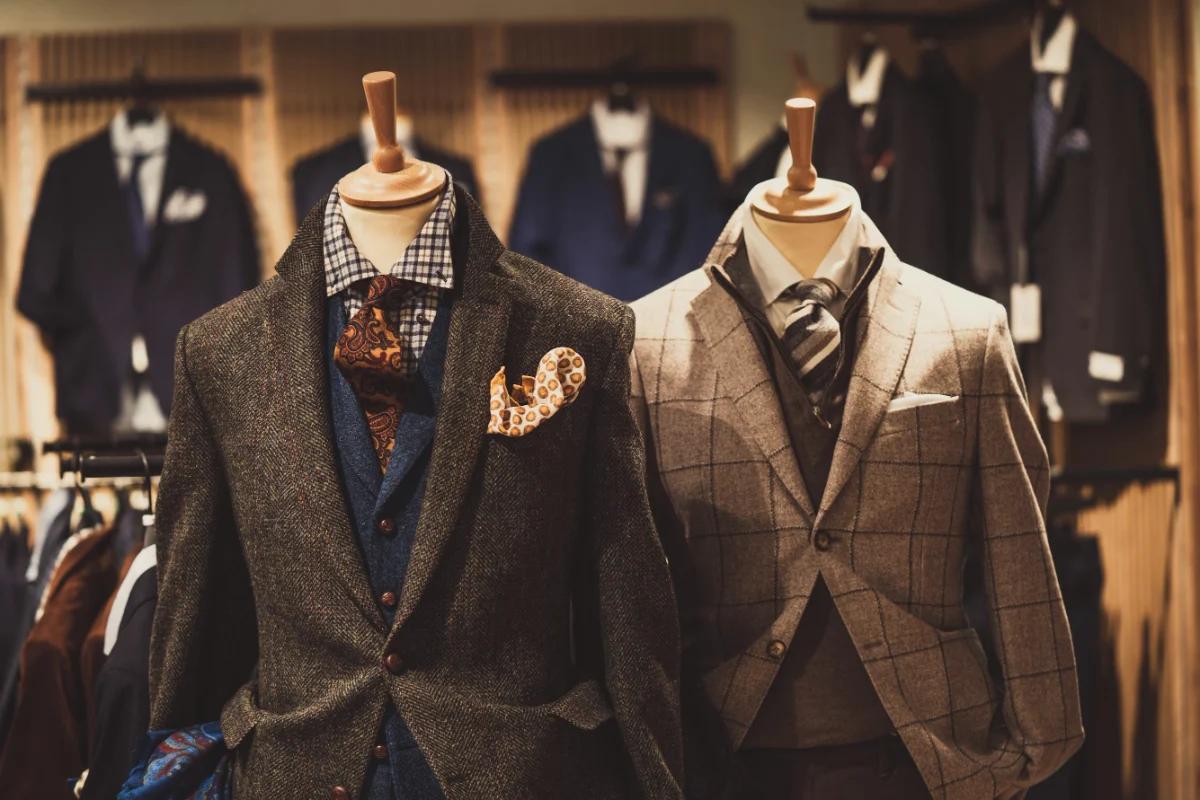
Dayang Group Co., Ltd. is one of the world's largest manufacturers of high-end suits and a leading men's formalwear customization expert in China. Founded by Li Guilian in 1979 and headquartered in Dalian, Liaoning Province, the company operates through an integrated model of in-house production and flexible OEM/ODM/MTM services. It focuses deeply on Custom & Group Apparel , providing corporate workwear (executive suits), personalized made-to-measure (MTM) suits, and small-batch customization for global high-end institutions in finance and aviation through its brands Trands and KEYYMEN, and has multiple times produced uniforms for the Chinese Olympic delegation. With an estimated 2025 revenue of RMB 3.5-4.5 billion, the company operates smart factories in Dalian, processing over 800,000 custom orders annually with a daily capacity exceeding 12,000 pieces, and employs approximately 6,500-7,000 people. Endorsed by figures like Warren Buffett and leveraging world-leading MTM technology, Dayang Group has successfully transformed from a traditional OEM giant into a digitally-driven "global customization expert." Strengths: Dayang Group's core strength lies in its world-leading MTM (Made-to-Measure) smart manufacturing capabilities, operating the world's largest single-site custom suit factory with proprietary AI body measurement and 5G intelligence cutting systems, processing over 800,000 custom orders annually and building formidable technical barriers in high-end suit customization. Endorsements from international figures like Warren Buffett have significantly boosted its brand recognition, making it a preferred partner for global premium corporate uniform customization. Weaknesses: Dayang Group's primary weaknesses include low financial transparency as a privately-held company, limiting capital market valuation references. Rising domestic labor costs and fluctuating import prices for high-quality wool continue to squeeze margins in its OEM business. Additionally, despite its strength in B2B customization, its brand awareness among mass consumers lags behind fast-fashion competitors.


Brand

Trands

Founded

1979

Workforce

6.5K+

Presence

20+ Countries

Headquarters

China

Market

Unlisted ( Privately Held )

Key Product Categories
Custom-made Clothing BrandsMen's Clothing IndustryMen's Tops IndustryMen's Outerwear IndustryMen's Bottoms IndustryMen's Formalwear IndustryCustom-made Clothing ManufacturersMen's Clothing IndustryMen's Tops IndustryMen's Outerwear IndustryCustom-made Clothing BrandsMen's Clothing IndustryMen's Tops IndustryMen's Outerwear IndustryMen's Bottoms IndustryMen's Formalwear IndustryCustom-made Clothing ManufacturersMen's Clothing IndustryMen's Tops IndustryMen's Outerwear Industry
6
Shenzhou International Group

Shenzhou International Group

Shenzhou International Group Holdings Limited is the "invisible champion" of global knitwear manufacturing, headquartered in Ningbo, Zhejiang, China. As a Hong Kong Stock Exchange-listed company (SEHK:02313), its core business focuses on Textile & Apparel categories including men's performance T-shirts, women's yoga wear, underwear, and loungewear, providing vertically integrated OEM/ODM services from fabric R&D, dyeing and finishing to garment sewing for global sportswear brands like Nike, Uniqlo, Adidas, and Puma. In 2025, Shenzhou achieved estimated revenue of RMB 32.5-34 billion, employing over 110,000 people across 13 large-scale integrated factories in Ningbo, Anhui, Vietnam, and Cambodia, producing approximately 550 million garments and 250,000 tons of fabric annually. Its top four clients contribute about 82% of revenue. Leveraging ultimate vertical integration efficiency and quick response capabilities, Shenzhou defines the manufacturing benchmark behind global brands.

Strengths: Shenzhou's core strength in Textile & Apparel lies in its extreme vertical integration model, controlling the entire value chain from fabric R&D, dyeing and finishing to garment sewing, building a triple moat of efficiency, quality, and cost in knitwear categories like performance T-shirts and yoga wear. Annual production scale of 550 million garments and 250,000 tons of fabric, combined with overseas capacity in Vietnam and Cambodia, makes it an irreplaceable core supplier for global brands like Nike and Uniqlo, with its share in client supply chains growing through shortened lead times and quick response capabilities.

Weaknesses: Shenzhou's main weaknesses stem from its business model's heavy reliance on its top four clients (Nike, Adidas, Uniqlo, Puma), with customer concentration reaching 82%, making performance highly susceptible to core brand order fluctuations. As a B2B manufacturer lacking end-consumer brand recognition, its gross margin is compressed by rising labor costs and initial depreciation of overseas new factories, slightly declining to 27.1% in H1 2025. It also faces uncertainty risks from cross-border raw material tariffs amid changing global trade environments.

Brand

Shenzhou

Founded

2005

Workforce

110K+

Headquarters

China

Market

SEHK : 2313

Key Product Categories
Baby Clothing (0-24 Months) ManufacturersMen's Clothing IndustryMen's Tops IndustryPolo ShirtMen's Knitted TopMen's Casual WearChildren's Clothing (For Ages 2-12) ManufacturersMen's Clothing IndustryMen's Tops IndustryPolo ShirtBaby Clothing (0-24 Months) ManufacturersMen's Clothing IndustryMen's Tops IndustryPolo ShirtMen's Knitted TopMen's Casual WearChildren's Clothing (For Ages 2-12) ManufacturersMen's Clothing IndustryMen's Tops IndustryPolo Shirt
7
Crystal International Group Limited

Crystal International Group Limited

Crystal International Group Limited is a globally leading apparel manufacturer headquartered in Hong Kong, listed on the Hong Kong Stock Exchange. Employing a vertically integrated model, it provides design and manufacturing services for international brands like UNIQLO, specializing in casualwear, sportswear and intimates. With 20 production bases across Vietnam, China, Cambodia and other locations, it employs ~70,000 people, reported $2.5 billion revenue in 2024, and has an annual capacity of ~400 million garments. Leveraging its vertical integration, global footprint and leading sustainability practices, it maintains an important competitive position in global apparel manufacturing.

Strengths: Crystal International's core strengths are its strong vertical integration enabling end-to-end services from fabric development to garment manufacturing; significant global footprint with 70% capacity in Vietnam and other strategic locations effectively diversifying risks; leading sustainability practices with notable achievements in eco-certifications and carbon reduction recognized by brand clients.

Weaknesses: Crystal International faces persistent cost control pressures from rising labor and material costs impacting profitability; international trade environment uncertainties with geopolitical factors affecting global supply chain stability; intensifying industry competition squeezing profit margins while relatively low OEM model margins constrain development.

Brand

Crystal Group

Founded

1970

Workforce

70K+

Presence

7+ Countries

Facilities

20+ Factory

Headquarters

Hong Kong

Market

SEHK : 2232

Key Product Categories
Children's Clothing (For Ages 2-12) ManufacturersMen's Clothing IndustryMen's Tops IndustryMen's KnitwearMen's T-shirtMen's Casual WearCustom-made Clothing ManufacturersMen's Clothing IndustryMen's Tops IndustryMen's KnitwearChildren's Clothing (For Ages 2-12) ManufacturersMen's Clothing IndustryMen's Tops IndustryMen's KnitwearMen's T-shirtMen's Casual WearCustom-made Clothing ManufacturersMen's Clothing IndustryMen's Tops IndustryMen's Knitwear
8
Brandix Apparel Limited

Brandix Apparel Limited

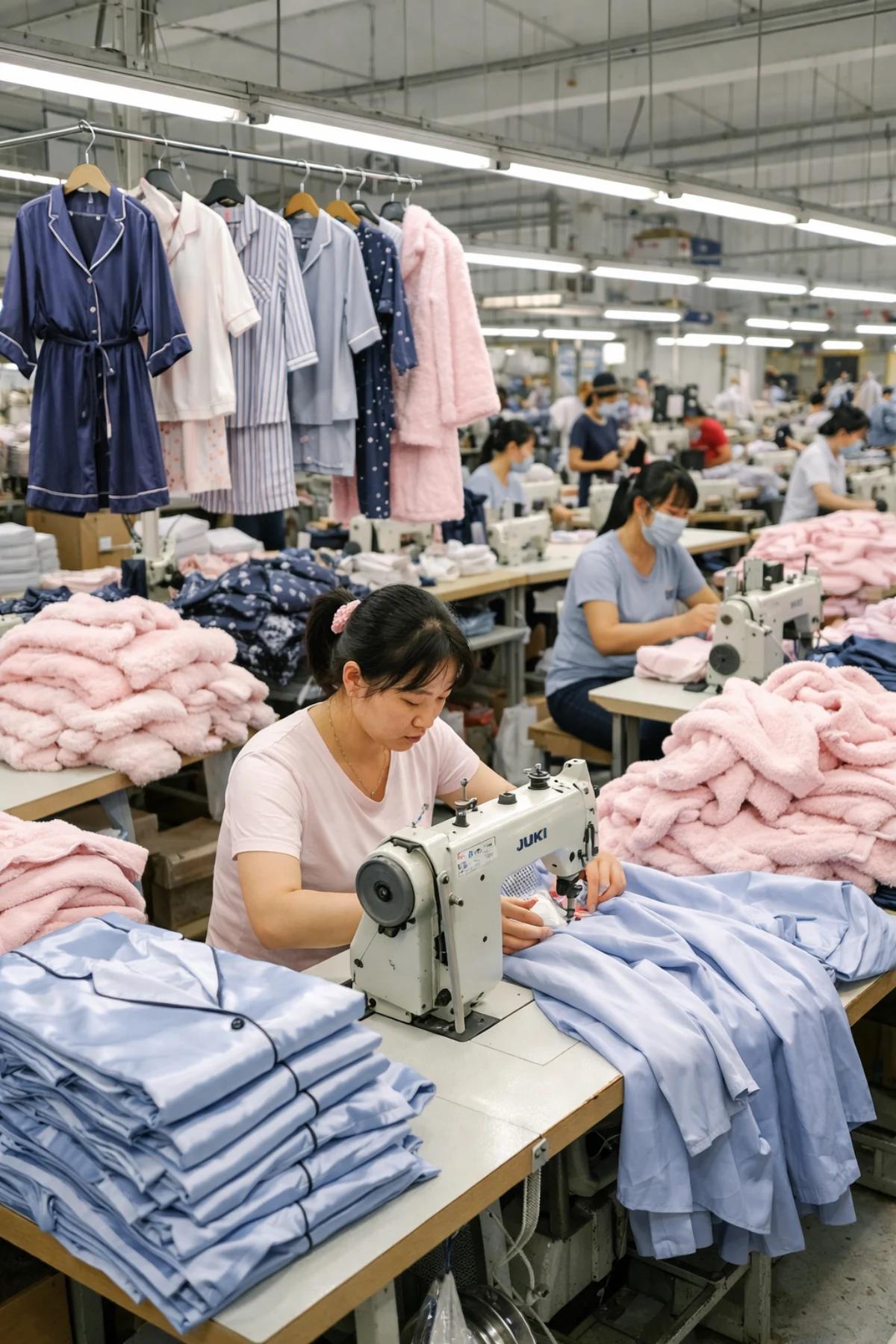
Brandix Apparel Limited is a leading apparel manufacturing giant in South Asia, forming the "twin pillars" of Sri Lanka's textile industry alongside MAS Holdings. Founded in 1972 and rebranded in 2002, the company remains privately held by the Amalean family and is headquartered in Colombo. Operating primarily in an OEM/ODM model, Brandix focuses deeply on intimates & hosiery, loungewear & sleepwear, and casualwear, providing end-to-end solutions from fabric R&D to finished products for top global brands such as Victoria's Secret, Gap, Uniqlo, and Marks & Spencer. With an estimated 2025 global revenue of $1.08 billion, it operates 28 factories across Sri Lanka, India, Bangladesh, and Haiti, employing approximately 67,000 people. Notably, loungewear & sleepwear, as a core category, boasts an annual capacity of 40 million sets, making it one of the world's largest pajamas manufacturers, leveraging its efficient vertical supply chain and sustainable manufacturing advantages to secure a vital position in the mass market. Strengths: Brandix's core strength lies in its complete vertical integration, encompassing spinning, weaving, dyeing, and garmenting within a closed-loop ecosystem, particularly at Brandix India Apparel City (BIAC), which enables "in-park circulation" and significantly boosts delivery efficiency. Furthermore, as a global benchmark in sustainable manufacturing, it operates the world's first LEED Platinum-certified zero-carbon factory, building a formidable reputation barrier in ESG and earning "best supplier" status from clients like Marks & Spencer. Weaknesses: Brandix's primary weaknesses are its lack of consumer-facing brand recognition as a B2B manufacturer and high dependency on a few key clients for business growth. Additionally, persistent inflation in Sri Lanka has led to wage increase pressures (approx. 12%), compounded by geopolitical uncertainties at overseas bases like Haiti, continuously squeezing its operating margins and resulting in a slight margin contraction in the short term.

Brand

Brandix Apparel

Founded

1972

Workforce

67K+

Facilities

28+ FactoriesNumber of

Headquarters

Sri Lanka

Market

Unlisted ( Privately Held )

Key Product Categories
Custom-made Clothing ManufacturersMen's Clothing IndustryMen's Tops IndustryMen's Outerwear IndustryMen's Bottoms IndustryMen's Sportswear IndustryEco-friendly Clothing ManufacturersMen's Clothing IndustryMen's Tops IndustryMen's Outerwear IndustryCustom-made Clothing ManufacturersMen's Clothing IndustryMen's Tops IndustryMen's Outerwear IndustryMen's Bottoms IndustryMen's Sportswear IndustryEco-friendly Clothing ManufacturersMen's Clothing IndustryMen's Tops IndustryMen's Outerwear Industry
9
SAS International Limited

SAS International Limited

SAS International Limited is a world-leading manufacturer of high-end metal ceilings and architectural metalwork, the preferred supplier for global transportation hubs, commercial landmarks, and corporate headquarters. Founded by a family in 1968 in Reading, England, the company remains privately held. Operating through UK-based in-house manufacturing, SAS deeply focuses on metal ceiling and acoustic systems within the full spectrum of building materials, offering a comprehensive portfolio spanning perforated acoustic metal panels, linear grilles and baffles, acoustic metal wall panels, custom architectural metalwork, radiant chilled ceilings, and proprietary concealed suspension systems. With estimated 2025 global revenue of $180-250 million, SAS operates three self-owned mega manufacturing facilities across England, Wales, and Scotland, employs over 800 people, and exports to more than 50 countries. Powered by world-leading metal fabrication precision, uncompromised UK-made quality assurance, deep integration of radiant cooling technology with building energy efficiency, and exceptional custom fabrication capabilities, SAS is solidifying its position as a hidden champion in global high-end metal ceilings through extreme focus and engineering excellence.

Strengths: SAS's core strength lies in its unrivaled quality benchmark in the global high-end metal ceiling market and ultra-focused manufacturing DNA, with UK-based in-house factories ensuring unmatched precision and color consistency across metal processing, perforation, and powder coating, making it the preferred choice for architects and major contractors on flagship airport and tech campus projects. Its forward-looking "ceiling + HVAC" cross-category integration, through radiant chilled ceiling systems that combine water-based temperature control with metal panels, creates a unique technology moat in zero-carbon buildings and LEED/BREEAM certified projects. Exceptional custom fabrication and engineering capabilities, with much of its capacity dedicated to non‑standard shapes, perfectly meet the bespoke demands of premium commercial spaces.

Weaknesses: SAS's primary weaknesses include heavy concentration in European and Middle Eastern premium markets, with reliance on UK-based manufacturing resulting in high global logistics costs and extended lead times, making it difficult to compete on price with Hunter Douglas or Armstrong which operate global supply chains. As a privately held company, financial transparency is limited, and post-Brexit customs complexity combined with high UK energy costs have significantly increased manufacturing expenses, translating into premium pricing that restricts mid-market penetration. With a highly focused product portfolio dominated by metal ceilings, SAS is acutely sensitive to commercial real estate and infrastructure cycles, while the rise of local competitors in emerging markets threatens its overseas share.

Brand

SAS

Founded

1968

Workforce

800+

Presence

50+ Countries

Headquarters

United Kingdom

Market

Unlisted ( Family Business )

Key Product Categories
Custom & Group Apparel CompaniesMen's Clothing IndustryWomen's Clothing IndustryProtective Products IndustryProtective Apparel IndustrySpecialized Gear IndustryCustom & Group Apparel ManufacturersMen's Clothing IndustryWomen's Clothing IndustryProtective Products IndustryCustom & Group Apparel CompaniesMen's Clothing IndustryWomen's Clothing IndustryProtective Products IndustryProtective Apparel IndustrySpecialized Gear IndustryCustom & Group Apparel ManufacturersMen's Clothing IndustryWomen's Clothing IndustryProtective Products Industry
10
Sancanal Garment Co., Ltd.

Sancanal Garment Co., Ltd.

Sancanal Garment Co., Ltd. is a wholly-owned subsidiary of Heilan Home Group Co., Ltd., specializing in high-end corporate wear and group customization. As a vertically integrated, self-producing brand, its business is entirely B2B-focused, providing one-stop tailored uniform solutions for financial institutions, utilities, government agencies, and large enterprises. Leveraging the group's robust supply chain, the company operates modern production facilities with an annual capacity of 15 million meters of worsted fabric, 3 million suits, and 10 million shirts, ensuring full control from fabric R&D to garment manufacturing. Sancanal does not engage in retail; it has established a leadership position in China's corporate wear customization sector through reliable product quality, professional service, and deep industry expertise.

Strengths:Sancanal's core strengths are the unparalleled quality control, cost advantages, and stable delivery capabilities afforded by its vertically integrated “fabric-to-garment” supply chain; concurrently, the exceptionally high professional reputation and client trust it has built within the B2B market, particularly in systemic sectors like finance and energy, form a profound business moat.

Weaknesses:Sancanal's main weaknesses are its complete dependence on corporate and government procurement, making its growth highly susceptible to macroeconomic and budgetary cycles; simultaneously, as a purely B2B brand, its substantial commercial value cannot be translated into brand equity in the consumer market, with brand recognition confined to professional circles.

Brand

Sancanal

Founded

1997

Workforce

2K+

Presence

Nationwide, China

Headquarters

China

Market

SSE:600398

Key Product Categories
Custom & Group Apparel CompaniesMen's Clothing IndustryMen's Outerwear IndustryMen's Bottoms IndustryMen's Formalwear IndustryWomen's Clothing IndustryCustom & Group Apparel ManufacturersMen's Clothing IndustryMen's Outerwear IndustryMen's Bottoms IndustryCustom & Group Apparel CompaniesMen's Clothing IndustryMen's Outerwear IndustryMen's Bottoms IndustryMen's Formalwear IndustryWomen's Clothing IndustryCustom & Group Apparel ManufacturersMen's Clothing IndustryMen's Outerwear IndustryMen's Bottoms Industry

Frequently Asked Questions

What exactly is the Men's Clothing Industry, and what are its main categories?
The Men's Clothing Industry encompasses the global business of designing, manufacturing, and selling apparel specifically for men. It’s a vast and segmented sector that goes beyond basic shirts and pants. The industry is systematically divided into several core categories: Men‘s Tops (including dress shirts, polos, and T-shirts), Outerwear (like jackets, coats, and hoodies), Bottoms (such as jeans, trousers, and shorts), Suits & Formalwear, and Sportswear & Performance Wear. Each category further branches into numerous sub-segments (e.g., oxford shirts, bomber jackets, chinos) catering to different styles, occasions, and functionalities, from daily casual wear and business attire to technical outdoor gear.
What are the key factors driving the growth and change in the Men's Fashion Industry?
The industry's evolution is driven by a combination of consumer trends, technological innovation, and economic forces. Key drivers include: 1. Shifting Consumer Mindsets: Men are increasingly viewing clothing as a form of self-expression, fueling demand for personalization, niche styles, and brand values. 2. Performance & Innovation: Advancements in fabrics (e.g., moisture-wicking, temperature regulation, sustainable materials) blur the lines between casual, formal, and sportswear. 3. Digital Influence: Social media and e-commerce have revolutionized discovery, purchasing, and trend cycles. 4. The Rise of Hybrid Lifestyles: Demand for versatile clothing suitable for work-from-home, casual office, and leisure drives categories like “smart casual” and performance outerwear. Conversely, factors like economic uncertainty and supply chain disruptions pose significant challenges.
Who are the main types of players competing in the global Men's Apparel market?
The market is structured around several distinct player types: 1. Luxury Conglomerates: Groups like LVMH and Kering own portfolio brands (e.g., Louis Vuitton, Gucci) focusing on high-margin, brand-driven products across all categories. 2. Vertical Luxury Brands: Companies like Ermenegildo Zegna and Brunello Cucinelli control their entire supply chain, specializing in premium materials (e.g., cashmere) and craftsmanship. 3. Premium/Lifestyle Brands: Brands like Ralph Lauren and Burberry balance heritage, design, and accessibility across a wide product range. 4. Fast Fashion Giants: Companies like Inditex (Zara) dominate through rapid trend replication and massive scale. 5. Sportswear Specialists: Nike, Adidas, and Anta focus on performance technology and athleisure. 6. Manufacturers/Wholesalers: Entities like PVH Corp. and Youngor operate brand portfolios and/or provide large-scale production services.
What‘s the difference between “In-House Production” and “Contract Manufacturing” in men's wear, and why does it matter?
This distinction refers to who physically makes the clothes. In-House Production means a brand owns and operates its own factories (e.g., Hermès, Zegna), allowing for extreme quality control, protection of proprietary techniques, and supply chain secrecy, but requires massive capital investment. Contract Manufacturing (or Outsourcing) means a brand hires third-party factories to produce goods to its specifications (common for PVH, fast fashion). This offers flexibility, cost efficiency, and scalability. The choice profoundly impacts a brand’s identity: in-house production is often tied to luxury, craftsmanship, and exclusivity (justifying higher prices), while outsourcing enables speed and affordability. Many brands, like Gucci and Burberry, use a hybrid model, keeping core products in-house and outsourcing basics.
What are the emerging future trends shaping the Men's Clothing Industry?
The future is being shaped by several converging trends: 1. Sustainability as Standard: Beyond a buzzword, it‘s becoming a core operational requirement, driving demand for recycled materials, circular business models (rental, repair), and full supply chain transparency. 2. Technology Integration: Wearable tech, smart fabrics with climate adaptation, and AI-driven personalization (fit, style) will become more prevalent. 3. Blurring of Categories: The lines between formal, casual, and technical sportswear will continue to dissolve, leading to more versatile, hybrid garments. 4. Direct-to-Consumer & Experience: Brands will strengthen DTC channels and focus on creating immersive experiences, both online and in flagship stores. 5. Regionalization & Resilience: To mitigate supply chain risks, there will be a move towards nearshoring and building more diversified, resilient production networks.