VerityRank

Manufacturer Rankings in the Kids & Baby Clothing Industry

HomeTextile & ApparelManufacturer Rankings in the Kids & Baby Clothing Industry

Welcome to Verity Rank's global “Manufacturer Rankings in the Kids & Baby Clothing Industry.” This list goes behind the brands to evaluate top manufacturers on hard metrics: production capacity, core patents, key client partnerships, quality control, and supply chain integration. We reveal the true industrial power behind the products. Our neutral assessments are based on cross-verified data from third-party sources like international certification bodies, industry research, and AI-aggregated production data. Rankings are provided for industry insight and B2B reference purposes only.

Top 10 Rankings

2026.05 Edition
1
Kitex Garments Ltd

Kitex Garments Ltd

Kitex Garments Limited, headquartered in Kerala, India, is a world-leading manufacturer of infant and children's apparel, with its core business focused on Kids & Baby Clothing, particularly babywear (7.1). As the world's second-largest producer of garments for ages 0-24 months, the company operates a vertically integrated model controlling the entire chain from cotton processing, spinning, and fabric manufacturing to finished garments. With a daily capacity of approximately 800,000 pieces and over 90% of its output exported to the U.S., it serves global giants like Carter's, Gerber, Walmart, and Target. In FY2025, revenue reached approximately ₹9.83 billion. With new facilities in Telangana coming online, Kitex is accelerating capacity expansion and promoting its own brand, Little Star, in the domestic market, solidifying its manufacturing leadership in global childrenswear.

Strengths: Kitex's core strengths lie in its ultimate vertically integrated supply chain, offering cost and quality advantages through full control from cotton to finished garments; as one of the world's largest producers of GOTS-certified organic cotton babywear, it has built technical barriers in non-toxic fabrics and eco-friendly manufacturing; its massive scale of 800,000 pieces daily makes it an irreplaceable strategic supplier for the U.S. children's market.

Weaknesses: Kitex's main weaknesses are its heavy reliance on the U.S. market (90% of revenue), exposing it to geopolitical and client order volatility; expansion-related depreciation and initial costs led to a Q3 2025 loss, straining profitability; as an OEM manufacturer, its own brand Little Star remains nascent with weak brand equity,hard to offset the cyclical risks of its core contract manufacturing business.

Brand

Kitex Garments

Founded

1992

Workforce

14K+

Presence

15+ Countries

Headquarters

India

Market

NSE : KITEX

Key Product Categories
Baby Clothing (0-24 Months) ManufacturersKids & Baby Clothing IndustryInfant Clothing IndustryBaby BodysuitsBaby RompersBaby OnesiesOutdoor Gear ManufacturersKids & Baby Clothing IndustryInfant Clothing IndustryBaby BodysuitsBaby Clothing (0-24 Months) ManufacturersKids & Baby Clothing IndustryInfant Clothing IndustryBaby BodysuitsBaby RompersBaby OnesiesOutdoor Gear ManufacturersKids & Baby Clothing IndustryInfant Clothing IndustryBaby Bodysuits
2
Shenzhou International Group

Shenzhou International Group

Shenzhou International Group Holdings Limited is the "invisible champion" of global knitwear manufacturing, headquartered in Ningbo, Zhejiang, China. As a Hong Kong Stock Exchange-listed company (SEHK:02313), its core business focuses on Textile & Apparel categories including men's performance T-shirts, women's yoga wear, underwear, and loungewear, providing vertically integrated OEM/ODM services from fabric R&D, dyeing and finishing to garment sewing for global sportswear brands like Nike, Uniqlo, Adidas, and Puma. In 2025, Shenzhou achieved estimated revenue of RMB 32.5-34 billion, employing over 110,000 people across 13 large-scale integrated factories in Ningbo, Anhui, Vietnam, and Cambodia, producing approximately 550 million garments and 250,000 tons of fabric annually. Its top four clients contribute about 82% of revenue. Leveraging ultimate vertical integration efficiency and quick response capabilities, Shenzhou defines the manufacturing benchmark behind global brands.

Strengths: Shenzhou's core strength in Textile & Apparel lies in its extreme vertical integration model, controlling the entire value chain from fabric R&D, dyeing and finishing to garment sewing, building a triple moat of efficiency, quality, and cost in knitwear categories like performance T-shirts and yoga wear. Annual production scale of 550 million garments and 250,000 tons of fabric, combined with overseas capacity in Vietnam and Cambodia, makes it an irreplaceable core supplier for global brands like Nike and Uniqlo, with its share in client supply chains growing through shortened lead times and quick response capabilities.

Weaknesses: Shenzhou's main weaknesses stem from its business model's heavy reliance on its top four clients (Nike, Adidas, Uniqlo, Puma), with customer concentration reaching 82%, making performance highly susceptible to core brand order fluctuations. As a B2B manufacturer lacking end-consumer brand recognition, its gross margin is compressed by rising labor costs and initial depreciation of overseas new factories, slightly declining to 27.1% in H1 2025. It also faces uncertainty risks from cross-border raw material tariffs amid changing global trade environments.

Brand

Shenzhou

Founded

2005

Workforce

110K+

Headquarters

China

Market

SEHK : 2313

Key Product Categories
Baby Clothing (0-24 Months) ManufacturersMen's Clothing IndustryMen's Tops IndustryPolo ShirtMen's Knitted TopMen's Casual WearChildren's Clothing (For Ages 2-12) ManufacturersMen's Clothing IndustryMen's Tops IndustryPolo ShirtBaby Clothing (0-24 Months) ManufacturersMen's Clothing IndustryMen's Tops IndustryPolo ShirtMen's Knitted TopMen's Casual WearChildren's Clothing (For Ages 2-12) ManufacturersMen's Clothing IndustryMen's Tops IndustryPolo Shirt
3
Jay Jay Mills (India) Private Limited

Jay Jay Mills (India) Private Limited

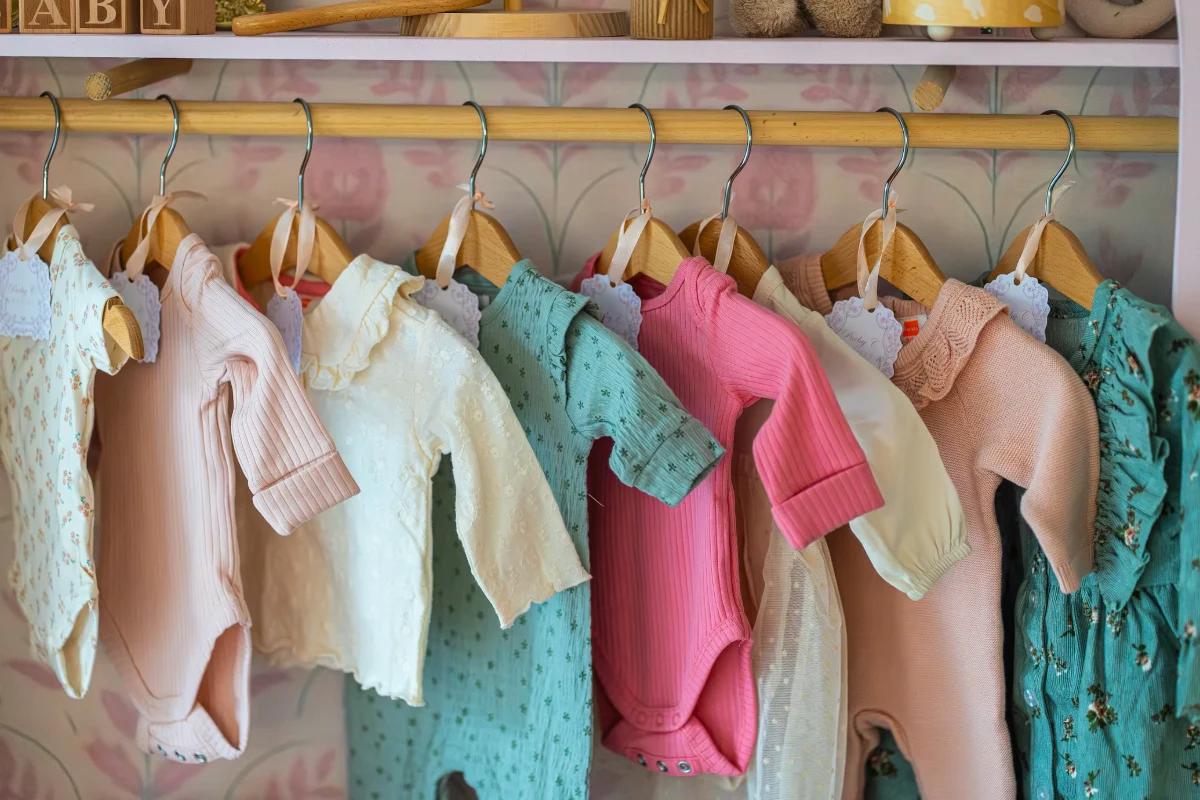
Jay Jay Mills (India) Private Limited, based in Tirupur, Tamil Nadu, is a world-leading vertically integrated knitwear manufacturer specializing in Kids & Baby Clothing, with babywear as its core. It controls the entire value chain from fiber to fashion, producing over 1 million garments daily for top global retailers like Walmart, Carter's, and Mothercare. With FY2025 revenue of ₹27.0 billion (~$322 million) and 30,000+ employees across facilities in India, Sri Lanka, Bangladesh, Ethiopia, and the USA, it leverages green manufacturing (100% renewable energy, GOTS certified) and digital innovation to maintain its leadership in the global children's apparel supply chain.

Strengths: Jay Jay Mills' core strengths lie in its fully vertically integrated supply chain from fiber to fashion, ensuring unparalleled control over cost, quality, and lead times. As a pioneer in GOTS-certified organic cotton and BCI cotton in India, its green facilities and sustainability credentials create high entry barriers for Western markets. With production bases across five countries, the company mitigates geopolitical and trade risks, while its massive scale—over 1 million garments daily—positions it as an irreplaceable strategic OEM/ODM partner for leading global children's brands.
Weaknesses: Jay Jay Mills' main weaknesses include its heavy reliance on the U.S. and European markets (over 90% of exports), exposing it to economic fluctuations and trade policy changes in these regions. Volatility in raw material prices and shipping costs continuously pressures profit margins. As a deep OEM/ODM player, the absence of its own consumer brand limits its bargaining power and leaves it vulnerable in the supply chain's value distribution.

Brand

Jay Jay Mills

Founded

1999

Workforce

30K+

Presence

5+ Countries

Headquarters

India

Market

Unlisted ( Private Enterprise )

Key Product Categories
Baby Clothing (0-24 Months) ManufacturersKids & Baby Clothing IndustryInfant Clothing IndustryBaby BodysuitsBaby RompersBaby OnesiesOutdoor Gear ManufacturersKids & Baby Clothing IndustryInfant Clothing IndustryBaby BodysuitsBaby Clothing (0-24 Months) ManufacturersKids & Baby Clothing IndustryInfant Clothing IndustryBaby BodysuitsBaby RompersBaby OnesiesOutdoor Gear ManufacturersKids & Baby Clothing IndustryInfant Clothing IndustryBaby Bodysuits
4
Hanesbrands Inc.(HBI)

Hanesbrands Inc.(HBI)

Hanesbrands is a global leader in vertically integrated innerwear & hosiery manufacturing, headquartered in Winston-Salem, NC, USA. Its iconic brands—Hanes, Maidenform, Bali, Playtex—comprehensively cover bras, panties, men's underwear, shapewear, everyday & functional socks, and loungewear. 2025 revenue reached approximately $3.53 billion. Operating production facilities across 30+ countries and employing ~65,000 people worldwide. Formerly listed on NYSE (HBI), the company was acquired by Gildan Activewear in late 2025 and now operates as a core Gildan division. Through unrivaled vertical integration and patented comfort technologies (X-Temp, FreshIQ), Hanesbrands has set the global benchmark for cost efficiency and quality in basic apparel.

Strengths:Hanesbrands' core strength is its rare apparel vertical integration (>70% in-house production), delivering superior cost control, speed-to-market, and quality consistency. Its brand portfolio holds #1 U.S. market share in men's underwear, bras, and shapewear. Patented comfort technologies (X-Temp, FreshIQ) provide strong product differentiation, creating dual moats of scale and innovation.

Weaknesses:Hanesbrands' main weaknesses: its mass-market brand image lacks premium appeal and relevance among younger demographics, with relatively weak fashion design credentials. Business is heavily concentrated in basic innerwear/hosiery, leaving it behind in athleisure expansion, localized emerging market operations, and DTC innovation compared to Nike and lululemon. Post-acquisition integration with Gildan also poses organizational and cultural challenges.

Brand

Hanesbrands Inc.(HBI)

Founded

1901

Workforce

65K+

Presence

45+ Countries

Headquarters

USA

Key Product Categories
Baby Clothing (0-24 Months) ManufacturersMen's Clothing IndustryMen's Tops IndustryMen's Outerwear IndustryMen's Bottoms IndustryMen's Sportswear IndustryHomewear BrandsMen's Clothing IndustryMen's Tops IndustryMen's Outerwear IndustryBaby Clothing (0-24 Months) ManufacturersMen's Clothing IndustryMen's Tops IndustryMen's Outerwear IndustryMen's Bottoms IndustryMen's Sportswear IndustryHomewear BrandsMen's Clothing IndustryMen's Tops IndustryMen's Outerwear Industry
5
Goodbaby International Holdings Ltd.

Goodbaby International Holdings Ltd.

Goodbaby International Holdings Ltd. is a globally leading vertically integrated children's durable goods and parenting ecosystem group. It operates a dual-engine model of "Own Brand Manufacturing (OBM) + Original Design Manufacturing (ODM)," housing brands like Goodbaby (gb), Cybex, and Evenflo. Its business spans the full spectrum of children's lifestyle, including mobility (strollers, car seats), home & care products, and apparel. Listed in Hong Kong, its core barrier is its globally integrated R&D and Industry 4.0 manufacturing network. In 2024, the group's revenue reached approximately HK$9.42 billion, with the "Children's Apparel, Footwear, and Accessories" segment contributing HK$1.38 billion, serving as a crucial synergistic business and traffic entry point within its "product + service" parenting ecosystem.

Strengths: Goodbaby Group's core strengths are its world-class vertically integrated R&D and smart manufacturing capabilities, which have built formidable technological and safety standard barriers in children's durables (e.g., strollers, car seats); concurrently, its powerful brand equity of "safety, professionalism, and trustworthiness" naturally extends to highly related categories like children's wear, and its unique "hardware (durables) + soft goods (apparel)" scenario solutions enhance customer stickiness and average order value.

Weaknesses: Goodbaby Group's main weaknesses are that its brand and operational system are better suited for durable goods, making it challenging to compete in the fast-paced, fashion-driven daily children's wear market where its brand perception is considered more "heavy," and its design and supply chain agility face tests; simultaneously, managing the coordinated development and resource allocation of children's wear across its multi-brand portfolio (e.g., gb, Cybex) is complex.

Brand

Goodbaby International Holdings

Founded

1989

Workforce

12K+

Presence

100+ Countries

Headquarters

China

Market

SEHK : 01086

Key Product Categories
Baby Clothing (0-24 Months) ManufacturersChildren's Shoes IndustryBackpacks IndustrySpecialty Bags IndustryBasic Hosiery IndustryKids & Baby Clothing IndustryKids & Baby Clothing BrandsChildren's Shoes IndustryBackpacks IndustrySpecialty Bags IndustryBaby Clothing (0-24 Months) ManufacturersChildren's Shoes IndustryBackpacks IndustrySpecialty Bags IndustryBasic Hosiery IndustryKids & Baby Clothing IndustryKids & Baby Clothing BrandsChildren's Shoes IndustryBackpacks IndustrySpecialty Bags Industry
6
Zhejiang Semir Garment Co., Ltd - Balabala

Zhejiang Semir Garment Co., Ltd - Balabala

“Balabala,” a brand under Zhejiang Semir Garment Co., Ltd., is China's largest and most comprehensive professional children's wear brand, positioned as a lifestyle brand covering "all categories, all age groups (0-14), and all consumption scenarios." Operating a business model integrating in-house design, hybrid sourcing/production, and omnichannel retail, its product portfolio fully spans apparel, footwear, accessories, and kids' gear. Leveraging an unparalleled distribution network of over 4,000 offline stores in China and leading e-commerce presence, Balabala's estimated annual retail sales reach RMB 15-18 billion, consistently ranking first in market share and defining mass-market children's wear consumption in China.

Strengths: Balabala's core strengths are its unrivalled depth and breadth of channel coverage in the Chinese market, which builds a formidable competitive barrier; concurrently, its complete full-category product matrix and efficient supply chain agility enable it to meet children's all-scenario dressing needs and have established profound brand trust as "professional, safe, and high-value-for-money" among mass-market families.

Weaknesses: Balabala's main weaknesses are the challenges it faces in brand premiumization and enhancing product value due to its long-standing mass-market positioning; simultaneously, competition with international and online brands has intensified post the peak of online traffic dividend, and its international operational capabilities still need to be verified to break through the growth ceiling.

Brand

Semir Garment Co.

Founded

1996

Workforce

4K+

Presence

20+ Countries

Headquarters

China

Key Product Categories
Baby Clothing (0-24 Months) BrandsChildren's Shoes IndustryBackpacks IndustrySpecialty Bags IndustryBasic Hosiery IndustryKids & Baby Clothing IndustryBaby Clothing (0-24 Months) ManufacturersChildren's Shoes IndustryBackpacks IndustrySpecialty Bags IndustryBaby Clothing (0-24 Months) BrandsChildren's Shoes IndustryBackpacks IndustrySpecialty Bags IndustryBasic Hosiery IndustryKids & Baby Clothing IndustryBaby Clothing (0-24 Months) ManufacturersChildren's Shoes IndustryBackpacks IndustrySpecialty Bags Industry
7
Anta Sports Products Limited

Anta Sports Products Limited

Anta Sports Products Limited is China's leading and globally top-three comprehensive sports goods group, headquartered in Fujian, founded in 1991, and listed on the Hong Kong Stock Exchange (2020.HK) in 2007. With a "single-focus, multi-brand, omni-channel" strategy, its portfolio includes Anta, FILA, Descente, Kolon, Arc'teryx (Amer Sports), and the newly acquired Jack Wolfskin (2025) and a stake in PUMA (2026). In 2025, group revenue reached approximately RMB 75–78 billion, with over 13,000 stores globally, ~65,000 employees, and annual footwear/apparel capacity of 140 million pairs and 100 million pieces respectively. As an official IOC uniform supplier, Anta is accelerating its transformation from a Chinese champion into a world-class sports group through multi-brand synergy and global M&A.

Strengths: Anta's core strengths lie in its exceptional multi-brand operation capabilities and global M&A integration expertise, leveraging the Anta, FILA, Descente, and Arc'teryx brand matrix to precisely target mass, fashion, and premium outdoor segments—strengthened by the 2025 PUMA stake acquisition and Jack Wolfskin purchase; its DTC transformation has achieved ~90% direct sales, demonstrating industry-leading channel control; deep partnerships with top IPs like NBA's Kyrie Irving and its role as consecutive Olympic Games uniform supplier build a formidable professional image moat; MSCI ESG rating upgraded to AA, highlighting outstanding supply chain sustainability.

Weaknesses: Anta's main weaknesses include inventory pressure, with average turnover days rising to 136 in 2025, presenting ongoing de-stocking challenges; multi-brand integration complexity, with FILA's growth slowing and newly acquired brands like Jack Wolfskin requiring time to digest; overseas expansion remains nascent, with brand awareness in Western markets far behind Nike and Adidas; R&D investment ratio still trails international giants, requiring continuous catch-up in core technologies for premium professional segments.

Brand

Anta

Founded

1991

Workforce

55K+

Presence

30+ Countries

Headquarters

China

Market

SEHK : 2020

Key Product Categories
Baby Clothing (0-24 Months) ManufacturersAthletic Shoes IndustryChildren's Shoes IndustryBackpacks IndustrySpecialty Bags IndustryBasic Hosiery IndustryChildren's Clothing (For Ages 2-12) BrandsAthletic Shoes IndustryChildren's Shoes IndustryBackpacks IndustryBaby Clothing (0-24 Months) ManufacturersAthletic Shoes IndustryChildren's Shoes IndustryBackpacks IndustrySpecialty Bags IndustryBasic Hosiery IndustryChildren's Clothing (For Ages 2-12) BrandsAthletic Shoes IndustryChildren's Shoes IndustryBackpacks Industry
8
Jinfa Labi Maternity & Baby Articles Co., Ltd.​

Jinfa Labi Maternity & Baby Articles Co., Ltd.​

Jinfa Labi Maternity & Baby Articles Co., Ltd. (Stock Code: 002762.SZ) is the first listed maternal and infant products company on China's A-share market, headquartered in Shantou, Guangdong. The company positions itself as an integrated provider focusing on the “apparel and daily use” needs of children aged 0-3, operating a dual-core business model of “Maternal & Infant Consumer Goods Manufacturing/Retail + Maternal & Infant Services.” Its core consumer goods business, centered on the “Labi Baby” brand, covers infant clothing, cotton products, and care items. Leveraging a network of approximately 1,200 offline stores (primarily franchised) and an omnichannel presence, it maintains a solid foundation in China's lower-tier cities. As a listed company with annual revenue around RMB 420 million, it actively explores capital operations to integrate the industry chain, seeking transformation from a traditional product manufacturer to a maternal and infant industry ecosystem platform. Strengths: Jinfa Labi’s core strengths are its unique capital platform and financing capabilities as the “first maternal and infant stock on the A-share market,” providing a key tool for expanding new businesses and integrating the industry chain through investment and M&A; concurrently, its extensively deployed network of approximately 1,200 offline physical retail stores across China, particularly in southern and central regions, forms a deep channel barrier and crucial brand touchpoint, serving as the cornerstone of its influence in regional markets. Weaknesses: Jinfa Labi’s main weaknesses lie in the growth bottleneck of its traditional maternal and infant consumer goods core business, with its annual revenue of approximately RMB 420 million facing pressure amidst fierce market competition and market share erosion from multiple players; furthermore, the synergistic effects of its dual-core “Product + Service” business model are insufficient, the operational diversity adds complexity to management, and its brand image faces aging issues, requiring enhanced appeal to the new generation of young parents.
Brand

Labibaby

Founded

1996

Workforce

1K+

Presence

Nationwide, China

Facilities

5+ Factories

Headquarters

China

Key Product Categories
Baby Clothing (0-24 Months) ManufacturersMaternity Wear IndustryBasic Hosiery IndustryKids & Baby Clothing IndustryInfant Clothing IndustryChildren's Everyday Wear IndustryKids & Baby Clothing ManufacturersOutdoor Gear ManufacturersBaby Clothing (0-24 Months) ManufacturersMaternity Wear IndustryBasic Hosiery IndustryKids & Baby Clothing IndustryInfant Clothing IndustryChildren's Everyday Wear IndustryKids & Baby Clothing ManufacturersOutdoor Gear Manufacturers
9
Arvind Limited

Arvind Limited

Arvind Limited is India's largest textile manufacturing group headquartered in Ahmedabad, Gujarat, listed on the Indian Stock Exchange. Employing a vertically integrated model, it operates a full industrial chain from spinning, weaving, dyeing to garment manufacturing, specializing in denim, apparel and advanced materials. With 15 production bases in India, ~25,000 employees, and operations across 80+ countries, it reported revenue of ₹50 billion (~$600 million) in 2024. Leveraging its comprehensive vertical integration, significant scale advantages and advanced sustainability practices, it maintains absolute leadership in India's textile market.

Strengths: Arvind's core strengths are its complete vertical integration enabling full supply chain control from spinning to garments, delivering significant scale benefits and cost advantages; as India's largest textile manufacturer, its annual capacities of 200 million meters fabric and 50 million garments provide strong competitiveness; advanced sustainability practices with notable achievements in water management and carbon reduction.

Weaknesses: Arvind's international brand influence remains relatively limited requiring global market recognition improvement; faces persistent cost control pressures from rising raw material and energy costs impacting profitability; increasing environmental demands necessitate continuous investments to meet stricter sustainability standards.

Brand

Arvind

Founded

1931

Workforce

25K+

Presence

80+ Countries

Facilities

15+ Factory

Headquarters

India

Market

NSE : ARVIND

Key Product Categories
Baby Clothing (0-24 Months) ManufacturersMen's Clothing IndustryMen's Tops IndustryMen's Formalwear IndustryWomen's Clothing IndustryWomen's Tops IndustryChildren's Clothing (For Ages 2-12) ManufacturersMen's Clothing IndustryMen's Tops IndustryMen's Formalwear IndustryBaby Clothing (0-24 Months) ManufacturersMen's Clothing IndustryMen's Tops IndustryMen's Formalwear IndustryWomen's Clothing IndustryWomen's Tops IndustryChildren's Clothing (For Ages 2-12) ManufacturersMen's Clothing IndustryMen's Tops IndustryMen's Formalwear Industry
10
Eclat Textile Co. Ltd.

Eclat Textile Co. Ltd.

Eclat Textile Co., Ltd. is a globally leading vertically integrated manufacturer of functional knitted fabrics and apparel, headquartered in Taoyuan, Taiwan, China, and listed on the Taiwan Stock Exchange (TWSE: 1476). Operating under a "R&D in Taiwan, Manufacturing in Southeast Asia" model, it provides one-stop ODM/OEM services from functional yarn R&D and high-end knitted fabric production to garment design and manufacturing, serving as a core innovation and manufacturing partner for top global sportswear and yoga brands like Nike and Lululemon. Revenue reached NT$33.96 billion (approx. $1.08B) in 2024, and despite short-term pressure from industry cycles, its profound technical moat and exceptional profitability solidify its status as a technology-driven “hidden champion” in the global textile supply chain.

Strengths: Eclat's core strengths are its deep vertical integration from yarn to finished garment and top-tier R&D and innovation capabilities, building a formidable technical moat and product premium power; concurrently, its strategic symbiotic relationships with benchmark clients like Nike and Lululemon ensure deep order binding and co-development opportunities, granting the company profitability and industry standing beyond that of a traditional contract manufacturer.

Weaknesses: Eclat's main weaknesses are its heavy revenue concentration on a few top-tier clients and the North American market, making its performance directly vulnerable to their strategic shifts and end-consumer cyclical fluctuations; furthermore, as an upstream manufacturer, it cannot fully avoid the inventory and demand cycles of the consumer goods industry, and its production reliance on Vietnam also introduces certain geopolitical and operational concentration risks.

Brand

Eclat Textile Co

Founded

1977

Workforce

16K+

Presence

5+ Countries

Facilities

10+ Factory

Headquarters

Taiwan

Market

TWSE : ​​1476​

Key Product Categories
Baby Clothing (0-24 Months) ManufacturersMen's Clothing IndustryMen's Sportswear IndustryWomen's Clothing IndustryWomen's Activewear IndustryFootwear IndustryFootwear FactoryMen's Clothing IndustryMen's Sportswear IndustryWomen's Clothing IndustryBaby Clothing (0-24 Months) ManufacturersMen's Clothing IndustryMen's Sportswear IndustryWomen's Clothing IndustryWomen's Activewear IndustryFootwear IndustryFootwear FactoryMen's Clothing IndustryMen's Sportswear IndustryWomen's Clothing Industry

Frequently Asked Questions

How Do We Generate Our Rankings?
At Verity Rank, our ranking methodology is built on data, not opinions. We aggregate and cross-validate information from multiple authoritative third-party sources to produce the most objective industry ranking possible.

1. Data Sources — Multi-Source Cross-Verification
Our primary data comes from four pillars:
National Statistical Agencies: We collect macro-level industry data from government statistical bureaus across major economies.
University-Affiliated Research Institutions: We incorporate peer-reviewed studies and industry reports from leading academic institutions worldwide.
AI-Driven Global Consumer Sentiment Analysis: We deploy NLP algorithms to analyze millions of consumer reviews, social media posts, and professional buyer feedback across 40+ languages.
Publicly Listed Company Financial Reports: We analyze SEC filings, annual reports, earnings transcripts, and ESG disclosures.

2. The Four-Dimensional Scoring Model
Each company is evaluated across four equally weighted dimensions:
Market Influence (25%): Global market share, revenue scale, distribution network breadth, countries served, and growth rate.
Brand Reputation (25%): Consumer satisfaction, buyer ratings, industry awards, media sentiment, and brand recognition.
Innovation & R&D (25%): Active patents, R&D investment ratio, product launch frequency, technology partnerships.
Sustainability & Ethics (25%): Environmental certifications, carbon reduction targets, labor practices, supply chain transparency.

3. Our Commitment to Independence
We do not accept payment for rankings. Our research team operates independently. Rankings are updated quarterly.

Disclaimer: The data in this ranking is compiled from third-party authoritative sources and is intended for reference and market decision support only. It does not constitute direct investment advice or brand endorsement.
What is the Outdoor Gear Industry and What Products Does It Include?
The outdoor gear industry produces equipment, apparel, and accessories for outdoor recreation — camping, hiking, climbing, mountaineering, backpacking, skiing, snowboarding, fishing, hunting, and water sports. With a global market exceeding $50 billion, it''s driven by the growing outdoor recreation economy and wellness trends.

Major Categories:
Shelter & Sleep Systems: Tents (backpacking, family camping, expedition, ultralight), sleeping bags (down vs. synthetic insulation, temperature ratings), sleeping pads (closed-cell foam, self-inflating, air pads with R-values for insulation), hammocks, and bivy sacks.
Backpacks & Carrying Systems: Daypacks, multi-day backpacking packs (40-80L), hydration packs, climbing packs, ski packs, and technical haul bags with suspension systems, load-lifter straps, and rain covers.
Climbing & Mountaineering Gear: Ropes (dynamic, static, UIAA-rated), carabiners, harnesses, belay devices, camming devices, nuts/chocks, ice axes, crampons, helmets, and via ferrata kits.
Outdoor Apparel: Technical outerwear (Gore-Tex, eVent, Futurelight waterproof/breathable shells — 3-layer construction), insulated jackets (down, synthetic), base layers, hiking pants/shorts, sun protective clothing (UPF 50+).
Cooking & Hydration: Camp stoves (canister, liquid fuel, wood-burning, integrated systems like Jetboil), cookware, water filters/purifiers (Sawyer, Katadyn, MSR, Platypus), hydration reservoirs, and insulated bottles.
Lighting & Navigation: Headlamps, lanterns, GPS devices (Garmin), satellite messengers (Garmin inReach, SPOT), maps, compasses, and solar chargers.
Winter Sports Gear: Skis, snowboards, boots, bindings, poles, avalanche safety equipment (beacon, probe, shovel), and ski touring/climbing skins.
What Are the Key Materials and Technologies in Outdoor Gear?
Outdoor gear sits at the frontier of materials science — demanding an extraordinary combination of light weight, extreme durability, weather protection, and safety in the world''s harshest environments.

1. Waterproof-Breathable Membranes:Gore-Tex (ePTFE): Expanded PTFE membrane with 9 billion pores per square inch — pores are 20,000x smaller than water droplets but 700x larger than water vapor molecules. • PU-based membranes (eVent, Pertex Shield): Hydrophilic polyurethane that transports moisture through molecular diffusion — no need for a separate PU layer. • Electrospun nanofiber membranes (The North Face Futurelight, Polartec NeoShell): Created by electrospinning polyurethane nanofibers — highly breathable with good waterproof ratings (10,000-20,000mm hydrostatic head).

2. Insulation Technologies:Down: Measured by fill power (550-900+ cuin/oz) — higher fill power = more loft per weight = warmer for same weight. Responsible Down Standard (RDS) certifies ethical sourcing. • Synthetic insulation: PrimaLoft, ThermoBall, CoreLoft — continuous filament or short-staple polyester that retains warmth when wet, unlike down. • Hybrid constructions: Down in core body areas, synthetic in moisture-prone zones (hood, cuffs, underarms).

3. High-Performance Textiles:Dyneema (UHMWPE — Ultra-High Molecular Weight Polyethylene): 15x stronger than steel by weight — used in ultralight backpacks, tents, and climbing slings. • Cordura nylon — high-denier (500D-1000D) abrasion-resistant fabric for packs and luggage. • Ripstop construction — grid of stronger threads woven into fabric to prevent tear propagation. • DWR (Durable Water Repellent): Surface treatment causing water to bead — transitioning from C8 (PFOS/PFOA) to C6 (shorter-chain) and C0 (fluorocarbon-free) formulations per regulatory requirements.

4. Safety & Certification Standards:UIAA (International Climbing and Mountaineering Federation): Safety standards for climbing equipment — ropes, carabiners, harnesses, helmets must meet UIAA ratings. • CE/EN standards: Required for PPE (Personal Protective Equipment) sold in EU — EN 12492 for climbing helmets, EN 12277 for harnesses, EN 892 for dynamic ropes. • ASTM: US standards for outdoor equipment — ASTM F1772 for climbing harnesses, ASTM F2116 for helmets.
What Should Buyers Consider When Sourcing Outdoor Gear?
Sourcing outdoor gear requires evaluating technical performance, safety certifications, durability under extreme conditions, and increasingly, sustainability credentials — as outdoor consumers are among the most environmentally conscious buyer segments.

1. Safety & Liability: Climbing, mountaineering, and safety-critical equipment must carry valid UIAA, CE, and/or ASTM certifications. Verify that certifications are current and cover the specific model being sourced. Understand product liability exposure — outdoor gear used in high-risk activities carries significant legal risk. Maintain documentation of conformity and consider product liability insurance.

2. Performance Testing & Field Validation: Request hydrostatic head (HH) test results for waterproof ratings, moisture vapor transmission rate (MVTR) for breathability, tear strength (ASTM D2261), and abrasion resistance (ASTM D4966/Martindale). For sleeping bags, verify EN 13537/ISO 23537 temperature ratings (Comfort, Limit, Extreme). For tents, evaluate wind tunnel testing results and pole strength.

3. Sustainability & Material Sourcing: Outdoor brands face intense consumer scrutiny on sustainability. Demand RDS (Responsible Down Standard) or TDS (Global Traceable Down Standard) certification for down products. Require bluesign®, OEKO-TEX® for textiles. Verify PFAS-free DWR (C0 or equivalent) as regulations phase out forever chemicals. Fair Wear Foundation membership indicates commitment to ethical manufacturing.

4. Durability & Warranty: Outdoor gear faces extreme abuse. Evaluate warranty terms — industry leaders offer lifetime or limited lifetime warranties (Patagonia Ironclad Guarantee, Osprey All Mighty Guarantee, The North Face Limited Lifetime). Assess repair programs — the outdoor industry increasingly offers in-house repair services to extend product lifespan and reduce waste.
Which Regions and Companies Lead in the Global Outdoor Gear Industry?
The global Outdoor Gear industry has a distinct geographic footprint, with production concentrated in regions that combine raw material access, manufacturing expertise, labor cost advantages, and proximity to end-use markets.
1. United States: Home to iconic brands — The North Face, Patagonia, Black Diamond, MSR, Therm-a-Rest, Osprey, CamelBak, and REI Co-op. Outdoor recreation contributes ~$450 billion annually to the US economy.

2. Europe: Germany (Jack Wolfskin, Vaude, Deuter — packs), Switzerland (Mammut), France (Petzl — climbing gear, Salomon, Millet), Italy (La Sportiva, Scarpa — footwear), Scandinavia (Fjällräven — Sweden, Helly Hansen — Norway, Halti — Finland). European brands lead in technical mountaineering and ski equipment.

3. China & Vietnam: Dominant manufacturing bases for global outdoor brands — tents, sleeping bags, backpacks, and apparel are primarily produced here. Chinese domestic brands (Toread, Mobi Garden, Naturehike) are gaining global market share.

4. Japan & South Korea: Montbell, Snow Peak (Japan) — premium camping gear; Black Yak, K2 (Korea) — technical outerwear. Asian outdoor brands combine technical quality with lightweight designs suited to humid, mountainous terrain.

Strategic Implications: The Outdoor Gear industry continues to evolve as supply chains diversify. Buyers should maintain multi-country sourcing strategies that balance cost, quality, lead time, and geopolitical risk. Understanding regional specialization — which countries excel at which product segments — is essential for making informed procurement decisions. The trend toward sustainability certifications (OEKO-TEX, GOTS, bluesign, GRS) and transparent supply chains is reshaping competitive dynamics, with manufacturers who invest in compliance and traceability gaining preferential access to premium markets.