

-36x36h.webp)
-36x36h.webp)
-450x250h.webp)











-150x150h.webp)
















































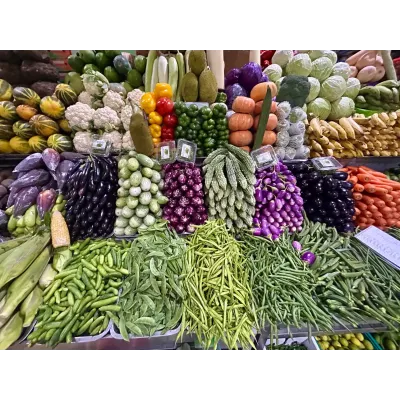





























































The Complete Guide to Food Ingredients Industry: Trends, Market & Key Players

Table of Contents
- 1. What is the Food Ingredients Industry?
- 2. Market Scale & Economic Impact
- 3. Key Trends Shaping 2026
- 4. Major Ingredient Categories
- 5. Regional Market Insights
- 6. Future Outlook
Click any section above to jump directly to it.

The food ingredients industry powers the global food supply chain with innovation and quality.
Every packaged snack, bottled beverage, and frozen meal on your grocery shelf has one thing in common: they all started with food ingredients. The food ingredients industry is the foundational layer of the global food supply chain, transforming raw agricultural commodities into specialized, functional components that food manufacturers use to create the products we eat every day.
1. What is the Food Ingredients Industry?
The food ingredients industry encompasses the companies and processes that produce and supply the essential components used in food and beverage manufacturing. Unlike food products sold directly to consumers, these are B2B (business-to-business) offerings that go into making finished goods.
Categories of Food Ingredients
Basic Ingredients
Flour, sugar, vegetable oils, salt, and starches that form the foundation of most food products.
Functional Additives
Emulsifiers, stabilizers, thickeners, and preservatives that improve texture, shelf life, and processing.
Flavors & Colors
Natural and artificial flavors, colorants, and sensory enhancers that make food appealing.
Nutritional Ingredients
Vitamins, minerals, proteins, probiotics, and botanical extracts for health-focused products.
2. Market Scale & Economic Impact
The global food ingredients market represents a massive economic force. Valued at approximately $250 billion in 2024, it is projected to grow at a compound annual growth rate (CAGR) of 5-6% through 2030. This growth is driven by increasing population, rising demand for processed and convenience foods, and growing consumer focus on health and wellness.
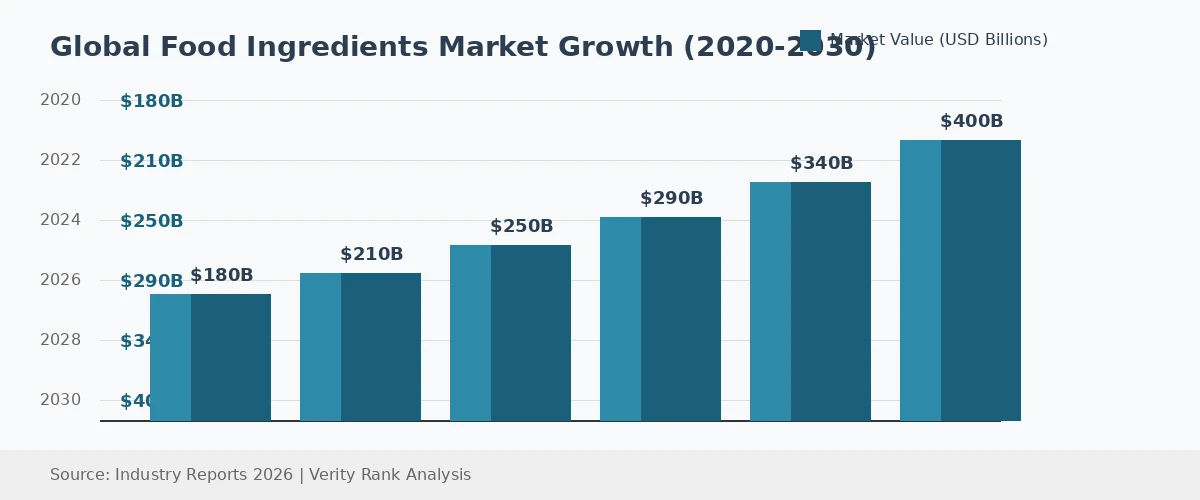
The food ingredients market continues to expand with rising global food demand.
| Market Segment | Market Value (2024) | Growth Rate (CAGR) |
|---|---|---|
| Functional Ingredients | $85+ Billion | 6.8% |
| Food Flavors | $35+ Billion | 5.5% |
| Food Enzymes | $2.8+ Billion | 7.2% |
| Plant-Based Proteins | $15+ Billion | 12.0% |
| Probiotics | $58+ Billion | 8.5% |
3. Key Trends Shaping 2026
3.1 The New Health Paradigm: Functional Ingredients
In 2026, consumers are increasingly taking ownership of their health journeys. According to Innova Market Insights, 1 in 3 consumers say they have become more self-sufficient in their health and well-being. This shift is driving demand for functional ingredients that add positive health benefits beyond basic nutrition.
Key Functional Ingredient Focus Areas:
- Gut Health: Probiotics, prebiotics, and fiber ingredients targeting digestive wellness
- Immunity: Vitamin C, zinc, elderberry, and botanical immune-support ingredients
- Mental Wellness: Adaptogens, omega-3s, and nootropics for cognitive support
- Healthy Aging: Antioxidants, collagen peptides, and longevity-supporting compounds
3.2 Powerhouse Proteins: Beyond Basic Nutrition
Protein continues to dominate ingredient innovation, but the conversation is shifting from mere quantity to quality and targeted benefits. Innova Market Insights has named Powerhouse Protein as the top trend for 2026.
- Alternative Protein Sources: Beyond traditional soy and pea proteins, chickpea, fava bean, and algae proteins are gaining traction
- Precision Fermentation: Technology enabling production of animal-identical proteins through microbial fermentation
- Protein-Fiber Combinations: New product launches increasingly feature protein with accompanying health claims and fiber
3.3 Clean Label & Natural Ingredients
Consumer trust in elaborate ingredient lists is waning. Research shows that 1 in 3 global consumers point to made with natural ingredients claims as making indulgent foods feel healthier. This is driving formulation shifts toward simple, recognizable ingredient lists, natural preservatives, and botanical extracts replacing synthetic additives.
3.4 Gut Health Hub: Fiber Takes Center Stage
Digestive health has become a primary consumer concern, with fiber emerging as a crucial partner to protein. Key developments include oat fiber as one of the fastest-growing fiber sources, inulin from chicory as a widely used prebiotic fiber, and resistant starch emerging as a next-generation gut health ingredient.
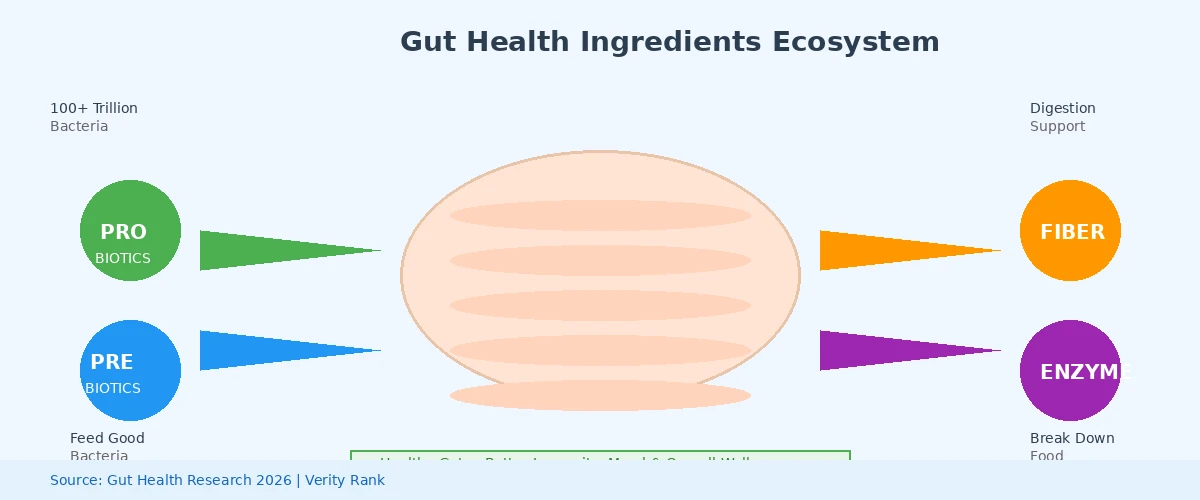
Gut health ingredients are driving the next wave of functional food innovation.
4. Major Ingredient Categories
4.1 Plant-Based & Alternative Proteins
The plant-based movement continues to thrive, with the market expanding beyond traditional meat alternatives into dairy alternatives, egg substitutes, and seafood analogs. Key players in this space include Beyond Meat, Impossible Foods, and Nestle, who are investing heavily in next-generation ingredient technologies.
4.2 Food Enzymes
Food enzymes are biocatalysts that accelerate biochemical reactions in food processing. The market is driven by demand for cleaner labels and natural processing aids. Major applications include baking enzymes for improved texture and shelf life, proteases for meat tenderization, and lactases for lactose-free dairy products.
4.3 Probiotics & Fermented Ingredients
The probiotics market continues to grow as consumers recognize the importance of gut microbiome health. Fermentation technology is also unlocking new protein solutions and flavor profiles, making it one of the most dynamic areas of ingredient innovation.
4.4 Clean Label Preservatives
Consumer preference for natural ingredients is driving innovation in shelf-life extension. Natural preservatives like rosemary extract, tea polyphenols, and fermented sugar are increasingly used to replace synthetic antioxidants.
5. Regional Market Insights
Asia-Pacific
The largest and fastest-growing market, driven by rising middle-class demand for processed foods, health supplements, and convenience products. China, India, and Southeast Asia are key growth engines.
North America
Mature market focused on clean label, organic, and non-GMO ingredients. Strong demand for plant-based proteins and functional beverages.
Europe
Leading in sustainability and clean label innovation. Strong regulatory framework driving natural and clean label ingredient adoption.
6. Future Outlook
The food ingredients industry in 2026 and beyond will be shaped by three converging forces: consumer health empowerment, naturalness and transparency, and technology-driven innovation.
Key Predictions for the Next Decade:
- Ingredient Systems Over Single Ingredients: Success will come from combining multiple functionalities into single, convenient solutions
- AI-Driven Discovery: Artificial intelligence will accelerate ingredient research, development, and personalization
- Regenerative Sourcing: Ingredient suppliers will increasingly source from regenerative agriculture practices
- Personalized Nutrition: Genetic and microbiome data will drive customized ingredient formulations
The food ingredients industry sits at the intersection of agriculture, technology, and consumer health. As the world faces challenges from population growth to climate change, the innovation happening in this sector will play a critical role in feeding humanity sustainably and nutritiously.
Navigate the Food Ingredients Landscape with Confidence
The future of food depends on the quality, safety, and innovation of its ingredients. Discover how Verity Rank independent verification and industry intelligence can help you source with confidence.
Contact Verity Rank TodayFor Further Learning: Explore industry insights from Innova Market Insights. To understand how Verity Rank evaluates ingredient suppliers, visit our verification methodology.
This article is for informational purposes and is based on industry reports and publicly available data as of April 2026.