We Use Cookies 🍪
We Use Cookies And Other Similar Technologies To Improve Your Browsing Experience And The Functionality Of Our Site. Learn More In Our Privacy Policy.

Manufacture Rankings in the ​​Sustainable Fashion Industry

Last Updated: January 26, 2026


Welcome to Verity Rank’s “Sustainable Fashion Manufacturer Rankings”. Whether sourcing responsible partners or tracing the origins of premium products, this list offers crucial guidance. We evaluate not just scale, but the adoption of innovative technologies (e.g., waterless dyeing, bio-based materials), possession of international eco-certifications, and proven experience supplying leaders like Patagonia and Kering. Rankings synthesize capacity data, patent analysis, and supply chain research from industry alliances and academic institutions. Verity Rank identifies manufacturing excellence that aligns with environmental responsibility, bridging the gap between sustainable vision and scale.

Lenzing AG

Lenzing AG (VIE: LNZ) is a global leading producer of specialty cellulose fibers, renowned for its flagship brands TENCEL™ Lyocell and Modal. As a provider of sustainable material solutions at the very upstream of the textile value chain, the company employs a vertically integrated “tree-to-fiber” model to produce biodegradable fibers sourced from certified wood. These fibers serve as core raw materials, supplied to over 1,000 global brands for manufacturing a full spectrum of products from apparel and home textiles to nonwovens. With H1 2025 revenue reaching €1.34 billion and significantly improved profitability, Lenzing has established its leadership in the sustainable fiber sector through its irreplaceable technological edge and deep empowerment of the industry's green transformation.

Strengths:Lenzing's core strengths are the exceptionally high technological barriers and near-monopolistic market position it has built in specialty cellulose fibers like Lyocell; concurrently, its vertically integrated model of “sustainably managed wood + closed-loop production process” not only ensures raw material reliability and environmental credentials but also forms powerful capabilities for cost control and quality assurance.
Weaknesses:Lenzing's main weaknesses stem from its performance being highly sensitive to global commodity price cycles (e.g., wood, energy) and fluctuations in downstream textile industry demand; simultaneously, as a capital-intensive upstream materials producer, its substantial capital expenditures and capacity expansion plans carry significant operational and market risks.
Lenzing
Lenzing
Brand Name
Lenzing, Austria
Lenzing, Austria
Address
1938
Founded
7.9K+
Number of Employees
10+ Countries
Global Production Base
1.11M+ Tons
Fiber Annual Production Capacity
Official Website
Textile Fiber Raw Materials Industry
Technical Fabrics Industry
Sustainable Fashion Industry
Organic Materials Industry
Recycled Fabrics Industry
Garment Accessories Industry
Lyocell Fiber
Modal Fiber
Viscose Fiber
Regenerated Fiber
Recycled Functional Fabric Raw Materials
Clothing Raw Material Suppliers
Textile Fiber Raw Materials Industry
Technical Fabrics Industry
Sustainable Fashion Industry
Organic Materials Industry
Recycled Fabrics Industry
Garment Accessories Industry
Lyocell Fiber
Modal Fiber
Viscose Fiber
Regenerated Fiber
Recycled Functional Fabric Raw Materials
Clothing Raw Material Suppliers

Patagonia, Inc.

Patagonia, Inc. is a US-origin, globally top-tier outdoor equipment brand and social enterprise fundamentally driven by radical environmental activism. Its core mission is “using business to save our home planet,” culminating in a historic 2022 ownership shift that transferred all equity to an environmental trust and collective, declaring “Earth is now our only shareholder.” Its business centers on high-performance, durable outdoor apparel (notably fleece and functional outerwear) and gear, sold via its own channels and carefully selected retailers, with all profits funding environmental causes. Through its unique model of “top-tier product performance + lifetime repair service + transparent environmental practice,” Patagonia has built unparalleled brand devotion, achieving over $1.5 billion in annual revenue and transforming into a global cultural symbol and ethical benchmark that transcends commerce.
Strengths: Patagonia's core strengths are its unmatched brand moral authority and consumer faith, built upon tangible environmental action and its “Earth as sole shareholder” ownership structure, which translate into exceptional customer loyalty, brand premium, and competitive immunity; concurrently, its deep integration of extreme product durability, lifetime repair services (Worn Wear), and radical environmental commitment creates a business model and value-based moat that competitors cannot replicate.
Weaknesses: Patagonia's central weakness is the fundamental contradiction inherent in its business model: as a company needing profit to fund environmental work, there exists a perpetual philosophical and commercial tension between its “buy less, repair more” anti-overconsumption ethos and the pursuit of sustained business growth; furthermore, its utmost ethical standards mean any minor supply chain or operational flaw can be magnified, posing significant reputational risk, and achieving 100% environmental and equitable goals across its complex global supply chain remains a monumental, ongoing challenge.
Patagonia
Patagonia
Brand Name
Ventura, California, USA
Address
1973
Founded
3K+
Number of Employees
35+ Countries
Business Scope
100+ Stores
Global Sales Network
Unlisted ( Private Company )
Listing Status
Official Website
Men's Clothing Industry
Men's Outerwear Industry
Men's Sportswear Industry
Women's Clothing Industry
Women's Outerwear Industry
Women's Activewear Industry
Athletic Shoes Industry
Specialty Footwear Industry
Backpacks Industry
Specialty Bags Industry
Functional Wear Industry
Hosiery Industry
Sports & Outdoor Gear Industry
Sports Apparel Industry
Outerwear Industry
Footwear Industry
Performance Accessories Industry
Camping Gear Industry
Kids & Baby Clothing Industry
Functional Wear Industry
Hard Shell Jackets Industry
Down Jackets Industry
Soft Shell Jackets Industry
Sustainable Fashion Industry
Organic Materials Industry
Recycled Fabrics Industry
Biodegradable Industry
Natural Dyes Industry
Closed-Loop Industry
Eco-Innovation Industry
Men's Clothing Industry
Men's Outerwear Industry
Men's Sportswear Industry
Women's Clothing Industry
Women's Outerwear Industry
Women's Activewear Industry
Athletic Shoes Industry
Specialty Footwear Industry
Backpacks Industry
Specialty Bags Industry
Functional Wear Industry
Hosiery Industry
Sports & Outdoor Gear Industry
Sports Apparel Industry
Outerwear Industry
Footwear Industry
Performance Accessories Industry
Camping Gear Industry
Kids & Baby Clothing Industry
Functional Wear Industry
Hard Shell Jackets Industry
Down Jackets Industry
Soft Shell Jackets Industry
Sustainable Fashion Industry
Organic Materials Industry
Recycled Fabrics Industry
Biodegradable Industry
Natural Dyes Industry
Closed-Loop Industry
Eco-Innovation Industry

Kering S.A.

Kering S.A. is a global leading luxury group headquartered in Paris, France, and listed on Euronext Paris. Operating as a “house of brands,” Kering's core business is brand portfolio management—it does not manufacture products but strategically acquires, owns, and empowers a collection of premier luxury houses including Gucci, Saint Laurent, Balenciaga, Bottega Veneta, and Boucheron. The group focuses on fashion, leather goods, jewelry, and watches, generating €19.95 billion in revenue in 2024 (down 4% on a comparable basis), solidifying its position as the world's second-largest luxury conglomerate. Its central strategy is to provide centralized operational and financial support while preserving each brand’s creative autonomy, with a growing emphasis on developing its jewelry division as a key future growth pillar and driving sustainability transformation across the group.
Strengths: Kering's core strengths lie in its portfolio of iconic, trend-defining luxury brands with a clear strategic hierarchy, coupled with a proven, exceptional track record in brand revitalization and value creation; furthermore, its sophisticated group platform provides comprehensive strategic empowerment—from retail networks to digital innovation—for its brands, supported by a powerful network of creative talents that continuously drives industry influence.
Weaknesses: Kering's main weaknesses are its excessive dependence on the performance of its flagship brand, Gucci, whose current transformative phase introduces significant earnings volatility and uncertainty for the entire group; simultaneously, the group is highly vulnerable to consumer sentiment shifts in key markets (notably Greater China) and faces intensely fierce direct competition from giants like LVMH across all major product categories.
Kering
Kering
Brand Name
Paris, France
Paris, France
Address
1962
Founded
47K+
Number of Employees
120+ Countries
Business Scope
1700+ Stores
Global Stores
Official Website
Men's Clothing Industry
Men's Tops Industry
Men's Outerwear Industry
Men's Bottoms Industry
Men's Formalwear Industry
Women's Clothing Industry
Women's Tops Industry
Dresses & Skirts Industry
Women's Outerwear Industry
Women's Pants Industry
Formalwear Industry
Footwear Industry
Men's Shoes Industry
Women's Shoes Industry
Athletic Shoes Industry
Luggage & Accessories Industry
Backpacks Industry
Handbags Industry
Luggage Industry
Wallets & Card Holders Industry
Intimates & Hosiery Industry
Women's Underwear Industry
Men's Underwear Industry
Fashion Accessories Industry
Head Accessories Industry
Neck Accessories Industry
Waist Belts Industry
Sustainable Fashion Industry
Organic Materials Industry
Recycled Fabrics Industry
Biodegradable Industry
Natural Dyes Industry
Closed-Loop Industry
Eco-Innovation Industry
Men's Clothing Industry
Men's Tops Industry
Men's Outerwear Industry
Men's Bottoms Industry
Men's Formalwear Industry
Women's Clothing Industry
Women's Tops Industry
Dresses & Skirts Industry
Women's Outerwear Industry
Women's Pants Industry
Formalwear Industry
Footwear Industry
Men's Shoes Industry
Women's Shoes Industry
Athletic Shoes Industry
Luggage & Accessories Industry
Backpacks Industry
Handbags Industry
Luggage Industry
Wallets & Card Holders Industry
Intimates & Hosiery Industry
Women's Underwear Industry
Men's Underwear Industry
Fashion Accessories Industry
Head Accessories Industry
Neck Accessories Industry
Waist Belts Industry
Sustainable Fashion Industry
Organic Materials Industry
Recycled Fabrics Industry
Biodegradable Industry
Natural Dyes Industry
Closed-Loop Industry
Eco-Innovation Industry

Toray Industries, Inc.

Toray Industries, Inc. (TYO: 3402) is a globally leading integrated materials science group, holding a dominant position particularly in carbon fiber and high-performance fibers. Building upon synthetic fiber technology, the company operates a vertically integrated R&D and production system, covering the entire value chain from basic chemicals and specialty fibers (e.g., nylon, polyester) to advanced carbon fiber composites and engineering plastics. Its products serve as critical raw materials, extensively used in aerospace (e.g., Boeing 787), high-end sports equipment, automotive lightweighting, and functional textiles. With FY2025 sales of ¥2.56 trillion, Toray has established itself as a key materials enabler driving innovation across multiple industries, leveraging its profound technological heritage, near-monopolistic market position, and deep partnerships with top-tier industrial clients worldwide.
Strengths:Toray's core strengths are its near-monopolistic global technological leadership and exceptionally high market entry barriers established in tip materials like carbon fiber; concurrently, its vertically integrated “basic chemicals-to-advanced materials” control over the entire industrial chain ensures superior quality, cost advantages, and supply chain security from R&D to mass production.
Weaknesses:Toray's main weaknesses stem from the dependence of its core businesses (e.g., carbon fiber) on strongly cyclical industries like aerospace and automotive, making its performance vulnerable to macroeconomic fluctuations; simultaneously, as a capital-intensive technology and manufacturing conglomerate, its substantial capital expenditures and capacity expansion plans carry significant investment risks, alongside pressure from emerging market competitors.
Toray
Toray
Brand Name
Chuo-ku, Tokyo, Japan
Address
1926
Founded
48K +
Number of Employees
25+ Countries
Business Scope
290+ Companies
Global Production and Operations Network
Official Website
Textile Fiber Raw Materials Industry
Technical Fabrics Industry
Sustainable Fashion Industry
Organic Materials Industry
Recycled Fabrics Industry
Closed-Loop Industry
Garment Accessories Industry
Carbon Fiber and Composite Materials
Environmentally Friendly Fibers
Regenerated Fiber
Recycled Functional Fabric Raw Materials
Clothing Raw Material Suppliers
Textile Fiber Raw Materials Industry
Technical Fabrics Industry
Sustainable Fashion Industry
Organic Materials Industry
Recycled Fabrics Industry
Closed-Loop Industry
Garment Accessories Industry
Carbon Fiber and Composite Materials
Environmentally Friendly Fibers
Regenerated Fiber
Recycled Functional Fabric Raw Materials
Clothing Raw Material Suppliers

Shenzhou International Group

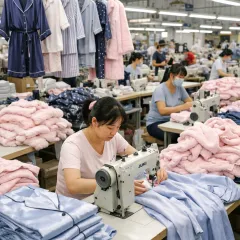
Shenzhou International Group Holdings Limited is a globally leading vertically integrated knitwear manufacturer headquartered in Ningbo, Zhejiang, listed on the Hong Kong Stock Exchange. It employs a unique vertical integration model covering fabric R&D, knitting, dyeing to garment manufacturing, providing OEM/ODM services for global brands like Nike, Adidas, and UNIQLO. With 6 production bases across China, Vietnam, and Cambodia, it employs ~89,000 people, reported RMB 30.5 billion revenue in 2024, and produces ~500 million garments annually. Leveraging its full supply chain integration, premium client portfolio, and scaled manufacturing capabilities, it maintains leadership in global apparel manufacturing.
Strengths: Shenzhou International's core strengths are its unique vertical integration enabling end-to-end control from fabric to garment with rapid response and quality assurance; premium client relationships with long-term partnerships with global brands like Nike and Adidas; outstanding manufacturing scale producing 500 million garments annually with global layout providing significant cost advantages.
Weaknesses: Shenzhou International faces cost control pressures from raw material fluctuations and rising labor costs impacting profitability; geopolitical risks from international trade policy changes challenge its global production layout; relatively low OEM model margins and increasing environmental requirements add operational cost pressures.
Shenzhou
Shenzhou
Brand Name
Ningbo, Zhejiang Province, China
Address
2005
Founded
89K+
Number of Employees
3+ Countries
Business Scope
6+ Factory
Processing Facilities
Official Website
Men's Clothing Industry
Men's Tops Industry
Men's Sportswear Industry
Women's Clothing Industry
Women's Tops Industry
Women's Activewear Industry
Intimates & Hosiery Industry
Women's Underwear Industry
Men's Underwear Industry
Loungewear & Sleepwear Industry
Loungewear Industry
Sustainable Fashion Industry
Recycled Fabrics Industry
Men's Clothing Industry
Men's Tops Industry
Men's Sportswear Industry
Women's Clothing Industry
Women's Tops Industry
Women's Activewear Industry
Intimates & Hosiery Industry
Women's Underwear Industry
Men's Underwear Industry
Loungewear & Sleepwear Industry
Loungewear Industry
Sustainable Fashion Industry
Recycled Fabrics Industry

Levi Strauss & Co.

Levi Strauss & Co. (NYSE: LEVI) is the originator and leading brand of the global jeans category, with a heritage spanning over 170 years. Centered around iconic denim products like the 501® jeans, the company covers a full range of casualwear, activewear, and accessories for men and women through its multi-brand portfolio including Levi's, Dockers, and Beyond Yoga. Utilizing a capital-light global outsourcing model with operations in over 100 countries, it has successfully executed a DTC (Direct-to-Consumer) transformation, with DTC revenue reaching 46% in Q3 2025. With net revenues of $1.543 billion in Q3 2025, Levi's maintains its leadership in the global denim and casual apparel market through its profound brand culture, successful omnichannel transformation, and robust global operations.
Strengths:Levi's core strengths are its irreplaceable brand cultural heritage and global consumer mindshare as the category definer for jeans, which create an exceptionally high competitive barrier; concurrently, its successfully implemented DTC-first strategy has significantly enhanced profitability, customer insight, and omnichannel control.
Weaknesses:Levi's main weaknesses are its historical revenue reliance on the core denim category, presenting an ongoing challenge in diversifying into other high-growth product segments; simultaneously, while flexible, its global outsourced supply chain remains vulnerable to external shocks from geopolitics, tariffs, and cost fluctuations.
Levi's
Levi's
Brand Name
San Francisco, California, USA
Address
1853
Founded
18K+
Number of Employees
100+ Countries
Business Scope
1000+ Contracted Factory
Global Cooperative Factories
Official Website
Men's Clothing Industry
Men's Tops Industry
Men's Outerwear Industry
Men's Bottoms Industry
Women's Clothing Industry
Women's Tops Industry
Dresses & Skirts Industry
Women's Outerwear Industry
Women's Pants Industry
Fashion Accessories Industry
Head Accessories Industry
Waist Belts Industry
Wrist & Hand Industry
Sustainable Fashion Industry
Organic Materials Industry
Recycled Fabrics Industry
Closed-Loop Industry
Organic Cotton Apparel Industry
Eco-friendly Clothing Industry
Renewable Apparel Materials Industry
Men's Clothing Industry
Men's Tops Industry
Men's Outerwear Industry
Men's Bottoms Industry
Women's Clothing Industry
Women's Tops Industry
Dresses & Skirts Industry
Women's Outerwear Industry
Women's Pants Industry
Fashion Accessories Industry
Head Accessories Industry
Waist Belts Industry
Wrist & Hand Industry
Sustainable Fashion Industry
Organic Materials Industry
Recycled Fabrics Industry
Closed-Loop Industry
Organic Cotton Apparel Industry
Eco-friendly Clothing Industry
Renewable Apparel Materials Industry

Industria de Diseño Textil, S.A. - Zara

Inditex Group is the world's leading fashion retail conglomerate headquartered in Tordera, Spain, and listed on the Madrid Stock Exchange. Employing a unique vertical integration model that combines design, production, logistics, and retail, it operates eight brands including ZARA, Pull&Bear, and Massimo Dutti across 200+ global markets. With 5,800+ directly-operated stores, 11 logistics centers, and 8 design hubs worldwide, Inditex reported €35.9 billion revenue in 2024 with approximately 130,000 employees. Its efficient rapid-response system, strong vertical integration, and continuous multi-brand innovation secure its absolute leadership in global fast-fashion.
Strengths: Inditex's core strengths are its unique vertically integrated business model enabling end-to-end control from design to retail; unparalleled rapid-response capability delivering new products from design to stores in just 2-3 weeks; a multi-brand portfolio covering diverse consumer segments, with flagship ZARA contributing 70% of revenue; and over 5,800 global company-owned stores ensuring optimal operational control and consistent customer experience.
Weaknesses: Inditex faces growing environmental pressures typical of fast-fashion, requiring continuous investment in sustainable transformation; intensifying market competition from online rivals and emerging brands threatens its market share; and persistent cost increases in raw materials, labor, and logistics continue to pressure profit margins.
Zara
Zara
Brand Name
Tordera, Barcelona, Spain
Address
1985
Founded
130K+
Number of Employees
200+ Countries
Business Scope
5800+ Stores
Global Stores
Official Website
Men's Clothing Industry
Men's Tops Industry
Men's Outerwear Industry
Men's Bottoms Industry
Men's Sportswear Industry
Women's Clothing Industry
Women's Tops Industry
Dresses & Skirts Industry
Women's Outerwear Industry
Women's Pants Industry
Formalwear Industry
Women's Activewear Industry
Swimwear Industry
Footwear Industry
Men's Shoes Industry
Women's Shoes Industry
Athletic Shoes Industry
Luggage & Accessories Industry
Backpacks Industry
Handbags Industry
Wallets & Card Holders Industry
Intimates & Hosiery Industry
Women's Underwear Industry
Men's Underwear Industry
Basic Hosiery Industry
Kids & Baby Clothing Industry
Infant Clothing Industry
Children's Everyday Wear Industry
Fashion Accessories Industry
Head Accessories Industry
Neck Accessories Industry
Waist Belts Industry
Wrist & Hand Industry
Loungewear & Sleepwear Industry
Sleep Sets Industry
Loungewear Industry
Sustainable Fashion Industry
Recycled Fabrics Industry
Men's Clothing Industry
Men's Tops Industry
Men's Outerwear Industry
Men's Bottoms Industry
Men's Sportswear Industry
Women's Clothing Industry
Women's Tops Industry
Dresses & Skirts Industry
Women's Outerwear Industry
Women's Pants Industry
Formalwear Industry
Women's Activewear Industry
Swimwear Industry
Footwear Industry
Men's Shoes Industry
Women's Shoes Industry
Athletic Shoes Industry
Luggage & Accessories Industry
Backpacks Industry
Handbags Industry
Wallets & Card Holders Industry
Intimates & Hosiery Industry
Women's Underwear Industry
Men's Underwear Industry
Basic Hosiery Industry
Kids & Baby Clothing Industry
Infant Clothing Industry
Children's Everyday Wear Industry
Fashion Accessories Industry
Head Accessories Industry
Neck Accessories Industry
Waist Belts Industry
Wrist & Hand Industry
Loungewear & Sleepwear Industry
Sleep Sets Industry
Loungewear Industry
Sustainable Fashion Industry
Recycled Fabrics Industry

Eileen Fisher, Inc.

EILEEN FISHER, Inc. is a highly influential American sustainable fashion brand and B Corp, renowned for its minimalist, timeless, and eco-conscious apparel collections for women. With “simple design” as its form and “circular economy” as its core, the company has built a complete closed-loop business model through its revolutionary Renew program (having collected over 800,000 garments), encompassing take-back, resale, and remaking. As a private company partially employee-owned, it operates without its own factories but enforces stringent environmental and social standards across its global supply chain. With over 50 company-owned stores in North America and estimated annual revenue in the hundreds of millions of dollars, EILEEN FISHER stands as a global thought leader and benchmark in sustainable fashion by integrating profound social responsibility with robust commercial success.
Strengths:EILEEN FISHER's core strengths are its undisputed leadership in sustainable fashion and its exceptional credibility as a B Corp, which create a powerful values-based moat and high customer loyalty; concurrently, its mature and innovative Renew circular business model not only practices environmental stewardship but also generates new revenue streams and deepens customer engagement.
Weaknesses:EILEEN FISHER's main weaknesses stem from its relatively high price point and focus on minimalist, classic design, which inherently limit its appeal to price-sensitive consumers and younger demographics seeking trend-driven styles; simultaneously, as a values-driven private enterprise, it faces an ongoing challenge in balancing the pursuit of scale with adherence to its rigorous supply chain standards.
Eileen Fisher
Eileen Fisher
Brand Name
Irvington, New York, USA
Address
1984
Founded
800+
Number of Employees
North America
Business Scope
50+ Stores
Global Retail Network
Unlisted ( Private Company )
Listing Status
Official Website
Women's Clothing Industry
Women's Tops Industry
Dresses & Skirts Industry
Women's Outerwear Industry
Women's Pants Industry
Formalwear Industry
Fashion Accessories Industry
Neck Accessories Industry
Loungewear Industry
Sustainable Fashion Industry
Organic Materials Industry
Recycled Fabrics Industry
Closed-Loop Industry
Organic Cotton Apparel Industry
Eco-friendly Clothing Industry
Renewable Apparel Materials Industry
Women's Clothing Industry
Women's Tops Industry
Dresses & Skirts Industry
Women's Outerwear Industry
Women's Pants Industry
Formalwear Industry
Fashion Accessories Industry
Neck Accessories Industry
Loungewear Industry
Sustainable Fashion Industry
Organic Materials Industry
Recycled Fabrics Industry
Closed-Loop Industry
Organic Cotton Apparel Industry
Eco-friendly Clothing Industry
Renewable Apparel Materials Industry

Prada S.p.A.

Prada S.p.A. is a globally leading luxury goods group headquartered in Milan, Italy, renowned for its sophisticated ready-to-wear, leather goods, and footwear that blend intellectual aesthetics with exquisite craftsmanship. Operating core brands Prada and Miu Miu, it sells directly to consumers through a network of approximately 600 company-owned stores worldwide. With FY2024 net revenues of €5.26 billion, the group—bolstered by co-creative directors Miuccia Prada and Raf Simons—continues to lead global high fashion and achieve robust commercial success, leveraging its powerful brand equity, a compelling product mix of icons and hit seasonal items (e.g., Re-Nylon bags, platform shoes), and vertical integration over key manufacturing processes.
Strengths: Prada's core strengths are its unparalleled cultural influence and creative authority as one of the world's most iconic luxury brands; its powerful product portfolio driven by a balance of iconic classics and seasonal hits, particularly in handbags and footwear; and the superior craftsmanship control and supply chain flexibility afforded by its vertical integration over key leather goods and apparel manufacturing.
Weaknesses: The group's main weaknesses are the significant sensitivity of its performance, as a high-end discretionary purchase, to global macroeconomic fluctuations, geopolitical tensions, and currency exchange volatility; intense competition from luxury conglomerates like LVMH and Kering for marketing resources and global retail expansion; and the inherent risk associated with its high dependence on the continual market success of each season's creative designs.
Prada
Prada
Brand Name
Lombardy, Italy
Lombardy, Italy
Address
1913
Founded
15K+
Number of Employees
70+ Countries
Business Scope
600+ Stores
Global Stores
Official Website
Men's Clothing Industry
Men's Tops Industry
Men's Outerwear Industry
Men's Bottoms Industry
Men's Formalwear Industry
Women's Clothing Industry
Women's Tops Industry
Dresses & Skirts Industry
Women's Outerwear Industry
Women's Pants Industry
Formalwear Industry
Footwear Industry
Men's Shoes Industry
Women's Shoes Industry
Athletic Shoes Industry
Luggage & Accessories Industry
Backpacks Industry
Handbags Industry
Luggage Industry
Wallets & Card Holders Industry
Fashion Accessories Industry
Head Accessories Industry
Neck Accessories Industry
Wrist & Hand Industry
Designer Collabs Accessories Industry
Men's Clothing Industry
Men's Tops Industry
Men's Outerwear Industry
Men's Bottoms Industry
Men's Formalwear Industry
Women's Clothing Industry
Women's Tops Industry
Dresses & Skirts Industry
Women's Outerwear Industry
Women's Pants Industry
Formalwear Industry
Footwear Industry
Men's Shoes Industry
Women's Shoes Industry
Athletic Shoes Industry
Luggage & Accessories Industry
Backpacks Industry
Handbags Industry
Luggage Industry
Wallets & Card Holders Industry
Fashion Accessories Industry
Head Accessories Industry
Neck Accessories Industry
Wrist & Hand Industry
Designer Collabs Accessories Industry

Arvind Limited

Arvind Limited is India's largest textile manufacturing group headquartered in Ahmedabad, Gujarat, listed on the Indian Stock Exchange. Employing a vertically integrated model, it operates a full industrial chain from spinning, weaving, dyeing to garment manufacturing, specializing in denim, apparel and advanced materials. With 15 production bases in India, ~25,000 employees, and operations across 80+ countries, it reported revenue of ₹50 billion (~$600 million) in 2024. Leveraging its comprehensive vertical integration, significant scale advantages and advanced sustainability practices, it maintains absolute leadership in India's textile market.
Strengths: Arvind's core strengths are its complete vertical integration enabling full supply chain control from spinning to garments, delivering significant scale benefits and cost advantages; as India's largest textile manufacturer, its annual capacities of 200 million meters fabric and 50 million garments provide strong competitiveness; advanced sustainability practices with notable achievements in water management and carbon reduction.
Weaknesses: Arvind's international brand influence remains relatively limited requiring global market recognition improvement; faces persistent cost control pressures from rising raw material and energy costs impacting profitability; increasing environmental demands necessitate continuous investments to meet stricter sustainability standards.
Arvind
Arvind
Brand Name
Ahmedabad, Gujarat, India
Address
1931
Founded
25K+
Number of Employees
80+ Countries
Business Scope
15+ Factory
Processing Facilities
Official Website
Men's Clothing Industry
Men's Tops Industry
Men's Formalwear Industry
Women's Clothing Industry
Women's Tops Industry
Dresses & Skirts Industry
Footwear Industry
Athletic Shoes Industry
Loungewear & Sleepwear Industry
Bedding Sets Industry
Protective Products Industry
Technical Fabrics Industry
Custom & Group Apparel Industry
Group Uniforms Industry
Sustainable Fashion Industry
Recycled Fabrics Industry
Men's Clothing Industry
Men's Tops Industry
Men's Formalwear Industry
Women's Clothing Industry
Women's Tops Industry
Dresses & Skirts Industry
Footwear Industry
Athletic Shoes Industry
Loungewear & Sleepwear Industry
Bedding Sets Industry
Protective Products Industry
Technical Fabrics Industry
Custom & Group Apparel Industry
Group Uniforms Industry
Sustainable Fashion Industry
Recycled Fabrics Industry

Sustainable Fashion Manufacturers

There are no products to list in this category.

FAQ

Verity Rank is committed to delivering authentic, transparent, and verifiable industry insights. This ranking is not based on subjective opinions but on a rigorous multi-dimensional evaluation model. We systematically collect and cross-verify public data and authoritative information from global sources, conducting quantitative analysis on key dimensions for each company, including financial performance, market influence, supply chain control, consumer sentiment, and innovative sustainability. Our data sources include, but are not limited to: public financial filings of listed companies, reports from international market research authorities (e.g., Euromonitor, BrandZ), statistics from government and industry bodies, specialized research from leading universities and think tanks, as well as global public sentiment and search trend data integrated via AI technology. All data undergoes cleaning and weighted calculation to ensure the objectivity and neutrality of the final ranking, presenting you with a credible panorama of the industry.
Sustainable Fashion is a holistic movement that considers the entire lifecycle of clothing, aiming to minimize environmental impact and maximize social responsibility. It goes beyond just using an organic material (like organic cotton). True sustainable fashion encompasses:
1. Environmental Integrity: This includes using organic/recycled materials, implementing water-saving dyeing techniques (like plant dyes or waterless processes), designing for durability and recyclability (closed-loop design), and adopting biodegradable alternatives.
2. Social Equity: Ensuring fair wages, safe working conditions, and workers' rights throughout the supply chain.
3. Economic Viability: Building business models that support repair, resale, and recycling. So, while a "green" item might focus on one aspect (e.g., material), sustainable fashion demands accountability across design, production, consumption, and end-of-life – it's a system change, not just a product attribute.
Spotting "greenwashing" – exaggerating environmental benefits – requires looking past marketing claims. Focus on transparency and concrete action:
1. Check for Specifics: Vague terms like "eco-friendly" are red flags. Look for precise information: What percentage of a product is made from organic or recycled materials (e.g., "100% GOTS organic cotton," "made with 50% recycled polyester from plastic bottles")?
2. Trace the Supply Chain: Truly committed brands often disclose their factories or material sources. Look for supply chain maps or published supplier lists.
3. Look for Certifications: Trustworthy, independent certifications like GOTS (for organic textiles), Fair Trade, Bluesign®, or GRS (Global Recycled Standard) provide verified proof of claims.
4. Examine Business Models: Do they offer repair services, take-back programs for old clothes, or have a resale platform? Brands like Patagonia (with Worn Wear) and Eileen Fisher (with Renew) integrate circularity into their core.
5. Research Their Investments: Are they investing in new sustainable materials and technologies? Long-term commitment often involves R&D, not just a one-off "conscious" collection.
The higher price point of sustainable fashion reflects the true, often hidden, cost of responsible production. Key factors include:
1. Cost of Materials: Organic cotton, recycled fabrics (like ECONYL®), and innovative materials (like mushroom leather) are typically more expensive to source and produce than conventional counterparts due to smaller-scale farming, complex recycling processes, and R&D costs.
2. Ethical Labor Practices: Paying fair living wages and ensuring safe working conditions increases production costs compared to exploiting cheap labor.
3. Investment in Technology: Implementing water-saving dyeing systems, energy-efficient manufacturing, and waste-reduction processes requires significant upfront investment.
4. Certification & Transparency: Obtaining and maintaining third-party certifications (e.g., GOTS, Fair Trade) involves audits and fees. Building transparent supply chains also requires investment in tracking and reporting systems.
5. Scale & Durability: Many sustainable brands produce in smaller batches to avoid overproduction, losing the cost benefits of mass production. Furthermore, they often invest in higher quality, more durable construction, which costs more upfront but offers longer product life. The price, therefore, isn't just for the product, but for the ethical and environmental values embedded within its creation.
Your most powerful tool is your purchasing power and how you care for clothes. Follow this "Buy Less, Choose Well, Make it Last" mindset:
1. Prioritize Quality Over Quantity: Invest in fewer, well-made, timeless pieces from brands that disclose their sustainable practices. Check fabric composition and look for durability.
2. Embrace Second-Hand: Buying vintage, thrifted, or from resale platforms extends a garment's life and reduces demand for new resources. It's one of the most sustainable choices.
3. Care for Your Clothes: Washing clothes less often, in cold water, and air-drying them significantly extends their lifespan and reduces energy use. Learn basic repair skills (like sewing a button) to keep items in use.
4. Participate in Take-Back Programs: When you're done with an item, use brand or retail recycling schemes (like those from H&M or Patagonia) to ensure it enters a proper recycling stream, not landfill.
5. Be a Conscious Advocate: Ask brands questions about their sustainability efforts. Your curiosity signals market demand for transparency and accountability, pushing the entire industry forward.
The future is being built on material science and digital technology. Key innovations include:
1. Next-Generation Materials: This includes Bio-fabricated Materials grown in labs from cells (like mushroom/mycelium leather, lab-grown spider silk) and Plant-Based Alternatives to conventional synthetics (like fibers made from algae, pineapple leaves, or citrus waste).
2. Advanced Recycling Technologies: Moving beyond mechanical recycling, Chemical Recycling (like the ECOCIRCLE™ process) breaks down old polyester or nylon to their molecular level to create new, high-quality fibers indistinguishable from virgin material, enabling true circularity.
3. Digital & AI Tools: 3D Design Software allows creating and fitting virtual samples, drastically reducing physical sample waste. AI optimizes supply chains to minimize overproduction and waste. Blockchain provides immutable tracking of a garment's journey and material origins, guaranteeing transparency.
4. Regenerative Agriculture: Moving beyond "do no harm," this practice (supported by brands like Patagonia and Gucci) focuses on farming methods that actively improve soil health, biodiversity, and carbon capture, making the raw material phase part of the climate solution. These innovations aim to decouple fashion from resource extraction and pollution.