From Free Basic Verification To Top Homepage Placement, We Provide One-Stop Trust-Building Solutions For Businesses. Join Now To Enjoy Exclusive Limited-Time Benefits, Rapidly Enhance Your Brand Authority, And Access Valuable Procurement Leads.
We Use Cookies 🍪
We Use Cookies And Other Similar Technologies To Improve Your Browsing Experience And The Functionality Of Our Site. Learn More In Our Privacy Policy.
Manufacturer Rankings in the Seasonings and Spices Industry
Last Updated:November 19, 2025
Verity Rank presents the authoritative power list of global seasonings and spices manufacturers. Unlike brand-focused rankings, this list zeros in on core manufacturing prowess—evaluating production capacity, technological innovation, quality control systems, and global supply chain dominance. We dissect the backbone of the industry to show you who truly powers the market. Our rankings are derived from a synthesis of official industrial data, authoritative agency reports, and AI-consolidated global capacity analysis, provided as an objective reference and not as investment advice.
McCormick & Company, Incorporated is a leading global flavor company headquartered in Sparks, Maryland, USA. Operating across 160+ countries, it specializes in spices, seasonings, flavor solutions, and sauces, maintaining 25+ production facilities worldwide. Listed on the New York Stock Exchange, McCormick reported $6.6 billion revenue in 2024, sustaining its absolute leadership through 130+ years of brand heritage and a robust global supply chain.
Strengths: McCormick's core strengths are its absolute market leadership in global flavors with 130-year brand heritage, continuous innovation driving growth with 300+ new products annually, and a comprehensive global supply chain across 160 countries with deep market penetration.
Weaknesses: Profitability remains vulnerable to fluctuations in raw material prices, particularly spices. It faces pressures from rapidly changing consumer preferences and intensifying market competition. Its global network encounters geopolitical risks and trade policy uncertainties across different markets.
Knorr is a leading global seasoning and convenience food brand under Unilever PLC, headquartered in London, UK and Rotterdam, Netherlands. Founded in 1838 with over 180 years of heritage, Knorr operates in 110 countries worldwide, specializing in soups, seasonings, and convenience foods. With approximately €4 billion brand sales in 2024, it maintains absolute leadership in the global seasoning market through its longstanding heritage and extensive global network.
Strengths: Knorr's core strengths are its 180+ years of brand heritage and deep consumer trust foundation, comprehensive distribution network across 110 countries with strong local operations, and continuous product innovation launching 100+ new products annually while leading in sustainable practices.
Weaknesses: The brand faces challenges from growing health-conscious trends requiring ongoing recipe optimization for reduced salt and sugar. Intense market competition continuously pressures market share and pricing power. Raw material cost fluctuations directly impact brand profitability.
Foshan Haitian Flavouring and Food Company Ltd. is a leading Chinese seasoning enterprise headquartered in Foshan, Guangdong Province. Specializing in soy sauce, oyster sauce, and seasoning pastes, it operates 10 production bases in China with annual capacity of 5 million tons. Listed on the Shanghai Stock Exchange, Haitian reported approximately RMB 32 billion revenue in 2024, maintaining absolute market leadership through scaled production advantages and extensive distribution networks.
Strengths: Haitian's core strengths are its absolute leadership in China's seasoning market with over 30% soy sauce market share, massive scaled production capacity of 5 million tons annually with highly automated production lines, and powerful distribution network covering 500,000 terminal outlets across China.
Weaknesses: The business heavily relies on domestic market, with international sales comprising less than 10% of revenue. It faces pressures from raw material cost fluctuations and intensifying market competition. Changing consumer preferences toward health trends like salt reduction demand higher product innovation.
Lee Kum Kee Company Limited is a leading global Chinese seasoning enterprise headquartered in Hong Kong SAR, China. Founded in 1888 with 136 years of history, it operates in 100+ countries, specializing in soy sauce, oyster sauce, and Chinese sauces. As a family-owned business, Lee Kum Kee generated approximately $3 billion revenue in 2024, maintaining absolute leadership in global Chinese seasoning through its century-old heritage and comprehensive worldwide network.
Strengths: Lee Kum Kee's core strengths are its 136-year brand heritage and profound Chinese culinary legacy, absolute market leadership in global oyster sauce with stringent quality control systems, and well-established global network across 100+ countries with local production capabilities.
Weaknesses: As a family-owned enterprise, it maintains limited financial transparency. It faces dual pressures from intensifying market competition and raw material cost fluctuations. Its global operations encounter uncertainties from changing international trade environments.
Ajinomoto Co., Inc. is a leading global amino acid technology and seasoning company headquartered in Tokyo, Japan. Operating across 130+ countries, it specializes in amino acids, seasonings, and health nutrition products, maintaining 45 production bases worldwide. Listed on the Tokyo Stock Exchange, Ajinomoto reported ¥1.3 trillion revenue in 2024, sustaining its significant industry leadership through unique amino acid technologies and century-old brand heritage.
Strengths: Ajinomoto's core strengths are its globally leading amino acid technology with 100+ years of expertise and numerous patents, profound research capabilities in umami science and health nutrition innovation, and extensive global network across 130 countries with overseas revenue comprising 65% of total sales.
Weaknesses: Profitability remains vulnerable to raw material cost fluctuations. As a multinational corporation, it faces financial risks from currency exchange rate volatility. Increasingly stringent global regulatory requirements continually add compliance costs and operational pressures.
The Kraft Heinz Company is a global leader in the packaged food industry, headquartered in Chicago and Pittsburgh, USA. Operating in over 40 countries, it specializes in condiments, cheese, convenient meals, and snacks, with a global network of 80 production facilities. Listed on NASDAQ (KHC), Kraft Heinz reported $26 billion revenue in 2024, maintaining its absolute market leadership through a powerful brand portfolio and an extensive worldwide distribution network.
Strengths:Kraft Heinz's core strengths are its powerful brand portfolio featuring eight iconic brands each generating over $1 billion in annual sales, a comprehensive global distribution network covering 98% of retailers, and significant scale economies in procurement and production that underpin strong cost control.
Weaknesses:The company faces challenges from shifting consumer preferences towards healthier eating trends, which pressure its traditional packaged food portfolio. It also contends with intensifying market competition and vulnerability to fluctuations in raw material costs, impacting profitability.
Shanghai Totole Food Co., Ltd., a subsidiary of Nestlé, is a leading seasoning brand in China, renowned for its chicken bouillon and compound seasonings. Headquartered in Shanghai, it operates three major production bases in China with an annual capacity of 500,000 tons. Founded in 1988, Totole holds over 40% market share in China's chicken bouillon segment and generated an estimated RMB 6 billion in revenue in 2024, maintaining its leadership through specialized expertise in umami technology and stringent quality control.
Strengths: Totole's core strengths are its absolute leadership in China's chicken bouillon market with over 40% share, a clear expert brand positioning backed by 36 years of heritage, and strong support from its parent company Nestlé, providing advanced R&D and quality management systems.
Weaknesses: The brand faces weaknesses including over-reliance on the Chinese domestic market (98% of revenue) and chicken bouillon products (60% of sales), limiting global expansion. It also confronts intensifying competition and vulnerability to raw material cost fluctuations.
Hormel Foods Corporation is a leading global branded food company, renowned for its meat processing, prepared foods, and diverse product portfolio including SPAM lunchmeat and Jennie-O turkey. Headquartered in Austin, Minnesota, it operates 50+ production facilities worldwide and reported $12.5 billion revenue in 2024. With a presence in 33 countries, Hormel maintains its significant market position through strong brand equity, vertically integrated supply chain, and continuous product innovation in the protein sector.
Strengths: Hormel's core strengths are its vertically integrated supply chain ensuring quality control from sourcing to distribution, powerful brand portfolio with iconic names like SPAM and Jennie-O, and strong product innovation capabilities with 100+ annual new product launches.
Weaknesses: The company's weaknesses include heavy reliance on the North American market (85% of revenue) limiting global growth potential, vulnerability to raw material cost fluctuations in the meat industry, and intensifying competition in the packaged food sector.

Yantai Shinho Enterprise Foods Co., Ltd. is a leading premium seasoning company in China, specializing in high-end soy sauce, condiment pastes, and organic foods. Headquartered in Yantai, Shandong, it operates six production bases with an annual capacity of 800,000 tons. With a presence in 61 countries and estimated revenue of RMB 10 billion in 2024, Shinho maintains its competitive position through premium branding, strict quality control, and health-oriented product philosophy across its diverse brand portfolio.
Strengths: Shinho's strengths include its clear positioning in China's premium seasoning market, industry-leading quality control system with comprehensive supply chain management, and pioneering health and nutrition concepts featuring organic and reduced-sodium products.
Weaknesses: The company faces challenges including intensifying competition in the premium segment, continuous cost control pressures from rising raw material prices, and operational hurdles in global expansion with only 10% overseas revenue contribution.
Dasida is a leading Korean seasoning brand under CJ CheilJedang, specializing in beef-based seasonings and compound condiments. Headquartered in Seoul, it operates five global production bases with an annual capacity of 300,000 tons. With over 30 years of heritage, Dasida holds over 50% market share in Korea's beef seasoning category and achieved estimated sales of $300 million in 2024, maintaining its leadership through authentic Korean flavor technology and CJ Group's global distribution network.
Strengths: Dasida's strengths include dominant leadership in Korea's beef seasoning market (over 50% share), clear specialization in beef flavor technology with 30+ years of expertise, and strong operational support from the global CJ Group network.
Weaknesses: The brand shows limited global influence with only 5% overseas revenue, faces product concentration risk in beef seasonings (50% of sales), and encounters increasing cost pressures and international competition.
At Verity Rank, we believe true authority comes from multi-dimensional data cross-verification. Our rankings are not based on a single factor but are generated by analyzing a diverse set of authoritative third-party data through sophisticated algorithmic models. This includes, but is not limited to: analysis of financial reports from public companies, government industry statistics, reports from leading market research firms, and validated academic research. We also consider market presence, consumer feedback, and expert opinions to conduct a comprehensive assessment—from corporate scale and market performance to public credibility—delivering a holistic and realistic picture of brand strength.
The seasonings and spices industry encompasses a wide range of products used to enhance food flavor. This includes foundational fermented seasonings like soy sauce and vinegar, compound seasonings such as chicken bouillon and mayonnaise, and a vast array of whole and ground spices like star anise and chili powder. It also extends to specialty sauces, marinates, flavored oils, and functional products like low-sodium options. Essentially, it covers any substance added to food to alter or improve its taste, aroma, and overall sensory experience.
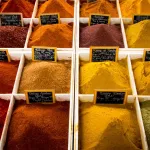
While often used interchangeably, there's a key difference. Spices typically refer to aromatic substances derived from the dried parts of plants—like seeds (cumin), bark (cinnamon), roots (turmeric), or fruits (chili peppers). Seasoning is a broader term that includes spices, but also encompasses salts, sugars, and manufactured products like soy sauce, bouillon cubes, or BBQ sauce. Think of spices as the raw, natural ingredients, while seasonings are the blends and prepared products that create the final flavor profile.
The "clean eating" movement is massively influencing the industry. Consumers now actively seek out seasonings with simpler, recognizable ingredients. This has fueled the rapid growth of functional seasonings, such as salt substitutes, MSG-free options, low-sodium soy sauce, and sugar-free ketchup. There is also rising demand for organic and certified (e.g., Non-GMO, Halal, Kosher) products. Brands are innovating to reduce artificial additives while maximizing natural flavor, making health a core driver of product development.
The flavor of a spice is deeply tied to its "terroir"—a French term for the unique combination of environmental factors where it's grown. Soil composition, climate, rainfall, and sunlight all influence the concentration of essential oils and aromatic compounds in the plant. For example, peppercorns from India may have a different pungency than those from Vietnam. This natural variation is why specific origins, like Ceylon Cinnamon or Sichuan Peppercorns, are highly valued for their distinct and superior flavor profiles.
An "Organic" certification on spices guarantees they were grown and processed according to strict government-set standards. This generally means no synthetic pesticides, herbicides, or fertilizers were used in cultivation, and no artificial colors or preservatives were added post-harvest. Farms are routinely inspected to ensure soil and water health. For consumers, this signifies a purer, more natural product with a reduced environmental footprint. Look for official seals like USDA Organic or EU Organic to verify the claim.