From Free Basic Verification To Top Homepage Placement, We Provide One-Stop Trust-Building Solutions For Businesses. Join Now To Enjoy Exclusive Limited-Time Benefits, Rapidly Enhance Your Brand Authority, And Access Valuable Procurement Leads.
We Use Cookies 🍪
We Use Cookies And Other Similar Technologies To Improve Your Browsing Experience And The Functionality Of Our Site. Learn More In Our Privacy Policy.
Manufacturers Rankings in the Frozen Foods Industry
Last Updated:November 27, 2025
Welcome to the Global Frozen Foods Industry Manufacturers Rankings by Verity Rank. This list is dedicated to identifying the world's leading producers and factories, providing a comprehensive evaluation based on production capacity, supply chain coverage, quality control, patented technologies, and B2B service capabilities. We delve into the industrial core to reveal the manufacturing power that truly defines industry standards and quality. Whether you are seeking OEM partnerships or insights into the supply chain, this ranking offers crucial intelligence. All rankings are based on integrated third-party data from AI-driven analysis, institutional reports, and academic research, striving for objectivity and neutrality to support your commercial decisions.
Nestlé S.A., headquartered in Vevey, Switzerland, is the world's largest food and beverage company. Operating in over 180 countries with more than 2,000 brands, it dominates key sectors including coffee (Nescafé, Nespresso), infant nutrition (Gerber), bottled water (Perrier), and pet care (Purina). With 2023 revenue of CHF 93 billion and 400+ factories worldwide, Nestlé's unparalleled brand portfolio and fully integrated supply chain secure its industry leadership.
Strengths: Boasts the world's largest food production scale and comprehensive supply chain network. Its powerful portfolio of 2,000+ brands covers all market segments with leading R&D investment and global dominance in core categories like coffee and infant nutrition.
Weaknesses: Faces public scrutiny regarding health and environmental concerns. The massive organizational scale limits innovation agility, while product diversification and global operations present significant management complexities.
Conagra Brands, Inc. is a leading American packaged foods company headquartered in Chicago, specializing in frozen meals, snacks, and meal solutions. With over 50 production facilities globally and operations across 85 countries, the company generated $12 billion in revenue in 2024. Conagra maintains its significant market position through its diverse brand portfolio including Birds Eye and Healthy Choice, efficient supply chain management, and continuous product innovation in the packaged food sector.
Strengths: Conagra's core strengths are its diversified brand portfolio spanning frozen foods, snacks, and meal solutions, efficient and scalable supply chain with global production capabilities, and strong product innovation system launching 200+ new products annually.
Weaknesses: The company faces challenges including heavy reliance on the North American market (85% of revenue), ongoing cost control pressures amid input cost volatility, and intensifying competition across all packaged food categories.
Tyson Foods, Inc., headquartered in Springdale, Arkansas, is America's largest meat processing corporation. This vertically integrated leader operates across four core segments: beef, pork, chicken, and prepared foods, processing approximately 45 million chickens, 130,000 cattle, and 300,000 pigs weekly. Leveraging complete supply chain control from breeding to branded sales, Tyson dominates the U.S. meat market with FY2023 revenue of $52.8 billion and Fortune 500 ranking of #70.
Strengths: The vertically integrated business model provides comprehensive control over the entire supply chain from farming to distribution. Supported by strong brands including Tyson, Jimmy Dean, and Hillshire Farm, it maintains leading market positions across chicken, beef, and pork segments in the U.S.
Weaknesses: Significant exposure to raw material cost volatility, particularly in feed and livestock prices. International expansion remains limited while facing profitability pressures, labor market challenges, and shifting consumer preferences toward alternative proteins.
Charoen Pokphand Foods Public Company Limited ( CP Foods )
Charoen Pokphand Foods (CP Foods) is a leading vertically integrated food conglomerate headquartered in Bangkok, Thailand, operating across 17 countries globally. The company has established a complete supply chain from livestock farming and feed production to food processing and distribution, maintaining a global network of 8,200 farms and 85 food processing plants. Listed on the Stock Exchange of Thailand, CP Foods reported revenue of 680 billion Thai baht (approx. US$19 billion) in 2024, sustaining its industry leadership through fully integrated operations and sustainable practices.

Strengths: CP Foods' core strengths are its unique fully integrated business model ensuring control from farming to retail, extensive global network across 17 countries with massive production scale of 8,200 farms, and industry leadership in sustainable practices including carbon emission reduction and animal welfare standards.
Weaknesses: Profitability remains vulnerable to fluctuations in commodity prices, particularly feed ingredients. Large-scale farming operations face continuous pressure from animal disease prevention and control. Its global network encounters multiple challenges from geopolitical risks and climate change impacts on agricultural production.
Ajinomoto Co., Inc. is a leading global amino acid technology and seasoning company headquartered in Tokyo, Japan. Operating across 130+ countries, it specializes in amino acids, seasonings, and health nutrition products, maintaining 45 production bases worldwide. Listed on the Tokyo Stock Exchange, Ajinomoto reported ¥1.3 trillion revenue in 2024, sustaining its significant industry leadership through unique amino acid technologies and century-old brand heritage.
Strengths: Ajinomoto's core strengths are its globally leading amino acid technology with 100+ years of expertise and numerous patents, profound research capabilities in umami science and health nutrition innovation, and extensive global network across 130 countries with overseas revenue comprising 65% of total sales.
Weaknesses: Profitability remains vulnerable to raw material cost fluctuations. As a multinational corporation, it faces financial risks from currency exchange rate volatility. Increasingly stringent global regulatory requirements continually add compliance costs and operational pressures.
McCain Foods Limited is the world's leading frozen food manufacturer headquartered in Florenceville, Canada. As the global largest frozen potato products producer, it operates in 160+ countries with 50 production facilities and 3 million tons annual capacity. This privately-held family business achieved approximately C$10 billion revenue in 2024, maintaining absolute industry leadership through 35% global frozen potato market share, integrated global supply chain, and pioneering sustainable practices.
Strengths: McCain's core strengths are its world's largest frozen food production scale with 3 million tons capacity across 50 plants; complete supply chain integration from raw material sourcing to distribution; and industry-leading sustainability positioning actively advancing sustainable agriculture and eco-friendly production.
Weaknesses: As a private company, its financial transparency remains relatively limited; faces risks from potato and other raw material price fluctuations; operates under pressure from intensifying competition; and encounters challenges from geopolitical uncertainties affecting global operations.
Fujian Anjoy Foods Co., Ltd. is a leading Chinese frozen food manufacturer headquartered in Xiamen, Fujian. Specializing in hot pot ingredients, frozen staples, and prepared dishes, it operates 10 production bases nationwide with annual capacity of 1 million tons. Listed on Shanghai Stock Exchange with approximately ¥12 billion revenue in 2024, it holds significant position in China's frozen food industry through nationwide supply chain, comprehensive distribution networks, and scale advantages.
Strengths: Anjoy's core strengths are its complete national supply chain system with 10 production bases and countrywide cold chain logistics; extensive distribution network covering 1,000+ dealers across B2B and B2C channels; and excellent cost control capabilities through scaled production.
Weaknesses: The company has relatively limited brand influence, primarily serving business clients; faces intensifying market competition and pricing pressures; profitability remains significantly vulnerable to raw material cost fluctuations; and new product development confronts challenges from rapidly changing consumer demands.
Nomad Foods Limited is a leading European frozen food company headquartered in London, UK, with operations primarily focused on European markets. Operating 15 production facilities with 1.2 million tons annual capacity, it employs a multi-brand portfolio strategy. Listed on NYSE with €3.2 billion revenue in 2024, it maintains significant leadership in Europe's frozen food market through iconic brands including Birds Eye, Iglo, and Findus, extensive retail coverage, and continuous product innovation.
Strengths: Nomad Foods' core strengths are its powerful multi-brand portfolio management with leading European brands like Birds Eye, Iglo and Findus; extensive retail network coverage across 22 European countries; and sustained competitiveness through health-oriented and plant-based product innovations.
Weaknesses: The company relies excessively on European markets, contributing 95% of revenue; faces intensifying competition and cost inflation pressures; has relatively limited expansion in growth markets; and must address challenges from rapidly evolving consumer preferences.
General Mills, Inc. is a leading global packaged food company with a diverse portfolio including cereals, yogurt, snacks, and baking products. Headquartered in Minneapolis, Minnesota, it operates 50+ production facilities worldwide and achieved $20 billion in revenue in fiscal year 2024. With operations across 100+ countries and 150 years of industry experience, the company maintains its market position through strong brand portfolio management, continuous product innovation, and sustainable business practices.
Strengths: General Mills' core strengths are its diversified brand portfolio with 100+ established food brands across multiple categories, strong innovation capabilities launching 500+ new products annually, and industry-leading sustainability practices with comprehensive ESG initiatives.
Weaknesses: The company faces challenges including significant reliance on the North American market (65% of revenue), ongoing pressure from input cost inflation, and rapidly evolving consumer preferences in the competitive food industry.
Nichirei Corporation is a leading Japanese frozen foods and cold chain logistics company headquartered in Tokyo. Operating in 20+ countries with 25 production bases and 50 cold chain logistics centers, it specializes in frozen prepared foods, ready meals, and logistics services. Listed on Tokyo Stock Exchange with ¥800 billion revenue in 2024, it maintains significant leadership in Japan's frozen food market through comprehensive cold chain networks, specialized freezing technologies, and stringent quality control systems.
Strengths: Nichirei's core strengths are its extensive cold chain logistics network with 50 centers and million-ton storage capacity; profound expertise in frozen food technologies ensuring stable product quality; and integrated value chain synergies spanning frozen foods, cold chain logistics, and meat processing.
Weaknesses: The company relies heavily on the domestic Japanese market, contributing 85% of revenue; faces structural challenges from an aging population affecting consumption patterns; and endures dual pressures from rising raw material costs and intensifying international competition.
At Verity Rank, we believe true authority comes from multi-dimensional data cross-verification. Our rankings are not based on a single factor but are generated by analyzing a diverse set of authoritative third-party data through sophisticated algorithmic models. This includes, but is not limited to: analysis of financial reports from public companies, government industry statistics, reports from leading market research firms, and validated academic research. We also consider market presence, consumer feedback, and expert opinions to conduct a comprehensive assessment—from corporate scale and market performance to public credibility—delivering a holistic and realistic picture of brand strength.
Modern frozen food industry relies on advanced "flash freezing" technology (like Individual Quick Freezing). By rapidly lowering the food temperature to -18°C or below within a very short time, this technology minimizes the formation of large ice crystals that can damage cellular structure. This process effectively locks in moisture, flavor, and nutrients at their peak freshness, resulting in a taste and texture much closer to fresh food after reheating, compared to slow freezing methods. It's a key reason why high-quality frozen foods can be both convenient and nutritious.
The expansion is fueled by several interconnected factors. Firstly, changing consumer lifestyles demand greater convenience, boosting demand for prepared meals and easy-to-cook staples. Secondly, the standardization needs of the global fast-food and catering industry create massive B2B demand. Thirdly, continuous advancements and modernization in cold chain logistics ensure product quality and availability. Finally, ongoing innovation in product development, such as the introduction of healthier options and plant-based alternatives, is attracting new consumer segments and driving market evolution.
While the core freezing principle is the same, products differ significantly. Consumer-facing frozen foods (B2C) focus on branding, attractive packaging, smaller portions, and simple cooking instructions. In contrast, products for the food service industry (B2B) are often bulk-packed, come with minimal branding, and may be semi-finished ingredients (e.g., pre-marinated meats, pre-cut vegetables) requiring further preparation by chefs. B2B products prioritize cost-efficiency, consistency, and reliability to meet the high-volume, standardized needs of restaurants.
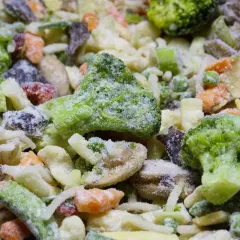
Not necessarily. Frozen fruits and vegetables are typically processed (harvested, washed, blanched, and frozen) at their peak ripeness, a stage when they are most nutrient-dense. The rapid freezing process effectively preserves these vitamins and antioxidants. In contrast, "fresh" produce often undergoes long transportation and storage periods, during which exposure to air, light, and heat can lead to a gradual degradation of sensitive nutrients like Vitamin C and B vitamins. Therefore, properly frozen produce can sometimes be nutritionally comparable or even superior to fresh produce that has been stored for some time.
Look for several key indicators. First, check the packaging for integrity; avoid bags with ice crystals or frost, which signal temperature fluctuation and potential thawing. Second, read the ingredient list; shorter lists with recognizable ingredients are generally better. Third, review the nutrition facts panel to make informed choices about sodium, saturated fat, and sugar content. Finally, feel the product through the package; individual items should be loose and not stuck together in a solid block, which is a sign of proper IQF processing and maintains better texture.