We Use Cookies 🍪
We Use Cookies And Other Similar Technologies To Improve Your Browsing Experience And The Functionality Of Our Site. Learn More In Our Privacy Policy.

Manufacturer Rankings in the Fashion Accessories Industry

Last Updated: January 16, 2026


Welcome to Verity Rank’s Global Manufacturer Rankings in the Fashion Accessories Industry. This list highlights the behind-the-scenes forces shaping the industry, evaluating the comprehensive capabilities of top-tier OEM giants and vertically integrated specialists. We go beyond basic capacity comparison to scrutinize technological patents, supply chain resilience, key client portfolios, green manufacturing standards, and global footprints. By cross-referencing international industry reports, authoritative audit data, and patent libraries, we identify the manufacturing leaders who truly define quality, efficiency, and sustainability. Verity Rank aims to provide a transparent map of global core production capabilities for industry decision-makers. Rankings are derived from public financials, international certification audits, and sector research, maintained for accuracy and intended for informational purposes.

Amer Sports, Inc.

Amer Sports, Inc. is a Finland-origin global multi-brand performance sports product group, now majority-owned and operationally driven by a Chinese consortium led by ANTA Sports. Functioning as a “brand empire” in the professional sports arena, its core strategy is to acquire, nurture, and synergistically manage a portfolio of iconic brands that hold absolute leadership in their respective niches, including Arc‘teryx, Salomon, Wilson, Atomic, and Suunto. Its business deeply spans outdoor equipment, ball sports gear, fitness machinery, and high-performance apparel and footwear. Operating a capital-light brand management and platform model, it distributes through a robust global supply chain, a rapidly expanding direct-to-consumer (DTC) retail network, and wholesale channels. Empowered by ANTA, the group has seen rapid growth, with Greater China becoming its largest market. Reaching €4.411 billion in revenue in 2024, it is advancing toward its €5 billion target for 2025, standing as a strategically sharp and execution-excellent growth paradigm in the global professional sports industry.
Strengths: Amer Sports’ core strengths lie in its nearly irreplicable portfolio of top-tier professional sports brands, where each subsidiary (e.g., Arc‘teryx, Salomon) possesses defining technical authority and “cult-like” user loyalty in its segment, creating a wide competitive moat; concurrently, the group has successfully driven brand premiumization and DTC transformation, and, leveraging the deep China market insight and growth resources from ANTA, achieves powerful synergy between its “global platform” and “China engine”.
Weaknesses: Amer Sports’ main weaknesses are its increasing growth reliance on the single China market, necessitating a balance between this explosive growth and steady development in other global markets to mitigate potential risks; simultaneously, in pushing the premiumization and cross-over of brands like Arc‘teryx, maintaining their core professional credibility to avoid brand dilution, along with the complex task of managing the culture and operations of multiple independent top brands, presents ongoing challenges.
Amer Sports
Amer Sports
Brand Name
Helsinki, Uusimaa, Finland
Address
1950
Founded
10K+
Number of Employees
100+ Countries
Business Scope
1000+ Stores
Global Cooperative Factories
Official Website
Men's Clothing Industry
Men's Outerwear Industry
Men's Sportswear Industry
Women's Clothing Industry
Women's Outerwear Industry
Women's Activewear Industry
Athletic Shoes Industry
Specialty Footwear Industry
Backpacks Industry
Specialty Bags Industry
Functional Wear Industry
Hosiery Industry
Sports & Outdoor Gear Industry
Sports Apparel Industry
Outerwear Industry
Footwear Industry
Performance Accessories Industry
Sports Equipment Industry
Kids & Baby Clothing Industry
Functional Wear Industry
Fashion Accessories Industry
Utility Accessories Industry
Hard Shell Jackets Industry
Down Jackets Industry
Soft Shell Jackets Industry
Ski Suits Industry
Men's Clothing Industry
Men's Outerwear Industry
Men's Sportswear Industry
Women's Clothing Industry
Women's Outerwear Industry
Women's Activewear Industry
Athletic Shoes Industry
Specialty Footwear Industry
Backpacks Industry
Specialty Bags Industry
Functional Wear Industry
Hosiery Industry
Sports & Outdoor Gear Industry
Sports Apparel Industry
Outerwear Industry
Footwear Industry
Performance Accessories Industry
Sports Equipment Industry
Kids & Baby Clothing Industry
Functional Wear Industry
Fashion Accessories Industry
Utility Accessories Industry
Hard Shell Jackets Industry
Down Jackets Industry
Soft Shell Jackets Industry
Ski Suits Industry

Shenzhou International Group

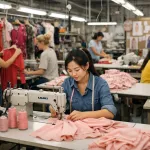
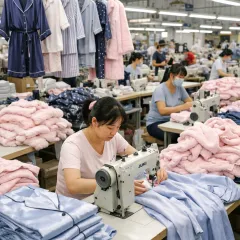
Shenzhou International Group Holdings Limited is a globally leading vertically integrated knitwear manufacturer headquartered in Ningbo, Zhejiang, listed on the Hong Kong Stock Exchange. It employs a unique vertical integration model covering fabric R&D, knitting, dyeing to garment manufacturing, providing OEM/ODM services for global brands like Nike, Adidas, and UNIQLO. With 6 production bases across China, Vietnam, and Cambodia, it employs ~89,000 people, reported RMB 30.5 billion revenue in 2024, and produces ~500 million garments annually. Leveraging its full supply chain integration, premium client portfolio, and scaled manufacturing capabilities, it maintains leadership in global apparel manufacturing.
Strengths: Shenzhou International's core strengths are its unique vertical integration enabling end-to-end control from fabric to garment with rapid response and quality assurance; premium client relationships with long-term partnerships with global brands like Nike and Adidas; outstanding manufacturing scale producing 500 million garments annually with global layout providing significant cost advantages.
Weaknesses: Shenzhou International faces cost control pressures from raw material fluctuations and rising labor costs impacting profitability; geopolitical risks from international trade policy changes challenge its global production layout; relatively low OEM model margins and increasing environmental requirements add operational cost pressures.
Shenzhou
Shenzhou
Brand Name
Ningbo, Zhejiang Province, China
Address
2005
Founded
89K+
Number of Employees
3+ Countries
Business Scope
6+ Factory
Processing Facilities
Official Website
Men's Clothing Industry
Men's Tops Industry
Men's Sportswear Industry
Women's Clothing Industry
Women's Tops Industry
Women's Activewear Industry
Intimates & Hosiery Industry
Women's Underwear Industry
Men's Underwear Industry
Loungewear & Sleepwear Industry
Loungewear Industry
Sustainable Fashion Industry
Recycled Fabrics Industry
Men's Clothing Industry
Men's Tops Industry
Men's Sportswear Industry
Women's Clothing Industry
Women's Tops Industry
Women's Activewear Industry
Intimates & Hosiery Industry
Women's Underwear Industry
Men's Underwear Industry
Loungewear & Sleepwear Industry
Loungewear Industry
Sustainable Fashion Industry
Recycled Fabrics Industry

LVMH Moët Hennessy Louis Vuitton SE

LVMH Moët Hennessy Louis Vuitton SE is the world's leading luxury goods conglomerate, headquartered in Paris, France. Listed on the Paris Stock Exchange, its portfolio spans fashion/leather goods, watches/jewelry, perfumes/cosmetics, and wines/spirits. It operates over 5,500 stores across 80+ countries, managing a unique collection of 75+ prestigious brands including Louis Vuitton and Dior. In 2024, LVMH reported revenue of €86.2 billion with approximately 215,000 employees, maintaining its absolute industry leadership through an unparalleled brand portfolio, exceptional craftsmanship, and a powerful global retail network.
Strengths: LVMH's core strengths are its unparalleled portfolio of 75+ iconic luxury brands, creating immense market appeal and pricing power; exceptional craftsmanship honed over centuries, forming an inimitable technical barrier; and a powerful global retail network of 5,500+ directly-operated stores ensuring top-tier client experience and strong channel control.
Weaknesses: LVMH's performance is highly sensitive to global economic cycles, with fluctuations significantly impacting luxury demand; its vast global supply chain faces complexities from geopolitics, raw material sourcing, and artisan scarcity; and increasingly stringent sustainability requirements impose ongoing cost pressures for its transformation.
Louis Vuitton
Louis Vuitton
Brand Name
Paris, France
Paris, France
Address
1987
Founded
215K+
Number of Employees
80+ Countries
Business Scope
200+ Workshop
Production Base
Official Website
Men's Clothing Industry
Men's Tops Industry
Men's Outerwear Industry
Men's Bottoms Industry
Men's Formalwear Industry
Men's Sportswear Industry
Women's Clothing Industry
Women's Tops Industry
Dresses & Skirts Industry
Women's Outerwear Industry
Women's Pants Industry
Formalwear Industry
Footwear Industry
Men's Shoes Industry
Women's Shoes Industry
Athletic Shoes Industry
Luggage & Accessories Industry
Backpacks Industry
Handbags Industry
Luggage Industry
Wallets & Card Holders Industry
Specialty Bags Industry
Fashion Accessories Industry
Head Accessories Industry
Neck Accessories Industry
Waist Belts Industry
Formal Neckwear Industry
Wrist & Hand Industry
Designer Collabs Accessories Industry
Sustainable Fashion Industry
Organic Materials Industry
Men's Clothing Industry
Men's Tops Industry
Men's Outerwear Industry
Men's Bottoms Industry
Men's Formalwear Industry
Men's Sportswear Industry
Women's Clothing Industry
Women's Tops Industry
Dresses & Skirts Industry
Women's Outerwear Industry
Women's Pants Industry
Formalwear Industry
Footwear Industry
Men's Shoes Industry
Women's Shoes Industry
Athletic Shoes Industry
Luggage & Accessories Industry
Backpacks Industry
Handbags Industry
Luggage Industry
Wallets & Card Holders Industry
Specialty Bags Industry
Fashion Accessories Industry
Head Accessories Industry
Neck Accessories Industry
Waist Belts Industry
Formal Neckwear Industry
Wrist & Hand Industry
Designer Collabs Accessories Industry
Sustainable Fashion Industry
Organic Materials Industry

Kering S.A.

Kering S.A. is a global leading luxury group headquartered in Paris, France, and listed on Euronext Paris. Operating as a “house of brands,” Kering's core business is brand portfolio management—it does not manufacture products but strategically acquires, owns, and empowers a collection of premier luxury houses including Gucci, Saint Laurent, Balenciaga, Bottega Veneta, and Boucheron. The group focuses on fashion, leather goods, jewelry, and watches, generating €19.95 billion in revenue in 2024 (down 4% on a comparable basis), solidifying its position as the world's second-largest luxury conglomerate. Its central strategy is to provide centralized operational and financial support while preserving each brand’s creative autonomy, with a growing emphasis on developing its jewelry division as a key future growth pillar and driving sustainability transformation across the group.
Strengths: Kering's core strengths lie in its portfolio of iconic, trend-defining luxury brands with a clear strategic hierarchy, coupled with a proven, exceptional track record in brand revitalization and value creation; furthermore, its sophisticated group platform provides comprehensive strategic empowerment—from retail networks to digital innovation—for its brands, supported by a powerful network of creative talents that continuously drives industry influence.
Weaknesses: Kering's main weaknesses are its excessive dependence on the performance of its flagship brand, Gucci, whose current transformative phase introduces significant earnings volatility and uncertainty for the entire group; simultaneously, the group is highly vulnerable to consumer sentiment shifts in key markets (notably Greater China) and faces intensely fierce direct competition from giants like LVMH across all major product categories.
Kering
Kering
Brand Name
Paris, France
Paris, France
Address
1962
Founded
47K+
Number of Employees
120+ Countries
Business Scope
1700+ Stores
Global Stores
Official Website
Men's Clothing Industry
Men's Tops Industry
Men's Outerwear Industry
Men's Bottoms Industry
Men's Formalwear Industry
Women's Clothing Industry
Women's Tops Industry
Dresses & Skirts Industry
Women's Outerwear Industry
Women's Pants Industry
Formalwear Industry
Footwear Industry
Men's Shoes Industry
Women's Shoes Industry
Athletic Shoes Industry
Luggage & Accessories Industry
Backpacks Industry
Handbags Industry
Luggage Industry
Wallets & Card Holders Industry
Intimates & Hosiery Industry
Women's Underwear Industry
Men's Underwear Industry
Fashion Accessories Industry
Head Accessories Industry
Neck Accessories Industry
Waist Belts Industry
Sustainable Fashion Industry
Organic Materials Industry
Recycled Fabrics Industry
Biodegradable Industry
Natural Dyes Industry
Closed-Loop Industry
Eco-Innovation Industry
Men's Clothing Industry
Men's Tops Industry
Men's Outerwear Industry
Men's Bottoms Industry
Men's Formalwear Industry
Women's Clothing Industry
Women's Tops Industry
Dresses & Skirts Industry
Women's Outerwear Industry
Women's Pants Industry
Formalwear Industry
Footwear Industry
Men's Shoes Industry
Women's Shoes Industry
Athletic Shoes Industry
Luggage & Accessories Industry
Backpacks Industry
Handbags Industry
Luggage Industry
Wallets & Card Holders Industry
Intimates & Hosiery Industry
Women's Underwear Industry
Men's Underwear Industry
Fashion Accessories Industry
Head Accessories Industry
Neck Accessories Industry
Waist Belts Industry
Sustainable Fashion Industry
Organic Materials Industry
Recycled Fabrics Industry
Biodegradable Industry
Natural Dyes Industry
Closed-Loop Industry
Eco-Innovation Industry

Pou Chen Corporation

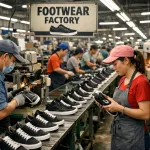
Pou Chen Corporation is a globally leading vertically integrated footwear manufacturing group headquartered in Taichung, Taiwan, China, and listed on the Taiwan Stock Exchange (TWSE: 9904). As the world's largest footwear manufacturer, it specializes in providing comprehensive ODM/OEM services, from design and development to mass production, for top-tier international sportswear brands like Nike and adidas. Its business model is deeply vertically integrated, covering the entire industrial chain from materials and molds to finished product assembly, supported by a vast network of over 100 factories primarily in Vietnam and Indonesia. With group revenue of approximately $9.15 billion and an annual output of about 340 million pairs in 2024, it is an indispensable cornerstone and “hidden champion” of the global athletic footwear supply chain.
Strengths: Pou Chen's core strengths are its unparalleled manufacturing scale, the cost and efficiency advantages derived from deep vertical integration, and its long-term, stable strategic partnerships with key clients like Nike and Adidas; concurrently, its globalized production network across multiple Southeast Asian countries provides operational flexibility and capacity allocation capabilities to mitigate single-market risks.
Weaknesses: Pou Chen's main weaknesses are its heavy revenue reliance on a few major cornerstone clients, making its performance highly vulnerable to their order fluctuations; furthermore, its concentrated production base in Southeast Asia exposes operations to impacts from local geopolitics, trade policies, and rising labor costs, and as a capital-intensive manufacturer, it faces persistent pressure from environmental compliance and automation upgrade investments.
Pou Chen
Pou Chen
Brand Name
Taichung, Taiwan
Taichung, Taiwan
Address
1969
Founded
235K+
Number of Employees
15+ Countries
Business Scope
100+ Factory
Processing Facilities
TWSE : ​9904
Listing Status
Official Website
Footwear Industry
Men's Shoes Industry
Women's Shoes Industry
Athletic Shoes Industry
Children's Shoes Industry
Specialty Footwear Industry
Footwear Materials & Components
Performance Shoes Industry
Lifestyle Sneakers Industry
Running Shoes Industry
Basketball Shoes Industry
Soccer Cleats Industry
Footwear Industry
Men's Shoes Industry
Women's Shoes Industry
Athletic Shoes Industry
Children's Shoes Industry
Specialty Footwear Industry
Footwear Materials & Components
Performance Shoes Industry
Lifestyle Sneakers Industry
Running Shoes Industry
Basketball Shoes Industry
Soccer Cleats Industry

WeiXing Co., Ltd - SAB

Zhejiang WeiXing Industrial Development Co., Ltd. is a leading Chinese apparel accessories manufacturer headquartered in Linhai, Zhejiang, listed on the Shenzhen Stock Exchange. It specializes in R&D and manufacturing of buttons, zippers and other garment accessories, employing a vertically integrated model from R&D to sales. With 5 domestic production bases and ~3,000 employees, it reported RMB 2.8 billion revenue in 2024, with annual capacities of 10 billion buttons and 500 million zippers. Leveraging stable product quality, premium client resources and strong supporting services, it maintains an important position in China's apparel accessories market.
Strengths: WeiXing's core strengths are its stable product quality and technical expertise with 200+ valid patents and complete quality system; premium client resources maintaining stable partnerships with domestic apparel brands; strong supporting service capabilities and vertical integration enabling one-stop accessory solutions.
Weaknesses: WeiXing faces constraints from relatively limited market size in the apparel accessories industry; intensifying competition brings price pressures and growing cost control challenges; heavy reliance on domestic market with only 5% overseas revenue limits risk resistance capability.
SAB
SAB
Brand Name
Taizhou, Zhejiang Province, China
Address
1976
Founded
3K+
Number of Employees
Nationwide, China
Business Scope
5+ Factory
Production Facilities
Official Website
Fashion Accessories Industry
Formal Neckwear Industry
Utility Accessories Industry
Button Industry
Zipper Industry
Garment Accessories Industry
Protective Products Industry
Technical Fabrics Industry
Sustainable Fashion Industry
Recycled Fabrics Industry
Metal Zipper Industry
PlasticZipper Industry
Functional Zipper Industry
Fashion Accessories Industry
Formal Neckwear Industry
Utility Accessories Industry
Button Industry
Zipper Industry
Garment Accessories Industry
Protective Products Industry
Technical Fabrics Industry
Sustainable Fashion Industry
Recycled Fabrics Industry
Metal Zipper Industry
PlasticZipper Industry
Functional Zipper Industry

Burberry Group plc

Burberry Group plc is a globally iconic luxury brand headquartered in London, UK, renowned for its classic trench coats, signature check pattern, and definition of British style. Its business spans high-end ready-to-wear, leather goods and handbags, footwear, and accessories, sold directly to consumers through a network of approximately 425 company-owned stores worldwide. With FY2024 revenue of £3.0 billion, the company is undergoing a profound brand transformation under Creative Director Daniel Lee, aiming to fuse its deep British heritage with contemporary design to reshape its modern luxury appeal and drive future growth.
Strengths: Burberry's core strengths are its unmatched brand recognition and deep heritage—the iconic trench coat and check are globally recognized cultural symbols—and the clear, cohesive transformation strategy demonstrated through product renewal, retail upgrades, and targeted marketing.
Weaknesses: The company's main weaknesses are the yet-to-be-fully-proven commercial success of its brand renewal strategy, particularly amid a challenging global luxury consumption environment; over-reliance on the Asia-Pacific market (especially China), making it vulnerable to regional economic and consumer sentiment swings; and significant pressure in the highly competitive leather goods and ready-to-wear markets.
Burberry
Burberry
Brand Name
London, United Kingdom
Address
1856
Founded
87K+
Number of Employees
50+ Countries
Business Scope
425+ Stores
Production Base
Official Website
Men's Clothing Industry
Men's Tops Industry
Men's Outerwear Industry
Men's Bottoms Industry
Men's Formalwear Industry
Women's Clothing Industry
Women's Tops Industry
Dresses & Skirts Industry
Women's Outerwear Industry
Women's Pants Industry
Formalwear Industry
Footwear Industry
Men's Shoes Industry
Women's Shoes Industry
Luggage & Accessories Industry
Handbags Industry
Luggage Industry
Wallets & Card Holders Industry
Fashion Accessories Industry
Head Accessories Industry
Neck Accessories Industry
Waist Belts Industry
Wrist & Hand Industry
Men's Clothing Industry
Men's Tops Industry
Men's Outerwear Industry
Men's Bottoms Industry
Men's Formalwear Industry
Women's Clothing Industry
Women's Tops Industry
Dresses & Skirts Industry
Women's Outerwear Industry
Women's Pants Industry
Formalwear Industry
Footwear Industry
Men's Shoes Industry
Women's Shoes Industry
Luggage & Accessories Industry
Handbags Industry
Luggage Industry
Wallets & Card Holders Industry
Fashion Accessories Industry
Head Accessories Industry
Neck Accessories Industry
Waist Belts Industry
Wrist & Hand Industry

VF Corporation

VF Corporation is a globally leading multi-brand apparel group headquartered in Denver, USA, and listed on the New York Stock Exchange (VFC). As a portfolio manager of iconic brands including Vans, The North Face, Timberland, and Dickies, it focuses on the design, marketing, and global distribution of apparel, footwear, and accessories in the outdoor, lifestyle, and workwear sectors, operating under a fully outsourced asset-light model. With group revenue of $10.45 billion in fiscal 2024, it is currently in a profound strategic and financial transformation named "Reinvent VF," aiming to revive growth by focusing on core brands, optimizing operations, and improving cash flow.
Strengths: VF Corporation's core strengths are the profound global cultural influence and consumer loyalty of its portfolio brands like Vans and The North Face, which constitute fundamental assets for revitalization; concurrently, its historically established vast global distribution network and clear brand-focused restructuring strategy provide a scale foundation and clear direction for the transformation.
Weaknesses: VF Corporation's main weaknesses are the persistent underperformance of its core brand Vans, making growth revitalization in the fiercely competitive active lifestyle market highly challenging; furthermore, the group carries significant debt with strained cash flow, creating financial pressure that limits strategic flexibility, and organizational inertia as a large enterprise poses internal resistance to deep transformation.
VF Corp
VF Corp
Brand Name
Denver, Colorado, USA
Address
1899
Founded
30K+
Number of Employees
170+ Countries
Business Scope
1300+ Stores
Global Cooperative Factories
Official Website
Men's Clothing Industry
Men's Tops Industry
Men's Outerwear Industry
Men's Bottoms Industry
Men's Sportswear Industry
Women's Clothing Industry
Women's Tops Industry
Dresses & Skirts Industry
Women's Outerwear Industry
Women's Pants Industry
Women's Activewear Industry
Footwear Industry
Men's Shoes Industry
Women's Shoes Industry
Athletic Shoes Industry
Luggage & Accessories Industry
Backpacks Industry
Handbags Industry
Wallets & Card Holders Industry
Specialty Bags Industry
Hosiery Industry
Sports & Outdoor Gear Industry
Sports Apparel Industry
Outerwear Industry
Performance Accessories Industry
Kids & Baby Clothing Industry
Children's Everyday Wear Industry
Fashion Accessories Industry
Head Accessories Industry
Formal Neckwear Industry
Wrist & Hand Industry
Men's Clothing Industry
Men's Tops Industry
Men's Outerwear Industry
Men's Bottoms Industry
Men's Sportswear Industry
Women's Clothing Industry
Women's Tops Industry
Dresses & Skirts Industry
Women's Outerwear Industry
Women's Pants Industry
Women's Activewear Industry
Footwear Industry
Men's Shoes Industry
Women's Shoes Industry
Athletic Shoes Industry
Luggage & Accessories Industry
Backpacks Industry
Handbags Industry
Wallets & Card Holders Industry
Specialty Bags Industry
Hosiery Industry
Sports & Outdoor Gear Industry
Sports Apparel Industry
Outerwear Industry
Performance Accessories Industry
Kids & Baby Clothing Industry
Children's Everyday Wear Industry
Fashion Accessories Industry
Head Accessories Industry
Formal Neckwear Industry
Wrist & Hand Industry

Gildan Activewear Inc.

Gildan Activewear Inc. is a globally vertical-integrated apparel manufacturing giant listed on the New York and Toronto stock exchanges, headquartered in Montreal, Canada. Its core business is supplying high-value, blank basic apparel to the B2B market, with product lines anchored by T-shirts, hoodies, underwear, and socks. These products serve as the foundational canvas for group customization, promotional merchandise, and mass retail. Operating 15 large-scale vertical-integration factories globally with over 50,000 employees, Gildan maintains deep control over its supply chain from yarn to finished garment. With 2023 revenue reaching US$3.197 billion, it is an “invisible champion” and efficiency benchmark within the industry.
Strengths: Gildan’s core strengths lie in its deeply vertical-integrated global production network (e.g., factories in Honduras, Bangladesh), which grants it unparalleled cost control, extreme economies of scale, and reliable product consistency; concurrently, its established position as the “industry standard” within B2B sectors (like screen printing and promotional products) and its strong customer partnerships form an exceptionally stable business foundation and entry barrier.
Weaknesses: Gildan’s main weaknesses stem from its role as an “invisible” manufacturer, lacking brand recognition and emotional connection with end consumers, resulting in limited pricing power and profits vulnerable to fluctuations in commodity prices like cotton; furthermore, its extensive global production network faces ongoing ESG scrutiny regarding environmental and labor practices, leading to high compliance costs and reputational risks.
Gildan
Gildan
Brand Name
Montreal, Quebec, Canada
Address
1984
Founded
50K+
Number of Employees
60+ Countries
Business Scope
15+ Factories
Production Base
Official Website
Men's Clothing Industry
Men's Tops Industry
Men's Outerwear Industry
Men's Bottoms Industry
Men's Sportswear Industry
Women's Clothing Industry
Women's Tops Industry
Women's Outerwear Industry
Women's Pants Industry
Women's Activewear Industry
Intimates & Hosiery Industry
Women's Underwear Industry
Men's Underwear Industry
Basic Hosiery Industry
Children's Everyday Wear Industry
Fashion Accessories Industry
Head Accessories Industry
Neck Accessories Industry
Wrist & Hand Industry
Loungewear & Sleepwear Industry
Sleep Sets Industry
Loungewear Industry
Custom & Group Apparel Industry
Group Uniforms Industry
Personalized Gear Industry
Men's Clothing Industry
Men's Tops Industry
Men's Outerwear Industry
Men's Bottoms Industry
Men's Sportswear Industry
Women's Clothing Industry
Women's Tops Industry
Women's Outerwear Industry
Women's Pants Industry
Women's Activewear Industry
Intimates & Hosiery Industry
Women's Underwear Industry
Men's Underwear Industry
Basic Hosiery Industry
Children's Everyday Wear Industry
Fashion Accessories Industry
Head Accessories Industry
Neck Accessories Industry
Wrist & Hand Industry
Loungewear & Sleepwear Industry
Sleep Sets Industry
Loungewear Industry
Custom & Group Apparel Industry
Group Uniforms Industry
Personalized Gear Industry

Kee Technologies Group Inc.​

Kee Technologies Group Inc. is a globally vertical-integrated zipper manufacturer headquartered in Hong Kong, specializing in high-performance zipper solutions for the apparel, luggage, and outdoor equipment industries. Driven by technological innovation, its signature products, such as the Red Dot Award-winning tape-free nylon zipper, demonstrate its leadership in lightweight and functional design. Through integrated production bases in Mainland China, Kee maintains full-process quality control from mold development to finished product assembly, with estimated annual sales between USD 100 million and 500 million. As a technological representative of China's zipper industry, it enjoys a strong reputation in the professional B2B sector and is actively committed to driving the industry toward sustainability and intelligence.
Strengths: Kee's core strengths lie in its deeply integrated vertical manufacturing system and continuous material science innovation capabilities, enabling rapid response to customized client needs and ensuring cutting-edge product quality; concurrently, its established image as a technical expert in the professional B2B market, focused on solving specific pain points (e.g., ultra-lightweight, quick-release), forms a differentiated competitive barrier and stable customer partnerships.
Weaknesses: Kee's main weaknesses are its still significantly lower global brand awareness and market share compared to international giants like YKK, resulting in a lack of recognition among end consumers; furthermore, as a privately held company, it may face capital constraints for global capacity expansion, channel deepening, and large-scale R&D investments, and its performance is susceptible to cyclical fluctuations in the downstream apparel and outdoor industries.
Kee
Kee
Brand Name
Hong Kong, China
Hong Kong, China
Address
1992
Founded
300+
Number of Employees
20+ Countries
Business Scope
2+ Factory
Production Base
Unlisted ( Private Company )
Listing Status
Official Website
Fashion Accessories Industry
Wrist & Hand Industry
Utility Accessories Industry
Zipper Industry
Garment Accessories Industry
Metal Zipper Industry
PlasticZipper Industry
Functional Zipper Industry
Zipper Machinery and Mold Industry
Fashion Accessories Industry
Wrist & Hand Industry
Utility Accessories Industry
Zipper Industry
Garment Accessories Industry
Metal Zipper Industry
PlasticZipper Industry
Functional Zipper Industry
Zipper Machinery and Mold Industry

Fashion Accessories Manufacturers

There are no products to list in this category.

FAQ

Verity Rank is committed to delivering authentic, transparent, and verifiable industry insights. This ranking is not based on subjective opinions but on a rigorous multi-dimensional evaluation model. We systematically collect and cross-verify public data and authoritative information from global sources, conducting quantitative analysis on key dimensions for each company, including financial performance, market influence, supply chain control, consumer sentiment, and innovative sustainability. Our data sources include, but are not limited to: public financial filings of listed companies, reports from international market research authorities (e.g., Euromonitor, BrandZ), statistics from government and industry bodies, specialized research from leading universities and think tanks, as well as global public sentiment and search trend data integrated via AI technology. All data undergoes cleaning and weighted calculation to ensure the objectivity and neutrality of the final ranking, presenting you with a credible panorama of the industry.
The Fashion Accessories Industry encompasses the design, manufacturing, and marketing of items that complement an outfit beyond core apparel and footwear. It’s a vast ecosystem focused on adornment, style enhancement, and added functionality. Products range across the body: from headwear like caps and hair accessories, to neckwear like scarves and ties, to waist items like belts, and wrist/hand accessories like gloves and bracelets. It also includes functional items (e.g., brooches, cufflinks) and high-end collaborative collections. This industry sits at the intersection of creativity, craftsmanship, material innovation, and consumer trends, representing a dynamic and high-value segment of the global fashion landscape.
The fashion accessories market is a multi-billion-dollar global sector with robust growth. Its significance is multi-faceted: For consumers, accessories offer a cost-effective way to refresh looks and express individuality. For brands, accessory lines (e.g., leather goods, scarves) are often high-margin “entry-point” products that significantly drive revenue. For the broader fashion ecosystem, accessories act as trend “testers” and “amplifiers,” often introducing new colors, patterns, or silhouettes. Furthermore, the industry fuels innovation across supply chains, from luxury leatherworking and precision metal casting to the development of sustainable materials, making it a vital engine of the global fashion economy.
The industry’s growth is propelled by several interconnected forces. Primarily, social media influence (e.g., Instagram, Xiaohongshu) has democratized fashion, fueling fast-paced demand for trend-driven accessories. Secondly, self-expression and personalization are paramount, with consumers, especially younger generations, using accessories as key identity markers. Thirdly, category blurring and functional integration are expanding the market, as accessories merge with technology (smart wearables) and performance gear. Finally, business model innovation—from fast fashion’s rapid cycles to luxury’s “accessorizing” strategies and the rise of DTC brands—continuously stimulates consumption and market expansion from various angles.
Brands and manufacturers represent two distinct yet interdependent ends of the supply chain. Fashion Brands (e.g., Louis Vuitton, Gucci) focus on creating demand. Their core competencies lie in market insight, brand storytelling, design, marketing, and sales. Their value is largely intangible (brand equity, creative direction). Conversely, Manufacturers (e.g., Shenzhou International, SAB) excel at fulfilling demand. They specialize in translating designs into physical products, mastering material sourcing, process engineering, precision manufacturing, quality control, and supply chain logistics. Their value is rooted in tangible assets (patents, facilities, scale) and operational excellence. Notably, products from many top brands are often produced by a select group of elite manufacturers behind the scenes.
Three major trends will define the industry’s future. First, deep technological integration: Accessories will evolve beyond ornamentation into smart wearables that monitor health, enable payments, and interact with environments. Second, sustainability as a baseline requirement: The use of traceable eco-materials (e.g., recycled nylon), cleaner production, and circular models (repair, rental) is transitioning from marketing to a core operational and consumer expectation. Third, hyper-personalization and micro-trends: Data analytics and flexible manufacturing will fuel customization for niche communities or individuals, while internet-born “micro-trends” will demand ultra-responsive supply chains. Succeeding in this future requires balancing creativity, technology, and responsibility in new ways.