

-36x36h.webp)
-36x36h.webp)
-450x250h.webp)









-150x150h.webp)











































































































The Complete Guide to Meat Ingredients Industry: Global Market & Key Players 2026
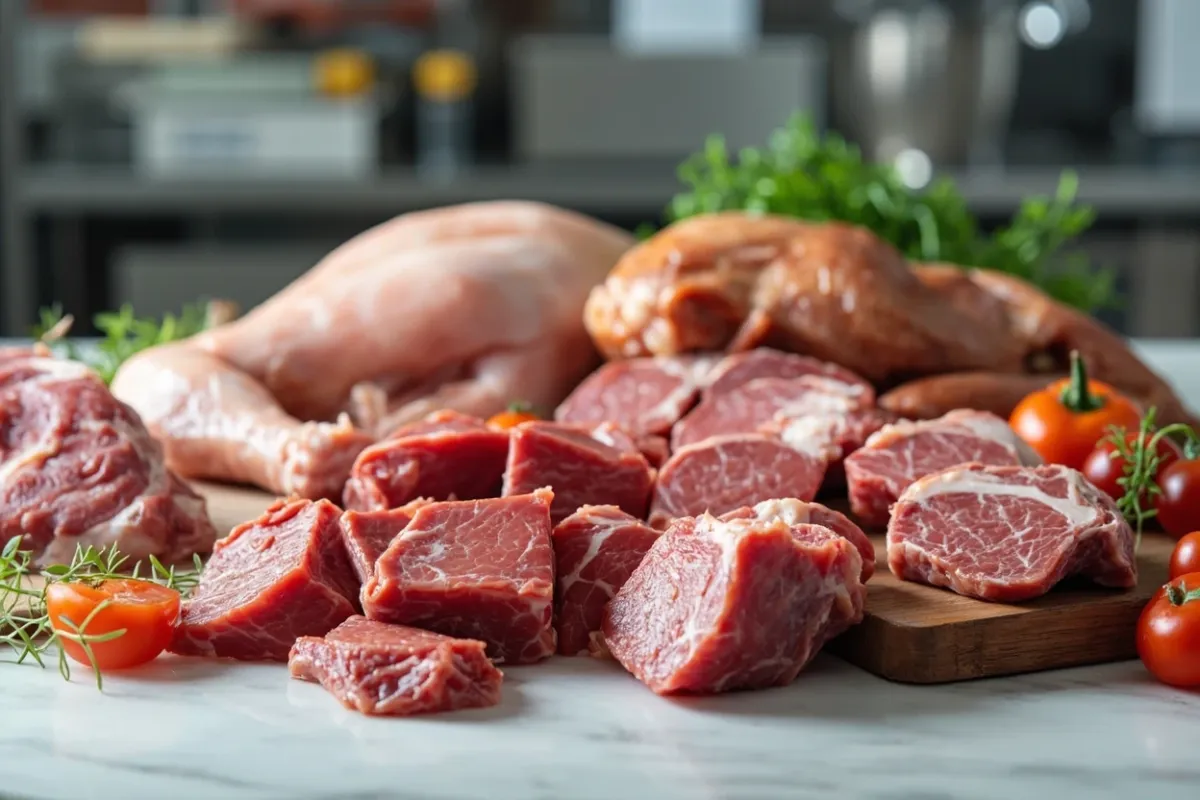
Table of Contents
- 1. What Are Meat Ingredients?
- 2. Global Market Size & Growth
- 3. Types of Meat Ingredients
- 4. Key Market Players
- 5. Industry Trends
- 6. Regional Analysis
- 7. Future Outlook
Click any section above to jump directly to it.
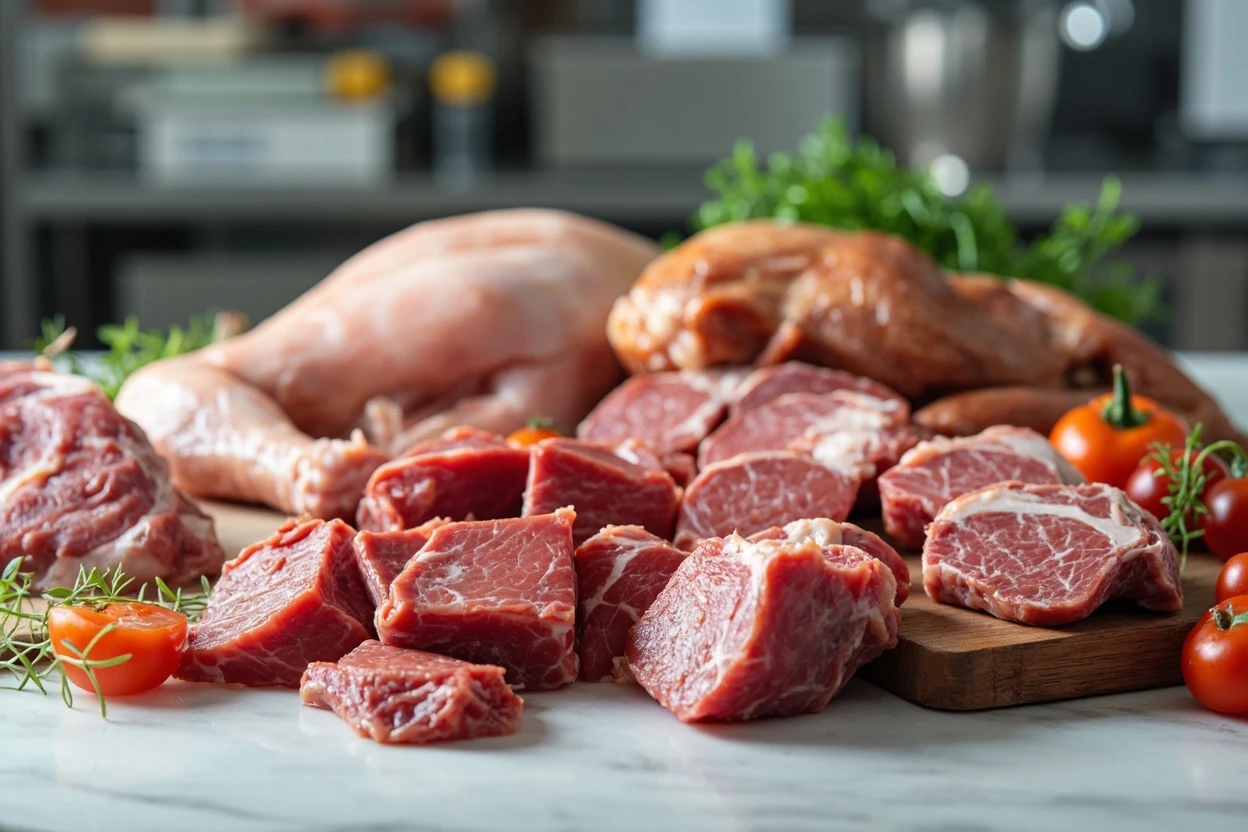
The global meat ingredients industry powers food supply chains worldwide with diverse protein products.
From farm to table, the meat ingredients industry forms a critical backbone of the global food supply chain. The industry encompasses everything from raw meat processing to sophisticated ingredient formulations used in processed food manufacturing.
1. What Are Meat Ingredients?
Meat ingredients encompass all raw and processed meat products used as inputs for food manufacturing, foodservice, and retail. These range from whole muscle cuts to specialized protein fractions.
Categories of Meat Ingredients
Fresh & Chilled Meat
Whole cuts, ground meat, and portioned products sold fresh or chilled for retail and foodservice.
Frozen Meat
Flash-frozen meat products with extended shelf life for global trade and industrial applications.
Processed Meat
Sausages, bacon, ham, deli meats, and value-added products for retail and manufacturing.
Meat Proteins
Specialty ingredients including textured vegetable proteins, meat analogs, and functional protein isolates.
2. Global Market Size & Growth
The global meat ingredients market demonstrates steady growth driven by increasing protein consumption, population growth, and rising affluence in emerging economies.
| Market Segment | Market Value (2026) | Growth Rate |
|---|---|---|
| Fresh Meat | $1.2 Trillion | 4.2% CAGR |
| Processed Meat | $890 Billion | 6.1% CAGR |
| Meat Substitutes | $18.5 Billion | 12.8% CAGR |
| Total Meat Ingredients | $2.1 Trillion | 5.3% CAGR |
3. Types of Meat Ingredients
3.1 Beef Ingredients
Beef accounts for approximately 25% of global meat consumption. Key products include ground beef, steaks, beef trimmings for processing, and dried beef ingredients. The United States, Brazil, and China are leading beef consumers.
3.2 Pork Ingredients
Pork dominates consumption in China, the European Union, and Vietnam. Products range from fresh cuts to processed ham, bacon, and sausage ingredients.
3.3 Poultry Ingredients
Chicken leads global meat production with the highest growth rate. Broiler meat is valued for its versatility, affordability, and relatively low religious barriers to consumption.
3.4 Specialty Meat
Lamb, goat, venison, and exotic meats serve premium and specialty market segments with higher margins but smaller volume.
4. Key Market Players
The meat ingredients industry features a mix of global giants and regional specialists. The top 10 players account for approximately 35% of the formal market.
JBS S.A.
Brazil-based global leader in meat processing with operations spanning beef, pork, and poultry. Revenue exceeded $70 billion in 2025.
Tyson Foods
US-based protein powerhouse with leading positions in chicken, beef, and pork. Strong focus on prepared foods and value-added products.
WH Group (Smithfield)
Chinese-owned global leader, primarily known for Smithfield Foods (world largest pork company) with operations across the US, Europe, and China.
Hormel Foods
US-based processor famous for SPAM and various branded meat products. Strong presence in foodservice and retail channels.
5. Industry Trends
5.1 Plant-Based Alternatives
Plant-based meat alternatives from companies like Beyond Meat and Impossible Foods are disrupting traditional meat markets, though growth has stabilized after initial rapid expansion.
5.2 Traceability & Transparency
Blockchain and digital traceability systems are becoming standard, enabling consumers to verify origin, processing conditions, and sustainability claims.
5.3 Sustainable Packaging
Vacuum-sealed, modified atmosphere packaging and sustainable alternatives reduce waste while maintaining freshness and extending shelf life.
5.4 Precision Livestock Farming
IoT sensors, AI-powered monitoring, and automated feeding systems improve animal welfare, efficiency, and product quality consistency.
6. Regional Analysis
Asia Pacific
Largest and fastest-growing region, driven by China, India, and Southeast Asia. Pork and poultry dominate, with rising demand for premium cuts.
North America
Mature market with strong focus on processed meats, convenience foods, and plant-based alternatives. Premium and specialty segments show growth.
Europe
Established market with strict regulations on animal welfare and sustainability. Growth in organic, free-range, and locally sourced products.
7. Future Outlook
The meat ingredients industry faces both significant opportunities and challenges as it evolves through 2026 and beyond.
Key Factors Shaping the Future:
- Protein Diversification: Growing acceptance of alternative proteins including plant-based, cultivated meat, and insect proteins
- Climate Commitments: Industry-wide pressure to reduce greenhouse gas emissions and adopt sustainable practices
- Health Focus: Demand for leaner cuts, reduced sodium, and functional meat products with enhanced nutritional profiles
- Digital Transformation: AI-powered supply chain optimization, predictive analytics, and automated processing facilities
Navigate the Meat Ingredients Market with Confidence
The quality and sourcing of meat ingredients directly impacts food safety and nutritional value. Discover how Verity Rank verification can help you source with confidence.
Contact Verity Rank TodayFor Further Learning: Explore market data from Grand View Research and Mordor Intelligence.
This article is for informational purposes and is based on industry reports and publicly available data as of April 2026.