

-36x36h.webp)
-36x36h.webp)
-450x250h.webp)










-150x150h.webp)






























































































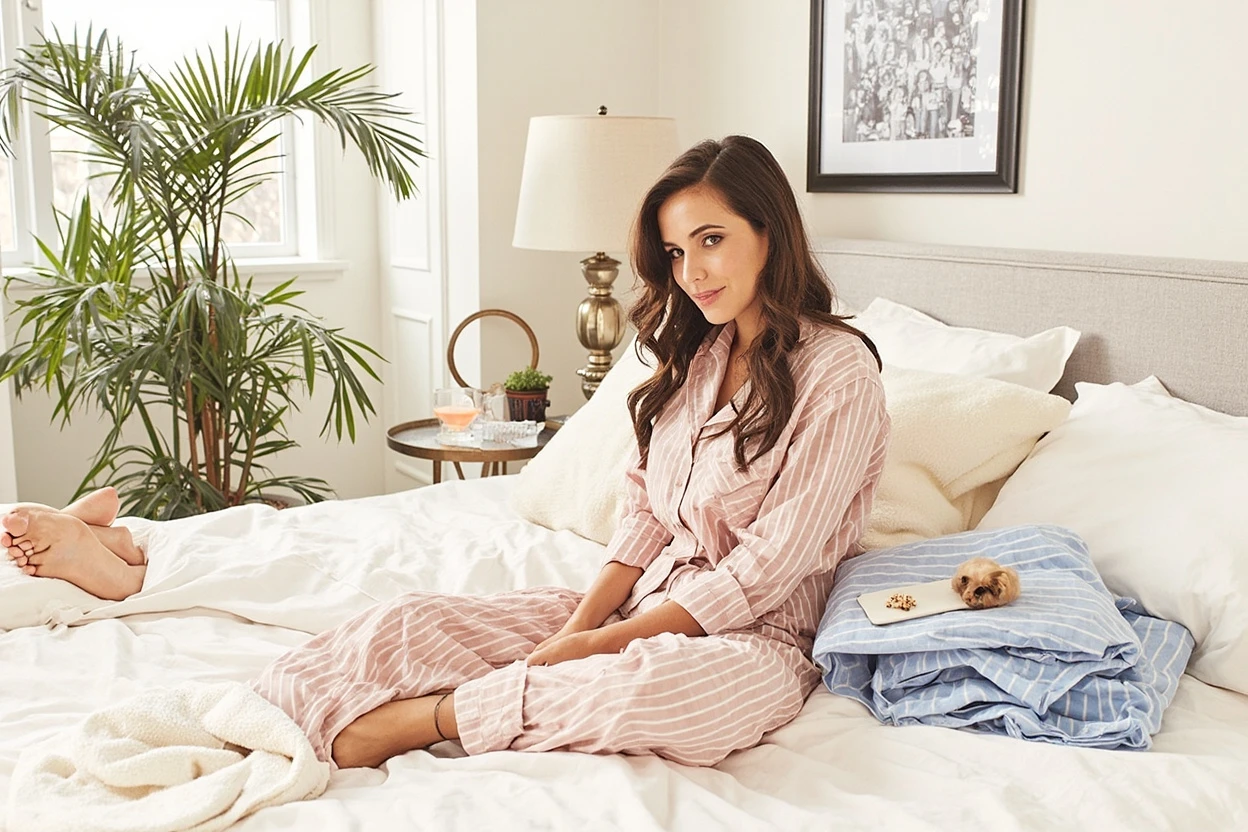
The $75 Billion Comfort Revolution: How Loungewear is Redefining Apparel by 2026
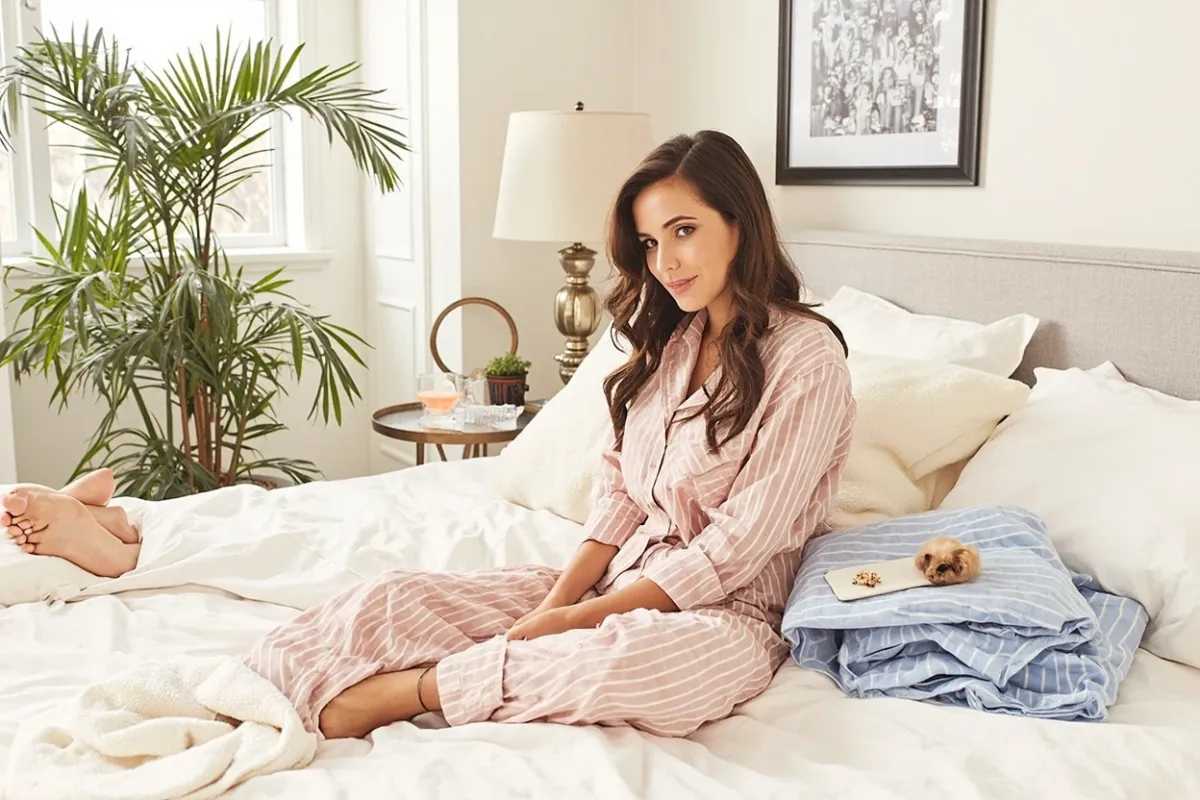
Table of Contents
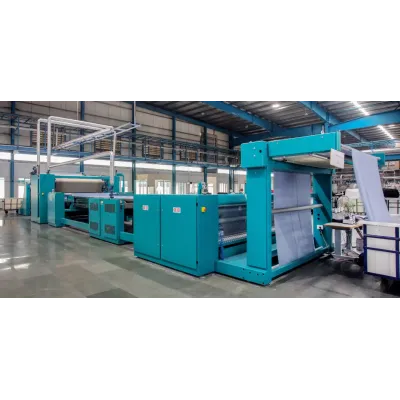
The global Loungewear & Sleepwear industry serves consumers worldwide with diverse solutions.
1. Industry Overview
What was once a private, utilitarian category is now a public statement and a dominant apparel sector. The loungewear and sleepwear industry has undergone a historic shift, evolving from basic nightclothes into a cornerstone of modern wardrobes, driven by the normalization of remote work and a cultural prioritization of comfort. This isn't just about wearing pajamas longer; it's a fundamental redefinition of 'dressed.' The category now seamlessly bridges the private space of the bedroom and the semi-public sphere of the home office, cafe, and school run, creating a massive, sustained demand for garments that are both presentable and profoundly comfortable. Valued at USD 63,135.07 million in 2025, the market's explosive trajectory underscores its new economic significance. It is a distinct segment within textile and apparel, characterized by its focus on softness, ease of wear, and designs that prioritize well-being over formality, challenging the traditional boundaries of daywear and nightwear.
Industry Scope & Characteristics
Broad Product Portfolio
Products span pajamas, lounge pants, nightgowns, robes, home robes, comfortable sleepwear, silk pajamas, serving diverse consumer needs from everyday essentials to premium specialized offerings.
Complex Global Supply Chains
Integrated international networks spanning multiple continents ensure year-round product availability across diverse markets.
Quality & Compliance Standards
Rigorous regulatory frameworks and quality certifications ensure product safety, consistency, and consumer trust worldwide.
Continuous Innovation
Heavy R&D investment drives formulation breakthroughs, processing technologies, and novel product development cycles.

Key market segments and growth drivers in the Loungewear & Sleepwear sector.
2. Market Analysis
The sleepwear and loungewear market is entering a transformative growth phase, projected to expand from USD 54,520 million in 2025 to USD 75,720 million by 2026. This surge is part of a longer-term boom, with the global market forecast to achieve USD 95.21 Billion by 2035, growing at a compound annual growth rate (CAGR) of approximately 9.22%. The loungewear sub-segment alone, valued at USD 7,541.34 million in 2026, is expected to more than double to USD 15,267.75 million by 2035. Three primary drivers fuel this expansion. First, the permanent hybrid work model has created a daily need for versatile 'zoom-worthy' comfort. Second, consumer demand for sustainability and innovative, performance-driven fabrics like temperature-regulating materials is pushing premiumization. Third, the rise of direct-to-consumer brands and omnichannel retail has made specialized comfort wear more accessible than ever. Geographically, North America remains the dominant market, while the Asia-Pacific region, led by China and Japan, is experiencing the fastest growth due to rising disposable incomes and urbanization.
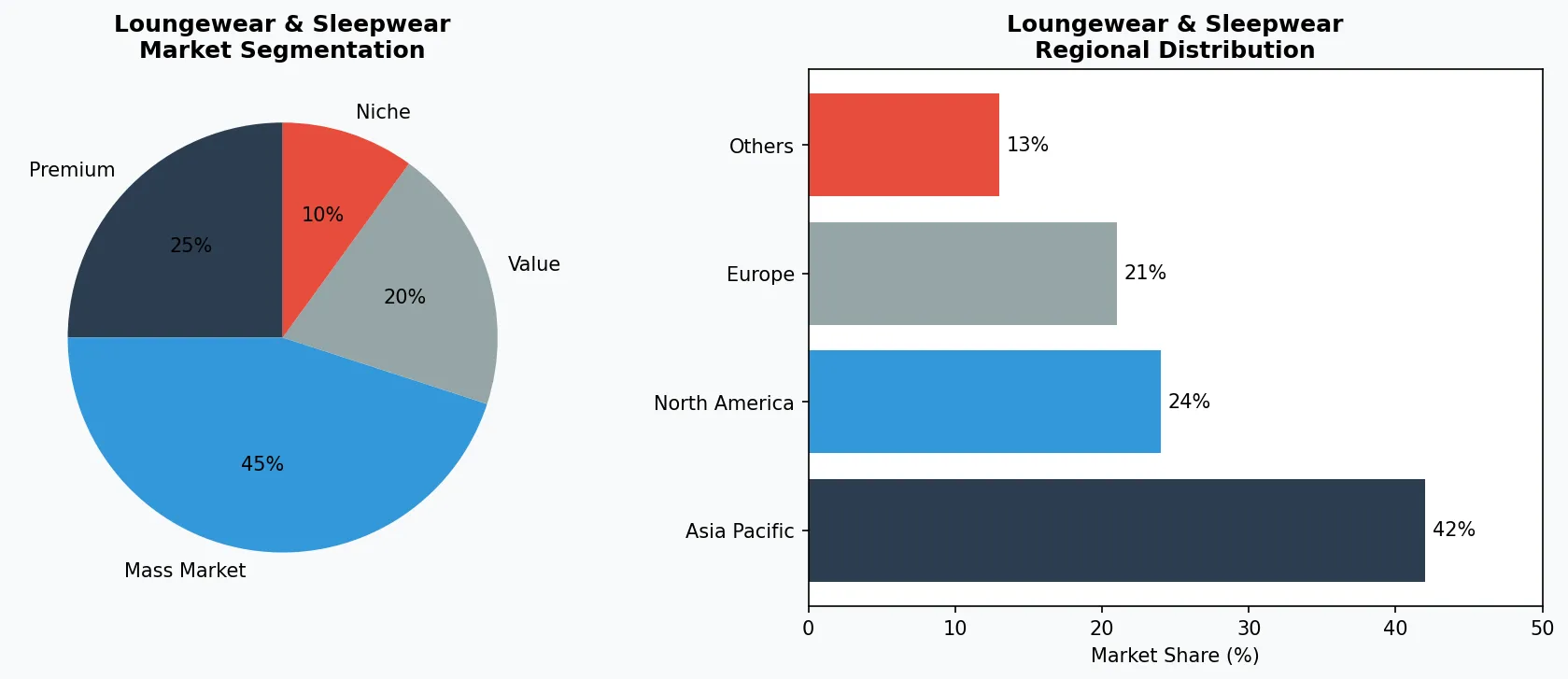
Market segmentation and regional distribution analysis for Loungewear & Sleepwear.
3. Product Categories
The product landscape is segmented by use case and material sophistication. Core sleepwear includes traditional pajama sets, nightgowns, and chemises designed specifically for rest, with brands like Hanes dominating the value segment and Victoria's Secret leading in feminine, stylish designs. The loungewear category, encompassing lounge pants, coordinated sets, and oversized tops, is the growth engine, blurring the lines between sleepwear and casual daywear; Amazon Essentials has captured significant market share here with its affordable, everyday basics. The third segment is premium and specialized apparel, including silk pajamas, cashmere robes, and technical garments made from breathable, temperature-regulating fabrics. This tier is defined by brands like Calvin Klein, which leverages its name in underwear to command authority in premium sleep and lounge essentials, often focusing on minimalist design and natural fibers.
Premium & Artisanal Tier
High-margin specialty products targeting affluent consumers who prioritize quality, craftsmanship, and unique attributes.
Mass Market Mainstream
Volume-driven products serving price-conscious mainstream consumers with reliable quality at accessible price points.
Functional & Niche Segment
Targeted products addressing specific health concerns, dietary requirements, or lifestyle preferences beyond basic needs.
4. Leading Players
Victoria's Secret has strategically pivoted to reclaim its authority in sleep and lounge, leveraging its brand recognition in intimates to launch collections that emphasize stylish designs and soft fabrics, targeting consumers seeking aesthetically pleasing comfort. Uniqlo employs a technology-first strategy, focusing on proprietary, affordable performance materials like Heattech and Airism for temperature regulation, making advanced comfort accessible to a mass market. Hanes, a legacy player, dominates the value and volume segments through extensive retail distribution and brand trust for basic, durable sleepwear like t-shirt and short sets. Calvin Klein occupies the premium space, using its minimalist aesthetic and strong brand identity to sell high-margin essentials like modal robe sets and signature waistband pants, often through wholesale partnerships with major department stores.
Global Market Leader
Multinational player commanding significant market share. Revenue exceeding $50B with operations across 100+ countries, diversified portfolio spanning all major price tiers.
Regional Champion
Dominant force in Asia Pacific with deeply localized product lines, extensive distribution networks, and strong regional retailer relationships.
Innovation Disruptor
Fast-growing challenger disrupting incumbents through breakthrough product innovation, direct-to-consumer models, and data-driven marketing in the loungewear & sleepwear space.
5. Market Trends
1. The shift to soft natural fabrics like organic cotton, linen...
The shift to soft natural fabrics like organic cotton, linen, and Tencel is paramount, driven by consumer demand for sustainability and skin-friendly comfort; brands across segments are highlighting material provenance and natural fiber blends. Temperature-regulating and breathable materials represent a key innovation frontier, moving comfort from a static to a dynamic feature; Uniqlo's success with Heattech exemplifies this trend, creating functional value for all-day wear. Finally, stylish designs that transition from bed to errands are no longer a niche trend but a market expectation, with companies like Victoria's Secret integrating loungewear into their mainline fashion narratives, offering coordinated sets in contemporary colors and silhouettes.
6. Regional Markets
North America, particularly the United States, remains the largest and most mature market, characterized by high consumer spending on apparel, strong brand penetration, and the early adoption of the work-from-home culture that catalyzed the loungewear boom. The Asia-Pacific region is the fastest-growing market, with Japan and South Korea leading in technical fabric innovation and fashion-forward lounge styles, while China's massive middle-class expansion fuels demand for both domestic and international comfort brands. Europe presents a diversified landscape, with Northern European countries emphasizing functional, sustainable design and Southern European markets showing stronger growth in stylish, lightweight loungewear suited to warmer climates and a vibrant cafe culture.
Asia Pacific — The Growth Engine
The world's largest and fastest-growing region, led by China, India, and Southeast Asia. Urbanization, rising middle class, and digital retail adoption are primary catalysts.
North America — Premium & Wellness Driven
A mature market with strong health-and-wellness orientation, sustainability commitments, and robust demand for premium and functional products.
Europe — Quality & Regulatory Leadership
A developed market with stringent quality, safety, and environmental regulations. Strong demand for organic, locally sourced, and ethically certified products.
7. Investment Outlook
Two specific opportunities stand out. First, the integration of smart textiles—fabrics with embedded sensors for sleep tracking or biometric monitoring—presents a frontier for premium product differentiation and deeper consumer engagement. Second, there is significant white space in developing markets in Southeast Asia and Latin America, where rising urban populations are just beginning to adopt dedicated loungewear categories beyond traditional sleepwear. The primary concrete risk is material cost volatility and supply chain fragility, particularly for the natural and innovative synthetic fibers that define the premium segment; a price shock or shortage could compress margins and stall the trend toward sustainable materials.
Strategic Considerations:
- ('Technology & AI Integration:', 'Artificial intelligence and IoT are revolutionizing production efficiency, quality assurance, and demand forecasting across the supply chain.')
- ('Sustainability as Business Strategy:', 'Regulatory pressure and consumer expectations are making environmental commitments essential, not optional.')
- ('Transparency & Traceability:', 'Consumers demand increasingly granular information about product origins, ingredients, and production methods.')
- ('Emerging Market Penetration:', 'Africa, Latin America, and second-tier Asian cities represent the next wave of volume growth.')
Make Informed Decisions in the Loungewear & Sleepwear Market
Product quality and sourcing integrity directly impact business outcomes. Discover how Verity Rank's verification platform helps industry participants source with greater confidence.
Contact Verity Rank TodayFurther Reading: Explore additional market intelligence from Grand View Research and Mordor Intelligence.
This article is for informational purposes only, based on publicly available industry data and market reports as of 2026-04-14. All market figures are estimates and may vary from actual results.