

-36x36h.webp)
-36x36h.webp)
-450x250h.webp)









-150x150h.webp)










































































































The Complete Guide to Edible Oils Industry: Market Analysis & Key Players 2026
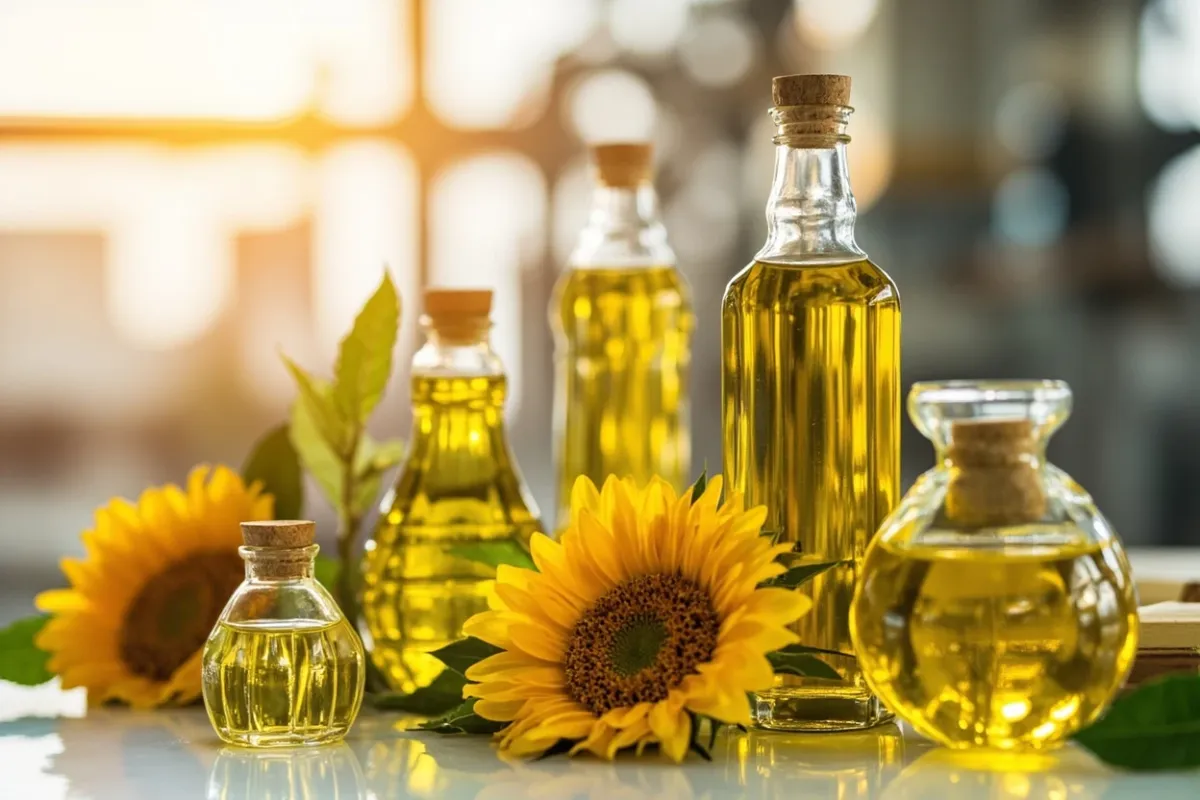
Table of Contents
- 1. What Are Edible Oils?
- 2. Global Market Size & Growth
- 3. Types of Edible Oils
- 4. Key Market Players
- 5. Health & Wellness Trends
- 6. Regional Analysis
- 7. Future Outlook
Click any section above to jump directly to it.
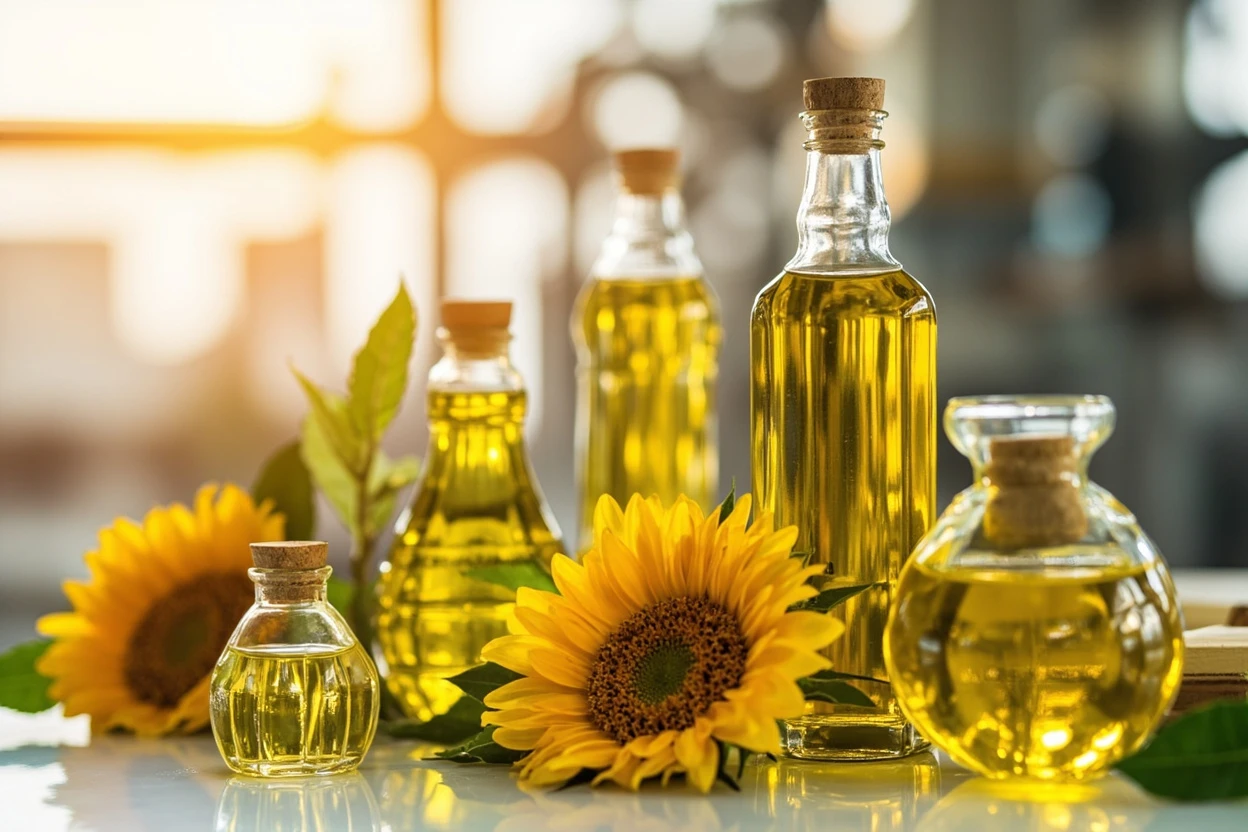
The global edible oils industry powers food production worldwide with diverse oil products.
From the olive groves of the Mediterranean to the palm plantations of Southeast Asia, edible oils form an essential component of human nutrition. The global edible oils industry is a massive economic force, providing the foundation for cooking, food processing, and countless industrial applications.
1. What Are Edible Oils?
Edible oils are fatty acids extracted from plants, animals, or marine sources that are suitable for human consumption. These oils are essential in cooking, food processing, and even pharmaceutical applications.
Categories of Edible Oils
Vegetable Oils
Palm, soybean, sunflower, rapeseed, and cottonseed oils form the backbone of global consumption.
Nut & Seed Oils
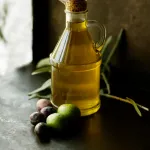
Olive, peanut, almond, walnut, and sesame oils prized for their distinct flavors and health benefits.
Specialty Oils
Coconut, avocado, flaxseed, and rice bran oils serving premium and functional food segments.
Blended Oils
Custom blends combining multiple oil types to achieve desired nutritional profiles and smoke points.
2. Global Market Size & Growth
The global edible oils market demonstrates robust growth driven by increasing population, rising health consciousness, and expanding food processing industries.
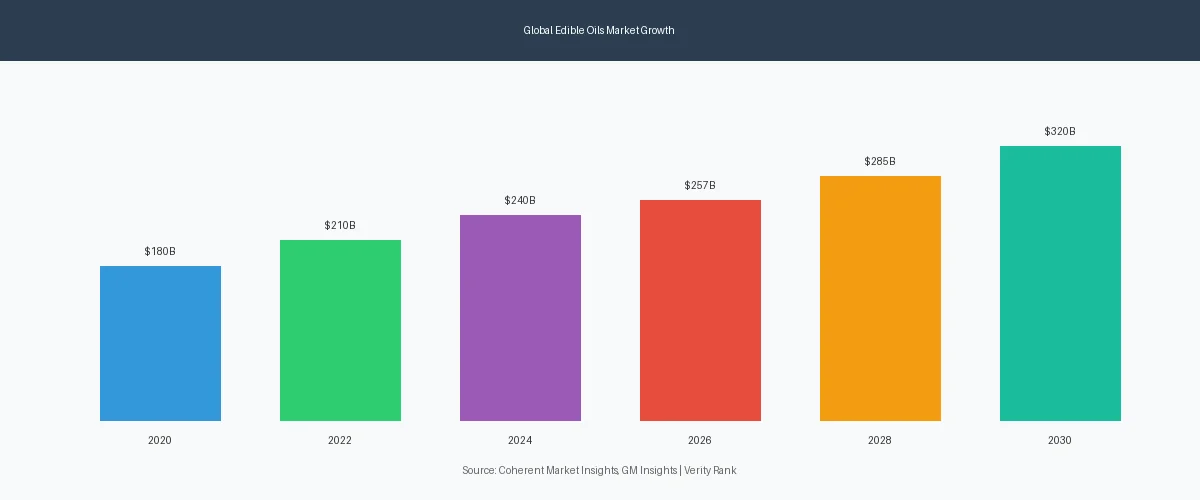
Global edible oils market projected to reach $363.98 billion by 2033.
| Market Metric | Value | Growth Rate |
|---|---|---|
| Market Value (2026) | $256.96 Billion | - |
| Projected Value (2033) | $363.98 Billion | 5.1% CAGR |
| Cooking Oil Market (2026) | $247.09 Billion | 7.19% CAGR |
| Edible Fats Market (2026) | $616.8 Billion | 5.9% CAGR |
3. Types of Edible Oils
Understanding the different types of edible oils helps consumers and businesses make informed decisions based on nutritional profiles, cooking applications, and cost-effectiveness.
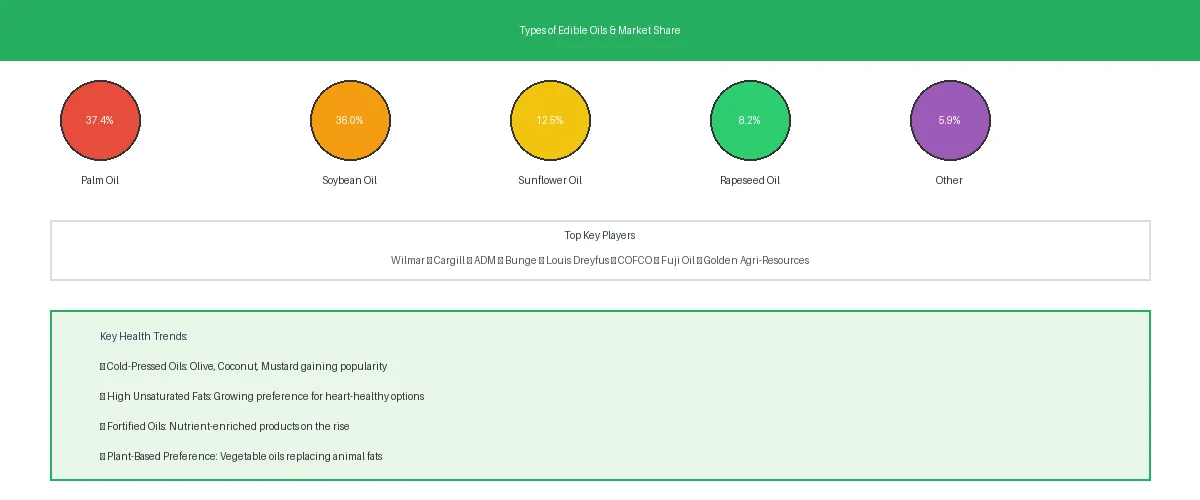
Palm oil and soybean oil dominate global edible oils consumption.
3.1 Palm Oil
Palm oil holds the largest market share at 37.4%, driven by its high yield per hectare, cost-effectiveness, and versatility in food processing. Major producers include Indonesia and Malaysia.
3.2 Soybean Oil
Soybean oil accounts for 36.0% of the market, valued for its nutritional profile rich in polyunsaturated and monounsaturated fatty acids. The United States, Brazil, and Argentina are leading producers.
3.3 Sunflower & Rapeseed Oil
Sunflower oil (12.5%) and rapeseed oil (8.2%) are gaining popularity due to their favorable fatty acid composition and suitability for health-conscious consumers.
4. Key Market Players
The edible oils industry features a consolidated competitive landscape, with the top five players collectively holding 42% of market share in 2025.
Wilmar International
Singapore-based global leader in palm oil and consumer products. Operations span plantations, milling, and branded consumer goods.
Cargill
US-based agribusiness giant with extensive oilseed processing and trading operations worldwide.
Archer Daniels Midland (ADM)
Leading US processor of oilseeds, corn, wheat, and cocoa, with strong global trading capabilities.
Bunge Limited
Global agribusiness and food company specializing in oilseed processing, sugar, and wheat.
5. Health & Wellness Trends
5.1 Cold-Pressed Oils
Cold-pressed oils such as olive oil, coconut oil, and mustard oil are gaining popularity due to their minimal processing and retention of natural nutrients.
5.2 High Unsaturated Fat Options
Consumers increasingly prefer oils high in unsaturated fats for cardiovascular health. This trend drives demand for olive, sunflower, and rapeseed oils.
5.3 Fortified Oils
Oils fortified with vitamin A, vitamin D, and omega-3 fatty acids address micronutrient deficiencies while providing essential fatty acids.
5.4 Premium & Specialty Varietals
Single-origin and premium varietal oils command higher prices, appealing to culinary enthusiasts and health-conscious consumers.
6. Regional Analysis
Asia Pacific
The dominant region with highest consumption, driven by large populations in China, India, and Indonesia. Palm and soybean oils lead consumption.
North America
Fast-growing region with health-conscious consumers preferring olive, avocado, and canola oils. Premium segments show strong growth.
Europe
Mature market with strong preference for olive oil and cold-pressed varieties. Sustainability concerns drive demand for certified sustainable oils.
7. Future Outlook
The edible oils industry faces both significant opportunities and challenges as it evolves through 2026 and beyond.
Key Trends Shaping the Future:
- Sustainability Focus: Increasing pressure for RSPO-certified sustainable palm oil and responsible sourcing practices
- Alternative Oils: Growing interest in algae oil, insect-based oils, and novel omega-rich sources
- Plant-Based Demand: Rising demand for vegetable oils as alternatives to animal fats in food manufacturing
- Health Innovation: Development of oils with enhanced nutritional profiles and functional benefits
Navigate the Edible Oils Market with Confidence
The quality and sourcing of edible oils directly impacts food safety and nutritional value. Discover how Verity Rank verification can help you source with confidence.
Contact Verity Rank TodayFor Further Learning: Explore market data from Coherent Market Insights and GM Insights.
This article is for informational purposes and is based on industry reports and publicly available data as of April 2026.