

Table of Contents
- 1. From Past to Present: A Story of Constant Change
- 2. The Industry Today: More Than Just Paper and Ink
- 3. Key Trends Shaping the Future
- 4. Common Challenges the Industry Faces
- 5. Looking Ahead: What Comes Next?
Click any section above to jump directly to it.

The paper and printing industry bridges centuries of craftsmanship with cutting-edge digital technology.
Look around you. The book on your shelf, the cereal box in your kitchen, the shipping label on a package, even the design on your t-shirt. Many of these everyday items have one thing in common: they were created by the vast, global paper and printing industry. Far from being a relic of the past, this industry is a dynamic, evolving force that touches nearly every part of our lives. Let's explore its fascinating journey, understand how it works today, and see where it's headed tomorrow.
1. From Past to Present: A Story of Constant Change
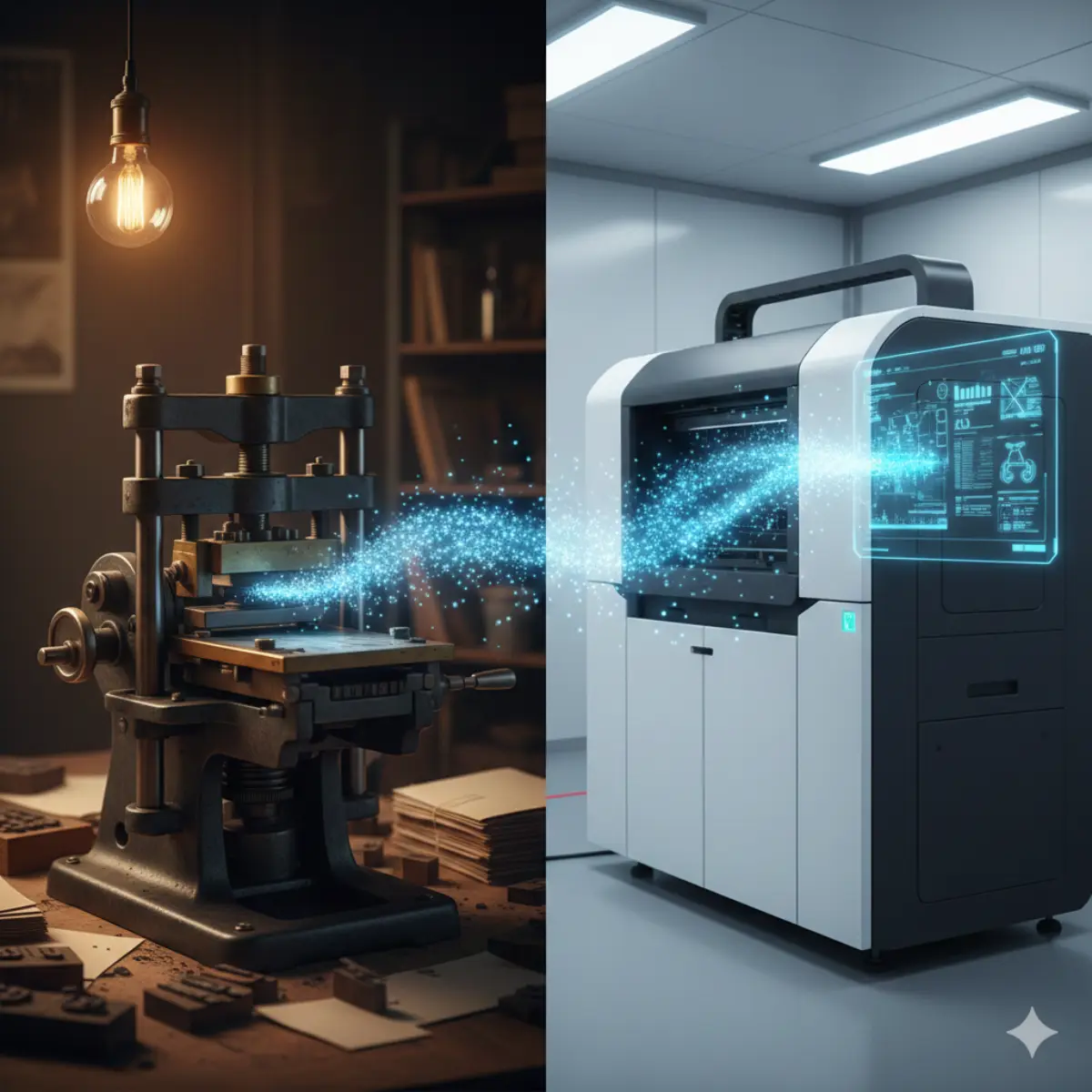
The story of printing begins long before the modern office printer. Ancient civilizations in China used carved woodblocks to press images onto silk and paper over a thousand years ago. The real revolution, however, came in the 15th century with Johannes Gutenberg's movable type printing press in Europe. This invention didn't just make books faster to produce; it made knowledge accessible, fueling the Renaissance and the spread of scientific ideas.
For centuries, the industry grew around techniques like letterpress (raised type), gravure (engraved plates), and later, offset lithography. Offset became the king of commercial printing for most of the 20th century, perfect for producing huge runs of magazines, newspapers, and catalogs cheaply. The basic idea is clever: it uses the fact that oil-based ink and water don't mix. The image is transferred from a plate to a rubber blanket, then to paper—hence "offset."
The Digital Wave
The late 20th century brought the computer, and with it, the industry's biggest shake-up yet. Digital printing was born. Unlike offset, which needs expensive physical plates set up for each job, digital printing works like a giant office printer. It creates images directly from a digital file using toners or liquid ink.
This was a game-changer. Suddenly, it became economical to print very small quantities—even a single copy. Customization and personalization exploded. While digital media reduced demand for newsprint and some advertising, it opened new doors in other areas.
2. The Industry Today: More Than Just Paper and Ink
Today's paper and printing industry is a complex global ecosystem. It's not one single business but a collection of interconnected sectors, each with its own focus and technology.
The Major Players and Sectors
Packaging Printing
The undisputed heavyweight champion. The boom in e-commerce means everything we order online needs a box, a label, and often eye-catching design. This sector uses everything from flexography (great for corrugated cardboard) to high-quality digital printing for short-run, customized boxes.
Commercial & Publishing
This includes marketing materials (brochures, flyers, business cards), books, and magazines. While volume has decreased, value remains. Books have proven resilient, and niche magazines thrive. This area relies heavily on offset for long runs and digital for on-demand and personalized printing.
Digital & Functional Printing
This fast-growing segment goes beyond paper. It includes printing on textiles (your custom t-shirt), ceramics, electronics, and even biomaterials. It's where innovation happens, with technologies like inkjet creating smart labels, decorative surfaces, and more.
By the Numbers: A Global Snapshot
Let's look at some key figures that define the scale and direction of the industry:
| Market Segment | Key Statistic | What It Means |
|---|---|---|
| Global Printing Market | Valued near $898 billion (2024) | It's a massive global industry, but growth is now driven by specific areas like packaging, not general printing. |
| Digital Printing Growth | Growing at ~5% per year, much faster than the industry average | Digital is the future. Its flexibility for short runs and customization is irreplaceable. |
| Regional Leader | Asia-Pacific holds over 44% of the global market | Manufacturing power and booming e-commerce in Asia make it the industry's engine room. |
| U.S. Industry | Revenue around $86.6 billion, but slowly declining | In mature markets, the focus has shifted from growth to efficiency, specialization, and high-value services. |
3. Key Trends Shaping the Future
The industry isn't standing still. Several powerful forces are reshaping how things are made, what they're made from, and who makes them.
The Green Revolution: Sustainability is Now Essential
This is no longer just a nice-to-have. Consumers and laws are demanding it. The industry is responding in big ways:
- Material Shift: Brands are ditching plastic for paper-based packaging that is easier to recycle or compost.
- Circular Economy: Using recycled paper fiber, soy-based inks, and designing packaging for easy recycling is becoming standard.
- Efficiency: Printers use smart software to minimize paper waste and energy use. The goal is a smaller carbon footprint for every printed item.
Smart Factories: Automation and AI Join the Pressroom
Modern print shops are getting a tech upgrade. Automation handles repetitive tasks, while data and AI help with decision-making.
- Web-to-Print & MIS: Customers order online, and the job flows automatically to the right machine. Management Information Systems (MIS) track everything, reducing errors and speeding up turnaround.
- Predictive Maintenance: Sensors on presses can predict when a part might fail, preventing costly downtime.
- Hyper-Personalization: Digital printing combined with data allows for mass customization—think of a catalog where every copy is tailored to a different person.
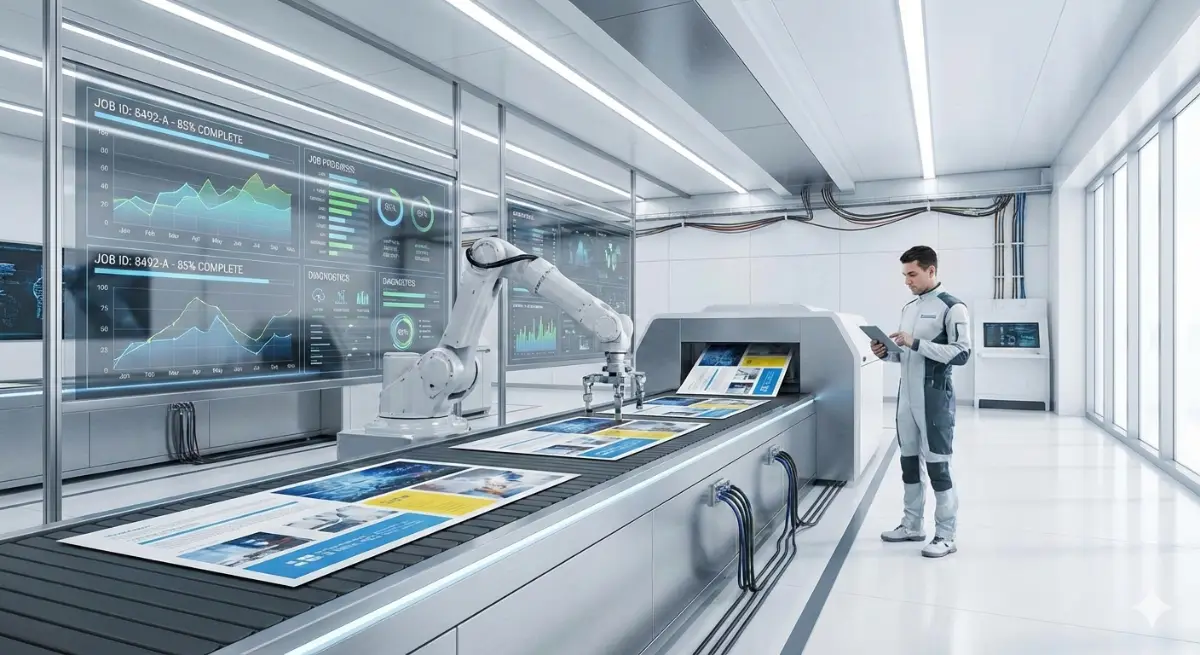
The print shop of the future: connected, automated, and data-driven.
4. Common Challenges the Industry Faces
Transformation isn't easy. Companies across the sector grapple with several persistent issues.
The Squeeze on Profits
Many printing businesses operate on very thin profit margins, often between 1-3%. Rising costs for paper, energy, and labor, combined with intense global price competition, make profitability a constant battle.
The Skills Gap
The industry needs a new kind of worker: someone who understands both traditional press operation and digital technology, data, and software. Finding and training this hybrid talent is a major hurdle.
Regulatory Pressure
From regulations on chemical emissions (like VOCs) to new laws about packaging waste and recycling, compliance is becoming more complex and costly, especially for smaller operations.
5. Market Trends
1. The Roadmap for the Next
The Roadmap for the Next Decade
2. The paper and printing industry's future lies in adaptation
The paper and printing industry's future lies in adaptation and added value. It will be less about putting ink on paper as a commodity service and more about providing intelligent, sustainable, and integrated solutions.
3. From the scrolls of ancient scribes to the personalized
From the scrolls of ancient scribes to the personalized package on your doorstep, the journey of printing is a story of human communication and innovation. It has constantly reinvented itself to meet the needs of the times. As it embraces sustainability and digital intelligence, this essential industry is poised to remain a vital part of our world, quietly shaping the things we see, use, and trust every day.
4. For Further Learning: Explore industry insights from
For Further Learning: Explore industry insights from WhatTheyThink or delve into detailed market research from firms like Smithers. To understand how complex global industries build trust with consumers, learn about our perspective at Verity Rank.