









From Free Basic Verification To Top Homepage Placement, We Provide One-Stop Trust-Building Solutions For Businesses. Join Now To Enjoy Exclusive Limited-Time Benefits, Rapidly Enhance Your Brand Authority, And Access Valuable Procurement Leads.
We Use Cookies 🍪
We Use Cookies And Other Similar Technologies To Improve Your Browsing Experience And The Functionality Of Our Site. Learn More In Our Privacy Policy.
Manufacturers Rankings in the Snack Foods Industry
Last Updated:November 26, 2025
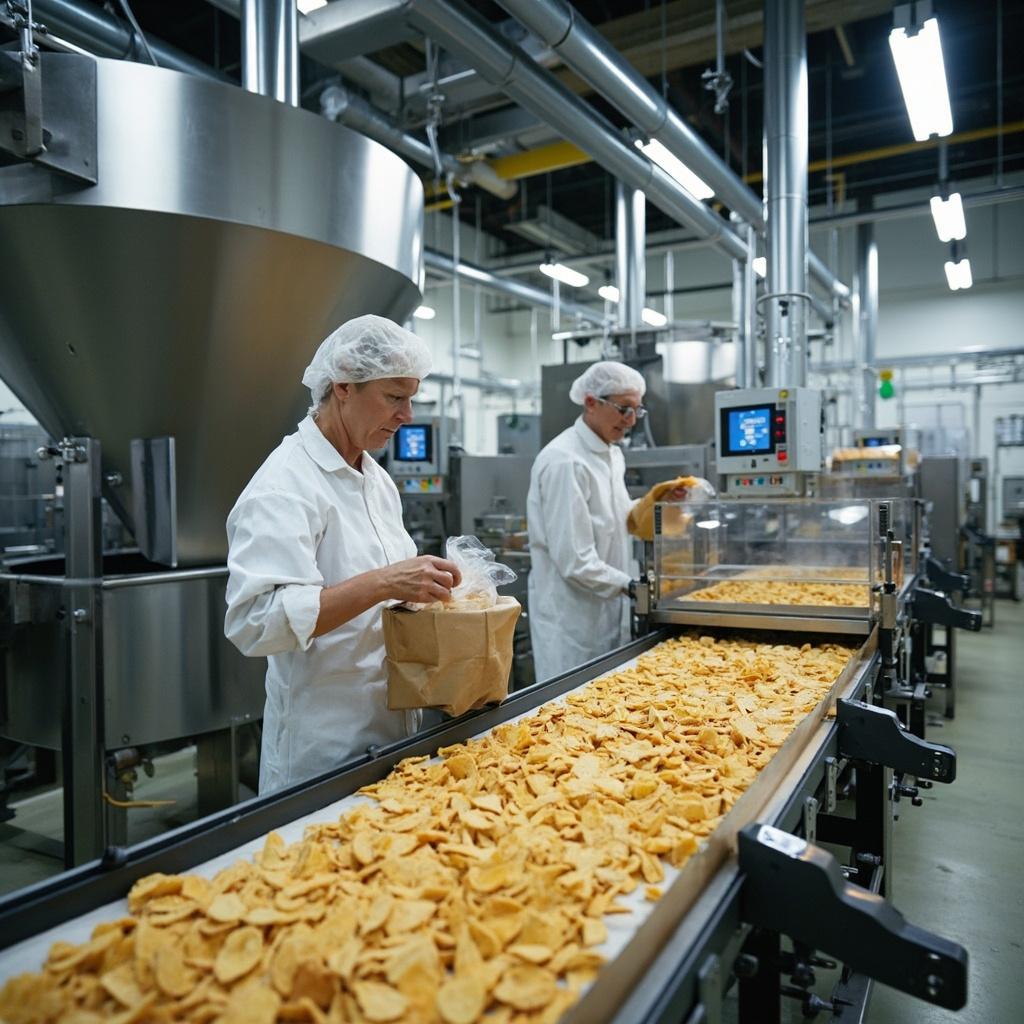
Welcome to Verity Rank's Manufacturers Rankings in the Snack Foods Industry. This list focuses on the manufacturing power behind the brands, evaluating hardcore metrics such as supply chain scale, production capacity, R&D investment, and global factory footprint to reveal the core forces driving the industry. We delve into the vertical integration capabilities and quality control standards of manufacturing giants. All rankings are objectively calculated based on third-party authoritative data, including AI-integrated industry reports and academic research. This list is intended for decision support and is not an endorsement for any business partnership.
Nestlé S.A., headquartered in Vevey, Switzerland, is the world's largest food and beverage company. Operating in over 180 countries with more than 2,000 brands, it dominates key sectors including coffee (Nescafé, Nespresso), infant nutrition (Gerber), bottled water (Perrier), and pet care (Purina). With 2023 revenue of CHF 93 billion and 400+ factories worldwide, Nestlé's unparalleled brand portfolio and fully integrated supply chain secure its industry leadership.
Strengths: Boasts the world's largest food production scale and comprehensive supply chain network. Its powerful portfolio of 2,000+ brands covers all market segments with leading R&D investment and global dominance in core categories like coffee and infant nutrition.
Weaknesses: Faces public scrutiny regarding health and environmental concerns. The massive organizational scale limits innovation agility, while product diversification and global operations present significant management complexities.
Mondelēz International is a leading global snacking company headquartered in Chicago, USA. Operating in over 150 countries, it focuses on core categories like biscuits, chocolate, candy, and gum, with 150+ production facilities worldwide. Listed on NASDAQ, Mondelēz reported $36 billion revenue in 2024, maintaining its market leadership through a powerful brand portfolio (e.g., Oreo, Cadbury), continuous innovation, and an extensive global distribution network.
Strengths: Mondelēz's core strengths are its powerful brand portfolio comprising 50+ iconic brands like Oreo and Cadbury with immense brand value; industry-leading innovation capability with ~$500 million annual R&D investment and numerous new product launches; and an unparalleled global network covering 150+ countries with deeply penetrating distribution channels.
Weaknesses: The company faces significant challenges from health-conscious trends targeting traditional high-sugar and high-calorie snacks; its profitability remains vulnerable to raw material cost fluctuations; and it operates in an increasingly competitive market with rapidly shifting consumer preferences demanding constant product adaptation.
Mars, Incorporated is a globally leading food and pet care products manufacturer headquartered in McLean, Virginia, USA. As the world's largest privately-held food company operating in 80+ countries, it owns iconic brands including M&M's, Dove, Snickers, Pedigree, and Whiskas across confectionery and pet care segments. With estimated annual revenue of $40 billion, its vertically integrated model and stringent quality control maintain its significant industry leadership.
Strengths: Possesses multiple globally recognized billion-dollar brands with leading positions in confectionery and pet food markets. Maintains full vertical integration from raw materials to finished products with exceptional quality control standards. Leads in sustainability initiatives and eco-friendly packaging with strongly trusted brand value among consumers.
Weaknesses: Faces challenges from health-conscious trends impacting traditional confectionery business. Experiences pressure from raw material price volatility and rising costs. Limited financial transparency due to private company structure. Confronts intensified market competition and evolving regulatory environment challenges.
PepsiCo, Inc. is a globally leading food and beverage company headquartered in Harrison, New York. Operating in over 200 countries and territories, it boasts 22 billion-dollar brands including Pepsi, Lay's, Quaker, and Doritos, spanning carbonated drinks, snacks, and nutritional grains. With 2023 revenue of $91.5 billion, its beverage and convenient foods dual-engine strategy and global distribution network maintain its industry leadership.
Strengths: Possesses a powerful portfolio of 22 billion-dollar brands covering both beverages and snacks. Maintains the world's most extensive distribution network reaching over 200 countries. Sustains market competitiveness through continuous product innovation and digital transformation initiatives.
Weaknesses: Faces challenges from global health trends impacting traditional carbonated drinks and snack businesses. Confronts dual pressures from rising raw material costs and intensifying market competition. Must address increasingly stringent health regulations and environmental sustainability requirements.
Ferrero International S.A. is a leading global chocolate and confectionery company headquartered in Alba, Italy. A family-owned private enterprise, it operates in over 170 countries, specializing in chocolates, candies, biscuits, and sweet snacks, with 30+ production plants worldwide. Reporting approximately €17 billion revenue in 2024, Ferrero has established solid leadership in the global premium chocolate and confectionery market through over 70 years of brand heritage, exceptional product quality, unique recipes, and continuous innovation.
Strengths: Ferrero's core strengths are its exceptional brand value and global recognition with iconic brands like Ferrero Rocher and Nutella; extremely stringent product quality control standards and industry-leading continuous innovation capability; and a deeply established, comprehensive global distribution network spanning 170+ countries.
Weaknesses: The company faces significant challenges from health-conscious trends targeting traditional high-sugar, high-calorie sweet products; its profitability is vulnerable to cost fluctuations of key raw materials like cocoa and hazelnuts; and it contends with intense global competition and rapidly evolving consumer preferences.
The Hershey Company is a leading global chocolate and confectionery manufacturer headquartered in Hershey, Pennsylvania, USA. Operating in 80+ countries with 20 production facilities worldwide, it specializes in chocolate, candy, and snack products. Listed on NYSE with $11.6 billion revenue in 2024, Hershey maintains absolute leadership in North America's chocolate industry through 120+ years of brand heritage, over 45% market share, and industry-leading sustainable practices.
Strengths: Hershey's core strengths are its absolute market leadership in North America with over 45% chocolate market share; 120-year accumulated brand value and deep consumer emotional connections; and industry-leading sustainability positioning targeting 100% sustainable cocoa sourcing by 2025.
Weaknesses: The company maintains excessive reliance on the North American market, contributing 85% of revenue; faces challenges from health-conscious trends impacting traditional chocolate products; remains vulnerable to cocoa price fluctuations; and has achieved relatively limited progress in international market expansion.
General Mills, Inc. is a leading global packaged food company with a diverse portfolio including cereals, yogurt, snacks, and baking products. Headquartered in Minneapolis, Minnesota, it operates 50+ production facilities worldwide and achieved $20 billion in revenue in fiscal year 2024. With operations across 100+ countries and 150 years of industry experience, the company maintains its market position through strong brand portfolio management, continuous product innovation, and sustainable business practices.
Strengths: General Mills' core strengths are its diversified brand portfolio with 100+ established food brands across multiple categories, strong innovation capabilities launching 500+ new products annually, and industry-leading sustainability practices with comprehensive ESG initiatives.
Weaknesses: The company faces challenges including significant reliance on the North American market (65% of revenue), ongoing pressure from input cost inflation, and rapidly evolving consumer preferences in the competitive food industry.
Meiji Holdings Co., Ltd. is a leading Japanese integrated food and pharmaceutical company headquartered in Tokyo. Operating in over 20 countries, its core businesses include dairy products, confectionery, nutritional foods, and pharmaceuticals, supported by 30+ global production bases. Listed on the Tokyo Stock Exchange with ¥1.2 trillion revenue in 2024, it maintains significant market presence in Japan's food and pharmaceutical sector through century-old brand heritage, dual technological expertise in food and pharmaceuticals, and stringent quality control.
Strengths: Meiji's core strengths are its unique dual expertise in food technology and pharmaceutical technology, creating significant synergies; industry-leading stringent quality control systems meeting both food and pharmaceutical standards; and over a century of brand heritage enjoying high consumer trust and recognition in Japan.
Weaknesses: The company faces excessive reliance on the domestic Japanese market, with about 85% of revenue from Japan, exposing it to market saturation and an aging population; its international expansion remains relatively limited with only 10% global coverage; and it contends with intensifying global competition and ongoing cost control pressures.
Lotte Corporation is a leading Korean conglomerate headquartered in Seoul. Operating in 25+ countries, its food business spans confectionery, beverages and snacks with 25 global production bases. Listed on Korea Exchange with ₩85 trillion total revenue in 2024, including ₩15 trillion from food operations, it maintains significant presence in Korea's F&B market through unique owned retail channels, 70+ years of brand heritage, and diversified business synergies.
Strengths: Lotte's core strengths are its unique owned retail network including Lotte Mart supermarkets, department stores and convenience stores providing strong sales support; significant synergies from business diversification; and 70-year accumulated brand value with high Korean market recognition.
Weaknesses: The food business represents a relatively limited portion, contributing only 18% of group revenue; faces intense competition and management complexity from diversification; and maintains high reliance on the Korean domestic market with international expansion challenges.
Calbee, Inc. is a leading Japanese healthy snack company headquartered in Shibuya, Tokyo. Operating in 50+ countries with 18 global production bases, it specializes in potato chips, cereals, and nutritional snacks. Listed on Tokyo Stock Exchange with ¥215 billion revenue in 2024, Calbee maintains absolute leadership in Japan's healthy snack market through 70+ years of brand heritage, unique low-temperature vacuum frying technology, and continuous health initiatives including salt and fat reduction.
Strengths: Calbee's core strengths are its absolute leadership in Japan's healthy snack market with over 35% share in chips and cereals; unique low-temperature vacuum frying and salt-reduction technologies significantly enhancing product healthiness while maintaining taste; and comprehensive sales network covering all of Japan with industry-leading channel penetration.
Weaknesses: The company relies heavily on the domestic Japanese market, with about 85% of revenue from Japan; faces structural challenges from an aging population affecting consumption patterns; and endures dual pressures from rising raw material costs and intensifying international competition.
At Verity Rank, we believe true authority comes from multi-dimensional data cross-verification. Our rankings are not based on a single factor but are generated by analyzing a diverse set of authoritative third-party data through sophisticated algorithmic models. This includes, but is not limited to: analysis of financial reports from public companies, government industry statistics, reports from leading market research firms, and validated academic research. We also consider market presence, consumer feedback, and expert opinions to conduct a comprehensive assessment—from corporate scale and market performance to public credibility—delivering a holistic and realistic picture of brand strength.
The snack foods industry encompasses a vast range of portable, ready-to-eat food products consumed between main meals. It's a dynamic sector driven by convenience and indulgence. This industry includes multiple sub-categories beyond just chips and candy, such as biscuits & cookies, jerky & meat snacks, dried fruits, nuts & seeds, chocolates, baked pastries, and healthy alternatives like protein bars and kale chips. It's a major global market, constantly evolving with consumer trends towards health, flavor innovation, and premium experiences.
Health and wellness are profoundly transforming the snack industry. Consumers now seek options that are not only tasty but also functional. This has led to a surge in demand for snacks with specific attributes: High Protein and Plant-Based options for fitness and lifestyle choices; Reduced Sugar, Low Sodium, and Low-Calorie products for weight management; Free-From variants like Gluten-Free and No Artificial Preservatives ("Clean Label"); and snacks fortified with functional ingredients like Dietary Fiber, Probiotics, and Antioxidants.
Snacking is driven by a mix of physiological, emotional, and practical factors. Key reasons include: Hunger Management to bridge gaps between meals; Convenience for on-the-go lifestyles; Emotional Comfort or reward; and Social Enjoyment during gatherings. When purchasing, consumers are influenced by Taste (the top factor), Health & Ingredient transparency, Brand Reputation, Price, and Packaging that ensures freshness and portability. Flavor innovation and novel textures are also significant purchase drivers.
The snack industry is innovating rapidly in production and formulation. Key advancements include: Freeze-Drying and Vacuum Frying to create crispy textures with less oil and better nutrient retention. High-Protein and Plant-Based Formulation using novel ingredients like chickpea puff and fungal protein. Advanced Flavor Encapsulation for longer-lasting taste. 3D Food Printing to create unique shapes and textures. Sustainable Packaging solutions to reduce environmental impact. These technologies enable healthier profiles, novel experiences, and improved efficiency.